


























The Realities of War Not Covered by
Major Newspapers
Dear friends,
The following article was carried on the respected Knight Ridder newswire. It is the best article I've seen in describing the sad realities of war. Yet if you do a search on a search engine, you will discover that though a number of local papers picked it up, not a single major newspaper picked up this story. Our major newspapers are owned by the power elite, who derive great financial benefit from war.
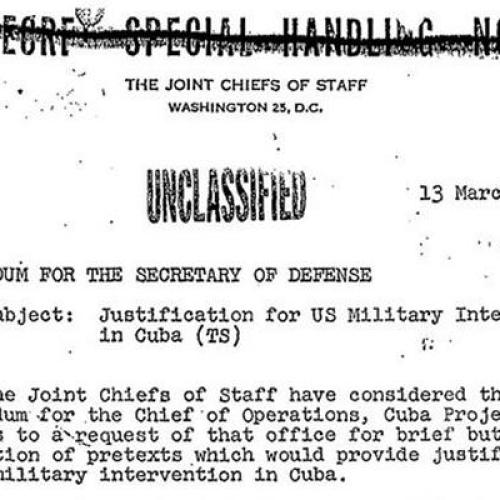
Very few people actually like war, yet so many accept it as a necessary evil. Most people are unaware that it is often the power elite who fan the flames of war, and sometimes even create the pretext for them (see www.WantToKnow.info/010501operationnorthwoods), as they profit by selling weapons to both sides both overtly and covertly. If you have any doubts of this, I invite you to read an excellent article by a highly decorated US general titled "War is a Racket" at www.WantToKnow.info/warcoverup
Please help others to understand the realities of war by spreading this news. May we all open to seeing humankind as one beautiful family, so that we might move towards a more harmonious way of relating to each other. Take care and have a great day.
With very best wishes,
Fred
P.S. For how you can help to build a brighter future, see www.WantToKnow.info/brighterfuture
http://www.contracostatimes.com/mld/cctimes/news/special_packages/galloway/8992746.htm?1c
Iraq combat: What it's really like over there
By JOSEPH L. GALLOWAY
Knight-Ridder Newspapers
WASHINGTON - The Internet, which fills our inboxes with spam and scams every day and keeps our delete keys shiny, occasionally delivers a real keeper, such as the words below, which were written by a graduate of West Point, Class of 2003, who's now at war in Iraq.
We tracked down the author, who gave us permission to quote from his letter so long as we didn't reveal his name.
Old soldiers in the Civil War coined a phrase for green troops who survived their first taste of battle: "He has seen the elephant." This Army lieutenant sums up the combat experience better than many a grizzled veteran:
"Well, I'm here in Iraq, and I've seen it, and done it. I've seen everything you've ever seen in a war movie. I've seen cowardice; I've seen heroism; I've seen fear; and I've seen relief. I've seen blood and brains all over the back of a vehicle, and I've seen men bleed to death surrounded by their comrades. I've seen people throw up when it's all over, and I've seen the same shell-shocked look in 35-year-old experienced sergeants as in 19-year-old privates.
"I've heard the screams - 'Medic! Medic!' I've hauled dead civilians out of cars, and I've looked down at my hands and seen them covered in blood after putting some poor Iraqi civilian in the wrong place at the wrong time into a helicopter. I've seen kids with gunshot wounds, and I've seen kids who've tried to kill me.
"I've seen men tell lies to save lives: 'What happened to Sergeant A.?' The reply: 'C'mon man, he's all right - he's wondering if you'll be OK - he said y'all will have a beer together when you get to Germany.' SFC A. was lying 15 feet away on the other side of the bunker with two medics over him desperately trying to get either a pulse or a breath. The man who asked after SFC A. was himself bleeding from two gut wounds and rasping as he tried to talk with a collapsed lung. One of them made it; one did not.
"I've run for cover as fast as I've ever run - I'll hear the bass percussion thump of mortar rounds and rockets exploding as long as I live. I've heard the shrapnel as it shredded through the trailers my men live in and over my head. I've stood, gasping for breath, as I helped drag into a bunker a man so pale and badly bloodied I didn't even recognize him as a soldier I've known for months. I've run across open ground to find my soldiers and make sure I had everyone.
"I've raided houses, and shot off locks, and broken in windows. I've grabbed prisoners, and guarded them. I've looked into the faces of men who would have killed me if I'd driven past their IED (improvised explosive device) an hour later. I've looked at men who've killed two people I knew, and saw fear.
"I've seen that, sadly, that men who try to kill other men aren't monsters, and most of them aren't even brave - they aren't defiant to the last - they're ordinary people. Men are men, and that's it. I've prayed for a man to make a move toward the wire, so I could flip my weapon off safe and put two rounds in his chest - if I could beat my platoon sergeant's shotgun to the punch. I've been wanted dead, and I've wanted to kill.
"I've sworn at the radio when I heard one of my classmate's platoon sergeants call over the radio: 'Contact! Contact! IED, small arms, mortars! One KIA, three WIA!' Then a burst of staccato gunfire and a frantic cry: 'Red 1, where are you? Where are you?' as we raced to the scene ... knowing full well we were too late for at least one of our comrades.
"I've seen a man without the back of his head and still done what I've been trained to do - 'medic!' I've cleaned up blood and brains so my soldiers wouldn't see it - taken pictures to document the scene, like I'm in some sort of bizarre cop show on TV.
"I've heard gunfire and hit the ground, heard it and closed my Humvee door, and heard it and just looked and figured it was too far off to worry about. I've seen men lined up outside a house, ready to enter - some as scared as they could be, and some as calm as if they were picking up lunch from McDonald's. I've laughed at dead men, and watched a sergeant on the ground, laughing so hard he was crying, because my boots were stuck in a muddy field, all the while an Iraqi corpse was not five feet from him.
"I've heard men worry about civilians, and I've heard men shrug and sum up their viewpoint in two words - 'F--- 'em.' I've seen people shoot when they shouldn't have, and I've seen my soldiers take an extra second or two, think about it, and spare somebody's life.
"I've bought drinks from Iraqis while new units watched in wonder from their trucks, pointing weapons in every direction, including the Iraqis my men were buying a Pepsi from. I've patrolled roads for eight hours at a time that combat support units spend days preparing to travel 10 miles on. I've laughed as other units sit terrified in traffic, fingers nervously on triggers, while my soldiers and I deftly whip around, drive on the wrong side of the road, and wave to Iraqis as we pass. I can recognize a Sadiqqi (Arabic for friend) from a Haji (Arabic word for someone who has made the pilgrimage to Mecca, but our word for a bad guy); I know who to point my weapons at, and who to let pass.
"I've come in from my third 18-hour patrol in as many days with a full beard and stared at a major in a pressed uniform who hasn't left the wire since we've been here, daring him to tell me to shave. He looked at me, looked at the dust and sweat and dirt on my uniform, and went back to typing at his computer.
"I've stood with my men in the mess hall, surrounded by people whose idea of a bad day in Iraq is a six-hour shift manning a radio, and watched them give us a wide berth as we swagger in, dirty, smelly, tired, but sure in our knowledge that we pull the triggers, and we do what the Army does, and they, with their clean uniforms and weapons that have never fired, support us.
"I've given a kid water and Gatorade and made a friend for life. I've let them look through my sunglasses - no one wears them in this country but us - and watched them pretend to be an American soldier - a swaggering invincible machine, secure behind his sunglasses, only because the Iraqis can't see the fear in his eyes.
"I've said it a thousand times - 'God, I hate this country.' I've heard it a million times more - 'This place sucks.' In quieter moments, I've heard more profound things: 'Sir, this is a thousand times worse than I ever thought it would be.' Or, 'My wife and Sgt. B's wife were good friends - I hope she's taking it well.'
"They say they're scared, and say they won't do this or that, but when it comes time to do it they can't let their buddies down, can't let their friends go outside the wire without them, because they know it isn't right for the team to go into the ballgame at any less than 100 percent.
"That's combat, I guess, and there's no way you can be ready for it. It just is what it is, and everybody's experience is different. Just thought you might want to know what it's really like."
ABOUT THE WRITER
Joseph L. Galloway is the senior military
correspondent for Knight Ridder Newspapers and co-author of the national
best-seller "We Were Soldiers Once ... and Young." Readers may
write to him at [email protected]
Your tax-deductible donations, however large or small, help greatly to support this important work.
To make a secure donation: https://www.WantToKnow.info/donationswtk
-- To subscribe to or unsubscribe from the WantToKnow.info list (one email every few days):
https://www.WantToKnow.info/subscribe --