


















































Love of country led Sibel Edmonds to become a translator for the F.B.I. following 9/11. But everything changed when she accused a colleague of covering up illicit activity involving Turkish nationals. Fired after sounding the alarm, she's now fighting for the ideals that made her an American, and threatening some very powerful people.
By David
Rose
Vanity Fair
September 2005 [Page 264-282]
In Washington, D.C., and its suburbs, December 2, 2001 was fine but cool, the start of the slide into winter after a spell of unseasonable warmth. At 10 o'clock that morning, Sibel and Matthew Edmonds were still in their pajamas, sipping coffee in the kitchen of their waterfront town house in Alexandria, Virginia, and looking forward to a well-deserved lazy Sunday.
Since mid-September, nine days after the 9/11 attacks, Sibel had been exploiting her fluency in Turkish, Farsi, and Azerbaijani as a translator at the F.B.I. It was arduous, demanding work, and Edmonds – who had two bachelor's degrees, was about to begin studying for her master's, and had plans for a doctorate – could have been considered overqualified. But as a naturalized Turkish-American, she saw the job as her patriotic duty.
The Edmondses' thoughts were turning to brunch when Matthew answered the telephone. The caller was a woman he barely knew – Melek Can Dickerson, who worked with Sibel at the F.B.I. "I'm in the area with my husband and I'd love you to meet him," Dickerson said. "Is it O.K. if we come by?" Taken by surprise, Sibel and Matthew hurried to shower and dress. Their guests arrived 30 minutes later. Matthew, a big man with a fuzz of gray beard, who at 60 was nearly twice the age of his petite, vivacious wife, showed them into the kitchen. They sat at a round, faux-marble table while Sibel brewed tea.
Melek's husband, Douglas, a U.S. Air Force major who had spent several years as a military attaché in the Turkish capital of Ankara, did most of the talking, Matthew recalls. "He was pretty outspoken, pretty outgoing about meeting his wife in Turkey, and about his job. He was in weapons procurement." Like Matthew, he was older than his wife, who had been born about a year before Sibel.
According to Sibel, Douglas asked if she and Matthew were involved with the local Turkish community, and whether they were members of two of its organized groups – the American-Turkish Council (A.T.C.) and the Assembly of Turkish American Associations (A.T.A.A.). "He said the A.T.C. was a good organization to belong to," Matthew says. "It could help to ensure that we could retire early and live well, which was just what he and his wife planned to do. I said I was aware of the organization, but I thought you had to be in a relevant business in order to join.
"Then he pointed at Sibel and said, 'All you have to do is tell them who you work for and what you do and you will get in very quickly.'" Matthew could see that his wife was far from comfortable: "She tried to change the conversation to the weather and such-like." But the Dickersons, says Matthew, steered it back to what they called their "network of high-level friends." Some, they said, worked at the Turkish Embassy in Washington. "They said they even went shopping weekly for [one of them] at a Mediterranean market," Matthew says. "They used to take him special Turkish bread."
Before long, the Dickersons left. At the time, Matthew says, he found it "a strange conversation for the first time you meet a couple. Why would someone I'd never met say such things?"
Only Sibel knew just how strange. A large part of her work at the F.B.I. involved listening to the wiretapped conversations of people who were the targets of counter-intelligence investigations. As she would later tell investigators from the Justice Department's Office of the Inspector General (O.I.G.) and the U.S. Congress, some of those targets were Turkish officials the Dickersons had described as high-level friends. In Sibel's view, the Dickersons had asked the Edmondses to befriend F.B.I. suspects. (In August 2002, Melek Can Dickerson called Sibel's allegations "preposterous, ludicrous and slanderous.")
Sibel also recalled hearing wiretaps indicating that Turkish Embassy targets frequently spoke to staff members at the A.T.C., one of the organizations that Turkish Embassy targets frequently spoke to staff members at the A.T.C., one of the organizations that the Dickersons allegedly wanted her and her husband to join. Sibel later told the O.I.G. she assumed that the A.T.C.'s board – which is chaired by Brent Scowcroft, President George H. W. Bush's national – security advisor – knew nothing of the use to which it was being put. But the wiretaps suggested to her that the Washington office of the A.T.C. was being used as a front for criminal activity.
Sibel and Matthew stood at the window of their oak-paneled hallway and watched the Dickersons leave. Sibel's Sunday has been ruined.
Immediately and in the weeks that followed, Sibel Edmonds tried to persuade her bosses to investigate the Dickersons. There was more to her suspicions than their peculiar Sunday visit. According to the documents filed by Edmonds's lawyers, Sibel believed Melek Can Dickerson had leaked information to one or more targets of an F.B.I. investigation, and had tried to prevent Edmonds from listening to wiretaps of F.B.I. targets herself. But instead of carrying out a thorough investigation of her allegations, at the end of March 2002 the F.B.I. fired Edmonds.
Edmonds is not the first avowed national security whistle-blower to suffer retaliation at the hands of a government bureaucracy that feels threatened or embarrassed. But being fired is one thing. Edmonds has also been prevented from proceeding with her court challenge or even speaking with complete freedom about the case.
On top of the usual prohibition against disclosing classified information, the Bush administration has smothered her case beneath the all-encompassing blanket of the "state-secrets privilege" – a Draconian and rarely used legal weapon that allows the government, merely by asserting a risk to national security, to prevent the lawsuits Edmonds has filed contesting her treatment from being heard in court at all. According to the Department of Justice, to allow Edmonds her day in court, even at a closed hearing attended only by personnel with full security clearance, "could reasonably be expected to cause serious damage to the foreign policy and national security of the United States."
Using the state-secrets privilege in this fashion is unusual, says Edmonds's attorney Ann Beeson, of the American Civil Liberties Union. "It also begs the question: Just what in the world is the government trying to hide?"
It may be more than another embarrassing security scandal. One counter-intelligence official familiar with Edmonds's case has told Vanity Fair that the F.B.I. opened an investigation into covert activities by Turkish nationals in the late 1990's. That inquiry found evidence, mainly via wiretaps, of attempts to corrupt senior American politicians in at least two major cities – Washington and Chicago. Toward the end of 2001, Edmonds was asked to translate some of the thousands of calls that had been recorded by this operation, some dating back to 1997.
Edmonds has given confidential testimony inside a secure Sensitive Compartmented Information facility on several occasions: to congressional staffers, to investigators from the O.I.G., and to the staff from the 9/11 commission. Sources familiar with this testimony say that, in addition to her allegations about the Dickersons, she reported hearing Turkish wiretap targets boast that they had a covert relationship with a very senior politician indeed – Dennis Hastert, Republican congressman from Illinois and Speaker of the House since 1999. The targets reportedly discussed giving Hastert tens of thousands of dollars in surreptitious payments in exchange for political favors and information. "The Dickersons," says one official familiar with the case, "are only the tip of the iceberg."
It's safe to say that Edmonds inherited her fearless obstinacy from her father, Rasim Deniz, who died in 2000. Born in the Tabriz region of northwestern Iran, many of whose natives speak Farsi (Persian), Turkish, and Azerbaijani, he was one of the Middle East's leading reconstructive surgeons, but his forthright liberal and secular opinions brought him into a series of conflicts with the local regimes. One of Sibel's earliest memories is of a search of her family's house in Tehran by members of SAVAK, the Shah's secret police, who were looking for left-wing books. Later, in 1981, came a terrifying evening after the Ayatollah Khomeini's Islamist revolution, when Sibel was 11. She was waiting in the car while her father went into a restaurant for takeout. By the time Deniz returned, his vehicle had been boxed in by government S.U.V.'s and Sibel was surrounded by black-clad revolutionary guards, who announced they were taking her to jail because her headscarf was insufficiently modest.
"My father showed his ID and asked them, 'Do you know who I am?,'" Sibel says. "He had been doing pro bono work in the slums of south Tehran for years, and now it was the height of the Iran-Iraq war. He told them, 'I have treated so many of your brothers. If you take my daughter, next time I have one in my operating room who needs an amputation at the wrist, I will cut his arm off at the shoulder.' They let me go."
It was time to get out. As soon as he could, Deniz abandoned his property and his post as head of the burn center at one of Tehran's most prestigious hospitals, and the family fled to Turkey.
When Sibel was 17, she wrote a paper for a high-school competition. Her chosen subject was Turkey's censorship laws, and why it was wrong to ban books and jail dissident writers. Her principal was outraged, she says, and asked her father to get her to write something else. Denis refused, but the incident caused a family crisis. "My uncle was mayor of Istanbul, and suddenly my essay was being discussed in an emergency meeting of the whole Deniz tribe. My dad was the only one who supported what I'd done. That was the last straw for me. I decided to take a break and go to the United States. I came here and fell in love with a lot of things – freedom. Now I wonder: was it just an illusion?"
Sibel enrolled at a college in Maryland, where she studied English and hotel management; later, she received bachelor's degrees at George Washington University in criminal justice and psychology, and worked with juvenile offenders. In 1992, at age 22, she had married Matthew Edmonds, a divorced retail-technology consultant who had lived in Virginia all his life.
For a long time, they lived an idyllic, carefree life. They bought their house in Alexandria, and Sibel transformed it into an airy spacious haven, with marble floors, a library, and breathtaking views across the Potomac River to Washington. Matthew had always wanted to visit Russia, and at Sibel's suggestion they spent three months in St. Petersburg, working with a children's hospital charity run by the cellist Mstislav Rostropovich. Sibel's family visited America often, and she and Matthew spent their summers at a cottage they had bought in Bodrum, Turkey, on the Aegean coast.
"People said we wouldn't last two years," Sibel says, "And here we still are, nearly 13 years on. A lot of people who go through the kind of experiences I've had find they put a huge strain on their marriage. Matthew is my rock. I couldn't have done it without him."
In 1978, when Sibel was eight and the Islamists' violent prelude to the Iranian revolution was just beginning, a bomb went off in a movie theater next to her elementary school. "I can remember sitting in the car, seeing the rescuers pulling charred bodies and stumps out of the fire. Then, on September 11, to see this thing happening here, across the ocean – it brought it all back. They put out a call for translators, and I thought, Maybe I can stop this from happening again."
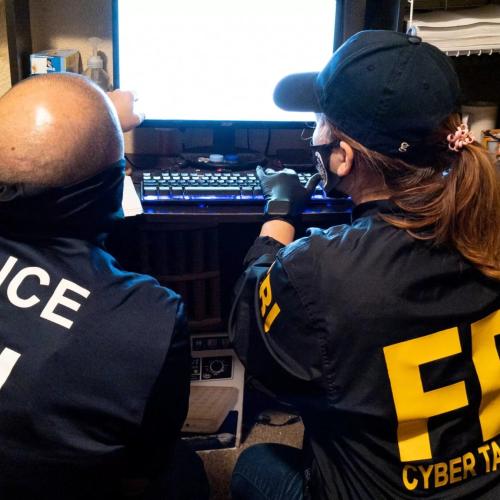
The translation department Edmonds joined was housed in a huge, L-shaped room in the F.B.I.'s Washington field office. Some 200 to 300 translators sat in this vast, open space, listening with headphones to digitally recorded wiretaps. The job carried heavy responsibilities. "You are the front line," Edmonds says. "You are the filter for every piece of intelligence which comes in foreign languages. It's down to you to decide what's important – 'pertinent,' as the F.B.I. calls it, and what's not. You decide what requires verbatim translation, what can be summarized, and what should be marked 'not pertinent' and left alone. By the time this material reaches the agents and analysts, you've already decided what they're going to get." To get this right requires a broad background of cultural and political knowledge: "If you're simply a linguist, you won't be able to discern these differences."
She was surprised to discover that until her arrival the F.B.I. had employed no Turkish-language specialists at all. In early October she was joined by a second Turkish translator, who had been hired despite his having failed language-proficiency tests. Several weeks later, a third Turkish speaker joined the department: Melek Can Dickerson. In her application for the job, she wrote that she had not previously worked in America. In fact, however, she had spent two years as an intern at an organization that figured in many of the wiretaps – the American-Turkish Council.
Much later, after Edmonds was fired, the F.B.I. gave briefings to the House and Senate. One source who was present says bureau officials admitted that Dickerson had concealed her history with the A.T.C., not only in writing but also when interviewed as part of her background security check. In addition, the officials conceded that Dickerson began a friendship at the A.T.C. with one of the F.B.I.'s targets. "They confirmed that when she was supposed to be listening to his calls," says one congressional source. "To me, that was like asking a friend of a mobster to listen to him ordering hits. She might have an allegiance problem. But they seemed not to get it.They blew off their friendship as 'just a social thing.' They told us 'They had been colleagues at work, after all.'"
Shortly after the house visit from the Dickersons, Sibel conveyed her version of the event to her supervisor, Mike Feghali – first orally and then in writing. The "supervisory language specialist" responsible for linguists working in several Middle Eastern languages, Feghali is a Lebanese-American who had previously been an F.B.I. Arabic translator for many years. Edmonds says he told her not to worry.
To monitor every call on every line at a large institution such as the Turkish Embassy in Washington would not be feasible. Inevitably, the F.B.I. listens more carefully to phones used by its targets, such as the Dickersons' purported friend. In the past, the assignment of lines to each translator has always been random: Edmonds might have found herself listening to a potentially significant conversation by a counter-intelligence target one minute and an innocuous discussion about some diplomatic party the next. Now, however, according to Edmonds, Dickerson suggested changing this system, so that each Turkish speaker would be permanently responsible for certain lines. She produced a list of names and numbers, together with her proposals for dividing them up. As Edmonds would later tell her F.B.I. bosses and congressional investigators, Dickerson had assigned the American-Turkish Council and three other "high-value" diplomatic targets, including her friend, to herself.
Edmonds found this arrangement very questionable. But she says that Dickerson spent a large part of that afternoon talking with Feghali inside his office. The next day he announced in an e-mail that he had decided to assign the Turkish wiretaps on exactly the basis recommended by Dickerson.
Like all his translators, Edmonds was effectively working with two, parallel lines of management: Feghali and the senior translation-department bosses above him, on one hand, and, on the other, the investigators and agents who actually used the material she translated. Early in the new year, 2002, Edmonds says, she discovered that Dennis Saccher, the F.B.I.'s special agent in charge of Turkish counter-intelligence, had developed his own, quite separate concerns about Dickerson.
On the morning of January 14, Sibel says, Saccher asked Edmonds to come into his cramped cubicle on the fifth floor. On his desk were printouts from the F.B.I. language-department database. They showed that on numerous occasions Dickerson had marked calls involving her friend and other counter-intelligence targets as "not pertinent," or had submitted only brief summaries stating that they contained nothing of interest. Some of these calls had a duration of more than 15 minutes. Saccher asked Edmonds why she was no longer working on these targets' conversations. She explained the new division of labor, and went on to tell him about the Dickersons' visit the previous month. Saccher was appalled, Edmonds says, telling her, "It sounds like espionage to me."
Saccher asked Edmonds and a colleague, Kevin Taskasen, to go back into the F.B.I.'s digital wiretap archive and listen to some of the calls that Dickerson had marked "not pertinent," and to re-translate as many as they could. Saccher suggested that they all meet with Feghali in a conference room on Friday, February 1. First, however, Edmonds and Taskasen should go to Saccher's office for a short pre-meeting – to review their findings and to discuss how to handle Feghali.
Edmonds had time to listen to numerous calls before the Friday meeting, and some of them sounded important. According to her later secure testimony, in one conversation, recorded shortly after Dickerson reserved the targets' calls for herself, a Turkish official spoke directly to a U.S. State Department staffer. They suggested that the State Department staffer would send a representative at an appointed time to the American-Turkish Council office, at 1111 14th St. NW, where he would be given $7,000 in cash. "She told us she'd heard mention of exchanges of information, dead drops – that kind of thing," a congressional source says. "It was mostly money in exchange for secrets." (A spokesperson for the A.T.C. denies that the organization has ever been involved in espionage or illegal payments. And a spokesperson for the Assembly of Turkish American Associations said that to suggest the group was involved with espionage or illegal payments is "ridiculous.")
Another call allegedly discussed a payment to a Pentagon official, who seemed to be involved in weapons-procurement negotiations. Yet another implied that Turkish groups had been installing doctoral students at U.S. research institutions in order to acquire information about black market nuclear weapons. In fact, much of what Edmonds reportedly heard seemed to concern not state espionage but criminal activity. There was talk, she told investigators, of laundering the profits of large-scale drug deals and of selling classified military technologies to the highest bidder.
Before entering the F.B.I. building for their Friday meeting with Saccher, Edmonds and Taskasen stood for a while on the sidewalk, smoking cigarettes. "Afterwards, we went directly to Saccher's office," Edmonds says. "We talked for a little while, and he said he'd see us downstairs for the meeting with Feghali a few minutes later, at nine A.M." They were barely out of the elevator when Feghali intercepted them. He didn't know they had just come from Saccher's office.
"Come on, we're going to start the meeting," he said. "By the way, Dennis Saccher can't be there, He's been sent out somewhere in the field." Later, Edmonds says, she called Saccher on the internal phone. "Why the hell did you cancel?" she asked. Bewildered, he told her that immediately after she and Taskasen had left his office Feghali phoned him, saying that the conference room was already in use, and that the meeting would have to be postponed.
Edmonds says Saccher also told her that he had been ordered not to touch the case by his own superiors, who called it a "can of worms." Despite his role as special agent in charge of Turkish counter-intelligence, he had even been forbidden to obtain copies of her translations. Saccher had two small children and a settled life in Washington. If he dared to complain, Edmonds says, he risked being assigned "to some fucked-up office in the land of tornadoes."
Instead, Edmonds was ushered into the windowless office of Feghali's colleague, translation-department supervisor Stephanie Bryan. Investigating possible espionage was not a task for which Bryan had been trained or equipped.
Bryan heard Edmonds out and told her to set down her allegations in a confidential memo. Edmonds says that Bryan approved of her writing it at home. Edmonds gave the document to Bryan on Monday, February 11. Early the following afternoon, the supervisor summoned Edmonds. Waiting in a nearby office were two other people, Feghali and Melek Can Dickerson. In front of them were Edmonds's translations of the wiretaps and her memo.
"Stephanie said that she'd taken my memo to the supervisory special agent, Tom Frields," Edmonds says. "He apparently wouldn't even look at it until Mike Feghali and Dickerson and seen it and been given a chance to comment. Stephanie said that, working for the government, there were certain things you didn't do, and criticizing your colleagues' work was one of them. She told me, 'Do you realize what this means? If you were right, the people who did the background checks would have to be investigated. The whole translation department could be shaken up!' Meanwhile, I was going to be investigated for a possible security breach – for putting classified information on my home computer. I was told to go the security department at three P.M."
Before Edmonds left, Dickerson had time to sidle over to her desk. According to Edmonds, she made what sounded like a threat: "Why are you doing this, Sibel? Why don't you just drop it? You know there could be serious consequences. Why put your family in Turkey in danger over this?"
Edmonds says the F.B.I.'s response to her was beginning to shift from indifference to outright retaliation. On February 13, the day after her interview with the bureau security office, three agents came to her home and seized the computer she shared with her husband. "I hadn't had time to back up the data, and I told them that most of my business was on that computer, Matthew Edmonds says.
"An agent called the next morning," Matthew says. "He told me, 'Everything on your computer is destroyed, and we didn't back it up.' They were playing games. When I got the computer back, they had wiped out everything. Four days later, I got a CD-ROM with it all backed up." A lifelong conservative Republican, Matthew was being shocked into changing his worldview. I was so naïve. I mean, what do you do if you think your colleague might be a spy? You go to the F.B.I.! I thought if Sibel's supervisor wasn't fixing this problem she should go to his superior, and so on up the chain. Someone would eventually fix it. I was never a cynical person. I am now."
While the agents were examining the Edmondses' computer, Mike Feghali was writing a memo for his own managers, stating "there was no basis" for Sibel's allegations. A day earlier, an F.B.I. security officer had interviewed Dickerson. A report issued by the O.I.G. in January 2005 states, "The Security Officer did not challenge the co-worker [Dickerson] with respect to any information the co-worker provided, although that information was not consistent with F.B.I. records. In addition.he did not review other crucial F.B.I. records, which would have supported some of Edmonds' allegations." Instead, he treated her claims as "performance issues," and "seemed not to appreciate or investigate the allegation that a co-worker may have been committing espionage.
According to a congressional source, the fact that Edmonds was a mere contract linguist, rather than an agent, made her claims less palatable. "They seemed to be saying, 'We don't need someone like this making trouble,'" the source says. "Yet, to her credit, she really did go up through the chain of command: to her boss, his boss, and so on."
Edmonds reached the top of the language-section management on February 22, when she met with supervisory special agent Tom Frields, a gray-haired veteran who was approaching the end of a long bureau career. At first it seemed he was trying to set her mind at rest: "He told me, I just want to assure you that everything is fine, and as far as you're concerned, your work on this matter is done,'" Edmonds says. "I told him, 'No, it's not fine. My family is worried about possible threats to their safety in Turkey.' His face went through a transformation. He warned me that these issues were classified at the highest level and must not be disclosed to anyone. He started to interrogate me: Who had I told? He said if it was anyone unauthorized he could have me arrested."
Edmonds's meeting with Frields on the 22nd was probably her last chance to save her job. The inspector general's 2005 report disclosed, "Immediately after the meeting, [Frields] began to explore whether the F.B.I. had the option to cease using Edmonds as a contract linguist."
Four days later the bureau's contracting unit told him, "If it was determined that [she] was unsuitable, the F.B.I. would have sufficient reason to terminate her contract." Stymied by Frields, Edmonds tried to go still higher, and on March 7 she was granted an audience with James Caruso, the F.B.I.'s deputy assistant director for counterterrorism and counter-intelligence. Edmonds says he listened politely for more than an hour but took no notes and asked no questions. Afterward, Matthew picked her up and they drove to the Capital Grille for an early lunch. It was only 11:30 and the restaurant was still empty, but as the Edmondses began to study their menus, they saw two men in suits pull up outside in an F.B.I.-issue S.U.V. They came inside and sat down at the next table.
"They just sat and stared at Sibel," Matthew says. "They took out their cell phones, opened them, and put them on the table. They didn't eat or drink – just sat, staring at Sibel, the whole time we were there." Modified cell phones, Sibel knew, are commonly used by bureau agents as a means of making covert recordings.
That afternoon, Sibel wrote to two official bodies with powers to investigate the F.B.I. – the Justice Department's internal affairs division, known as the Office of Professional Responsibility, and its independent watchdog, the O.IG. She went on to send faxes to the Senate Intelligence Committee and Senators Charles Grassley, Republican from Iowa, and Patrick Leahy, Democrat from Vermont, both of whom sit on the Senate Judiciary Committee, to say that she had found evidence of possible national-security breaches.
On March 8, Sibel appeared at a dingy little office in Washington's China Town, where she was polygraphed. According to the 2005 inspector general's report, the purpose of this examination was to discover whether she had made unauthorized disclosures of classified information. "She was not deceptive in her answers," the O.I.G. reported.
Dickerson was polygraphed two weeks later, on March 21, and she too was deemed to have passed. But, according to an official cited in the report, the questions she was asked were vague and unspecific. "The polygraph unit chief admitted that questions directly on point could have been asked but were not." Nevertheless, then and for a long time afterward, "the FBI continued to rely on the [Dickerson] polygraph as support for its position that Edmonds' allegations were unfounded."
Dickerson's polygraph test, however unsatisfactory, seems to have sealed Edmonds' fate at the FBI. The following afternoon, she was asked to wait in Stephanie Bryan's office. "Feghali saw me sitting there and leaned across the doorway," Edmonds says. "He tapped his watch and said, 'In less than an hour you will be fired, you whore.'" A few minutes later, she was summoned to a meeting with Frields. They were joined by Bryan and George Stukenbroeker, the chief of personal security and the man in charge of investigating her case. Edmonds had violated every security rule in the book, Stukenbroeker said.
A hulking security guard arrived to help escort her from the building. Edmonds asked if she could return to her desk to retrieve some photos, including shots of her late father of which she had no copies. Bryan refused, saying, "You'll never set foot in the FBI again."
Bryan promised to forward them, says Edmonds, who never got the photos back. Edmonds looked at Frields. "You are only making your wrongdoing worse, and my case stronger. I will see you very soon," she told him. According to Edmonds, Frields replied, "Soon maybe, but it will be in jail. I'll see you in jail." (When interviewed by the O.I.G., Frields and another witness denied making this comment.)
Matthew was waiting outside. "I'm not a crybaby," Sibel says. "But as I got into my husband's car that afternoon, I was in floods, shaking.
As soon as she returned home from the February meeting where Dickerson allegedly cautioned her not to endanger her family in Turkey, Sibel called her mother and sister in Istanbul, even though it was the middle of the night there. Sibel is the oldest of three sisters. The youngest was studying in America and living with the Edmondses in Alexandria, but the middle sister - whose name Edmonds wishes to protect - was enjoying a successful career at an international travel company based in Istanbul. The 29-year-old was also engaged to be married. Within days of receiving Sibel's call, she flew with her mother to Washington.
Early in April, Sibel and Matthew were having lunch in their favorite Thai restaurant in Old Town Alexandria - a precious chance, with their house now fully occupied with Sibel's family, to share a private moment together. "My phone rang," Sibel says. "It was my middle sister. She said something really bad had happened and I must come back at once."
The sister's Istanbul neighbor had just phoned, saying that two policemen had knocked on her door, asking for the sister's whereabouts. They would not disclose the reason, saying only that it was an "intelligence matter." They also left a document. Sent by Tevfik Asici of the Atakoy Branch Police Station and dated April 11, it was addressed to Sibel's sister and read, "For an important issue your deposition/interrogation is required. If you do not report to the station within 5 days, between 09:00 and 17:00, as is required by Turkish law CMK.132, you will be taken/arrested by force."
In July 2002, with a written recommendation from Senator Grassley, Sibel's sister requested political asylum in the United States. Her application statement cited the threat allegedly made by Dickerson, adding that Sibel would be considered "a spy and a traitor to Turkey under Turkish law, and the Turkish police will use me to get at her. Turkish police are known for using cruelty and torture during interrogation; subjects are kept without advice to family members and often disappear with no trace." Estranged from Sibel, the sister remains in America, unable to go home.
Edmonds did what numerous avowed whistleblowers had done before: she appealed to congress, and she got a lawyer - David Colapinto of the Washington firm of Kohn, Kohn and Calapinto, which advertises itself on its Web site as specializing in cases of this kind. He filed suit under the Freedom of Information Act for full disclosure of what happened inside the bureau, and submitted a claim for damages for the violation of Edmonds's constitutional rights. By August he was ready to depose Douglas Can Dickerson. But before their scheduled deposition, the couple abruptly left the country. Douglas had been assigned to an air-force job in Belgium. Virgil Magee, a U.S. Air Force spokesman in Belgium, confirms that Dickerson remains on active duty in Europe, but refuses to say exactly where.
That fall, Attorney General John Ashcroft tried to wipe out Edmonds's legal action by invoking the state secrets privilege. This recourse, derived form English common law, has never been the subject of any congressional vote or statute. Normally, says Ann Beeson of the A.C.L.U., it is used be the government when it wants to resist the legal "discovery" in court of a specific piece of evidence that it fears might harm national security if publicized. But in Edmonds case Ashcroft argued that the very subject of her lawsuit was a state secret. To air her claims in front of federal judges would jeopardize national security.
This, Beeson says, had distinct advantages for the F.B.I. and the Department of Justice: it meant they did not have to contest the merits of her claims. Moreover, the substance of the arguments they used to justify this level of secrecy was and is secret itself. The full version of Ashcroft's declaration invoking the privilege, filed on October 18, 2002, was classified, and in the public case for blocking Edmonds's action rested on the mere assertion that it would be damaging to proceed. Later, in 2004, the law firm of Motley Rice sought to depose her for a pending case on behalf of the families of 9/11 victims. Immediately, Ashcroft asserted the privilege again. Motley Rice submitted a list of questions it wanted to ask Edmonds, almost all of which were prohibited. Among them: "When and where were you born?," "What languages do you speak?," and "Where did you go to school?"
Edmonds still wanted to fight, and to challenge Ashcroft in court. But over the next few months, the relationship with her lawyers began to suffer. "Let's face it, taking on the D.O.J. is no joke, especially in Washington," Edmonds says.
It was the absolute low point. I tried to find another firm," she says, "but as soon as I mentioned the state-secrets privilege, it was like, 'Turn around, go back, and by the way the clock is running at $450 an hour.' I must have been turned away by 20 firms."
The Dickersons, the Justice Department, and the F.B.I. and its relevant personnel declined to comment for this article. In August 2002, Melek Can Dickerson told the Chicago Tribune, "both the F.B.I. and the Department of Justice have conducted separate investigations of [Edmonds's] claims.. They fired her and, interestingly, they continued my contract."
In September 2002, Colonel James Worth of the Office of the Air Force Inspector General said that, in response to a letter from Edmonds, there had been a "complete and thorough review of Major [Douglas] Dickerson's relationship with the American-Turkish Council" that found "no evidence of any deviation from the scope of his duties." Edmonds says she was not interviewed by those conducting the review.
Edmonds' treatment by the F.B.I. seems to fit two baleful patterns: the first is the bureau's refusal to address potentially disastrous internal-security flaws; the second is a general tendency among national-security agencies to retaliate against whistle-blowers.
Amid the lush greenery of his parents' garden in Plattsmouth, Nebraska; former F.B.I. senior intelligence-operations specialist John Cole describes how these institutional inclinations combined to destroy his career. Now 44, Cole joined the F.B.I. in 1985. By the late 1990's, he was running undercover operations in the Washington area, focusing on counter-terrorism and counter-intelligence. Later, while playing a key role in the 9/11 investigation, he became the F.B.I.'s national counter-intelligence program manager for India, Afghanistan and Pakistan.
Early in the fall of 2001, Cole was asked to assess whether a woman who had applied to work as a translator of Urdu, Pakistan's national language, might pose a risk to security. "The personnel security officer said she thought there was something that didn't seem right," Cole says. "I went through the file, and it stuck out a mile: she was the daughter of a retired Pakistani general who had been their military attaché in Washington." He adds that, to his knowledge, "Every single military attaché they've ever assigned has been a known intelligence officer."
After September 11, this association looked especially risky. The Pakistani intelligence service had trained and supported the Taliban in Afghanistan, and still contained elements who were far from happy with President Pervez Musharraf's pro-American policies. Cole gave his findings to the security officer. "Well done," she said. "You've found it."
A week later, she called Cole again, to say that the woman had started work that morning with a top-secret security clearance. F.B.I. director Robert Mueller had promised Congress that the bureau would hire lots of new Middle Eastern linguists, and normal procedures had been short-circuited as a result. As of July 2005, the woman was still a bureau translator. Sibel Edmonds said she remembers her well - as the leader of a group that pressed for separate restrooms for Muslims.
Cole says the incident was only one of several that caused him to doubt the quality and security of the FBI's counterterrorism efforts, and, like Edmonds, he says he tried to fix the problems he saw by going up the chain of command. Getting rid of an agent of his stature was a lot more difficult than firing a contract linguist. Cole says the retaliation began when, after years of glowing reports, his annual appraisal found his work in one area to be "minimally acceptable." Next, he was placed under investigation by the Office of Professional Responsibility, first on a charge that he lied on a routine background check, and then, after he had disclosed classified information without authorization. Finally, he was demoted to menial roles: "They literally had me doing the Xeroxing" Bitterly disillusioned, he says, he resigned in March 2004.
"According to the terms of our employment, whistle-blowing is an obligation," Cole says, "We sign a piece of paper every year saying we will report any mismanagement or evidence of a possible crime. But the management's schtick is that if you draw attention to the bureau's shortcomings you're disgracing it.
Cole is one of about 50 current and former members of the FBI, C.I.A., National Security Agency, and other bodies who have made contact recently with Sibel Edmonds. Another is Mike German, one of the bravest and most successful counterterrorism agents in the bureau's history, who penetrated a neo-Nazi gang in Los Angeles and a militia group in Seattle and brought them to justice.
German made his bed of nails in 2002 when he was asked to get involved in an investigation into a suspected cell of Islamist terrorists. "I came down and reviewed the case, and it was a complete mess," he says. "There were violations of FBI policy and violations of the law. As someone who had been through successful terrorism prosecutions, I knew you couldn't afford to make mistakes."
Like Cole, German says he thought himself obliged to report what was going wrong, not to penalize other agents but in the hope of putting it right. "I though the bureau would do the right thing: that the case would get back on track, and we'd get the opportunity to take action against the bad guys involved." Instead, he says, he faced the familiar litany of escalating retaliation - including an internal investigation of his own work on the terrorist cell case. "Bear in mind that only a handful of people have ever infiltrated terrorist groups," German says. "You'd think that after 9/11 they might have been interested in that. But word came back to me that I'd never get a counterterrorism case again." He resigned from the bureau in June 2004.
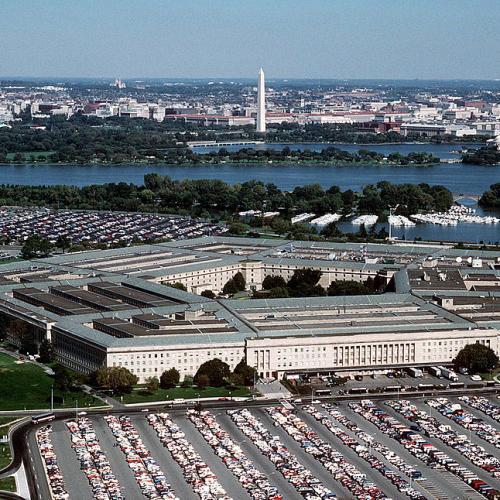
As I talked to whistle-blowers, I had the impression that those treated the worst were among the brightest and best. There could be no clearer example than Russ Tice, and 18-year intelligence veteran who has worked for the Pentagon's Defense Intelligence Agency (D.I.A.) and American's eavesdroppers, the National Security Agency. "I dealt with super-sensitive stuff," he says. "I obviously can't talk about it, but I had operational roles in both Afghanistan and Iraq."
It was at D.I.A. in the spring of 2001 that he wrote a report setting down his suspicions about a junior collage, a Chinese-American who Tice says was living a lavish lifestyle beyond her apparent means. Although she was supposed to be working on a doctorate, he noticed her repeatedly in the office, late at night, reading classified material on an agency computer. "It's not like I obsessed over the issue," Tice says. "I did my job, and then 9/11 happened, and I was a very busy boy."
He moved to the N.S.A. toward the end of 2002. The trigger for his downfall the following April was the arrest of Katrina Leung; the F.B.I. informant accused of spying for China while having an affair with a bureau agent. It prompted Tice to send a classified e-mail to the D.I.A. security section, commenting that the Leung case showed that the F.B.I. was "incompetent." The implication was that the D.I.A. could prove it's competence by fully investigating the junior colleague.
Tice, a big, powerful man with a forthright manner, has to pause to control his emotions when he describes what happened as a consequence. "I was sent for an emergency psychiatric evaluation. I took all the computer tests and passed them with flying colors. But then the shrink says he believes I'm unbalanced. Later he said I'm suffering from "paranoid ideation." He was examined by an independent psychiatrist, who "found no evidence of mental disorder." But he had already been denied access to secure places at N.S.A. As a result, this highly commended technical-espionage expert was put to work in the N.S.A.'s motor pool, "wiping snow off cars, vacuuming them, and driving people around. People looked at me like I had bubonic plague." (The D.I.A. did not respond to a request for comment, and an agency spokesperson said the agency does not discuss personnel matters.)
After about eight months of this purgatory, apparently an attempt to persuade him to resign, he was placed on "administrative leave." Like other whistle-blowers, he tried to redress his treatment. In August 2004, Tice wrote letters to members of the House and Senate. Six days later, the N.S.A. began the formal process which would lead to his getting fired, and to having his clearance revoked permanently. "What happened to me was total Stalin-era tactics," he says. "Everyone I know or ever worked with says I'm perfectly sane. Yet I just don't know what to do next. I've been in intelligence all my life, but without a security clearance, I can't practice my trade."
Echoing Cole and German, one of the congressional staffers who heard Edmonds's secure testimony likens the FBI to a family, "and you don't take your problems outside it. They think they're the best law enforcement agency in the world, that they're beyond criticism and beyond reproach." To an outside observer that ethos alone might explain the use of the state secrets privilege against Edmonds. But, the staffer adds, some of the wiretaps she said she translated "mentioned government officials." Here may lie an entirely different dimension to her case. Vanity Fair has established that around the time the Dickersons visited the Edmondses, in December 2001, Joel Robertz, an F.B.I. special agent in Chicago, contacted Sibel and asked her to review some wiretaps. Some were several years old, others more recent; all had been generated by a counter-intelligence that had its start in 1997. "It became apparent that Chicago was actually the center of what was going on."
Its subject was explosive; what sounded like attempts to bribe elected members of Congress, both Democrat and Republican. "There was pressure within the bureau for a special prosecutor to be appointed and take the case on, "the official says. Instead, his colleagues were told to alter the thrust of their investigation - away from elected politicians and toward appointed officials. "This is the reason why Ashcroft reacted to Sibel in such an extreme fashion," he says "It was to keep this from coming out."
In her secure testimony, Edmonds disclosed some of what she recalled hearing. In all, says a source who was present, she managed to listen to more than 40 of the Chicago recordings supplied by Robertz. Many involved an F.B.I. target at the city's large Turkish Consulate, as well as members of the American-Turkish Consulate, as well as members of the American-Turkish Council and the Assembly of Turkish American Associates.
Some of the calls reportedly contained what sounded like references to large scale drug shipments and other crimes. To a person who knew nothing about their context, the details were confusing and it wasn't always clear what might be significant. One name, however, apparently stood out - a man the Turkish callers often referred to by the nickname "Denny boy." It was the Republican congressman from Illinois and Speaker of the House, Dennis Hastert. According to some of the wiretaps, the F.B.I.'s targets had arranged for tens of thousands of dollars to be paid to Hastert's campaign funds in small checks. Under Federal Election Commission rules, donations of less than $200 are not required to be itemized in public filings.
Hastert himself was never heard in the recordings, Edmonds told investigators, and it is possible that the claims of covert payments were hollow boasts. Nevertheless, an examination of Hastert's federal filings shows that the level of un-itemized payments his campaigns received over many years was relatively high. Between April 1996 and December 2002, un-itemized personal donations to the Hastert for Congress Committee amounted to $483,000. In contrast, un-itemized contributions in the same period to the committee run on behalf of the House majority leader, Tom Delay, Republican of Texas, were only $99,000. An analysis of the filings of four other senior Republicans shows that only one, Clay Shaw of Florida, declared a higher total in un-itemized donations than Hastert over the same period: $552,000. The other three declared far less. Energy and Commerce Committee chairman Joe Barton, of Texas, claimed $265,000; Armed Services Committee chairman Duncan Hunter, of California, got $212,000; and Ways and Means Committee chairman Bill Thomas, of California, recorded $110,000.
Edmonds reportedly added that the recordings also contained repeated references to Hastert's flip-flop, in the fall of 2000, over an issue which remains of intense concern to the Turkish government - the continuing campaign to have Congress designate the killings of Armenians in Turkey between 1915 and 1923 a genocide. For many years, attempts had been made to get the house to pass a genocide resolution, but they never got anywhere until August 2000, when Hastert, as Speaker, announced that he would give it his backing and see that it received a full house vote. He had a clear political reason, as analysts noted at the time: a California Republican incumbent, locked in a tight congressional race, was looking to win over his district's large Armenian community. Thanks to Hastert, the resolution, vehemently opposed by the Turks, passed the International Relations Committee by a large majority. Then, on October 19, minutes before the full House vote, Hastert withdrew it.
At the time, he explained his decision by saying that he had received a letter from President Clinton arguing that the genocide resolution, if passed, would harm U.S. interests. Again, the reported content of the Chicago wiretaps may well have been sheer bravado, and there is no evidence that any payment was ever made to Hastert or his campaign. Nevertheless, a senior official at the Turkish Consulate is said to have claimed in one recording that the price for Hastert to withdraw the resolution would have been at least $500,000.
Hastert's spokesman says the congressman withdrew the genocide resolution only because of the approach from Clinton, "and to insinuate anything else just doesn't make any sense." He adds that Hastert has no affiliation with the A.T.C. or other groups reportedly mentioned in the wiretaps: "He does not know these organizations." Hastert is "unaware of Turkish interests making donations," the spokesman says, and his staff has "not seen any pattern of donors with foreign names."
For more than years after Edmonds was fired, the Office of the Inspector General's inquiry ground on. At last, in July 2004, its report was completed - and promptly labeled classified at the behest of the F.B.I. It took months of further pressure before a redacted, unclassified version was finally issued, in January 2005. It seemed to provide stunning vindication of Edmond's credibility.
"Many of Edmonds' core allegations relating to the co-worker [Melek Can Dickerson] were supported by either documentary evidence or witnesses," the report said. "We believe that the F.B.I. should have investigated the allegations more thoroughly."
The F.B.I. had justified firing Edmonds on the grounds that she had a "disruptive effect," the report went on. However, "this disruption related primarily to Edmonds' aggressive pursuit of her allegations of misconduct, which the F.B.I. did not believe were supported and which it did not adequately investigate. In fact, as we described throughout our report, many of her allegations had basis in fact," the report read. "We believe . that the F.B.I. did not take them seriously enough, and that her allegations were, in fact, the most significant factor in the F.B.I.'s decision to terminate her services."
Meanwhile, Edmonds had new lawyers: the A.C.L.U.'s Ann Beeson, who is leading the challenge to the state-secrets privilege, and Mark Zaid, a private attorney who specializes in national-security issues. Zaid has filed a $10 million tort suit, citing the threats to Edmonds's family, her inability to look after her real-estate and business interests in Turkey, and a series of articles in the Turkish press that have vilified her.
In July 2004, a federal district court had ruled in favor of the government's use of the state-secrets privilege. Like Ashcroft's declaration, its opinion contained no specific facts. Next came a bizarre hearing in the D.C. appeals court in April 2005. The room was cleared of reporters while Beeson spoke for 15 minutes. Then Beeson and Edmonds were also expelled to make way for the Department of Justice lawyers, who addressed the judges in secret. Two weeks later, the court rejected Edmond's appeal, without expanding on the district court's opinion. At press time, she was set to file a brief with the U.S. Supreme Court. If the court agrees to take the case, the government's reasons for its actions may finally be forced into the open; legal experts say the Supreme Court has never allowed secret arguments.
A week after the April appeal hearing, Edmonds gathered more than 30 whistle-blowers from the F.B.I., C.I.A., National Security Agency, Department of Homeland Security, and other agencies to brief staffers from the House and Senate. Among the whistle-blowers were Daniel Ellsberg, who leaked the Pentagon Papers to the New York Times in 1971, and Coleen Rowley, the F.B.I. agent from Minneapolis who complained that Washington ignored local agents who in August 2001 had raised concerns about a flight student named Zacharias Moussoui, who has since admitted being an al-Qaeda terrorist.
Many of those present had unearthed apparent breaches of national security; many aid their careers had been wrecked as a result. At a press conference after the briefings, Congressman Edward Markey, Democrat of Massachusetts, praised Edmonds and her colleagues as "national heroes," pledging that he would introduce a bill to make it a crime for any agency manager to retaliate against such individuals. Afterward, the whistle-blowers mingled over hors d'oeuvres and explored their common ground and experiences. By July, they are working to formalize their not-for-profit campaign group, the National Security Whistleblowers Coalition. "When they took on Sibel," says Mike German, who is now the coalition's congressional liaison, "they made the wrong woman mad."
"I'm going to keep pushing this as long as I can, but I'm not going to get obsessional," Edmonds says. "There are other things I want to do with my life. But the day the Iranians tried to arrest me, my father told me, "Sibel, you only live your life once. How do you choose to live? According to your principles, or in fear?" I have never forgotten those words."
Copyright Vanity Fair. Reprinted for Fair Use educational purposes only.
Sibel Edmonds Vanity Fair Article