
















































The Truth About the Drug Companies
By Marcia Angell, M.D.
10-Page Summary Exposes a Major Health Cover-up
For a two-page summary of the health cover-up, click here
"The combined profits for the ten drug companies in the Fortune 500 ($35.9 billion) were more than the profits for all the other 490 businesses put together ($33.7 billion) [in 2002]. Over the past two decades the pharmaceutical industry has moved very far from its original high purpose of discovering and producing useful new drugs. Now primarily a marketing machine to sell drugs of dubious benefit, this industry uses its wealth and power to co-opt every institution that might stand in its way, including the US Congress, the FDA, academic medical centers, and the medical profession itself."

Dr. Marcia Angell is a former editor in chief of the prestigious New England Journal of Medicine. She is currently a senior lecturer at Harvard Medical School. The below eye-opening essay by Dr. Angell covers essential points in her highly acclaimed book The Truth About the Drug Companies.
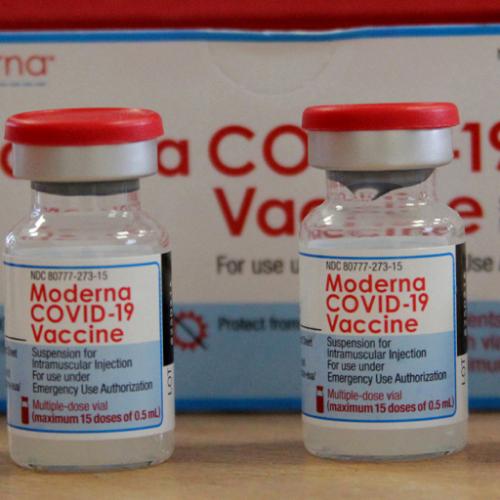
Though this revealing book was published in 2005, the major corruption in the pharmaceutical industry it exposes has, if anything, gotten worse. And it is quite apparent that vaccines are the new gold mine, cleverly promoted as "free" when it is your tax money that pays for them. Below are key excerpts from this compelling book and links to the book reviews of three leading US newspapers:
New York Times: "A scorching indictment of drug companies and their research and business practices ... tough, persuasive and troubling."
Boston Globe: "A sober, clear-eyed attack on the excesses of drug company power ... a lucid, persuasive, and highly important book."
Washington Post: "Always authoritative ... [this book] delivers the message—that drug-company money and power is corrupting American medicine—in a convincing, no-nonsense manner."
Part 1
Every day Americans are subjected to a barrage of advertising by the pharmaceutical industry. Mixed in with the pitches for a particular drug—usually featuring beautiful people enjoying themselves in the great outdoors—is a more general message.
Boiled down to its essentials, it is this: "Yes, prescription drugs are expensive, but that shows how valuable they are. Besides, our research and development costs are enormous. We need to cover them. As 'research-based' companies, we turn out a steady stream of innovative medicines that lengthen life, enhance its quality, and avert more expensive medical care. You are the beneficiaries of this ongoing achievement of the American free enterprise system. So be grateful ... and pay up." More prosaically, what the industry is saying is that you get what you pay for.
Is any of this true? Well, the first part certainly is. Prescription drug costs are indeed high—and rising fast. Americans now spend a staggering $200 billion a year on prescription drugs, and that figure is growing at a rate of about 12 percent a year. [1] Drugs are the fastest-growing part of the health care bill—which itself is rising at an alarming rate. The increase in drug spending reflects, in almost equal parts, the facts that people are taking a lot more drugs than they used to, that those drugs are more likely to be expensive new ones instead of older, cheaper ones, and that the prices of the most heavily prescribed drugs are routinely jacked up.
Before its patent ran out, for example, the price of Schering-Plough's top-selling allergy pill, Claritin, was raised thirteen times over five years, for a cumulative increase of more than 50 percent. [2] As a spokeswoman for one company explained, "Price increases are not uncommon in the industry. This allows us to be able to invest in R&D." [3] In 2002, the average price of the fifty drugs most used by senior citizens was nearly $1,500 per drug for a year's supply. (Pricing varies greatly, but this refers to what the companies call the average wholesale price, which is usually pretty close to what an individual without insurance pays at the pharmacy.)
Paying for prescription drugs is no longer a problem just for poor people. As the economy continues to struggle ... employers are requiring workers to pay more of the costs themselves. Since prescription drug costs are rising so fast, payers are particularly eager to get out from under them by shifting costs to individuals. The result is that more people have to pay a greater fraction of their drug bills out of pocket. And that packs a wallop.
Many of them simply can't do it. They trade off drugs against home heating or food. Some people try to string out their drugs by taking them less often than prescribed, or sharing them with a spouse. Others, too embarrassed to admit that they can't afford to pay for drugs, leave their doctors' offices with prescriptions in hand but don't have them filled. Not only do these patients go without needed treatment but their doctors sometimes wrongly conclude that the drugs they prescribed haven't worked and prescribe yet others—thus compounding the problem.
The people hurting most are the elderly. When Medicare was enacted in 1965, people took far fewer prescription drugs and they were cheap. For that reason, no one thought it necessary to include an outpatient prescription drug benefit in the program. In those days, senior citizens could generally afford to buy whatever drugs they needed out of pocket. Approximately half to two thirds of the elderly have supplementary insurance that partly covers prescription drugs, but that percentage is dropping as employers and insurers decide it is a losing proposition for them.
For obvious reasons, the elderly tend to need more prescription drugs than younger people—mainly for chronic conditions like arthritis, diabetes, high blood pressure, and elevated cholesterol. In 2001, nearly one in four seniors reported that they skipped doses or did not fill prescriptions because of the cost. (That fraction is almost certainly higher now.) Sadly, the frailest are the least likely to have supplementary insurance.
Furthermore, in one of the more perverse of the pharmaceutical industry's practices, prices are much higher for precisely the people who most need the drugs and can least afford them. The industry charges Medicare recipients without supplementary insurance much more than it does favored customers, such as large HMOs or the Veterans Affairs (VA) system. Because the latter buy in bulk, they can bargain for steep discounts or rebates. People without insurance have no bargaining power; and so they pay the highest prices.
In the past two years, we have started to see, for the first time, the beginnings of public resistance to rapacious pricing and other dubious practices of the pharmaceutical industry. It is mainly because of this resistance that drug companies are now blanketing us with public relations messages. And the magic words, repeated over and over like an incantation, are research, innovation, and American. Research. Innovation. American. It makes a great story.
But while the rhetoric is stirring, it has very little to do with reality. First, research and development (R&D) is a relatively small part of the budgets of the big drug companies—dwarfed by their vast expenditures on marketing and administration, and smaller even than profits. In fact, year after year, for over two decades, this industry has been far and away the most profitable in the United States. (In 2003, for the first time, the industry lost its first-place position, coming in third, behind "mining, crude oil production," and "commercial banks.") The prices drug companies charge have little relationship to the costs of making the drugs and could be cut dramatically without coming anywhere close to threatening R&D.
Second, the pharmaceutical industry is not especially innovative. As hard as it is to believe, only a handful of truly important drugs have been brought to market in recent years, and they were mostly based on taxpayer-funded research at academic institutions, small biotechnology companies, or the National Institutes of Health (NIH).
The great majority of "new" drugs are not new at all but merely variations of older drugs already on the market. These are called "me-too" drugs. The idea is to grab a share of an established, lucrative market by producing something very similar to a top-selling drug. For instance, we now have six statins (Mevacor, Lipitor, Zocor, Pravachol, Lescol, and the newest, Crestor) on the market to lower cholesterol, all variants of the first. As Dr. Sharon Levine, associate executive director of the Kaiser Permanente Medical Group, put it:
"If I'm a manufacturer and I can change one molecule and get another twenty years of patent rights, and convince physicians to prescribe and consumers to demand the next form of Prilosec, or weekly Prozac instead of daily Prozac, just as my patent expires, then why would I be spending money on a lot less certain endeavor, which is looking for brand-new drugs?" [4]
Third, the industry is hardly a model of American free enterprise. To be sure, it is free to decide which drugs to develop (me-too drugs instead of innovative ones, for instance), and it is free to price them as high as the traffic will bear, but it is utterly dependent on government-granted monopolies—in the form of patents and Food and Drug Administration (FDA)-approved exclusive marketing rights. If it is not particularly innovative in discovering new drugs, it is highly innovative—and aggressive—in dreaming up ways to extend its monopoly rights.
And there is nothing peculiarly American about this industry. It is the very essence of a global enterprise. Roughly half of the largest drug companies are based in Europe. (The exact count shifts because of mergers.) In 2002, the top ten were the American companies Pfizer, Merck, Johnson & Johnson, Bristol-Myers Squibb, and Wyeth (formerly American Home Products); the British companies GlaxoSmithKline and AstraZeneca; the Swiss companies Novartis and Roche; and the French company Aventis (which in 2004 merged with another French company, Sanafi Synthelabo, putting it in third place). [5] All are much alike in their operations. All price their drugs much higher here than in other markets.
Since the United States is the major profit center, it is simply good public relations for drug companies to pass themselves off as American, whether they are or not. It is true, however, that some of the European companies are now locating their R&D operations in the United States. They claim the reason for this is that we don't regulate prices, as does much of the rest of the world. But more likely it is that they want to feed on the unparalleled research output of American universities and the NIH. In other words, it's not private enterprise that draws them here but the very opposite—our publicly sponsored research enterprise.
Over the past two decades the pharmaceutical industry has moved very far from its original high purpose of discovering and producing useful new drugs. Now primarily a marketing machine to sell drugs of dubious benefit, this industry uses its wealth and power to co-opt every institution that might stand in its way, including the US Congress, the FDA, academic medical centers, and the medical profession itself. (Most of its marketing efforts are focused on influencing doctors, since they must write the prescriptions.)
If prescription drugs were like ordinary consumer goods, all this might not matter very much. But drugs are different. People depend on them for their health and even their lives. In the words of Senator Debbie Stabenow (D-Mich.), "It's not like buying a car or tennis shoes or peanut butter." People need to know that there are some checks and balances on this industry, so that its quest for profits doesn't push every other consideration aside. But there aren't such checks and balances.
Part 2
What does the eight-hundred-pound gorilla do? Anything it wants to.
What's true of the eight-hundred-pound gorilla is true of the colossus that is the pharmaceutical industry. It is used to doing pretty much what it wants to do. The watershed year was 1980. Before then, it was a good business, but afterward, it was a stupendous one. From 1960 to 1980, prescription drug sales were fairly static as a percent of US gross domestic product, but from 1980 to 2000, they tripled. They now stand at more than $200 billion a year. [6] [As of 2020, that number had increased another 75% to $348 billion] Of the many events that contributed to the industry's great and good fortune, none had to do with the quality of the drugs the companies were selling.
The claim that drugs are a $200 billion industry is an understatement. According to government sources, that is roughly how much Americans spent on prescription drugs in 2002. That figure refers to direct consumer purchases at drugstores and mail-order pharmacies (whether paid for out of pocket or not), and it includes the nearly 25 percent markup for wholesalers, pharmacists, and other middlemen and retailers. But it does not include the large amounts spent for drugs administered in hospitals, nursing homes, or doctors' offices (as is the case for many cancer drugs). In most analyses, they are allocated to costs for those facilities.
Drug company revenues (or sales) are a little different, at least as they are reported in summaries of corporate annual reports. They usually refer to a company's worldwide sales, including those to health facilities. But they do not include the revenues of middlemen and retailers.
Perhaps the most quoted source of statistics on the pharmaceutical industry, IMS Health, estimated total worldwide sales for prescription drugs to be about $400 billion in 2002. About half were in the United States. So the $200 billion colossus is really a $400 billion megacolossus.
The election of Ronald Reagan in 1980 was perhaps the fundamental element in the rapid rise of big pharma—the collective name for the largest drug companies. With the Reagan administration came a strong pro-business shift not only in government policies but in society at large. And with the shift, the public attitude toward great wealth changed. Before then, there was something faintly disreputable about really big fortunes. You could choose to do well or you could choose to do good, but most people who had any choice in the matter thought it difficult to do both.
That belief was particularly strong among scientists and other intellectuals. They could choose to live a comfortable but not luxurious life in academia, hoping to do exciting cutting-edge research, or they could "sell out" to industry and do less important but more remunerative work.
Starting in the Reagan years and continuing through the 1990s, Americans changed their tune. It became not only reputable to be wealthy, but something close to virtuous. There were "winners" and there were "losers," and the winners were rich and deserved to be. The gap between the rich and poor, which had been narrowing since World War II, suddenly began to widen again, until today it is a chasm.
The pharmaceutical industry and its CEOs quickly joined the ranks of the winners as a result of a number of business-friendly government actions. I won't enumerate all of them, but two are especially important. Beginning in 1980, Congress enacted a series of laws designed to speed the translation of tax-supported basic research into useful new products—a process sometimes referred to as "technology transfer." The goal was also to improve the position of American-owned high-tech businesses in world markets.
The most important of these laws is known as the Bayh-Dole Act. Bayh-Dole enabled universities and small businesses to patent discoveries emanating from research sponsored by the National Institutes of Health, the major distributor of tax dollars for medical research, and then to grant exclusive licenses to drug companies. Until then, taxpayer-financed discoveries were in the public domain, available to any company that wanted to use them. But now universities, where most NIH-sponsored work is carried out, can patent and license their discoveries, and charge royalties. Similar legislation permitted the NIH itself to enter into deals with drug companies that would directly transfer NIH discoveries to industry.
Bayh-Dole gave a tremendous boost to the nascent biotechnology industry, as well as to big pharma. Small biotech companies, many of them founded by university researchers to exploit their discoveries, proliferated rapidly. They now ring the major academic research institutions and often carry out the initial phases of drug development, hoping for lucrative deals with big drug companies that can market the new drugs. Usually both academic researchers and their institutions own equity in the biotechnology companies they are involved with. Thus, when a patent held by a university or a small biotech company is eventually licensed to a big drug company, all parties cash in on the public investment in research.
These laws mean that drug companies no longer have to rely on their own research for new drugs, and few of the large ones do. Increasingly, they rely on academia, small biotech startup companies, and the NIH for that. [7] At least a third of drugs marketed by the major drug companies are now licensed from universities or small biotech companies, and these tend to be the most innovative ones. [8] While Bayh-Dole was clearly a bonanza for big pharma and the biotech industry, whether its enactment was a net benefit to the public is arguable.
The Reagan years and Bayh-Dole also transformed the ethos of medical schools and teaching hospitals. These nonprofit institutions started to see themselves as "partners" of industry, and they became just as enthusiastic as any entrepreneur about the opportunities to parlay their discoveries into financial gain. Faculty researchers were encouraged to obtain patents on their work (which were assigned to their universities), and they shared in the royalties.
Many medical schools and teaching hospitals set up "technology transfer" offices to help in this activity and capitalize on faculty discoveries. As the entrepreneurial spirit grew during the 1990s, medical school faculty entered into other lucrative financial arrangements with drug companies, as did their parent institutions.
One of the results has been a growing pro-industry bias in medical research—exactly where such bias doesn't belong. Faculty members who had earlier contented themselves with what was once referred to as a "threadbare but genteel" lifestyle began to ask themselves, in the words of my grandmother, "If you're so smart, why aren't you rich?" Medical schools and teaching hospitals, for their part, put more resources into searching for commercial opportunities.
Starting in 1984, with legislation known as the Hatch-Waxman Act, Congress passed another series of laws that were just as big a bonanza for the pharmaceutical industry. These laws extended monopoly rights for brand-name drugs. Exclusivity is the lifeblood of the industry because it means that no other company may sell the same drug for a set period. After exclusive marketing rights expire, copies (called generic drugs) enter the market, and the price usually falls to as little as 20 percent of what it was. [9]
There are two forms of monopoly rights—patents granted by the US Patent and Trade Office (USPTO) and those exclusivity granted by the FDA. While related, they operate somewhat independently, almost as backups for each other. Hatch-Waxman ... was meant mainly to stimulate the foundering generic industry by short-circuiting some of the FDA requirements for bringing generic drugs to market. While successful in doing that, Hatch-Waxman also lengthened the patent life for brand-name drugs. Since then, industry lawyers have manipulated some of its provisions to extend patents far longer than the lawmakers intended.
In the 1990s, Congress enacted other laws that further increased the patent life of brand-name drugs. Drug companies now employ small armies of lawyers to milk these laws for all they're worth—and they're worth a lot. The result is that the effective patent life of brand-name drugs increased from about eight years in 1980 to about fourteen years in 2000. [10] For a blockbuster—usually defined as a drug with sales of over a billion dollars a year (like Lipitor or Celebrex or Zoloft)—those six years of additional exclusivity are golden. They can add billions of dollars to sales—enough to buy a lot of lawyers and have plenty of change left over. No wonder big pharma will do almost anything to protect exclusive marketing rights, despite the fact that doing so flies in the face of all its rhetoric about the free market.
As their profits skyrocketed during the 1980s and 1990s, so did the political power of drug companies. By 1990, the industry had assumed its present contours as a business with unprecedented control over its own fortunes. For example, if it didn't like something about the FDA, the federal agency that is supposed to regulate the industry, it could change it through direct pressure or through its friends in Congress.
The top ten drug companies (which included European companies) had profits of nearly 25 percent of sales in 1990, and except for a dip at the time of President Bill Clinton's health care reform proposal, profits as a percentage of sales remained about the same for the next decade. (Of course, in absolute terms, as sales mounted, so did profits.)
In 2001, the ten American drug companies in the Fortune 500 list ranked far above all other American industries in average net return, whether as a percentage of sales (18.5 percent), of assets (16.3 percent), or of shareholders' equity (33.2 percent). These are astonishing margins. For comparison, the median net return for all other industries in the Fortune 500 was only 3.3 percent of sales. Commercial banking, itself no slouch as an aggressive industry with many friends in high places, was a distant second, at 13.5 percent of sales. [11]
In 2002, as the economic downturn continued, big pharma showed only a slight drop in profits—from 18.5 to 17.0 percent of sales. The most startling fact about 2002 is that the combined profits for the ten drug companies in the Fortune 500 ($35.9 billion) were more than the profits for all the other 490 businesses put together ($33.7 billion). [12] In 2003 profits of the Fortune 500 drug companies dropped to 14.3 percent of sales, still well above the median for all industries of 4.6 percent for that year. When I say this is a profitable industry, I mean really profitable. It is difficult to conceive of how awash in money big pharma is.
Drug industry expenditures for research and development, while large, were consistently far less than profits. For the top ten companies, they amounted to only 11 percent of sales in 1990, rising slightly to 14 percent in 2000. The biggest single item in the budget is neither R&D nor even profits but something usually called "marketing and administration." In 1990, a staggering 36 percent of sales revenues went into this category, and that proportion remained about the same for over a decade. [13] Note that this is two and a half times the expenditures for R&D.
These figures are drawn from the industry's own annual reports to the Securities and Exchange Commission (SEC) and to stockholders, but what actually goes into these categories is not at all clear, because drug companies hold that information very close to their chests. It is likely, for instance, that R&D includes many activities most people would consider marketing, but no one can know for sure.
For its part, "marketing and administration" is a gigantic black box that probably includes what the industry calls "education," as well as advertising and promotion, legal costs, and executive salaries—which are whopping. According to a report by the non-profit group Families USA, the former chairman and CEO of Bristol-Myers Squibb, Charles A. Heimbold Jr., made $74,890,918 in 2001, not counting his $76,095,611 worth of unexercised stock options. The chairman of Wyeth made $40,521,011, exclusive of his $40,629,459 in stock options. And so on. [14]
Part 3
If 1980 was a watershed year for the pharmaceutical industry, 2000 may very well turn out to have been another one—the year things began to go wrong. As the booming economy of the late 1990s turned sour, many successful businesses found themselves in trouble. And as tax revenues dropped, state governments also found themselves in trouble. In one respect, the pharmaceutical industry is well protected against the downturn, since it has so much wealth and power. But in another respect, it is peculiarly vulnerable, since it depends on employer-sponsored insurance and state-run Medicaid programs for much of its revenues. When employers and states are in trouble, so is big pharma.
And sure enough, in just the past couple of years, employers and the private health insurers with whom they contract have started to push back against drug costs. Most big managed care plans now bargain for steep price discounts. Most have also instituted three-tiered coverage for prescription drugs—full coverage for generic drugs, partial coverage for useful brand-name drugs, and no coverage for expensive drugs that offer no added benefit over cheaper ones. These lists of preferred drugs are called formularies, and they are an increasingly important method for containing drug costs. Big pharma is feeling the effects of these measures, although not surprisingly, it has become adept at manipulating the system—mainly by inducing doctors or health plans to put expensive, brand-name drugs on formularies.
State governments, too, are looking for ways to cut their drug costs. Some state legislatures are drafting measures that would permit them to regulate prescription drug prices for state employees, Medicaid recipients, and the uninsured. Like managed care plans, they are creating formularies of preferred drugs. The industry is fighting these efforts—mainly with its legions of lobbyists and lawyers. It fought the state of Maine all the way to the US Supreme Court, which in 2003 upheld Maine's right to bargain with drug companies for lower prices, while leaving open the details. But that war has just begun, and it promises to go on for years and get very ugly.
Recently the public has shown signs of being fed up. The fact that Americans pay much more for prescription drugs than Europeans and Canadians is now widely known. An estimated one to two million Americans buy their medicines from Canadian drugstores over the Internet, despite the fact that in 1987, in response to heavy industry lobbying, a compliant Congress had made it illegal for anyone other than manufacturers to import prescription drugs from other countries. [15] In addition, there is a brisk traffic in bus trips for people in border states, particularly the elderly, to travel to Canada or Mexico to buy prescription drugs. Their resentment is palpable, and they constitute a powerful voter block—a fact not lost on Congress or state legislatures.
The industry faces other, less familiar problems. It happens that, by chance, some of the top-selling drugs—with combined sales of around $35 billion a year—are scheduled to go off patent within a few years of one another. [16] This drop over the cliff began in 2001, with the expiration of Eli Lilly's patent on its blockbuster antidepressant Prozac. In the same year, AstraZeneca lost its patent on Prilosec, the original "purple pill" for heartburn, which at its peak brought in a stunning $6 billion a year. Bristol-Myers Squibb lost its best-selling diabetes drug, Glucophage.
The unusual cluster of expirations will continue for another couple of years. While it represents a huge loss to the industry as a whole, for some companies it's a disaster. Schering-Plough's blockbuster allergy drug, Claritin, brought in fully a third of that company's revenues before its patent expired in 2002. [17] Claritin is now sold over the counter for much less than its prescription price. So far, the company has been unable to make up for the loss by trying to switch Claritin users to Clarinex—a drug that is virtually identical but has the advantage of still being on patent.
Even worse is the fact that there are very few drugs in the pipeline ready to take the place of blockbusters going off patent. In fact, that is the biggest problem facing the industry today, and its darkest secret. All the public relations about innovation is meant to obscure precisely this fact. The stream of new drugs has slowed to a trickle, and few of them are innovative in any sense of that word. Instead, the great majority are variations of oldies but goodies—"me-too" drugs.
Of the 78 drugs approved by the FDA in 2002, only 17 contained new active ingredients, and only seven of these were classified by the FDA as improvements over older drugs. The other 71 drugs approved that year were variations of old drugs or deemed no better than drugs already on the market. In other words, they were me-too drugs. Seven of 78 is not much of a yield. Furthermore, of those seven, not one came from a major US drug company. [18]
For the first time, in just a few short years, the gigantic pharmaceutical industry is finding itself in serious difficulty. It is facing, as one industry spokesman put it, "a perfect storm." To be sure, profits are still beyond anything most other industries could hope for, but they have recently fallen, and for some companies they fell a lot. And that is what matters to investors. For some companies, stock prices have plummeted.
Nevertheless, the industry keeps promising a bright new day. It bases its reassurances on the notion that the mapping of the human genome and the accompanying burst in genetic research will yield a cornucopia of important new drugs. Left unsaid is the fact that big pharma is depending on government, universities, and small biotech companies for that innovation. While there is no doubt that genetic discoveries will lead to treatments, the fact remains that it will probably be years before the basic research pays off with new drugs. In the meantime, the once-solid foundations of the big pharma colossus are shaking.
The hints of trouble and the public's growing resentment over high prices are producing the first cracks in the industry's formerly firm support in Washington. In 2000, Congress passed legislation that would have closed some of the loopholes in Hatch-Waxman and also permitted American pharmacies, as well as individuals, to import drugs from certain countries where prices are lower.
In particular, they could buy back FDA-approved drugs from Canada that had been exported there. It sounds silly to "reimport" drugs that are marketed in the United States, but even with the added transaction costs, doing so is cheaper than buying them here. But the bill required the secretary of health and human services to certify that the practice would not pose any "added risk" to the public, and secretaries in both the Clinton and Bush administrations, under pressure from the industry, refused to do that.
The industry is also being hit with a tidal wave of government investigations and civil and criminal lawsuits. The litany of charges includes illegally overcharging Medicaid and Medicare, paying kickbacks to doctors, engaging in anticompetitive practices, colluding with generic companies to keep generic drugs off the market, illegally promoting drugs for unapproved uses, engaging in misleading direct-to-consumer advertising, and, of course, covering up evidence.
Some of the settlements have been huge. TAP Pharmaceuticals, for instance, paid $875 million to settle civil and criminal charges of Medicaid and Medicare fraud in the marketing of its prostate cancer drug, Lupron. [19] All of these efforts could be summed up as increasingly desperate marketing and patent games, activities that always skirted the edge of legality but now are sometimes well on the other side.
How is the pharmaceutical industry responding to its difficulties? One could hope drug companies would decide to make some changes—trim their prices, or at least make them more equitable, and put more of their money into trying to discover genuinely innovative drugs, instead of just talking about it. But that is not what is happening. Instead, drug companies are doing more of what got them into this situation. They are marketing their me-too drugs even more relentlessly. They are pushing even harder to extend their monopolies on top-selling drugs. And they are pouring more money into lobbying and political campaigns. As for innovation, they are still waiting for Godot.
The news is not all bad for the industry. The Medicare prescription drug benefit enacted in 2003, and scheduled to go into effect in 2006, promises a windfall for big pharma since it forbids the government from negotiating prices. The immediate jump in pharmaceutical stock prices after the bill passed indicated that the industry and investors were well aware of the windfall.
This is an industry that in some ways is like the Wizard of Oz—still full of bluster but now being exposed as something far different from its image. Instead of being an engine of innovation, it is a vast marketing machine. Instead of being a free market success story, it lives off government-funded research and monopoly rights.
Yet this industry occupies an essential role in the American health care system, and it performs a valuable function, if not in discovering important new drugs at least in developing them and bringing them to market. But big pharma is extravagantly rewarded for its relatively modest functions. We get nowhere near our money's worth. The United States can no longer afford it in its present form.
Clearly, the pharmaceutical industry is due for fundamental reform. Reform will have to extend beyond the industry to the agencies and institutions it has co-opted, including the FDA and the medical profession and its teaching centers. In my book, The Truth About the Drug Companies, I discuss the major reforms that will be necessary.
For example, we need to get the industry to focus on discovering truly innovative drugs instead of turning out me-too drugs (and spending billions of dollars to promote them as though they were miracles). The me-too business is made possible by the fact that the FDA usually approves a drug only if it is better than a placebo. It needn't be better than an older drug already on the market to treat the same condition; in fact, it may be worse. There is no way of knowing, since companies generally do not test their new drugs against older ones for the same conditions at equivalent doses. (For obvious reasons, they would rather not find the answer.) They should be required to do so.
The me-too market would collapse virtually overnight if the FDA made approval of new drugs contingent on their being better in some important way than older drugs already on the market. Probably very few new drugs could meet that test. By default, then, drug companies would have to concentrate on finding truly innovative drugs, and we would finally find out whether this much-vaunted industry is turning out better drugs. A welcome by-product of this reform is that it would also reduce the incessant and enormously expensive marketing necessary to jockey for position in the me-too market. Genuinely important new drugs do not need much promotion (imagine having to advertise a cure for cancer).
A second important reform would be to require drug companies to open their books. Drug companies reveal very little about the most crucial aspects of their business. We know next to nothing about how much they spend to bring each drug to market or what they spend it on. (We know that it is not $802 million, as some industry apologists have recently claimed.) Nor do we know what their gigantic "marketing and administration" budgets cover. We don't even know the prices they charge their various customers.
Perhaps most important, we do not know the results of the clinical trials they sponsor—only those they choose to make public, which tend to be the most favorable findings. (The FDA is not allowed to reveal the results it has.) The industry claims all of this is "proprietary" information. Yet, unlike other businesses, drug companies are dependent on the public for a host of special favors—including the rights to NIH-funded research, long periods of market monopoly, and multiple tax breaks that almost guarantee a profit. Because of these special favors and the importance of its products to public health, as well as the fact that the government is a major purchaser of its products, the pharmaceutical industry should be regarded much as a public utility.
These are just two of many reforms I advocate in The Truth About the Drug Companies. Some of the others have to do with breaking the dependence of the medical profession on the industry and with the inappropriate control drug companies have over the evaluation of their own products. The sort of thoroughgoing changes required will take government action, which in turn will require strong public pressure. It will be tough. Drug companies have the largest lobby in Washington, and they give copiously to political campaigns. Legislators are now so beholden to the pharmaceutical industry that it will be exceedingly difficult to break its lock on them.
But the one thing legislators need more than campaign contributions is votes. That is why citizens should know what is really going on. Contrary to the industry's public relations, they don't get what they pay for. The fact is that this industry is taking us for a ride, and there will be no real reform without an aroused and determined public to make it happen.
To order Marcia Angell's The Truth About the Drug Companies: click here
For more on cover-ups affecting your health, see our Health Information Center
Notes
[1] There are several sources of statistics on the size and growth of the industry. One is IMS Health, a company that collects and sells information on the global pharmaceutical industry. See this link for the $200 billion figure. For further sources on this and other matters, see my book The Truth About the Drug Companies: How They Deceive Us and What to Do About It, from which this article is drawn.
[2] For a full picture of the special burden of rising drug prices on senior citizens, see Families USA, "Out-of-Bounds: Rising Prescription Drug Prices for Seniors" at this link.
[3] Sarah Lueck, "Drug Prices Far Outpace Inflation," Wall Street Journal, July 10, 2003, p. D2.
[4] On ABC Special with Peter Jennings, "Bitter Medicine: Pills, Profit, and the Public Health," May 29, 2002.
[5] For the top ten companies and their recent mergers as of 2003, see this link.
[6] These figures come from the US Centers for Medicare & Medicaid Services, Office of the Actuary, National Health Statistics Group, Baltimore, Maryland. They were summarized in Cynthia Smith, "Retail Prescription Drug Spending in the National Health Accounts," Health Affairs, January/February 2004, p. 160.
[7] For excellent summaries of public contributions to drug company research, see Public Citizen Congress Watch, "Rx R&D Myths: The Case Against the Drug Industry's R&D 'Scare Card,'" July 2001 (www.citizen.org); and NIHCM, "Changing Patterns of Pharmaceutical Innovation," May 2002 (www.nihcm.org).
[8] This is probably an underestimate. One source that indicates it is at least this is CenterWatch, www.centerwatch.com, a private company owned by Thomson Medical Economics, which provides information to the clinical trial industry. See An Industry in Evolution, third edition, edited by Mary Jo Lamberti (CenterWatch, 2001), p. 22.
[9] Families USA, "Out-of-Bounds: Rising Prescription Drug Prices for Seniors."
[10] Public Citizen Congress Watch, "Rx R&D Myths."
[11] "The Fortune 500," Fortune, April 15, 2002, p. F26.
[12] Public Citizen Congress Watch, "Drug Industry Profits: Hefty Pharmaceutical Company Margins Dwarf Other Industries," June 2003, www.citizen.org/documents/Pharma_Report.pdf. The data are drawn mainly from the Fortune 500 list in Fortune, April 7, 2003, and drug company annual reports.
[13] Henry J. Kaiser Family Foundation, "Prescription Drug Trends," November 2001, www.kff.org
[14] FamiliesUSA, "Profiting from Pain: Where Prescription Drug Dollars Go," July 2002, click here.
[15] Patricia Barry, "More Americans Go North for Drugs," AARP Bulletin, April 2003, p. 3.
[16] Chandrani Ghosh and Andrew Tanzer, "Patent Play," Forbes, September 17, 2001, p. 141.
[17] Gardiner Harris, "Schering-Plough Is Hurt by Plummeting Pill Costs," New York Times, July 8, 2003, p. C1.
[18] For key information about the numbers and kinds of drugs approved each year, see the Web site of the US Food and Drug Administration (FDA) at this link.
[19] Alice Dembner, "Drug Firm to Pay $875M Fine for Fraud," Boston Globe, October 4, 2001, p. A13.

- Inform your media and political representatives of this important information on the truth about drug companies. To contact those close to you, click here.
- Learn more about major health cover-ups which put your health at risk and other ways to improve your health in this lesson from the free Insight Course.
- Read concise summaries of revealing major media reports on corruption by pharmaceutical companies available here.
- Visit our Health Information Center at www.WantToKnow.info/healthinformation.
- Spread this news on the truth about drug companies to your friends and colleagues, and bookmark this article on key social networking websites using the "Share" icon on this page, so that we can fill the role at which the major media is sadly failing. Together, we can make a difference.
See our exceptional archive of revealing news articles.
Please support this important work: Donate here.
www.momentoflove.org - Every person in the world has a heart
www.personalgrowthcourses.net - Dynamic online courses powerfully expand your horizons
www.WantToKnow.info - Reliable, verifiable information on major cover-ups
www.weboflove.org - Strengthening the Web of Love that interconnects us all
Subscribe here to the WantToKnow.info email list (two messages a week)