






















9/11 Conspiracy
"Anyone who types
the words '9/11' and 'conspiracy' into an online search engine soon learns
that not everybody buys the official narrative of what took place on Sept.
11, 2001. A professor emeritus at the Claremont School of Theology, 66-year-old
David Ray Griffin...compiled a summary of material against the accepted story...'The
9/11 Commission Report: Omissions and Distortions,' a critique of the
Kean commission document in which he suggests that a chunk of the blame for
the worst terrorist attack on U.S. soil lies closer to home than the caves
of Afghanistan."
--
Los Angeles Times, 8/28/05
Dear friends,
An eye-opening article published in the Los Angeles Times raises questions of a 9/11 conspiracy. The below Times article presents an interview with distinguished theologian David Ray Griffin, who has become a major proponent of a 9/11 conspiracy based on glaring inconsistencies and omissions in the 9/11 Commission Report. For more excellent information suggesting a 9/11 conspiracy, see Wikipedia's 9/11 conspiracy page: http://en.wikipedia.org/wiki/9/11_conspiracy_theories See also the abundance of reliable, verifiable information available at our 9/11 Information Center
We are convinced that once more media give substantial coverage to the verifiable facts revealing a 9/11 conspiracy, concerned citizens around the world will join in demanding a real investigation. This will lead to major reforms designed to strengthen democracy and assure that our elected governments work together for the good of all. You can help by spreading this vital information to your friends and colleagues and writing to your elected representatives. Take care and have a wonderful day!
With best wishes,
Fred Burks for PEERS and WantToKnow.info
Former language interpreter
for Presidents Bush and Clinton
P.S To watch a revealing C-SPAN program covering a recent 9/11 hearing held by Congresswoman Cynthia McKinney on August 31 and September 2 at 8:00 PM (Eastern time), click here.
http://www.latimes.com/features/printedition/magazine/la-tm-crgriffin35aug28,1,3835884.story
https://www.WantToKnow.info/050828latimes911conspiracy
- Copy of LA Times 9/11 Conspiracy Article
Getting Agnostic About 9/11
A society of nonbelievers
questions the official version
MARK EHRMAN
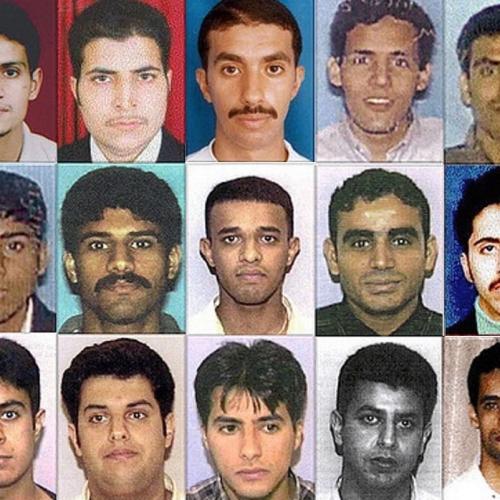
Anyone who types the words "9/11" and "conspiracy" into an online search engine soon learns that not everybody buys the official narrative of what took place on Sept. 11, 2001. As a professor emeritus at the Claremont School of Theology, 66-year-old David Ray Griffin would seem to have more affinity for leather elbow patches than tin hats, yet after friends and colleagues prodded him into sifting through the evidence, he experienced a conversion. Now he's spreading the bad news. Griffin compiled a summary of material arguing against the accepted story that 19 hijackers sent by Osama bin Laden took the aviation system and the U.S. military by surprise that awful day in his 2004 book "The New Pearl Harbor" (published by Interlink, a Massachusetts-based independent publisher covering areas including travel, cooking, world fiction, current events, politics, children's literature and other subjects). He recently followed up with the book "The 9/11 Commission Report: Omissions and Distortions" (Interlink), a critique of the Kean commission document in which he suggests that a chunk of the blame for the worst terrorist attack on U.S. soil lies closer to home than the caves of Afghanistan. We contacted him at his Santa Barbara-area home for a report on his journey from mild-mannered scholar to doubting Thomas.
How did you join the ranks of those questioning the official account of the 9/11 events?
I was rather slow getting on board. For the first year and a half I just accepted the conventional view, really the blowback thesis, that this was blowback for our foreign policy. When a colleague suggested to me about a year after 9/11 that he was convinced our own government or forces within our own government had arranged it, I didn't accept that. Then several months later another colleague sent me [a link to] a website that had a timeline. Once I started reading that and saw all those stories drawn from mainstream sources that contradicted the official account, I decided I needed to look into it more carefully, and the more I looked, the worse it got. I considered it an obligation to kind of organize, compile the evidence and put it out there for the public.
The Internet is full of 9/11 conspiracy theories. What have you contributed to the discussion?
My main contribution has been the second book, [showing] that the 9/11 commission report is not worthy of belief, and the implication of that is that they were covering up the government's own guilt.
What would constitute a "smoking gun" against the official 9/11 account?
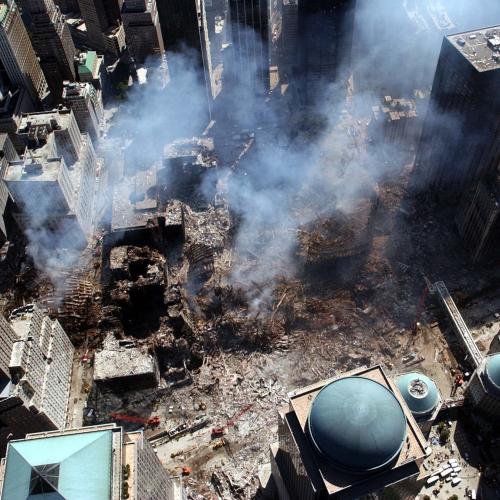
There are many. By just ignoring them, the 9/11 commission implicitly admitted they couldn't answer them. The towers coming down into a pile only a few stories high is a smoking gun. Many laws of physics had to be violated if the official story about the collapses is true. [The collapses] had all the earmarks of a controlled demolition by explosives. One of those is total collapse into a small pile of rubble. The fact that Building 7 [a skyscraper near the towers] collapsed when it had not been hit by an airplane, and collapsed in seven or eight seconds, that's a smoking gun. The fact that standard operating procedures were not followed that morning, and we've gotten three different stories now by the U.S. military as to why they did not intercept the planes, that's a smoking gun. The Secret Service leaving the president and themselves wide open to being attacked by [not responding immediately], that's a smoking gun. I can't say one is bigger than the other. You've got six or seven that are equally big.
Critics of the official 9/11 account seem to draw sinister inferences from instances where people, buildings or physical objects didn't react or behave as one might expect in theory. For example, if the hijackers were devout Muslims, why were some drinking, eating pork chops and cavorting with lap dancers? Doesn't real life unfold inconsistently, even bizarrely?
That's true, but the 9/11 commission simply ignored those questions. They're creating this image of fanatics who were so devout and convinced of the truth of their religion that they were ready to meet their maker, yet here's all this evidence that suggests they were not devout at all. [The commission] simply ignored evidence.
Dissenters also seem to find it suspect that in a dire emergency, individuals and agencies bumbled, fumbled, delayed, dropped the ball or choked. Won't that occur in any emergency?
Well, of course, that is the official theory. It's a coincidence theory that just happened to be that on those days, everybody became terribly incompetent. Take the FAA [Federal Aviation Administration]. They've got these standard procedures: If a plane goes off course, if you lose radio contact or lose the transponder, you call the military. On this day we're told these FAA officials hit the trifecta. They got all three of these things, and yet they would stand around debating, "Should we call the military? No, I don't think so." And when they finally call, the people at headquarters won't accept their calls because they were in conference or wouldn't pass the call on. They have roughly about 100 hijack warnings a year where planes have to be scrambled, but suddenly they become just all thumbs. The whole thing is just implausible. The other thing is, if you've got accidents, screw-ups, some ought to go one way and the others the other way. Here everything goes the same way. Everybody fails to do their jobs in relation to something to do with 9/11.
With others, you have alleged that inconsistencies, omissions or lies in the 9/11 record point to a cover-up, or even collusion or orchestration, by the American government. What would motivate such a scenario?
You've got liberal Democrats and Republicans and Independents who are appalled by what Andrew Bacevich [a professor of international relations at Boston University] called "the new American militarism" in the book "American Empire." New meaning, qualitatively different than before. This post-9/11 push to a new level has made the world an enormously more dangerous place. Many people apart from thinking about 9/11 as an inside job have decided that the United States is doing what [Princeton University emeritus international law professor] Richard Falk calls a "global domination project." Chalmers Johnson [Japan Policy Research Institute president], a previous conservative, now says that we have become a military juggernaut intent on world domination.
Have you followed polls on what the public believes about 9/11?
There was a Zogby poll in New York. The question asked was, do you believe the government had advance knowledge of the attacks and consciously let them happen? Forty-nine percent in New York City said yes. I believe it was 43% statewide. That is a pretty remarkable figure. In this country there has not been a poll that asked, do you believe the government actually planned and orchestrated the attacks? The question has been raised in Europe and Canada and has gotten to somewhere around 20%. It would be interesting to have such a poll in the United States.
Conspiracy theorists are often dismissed as marginal types. Where do your views on 9/11 place you in the eyes of your peers in academia?
One thing to point out is, the official account itself is a conspiracy theory. It says that 19 Arab Muslims under the influence of Osama bin Laden conspired to pull off this operation. The question is not whether one is a conspiracy theorist about 9/11. It's which conspiracy theory do you find most supported by the evidence?
Does your role as a 9/11 dissenter depart from your life's work as a scholar and theologian?
At first glance it may seem strange, but the task of a theologian is to look at the world from what we would imagine the divine perspective, [which] would care about the good of the whole and would love all the parts. [So] 9/11, if it was brought about by forces within our own government for imperial reasons, is antithetical to the general good.
Evil has been a subject of your academic writing. It's also been a recurring theme in administration rhetoric. Is that strange?
In these politicians' mouths, it's used to describe certain groups and organizations when it's politically convenient to do so, and then to overlook even greater evil when it's politically convenient to do so. If you understand the divine as an all-powerful and wrathful creator who seeks vengeance, and uses overwhelming power to destroy its enemies, why then, if you've got the political power, you're probably going to think you're acting like God if you do that. The [Christian] church during the early centuries was anti-empire. Rome was the enemy. With Constantine, the empire accepted Christianity, and Christianity started accepting empire and all that entailed. There has been a long history of support for militarism, so from that perspective, it's not so strange.
Prior to your 9/11 work, did you have an anti-establishment streak?
I never burned my bra. I was fairly critical like a lot of Americans are, but I don't think people would have looked at me and said, "There's an anti-establishment guy."
Do you get hate mail?
I've had a few people suggest I need to see a psychiatrist, and one psychiatrist in L.A. even kindly offered his services.
For more reliable 9/11 conspiracy information: https://www.WantToKnow.info/911information
Your tax-deductible donations, however large or small, help greatly to support this important work.
To make a donation by credit card, check, or money order:
https://www.WantToKnow.info/donationswtk
www.momentoflove.org - Every person in the world has a heart
www.personalgrowthcourses.net - Dynamic online courses powerfully expand your horizons
www.WantToKnow.info - Reliable, verifiable information on major cover-ups
www.weboflove.org - Strengthening the Web of Love that interconnects us all
Subscribe here to the WantToKnow.info email list (two messages a week)
9/11 Conspiracy