
































Elections News Articles
Below are key excerpts of revealing news articles on elections from reliable news media sources. If any link fails to function, a paywall blocks full access, or the article is no longer available, try these digital tools.
For further exploration, delve into our comprehensive Elections Information Center.

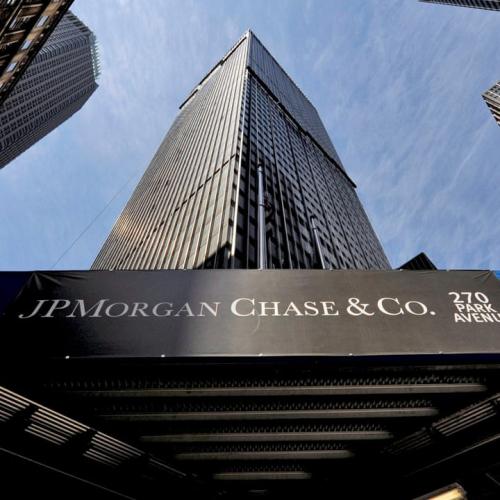
40 years ago, a worn-out white Gulfstream II jet descended over Fort Lauderdale, Fla., carrying a regal but sickly passenger almost no one was expecting. Aboard were a Republican political operative, a retinue of Iranian military officers ... and Mohammed Reza Pahlavi, the newly deposed shah of Iran. The only one waiting to receive the deposed monarch was a senior executive of Chase Manhattan Bank, which had not only lobbied the White House to admit the former shah but had arranged visas for his entourage. Less than two weeks later, on Nov. 4, 1979, vowing revenge for the admission of the shah to the United States, revolutionary Iranian students seized the American Embassy in Tehran and then held more than 50 Americans and Washington hostage for 444 days. The shah, Washingtons closest ally in the Persian Gulf, had fled Tehran in January 1979. The shah sought refuge in America. But President Jimmy Carter ... refused him entry for the first 10 months of his exile. Chase Manhattan Bank and its well-connected chairman worked behind the scenes to persuade the Carter administration to admit the shah, one of the banks most profitable clients. For Mr. Carter, for the United States and for the Middle East it was an incendiary decision. The ensuing hostage crisis enabled Ayatollah Ruhollah Khomeini to consolidate his theocratic rule, started a four-decade conflict between Washington and Tehran ... and helped Ronald Reagan take the White House.
Note: More information is available in this 1991 New York Times article and this article. For more along these lines, see concise summaries of deeply revealing news articles on government corruption from reliable major media sources.
The United States is stepping up digital incursions into Russias electric power grid in a warning to President Vladimir V. Putin and a demonstration of how the Trump administration is using new authorities to deploy cybertools more aggressively, current and former government officials said. In interviews over the past three months, the officials described the previously unreported deployment of American computer code inside Russias grid and other targets as a classified companion to more publicly discussed action directed at Moscows disinformation and hacking units around the 2018 midterm elections. In August of 2018, President Trump signed [an] executive order ... called National Security Presidential Memorandum 13. Its contents are still classified, but essentially it allows the Cyber Command to go ahead and conduct all kinds of operations inside foreign networks without going back to the president for prior approval. The first thing it did was go after those units in Russia that were responsible for a lot of the election-hacking. They went after the G.R.U., the Russian military intelligence unit that had been responsible for breaking into the D.N.C.. A lot of that ... was made public. What wasnt made public was a parallel effort to go inside the Russian power grid, to put some code in places where the Russians ... wouldnt see it, in case the U.S. ever needed to act against Russias utilities as the Russians were putting malware in our systems.
Note: A 2007 New York Times article describes the formation of the Air Force Cyberspace Command to arm the US military in anticipation of widespread computer-based warfare. A more recent Guardian article says, "we might already be living through the first world cyberwar." For more along these lines, see concise summaries of deeply revealing news articles on intelligence agency corruption from reliable major media sources.
In 2015, Marylands main election system vendor was bought by a parent company with ties to a Russian oligarch. The states election officials did not know about the purchase until July 2018, when the FBI notified them of the potential conflict. The FBI investigated and did not find any evidence of tampering or sharing of voter data. But the incident was a giant red flag ... especially as many states have outsourced vote-counting to the private sector. Democracy in the United States is now largely a secretive and privately-run affair conducted out of the public eye with little oversight. The corporations that run every aspect of American elections, from voter registration to casting and counting votes by machine, are subject to limited state and federal regulation. The companies are privately-owned and closely held, making information about ownership and financial stability difficult to obtain. The software source code and hardware design of their systems are kept as trade secrets. A small network of companies ... have near-monopolies on election services, such as building voting machines. Across the spectrum, private vendors have long histories of errors that affected elections, of obstructing politicians and the public from seeking information, of corruption, suspect foreign influence, false statements of security and business dishonesty. The computer security world has been sounding the alarm since voting machines were adopted. Now lawmakers, election officials and national security experts are joining in.
Note: Computer scientists have shown nearly every make and model of electronic voting machine to be vulnerable to hacking. For more along these lines, see concise summaries of deeply revealing elections corruption news articles from reliable major media sources.
For 55 years, every presidential administration has granted early protection to major candidates who requested it. The Biden administration is the sole outlier. The Kennedy campaign made its fifth formal request for Secret Service protection in March, citing a 67-page report of repeated death threats, nutjob letters, two heavily armed intruders to a campaign event, an invader in Kennedy’s Cape Cod house, and another man who invaded Kennedy’s home twice in one day when Kennedy and his wife, Cheryl Hines, were at home. President Biden’s decision to deny Secret Service protection to Kennedy seems to be based on political considerations and weaponizes the Secret Service by making it necessary for Kennedy to raise and spend millions of dollars each month for security. Kennedy appears to fit neatly into the law governing Secret Service protection for presidential candidates. Security costs the campaign 30 cents out of each dollar raised. Secret Service records recently revealed the agency’s conclusions that Kennedy is at “elevated risk for adverse attention,” and after reviewing credible armed threats against Kennedy, the agency assembled a group of eight teams ready to step in quickly after they get the go-ahead. But they never got it. RFK Jr. has provoked and challenged some of the most powerful forces in our country, especially concerning the military-industrial complex, the CIA, and endless foreign wars that so enrich defense contractors. The perils to Kennedy arise not only because of his name but also because of the mainstream media’s relentless demonization of him.
Note: Nikki Haley asked for Secret Service protection earlier this month, and the Secret Service agreed even though she is no longer in the race. Read more about the JFK assassination. For more along these lines, see concise summaries of deeply revealing news articles on government corruption from reliable major media sources.
Leading up to the August Republican presidential primary debate ... An RNC official told Google via email that the debate would be streaming exclusively on the upstart video platform Rumble. The August 23 debate was broadcast on Fox News and streamed on Fox Nation, which requires a subscription, while Rumble was the only one to stream it for free. On the day of and during the debate, however, potential viewers who searched Google for “GOP debate stream” were returned links to YouTube, Fox News, and news articles about the debate, according to screen recordings. Rumble was nowhere on the first page. For Rumble, which is currently in discovery in an antitrust lawsuit against Google in California, this is a case of Google suppressing its competitors in favor of its own product, YouTube. YouTube is owned by Google, and it has regularly been the subject of anticompetitive allegations from rivals, who charge that Google unfairly and illegally favors YouTube in its search algorithm. Google, in fact, is in the middle of a landmark antitrust trial, charged with anticompetitive practices by the Department of Justice. The company would not have been required by antitrust law to promote [Rumble's] link. It would, however, be barred from suppressing the competitor’s link from organic results. The fact that Rumble’s link did not appear on the first page even though it was the most relevant link the search could return means either the search engine failed at its task or the link was suppressed.
Note: For more along these lines, see concise summaries of deeply revealing news articles on corporate corruption and media manipulation from reliable sources.
The government of Saudi Arabia is an investor in the private company that owns a virtual monopoly on software that powers Democratic candidates — including management of the Democratic National Committee’s all-important voter list. Sanabil Investments, the company that manages Saudi Arabia’s sovereign wealth fund, recently published its first list of investments. The list includes two private equity firms involved two years ago in the sale and acquisition of EveryAction and NGP VAN, the companies that make up the Democratic Party’s campaign tech apparatus. Federal regulations are designed to stop sovereign wealth funds from interfering in domestic politics. If a particular investment includes a national security risk, federal regulators can force the transaction to be undone through the Committee on Foreign Investment in the United States under the Department of the Treasury. Most of that risk is typically mitigated because sovereign wealth funds tend to be invested in companies through intermediaries. Investment in a company that deals with data related to voting and politics could be of potential concern to the Committee on Foreign Investment, even if the investor has no real influence over relevant data. The Sanabil investment doesn’t mean the Saudi government has an interest in the functions of the companies. Instead, said progressive strategist Gabe Tobias, the disclosure is a further indication that the fate of EveryAction and NGP VAN is not a priority for their owners.
Note: For more along these lines, see concise summaries of deeply revealing news articles on elections corruption from reliable major media sources.
Kentucky lawmakers have warned the state was heading towards a disastrous primary election this week, as ballot problems, voter confusion and a severe shortage of polling places threatened to suppress turnout amid the coronavirus pandemic. State officials ... released a joint statement condemning US District Court Judge Charles Simpsons ruling against a case that argued having just one polling site in most of the states 120 counties would result in voter suppression. We believe the judge disregarded evidence from our expert witness that one location will suppress the vote, particularly among African Americans, read the statement, co-authored by Jason Nemes, a Republican state representative, and Keisha Dorsey, a Democratic councilwoman. The lawmakers were both behind the lawsuit, which demanded an increase in statewide polling locations. Voters throughout Kentucky received inaccurate absentee ballots ... that do not match their party affiliations. In Kentucky, voters must be members of a party to participate in its primary elections. In a typical election year, Kentucky has about 3,700 polling sites. When Election Day arrives ... there will be just 200 polling sites across the state. Ben Jealous, president of People For The American Way, described the situation as Our Next Electoral Nightmare. Half Kentuckys Black voters live in one county, he wrote. It will have one polling place ... for 616,000 registered voters.
Note: For more along these lines, see concise summaries of deeply revealing news articles on the coronavirus and elections corruption from reliable major media sources.
A Texas appeals court on Thursday upheld a five-year prison sentence for a woman who was convicted of illegally voting even though she didn’t know she was ineligible when she went to the polls in 2016. The punishment for the Fort Worth woman, Crystal Mason, stirred national outrage because of its severity, prompting accusations that prosecutors were trying to intimidate Texans from voting. Four years ago, Mason was on supervised release, similar to probation, for a federal felony conviction. Mason voted in the last presidential election at the urging of her mother and cast a provisional ballot. The ballot was never counted because Mason was not an eligible voter. During her 2018 trial probation officials testified that they never told Mason she could not vote, but the appeals court said that didn’t matter. Mason was guilty, the court said, because she knew she was on supervised release. Texas is one of 48 states that strip people with felony convictions of the right to vote, but the rules on when people regain the right to vote vary widely from state to state and are often extremely confusing, even to elections officials. The decision to prosecute Mason was unusual. Since 2014, at least 12,668 people have voted using a provisional ballot in Tarrant county and 88% of them have been rejected because the voter was not eligible. Mason is the only voter who used a provisional ballot who was prosecuted for illegal voting.
Note: For more along these lines, see concise summaries of deeply revealing news articles on elections corruption from reliable major media sources.
Seven top agency officials, including the heads of the FBI and CIA, issued a joint statement predicting Russia, and other countries intend to meddle in the 2020 elections via cyber attacks or social media. Russia, China, Iran, and other foreign malicious actors all will seek to interfere in the voting process or influence voter perceptions, the joint statement said. The threat of more cyber attacks, plus disinformation and social media operations to sway public opinion, has prompted the federal government to work closely with officials in all 50 states, the statement said. A Senate intelligence committee report in mid-2019 concluded that Kremlin hackers manipulated election systems in all 50 states, and succeeded in breaching systems in two Florida counties and another state. New questions are being raised about the safety of some electronic voting equipment given problems in 2019 and 2018, respectively, in Pennsylvania and Georgia. A lawsuit was filed last month to block Pennsylvania from certifying electronic voting equipment that Philadelphia has purchased, after the same machines encountered significant problems in November in undercounting votes. The equipment was made by ... ES&S, which boasts about 50% of the national voting machine market and has been cited before for malfunctions. In Georgia in the 2018 elections, for instance, old voting machines made by ES&S were involved in counting votes in a race where reportedly about 80,000 votes were strangely not cast.
Note: There have been serious problems with electronic voting in the US for decades. There is little doubt powerful factions within the US have taken advantage of this. Only now that the Russians are being accused is anyone talking about this. For more along these lines, see concise summaries of deeply revealing news articles on elections corruption from reliable major media sources.
Jurisdictions once monitored by the justice department for racially discriminatory voting practices have collectively closed more than 1,000 polling places since a watershed 2013 US supreme court ruling released the jurisdictions from oversight, according to a new watchdog report. In 757 counties and county equivalents that formerly had to pre-clear voting practice changes with Washington, 1,173 polling places disappeared between 2014 and 2018, a study by the Leadership Conference Education Fund, part of the nations oldest and largest civil rights coalition, found. The closures could disproportionately disenfranchise voters of color, especially when combined with restrictive voter ID laws, gerrymandering and aggressive voter roll purges, the report warned. Last month, a separate study found that US election jurisdictions with histories of egregious voter discrimination have been purging voter rolls at a rate 40% beyond the national average. Closing polling places has a cascading effect, leading to long lines at other polling places, transportation hurdles, denial of language assistance and other forms of in-person help, and mass confusion about where eligible voters may cast their ballot, the report said. For many people, and particularly for voters of color, older voters, rural voters and voters with disabilities, these burdens make it harder and sometimes impossible to vote.
Note: For more along these lines, see concise summaries of deeply revealing news articles on elections corruption from reliable major media sources.
New state laws tightening voting restrictions come in two basic varieties: those that make it harder to cast a vote and those making it more difficult to get registered to vote in the first place. In Kansas, one law effectively shuts down voter registration drives. It's now a felony offense to impersonate an election official, and the law creates a vague standard for breaking it, a standard that depends on impressions. It criminalizes engaging in conduct that might seem like something an election official would do. Davis Hammet, president of the Kansas civic engagement group Loud Light, says that subjective standard would probably include work his volunteers do, which includes approaching people with clipboards and registering them to vote. "So, if someone accuses you of being an election official or saying they were just confused and thought you were one, and you were arrested, you would be charged with a felony," Hammet says. "And so, a felony means you lose your right to vote. So, you could lose your right to vote for trying to help people vote." This knocks a big hole in efforts to register new voters because county elections officials rely on volunteer groups to do outreach. Tammy Patrick has been tracking an avalanche of election-related legislation. "There have been a little more than 3,000 bills introduced ... this legislative session, which is the most bills we've seen around election administration," Patrick says. "Many of them actually have included things very similar to the Kansas law."
Note: For more along these lines, see concise summaries of deeply revealing news articles on elections corruption from reliable major media sources.
The young couple posing in front of the faux Eiffel Tower at the Paris hotel in Las Vegas fit right in, two people in a sea of idealistic Democrats who had arrived in the city in February 2020 for a Democratic primary debate. Large donations to the Democratic National Committee — $10,000 each — had bought Beau Maier and Sofia LaRocca tickets to the debate. In fact, much about them was a lie. Mr. Maier and Ms. LaRocca were part of an undercover operation by conservatives to infiltrate progressive groups, political campaigns and the offices of Democratic as well as moderate Republican elected officials during the 2020 election cycle. Using large campaign donations and cover stories, the operatives aimed to gather dirt that could sabotage the reputations of people and organizations considered threats to a hard-right agenda. At the center of the scheme was an unusual cast: a former British spy connected to the security contractor Erik Prince, a wealthy heiress to the Gore-Tex fortune and undercover operatives like Mr. Maier and Ms. LaRocca who used Wyoming as a base to insinuate themselves into the political fabric of this state and at least two others, Colorado and Arizona. In more than two dozen interviews and a review of federal election records, The New York Times reconstructed many of the operatives’ interactions in Wyoming and other states ... and spoke to people with whom they discussed details of their spying operation.
Note: For more along these lines, see concise summaries of deeply revealing news articles on government corruption from reliable major media sources.
On Election Day 2016, Crystal Mason went to vote. When her name didn’t appear on official voting rolls at her polling place in Tarrant County, Texas, she filled out a provisional ballot. Ms. Mason’s ballot was never officially counted or tallied because she was ineligible to vote: She was on supervised release after serving five years for tax fraud. Nonetheless, that ballot has wrangled her into a lengthy appeals process after a state district court sentenced her to five years in prison for illegal voting, as she was a felon on probation when she cast her ballot. Ms. Mason maintains that she didn’t know she was ineligible to vote. Her case is now headed for the Texas Court of Criminal Appeals, the highest state court for criminal cases. Ms. Mason unsuccessfully asked for a new trial and lost her case in an appellate court. This new appeal is the last chance for Ms. Mason, 46, who is out on appeal bond, to avoid prison. If her case has to advance to the federal court system, Ms. Mason would have to appeal from a cell. According to Tommy Buser-Clancy, a lawyer at the American Civil Liberties Union of Texas, Ms. Mason should never have never been convicted. If there is ambiguity in someone’s eligibility, the provisional ballot system is there to account for it, he said. If her eligibility was incorrect, he said, “that should be the end of the story.” 72 percent of [Texas attorney general, Ken] Paxton’s voter fraud cases have targeted people of color.
Note: For more along these lines, see concise summaries of deeply revealing news articles on elections corruption from reliable major media sources.
Voter suppression has taken centre stage in the race to elect potentially the 46th president of the United States. But we’ve heard little about the 5.2 million Native Americans whose ancestors have called this land home before there was a US president. The rights of indigenous communities – including the right to vote – have been systematically violated for generations with devastating consequences. Voter turnout for Native Americans and Alaskan Natives is the lowest in the country, and about one in three eligible voters (1.2 million people) are not registered to vote. In a new book, Voting in Indian County: The View from the Trenches, Jean Reith Schroedel ... at Claremont Graduate University weaves together historical and contemporary voting rights conflicts. American Indians and Native Alaskans were the last group in the United States to get citizenship and to get the vote. Some laws used to disenfranchise them were still in place in 1975. Voting by mail is very challenging for Native Americans for multiple reasons. First and foremost, most reservations do not have home mail delivery. Instead, people need to travel to post offices or postal provide sites – little places that offer minimal mail services and are located in places like gas stations and mini-marts. Take the Navajo Nation that encompasses 27,425 square miles – it’s larger than West Virginia, yet there are only 40 places where people can send and receive mail. In West Virginia, there are 725. Not a single PO box on the Navajo Nation has 24-hour access.
Note: For more along these lines, see concise summaries of deeply revealing news articles on elections corruption from reliable major media sources.
For many years Michigan was divided evenly along party lines. Then, in 2011, Michigan’s Republican party legally rigged the system. Charged with drawing new district lines, the lawmakers did so with unprecedented precision – carving unnatural boundaries to keep their favored voters and locales in hand – to guarantee a majority for their party. It worked perfectly. The process of creating these doctored maps, known as gerrymandering, resulted in widespread victories for the Republicans. But in 2016, a then 26-year-old with no political experience uprooted the system. Katie Fahey ... dedicated two years of her life to launching and leading a grassroots campaign that started with a Facebook post and, against the odds, ended gerrymandering in Michigan. Film-makers found Fahey the perfect anchor for their gerrymandering documentary Slay the Dragon, named for the oddly shaped district in Massachusetts created by the man who gerrymandering its name, former vice-president Elbridge Gerry. Slay the Dragon will be released this week during a census year – when the US population will be carefully counted in order to determine the size of electoral districts next year. It’s clear that Fahey’s hard-won movement is a threat to Republicans across the country during that process. But Fahey is hoping the momentum ... can be replicated in the 35 other states that still use congressional redistricting.
Note: For more along these lines, see concise summaries of deeply revealing news articles on elections corruption from reliable major media sources.
Four years ago, for an embarrassingly modest price, Russia pulled off one of the more audacious acts of election interference in modern history. The Internet Research Agency, the team of Kremlin-backed online propagandists, spent $15 million to $20 million and wreaked havoc on the psyche of the American voter. Russian intelligence agents carried out the digital version of Watergate, infiltrating the Democratic Party and the Clinton campaign, stealing tens of thousands of emails, and weaponizing them in the days and weeks before the election. Russian-based hackers tested election websites in all 50 states for weak spots. The Russians were testing whether our windows were open, rattling our doors to see whether they were locked, and found the windows and doors wide open, says Sen. Mark Warner (D-Va.), the top Democrat on the Intelligence Committee. The Russians ... recently hacked the Ukrainian natural-gas company at the center of the Trump impeachment scandal to potentially find damaging material about the Biden family. Other foreign nations, including Iran, North Korea, Saudi Arabia, and China, are getting in on the act. Theyll be joined, analysts say, by domestic actors American consultants and candidates and click merchants borrowing and adapting Russias tactics to influence an election or make a quick buck. Were still in a situation going into 2020 where there are significant gaps left in the security of election infrastructure, says J. Alex Halderman ... who studies voting equipment.
Note: The private companies that supply elections software are very vulnerable to hacking. For more along these lines, see concise summaries of deeply revealing news articles on elections corruption from reliable major media sources.
Georgia secretary of state and gubernatorial candidate Brian Kemp improperly purged more than 340,000 voters from the states registration rolls, an investigation charges. Greg Palast, a journalist and the director of the Palast Investigative Fund, said an analysis he commissioned found 340,134 voters were removed from the rolls on the grounds that they had moved but they actually still live at the address where they are registered. Their registration is cancelled. Not pending, not inactive cancelled. If they show up to vote on 6 November, they will not be allowed to vote. Thats wrong, Palast [said]. Its the latest voting rights controversy to crop up in the Georgia governors race, which pits Republican Kemp against Democrat Stacey Abrams, who if elected would become the first African American woman governor of any state. Lawsuits have also charged that Kemp blocked the registrations of 50,000 would-be voters, 80% of them black, Latino or Asian, because of minor discrepancies in the spelling or spacing of their name. Another suit targeted the states most diverse county after it rejected an unusually large number of absentee ballots. Brian Kemp has abused his power as secretary of state of Georgia to purge the voting rolls of Georgia primarily of black and brown people, said Joe Beasley, an Atlanta civil rights activist. If he had ... integrity, he would have stepped aside as secretary of state, because you cant referee an election in which you stand to be a winner.
Note: More on this is available in this MSNBC article. For more along these lines, see concise summaries of deeply revealing elections news articles from reliable major media sources.
Marsha Appling-Nunez was showing the college students she teaches how to check online if they're registered to vote when she made a troubling discovery. Despite being an active Georgia voter who had cast ballots in recent elections, she was no longer registered. She tried re-registering, but with about one month left before a November election ... Appling-Nunez's application is one of over 53,000 sitting on hold with Georgia Secretary of State Brian Kemp's office. Kemp, who's also the Republican candidate for governor, is in charge of elections and voter registration in Georgia. His Democratic opponent, former state Rep. Stacey Abrams, and voting rights advocacy groups charge that Kemp is systematically using his office to suppress votes and tilt the election, and that his policies disproportionately affect black and minority voters. Through a process that Kemp calls voter roll maintenance and his opponents call voter roll purges, Kemp's office has cancelled over 1.4 million voter registrations since 2012. Nearly 670,000 registrations were cancelled in 2017 alone. According to records obtained from Kemp's office through a public records request, Appling-Nunez's application - like many of the 53,000 registrations on hold with Kemp's office - was flagged because it ran afoul of the state's "exact match" verification process. An analysis of the records obtained by The Associated Press reveals racial disparity in the process. Georgia's population is approximately 32 percent black, according to the U.S. Census, but the list of voter registrations on hold with Kemp's office is nearly 70 percent black.
Note: More on this is available in this MSNBC article. For more along these lines, see concise summaries of deeply revealing elections news articles from reliable major media sources.
A little-known, billionaire-funded organization, called Americans for Prosperity (AFP), has tilted American politics to the right. [It] is at the center of the political network created and directed by the billionaire conservative industrialists, Charles and David Koch. AFP has quietly pushed behind the scenes for many of the most important conservative victories across the nation, including the anti-union bills that passed in former union strongholds such as Wisconsin, Michigan, and Ohio. AFPs laser-like focus on anti-union legislation ... reflects strategic calculations. AFP has recognized that to make lasting change in US politics, the Koch network would need to permanently weaken the organizations that support liberal candidates and causes and above all, the labor movement. In constructing AFP, the Kochs have created a vehicle that is perfectly positioned to reshape American politics. AFP focuses on both elections and policy battles at all levels of government. Its activities are mostly centrally directed. And even though grassroots participants do not have much say in the direction of the group, AFP has nearly 3 million citizen activists signed up to mobilize for candidates and policy causes. Taken together, AFPs grassroots volunteers and staffing rival those of the Republican party itself. By providing resources to support GOP candidates and officials, and exerting leverage on them once elected, AFP has been able to pull the Republican party to the far right on economic, tax and regulatory issues.
Note: The Koch brothers' secretive empire spent nearly $1 billion on US elections in 2016. Along with opposing organized labor, this empire has been killing public transit projects across the country. For more along these lines, see concise summaries of deeply revealing news articles on government corruption and the manipulation of public perception.
Tax-exempt nonprofit organizations supposedly devoted to social welfare can spend large amounts of money to influence elections without publicly disclosing the identities of their donors. But instead of cracking down on the use of dark money for political purposes, the Internal Revenue Service has decided to stop requiring these groups to reveal even to the government the sources of their funding. On Monday, the IRS and the Treasury Department announced they would no longer require 501(c)(4) groups ... to supply the government with the identities of donors who gave more than $5,000 in a single year. Its a step backward that could make it easier for money from foreign sources to find its way into U.S. elections. But while this weeks policy change may not affect what the public may learn about political spending by so-called social welfare groups, it could make it more difficult for the government to police laws against spending by foreigners on U.S. elections. Fred Wertheimer, president of the campaign reform group Democracy 21, warned that, with the end of the reporting requirement, there is no way to determine if a 501(c)(4) advocacy group that is spending money to influence federal elections is taking that money from [a] foreign interest.
Note: For more along these lines, see concise summaries of deeply revealing elections corruption news articles from reliable major media sources. Then explore the excellent, reliable resources provided in our Elections Information Center.
Important Note: Explore our full index to revealing excerpts of key major media news articles on several dozen engaging topics. And don't miss amazing excerpts from 20 of the most revealing news articles ever published.