
























































Media Articles
Below are key excerpts of revealing news articles from reliable news media sources. If any link fails to function, a paywall blocks full access, or the article is no longer available, try these digital tools.
For further exploration, delve into our comprehensive Information Centers.

Fort Benning, the infamous Georgia U.S. military base, is once again in the news, changing its name to Fort Moore, thereby ditching its Confederate name. Across Latin America, the very name of Fort Benning is enough to strike terror into the hearts of millions, bringing back visions of massacres and genocides. This is because the fort is home to the School of the Americas (now known as Western Hemisphere Institute for Security Cooperation or WHINSEC), a shadowy academy where around 84,000 Latin American soldiers and police officers have been taught on the U.S. dime on how to kill, torture and how to stamp out political activists. “The school is controversial partly because of its role in promoting US hegemony in Latin America,” James Jordan, national co-coordinator at Alliance for Global Justice, told MintPress, adding, “But even worse, it is how the school has promoted this: teaching methods of torture – even publishing torture manuals, counterintelligence, psyops, repression of political voices that don’t meet the approval of Washington DC. If one looks at cases of human rights abuses by the military throughout Latin America, the number of those responsible who were trained at the School of the Americas is simply staggering.” In 1996, the Pentagon was pressured into releasing the school’s official training manuals. Even a casual glance through the nearly 1200 pages of instructions makes for sobering reading and dispels the myth forever that the U.S. is a benevolent global force.
Note: The School of the Americas graduated more than 500 human rights abusers. The identities of many other US-trained troops operating in other countries remain hidden by US courts. For more along these lines, see concise summaries of deeply revealing news articles on military corruption from reliable major media sources.
The world's 722 biggest companies collectively are making more than $1tn a year in windfall profits on the back of soaring energy prices and rising interest rates. The companies made $1.08tn this way in 2021 and $1.09tn last year, according to analysis of Forbes magazine data by the charities Oxfam and ActionAid. The collective profits were 89% higher than the previous four-year average covering 2017-2020. Windfall profits are defined as those exceeding average profits in the previous four years by more than 10%. Energy companies recorded the highest windfall profits. Of the 45 energy firms on Forbes list of the 2,000 biggest companies, they made on average $237bn a year in windfall profits in 2021 and 2022. Many food and beverage corporations, banks, pharmaceutical companies and retailers also reported a surge in profits during a cost-of-living crisis in which more than a quarter of a billion people in 58 countries experienced acute food insecurity in 2022. Those profits have stoked accusations of "greedflation" – pushing through excessive price increases and driving up inflation. Katy Chakrabortty, Oxfam's head of advocacy, said "A corporate bonanza is supercharging inflation, leaving millions of people in the UK and around the world struggling to pay their bills and feed their families. The windfall profits of 18 food and beverage corporations are more than twice the amount needed to cover the shortfall in life-saving assistance to tens of millions of people."
Note: For more along these lines, see concise summaries of deeply revealing news articles on corporate corruption from reliable major media sources.
As the Ukraine war drags on, the Biden administration is now reportedly in the final stages of deciding whether to send more [cluster munitions] to the Ukrainian military. The decision to supply cluster munitions to Ukraine would likely be seen as a setback to nonproliferation efforts aimed at stopping use of the weapon. The report by Human Rights Watch analyzing the impact of previous cluster munition attacks carried out last summer by the Ukrainian military found numerous dead and wounded civilians in Izium who were hit by exploding cluster bomblets. Cluster munitions are controversial due to the manner in which "bomblets" are scattered around a targeted area, creating secondary explosions that can cause death and injury even long after a conflict has ceased. The bombs are currently at the center of an international campaign to ban their use in armed conflict. More than 100 states have signed an international convention on cluster munitions vowing not to employ them in war, produce them domestically, or encourage their use in foreign conflicts. Despite public pressure to join, the U.S. has not become a signatory to the convention. The Ukrainian military was reported to have requested significant transfers of the munitions late last year. "Cluster munitions used by Russia and Ukraine are killing civilians now and will continue to do so for many years," said Mary Wareham, advocacy director of the Arms Division at Human Rights Watch, in the report.
Note: The global cluster bombs trade is funded by the world's biggest banks. For more along these lines, see concise summaries of deeply revealing news articles on government corruption and war from reliable major media sources.
The group was brought together with the help of Braver Angels, one of hundreds of grassroots organizations that have sprung up in recent years to try to bridge the partisan divide. "I think the media has such a big part in dividing us, whether it is racially or politically or gender or sex," [said Nancy Miranda]. "The media tends to foster the extremes by fueling a lot of the rhetoric that is at the extremes of both red and blue," [said Dr. Bill Shaul]. "And the rhetoric and the disrespect and the lack of civility that we sometimes see portrayed in the media, I think, has made this a lot worse." "Now we have a 24-hour news cycle," [said Leah Nichols]. "And the news I see is probably different than the news Nancy sees, which is probably different than the news that you see, because we're all – have our own tailored algorithms when it comes down to social media. I think that the news is just so different than it used to be. It is hard for us to even be on the same page sometimes. I think it's really easy to look at the other side and be able to say, oh, maybe they just don't have the knowledge that I have or they don't know the things that I know. But, in reality, we all have our own lived experiences that have brought us to where we are. And if we could listen to each other, maybe we'd actually be able to understand a little better." "I really think the answer to our polarization politically in this country is in our communities, and it is in the relationships that we have with one another, especially across lines of difference," [said John Shi].
Note: Read more about the inspiring mission of Braver Angels. For more along these lines, see concise summaries of deeply revealing news articles on media manipulation from reliable sources.
The U.S. military retreated from Afghanistan two years ago, leaving behind weapons that are now turning up in far-flung trouble spots. In markets that have sprung up across the southern and eastern badlands ... merchants with Taliban permits are offering U.S.-made automatic assault rifles and handguns for sale. Ad hoc weapons bazaars are offering rockets and bombs, shoulder-fired grenade launchers, night vision goggles, sniper rifles and scopes, and ammunition. The Taliban, allies of if not quite affiliates of al Qaeda ... appear to be funneling small arms to like-minded extremists. U.S. assault weapons have reportedly been used in recent attacks by non-state groups in Kashmir, bitterly divided between India and Pakistan, and in Israel’s Gaza Strip. The U.S. Department of Defense estimated that left-behind stockpiles of arms and vehicles were worth $7.12 billion of the $18.6 billion spent from 2002 on arming the Afghan security forces. “This included roughly 600,000 weapons of all calibers, nearly 300 fixed-wing and rotary-wing aircraft, over 80,000 vehicles of several models, communications equipment, and other advanced materiel such as night vision goggles and biometric systems,” according to the U.S. Special Inspector General for Afghanistan Reconstruction (SIGAR). SIGAR quoted a Taliban official as saying, “The group took possession of more than 300,000 light arms, 26,000 heavy weapons, and about 61,000 military vehicles.”
Note: Why didn’t the US military prioritize removing this huge amount of equipment that they knew would be taken over by the Taliban? Read more about the shocking lack of oversight of money and equipment sent to Afghanistan. For more along these lines, see concise summaries of deeply revealing news articles on military corruption from reliable major media sources.
Government borrowing and spending are necessary to stimulate the economy during recessions. The United States, however, now borrows heavily during periods of economic growth to meet basic and ongoing obligations. It’s increasingly unsustainable. Over the next decade, the Congressional Budget Office projects that annual federal budget deficits will average around $2 trillion per year, adding to the $25.4 trillion in debt the government already owes to investors. Borrowing is expensive. A mounting share of federal revenue, money that could be used for the benefit of the American people, goes right back out the door in the form of interest payments to investors who purchase government bonds. Rather than collecting taxes from the wealthy, the government is paying the wealthy to borrow their money. By 2029, the government is on pace to spend more each year on interest than on national defense, according to the Congressional Budget Office. By 2033, interest payments will consume an amount equal to 3.6 percent of the nation’s economic output. The debt ceiling is part of the problem. It was never intended to limit the federal debt. It was actually created to facilitate borrowing. During World War I, Congress got tired of authorizing each new round of bonds, so it gave the Treasury permission to borrow up to a specific limit. Its current use ... is even less productive. Larger changes are going to happen only if both political parties are willing participants.
Note: Explore an excellent analysis of the substantial role that the defense budget has in federal government’s spending, which was not mentioned in this New York Times article. For more along these lines, see concise summaries of deeply revealing news articles on government corruption from reliable major media sources.
A federal judge on Tuesday blocked key Biden administration agencies and officials from meeting and communicating with social media companies about "protected speech," in an extraordinary preliminary injunction in an ongoing case. The injunction came in response to a lawsuit brought by Republican attorneys general in Louisiana and Missouri, who allege that government officials went too far in their efforts to encourage social media companies to address posts that they worried could contribute to vaccine hesitancy during the pandemic. Over the last five years, coordination and communication between government officials and [social media] companies increased. Public health officials also frequently communicated with the companies during the coronavirus pandemic. The injunction was a victory for the state attorneys general, who have accused the Biden administration of enabling a "sprawling federal 'Censorship Enterprise'" to encourage tech giants to remove politically unfavorable viewpoints and speakers. The judge, Terry A. Doughty, has yet to make a final ruling in the case, but in issuing the injunction, he signaled he is likely to ... find that the Biden administration ran afoul of the First Amendment. The state attorneys general have argued that starting in 2017 ... officials within the government began laying the groundwork for a "systemic and systematic campaign" to control speech on social media. These efforts accelerated in 2020 ... amid the response to the outbreak of the coronavirus pandemic.
Note: For more along these lines, see concise summaries of deeply revealing news articles on government corruption and media manipulation from reliable sources.
Collective neuroscience, as some practitioners call it, is a rapidly growing field of research. An early, consistent finding is that when people converse or share an experience, their brain waves synchronize. Neurons in corresponding locations of the different brains fire at the same time, creating matching patterns, like dancers moving together. Auditory and visual areas respond to shape, sound and movement in similar ways, whereas higher-order brain areas seem to behave similarly during more challenging tasks such as making meaning out of something seen or heard. The experience of "being on the same wavelength" as another person is real, and it is visible in the activity of the brain. Interbrain synchrony prepares people for interaction and beginning to understand it as a marker of relationships. Given that synchronized experiences are often enjoyable, researchers suspect this phenomenon is beneficial: it helps us interact and may have facilitated the evolution of sociality. This new kind of brain research might also illuminate why we don't always "click" with someone or why social isolation is so harmful to physical and mental health. Preliminary evidence ... shows synchrony between interacting brains and, more intriguingly, that correlations in some brain regions are greater between people while they are telling a joint story than during the independent stories, particularly in the parietal cortex. "That area is active for memory and narrative construction," [neuroscientist Thalia] Wheatley says. "It seems to fit."
Note: Explore a treasure trove of concise summaries of incredibly inspiring news articles which will inspire you to make a difference.
A little-known federal agency called BARDA dedicated to countering "health security threats" was responsible for conducting the quality review of every COVID-19 vaccine dose administered in the U.S., Sasha Latypova reported on her Substack. But BARDA, the Biomedical Advanced Research and Development Authority, which has a "militarized" purpose according to Latypova, is not subject to the same regulations as typical pharmaceutical manufacturers, distributors or regulatory agencies. "The public was told these vaccines are made by Pfizer and Moderna and rigorously approved by the FDA," [said Latypova]. That ... would mean that the "consumer protections we expect from pharmaceutical products, medical devices and even food ... we expect them to be in place." But in fact, countermeasures contracts made available through Freedom of Information Act (FOIA) requests ... and U.S. Securities and Exchange Commission disclosures show the U.S. Department of Defense (DOD) and BARDA contracts with the pharmaceutical companies were structured such that these protections weren't required. The contracts also specified that manufacturers and federal agencies were protected by the Public Readiness and Emergency Preparedness (PREP) Act, which shields "covered persons" – such as pharmaceutical companies, or the DOD/BARDA – from liability for injuries sustained from "countermeasures," such as vaccines ... administered during a public health emergency.
Note: Sasha Latypova is a former pharmaceutical industry executive who now specializes in uncovering fraud in pharmaceutical research, development, and manufacturing. For more along these lines, see concise summaries of deeply revealing news articles on government corruption and coronavirus vaccines from reliable major media sources.
Over 30 million Americans a year use benzodiazepines, or “benzos,” including Xanax, Valium, Ativan and Klonopin. Benzodiazepines are prescribed to treat anxiety disorders, insomnia, muscle spasms, schizophrenia, bipolar disorder, seizures and epilepsy. But this widely used class of drugs is linked to severe side effects and life impacts that can last for years — even after people have stopped taking the drugs — a new study finds. “Patients have been reporting long-term effects from benzodiazepines for over 60 years. I am one of those patients,” Dr. Christy Huff, a cardiologist and co-author of the study, said in a news release. The new research, published in PLOS One, includes a lengthy list of side effects that a majority of benzo users experienced more than a year after they stopped taking the drugs. Those long-lasting symptoms include low energy, difficulty focusing, memory loss, anxiety, insomnia, sensitivity to light and sounds, digestive problems, symptoms triggered by food and drink, muscle weakness and body pain. Alarmingly, users also struggled with severe life impacts: 54.7% reported suicide attempts or suicidal thoughts, for example. Health experts noted numerous other problems with benzos, including an increased risk of suicide and dependence on the drug, among other adverse side effects. Withdrawal from benzos can produce troubling symptoms as soon as within 24 hours, and these adverse effects can last for months.
Note: For more along these lines, see concise summaries of deeply revealing news articles on Big Pharma corruption from reliable major media sources.
On Monday, the House Judiciary Committee released a report on how the Cybersecurity and Infrastructure Security Agency (CISA) "colluded with Big Tech and 'disinformation' partners to censor Americans." The 36-page report raises three familiar issues: first, government actors worked with third parties to overturn the First Amendment; second, censors prioritized political narratives over truthfulness; and third, an unaccountable bureaucracy hijacked American society. The House Report reveals that CISA, a branch of the U.S. Department of Homeland Security, worked with social media platforms to censor posts it considered dis-, mis- or malinformation. Brian Scully, the head of CISA's censorship team, conceded that this process, known as "switchboarding," would "trigger content moderation." Additionally, CISA funded the nonprofit EI-ISAC in 2020 to bolster its censorship operations. In launching the nonprofit, the government boasted that it "leverage[d] DHS CISA's relationship with social media organizations to ensure priority treatment of misinformation reports." The switchboard programs directly contradict sworn testimony from CISA Director Jen Easterly. The report outlines how CISA censored "malinformation – truthful information that, according to the government, may carry the potential to mislead." Dr. Kate Starbird, a member of CISA's "Misinformation & Disinformation" subcommittee, lamented that many Americans seem to "accept malinformation as 'speech' and within democratic norms."
Note: For more along these lines, see concise summaries of deeply revealing news articles on intelligence agency corruption and media manipulation from reliable sources.
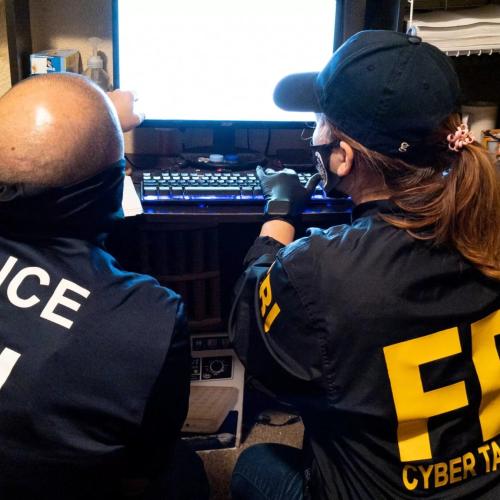
Joerg Arnu has been obsessed with Area 51 ever since his first visit to the perimeter of the secretive military base in 1998. The rumours of alien life forms, CIA spy plane testing programmes, and sense of forbidden mystery surrounding the massive military base in the southern Nevada desert instantly intrigued the 61-year-old retired software developer. In 1999, he launched the DreamlandResort blog as a comprehensive one-stop-shop for photos, videos and discussion about the base and the top secret military aircraft that are built and tested there. He eventually bought a second home near the gates of the military base. Last year, he was in bed when around 20 armed counter-terrorism agents in tactical gear raided his Rachel home, handcuffed him and led him out of his home in the freezing cold for questioning. The agents seized four of Mr Arnu's computers, containing his life's work on Area 51, along with treasured photos of his deceased parents, and medical and tax records. The agents handed Mr Arnu a search warrant signed by a federal magistrate judge. The first 39 pages were missing, and it only provided vague hints of what the agents had been looking for. A joint team from the FBI and the Air Force Office of Special Investigations (USAF OSI) had conducted the raids. Eight months on, he still has no idea whether he will face charges, or if he'll ever get back the more than $30,000 he says he's out of pocket for as a result of seized equipment, property damage and legal fees.
Note: For more along these lines, see concise summaries of deeply revealing news articles on government corruption and UFOs from reliable major media sources.
A top adviser to Anthony Fauci at the National Institutes of Health admitted that he used a personal email account in an apparent effort to evade the strictures of the Freedom of Information Act. "As you know, I try to always communicate on gmail because my NIH email is FOIA'd constantly," wrote David M. Morens, a high-ranking NIH official. The email that contains Morens's statements was part of a broader exchange in which Morens and his scientist correspondents denounced media coverage by The Intercept and other publications concerning the origins of Covid and harshly criticized those who take seriously the possibility that the virus emerged from a research accident in Wuhan, China. "I have not been approved to talk about 'origins' on the record. But today, to my total surprise, my boss [Anthony Fauci] actually ASKED me to speak to the National Geographic on the record about origins," Morens wrote at the time. "I interpret this to mean that our government is lightening up but that Tony doesn't want his fingerprints on origin stories." On Thursday, Rep. Brad Wenstrup, R-Ohio, the chair of the Select Subcommittee on the Coronavirus Pandemic, sent a letter to Morens. Documents ... "suggest that you may have used your personal e-mail to avoid transparency and the Freedom of Information Act (FOIA), potentially intentionally deleted federal records, and acted in your official capacity to disparage your fellow scientists, including by encouraging litigation against them."
Note: Originally deemed a conspiracy theory, there is now significant evidence revealing how COVID-19 was engineered in the context of bioweapons research with US funding and Chinese military involvement at the Wuhan Institute of Virology. For more along these lines, see concise summaries of deeply revealing news articles on government corruption and the coronavirus from reliable major media sources.
Stuck indoors during the peak of COVID lockdown, science journalist Rachel Nuwer found herself at a professional crossroads. She had already published a nonfiction book on the dark world of wildlife trafficking and was looking for her next subject. A moment of clarity came at a surprising time. She and her partner, at home with nothing much to do, ingested MDMA. MDMA, also known as ecstasy or molly, is illegal. It is listed as a Schedule 1 drug by the U.S. federal government (the same group as marijuana and psilocybin, or magic mushrooms). A growing body of academic research has suggested potential benefits of MDMA beyond the recreational ecstasy some partygoers are familiar with. One study found that MDMA-enhanced therapy dramatically reduced PTSD symptoms. Another showed that psychedelics like MDMA could reopen so-called critical periods of time when brains are especially impressionable and open to learning. A scientific case study profiled a former white supremacist who reformed his extremist views after taking MDMA. Nuwer experienced similar clarity while on the drug. Her new book, "I Feel Love: MDMA and the Quest for Connection in a Fractured World," is the result of her epiphany. She explores the history and potential of the so-called love drug.
Note: Read more about the healing potentials of mind-altering drugs. Explore more positive stories like this in our comprehensive inspiring news articles archive focused on solutions and bridging divides.
High-ranking US government officials have "first-hand knowledge" of a secret Pentagon crash retrieval program for UFOs, Sen. Marco Rubio has claimed. Rubio (R-Fla.), who serves as vice chairman of the Senate Intelligence Committee, told NewsNation Monday that "serious" whistleblowers – who "have held very high clearances and high positions within our government" – have come forward to the panel about several incidents in recent years. "Some of these people still work in the government," the 52-year-old Rubio told the outlet. "And frankly, a lot of them are very fearful, fearful of their jobs, fearful [of] their clearances, fearful of their career, and some, frankly, are fearful of harm coming to them." Rubio's comments bolster the testimony of an Air Force veteran and former intelligence official who recently told Congress he had "proof" that the US government had been covertly storing extraterrestrial aircraft for decades. "These are retrieving non-human origin technical vehicles, call it spacecraft if you will, non-human exotic origin vehicles that have either landed or crashed," 36-year-old David Grusch [said]. "Well, naturally, when you recover something that's either landed or crashed, sometimes you encounter dead pilots and, believe it or not, as fantastical as that sounds, it's true." Grusch said the US government even received a tip from the Vatican about a UFO – and later recovered the alien craft from Italian Fascist dictator Benito Mussolini.
Note: Watch the revealing interview of Grusch concisely alleging what was once deemed as a speculative theory: the U.S. government has recovered non-human craft for decades and kept this secret to the public. For more along these lines, see concise summaries of revealing news articles on UFOs from reliable major media sources. Then explore the excellent, reliable resources provided in our UFO Information Center.
In the roughly 16 months since Russia's February 2022 escalation of the Ukraine conflict, the US government has approved several multi-billion dollar spending packages to sustain the Kiev military's fight against Moscow. Though many Americans likely believe that US dollars allocated for Ukraine are spent directly on supplies for the war effort, the lead author of this report, Heather Kaiser, conducted a thorough review of Washington's budget for the 2022 and 2023 fiscal year and discovered that is far from the case. US taxpayers may be shocked to learn that as their families grappled with fears of Social Security's looming insolvency, the Social Security Administration in Washington sent $4.48 million to the Kiev government in 2022 and 2023 alone. In another example of bizarre spending, USAID paid off $4.5 billion worth of Ukraine's sovereign debt through payments made to the World Bank – all while Congress went to loggerheads over America's ballooning national debt. (Western financial interests including BlackRock Inc. are among the largest holders of Ukrainian government bonds.) Calculating the total dollar amount that the US has given to Ukraine is incredibly challenging for multitude of reasons: there is a lag in reporting expenditures; covert money given by the CIA (Title 50 Covert Action) won't be publicly disclosed; and direct military assistance in the form of military equipment is not calculated in the same manner as raw cash.
Note: The above article doesn't provide a total figure. Congress approved $113 billion in aid to Ukraine in 2022. For more along these lines, see concise summaries of deeply revealing news articles on government corruption from reliable major media sources.
An early magazine advertisement for Merck's breakthrough asthma and allergy medicine, Singulair, featured a happy child, hanging upside-down from a tree. Asthmatic kids could now breathe easier, the text assured, and side effects were "usually mild" and "similar to a sugar pill." When the drug launched in 1998, its label said the drug's distribution in the brain was "minimal," with no mention of psychiatric side effects. Merck's early safety claims later faced intense scrutiny amid reports over two decades that patients, including many children, had died by suicide or experienced neuropsychiatric problems after taking the drug. The FDA in 2020 ordered its most serious warning, known as a "black box," on Singulair's label. And Merck now faces a raft of lawsuits alleging it knew from its early research that the drug could impact the brain and that it minimized the potential for psychiatric problems in statements to regulators. The lawsuits cite the research of Julia Marschallinger, a cell biologist who has studied the drug along with colleagues at the Institute of Molecular Regenerative Medicine in Austria. That team found in 2015 that the drug's distribution into the brain was more significant than its label described. In its original patent for Singulair, Merck cited other applications for the drug, beyond asthma and allergies, including as a treatment for "cerebral spasm," a neurological condition. Lawsuits filed against Merck cite this 1996 patent as evidence of Merck's knowledge of the drug's potential brain impacts.
Note: Read more about Singulair and its dangers to human health, along with the tremendous financial conflicts of interests resulting in the FDA protecting the pharmaceutical industry first, and the health of the people second. For more along these lines, see concise summaries of deeply revealing news articles on pharmaceutical industry corruption from reliable major media sources.
Public health leaders like Rochelle Walensky and Anthony Fauci make false claims, or contradict themselves repeatedly, on subjects related to the pandemic response, while leading scientists, like Peter Hotez in the US and Christian Drosten in Germany, are equally susceptible to such flip-flops and lies. All of these figures publicly and aggressively promoted anti-public health policies, including universal masking, social distancing, mass testing and quarantining of healthy people, lockdowns and vaccine mandates. All the top pro-lockdown scientists and public health experts – in perfect lockstep – suddenly started (and continue to this day) to misread studies and advocate policies that they had claimed in the past were unnecessary. The public health experts were not responsible for pandemic response policy. The military-intelligence-biodefense leadership was in charge. The most startling switch was the replacement of the public health agencies by the National Security Council and Department of Homeland Security at the helm of pandemic policy and planning. As part of the secret switch, all communications – defined in every previous pandemic planning document as the responsibility of the CDC – were taken over by the National Security Council under the auspices of the White House Task Force. The CDC was not even allowed to hold its own press conferences!
Note: Read more about how the national security state was involved in COVID public health policies. For more along these lines, see concise summaries of deeply revealing news articles on government corruption and the coronavirus from reliable major media sources.
When Joan Carulla Figueres turned the roof terrace of his Barcelona apartment into a garden, it was out of nostalgia for his rural origins. Sixty-five years later, the ecological concepts he has long followed have become commonplace, and he is acclaimed as a pioneer of organic farming. Carulla, who celebrated his 100th birthday this year, is credited with creating the city's first roof garden. However, his "allotment in the sky" boasts far more than the usual tomato plants and pots of geraniums. It is home to more than 40 fruit trees, vines that produce 100kg (220lbs) of grapes a year, olives, peaches, figs, garlic, aubergines and even potatoes. He is passionate about potatoes. His approach to agriculture is what today we call organic, but Carulla insists he is not doing anything new and that poor farmers have always practised organic farming out of necessity. "My grandparents had little land and no money for fertiliser," he says. "They used animal and vegetable waste and straw. We lived a frugal life. We didn't go hungry, we just lived." Like his forebears, Carulla makes compost from everything, including old magazines and thin wooden fruit boxes. "There's almost nothing we don't use, everything decomposes eventually." If the war made him a vegetarian, it also made him a pacifist. He was 15 when Juneda was bombed and strafed by fascist warplanes. Carulla speaks with sorrow of the 117 people killed in the village and how the reprisals carried out by both sides at the end of the war broke his father’s spirit and drove his mother to an early grave. “She was one of the war’s silent victims,” he says. “I think she died from pain and suffering.” He also talks about how at the age of 10 he had an epiphany when he vowed to become un generador de amor (someone who generates love). "I don't know where this phrase came from, but I decided that what I had to do was to create love in everyone, universal love."
Note: Don't miss a great video on Figueres and his garden. Explore a treasure trove of concise summaries of incredibly inspiring news articles which will inspire you to make a difference.
Alex Fields had not spoken to his nephew in four years. Not since the killing. But when his nephew Donald Fields Jr finally appeared over Zoom from the county jail, Alex Fields was consumed by the moment. Don Jr was charged with the murder of his father, Donald Fields Sr, in 2016. Today was the first step in a long journey that would see a tragedy transformed into a pioneering case of compassion in America's punitive criminal justice system. It marked the first time that restorative justice – the act of resolving crimes through community reconciliation and accountability over traditional punishment – had been used in a homicide case in the state of North Carolina. And probably the first case of its kind in the US. The DA's office forged a new plea deal, which offered Don Jr the opportunity to plead guilty to voluntary manslaughter, which could see him sentenced to "time served". The family worked on a new repair agreement, which was 13 points long and had conditions facilitating Don Jr's release. There is increasing evidence that use of restorative justice lowers rates of recidivism. Those who are victims of violence are far more likely to become perpetrators of violent acts later on. "Just as we cannot incarcerate our way out of violence, we cannot reform our way out of mass incarceration without taking on the question of violence," [Danielle Sered] writes. "The context in which violence happens matters, as do the identities and experiences of those involved.”
Note: Danielle Sered is the founder of a Brooklyn-based restorative justice organization Common Justice, which is the first alternative-to-incarceration and victim-service program in the United States that focuses on violent felonies in the adult courts. For further reading, explore her book, Until We Reckon: Violence, Mass Incarceration, and a Road to Repair.
Important Note: Explore our full index to key excerpts of revealing major media news articles on several dozen engaging topics. And don't miss amazing excerpts from 20 of the most revealing news articles ever published.



