





















Terrorism News Articles
Below are key excerpts of revealing news articles on terrorism from reliable news media sources. If any link fails to function, a paywall blocks full access, or the article is no longer available, try these digital tools.
For further exploration, delve into our comprehensive Military-Intelligence Corruption Information Center.

James Clapper is very worried. It's not the first time. Last week the man who serves as America's Director of National Intelligence [told] assembled members of the Senate Select Intelligence Committee that the annual worldwide threat assessment ... has filled him with dread. Last year he appeared before Congress for a similar purpose. He was very, very concerned then too. [And the same] in 2012. Of course, one must consider the possibility that over the past five decades the world has never been as dangerous, complex and challenging as it's been over the past three years, [even though the] whole "threat of nuclear holocaust" ... defined much of the 60s, 70s and 80s. Clapper's alarmist tone is hardly matched by the threats he cites. Significantly more Americans die each year from falling furniture [than from terrorist acts]. To listen to Clapper and others in the intelligence community one might never know that inter-state war has largely disappeared and that wars in general are in the midst of a multi-decade decline. 2013 was a landmark year for non-proliferation with important progress made in slowing down Iran's nuclear aspirations and enforcing the norm on chemical weapons usage. There are real threats to the US, but Clapper should be able to talk about them in sober, evidence-based, non-hysterical terms. It's almost as if Clapper and the intelligence community that he helms are playing up foreign threats in order to justify bloated post-9/11 budgets. [Remember that] he allegedly lied to Congress over the extent to which the National Security Agency was collecting phone and e-mail records of individual Americans. [Sadly,] threat mongering and exaggeration is the norm rather than the exception.
Note: For a dramatic BBC documentary showing how many politicians literally promote fear for their own self benefit, watch Power of Nightmares at this link. For more on intense deception perpetrated by the intelligence community, see the deeply revealing reports from reliable major media sources available here.
Pope Francis's crusade against corruption has made him a target for Italy's all-powerful mafia clans, a leading anti-mob prosecutor has warned. Nicola Gratteri, who has battled Calabria's shadowy 'Ndrangheta mafia, said [that] Francis's attempt to bring transparency to the Vatican was making the white collar mobsters who do business with corrupt prelates "nervous and agitated". He told the Italian daily Il Fatto Quotidiano: "Pope Francis is dismantling centres of economic power in the Vatican. If the bosses could trip him up they wouldn't hesitate. I don't know if organised criminals are in a position to do something, but they are certainly thinking about it. They could be dangerous." Francis, who has called for "a poor church", has backed reform at the Vatican's bank, which has been suspected for years of being a channel for the laundering of mob profits. This week police impounded a luxury hotel on Rome's Janiculum hill formerly a monastery which the 'Ndrangheta allegedly purchased from a religious order. "The mafia that invests, that launders money, that therefore has the real power, is the mafia which has got rich for years from its connivance with the church," said Gratteri. "Priests continuously visit the houses of bosses for coffee, which gives the bosses strength and popular legitimacy," he said. A bishop in Locri in Calabria had excommunicated mobsters after they damaged fruit trees owned by the church, he said. "But before that episode, the bosses had killed thousands of people" without being sanctioned, he added.
Note: For more on secret societies, see the deeply revealing reports from reliable major media sources available here.
The National Security Agency and the FBI are tapping directly into the central servers of nine leading U.S. Internet companies, extracting audio and video chats, photographs, e-mails, documents, and connection logs. The program, code-named PRISM, has not been made public until now. It may be the first of its kind. Equally unusual is the way the NSA extracts what it wants, according to the document: Collection directly from the servers of these U.S. Service Providers: Microsoft, Yahoo, Google, Facebook, PalTalk, AOL, Skype, YouTube, Apple. GCHQ, Britains equivalent of the NSA, also has been secretly gathering intelligence from the same internet companies through an operation set up by the NSA. PRISM was launched from the ashes of President George W. Bushs secret program of warrantless domestic surveillance in 2007, after news media disclosures, lawsuits and the Foreign Intelligence Surveillance Court forced the president to look for new authority. Congress obliged with the Protect America Act in 2007 and the FISA Amendments Act of 2008, which immunized private companies that cooperated voluntarily with U.S. intelligence collection. Government officials and the document itself made clear that the NSA regarded the identities of its private partners as PRISMs most sensitive secret, fearing that the companies would withdraw from the program if exposed. 98 percent of PRISM production is based on Yahoo, Google and Microsoft; we need to make sure we dont harm these sources, the briefings author wrote in his speakers notes.
Note: For graphs and lots more on the Prism program, see the Guardian article at this link. Technically, U.S. officials are not allowed to mine personal data from U.S. citizens. Yet if U.K. authorities mine data on U.S. citizens, they can share it freely with officials in the U.S. and vice versa. There is evidence that this happens quite frequently, thus circumventing privacy protections. For an excellent article which goes deep into this issue, click here.
Former U.S. Sen. Bob Graham has accused the FBI in court papers of having impeded Congresss Joint Inquiry into 9/11 by withholding information about a Florida connection to the ... attacks that killed nearly 3,000 people. The information ... includes a recently declassified FBI report that ties a Saudi family who once lived in Sarasota to individuals associated with the terrorist attacks on 9/11/2001. The FBIs failure to call (to the Joint Inquirys attention) documents finding many connections between Saudis living in the United States and individuals associated with the terrorist attack(s) interfered with the Inquirys ability to complete its mission, said Graham, co-chairman of the Joint Inquiry. Graham said the FBI kept the 9/11 Commission in the dark, too. He said co-chairmen Thomas Kean and Lee Hamilton and executive director Philip Zelikow all told him they were unaware of the FBIs Sarasota investigation. Moreover, Graham stated that Deputy FBI Director Sean Joyce, the Bureaus second in command, personally intervened to block him from speaking with the special agent-in-charge of the Sarasota investigation. I am troubled by what appears to me to be a persistent effort by the FBI to conceal from the American people information concerning possible Saudi support of the Sept. 11 attacks, Floridas former governor said.
Note: For deeply revealing reports from reliable major media sources on the 9/11 attacks, click here.
Toward the end of a May 27 article in The Times about President Obamas speech in which, among other things, he mentioned setting new standards for ordering drone strikes against non-Americans, there was this rather disturbing paragraph: Even as he set new standards, a debate broke out about what they actually meant and what would actually change. For now, officials said, signature strikes targeting groups of unidentified armed men presumed to be extremists will continue in the Pakistani tribal areas. As Glenn Greenwald has pointed out, those two sentences seem to contradict the entire tenor of Mr. Obamas speech, and of a letter to Congress from Attorney General Eric Holder. Both men seemed to be saying that the administration would stop using unmanned drones to kill targets merely suspected, due to their location or their actions, of a link to Al Qaeda or another terrorist organization. Those strikes have resulted in untold civilian casualties that have poisoned Americas relationship with Yemen and Pakistan. Mr. Obama talked at some length about civilian casualties, and also said that the need to use drone strikes against forces that are massing to support attacks on coalition forces will disappear once American forces withdraw from Afghanistan at the end of 2014. But so what to make of that paragraph in the May 27 article? I asked the White House. What I got in response was part of a background briefing given after the presidents speech that repeated the language about how the need for signature strikes will fade.
Note: Drone strikes often miss their intended targets and reportedly create more terrorists than they kill. Casualties of war whose identities are unknown are frequently mis-reported to be "militants". For more along these lines, see concise summaries of deeply revealing government corruption news articles from reliable major media sources.
A dozen years after the terrorist attacks of Sept. 11, 2001, an independent, nonpartisan panels examination of the interrogation and detention programs carried out in their aftermath by the Bush administration ... provides a valuable, even necessary reckoning. The work of the [11-member task force convened by the Constitution Project, a legal research and advocacy group] is informed by interviews with dozens of former American and foreign officials, as well as with former prisoners. It is the fullest independent effort so far to assess the treatment of detainees at Guantnamo Bay, in Afghanistan and Iraq, and at the C.I.A.s secret prisons. The reports authoritative conclusion that the United States engaged in the practice of torture is impossible to dismiss. The report found that those methods violated international legal obligations with no firm or persuasive evidence that they produced valuable information that could not have been obtained by other means. The task force found that using torture like waterboarding, slamming prisoners into walls, and chaining them in uncomfortable stress position for hours had no justification. And in engineering enforced disappearances and secret detentions, the United States violated its international treaty obligations. As the panel notes, there never was before the kind of considered and detailed discussions that occurred after 9/11 directly involving a president and his top advisers on the wisdom, propriety and legality of inflicting pain and torment on some detainees in our custody.
Note: For another informative article on this from the Times, click here.
On December 7, 1941, Japanese war planes bombed the U.S. naval base at Pearl Harbor, Hawaii. Six decades later, Al Qaeda terrorists flew hijacked airplanes into the World Trade Center and the Pentagon. Neither President Franklin Roosevelt nor President George W. Bush targeted and killed Americans on U.S. soil in the aftermath of those attacks. Doing so wouldn't have made any sense. How strange, then, that Attorney General Eric Holder invoked those very attacks in a letter confirming that President Obama believes there are circumstances in which he could order Americans targeted and killed on U.S. soil. "It is possible ... for the President to authorize the military to use lethal force within the territory of the United States," he wrote. "The President could conceivably have no choice but to authorize the military to use such force if necessary to protect the homeland in the circumstances of a catastrophic attack like the ones suffered on December 7, 1941 and on September 11, 2001." The very scenario to be guarded against is a president using the pretext of a terrorist attack to seize extraordinary powers. Isn't that among the most likely scenarios for the United States turning into an authoritarian security state?
Note: For more along these lines, see concise summaries of deeply revealing news articles on government corruption and the erosion of civil liberties.
The Government has secretly ramped up a controversial programme that strips people of their British citizenship on national security grounds with two of the men subsequently killed by American drone attacks. Since 2010, the Home Secretary, Theresa May, has revoked the passports of 16 individuals, many of whom are alleged to have had links to militant or terrorist groups. Critics of the programme warn that it allows ministers to wash their hands of British nationals suspected of terrorism who could be subject to torture and illegal detention abroad. They add that it also allows those stripped of their citizenship to be killed or rendered without any onus on the British Government to intervene. At least five of those deprived of their UK nationality ... were born in Britain, and one man had lived in the country for almost 50 years. Those affected have their passports cancelled, and lose their right to enter the UK making it very difficult to appeal. The leading human rights lawyer Gareth Peirce said the present situation smacked of mediaeval exile, just as cruel and just as arbitrary. Ian Macdonald QC, the president of the Immigration Law Practitioners Association, described the citizenship orders as sinister. Its not open government; its closed, and it needs to be exposed. Government officials act when people are out of the country on two occasions while on holiday before cancelling passports and revoking citizenships.
Note: For deeply revealing reports from reliable major media sources on crimes committed in wars of aggression, click here.
The president has a clandestine network targeting a 'kill list' justified by secret laws. How is that different than a death squad? The film Dirty Wars, which premiered at Sundance ... tracks the Joint Special Operations Command (JSOC), a network of highly-trained, completely unaccountable US assassins, armed with ever-expanding "kill lists". [Narrator Jeremy] Scahill and [director Rick] Rowley track this new model of US warfare that strikes at civilians and insurgents alike in 70 countries. They interview former JSOC assassins, who are shell-shocked at how the "kill lists" they are given keep expanding, even as they eliminate more and more people. Our conventional forces are subject to international laws of war: they are accountable for crimes in courts martial; and they run according to a clear chain of command. As much as the US military may fall short of these standards at times, it is a model of lawfulness compared with JSOC, which has far greater scope to undertake the commission of extra-legal operations and unimaginable crimes. JSOC morphs the secretive, unaccountable mercenary model of private military contracting, which Scahill identified in Blackwater: The Rise of the World's Most Powerful Mercenary Army, into a hybrid with the firepower and intelligence backup of our full state resources. JSOC operates outside the traditional chain of command; it reports directly to the president of the United States. What does it means for the president to have an unaccountable paramilitary force, which can assassinate anyone anywhere in the world?
Note: For more on JSOC, click here.
The FBI suspected within days of the Sept. 11, 2001, terrorist attacks that the American Muslim cleric Anwar al-Awlaki may have purchased tickets for some of the hijackers for air travel in advance of the attacks, according to newly released documents. The heavily redacted records obtained by Judicial Watch through a [FOIA] request suggest the FBI held evidence tying the American-born cleric to the hijackers just 16 days after the attack that killed nearly 3,000 Americans. We have FBI documents showing that the FBI knew that al-Awlaki had bought three tickets for three of the hijackers to fly into Florida and into Las Vegas, including the lead hijacker, Mohammad Atta, Tom Fitton, president of Judicial Watch, told Fox News. He added that the records show the cleric, killed in September 2011 by a U.S. drone strike in Yemen, was a central focus of the FBI's investigation of 9/11. They show he wasn't cooperative. And they show that he was under surveillance. The cleric was a guest speaker on moderate Islam at a Pentagon executive dining room in February 2002. The newly released documents now suggest the FBI knew five months earlier of al-Awlakis probable link to the hijackers. Al-Awlaki was held at New York Citys JFK airport on Oct. 10, 2002, under a warrant for passport fraud, a felony punishable by 10 years. However, ... an FBI agent, Wade Ammerman, from the bureaus Washington field office ordered the cleric be released from custody, even though there was an active warrant for his arrest.
Note: Click here to view the more than 200 pages of documents obtained by Judicial Watch. Isn't it quite strange that the continuously monitored Al-Awlaki was breakfasting with the Pentagon brass and was released from custody by the FBI, after the 9/11 attacks? Could his assassination by drone have been for the purpose of keeping him quiet about what he knew concerning 9/11?
Through Freedom of Information Act requests and interviews with officials at numerous agencies, The Wall Street Journal has reconstructed the clash over the counterterrorism program within the administration of President Barack Obama. The attorney general [has] signed the changes into effect. The rules now allow the little-known National Counterterrorism Center to examine the government files of U.S. citizens for possible criminal behavior, even if there is no reason to suspect them. That is a departure from past practice, which barred the agency from storing information about ordinary Americans unless a person was a terror suspect or related to an investigation. Now, NCTC can copy entire government databasesflight records, casino-employee lists, the names of Americans hosting foreign-exchange students and many others. The agency has new authority to keep data about innocent U.S. citizens for up to five years, and to analyze it for suspicious patterns of behavior. Previously, both were prohibited. Data about Americans "reasonably believed to constitute terrorism information" may be permanently retained. "It's breathtaking" in its scope, said a former senior administration official. The Fourth Amendment of the Constitution says that searches of "persons, houses, papers and effects" shouldn't be conducted without "probable cause" that a crime has been committed.
Note: This article requires subscription to view at the link above. To read it for free, click here. For analysis of this sweeping increase in government privacy invasions, click here. For deeply revealing reports from reliable major media sources on government privacy invasions, click here.
Last week, Stanford University and New York University released a major study about the use of drones in the ever-evolving but never-ending war on terror. Drones are terrorizing an entire civilian population. [We] spent weeks in Pakistan interviewing more than 60 people from North Waziristan. Many were survivors of strikes. Others had lost loved ones and family members. All of them live under the constant threat of annihilation. What my colleagues and I learned from these unnamed and unknown victims of America's drone warfare gave the report its title: "Living Under Drones." Drones are a constant presence in the skies above the North Waziristan tribal area in Pakistan, with as many as six hovering over villages at any one time. People hear them day and night. They are an inescapable presence, the looming specter of death from above. And that presence is steadily destroying a community twice the size of Rhode Island. The routines of daily life have been ripped to shreds. Indisputably innocent people cower in their homes, afraid to assemble on the streets. "Double taps," or secondary strikes on the same target, have stopped residents from aiding those who have been injured. A leading humanitarian agency now delays assistance by an astonishing six hours. What makes this situation even worse is that no one can tell people in these communities what they can do to make themselves safe. No one knows who is on the American kill list, no one knows how they got there and no one knows what they can do to get themselves off. It's all terrifyingly random. Suddenly, and without warning, a missile launches and obliterates everyone within a 16-yard radius.
Note: The author of this report, Jennifer Gibson, is a staff attorney with Reprieve, a London-based legal charity that represents dozens of Pakistani drone victims. For an excellent, seven-minute video by professors exploring the tragic reality of drone strikes in Pakistan, click here. For the "Living Under Drones" website where you can read a summary and download this report by Stanford University and the New York Times, click here. To learn about a beautiful movement to place large photos of children's faces in target areas to stop drone operators from killing innocents, click here.
Revelations that prominent radical activist Richard Aoki was an FBI informant have prompted angry denials among his supporters, but newly released records confirm he was secretly providing information to agents during the period he gave the Black Panthers guns and firearms training. The documents from Aoki's FBI informant file - totaling 221 pages - were released after a court challenge under the Freedom of Information Act and show that Aoki was an informant from 1961 to 1977, with only brief interruptions. The records say that at various points, he provided information that was "unique" and of "extreme value." The records chronicle Aoki's 16-year career as an informant, including years in which he was a student at Merritt College in Oakland and at UC Berkeley, participating in the Black Panthers and other radical groups. They also cover years during which Aoki was a teacher at those universities. An early FBI report says Aoki was assigned the alias "Richard Ford" to use when signing reports, as well as a permanent informant number, which the FBI redacted. It notes his date of birth, his parents' names and his address. "Coverage furnished by this informant is unique and not available from any other source," the FBI report says. "Many activist individuals seek informant's advice and counseling since informant is considered as a militant who has succeeded within the establishment without surrending (sic) to it."
Note: Here is undeniable evidence that the FBI was involved in infiltrating movements and radicalizing them with guns and weapons. Why isn't this being discussed widely in the media, particularly as it is likely this is still going on, most recently with the Occupy movement? The revelation that Aoki was an informant was first made last month in a news report and video by the Center for Investigative Reporting, based on the new book Subversives: The FBI's War on Student Radicals, and Reagan's Rise to Power.
The US government has long maintained, reasonably enough, that a defining tactic of terrorism is to launch a follow-up attack aimed at those who go to the scene of the original attack to rescue the wounded and remove the dead. Yet ... this has become one of the favorite tactics of the very same US government. Attacking rescuers (and arguably worse, bombing funerals of America's drone victims) is now a tactic routinely used by the US in Pakistan. In February, the Bureau of Investigative Journalism documented that "the CIA's drone campaign in Pakistan has killed dozens of civilians who had gone to help rescue victims or were attending funerals." Specifically: "at least 50 civilians were killed in follow-up strikes when they had gone to help victims." The UN special rapporteur on extrajudicial killings ... Christof Heyns, said that if "there have been secondary drone strikes on rescuers who are helping (the injured) after an initial drone attack, those further attacks are a war crime." There is no doubt that there have been. The frequency with which the US uses this tactic is reflected by this December 2011 report ... on the drone killing of 16-year-old Tariq Khan and his 12-year-old cousin Waheed, just days after the older boy attended a meeting to protest US drones: "[Witnesses] did not provide pictures of the missile strike scene. Virtually none exist, since drones often target people who show up at the scene."
Note: Drone strikes almost always miss their intended targets and reportedly create more terrorists than they kill. Casualties of war whose identities are unknown are frequently mis-reported to be "militants". For more along these lines, see concise summaries of deeply revealing government corruption news articles from reliable major media sources.
I [Tangerine Bolen] am one of the lead plaintiffs in the civil lawsuit against the National Defense Authorization Act, which gives the president the power to hold any US citizen anywhere for as long as he wants, without charge or trial. In a May hearing, Judge Katherine Forrest issued an injunction against it; this week, in a final hearing in New York City, US government lawyers asserted even more extreme powers the right to disregard entirely the judge and the law. On Monday 6 August, Obama's lawyers filed an appeal to the injunction a profoundly important development that, as of this writing, has been scarcely reported. In the earlier March hearing, US government lawyers had confirmed that, yes, the NDAA does give the president the power to lock up people like journalist Chris Hedges and peaceful activists like myself and other plaintiffs. Government attorneys stated on record that even war correspondents could be locked up indefinitely under the NDAA. In this hearing ... Obama's attorneys refused to assure the court, when questioned, that the NDAA's section 1021 the provision that permits reporters and others who have not committed crimes to be detained without trial has not been applied by the US government anywhere in the world after Judge Forrest's injunction. In other words, they were telling a US federal judge that they could not, or would not, state whether Obama's government had complied with the legal injunction that she had laid down before them. I, like many in this fight, am now afraid of my government. We have good reason to be.
Note: For deeply revealing reports from reliable major media sources on civil liberties, click here.
Most Americans have gotten used to regular news reports about military and CIA drones attacking terrorist suspects including US citizens in Pakistan, Yemen, and elsewhere abroad. But picture thousands of drone aircraft buzzing around the United States. By some government estimates, as many as 30,000 drones could be part of intelligence gathering and law enforcement here in the United States within the next ten years. Operated by agencies down to the local level, this would be in addition to the 110 current and planned drone activity sites run by the military services in 39 states, reported this week by the Federation of American Scientists, a non-government research project. Civil libertarians warn that unmanned aircraft carrying cameras raise the prospect of a significant new avenue for the surveillance of American life, as the American Civil Liberties Union put it in a report last December. The technology is quickly becoming cheaper and more powerful, interest in deploying drones among police departments is increasing, and our privacy laws are not strong enough to ensure that the new technology will be used responsibly and consistently with democratic values, reported the ACLU. In short, all the pieces appear to be lining up for the eventual introduction of routine aerial surveillance in American life.
Note: For deeper analysis of the threats posed to American citizens by military and police drones in the skies, click here. For information on a federal recent law compelling the Federal Aviation Administration to allow drones to fly in US skies, click here. For more information on the use of drones by police in the US, click here. For lots more from reliable sources on surveillance in the US, click here.
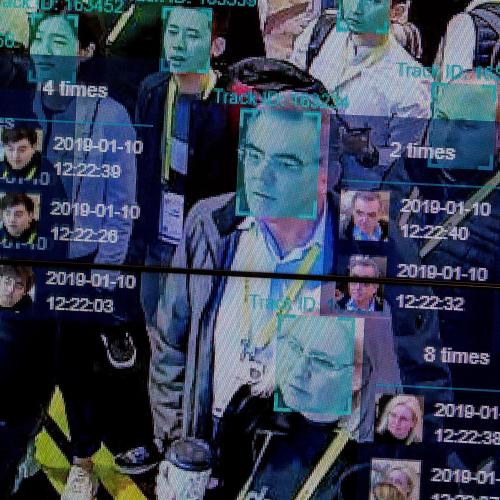
A cycle of overhyped terror plots involving government agency entrapment feeds a multimillion-dollar surveillance industry. The news stories ... quickly surface, long enough to cause scary headlines, then vanish before people can learn how often the cases are thrown out. These are stories about "bumbling fantasists", hapless druggies, the aimless, even the virtually homeless and mentally ill, and other marginal characters with not the strongest grip on reality, who have been lured into discourses about violence against America only after assiduous courting, and in some cases outright payment, by undercover FBI or police informants. But the tales of entrapment and terror hype continue apace ten years after 9/11. Now we have another "underwear bomber" declared by the Pentagon to have been about to launch a major attack via a US-bound plane, but who appears, reportedly, to have been a CIA-run double agent. What is the evidence that the "device", which is supposedly so sophisticated that there is doubt as to whether existing surveillance technologies in US airports would have caught it, actually exists? It is important to note that we can no longer assume that the FBI and the CIA and the NSA work ... for the safety of the American people; they [now] represent a revolving door of government officials who become security industry lobbyists and manufacturers, which, in turn, get the multimillion-dollar contracts for tackling the very problems these stories [hype].
Note: For more on this bizarre news, see the CBS report at this link. Isn't it amazing how many terrorist groups have undercover FBI and CIA agents involved in actually pushing plots forward? One has to wonder how far the plots would go without prompting by intelligence insiders. For a powerful BBC documentary suggesting that terrorism is pushed and sold by politicians for a deeper agenda, click here.
An FBI special agent was testifying in the government’s high-profile terrorism trial against Omar Abdel Rahman, the “blind sheik” suspected of plotting the first attack on the World Trade Center. Frederic Whitehurst, a chemist and lawyer who worked in the FBI’s crime lab, testified that he was told by his superiors to ignore findings that did not support the prosecution’s theory of the bombing. “There was a great deal of pressure put upon me to bias my interpretation,” Whitehurst said in U.S. District Court in New York in 1995. After the Justice Department’s inspector general began a review of Whitehurst’s claims, Attorney General Janet Reno and FBI Director Louis J. Freeh decided to launch a task force to dig through thousands of cases involving discredited agents. The task force took nine years to complete its work and never publicly released its findings. Officials never notified many defendants of the forensic flaws in their cases and never expanded their review to catch similar mistakes. If the Justice Department was secretive, the agency’s independent inspector general was not. Michael R. Bromwich’s probe culminated in a devastating 517-page report in April 1997 on misconduct at the FBI lab. He concluded that FBI managers failed — in some cases for years — to respond to warnings about the scientific integrity and competence of agents. The chief of the lab’s explosives unit, for example, “repeatedly reached conclusions that incriminated the defendants without a scientific basis” in the 1995 Oklahoma City bombing.
Note: Read more about the FBI's mishandling of forensic evidence in the Oklahoma City bombing case. For more along these lines, see concise summaries of deeply revealing news articles on government corruption from reliable major media sources.
Section 101. Purpose. This order delegates authorities and addresses national defense resource policies and programs under the Defense Production Act of 1950. Sec. 103. General Functions. Executive departments and agencies ... responsible for plans and programs relating to national defense ... or for resources and services needed to support such plans and programs, shall: ... (c) be prepared, in the event of a potential threat to the security of the United States, to take actions necessary to ensure the availability of adequate resources and production capability, including services and critical technology, for national defense requirements; ... Sec. 310. Critical Items. The head of each agency engaged in procurement for the national defense is delegated the authority of the President ... to take appropriate action to ensure that critical components, critical technology items, essential materials, and industrial resources are available from reliable sources when needed to meet defense requirements during peacetime, graduated mobilization, and national emergency. Appropriate action may include restricting contract solicitations to reliable sources, restricting contract solicitations to domestic sources (pursuant to statutory authority), stockpiling critical components, and developing substitutes for critical components or critical technology items. [signed] BARACK OBAMA
Note: For analysis of this executive order issued by President Obama giving legal power to the executive office to take control of all national resources, public or private, in peacetime or in war, click here.
The U.S. government is legally justified in killing its own citizens overseas if they are involved in plotting terror attacks against America, Attorney General Eric Holder said [on March 5], offering the Obama administration's most detailed explanation so far of its controversial targeted killing program. The Fifth Amendment provides that no one can be "deprived of life" without due process of law. But that due process, Holder said, doesn't necessarily come from a court. "Due process and judicial process are not one and the same, particularly when it comes to national security. The Constitution guarantees due process, not judicial process," the attorney general said. The ACLU called Holder's explanation "a defense of the governments chillingly broad claimed authority to conduct targeted killings of civilians, including American citizens, far from any battlefield without judicial review or public scrutiny." "Few things are as dangerous to American liberty as the proposition that the government should be able to kill citizens anywhere in the world on the basis of legal standards and evidence that are never submitted to a court, either before or after the fact," said Hina Shamsi, director of the ACLUs National Security Project. "Anyone willing to trust President Obama with the power to secretly declare an American citizen an enemy of the state and order his extrajudicial killing should ask whether they would be willing to trust the next president with that dangerous power, she said. The ACLU is suing the Obama administration, seeking to have documents regarding the targeted killing program made public.
Note: Attorney General Holder's claim that US citizens can be killed by the government without judicial process clearly violates the U.S. Bill of Rights. In addition to the Fifth Amendment that states that no person shall be held to answer for a crime "without due process of law," the Sixth Amendment states that "the accused shall enjoy the right to a speedy and public trial."
Important Note: Explore our full index to revealing excerpts of key major media news articles on several dozen engaging topics. And don't miss amazing excerpts from 20 of the most revealing news articles ever published.