





























Vaccines Media Articles
Below are key excerpts of revealing news articles on vaccine controversies from reliable news media sources. If any link fails to function, a paywall blocks full access, or the article is no longer available, try these digital tools.

The number of kids in America living with autism is apparently growing at a considerable rate, according to a new study. Published in JAMA Pediatrics ... the new study reveals a nearly 52% increase in autism spectrum disorder diagnoses among children in the United States between 2017 and 2020. The National Institute of Mental Health says that "autism spectrum disorder (ASD) is a neurological and developmental disorder that affects how people interact with others, communicate, learn, and behave." One out of every 30 kids in America has that developmental disorder. ASD rates in American kids have been rising since 2014, only dipping slightly in 2016 and 2017 before resuming the increasing pattern all the way to 2020. The Centers for Disease Control and Prevention (CDC) conducts the National Health Interview Survey every year. The survey data shows that about 2.24% of kids were diagnosed with ASD in 2014, which climbed all the way to 2.76% before dipping to 2.29% in 2017. As of 2020, the percentage of American youth who have been diagnosed with ASD has reached 3.49%. Around 4.64% of boys were diagnosed with ASD, while only 1.56% of girls received the same diagnosis.
Note: Such a huge problem, yet almost no studies comparing non-vaccinated children with those vaccinated. One of the few studies conducted show unvaccinated children were healthier. An investigation of Amish children found practically no cases of autism. For more along these lines, see concise summaries of deeply revealing news articles on health from reliable major media sources.
Levels of vaccine hesitancy among physicians may be higher than expected, with 1 in 10 primary care doctors not believing that vaccines are safe, according to a new survey. Among 625 physicians, 10.1% did not agree that vaccines were safe; 9.3% did not agree that vaccines were effective; and 8.3% did not agree that they were important, Timothy Callaghan, PhD, of Texas A&M School of Public Health [said]. The high proportion of hesitancy among primary care doctors "was certainly a surprise for us," Callaghan told MedPage Today. "We found that concerns about vaccines in general were far more widespread in the physician population than we might have expected." Confidence in vaccines among physicians was still higher than in the general public, as were rates of COVID-19 vaccination, with only 5.2% still unvaccinated at the end of the survey in May 2021. But high levels of vaccine uptake among doctors could have more to do with employer regulations or perceived risks of their workplace environment, Callaghan said. Callaghan and colleagues conducted their survey from May 14 to May 25, 2021 among 625 physicians in family medicine, internal medicine, or general practice. They were asked how strongly they agreed with questions about safety, effectiveness, and importance of vaccines, among other factors. Only 67.4% strongly agreed that vaccines are safe, just 75% strongly agreed they are effective, and only 76% strongly agreed they're important, the researchers found.
Note: For more on this, explore this article. For more along these lines, see concise summaries of deeply revealing news articles on coronavirus vaccines from reliable major media sources.
A new study from Lund University in Sweden on how the Pfizer-BioNTech COVID-19 vaccine affects human liver cells under experimental conditions, has been viewed more than 800,000 times in just over a week. A previous study from MIT has indicated that the SARS-CoV-2 virus mRNA can be converted to DNA and integrated into the human genome. Indeed, about 8 percent of human DNA comes from viruses inserted into our genomes during evolution. Does the Pfizer-BioNTech mRNA vaccine get converted to DNA or not? We show that the vaccine enters liver cells as early as 6 hours after the vaccine has been administered. We saw that there was DNA converted from the vaccine's mRNA in the host cells we studied. These findings were observed in petri dishes under experimental conditions, but we do not yet know if the converted DNA is integrated into the cells' DNA in the genome - and if so, if it has any consequences. About 18 percent of the vaccine accumulates in the liver just 30 minutes after the vaccine is injected in mice as reported by Pfizer in EMA assessment report, and therefore we chose to study liver cells. This also explains the choice of vaccine concentrations in our study ... which are 0.5-2% of the injection site concentration. We think it is self-evident that this type of research should be pursued. We have a new vaccine, and ... it is also a bit surprising that such studies do not seem to have been carried out before.
Note: The major media immediately published articles seriously downplaying the significance of this important study, which states that after COVID vaccines were administered, “there was DNA converted from the vaccine's mRNA in the host cells we studied.” The study calls for further investigation, yet the mainstream media downplays this point. For more along these lines, see concise summaries of deeply revealing news articles on COVID vaccines from reliable major media sources.
YouTube is taking down several video channels associated with high-profile anti-vaccine activists including Joseph Mercola and Robert F. Kennedy Jr., who experts say are partially responsible for helping seed the skepticism that’s contributed to slowing vaccination rates across the country. As part of a new set of policies aimed at cutting down on anti-vaccine content on the Google-owned site, YouTube will ban any videos that claim that commonly used vaccines approved by health authorities are ineffective or dangerous. Mercola, an alternative medicine entrepreneur, and Kennedy, a lawyer and the son of Sen. Robert F. Kennedy who has been a face of the anti-vaccine movement for years, have both said in the past that they are not automatically against all vaccines, but believe information about the risks of vaccines is being suppressed. Facebook banned misinformation on all vaccines seven months ago, though the pages of both Mercola and Kennedy remain up on the social media site. Their Twitter accounts are active, too. In an email, Mercola said he was being censored. Kennedy also said he was being censored. “There is no instance in history when censorship and secrecy has advanced either democracy or public health,” he said in an email. Social media companies have hired thousands of moderators and used high-tech image- and text-recognition algorithms to try to police misinformation. YouTube has removed over 133,000 videos for broadcasting coronavirus misinformation.
Note: Listen to first hand tragic stories of those who died or were seriously injured by COVID injections. Read one woman’s harrowing story of suffering severe side effects from the Pfizer injection only to have her story suppressed even though she supports vaccines in general. For more along these lines, see concise summaries of deeply revealing news articles on coronavirus vaccines and media corruption from reliable sources.
The US Food and Drug Administration announced the resignations of two top vaccine officials on Tuesday, and reports said the two were leaving in anger over the Biden administration's plan to roll out COVID-19 booster shots before officials had a chance to approve it. Dr. Marion Gruber, the director of the FDA's Office of Vaccines Research and Review, and her deputy, Dr. Philip Krause, plan to leave the FDA. Dr. Peter Marks, the director of the FDA's Center for Biologics Evaluation and Research, praised the pair for their work during the COVID-19 pandemic. He didn't give a reason for their departures. But sources told ... Politico that Gruber and Krause were upset with Biden administration's booster-shot plan. One former senior FDA leader [said] that Gruber and Krause were leaving because they felt that the Centers for Disease Control and Prevention was making vaccine decisions that should have been left to the FDA and were upset with Marks, the leader of their division, for not insisting on the agency's oversight. The source said the final straw was the Biden administration's announcing the booster-shot plan before the FDA had officially signed off on it. A former FDA official told Politico that the resignations were tied to anger over the FDA's lack of autonomy in booster planning.
Note: We don’t use Business Insider as a normal reliable source, but in this case, the major media (like this CNN article) avoids linking this decision to the boosters. For more along these lines, see concise summaries of deeply revealing news articles on government corruption and coronavirus vaccines from reliable major media sources.
At least 10 out of 26 Indonesian doctors who have died from Covid-19 this month had been fully vaccinated with Sinovac, prompting health experts to consider whether medics should receive alternative doses to boost immunity. Indonesia, which has relied on the Chinese-made vaccine for its health workers, is struggling with a new surge in coronavirus cases. On Monday the country announced 20,694 new infections. In Kudus, a town in central Java, more than 500 medical workers have tested positive for Covid-19 over the last two weeks, including one doctor who died. All were fully vaccinated. The data, released by the risk mitigation team of the Indonesian Medical Association (IMA), adds to questions about the level of protection that Sinovac provides against new, more infectious variants. The vaccine was approved for emergency use this month by the World Health Organization, which said efficacy results showed it prevented symptomatic disease in 51% of those vaccinated, and prevented severe Covid-19 and hospitalisation in 100% of the studied population. However, several countries that have vaccinated a large proportion of their population and used the Chinese-made Sinovac or Sinopharm vaccines as part of their inoculation campaigns have reported recent outbreaks. These include Mongolia, Seychelles, Bahrain and Chile.
Note: For more along these lines, see concise summaries of deeply revealing news articles on coronavirus vaccines from reliable major media sources.
The pharmaceutical industry is distributing talking points, organizing opposition, and even collecting congressional signatures in an attempt to reverse President Joe Biden’s support for worldwide access to generic Covid-19 vaccines. The behind-the-scenes moves ... come as the U.S. last week announced that it would support the World Trade Organization proposal, led by India and South Africa, to temporarily waive enforcement of intellectual property and patent rights on coronavirus vaccines. Without a radical expansion in vaccine manufacturing capacity, many developing countries will not achieve mass vaccination rates until 2023 or 2024. The waiver request, which was unexpectedly endorsed by Biden’s administration on May 5, is designed to provide legal immunity for drug firms to copy the formulas of existing vaccines to supply low-cost vaccines to low-income countries. On Wednesday, Jared Michaud, a lobbyist with the Pharmaceutical Research and Manufacturers of America, a trade group that represents Pfizer, Johnson & Johnson, AstraZeneca, and other major drug firms, sent an email laying out the industry’s role in coaxing lawmakers to push back against a waiver. One of the documents laid out potential national security concerns and suggested that lawmakers should argue the waiver could empower Russia and China. PhRMA ... spent over $24 million on federal lobbying last year and is one of the biggest corporate players in election spending.
Note: For more along these lines, see concise summaries of deeply revealing news articles on Big Pharma corruption and the coronavirus vaccine from reliable major media sources.
A week ago, the Biden administration announced support for waiving intellectual property protection for Covid-19 vaccines. In response, Bio, a trade association representing biotechnology companies, issued a statement saying, “The United States has unfortunately chosen to set a dangerous precedent with these actions.” Efforts to maintain intellectual property rights from life-saving drugs to vaccines have hindered the global response. The Biden administration surprised a lot of observers by coming out in favor of this ... temporary suspension of IP and patent enforcement on certain medications related to the Covid-19 pandemic. Right now, the way that wealthier countries — the U.S. and others — are confronting this crisis for the developing world is through voluntary agreements. There are really two ways to combat this crisis. There’s a way to do it in a sense that maximizes profit for the healthcare companies, the pharmaceutical companies. And then there’s the more collaborative, nonprofit approach. And early on, pharmaceutical companies were fighting this more collaborative approach. The pharmaceutical companies, in addition, have said they plan to increase prices once the pandemic quote-unquote ends. These companies are eagerly awaiting the opportunity to increase prices.
Note: For more along these lines, see concise summaries of deeply revealing news articles on Big Pharma corruption and the coronavirus vaccine from reliable major media sources.
In the coming months, Linda Thomas-Greenfield, President Joe Biden's ambassador to the United Nations, will hear from a growing chorus of developing nations about the foundering efforts to distribute the coronavirus vaccine globally. The nations, many of which have not even begun vaccinating their populations, are demanding that the U.S. support proposals to temporarily waive certain patent and intellectual property rights so that generic coronavirus vaccines can be produced. The proposals have been fiercely opposed by American drugmakers, including Pfizer. ASG ... represents Pfizer. Many leading figures in Biden's administration, including key White House advisers, State Department leaders, and health care officials have financial stake in or professional ties to vaccine manufacturers, which are now lobbying to prevent policies that would cut into future profits over the vaccine. ASG in particular has unusual amounts of sway in the Biden administration. State Department officials Victoria Nuland, Wendy Sherman, Uzra Zeya, and Molly Montgomery previously worked at ASG, as did Philip Gordon, Vice President Kamala Harris's national security adviser. The pharmaceutical industry, in a bid to shield an expected financial windfall, has pressed the Biden administration not only to oppose the waiver, but also to impose trade-related sanctions on countries that back [a] proposal or move to manufacture coronavirus vaccines without permission from patent holders.
Note: For more along these lines, see concise summaries of deeply revealing news articles on coronavirus vaccines and Big Pharma corruption from reliable major media sources.
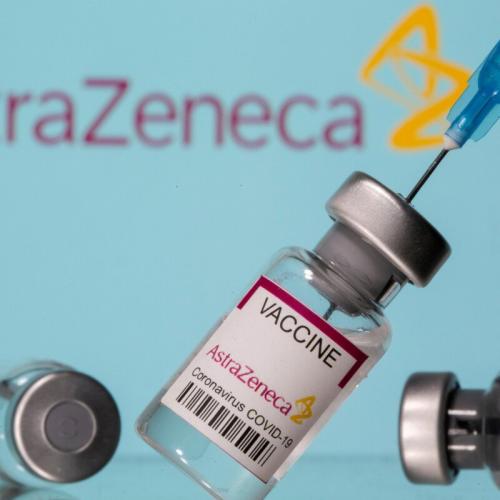
AstraZeneca may have included "outdated information" in touting the effectiveness of its COVID-19 vaccine in a U.S. study, federal health officials said Tuesday in an unusual public rift that could further erode confidence in the shot. In an extraordinary rebuke, just hours after AstraZeneca on Monday announced its vaccine worked well in the U.S. study, an independent panel that oversees the study scolded the company for cherry-picking data, according to a senior administration official. The panel wrote to AstraZeneca and U.S. health leaders that it was concerned the company chose to use data that was outdated and potentially misleading instead of the most recent and complete findings. The NIH's Dr. Anthony Fauci told ABC's "Good Morning America" that the incident "really is what you call an unforced error" and that he expects the discrepancy to be straightened out. But that nitty-gritty seldom is seen by the public, something now exposed by the extraordinary microscope being applied to development of the world's COVID-19 vaccines. The vaccine is used widely in Britain, across the European continent and in other countries, but its rollout was troubled by inconsistent study reports about its effectiveness, and then last week a scare about blood clots that had some countries temporarily pausing inoculations. Company executives refused repeated requests from reporters to provide a breakdown of the 141 COVID-19 cases it was using to make the case for the shot's effectiveness.
Note: For more along these lines, see concise summaries of deeply revealing news articles on coronavirus vaccines from reliable major media sources.
Germany, France, Spain, Italy, Ireland and the Netherlands have joined the growing list of countries that have suspended the use of the coronavirus vaccine developed by AstraZeneca and the University of Oxford over blood clot concerns. The Dutch government said Sunday that the Oxford-AstraZeneca vaccine would not be used until at least March 29, while Ireland said earlier in the day that it had temporarily suspended the shot as a precautionary step. On Monday, the German government also said it was suspending its use, with the vaccine regulator, the Paul Ehrlich Institute, calling for further investigations. The Italian medicines authority made a similar announcement on Monday afternoon and French President Emmanuel Macron also said the vaccine’s use would be paused pending a verdict from the EU’s regulator. Spain Health Minister Carolina Darias said Monday that the country will halt use of the shot for at least two weeks. Portugal and Slovenia also suspended the vaccine. Thailand has also halted its planned deployment of the vaccine. The move to pause its use by Dutch and Irish officials came shortly after Norway’s medicines agency said it had been notified of three health workers being treated in hospital for bleeding, blood clots and a low count of blood platelets after receiving the Oxford-AstraZeneca vaccine. Norway has put its Oxford-AstraZeneca vaccine program on hold.
Note: Many countries have resumed using this vaccine after Europe's medicines regulator concluded it was "safe and effective". For more along these lines, see concise summaries of deeply revealing news articles on coronavirus vaccines from reliable major media sources.
Pfizer expects to sell $15 billion worth of Covid-19 vaccines in 2021. That would make it the second-highest revenue-generating drug anytime, anywhere, according to industry reports. The maker of the first Covid-19 vaccine to be approved for use in advanced markets has released its earning forecasts for 2021 today. Pfizer expects to earn between $59 billion and $61 billion - up from $42 billion it made in 2020. Sales of the vaccine are set to bring in about a fourth of Pfizer's total revenue this year. That would be nearly as much as its three best-selling products combined. The company is expecting profit margins for the vaccine to be between 25% and 30% which means profits from the vaccine could be around $4 billion. All of Pfizer's costs and profits from the vaccine are split evenly with BioNTech, the biotech company that helped develop the treatment. There are is only one drug in the world that sells more - Humira, a prescription medication for arthritis. Pfizer plans on selling 2 billion doses of the vaccine this year, but that demand should subside in coming years so the revenue of Covid-19 vaccine won't be stable, Pfizer's CEO Albert Bourla said on an call with analysts and investors. The company expects to continue profiting from it by selling booster doses, including ones required to shield against new variants of the virus, Bourla said. Further, Pfizer is pursuing more avenues to employ the mRNA technology underlying the vaccine, including a flu vaccine and other therapeutic applications.
Note: Read more in this revealing Reuters article. For more along these lines, see concise summaries of deeply revealing news articles on coronavirus vaccines and Big Pharma profiteering from reliable major media sources.
Health authorities in Norway sought to allay safety concerns raised by the death of some elderly patients after they were vaccinated against Covid-19, saying there’s no evidence of a direct link. The initial reports from Norway raised alarm as the world looks for early signs of potential side effects from the vaccines. Although doctors say it’s possible that vaccine side-effects could aggravate underlying illnesses, they were expecting nursing-home residents to die shortly after being vaccinated because deaths are more common among the frailest and sickest elderly patients. In Norway, 33 people aged 75 and over died following immunization, according to the [Norwegian Medicines Agency]’s latest figures. All were already seriously ill, it said. The Scandinavian country has already inoculated almost all of its nursing home population, with more than 48,000 people vaccinated. The reported fatalities are well under 1 out of 1,000 nursing-home patients to be vaccinated, [Steinar Madsen, medical director at the Norwegian Medicines Agency] said. The side effects of immunization can, in some cases, “tip the patients into a more serious course of the underlying disease,” Madsen said. “We can’t rule that out.” Other countries, including Germany and Israel, have also reported deaths in people who recently were vaccinated. Until Friday, Norway had only used the vaccine provided by Pfizer Inc. and BioNTech SE. The companies are now working with the Nordic country to look into the deaths.
Note: For more details on these and other deaths from the vaccines, see this webpage. Are all these deaths shortly after vaccination simply coincidence? Read about many problems with these vaccines based on reports from reliable sources. For more, see concise summaries of deeply revealing news articles on coronavirus vaccines from reliable major media sources. Then explore the excellent, reliable resources provided in our Coronavirus Information Center.
Health authorities are investigating the case of a Florida doctor who died from an unusually severe blood disorder 16 days after receiving the Pfizer coronavirus vaccine. Dr. Gregory Michael, a 56-year-old obstetrician and gynecologist in Miami Beach, received the vaccine at Mount Sinai Medical Center on Dec. 18 and died 16 days later from a brain hemorrhage, his wife, Heidi Neckelmann, wrote. Shortly after receiving the vaccine, Dr. Michael developed an extremely serious form of a condition known as acute immune thrombocytopenia, which prevented his blood from clotting properly. About nine million people in the United States have received at least one shot of either the Pfizer or Moderna coronavirus vaccine, the two authorized in the United States. So far, serious problems reported were 29 cases of anaphylaxis, a severe allergic reaction. Dr. Jerry L. Spivak, an expert on blood disorders at Johns Hopkins University, who was not involved in Dr. Michael’s care, said that based on Ms. Neckelmann’s description, “I think it is a medical certainty that the vaccine was related.” “This is going to be very rare,” said Dr. Spivak, an emeritus professor of medicine. But he added, “It happened and it could happen again.” Dr. Paul Offit, an expert in vaccines and infectious diseases ... said that the measles vaccine and measles itself have been known to cause this same clotting problem, but it is usually transient and not serious. It occurs in about one of every 25,000 measles shots
Note: The supposed experts are claiming the numerous deaths of people within hours to weeks after the vaccine are just coincidental. This article examines these deaths and raises many questions. And why are so few of these being reported? Read about many problems with these vaccines based on reports from reliable sources. For more, see concise summaries of deeply revealing news articles on coronavirus vaccines from reliable major media sources. Then explore the excellent, reliable resources provided in our Coronavirus Information Center.
Though most people who protect themselves with a coronavirus vaccine will never develop serious side effects, such rare cases are barred from federal court and instead steered to an obscure program with a record of seldom paying claims. The Countermeasures Injury Compensation Program, which was set up specifically to deal with vaccines under emergency authorization, has just four employees and few hallmarks of an ordinary court. Decisions are made in secret by government officials, claimants can’t appeal to a judge and payments in most death cases are capped at $370,376. That stands in contrast to the much more established federal vaccine court, which decides cases of injury from most childhood vaccines and other common inoculations. George Washington University law professor Peter Meyers has followed the countermeasures program for years and bluntly calls it a “black hole,” obtaining federal documents this summer showing it has paid fewer than 1 in 10 claims in its 15-year history. Experts are concerned that with the sheer volume of people expected to get coronavirus vaccines in the U.S. — more than 200 million — even a successful rollout with relatively few ill effects could be enough to swamp the program. What’s more, such cases are complex and it’s often hard to prove a direct link between claims of illness and a vaccine. The countermeasures program was created by a 2005 law. Under the program, drug makers can only be sued for “willful misconduct.”
Note: For more along these lines, see concise summaries of deeply revealing news articles on coronavirus vaccines from reliable major media sources. Then explore the excellent, reliable resources provided in our Coronavirus Information Center.
A nurse who had just received the coronavirus vaccine at a Tennessee hospital told reporters she was feeling dizzy and then fainted. Nurse manager Tiffany Dover received the Pfizer-BioNTech jab at CHI Memorial Hospital in Chattanooga on Thursday and was giving a press briefing when she began to trail off, according to WTVC-9. "All of my staff, you know, we are excited to get the vaccine. We are in the COVID unit, so therefore, you know, my team will be getting first chances to get the vaccine," Dover said. "And I know that it's really "Sorry, I'm feeling really dizzy," she continued. One of the doctors behind her caught her as she passed out about 17 minutes after receiving the shot. "It just hit me all of a sudden, I could feel it coming on. I felt a little disoriented, but I feel fine now, and the pain in my arm is gone," Dover said after recovering. Dover told WTVC-9 she has a condition where she often faints when she feels pain.
Note: A video of this nurse fainting while being interviewed is available here. Read about health care workers who went into anaphylactic shock shortly after receiving the vaccine. One landed in the ICU. For more, see concise summaries of deeply revealing news articles on problems with the coronavirus vaccines from reliable major media sources. Then explore the excellent, reliable resources provided in our Coronavirus Information Center.
Two health care workers at the same hospital in Alaska developed concerning reactions just minutes after receiving Pfizer's coronavirus vaccine this week, including one staff member who was to remain hospitalized until Thursday. The first worker, a middle-aged woman who had no history of allergies, had an anaphylactic reaction that began 10 minutes after receiving the vaccine. [After treatment] her symptoms subsided but then re-emerged, and she was treated with steroids and an epinephrine drip. When doctors tried to stop the drip, her symptoms re-emerged yet again, so the woman was moved to the intensive care unit. The second worker received his shot on Wednesday and developed eye puffiness, lightheadedness and a scratchy throat 10 minutes after the injection. He was taken to the emergency room and treated. The worker was back to normal within an hour and released. The hospital ... administered 144 total doses. The Alaska woman's reaction was believed to be similar to the anaphylactic reactions two health workers in Britain experienced after receiving the Pfizer-BioNTech vaccine last week. Like her, both recovered. Pfizer's trial did not find any serious adverse events caused by the vaccine, although many participants did experience aches, fevers and other side effects. [The CDC] has recommended that the vaccine be administered in settings that have supplies, including oxygen and epinephrine, to manage anaphylactic reactions.
Note: Does this sound like a safe vaccine? Remember that billions of dollars are involved here and Pfizer in the past was fined $2.3 billion dollars for illegal processes. How much can we trust them? More in this great article. And watch a video of a nurse fainting while being interviewed on TV minutes after getting the vaccine. For more, see concise summaries of deeply revealing news articles on problems with the coronavirus vaccines from reliable major media sources. Then explore the excellent, reliable resources provided in our Coronavirus Information Center.
The sudden death of a prominent anti-vaccination activist has led to a police probe. Brandy Vaughan, 45, was found dead on December 7. On Monday, the Santa Barbara County Sheriff's Office announced an investigation into the circumstances surrounding her death. "The decedent has been positively identified and the death is believe [sic] to be a result of natural causes based on an autopsy exam conducted last week," Santa Barbara County Sheriff Public Information Officer Raquel Zick said. "The final cause and manner of death determination are pending toxicology screening which normally takes 4-6 weeks." Vaughan, a former Merck pharmaceutical representative, was an outspoken critic of mandatory vaccinations and pharmaceutical companies. She founded non-profit organization Learn The Risk in a bid to educate people "on the dangers of pharmaceutical products, including vaccines and unnecessary medical treatments." [Vaughan] once worked for Merck pharmaceutical as a sales representative for Vioxx, a painkiller eventually taken off the market."I realized that just because something is on the market doesn't mean it's safe," Vaughan writes. "Much of what we are told by the healthcare industry just simply isn't the truth." In a Facebook post dated December 4 of 2019, Vaughan asks: "Ever wonder why I speak out against Big Pharma and suffer the major consequences? Because I will fight for my son and humanity and I will educate people on pharmaceutical product dangers until my last breath!"
Note: This article fails to mention that the number of deaths due to Vioxx are estimated to be between 40,000 and 500,000. Read also an article titled "Mystery surrounds death of Tanzanian president who defied COVID lockdown." For more along these lines, see concise summaries of deeply revealing news articles on vaccines and Big Pharma corruption from reliable major media sources.
Pfizer chairman Albert Bourla told NBC’s Dateline host Lester Holt that the pharmaceutical company was “not certain” if the vaccine prevented the coronavirus from being transmitted, saying: “This is something that needs to be examined.” In a prime-time special titled “Race for a Vaccine” ... Holt questioned Bourla and other individuals involved in the development and distribution of the vaccine. In November, Pfizer announced that its vaccine candidate had been shown to be more than 90% effective at preventing COVID-19 and has applied for emergency use authorization from the Food and Drug Administration (FDA). The U.K. became the first country to approve Pfizer’s vaccine this week with the first round of immunizations expected to roll out next week. In August, Canada signed a deal with Pfizer for 20 million doses of the vaccine. In a list of interview highlights released before the special, Holt asked Bourla: “Even though I’ve had the protection, am I still able to transmit it to other people?” “I think this is something that needs to be examined. We are not certain about that right now with what we know,” Bourla responded.
Note: An MSN article reported that a 41-year-old Portuguese health worker died two days after getting the Pfizer vaccine, but then removed the article. Learn more about this death in this article. A Florida doctor also died after receiving the vaccine. This CDC report states “December 14–23, 2020, monitoring … detected 21 cases of anaphylaxis after administration of a reported 1,893,360 first doses of the Pfizer-BioNTech COVID-19 vaccine.” For more, explore the excellent, reliable resources provided in our Coronavirus Information Center.
The announcement this week that a cheap, easy-to-make coronavirus vaccine appeared to be up to 90 percent effective was greeted with jubilation. But since unveiling the preliminary results, AstraZeneca has acknowledged a key mistake in the vaccine dosage received by some study participants, adding to questions about whether the vaccine's apparently spectacular efficacy will hold up under additional testing. Scientists and industry experts said the error and a series of other irregularities and omissions in the way AstraZeneca initially disclosed the data have eroded their confidence in the reliability of the results. The regimen that appeared to be 90 percent effective was based on participants receiving a half dose of the vaccine followed a month later by a full dose; the less effective version involved a pair of full doses. AstraZeneca disclosed in its initial announcement that fewer than 2,800 participants received the smaller dosing regimen, compared with nearly 8,900 participants who received two full doses. Moncef Slaoui, the head of Operation Warp Speed, the U.S. initiative to fast-track coronavirus vaccines, noted another limitation in AstraZeneca's data. On a call with reporters, he suggested that the participants who received the half-strength initial dose had been 55 years old or younger. The fact that the initial half-strength dose wasn't tested in older participants, who are especially vulnerable to Covid-19, could undermine AstraZeneca's case to regulators that the vaccine should be authorized for emergency use.
Note: Learn in this revealing article how vaccine trials are rigged. This article spells out how vaccine makers are above the law and face no consequences for damage from vaccines. For more along these lines, see concise summaries of deeply revealing news articles on the coronavirus and vaccines from reliable major media sources.
Important Note: Explore our full index to key excerpts of revealing major media news articles on several dozen engaging topics. And don't miss amazing excerpts from 20 of the most revealing news articles ever published.