



















































Banking Bailout Media Articles
Below are key excerpts of revealing news articles on the 2008 banking bailout from reliable news media sources. If any link fails to function, a paywall blocks full access, or the article is no longer available, try these digital tools.

The past three years have been a disaster for most Western economies. The United States has mass long-term unemployment for the first time since the 1930s. Meanwhile, Europes single currency is coming apart at the seams. How did it all go so wrong? The fact is that what were experiencing right now is a top-down disaster. The policies that got us into this mess ... were, with few exceptions, policies championed by small groups of influential people in many cases, the same people now lecturing the rest of us on the need to get serious. And by trying to shift the blame to the general populace, elites are ducking some much-needed reflection on their own catastrophic mistakes. What happened to the budget surplus the federal government had in 2000? First, there were the Bush tax cuts, which added roughly $2 trillion to the national debt over the last decade. Second, there were the wars in Iraq and Afghanistan, which added an additional $1.1 trillion or so. And third was the Great Recession, which led both to a collapse in revenue and to a sharp rise in spending on unemployment insurance and other safety-net programs. So who was responsible for these budget busters? It wasnt the man in the street. We need to place the blame where it belongs, to chasten our policy elites. Otherwise, theyll do even more damage in the years ahead.
Note: For highly revealing major articles exposing secret gatherings of the global elite and their activities, click here.
Goldman Sachs is bracing itself for what may be the most contentious annual meeting in the embattled investment bank's 142-year history. Angry shareholders, including a coalition of religious groups, are planning to call on Goldman's executives to justify the combined $69.6m (42.4m) payday its top five executives received in 2010 and to answer questions about allegations that the bank misled clients and lied to Congress. The meeting comes amid mounting pressure on the bank. Earlier this week Eric Holder, the US attorney-general, confirmed that the justice department was investigating Goldman's role in the financial crisis following a withering report on the bank's role led by senators Carl Levin and Tom Coburn. The 650-page report "Wall Street and the Financial Crisis: Anatomy of a Financial Collapse," gave Goldman its own section titled "Failing to Manage Conflicts of Interest: A Case Study of Goldman Sachs." In July the bank paid $500m to settle charges brought by financial regulator the Securities and Exchange Commission (SEC) that it misled customers over complex sub-prime mortgage products it sold in 2007. The spotlight on executive pay could not come at a more sensitive moment for the bank. The bank's top five executives received cash and stock last year that was 13 times greater than the year before. Goldman's 2010 net revenues fell 13% and profits fell 37%. Goldman paid Blankfein close to $19m in compensation for 2010, almost double his award for the previous year.
Note: For lots more on the financial chicanery of Goldman Sachs and other major financial corporations that led to the global economic crisis and massive taxpayer bailouts of the firms, click here.
A Senate panel has concluded that Goldman Sachs Group Inc. profited from the financial crisis by betting billions against the subprime mortgage market, then deceived investors and Congress about the firm's conduct. Some of the findings in the report by the Senate's Permanent Subcommittee on Investigations will be referred to the Justice Department and the Securities and Exchange Commission for possible criminal or civil action, said Sen. Carl Levin (D-Mich.), the panel's chairman. The giant investment bank was just one focus of the subcommittee's probe into Wall Street's role in the financial crisis. The 639-page report based on internal memos, emails and interviews with employees of financial firms and regulators casts broad blame, saying the crisis was caused by "conflicts of interest, heedless risk-taking and failures of federal oversight." Among the culprits cited by the panel are Washington Mutual, a major mortgage lender that failed in 2008, as well as the Office of Thrift Supervision, a federal bank regulator, and credit rating firms. Asked if he was disappointed that no Wall Street figures had gone to jail in connection with the crisis, Levin responded, "There's still time."
Note: For many key reports from major media sources illuminating how major financial corporations knowingly brought about the global financial crisis and profited from it, click here.
Analysts who reviewed complex mortgage bonds that ultimately collapsed and ruined the U.S. housing market were threatened with firing if they lost lucrative business, prompting faulty ratings on trillions of dollars worth of junk mortgage bonds, a Senate report said [on April 13]. The 639-page report by the Senate Permanent Subcommittee on Investigations confirms much of what McClatchy Newspapers first reported about mismanagement by credit ratings agencies in 2009. Credit rating agencies are supposed to provide independent assessments on the quality of debt being issued by companies or governments. Traditionally, investments rated AAA had a probability of failure of less than 1 percent. But in collusion with Wall Street investment banks, the Senate report concludes, the top two ratings agencies - Moody's Investors Service and Standard & Poor's - effectively cashed in on the housing boom by ignoring mounting evidence of problems in the housing market. Profits at both companies soared, with revenues at market leader Moody's more than tripling in five years. Then the bottom fell out of the housing market, and Moody's stock lost 70 percent of its value; it has yet to fully recover. More than 90 percent of AAA ratings given in 2006 and 2007 to pools of mortgage-backed securities were downgraded to junk status.
Note: For many key reports from major media sources illuminating how major financial corporations knowingly brought about the global financial crisis and profited from it, click here.
Christy Mack, the wife of Morgan Stanley Chairman John Mack, and Susan Karches, the widow of the company's former investment-banking division president, Peter Karches, are among the chief investors in a company that received $220 million in low-interest loans. The funds came from a federal bailout program that "virtually guaranteed them millions in risk-free income," according to the article ... "The Real Housewives of Wall Street," which appears in [Rolling Stone]. In 2009, Christy Mack and Susan Karches launched Waterfall TALF Opportunity, a company with a Cayman Islands address, although the two women did not seem "to have any experience whatsoever in finance." TALF stands for "Term Asset-Backed Securities Loan Facility." The federal aid they received "falls under a broader category of bailout initiatives designed" by Federal Reserve chief Ben Bernanke and Treasury Secretary Timothy Geithner. With an initial upfront investment of $15 million, Waterfall TALF received $220 million in cash from the Fed, most of which it used to purchase "student loans and commercial mortgages." The loans were set up so that the investors "would keep 100% of any gains on the deal while the Fed and the Treasury (read: the taxpayer) would eat 90% of the losses."
Note: We don't usually quote the New York Daily News, but as they were the only major media to report this important story, we've included it here. Why are the major media silent on this powerful information uncovered by U.S. Senator Bernie Sanders? For the full story on this, click here. For lots more from reliable sources on corruption in the government bailouts of the biggest banks, click here.
Do you know who really owns your mortgage? That question has become a nightmare for many homeowners since the invention of mortgage-backed securities. Yes, those were the exotic investments that sparked the financial collapse in this country. And they're still causing problems. As it turns out, Wall Street cut corners when it bundled homeowners' mortgages into securities that were traded from investor to investor. Now that banks are foreclosing on people, they're finding that the legal documents behind many mortgages are missing. So, what do the banks do? Some companies appear to be resorting to forgery and phony paperwork in what looks like a nationwide epidemic. Even if you're not at risk of foreclosure, there could be legal ramifications for a homeowner if the chain of title has been lost.
Note: Don't miss at the link above the most excellent, six-minute CBS video explaining more on this blatant deception and manipulation by many banks. You have to put up with a one-minute commercial shortly after the video starts. For lots more from reliable sources on the criminal practices of mortgage lenders, click here.
It's bizarre but, it turns out, Wall Street cut corners when it created those mortgage-backed investments that triggered the financial collapse. Now that banks want to evict people, they're unwinding these exotic investments to find, that often, the legal documents behind the mortgages aren't there. Caught in a jam of their own making, some companies appear to be resorting to forgery and phony paperwork to throw people - down on their luck - out of their homes. This past January in Los Angeles, 37,000 homeowners facing foreclosure showed up to an event to beg their bank for lower payments on their mortgage. In February in Miami, 12,000 people showed up to a similar event. For many that's when the real surprise comes in: these same banks have fouled up all of their own paperwork to a historic degree. There were a million foreclosures last year. And there will be another million this year - those lawsuits are forcing open those bundled, mortgage-backed securities that Wall Street cooked up in the mid 2000s, and exposing a lack of ownership documents all across the country. Banks are defensive because all 50 state attorneys general want to punish them: the states are seeking about $20 billion in damages for what they say is the irresponsible, perhaps criminal way, that some mortgage companies handled what is, for most folks, the most important investment of their lives.
Note: To watch the amazing 14-minute video of this article, click here. Learn how banks paid a company which hired people off the streets to pretend they were bank vice presidents and sign thousands of documents fraudulently. For lots more from reliable sources on the criminal practices of mortgage lenders, click here.
Dexia SA (DEXB), based in Brussels and Paris, borrowed as much as $33.5 billion through its New York branch from the Feds discount window lending program, according to Fed documents released yesterday in response to a Freedom of Information Act request. Dublin-based Depfa Bank Plc, taken over in 2007 by a German real-estate lender later seized by the German government, drew $24.5 billion. The biggest borrowers from the ... discount window as the program reached its crisis-era peak were foreign banks, accounting for at least 70 percent of the $110.7 billion borrowed during the week in October 2008 when use of the program surged to a record. The disclosures may stoke a reexamination of the risks posed to U.S. taxpayers by the central banks role in global financial markets. Separate data disclosed in December on temporary emergency-lending programs set up by the Fed also showed big foreign banks as borrowers. Six European banks were among the top 11 companies that sold the most debt overall -- a combined $274.1 billion -- to the Commercial Paper Funding Facility. Those programs also loaned hundreds of billions of dollars to the biggest U.S. banks, including JPMorgan Chase & Co., Bank of America Corp., Citigroup Inc. and Morgan Stanley.
Note: For a treasure trove of reports from reliable sources on the bailout of banks worldwide by the US taxpayer, click here.
The Federal Reserve will disclose details of emergency loans it made to banks in 2008, after the U.S. Supreme Court rejected an industry appeal that aimed to shield the records from public view. The justices ... left intact a court order that gives the Fed five days to release the records, sought by Bloomberg News' parent company, Bloomberg. The order marks the first time a court has forced the Fed to reveal the names of banks that borrowed from its oldest lending program, the 98-year-old discount window. "I can't recall that the Fed was ever sued and forced to release information" in its 98-year history, said Allan H. Meltzer, the author of three books on the U.S central bank and a professor at Carnegie Mellon University in Pittsburgh. The disclosures, together with details of six bailout programs released by the central bank in December under a congressional mandate, would give taxpayers insight into the Fed's unprecedented $3.5 trillion effort to stem the 2008 financial panic. Under the trial judge's order, the Fed must reveal 231 pages of documents related to borrowers in April and May 2008, along with loan amounts. News Corp.'s Fox News is pressing a bid for 6,186 pages of similar information on loans made from August 2007 to November 2008.
Note: For a treasure trove of reports from major media sources on the hidden activities of the Fed and the biggest Wall Street and international banks, click here.
Anonymous, an online hacker group, released a string of e-mails last week that purportedly show mortgage document fraud at Bank of America. Many people yawned. After all, there have been well-documented cases of mortgage fraud and illegal foreclosures, and little has been done to punish Bank of America or any of the banks for their behavior. But just because the federal government has been slow to act on the mortgage crisis doesn't mean that these e-mails are any less valuable. The e-mails are a chain showing requests for Balboa Insurance employees to remove document tracking numbers from the system of record. Balboa Insurance became a division of Bank of America after the bank bought the bankrupt home loan company Countrywide Financial. The idea suggested in the e-mails was to misplace individual documents away from matching loans. This would make it harder for federal auditors to investigate individual loans. It would also make it far more difficult for individual homeowners to dispute or question bank action on their loans - and therefore obtain mortgage modifications or a stay on bank foreclosure. The Anonymous e-mails are serious indeed. They're a snapshot into why the mortgage mess spiraled out of control. While they don't tell the whole story, they point to the need for further investigation and possible action on behalf of the federal government. When people are losing their homes, the banks shouldn't be allowed to get away with deception.
Note: For a treasure trove of reports by major media sources on the collusion between government and banks against the public interest, click here.
"The facts in the report speak for themselves, but the principles it describes could apply to funds throughout the United States and overseas." That's attorney Philip Khinda, talking about the 75-page report he delivered last week to the California Public Employees' Retirement System on dealings involving former senior executives and board members with so-called placement agents, and how the latter got tens of millions of dollars in questionable fees for their services. The report is the culmination of a 17-month investigation headed by Khinda, a partner at the Washington law firm Steptoe & Johnson, which was hired by CalPERS for the job. Citing the $800 million a year CalPERS was paying out in fees, the report concludes that "the excessive nature created an environment in which external managers were willing and able to pay fees at a level that bore little or no relationship to the services apparently provided by the placement agents ... Many of the abuses relating to placement agent arrangements were, in a sense, a symptom of a larger problem." That larger problem applies, in part, to funds throughout the United States and overseas, ranging from other public pension funds to sovereign wealth funds investing in the United States. With the amount of money at stake, the fat fees involved, and the various middlemen looking for a piece, events similar to what transpired at CalPERS could just as easily appear elsewhere.
Note: For a treasure trove of reports by major media sources on the collusion between government and financial corporations against the public interest, click here.
This week, the Michigan legislature passed and the governor signed into law a bill that would permit Governor Rick Snyder to push aside elected city officials and replace them with emergency financial managers in any municipality or school district facing financial difficulties. The law would include virtually every town and city in the state as those cities that arent bankrupt already soon will be once the governors proposed budget which cuts billions in aid to municipalities and school districts is approved by the legislature. One of the most shocking, Draconian, democracy-destroying measures in the history of this country has became law and the nation has seemingly slept through it. The new law, described by one of the GOP legislators sponsoring the bill as financial martial law, empowers the governors appointees [referred to as Emergency Financial Managers] to fire duly elected local officials, cancel labor contracts and even dissolve entire communities and school districts. This is about so much more than collective bargaining agreements and unions. This law gives an appointee of the governor which, by the way, may be a corporation the authority to dismiss any or all of a municipalitys elected government officials.
Note: For a treasure trove of reports by major media sources on the collusion between government and financial powers against the public interest, click here.
Michigan lawmakers are on the verge of approving a bill that would enable the governor to appoint "emergency managers" -- officials with unilateral power to make sweeping changes to cities facing financial troubles. Under the legislation ... the governor could declare a "financial emergency" in towns or school districts. He could then appoint a manager to fire local elected officials, break contracts, seize and sell assets, eliminate services - and even eliminate whole cities or school districts without any public input. The measure passed in the state Senate this week; the House passed its own version earlier. Republican Gov. Rick Snyder has said he will sign the bill into law. U.S. Rep. John Conyers, a Democrat who represents Detroit, said in a statement that in a given city, the governor's new "financial czar" could "force a municipality into bankruptcy, a power that will surely be used to extract further concessions from hardworking public sector workers." He said the legislation raises "serious constitutional concerns."
Note: The bill was made law. For more, click here. For a treasure trove of reports from major media sources exposing the control exerted by financial powers on government officials, click here.
What's wrong with this picture: Years have passed since Wall Street's financial meltdown. Due to the crisis, the economy tanked, the mortgage market has yet to recover, and millions of jobs were lost. Many of those jobs losses will be permanent. The only person who went to jail for any of this was Bernie Madoff. When he accepted his Academy Award for the documentary "Inside Job," Berkeley filmmaker Charles Ferguson reminded Americans that the lack of criminal prosecutions for the financial crisis is, simply, "wrong." No matter what kinds of logical, legal explanations that the Justice Department has trotted out to explain why all of these senior financial executives are too big to jail, it's outrageous that there has not been and will not be any comeuppance for the men who plunged the American economy into chaos. The fact that some of these executives have or will receive some financial punishment in civil court is of little consequence - if ruining the economy isn't worth a little jail time, then what is? The Obama administration has not made it a priority to prosecute financial executives. Its reticence to punish was prominently on display last month, when the Justice Department decided not to prosecute Angelo Mozilo, the former CEO of Countrywide Financial. Mozilo left an e-mail trail detailing his feelings about Countrywide's "toxic" mortgage products and negotiated a $67.5 million payout in a civil suit that was brought against him by the Securities and Exchange Commission. If the feds don't go after him, it's unlikely that they'll go after anyone else. It's a bitter contrast to the 1980s savings-and-loan crisis, when the federal government threw enormous resources at criminal prosecutions and sent even well-connected executives, like Charles Keating, to jail.
Note: For other highly revealing major media articles showing just how much control big bankers have over government, click here.
"Forgive me," said Berkeley filmmaker Charles Ferguson upon receiving an Academy Award on Sunday night for his documentary "Inside Job." "I must start by pointing out that three years after a horrific financial crisis caused by fraud, not a single financial executive has gone to jail - and that's wrong." A number of people would agree, including a majority of Americans, according to opinion polls, who blame U.S. banks and other private institutions for the 2007-08 financial meltdown documented in Ferguson's film. "He raised exactly the right question," said William Black, a senior regulator at the former Federal Savings and Loan Insurance Corp., which helped clean up the far less costly S&L crisis of the late 1980s and early 1990s. More than 1,800 S&L officials were convicted of felonies in its aftermath, with more than 1,000 jailed. But the difference between then and now - and with the 1929 crash, which saw a number of bankers go to jail - is open to much debate. "We had well over 10,000 criminal referrals from regulators in the S&L crisis," said Black, now an associate professor of economics and law at the University of Missouri-Kansas City School of Law. "This time, zero."
Note: For other major media articles revealing the vast extent of unmitigated corruption related to the banking bailouts, click here. For reliable, eye-opening information on how the public is continually deceived about banking, click here. And for an excellent study guide on the facts presented in this revealing film, click here.
Charles Ferguson's film Inside Job ... explains why so little has been done to reform the financial world or bring criminal prosecutions against the main protagonists [of the financial crash that began in 2008]. His villainous lineup includes bankers, politicians (many of whom were previously bankers), regulators, the credit ratings agencies and academics. In Inside Job, the name that keeps cropping up is Larry Summers, a friend of President Bill Clinton and more recently Barack Obama. Summers exemplifies the links between cheerleaders in academia, Wall Street, supine regulators and an ignorant Capitol Hill that Ferguson stresses were at the root of the problem. Still, no matter how much it is explained, the general public is not going to understand. How does one go into battle yelling slogans about credit default swaps? The bankers know ignorance is their trump card. Maybe Inside Job will make us more savvy in time for the next crash.
Note: For a treasure trove of reports from reliable souces on the criminality of the major financial firms, regulatory agencies and politicians which led to the global financial crisis and Greater Depression, click here.
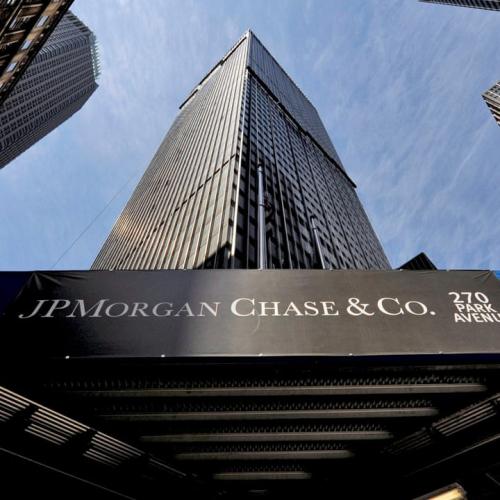
J.P. Morgan Chase & Co. ignored or dismissed warning signs about the Madoff fraud even as it earned hundreds of millions of dollars from its relationship with his firm, according to a lawsuit unsealed [on February 3]. The $6.4 billion lawsuit ... claims that bankers at J.P. Morgan discussed the possibility that Bernard Madoff was operating a Ponzi scheme, worried that a firm of such size was audited by a storefront accountant and called his returns "too good to be true." "While numerous financial institutions enabled Madoff's fraud, JPMC was at the very center of that fraud, and thoroughly complicit in it," according to the 115-page lawsuit, filed under seal in December by Irving Picard, the trustee seeking to recover money for Mr. Madoff's victims. The complaint seeks the return of nearly $1 billion in J.P. Morgan's profits and fees, and $5.4 billion in damages. It goes into great detail about the bank's alleged efforts, starting in about 2006, to make money by offering products tied to Mr. Madoff through investment funds that fed money to him. The lawsuit offers a detailed account of the more than two decade relationship between J.P. Morgan and Mr. Madoff. The lawsuit claims that the bank didn't pay attention to billions of dollars passing through the Madoff firm's main J.P. Morgan account, much of it by hand-written check, or to discrepancies in the account balance and unreported obligations.
Note: For lots more from major media sources on the criminal practices of the biggest financial institutions, click here.
When it comes to paychecks, Wall Street's law of gravity is back in full force: What goes down must come back up. In 2010, total compensation and benefits at publicly traded Wall Street banks and securities firms hit a record of $135 billion, according to an analysis by The Wall Street Journal. The total is up 5.7% from $128 billion in combined compensation and benefits by the same companies in 2009. At 25 large financial firms that have reported full-year results, revenue rose to $417 billion, another all-time high. "Things are shifting back to where they were before," said J. Robert Brown, a law professor at the University of Denver who studies compensation and corporate-governance issues. Buried in the numbers, though, are signs of how Wall Street's pay culture is bending in response to pressure from regulators and shareholders. Last year, deferred compensation made up as much as half of total pay, up from about a third previously, estimates Alan Johnson, managing director of Johnson Associates Inc., a New York pay consultant. Banks and securities firms are deferring a larger percentage of compensation than they used to, trying to counter criticism that yearly cash bonuses encourage unwise risk-taking by executives, traders and other employees aiming for a big payday.
Note: For the NY State Comptroller's analysis of Wall Street bonuses in 2010, click here and here.
"We certainly applaud the efforts of the commission," said White House press secretary Robert Gibbs, referring to the Financial Crisis Inquiry Report. "Frankly, I'm not sure much has changed," said one of commissioners, Byron Georgiou. "The concentration of assets in the nation's 10 biggest banks is bigger now than it was five years ago, from 58 percent in 2006 to 63 percent now." Referring to executives who remain at the head of those banks that almost ran aground, Georgiou said ... "Either they knew and didn't want to tell us, or they really didn't know. Either way, they put their institutions at risk." And have yet to be held accountable. Commissioner Brooksley Born can enjoy a certain sense of vindication. Not only had "over-the-counter derivatives contributed significantly to this crisis," ... but the enactment of legislation in 2000 to ban their regulation "was a key turning point in the march toward the financial crisis." As head of the Commodity Futures Trading Commission in the 1990s, Born was aware of the damage the largely unregulated instruments had already caused. Born suggested some more regulation. [She] was squashed like a bug by Clinton administration heavyweights, including Lawrence Summers and Robert Rubin, [and] Federal Reserve Chairman Alan Greenspan. One of the results: The Commodity Futures Modernization Act of 2000 eliminated government oversight of the OTC market. As the report documents, the use of such derivatives ... helped bring the entire financial system to its knees. Born hasn't seen much change in terms of accountability. One thing the report makes clear ... is just how preposterous were the "Who knew?" and "Who could have predicted?" statements offered up by chief executives and top government officials.
Note: So the 10 biggest banks now control 63% of total U.S. bank assets. The total for these banking assets as of the second quarter of 2010 were calculated at $13.22 trillion. Yet four of these megabanks also control an astounding 95% of the $574 trillion derivatives market, a sum over 40 times the amount of bank assets! Do you think there might be a problem with a derivatives bubble?
How might you compensate management for a year in which profits plunged, you spent $550 million of shareholder money to settle a fraud investigation and your stock ended up more or less exactly where it started? You might be tempted to nix raises or withhold bonuses to send a responsible message about linking pay to performance. But if so, you wouldn't be Goldman Sachs. It just had the year described above and responded by tripling everyone's base salary while boosting bonuses by 40%. Is this a great country or what? Goldman said in a filing [on January 28] that CEO Lloyd Blankfein will make $2 million this year, and his top lieutenants will each make $1.85 million. Top Goldman brass had been making $600,000 annually in salary since the firm's 1999 initial public offering. All 470 of Goldman's partners will get higher salaries. The top five officers will also get $12.6 million each in bonuses. That's up from $9 million each last year. That may seem like a high price to pay for a pretty lousy year and one that ended with a Fed-inspired reminder that Goldman, just in case anyone forgot, took billions upon billions of dollars in bailout loans in 2008 and 2009.
Note: For key articles from reliable sources detailing the outrageous compensation awarded to the highest officers of Wall Street financial corporations after they were bailed out by the government, click here.
Important Note: Explore our full index to key excerpts of revealing major media news articles on several dozen engaging topics. And don't miss amazing excerpts from 20 of the most revealing news articles ever published.