

































Banking Bailout News Articles
Below are key excerpts of revealing news articles on the 2008 banking bailout from reliable news media sources. If any link fails to function, a paywall blocks full access, or the article is no longer available, try these digital tools.

After receiving billions in aid from U.S. taxpayers, the nation's largest banks say they can't track exactly how they're spending it. Some won't even talk about it. "We're choosing not to disclose that," said Kevin Heine, spokesman for Bank of New York Mellon, which received about $3 billion. The Associated Press contacted 21 banks that received at least $1 billion in government money and asked four questions: How much has been spent? What was it spent on? How much is being held in savings, and what's the plan for the rest? None of the banks provided specific answers. Some banks said they simply didn't know where the money was going. There has been no accounting of how banks spend that money. The answers highlight the secrecy surrounding the Troubled Asset Relief Program, which earmarked $700 billion ... to help rescue the financial industry. Lawmakers summoned bank executives to Capitol Hill last month and implored them ... not to hoard it or spend it on corporate bonuses, junkets or to buy other banks. But there is no process in place to make sure that's happening and there are no consequences for banks that don't comply. Meanwhile, banks that are getting taxpayer bailouts awarded their top executives nearly $1.6 billion in salaries, bonuses, and other benefits last year. Congress attached nearly no strings to the $700 billion bailout in October. And the Treasury Department, which doles out the money, never asked banks how it would be spent. No bank provided even the most basic accounting for the federal money. Most banks wouldn't say why they were keeping the details secret.
Note: Explore key information that the bankers don't want you to know on the Federal Reserve, which is neither federal, nor a reserve. For more along these lines, see concise summaries of deeply revealing news articles on the banking bailout from reliable major media sources. Then explore the excellent, reliable resources suggesting major corruption provided in our Banking Information Center.
Iceland ... has just sentenced five senior bankers and one prominent investor to prison for crimes relating to the economic meltdown in 2008. The nation that gambled so heavily on the markets and lost so disastrously in the consequent crash has [now] sent 26 financiers to jail for combined sentences of 74 years. The authorities pursued bank bosses, chief executives, civil servants and corporate raiders for crimes ranging from insider trading to fraud, money laundering, misleading markets, breach of duties and lying to the authorities. Meanwhile the economy that collapsed so spectacularly has rebounded after letting banks go bust, imposing capital controls and protecting its own citizens over all other losers. This determination to hold people to account for actions that caused intense financial misery contrasts strongly with Britain, most of the rest of Europe and the United States. Britain never bothered holding a proper inquiry into the financial meltdown that still heavily impacts on public finances. In New York, a couple of minor British bankers have just been convicted of manipulating inter-bank lending rates. In London, the massive HSBC is playing political games ... to stave off regulatory pressures. This is the bank, remember, fined 1.2bn after a US investigation found it was laundering money for gangsters and rogue nations, then discovered to be helping wealthy clients evade tax in dozens of countries. Its former boss became a government minister and then chairman of the British Museum.
Note: So the one nation that jailed its big bankers and let banks go bust is doing very well. Why are so exceedingly few bankers in other countries being jailed for crimes involving trillions of dollars and bankrupting millions of citizens? For more along these lines, see concise summaries of deeply revealing news articles about corruption in government and in the financial industry.
On the third Wednesday of every month, the nine members of an elite Wall Street society gather in Midtown Manhattan. The men share a common goal: to protect the interests of big banks in the vast market for derivatives, one of the most profitable and controversial fields in finance. They also share a common secret: The details of their meetings, even their identities, have been strictly confidential. Drawn from giants like JPMorgan Chase, Goldman Sachs and Morgan Stanley, the bankers form a powerful committee that helps oversee trading in derivatives, instruments which, like insurance, are used to hedge risk. In theory, this group exists to safeguard the integrity of the multitrillion-dollar market. In practice, it also defends the dominance of the big banks. The banks in this group ... have fought to block other banks from entering the market, and they are also trying to thwart efforts to make full information on prices and fees freely available. Banks influence over this market, and over clearinghouses like the one this select group advises, has costly implications for businesses large and small. The size and reach of this market has grown rapidly over the past two decades. Pension funds today use derivatives to hedge investments. States and cities use them to try to hold down borrowing costs. Airlines use them to secure steady fuel prices. Food companies use them to lock in prices of commodities like wheat or beef.
Note: To explore highly revealing news articles on the powerful secret societies which without doubt back these top bankers, click here. For a treasure trove of reports from reliable sources detailing the amazing control of major banks over government and society, click here.
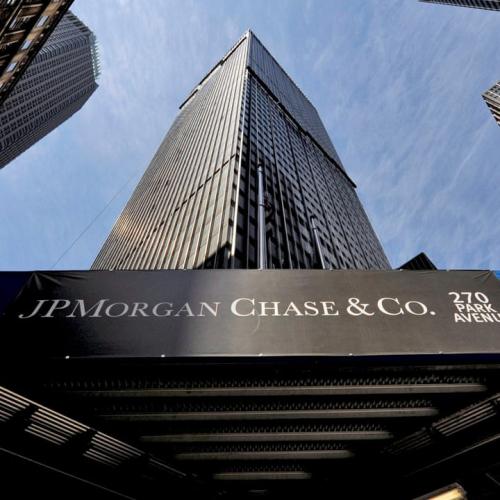
Several financial giants that received federal bailout money in the last year paid out bonuses to employees in 2008 that greatly exceeded the amount of profit generated by the banks, according to a study on executive compensation released by New York State Attorney General Andrew Cuomo Thursday. Despite claims by bank executives that bonuses are tied to the company's performance, the report states that "there is no clear rhyme or reason to how the banks compensate or reward their employees." Cuomo's investigation "suggests a disconnect between compensation and bank performance that resulted in a 'heads I win, tails you lose' bonus system." According to the report: Goldman Sachs, which earned $2.3 billion last year and received $10 billion in TARP funding, paid out $4.8 billion in bonuses in 2008 - more than double their net income. Morgan Stanley, which earned $1.7 billion last year and received $10 billion in bailout funds, handed out $4.475 billion in bonuses, nearly three times their net income. JPMorgan Chase, which earned $5.6 billion in 2008 and received $25 billion from the government, paid out $8.69 billion in bonus money. Citigroup and Merrill Lynch lost a combined $54 billion last year. They received a total of $55 billion in bailouts and paid out $9 billion in combined bonuses. ($5.33 billion for Citigroup; $3.6 billion for Merrill Lynch, which was subsequently acquired by Bank of America.) Bonuses have been a hot-button issue surrounding these federally bailed out banks for months, with company executives facing heat from ... local officials like Cuomo angered by the exorbitant compensation plans for the same people widely seen as responsible for the country's financial crisis.
Note: Click here to read the full report. For lots more on the realities behind the taxpayer bailout of Wall Street, click here.
There's a $700 trillion elephant in the room and it's time we found out how much it really weighs on the economy. Derivative contracts total about three-quarters of a quadrillion dollars in "notional" amounts, according to the Bank for International Settlements. These contracts are tallied in notional values because no one really can say how much they are worth. But valuing them correctly is exactly what we should be doing because these comprise the viral disease that has infected the financial markets and the economies of the world. Try as we might to salvage the residential real estate market, it's at best worth $23 trillion in the U.S. We're struggling to save the stock market, but that's valued at less than $15 trillion. And we hope to keep the entire U.S. economy from collapsing, yet gross domestic product stands at $14.2 trillion. Compare any of these to the derivatives market and you can easily see that we are just closing the windows as a tsunami crashes to shore. The total value of all the stock markets in the world amounts to less than $50 trillion, according to the World Federation of Exchanges. To be sure, the derivatives market is international. But much of the trouble we're in began with contracts "derived" from the values associated with U.S. residential real estate market. These contracts were engineered based on the various assumptions tied to those values. Few know what derivatives are worth. I spoke with one derivatives trader who manages billions of dollars and she said she couldn't even value her portfolio because "no one knows anymore who is on the other side of the trade."
Note: Banks and financial firms deemed "too big to fail" were bailed out worldwide at taxpayers' expense. But what will happen if losses in the derivatives market skyrocket? No government in the world has the resources to save financial corporations from a collapse in their derivatives trading. For a treasure trove of reports from reliable sources detailing the amazing control of major banks over government and society, click here.
On Dec. 23, 1913, President Woodrow Wilson signed the Owen Glass Act, creating the Federal Reserve. As we note its centennial, what has the Fed accomplished during the last 100 years? The stated original purposes were to protect the soundness of the dollar and banks and also to lessen the jarring ups and downs of the business cycle. Oops. Under the Feds supervision, boom and bust cycles have continued. Three of them have been severe: the Great Depression, the stagflationary period of 1974-82, and the current Great Recession. Bank failures have occurred in alarmingly high numbers. Depending on what measurements are used, the dollar has lost between 95 and 98 percent of its purchasing power. (Amazingly, the Feds official position today is that inflation is not high enough, so the erosion of the dollar continues as a matter of policy.) Having failed to achieve its original goals, the Fed also has had a miserable record in accomplishing later goals. The 1970 amendments to the Federal Reserve Act stipulated that the Fed should promote effectively the goals of maximum employment, stable prices, and moderate long-term interest rates. In baseball parlance, the Fed has been 0-for-three. So, what has the Fed accomplished during its century of existence? Well, it has become adept at bailing out mismanaged banks. In the aftermath of the 2008 financial crisis, the Fed orchestrated the big bailout of Wall Street. Politically, the Fed is repugnant. Its chairman is commonly referred to as the second most powerful person in the country. In a democratic republic, should the second most powerful policymaker be unelected?
Note: How remarkable for Forbes to publish an article chastising the Fed! The times are a changin'! For an essay by noted financial researcher Ellen Brown on this occasion, click here. For more on the collusion between government and the biggest banks, see the deeply revealing reports from reliable major media sources available here.
My first year on Wall Street, 1993, I was paid 14 times more than I earned the prior year and three times more than my father's best year. For that money, I helped my company create financial products that were disguised to look simple, but which required complex math to properly understand. That first year I was roundly applauded by my bosses, who told me I was clever, and to my surprise they gave me $20,000 bonus beyond my salary. When I did ask, rather naively, if this was all kosher, I would be assured multiple times that multiple lawyers and multiple managers had approved the sales. One senior trader, consoling me late at night, reminded me, You are playing in the big leagues now. If a customer wants a red suit, you sell them a red suit. If that customer is Japanese, you charge him twice what it costs. Being paid very well also helped ease any of my concerns. Feeling guilty, kid? Here take a big check. I was, for the first time in my life, feeling valued for my math skills. Ego and money are nice salves for any potential feeling of guilt. After a few years on Wall Street it was clear to me: you could make money by gaming anyone and everything. The more clever you were, the more ingenious your ability to exploit a flaw in a law or regulation, the more lauded and celebrated you became. Nobody seemed to be getting called out. No move was too audacious. Traders got more and more audacious, and corruption became more and more diffused through the system. By 2006 you could open up almost any major business, look at its inside workings, and find some wrongdoing.
Note: For more on financial corruption, see the deeply revealing reports from reliable major media sources available here.
It's long been suspected that ratings agencies like Moody's and Standard & Poor's helped trigger the meltdown. A new trove of embarrassing documents shows how they did it. Everybody else got plenty of blame: the greed-fattened banks, the sleeping regulators, the unscrupulous mortgage hucksters. But what about the ratings agencies? Thanks to a mountain of evidence gathered for a pair of major lawsuits by the San Diego-based law firm Robbins Geller Rudman & Dowd, ... we now know that the nation's two top ratings companies, Moody's and S&P, have for many years been shameless tools for the banks, willing to give just about anything a high rating in exchange for cash. In incriminating e-mail after incriminating e-mail, executives and analysts from these companies are caught admitting their entire business model is crooked. Ratings agencies are the glue that ostensibly holds the entire financial industry together. Their primary function is to help define what's safe to buy, and what isn't. But the financial crisis happened because AAA ratings stopped being something that had to be earned and turned into something that could be paid for. The Financial Crisis Inquiry Commission published a case study in 2011 of Moody's in particular and discovered that between 2000 and 2007, the agency gave nearly 45,000 mortgage-backed securities AAA ratings. One year Moody's doled out AAA ratings to 30 mortgage-backed securities every day, 83 percent of which were ultimately downgraded. "This crisis could not have happened without the rating agencies," the commission concluded.
Note: This is another great, well researched article by Rolling Stone's Matt Taibbi. Why isn't the major media coming up with anything near the quality of this man's work? For deeply revealing reports from reliable major media sources on financial corruption, click here.
Europes decision to force depositors in Cypriot banks to share in the cost of the latest euro zone bailout has sparked outrage in Cyprus and fears that a run on deposits over the weekend might spread to larger countries at risk like Spain and Italy. Under an emergency deal reached early Saturday in Brussels, a one-time tax of 9.9 percent is to be levied on Cypriot bank deposits of more than 100,000 euros, or $130,000, effective [March 19]. That will hit wealthy depositors mostly Russians who have put vast sums into Cypruss banks in recent years. But smaller deposits will also be taxed, at 6.75 percent, meaning that the banks will be confiscating money directly from retirees and ordinary workers to help pay the tab for the 10 billion euro bailout or $13 billion. Most of the 10 billion euros will go to bail out Cypriot banks, which took a blow when their substantial holdings of Greek government bonds were written down as part of that countrys second bailout. The islands banks are also laden with loans made to Greek companies and individuals, which have turned sour as Greece endures its fourth year of economic and financial crisis. The "deposit tax", which is expected to raise 5.8 billion euros, was part of a bailout agreement ... among finance ministers from euro countries and representatives of the International Monetary Fund and the European Central Bank. The Cypriot bailout follows those for Greece, Portugal, Ireland and the Spanish banking sector and is the first where bank depositors will be touched.
Note: What gives anyone the right to seize the deposits of ordinary bank account holders? Is this the first step towards establishing a precedent for governments to seize anything they want from ordinary citizens? For a report indicating that the Cypriot people may not take this attack lying down, click here.
The US is the world's largest prison state, imprisoning more of its citizens than any nation on earth, both in absolute numbers and proportionally. It imprisons people for longer periods of time, more mercilessly, and for more trivial transgressions than any nation in the west. This sprawling penal state has been constructed over decades, by both political parties, and it punishes the poor and racial minorities at overwhelmingly disproportionate rates. But not everyone is subjected to that system of penal harshness. It all changes radically when the nation's most powerful actors are caught breaking the law. With few exceptions, they are gifted not merely with leniency, but full-scale immunity from criminal punishment. Thus have the most egregious crimes of the last decade been fully shielded from prosecution when committed by those with the greatest political and economic power: the construction of a worldwide torture regime, spying on Americans' communications without the warrants required by criminal law by government agencies and the telecom industry, an aggressive war launched on false pretenses, and massive, systemic financial fraud in the banking and credit industry that triggered the 2008 financial crisis. This two-tiered justice system was the subject of [the] book, With Liberty and Justice for Some. On Tuesday, not only did the US Justice Department announce that HSBC would not be criminally prosecuted, but outright claimed that the reason is that they are too important, too instrumental to subject them to such disruptions.
Note: For deeply revealing reports from reliable major media sources on government corruption, click here.
When the people of Greece saw their democratically elected Prime Minister George Papandreou forced out of office in November of 2011 and replaced by an unelected Conservative technocrat, Lucas Papademos, most were unaware of the bigger picture of what was happening. Most of us in the United States were [equally] ignorant when, in 2008, [Congress] voted yes at the behest of Bush's Treasury Secretary Henry Paulsen and jammed through the biggest bailout of Wall Street in our nations history. But now, as the Bank of England ... announces that former investment banker Mark Carney will be its new chief, we cant afford to ignore whats happening around the world. Steadily and stealthily Goldman Sachs is carrying out a global coup detat. Theres one tie that binds Lucas Papademos in Greece, Henry Paulsen [and Timothy Geithner] in the United States, and Mark Carney in the U.K., and thats Goldman Sachs. All were former bankers and executives at the Wall Street giant, all assumed prominent positions of power, and all played a hand after the global financial meltdown of 2007-08, thus making sure Goldman Sachs weathered the storm and made significant profits in the process. As Europe descends [into] economic crisis, Goldman Sachs's people are managing the demise of the continent. As the British newspaper The Independent reported earlier this year, the Conservative technocrats currently steering or who have steered post-crash fiscal policy in Greece, Germany, Italy, Belgium, France, and now the UK, all hail from Goldman Sachs. In fact, the head of the European Central Bank itself, Mario Draghi, was the former managing director of Goldman Sachs International.
Note: Once again truth-out.org carries this important article and vital information which no major media has covered. Strangely, the entire website went down for a while not long after the article was published. If the article cannot be found at the link above, click here. For deeply revealing reports from reliable major media sources on financial corruption, click here.
Regulators on both sides of the Atlantic failed to act on clear warnings that the Libor interest rate was being falsely reported by banks during the financial crisis, it emerged last night. A cache of documents released yesterday by the New York Federal Reserve showed that US officials had evidence from April 2008 that Barclays was knowingly posting false reports about the rate at which it could borrow in order to assuage market concerns about its solvency. An unnamed Barclays employee told a New York Fed analyst, Fabiola Ravazzolo, on 11 April 2008: "So we know that we're not posting, um, an honest Libor." He said Barclays started under-reporting Libor because graphs showing the relatively high rates at which the bank had to borrow attracted "unwanted attention" and the "share price went down". The verbatim note of the call released by the Fed represents the starkest evidence yet that Libor-fiddling was discussed in high regulatory circles years before Barclays' recent 290m fine. The New York Fed said that, immediately after the call, Ms Ravazzolo informed her superiors of the information, who then passed on her concerns to Tim Geithner, who was head of the New York Fed at the time. Mr Geithner investigated and drew up a six-point proposal for ensuring the integrity of Libor which he presented to the British Bankers Association, which is responsible for producing the Libor rate daily. Mr Geithner, who is now US Treasury Secretary, also forwarded the six-point plan to the Governor of the Bank of England, Sir Mervyn King.
Note: For deeply revealing reports from reliable major media sources on regulatory and financial corruption and criminality, click here. For our highly revealing Banking Corruption Information Center, click here.
Motorists may have been paying too much for their petrol because banks and other traders are likely to have tried to manipulate oil prices in the same way they rigged interest rates, an official report has warned. Concerns are growing about the reliability of oil prices, after a report for the G20 found the market is wide open to manipulation or distortion. Traders from banks, oil companies or hedge funds have an incentive to distort the market and are likely to try to report false prices, it said. Petrol retailers use oil price benchmarks to decide how much to pay for future supplies. The rate is calculated by data companies based on submissions from firms which trade oil on a daily basis such as banks, hedge funds and energy companies. However, like Libor ... the market is unregulated and relies on the honesty of the firms to submit accurate data about all their trades. This is one of the major concerns raised in the G20 report, published last month by the International Organisation of Securities Commissions (IOSCO). In the study for global finance ministers, including George Osborne, the regulator warns that traders have opportunities to influence oil prices for their own profit. It points out that the whole market is voluntary, meaning banks and energy companies can choose which trades to make public. IOSCO says this creates opportunity for a trader to submit a partial picture in order to influence the [price] to the traders advantage.
Note: For deeply revealing reports from reliable major media sources on regulatory and financial corruption and criminality, click here.
Today is my last day at Goldman Sachs. Over the course of my career I have had the privilege of advising two of the largest hedge funds on the planet [and] five of the largest asset managers in the United States. My clients have a total asset base of more than a trillion dollars. After almost 12 years at the firm ... I believe I have worked here long enough to understand ... its culture, its people and its identity. And I can honestly say that the environment now is as toxic and destructive as I have ever seen it. To put the problem in the simplest terms, the interests of the client continue to be sidelined in the way the firm operates and thinks about making money. Today, if you make enough money for the firm (and are not currently an ax murderer) you will be promoted into a position of influence. What are three quick ways to become a leader? a) Execute on the firm's "axes," which is Goldman-speak for persuading your clients to invest in the stocks or other products that we are trying to get rid of because they are not seen as having a lot of potential profit. b) "Hunt Elephants." In English: get your clients -- some of whom are sophisticated, and some of whom aren't -- to trade whatever will bring the biggest profit to Goldman. c) Find yourself sitting in a seat where your job is to trade any illiquid, opaque product with a three-letter acronym. I attend derivatives sales meetings where not one single minute is spent asking questions about how we can help clients. It's purely about how we can make the most possible money off of them.
Note: The author of this article, Greg Smith, was a Goldman Sachs executive director and head of the firms United States equity derivatives business in Europe, the Middle East and Africa. For an excellent compilation of news articles and government documents showing the huge risk of the derivatives bubble being manipulate by Goldman Sachs and others, click here.
It's the dark heart of Britain, the place where democracy goes to die, immensely powerful, equally unaccountable. But I doubt that one in 10 British people has any idea of what the Corporation of the City of London is and how it works. As Nicholas Shaxson explains in his fascinating book Treasure Islands, the Corporation exists outside many of the laws and democratic controls which govern the rest of the United Kingdom. The City of London is the only part of Britain over which parliament has no authority. This is ... an official old boys' network. In one respect at least the Corporation acts as the superior body: it imposes on the House of Commons a figure called the remembrancer: an official lobbyist who sits behind the Speaker's chair and ensures that, whatever our elected representatives might think, the City's rights and privileges are protected. The mayor of London's mandate stops at the boundaries of the Square Mile. The City has exploited this remarkable position to establish itself as a kind of offshore state, a secrecy jurisdiction which controls the network of tax havens housed in the UK's crown dependencies and overseas territories. This autonomous state within our borders is in a position to launder the ill-gotten cash of oligarchs, kleptocrats, gangsters and drug barons. It has also made the effective regulation of global finance almost impossible.
Note: To understand how democracy is easily circumvented, read this full article. For lots more from reliable sources on the hidden background to the control over governments held by financial powers, click here.
Wall Street's total price tag on settlements with U.S. securities regulators for allegedly misleading investors about mortgage bonds churned out ahead of the financial crisis surged past $1 billion with a deal by Citigroup Inc. to pay $285 million ... to end civil-fraud charges by the Securities and Exchange Commission. The SEC claimed Citigroup sold slices of the $1 billion mortgage-bond deal without disclosing to investors that the bank was shorting $500 million of the deal, or betting its assets would lose value. Several Wall Street firms have settled similar claims by the SEC, which has generally stuck to the strategy used by the agency to get a $550 million settlement last year with Goldman Sachs Group Inc.. And the SEC's investigation of the Wall Street mortgage machine isn't over yet. Lorin Reisner, deputy enforcement director at the SEC, said civil mortgage-related cases against Goldman, J.P. Morgan Chase & Co., Countrywide Financial Corp., New Century Financial Corp. and other companies "read like an index to unlawful conduct in connection with the financial crisis." The SEC has collected a total of $1.03 billion through mortgage-bond-deal settlements. In addition to Citigroup, the total includes Goldman, J.P. Morgan, Royal Bank of Canada, Wells Fargo & Co. and Credit Suisse Group AG.
Note: For lots more from major media sources on the illegal profiteering of major financial corporations, click here.
Citigroup Inc. and Bank of America Corp. were the reigning champions of finance in 2006 as home prices peaked, leading the 10 biggest U.S. banks and brokerage firms to their best year ever with $104 billion of profits. By 2008, the housing markets collapse forced those companies to take more than six times as much, $669 billion, in emergency loans from the U.S. Federal Reserve. The loans dwarfed the $160 billion in public bailouts the top 10 got from the U.S. Treasury, yet until now the full amounts have remained secret. Fed Chairman Ben S. Bernankes [actions] included lending banks and other companies as much as $1.2 trillion of public money, about the same amount U.S. homeowners currently owe on 6.5 million delinquent and foreclosed mortgages. The largest borrower, Morgan Stanley, got as much as $107.3 billion, while Citigroup took $99.5 billion and Bank of America $91.4 billion, according to a Bloomberg News compilation of data obtained through Freedom of Information Act requests, months of litigation and an act of Congress. It wasnt just American finance. Almost half of the Feds top 30 borrowers, measured by peak balances, were European firms. Data gleaned [under the Freedom of Information Act] make clear for the first time how deeply the worlds largest banks depended on the U.S. central bank to stave off cash shortfalls. Even as the firms asserted in news releases or earnings calls that they had ample cash, they drew Fed funding in secret.
Note: For a treasure trove of information from reliable sources on the government transfer of public assets to private banks and financial corporations, click here.
The first top-to-bottom audit of the Federal Reserve uncovered eye-popping new details about how the U.S. provided a whopping $16 trillion in secret loans to bail out American and foreign banks and businesses during the worst economic crisis since the Great Depression. Among the [Government Accountability Office] investigation's key findings is that the Fed unilaterally provided trillions of dollars in financial assistance to foreign banks and corporations from South Korea to Scotland, according to the GAO report. The [report] also determined that the Fed lacks a comprehensive system to deal with conflicts of interest, despite the serious potential for abuse. In fact, according to the report, the Fed provided conflict of interest waivers to employees and private contractors so they could keep investments in the same financial institutions and corporations that were given emergency loans. For example, the CEO of JP Morgan Chase served on the New York Fed's board of directors at the same time that his bank received more than $390 billion in financial assistance from the Fed. The investigation also revealed that the Fed outsourced most of its emergency lending programs to private contractors, many of which also were recipients of extremely low-interest and then-secret loans.
Note: We don't normally use the website of a member of the U.S. Senate as a source, but as amazingly none of the media covered this vitally important story other than one blog on Forbes, we are publishing this here. The GAO report to back up these claims is available for all to see at this link. For how the media is so controlled, don't miss the powerful two-page summary with reports by many award-winning journalists at this link. For another good article on the Fed's manipulations, click here.
The more aggressively a bank lobbied before the financial crisis, the worse its loans performed during the economic downturn -- and the more bailout dollars it received, according to a study published by the National Bureau of Economic Research this week. The report, titled "A Fistful of Dollars: Lobbying and the Financial Crisis," said that banks' lobbying efforts may be motivated by short-term profit gains, which can have devastating effects on the economy. "Overall, our findings suggest that the political influence of the financial industry played a role in the accumulation of risks, and hence, contributed to the financial crisis," said the report, written by three economists from the International Monetary Fund. Data collected by the three authors -- Deniz Igan, Prachi Mishra and Thierry Tressel -- show that the most aggressive lobbiers in the financial industry from 2000 to 2007 also made the most toxic mortgage loans. They securitized a greater portion of debt to pass the home loans onto investors and their stock prices correlated more closely to the downturn and ensuing bailout. The banks' loans also suffered from higher delinquencies during the downturn.
Note: If the above link fails, click here. For lots more from reliable sources on corruption in the government bailouts of the biggest banks, click here.
Inside the humdrum offices of a tiny trading firm called Tradeworx, workers ... tend high-speed computers that typically buy and sell 80 million shares a day. But on the afternoon of May 6, as the stock market began to plunge in the flash crash, someone here walked up to one of those computers and typed the command HF STOP: sell everything and shutdown. Across the country, several of Tradeworxs counterparts did the same. In a blink, some of the most powerful players in the stock market high-frequency traders went dark. The result sent chills through the financial world. After the brief 1,000-point plunge in the stock market that day, the growing role of high-frequency traders in the nations financial markets is drawing new scrutiny. Over the last decade, these high-tech operators have become sort of a shadow Wall Street from New Jersey to Kansas City, from Texas to Chicago. Depending on whose estimates you believe, high-frequency traders account for 40 to 70 percent of all trading on every stock market in the country. Some of the biggest players trade more than a billion shares a day. These are short-term bets. Very short. The founder of Tradebot, in Kansas City, Mo., told students in 2008 that his firm typically held stocks for 11 seconds. Tradebot, one of the biggest high-frequency traders around, had not had a losing day in four years, he said.
Note: For key reports on the dubious practices which underlay the financial crisis and the impoverishment of the public treasury, click here.
Important Note: Explore our full index to revealing excerpts of key major media news articles on several dozen engaging topics. And don't miss amazing excerpts from 20 of the most revealing news articles ever published.



