
















Financial News Articles
Below are key excerpts of revealing news articles on financial corruption from reliable news media sources. If any link fails to function, a paywall blocks full access, or the article is no longer available, try these digital tools.
For further exploration, delve into our comprehensive Banking Corruption Information Center.

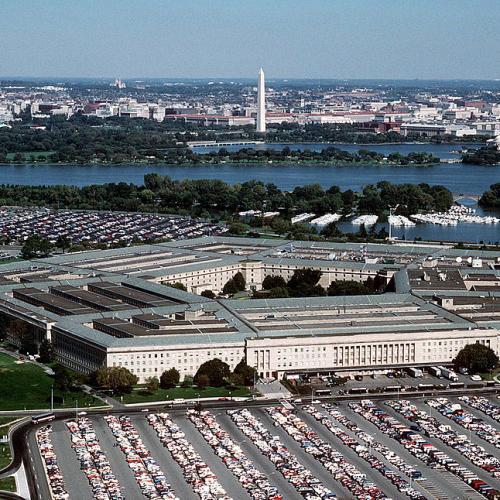
On Sept. 10 [2001], Secretary of Defense Donald Rumsfeld declared war. Not on foreign terrorists, "the adversary's closer to home. It's the Pentagon bureaucracy." He said money wasted by the military poses a serious threat. Rumsfeld promised change but the next day Sept. 11 the world changed and in the rush to fund the war on terrorism, the war on waste seems to have been forgotten. Just last week President Bush announced, "my 2003 budget calls for more than $48 billion in new defense spending." More money for the Pentagon ... while its own auditors admit the military cannot account for 25 percent of what it spends. "According to some estimates we cannot track $2.3 trillion in transactions," Rumsfeld admitted. $2.3 trillion that's $8,000 for every man, woman and child in America. A former Marine turned whistle-blower is risking his job by speaking out ... about the millions he noticed were missing from one defense agency's balance sheets. Jim Minnery, Defense Finance and Accounting Service ... tried to follow the money trail, even crisscrossing the country looking for records. "The director looked at me and said 'Why do you care about this stuff?' It took me aback. My supervisor asking me why I care about doing a good job," said Minnery. He was reassigned and says officials then covered up the problem. The Pentagon's Inspector General "partially substantiated" several of Minnery's allegations.
Note: Watch the CBS video clip of this shocking admission. Another key clip is available here. Explore also other media articles revealing major government corruption. Even though originally not reported because of the trauma of 9/11, why wasn't this news broadcast far and wide later? Why isn't it making media headlines now? See also a revealing collection of news articles on military corruption.
Some of the world's biggest, most profitable corporations enjoy a far lower tax rate than you do – that is, if they pay taxes at all. The most egregious example is General Electric. Last year the conglomerate generated $10.3 billion in pretax income, but ended up owing nothing to Uncle Sam. In fact, it recorded a tax benefit of $1.1 billion. How did this happen? It's complicated. GE in effect consists of two divisions: General Electric Capital and everything else. The everything else – maker of engines, power plants, TV shows and the like – would have paid a 22% tax rate if it was a standalone company. It's GE Capital that keeps the overall tax bill so low. Over the last two years, GE Capital has displayed an uncanny ability to lose lots of money in the U.S. (posting a $6.5 billion loss in 2009), and make lots of money overseas (a $4.3 billion gain). Not only do the U.S. losses balance out the overseas gains, but GE can defer taxes on that overseas income indefinitely. It's the tax benefit of overseas operations that is the biggest reason why multinationals end up with lower tax rates than the rest of us.
Note: Forbes later changed the title of this article to a more innocuous "What The Top U.S. Companies Pay In Taxes." Can you believe that GE not only pays no taxes, they actually get credit from the US government? They ship US jobs overseas and then reap huge tax benefits as a result. What's wrong with this picture? For a wealth of media news articles on the hidden manipulations of major financial corporations, click here.
After receiving billions in aid from U.S. taxpayers, the nation's largest banks say they can't track exactly how they're spending it. Some won't even talk about it. "We're choosing not to disclose that," said Kevin Heine, spokesman for Bank of New York Mellon, which received about $3 billion. The Associated Press contacted 21 banks that received at least $1 billion in government money and asked four questions: How much has been spent? What was it spent on? How much is being held in savings, and what's the plan for the rest? None of the banks provided specific answers. Some banks said they simply didn't know where the money was going. There has been no accounting of how banks spend that money. The answers highlight the secrecy surrounding the Troubled Asset Relief Program, which earmarked $700 billion ... to help rescue the financial industry. Lawmakers summoned bank executives to Capitol Hill last month and implored them ... not to hoard it or spend it on corporate bonuses, junkets or to buy other banks. But there is no process in place to make sure that's happening and there are no consequences for banks that don't comply. Meanwhile, banks that are getting taxpayer bailouts awarded their top executives nearly $1.6 billion in salaries, bonuses, and other benefits last year. Congress attached nearly no strings to the $700 billion bailout in October. And the Treasury Department, which doles out the money, never asked banks how it would be spent. No bank provided even the most basic accounting for the federal money. Most banks wouldn't say why they were keeping the details secret.
Note: Explore key information that the bankers don't want you to know on the Federal Reserve, which is neither federal, nor a reserve. For more along these lines, see concise summaries of deeply revealing news articles on the banking bailout from reliable major media sources. Then explore the excellent, reliable resources suggesting major corruption provided in our Banking Information Center.
On July 26, 2016, the Office of the Inspector General (OIG) issued a report “Army General Fund Adjustments Not Adequately Documented or Supported”. The report indicates that for fiscal year 2015 the Army failed to provide adequate support for $6.5 trillion. Given that the entire Army budget in fiscal year 2015 was $120 billion, unsupported adjustments were 54 times the level of spending authorized by Congress. An appendix to the July 2016 report shows $2 trillion in changes to the Army General Fund balance sheet due to unsupported adjustments. On the asset side, there is $794 billion increase in the Army's Fund Balance with the U.S. Treasury. There is also an increase of $929 billion in the Army's Accounts Payable. What is the source of the additional $794 billion in the Army's Fund Balance? The July 2016 report is not the only such report of unsubstantiated adjustments. Mark Skidmore and Catherine Austin Fitts, former Assistant Secretary of Housing and Urban Development, conducted a search of government websites and found similar reports dating back to 1998. While the documents are incomplete, original government sources indicate $21 trillion in unsupported adjustments have been reported for the Department of Defense and the Department of Housing and Urban Development for the years 1998-2015. [And why] after Mark Skidmore began inquiring about OIG-reported unsubstantiated adjustments, [was] the OIG's webpage, which documented, albeit in a highly incomplete manner, these unsupported "accounting adjustments," ... mysteriously taken down?
Note: Explore this webpage for a brief background to this astounding news. See also a detailed analysis of these missing trillions, which amount to $65,000 per man, woman, and child in the US. And don't miss this highly revealing interview with Prof. Mark Skidmore of Michigan State with even more startling news.
For seven generations, one European family has dominated an incredible part of all that money can buy. From its London and Paris banks, the family's millions have been sent forth to ... business enterprises on six continents. Some of its stately dwellings are the kind of mansions that mere San Simeons hoped to imitate. This ancient and unusual banking dynasty shields itself from the curious eye of the public, but the map and history of Europe have been changed by its action and etched with its name: the House of Rothschild. Seldom unimaginative in the use of their money, Rothschild gold has powered the ambitions of prime ministers, princes and popes. It has financed wars and reparations treaties, changed the course of politics and bailed out armies and nations. The Rothschilds strung railroads across the Continent, gained control of the Suez Canal [and] carved diamond mines in the African veld. The British Rothschilds [are still] the world's most important bullion dealers. No modern family ... has been so important for so long in European business. Newer dynasties such as the Rockefellers and the Fords have made more millions, but ... ledgers cannot reflect the Rothschild lands, their possessions and influence accumulated over the generations, their priceless collections of art. Today, the legend is very much alive and being added to. The Rothschilds are striking out in many new directions behind a silver curtain of discretion. Rather than run companies by themselves, the Rothschilds often prefer to start or join syndicates, placing their men on boards to exert maximum influence with minimum investment risk. [They rely on] a far spreading network of agents, who seldom even admit that they are employed by the Rothschilds.
Note: To read the full, fascinating article, click here. The major media have very rarely exposed the power and wealth of the Rothschilds as in this article. Note that the article was written less than a month after the assassination of John F. Kennedy. Could it be because of some anger at the elite who killed Kennedy that this highly revealing article was actually published? For more on secret societies which command huge hidden power, see the deeply revealing reports from reliable major media sources available here.
Public banks are typically operated by government or tribal authorities and, in theory, would be chartered to achieve social good and invest in communities. Only two public banks currently operate in the United States: the Bank of North Dakota, founded in 1919, and the Territorial Bank of American Samoa, founded in 2018. Organizations pushing for a public banking option exist in 37 states, according to the Public Banking Institute. In contrast to private banks, which are responsible to their shareholders, public banks are responsible to their boards and are chartered to invest in public needs. The Bank of North Dakota, for instance, is chartered to offer a “revolving loan fund” to farmers, and profits from loans are directed back into the fund to keep interest rates low. The modern movement to invest in public banks grew out of the 2008 financial crisis and was galvanized during the pandemic, fueled by a populist distrust of the banking and finance sectors. In October 2020, Representatives Alexandria Ocasio-Cortez and Rashida Tlaib introduced the federal Public Banking Act, which would allow state and local governments across the country to create public banks. In the first two months of 2021 there were sixteen bills across the country designed to pave the way for public banks. Supporters of public banks are hoping that any deposits from state and local governments can be used to fund community-based projects that have trouble getting funded by private banks.
Note: Explore more positive stories like this in our comprehensive inspiring news articles archive focused on solutions and bridging divides.
Wells Fargo Bank, one of the nation's largest banks, has been hit with $185 million in civil penalties for secretly opening millions of unauthorized deposit and credit card accounts that harmed customers, federal and state officials said Thursday. Employees of Wells Fargo (WFC) boosted sales figures by covertly opening the accounts and funding them by transferring money from customers' authorized accounts without permission, the Consumer Financial Protection Bureau, Office of the Comptroller of the Currency and Los Angeles city officials said. An analysis by the San Francisco-headquartered bank found that its employees opened more than two million deposit and credit card accounts that may not have been authorized by consumers. Many of the transfers ran up fees or other charges for the customers, even as they helped employees make incentive goals. The bank agreed to pay full restitution to all victims and a $100 million fine to the Consumer Financial Protection Bureau's civil penalty fund - the largest in the regulator's five-year operating history. Wells Fargo will pay a separate $35 million penalty to the Office of the Comptroller of the Currency. Additionally, Wells Fargo said it terminated approximately 5,300 employees and managers over a five-year period for their involvement with the unauthorized accounts.
Note: No Wells Fargo executives have been held responsible for this bank's institutionalized breach of customer trust. Do you think these actions were taken without approval from at least one executive? For more along these lines, see concise summaries of deeply revealing banking corruption news articles from reliable major media sources.
Iceland ... has just sentenced five senior bankers and one prominent investor to prison for crimes relating to the economic meltdown in 2008. The nation that gambled so heavily on the markets and lost so disastrously in the consequent crash has [now] sent 26 financiers to jail for combined sentences of 74 years. The authorities pursued bank bosses, chief executives, civil servants and corporate raiders for crimes ranging from insider trading to fraud, money laundering, misleading markets, breach of duties and lying to the authorities. Meanwhile the economy that collapsed so spectacularly has rebounded after letting banks go bust, imposing capital controls and protecting its own citizens over all other losers. This determination to hold people to account for actions that caused intense financial misery contrasts strongly with Britain, most of the rest of Europe and the United States. Britain never bothered holding a proper inquiry into the financial meltdown that still heavily impacts on public finances. In New York, a couple of minor British bankers have just been convicted of manipulating inter-bank lending rates. In London, the massive HSBC is playing political games ... to stave off regulatory pressures. This is the bank, remember, fined 1.2bn after a US investigation found it was laundering money for gangsters and rogue nations, then discovered to be helping wealthy clients evade tax in dozens of countries. Its former boss became a government minister and then chairman of the British Museum.
Note: So the one nation that jailed its big bankers and let banks go bust is doing very well. Why are so exceedingly few bankers in other countries being jailed for crimes involving trillions of dollars and bankrupting millions of citizens? For more along these lines, see concise summaries of deeply revealing news articles about corruption in government and in the financial industry.
Five of the worlds largest banks have agreed to pay more than $5 billion in fines to settle charges made by regulatory agencies and the Justice Department that the banks had acted in concert to manipulate international interest and foreign currency exchange rates. Attorney General Loretta E. Lynch said the banks had engaged in brazenly illegal behavior on a near-daily basis. The scale of the price-fixing scandal is hard to grasp. It touched ... almost every company and individual in the financial markets. By tweaking global benchmarks used to set foreign exchange and interest rates for a staggering number of transactions a day, the banks over several years bilked billions of dollars of extra profits by altering rates in their favor. Critics complained that the Justice Department had failed to prosecute any additional individuals. Wall Street watchdog group Better Markets called it a slap on the wrist, and Sen. Elizabeth Warren (D-Mass.) said in an e-mail: Thats not accountability for Wall Street. Its business as usual, and it stinks. Barclays, along with JPMorgan Chase, Royal Bank of Scotland Group and Citigroup, will plead guilty to conspiring to manipulate the price of U.S. currency and euros, authorities said. JPMorgan Chase said it had agreed to plead guilty to a single antitrust violation and pay a fine of $550 million. Under the resolution with the Fed, the firm will pay a fine of $342 million. The bank said it had previously set aside reserves for these settlements.
Note: When it comes to international banking, it appears that almost everything is rigged. For more along these lines, see concise summaries of deeply revealing news articles about the systemically corrupt financial industry.
Global gold prices may have been manipulated on 50 per cent of occasions between January 2010 and December 2013, according to analysis by Fideres, a consultancy. The findings come amid a probe by German and UK regulators into alleged manipulation of the gold price, which is set twice a day by Deutsche Bank, HSBC, Barclays, Bank of Nova Scotia and Socit Gnrale in a process known as the London gold fixing. Fideres research found the gold price frequently climbs (or falls) once a twice-daily conference call between the five banks begins, peaks (or troughs) almost exactly as the call ends and then experiences a sharp reversal, a pattern it alleged may be evidence of collusive behaviour. [This] is indicative of panel banks pushing the gold price upwards on the basis of a strategy that was likely predetermined before the start of the call in order to benefit their existing positions or pending orders, Fideres concluded. The behaviour of the gold price is very suspicious in 50 per cent of cases. This is not something you would expect to see if you take into account normal market factors, said Alberto Thomas, a partner at Fideres. Alasdair Macleod, head of research at GoldMoney, a dealer in physical gold, added: When the banks fix the price, the advantage they have is that they know what orders they have in the pocket. BaFin, the German regulator, has launched an investigation into gold-price manipulation and demanded documents from Deutsche Bank. The UKs Financial Conduct Authority is also examining how the price of gold and other precious metals is set as part of a wider probe into benchmark manipulation following findings of wrongdoing with respect to Libor and similar allegations with respect to the foreign exchange market.
Important Note: The above article was removed from the Financial Times website just two days after it was posted. How strange. To read the full article on another website, click here. And for a BBC article which shows how the Rothschilds fixed gold prices in the past, click here. For more on financial corruption, see the deeply revealing reports from reliable major media sources available here.
One could slash private debt by 100pc of GDP, boost growth, stabilize prices, and dethrone bankers all at the same time. It could be done cleanly and painlessly, by legislative command, far more quickly than anybody imagined. The conjuring trick is to replace our system of private bank-created money -- roughly 97pc of the money supply -- with state-created money. Specifically, it means an assault on "fractional reserve banking". If lenders are forced to put up 100pc reserve backing for deposits, they lose the exorbitant privilege of creating money out of thin air. The nation regains sovereign control over the money supply. There are no more bank runs, and fewer boom-bust credit cycles. That at least is the argument [in] the IMF study, by Jaromir Benes and Michael Kumhof, which came out in August and has begun to acquire a cult following around the world. Entitled "The Chicago Plan Revisited", it revives the scheme first put forward by professors Henry Simons and Irving Fisher in 1936 during the ferment of creative thinking in the late Depression. Benes and Kumhof argue that credit-cycle trauma - caused by private money creation - dates deep into history. The original authors of the Chicago Plan were responding to the Great Depression. They believed it was possible to prevent the social havoc caused by wild swings from boom to bust, and to do so without crimping economic dynamism. The benign side-effect of their proposals would be a switch from national debt to national surplus.
Note: This article is an incredible breakthrough in real reporting on the banking sector. It is most highly recommended to read the entire article and then explore our powerful Banking Corruption Information Center.
Executives with Europe's biggest bank, HSBC, were subjected to a humiliating onslaught from US senators on Tuesday over revelations that staff at its global subsidiaries laundered billions of dollars for drug cartels, terrorists and pariah states. HSBC's subsidiaries transported billions of dollars of cash in armoured vehicles, cleared suspicious travellers' cheques worth billions, and allowed Mexican drug lords buy to planes with money laundered through Cayman Islands accounts. Other subsidiaries moved money from Iran, Syria and other countries on US sanctions lists, and helped a Saudi bank linked to al-Qaida to shift money to the US. The committee had released a damning report on Monday, which detailed a collapse in HSBC's compliance standards. Executives at the bank [were] consistently warned of problems. HSBC's Mexican operations moved $7bn into the bank's US operations, and according to its own staff, much of that money was tied to drug traffickers. Leigh Winchell, assistant director for investigative programs at US immigration & customs enforcement ... said 47,000 people had lost their lives since 2006 as a result of Mexican drug traffickers. The senators highlighted testimony from Leopoldo Barroso, a former HSBC anti money-laundering director, who told company officials in an exit interview that he was concerned about "allegations of 60% to 70% of laundered proceeds in Mexico" going through HSBC's affiliate.
Note: HSBC may have been founded to service the international drug trade. They eventually settled this case for $1.92 billion. The corrupt bankers were not criminally prosecuted. Settlements like this often amount to "cash for secrecy" deals that are ultimately profitable for banks. For more along these lines, see concise summaries of deeply revealing banking corruption news articles from reliable major media sources.
The secretive Bilderberg Group ... is bringing together the world's financial and political elite this week. Conspiracy theories abound. It's only recently that the media has picked up on the Bilderbergers. Meetings are closed to the public and the media, and no press releases are issued. In the manner of a James Bond plot, up to 150 leading politicians and business people are to gather in a ski resort in Switzerland for four days of discussion about the future of the world. Meetings often feature future political leaders shortly before they become household names. Under the group's leadership of former US Secretary of State Henry Kissinger and one-time EU vice president, Viscount Davignon, the aim is purportedly to allow Western elites to share ideas. But conspiracy theorists have accused it of everything from deliberately engineering the credit crunch to planning to kill 80% of the world population. Denis Healey, co-founder of the group, told the journalist Jon Ronson in his book Them that ... "The confidentiality enabled people to speak honestly without fear of repercussions." Secret cabals extend beyond the Bilderberg Group. The Illuminati ... is alleged to be an all powerful secret society. The Freemasons [is another] secret fraternity society. The conspiracy theorists may get overexcited, but they have a point, says Prof Andrew Kakabadse. The group has genuine power that far outranks the World Economic Forum, which meets in Davos, he argues. And with no transparency, it is easy to see why people are worried about its influence. The theme at Bilderberg is to bolster a consensus around free market Western capitalism and its interests around the globe, he says. "There's a very strong move to have a One World government in the mould of free market Western capitalism."
Note: Why is there so little reporting on this influential group in the major media? Thankfully, the alternative media has had some good articles. And a Google search can be highly informative. For many other revealing news articles from major media sources on powerful secret societies, click here. And for reliable information covering the big picture of how and why these secret societies are using government-sponsored mind control programs to achieve their agenda, click here.
On the third Wednesday of every month, the nine members of an elite Wall Street society gather in Midtown Manhattan. The men share a common goal: to protect the interests of big banks in the vast market for derivatives, one of the most profitable and controversial fields in finance. They also share a common secret: The details of their meetings, even their identities, have been strictly confidential. Drawn from giants like JPMorgan Chase, Goldman Sachs and Morgan Stanley, the bankers form a powerful committee that helps oversee trading in derivatives, instruments which, like insurance, are used to hedge risk. In theory, this group exists to safeguard the integrity of the multitrillion-dollar market. In practice, it also defends the dominance of the big banks. The banks in this group ... have fought to block other banks from entering the market, and they are also trying to thwart efforts to make full information on prices and fees freely available. Banks influence over this market, and over clearinghouses like the one this select group advises, has costly implications for businesses large and small. The size and reach of this market has grown rapidly over the past two decades. Pension funds today use derivatives to hedge investments. States and cities use them to try to hold down borrowing costs. Airlines use them to secure steady fuel prices. Food companies use them to lock in prices of commodities like wheat or beef.
Note: To explore highly revealing news articles on the powerful secret societies which without doubt back these top bankers, click here. For a treasure trove of reports from reliable sources detailing the amazing control of major banks over government and society, click here.
There's a $700 trillion elephant in the room and it's time we found out how much it really weighs on the economy. Derivative contracts total about three-quarters of a quadrillion dollars in "notional" amounts, according to the Bank for International Settlements. These contracts are tallied in notional values because no one really can say how much they are worth. But valuing them correctly is exactly what we should be doing because these comprise the viral disease that has infected the financial markets and the economies of the world. Try as we might to salvage the residential real estate market, it's at best worth $23 trillion in the U.S. We're struggling to save the stock market, but that's valued at less than $15 trillion. And we hope to keep the entire U.S. economy from collapsing, yet gross domestic product stands at $14.2 trillion. Compare any of these to the derivatives market and you can easily see that we are just closing the windows as a tsunami crashes to shore. The total value of all the stock markets in the world amounts to less than $50 trillion, according to the World Federation of Exchanges. To be sure, the derivatives market is international. But much of the trouble we're in began with contracts "derived" from the values associated with U.S. residential real estate market. These contracts were engineered based on the various assumptions tied to those values. Few know what derivatives are worth. I spoke with one derivatives trader who manages billions of dollars and she said she couldn't even value her portfolio because "no one knows anymore who is on the other side of the trade."
Note: Banks and financial firms deemed "too big to fail" were bailed out worldwide at taxpayers' expense. But what will happen if losses in the derivatives market skyrocket? No government in the world has the resources to save financial corporations from a collapse in their derivatives trading. For a treasure trove of reports from reliable sources detailing the amazing control of major banks over government and society, click here.
In a recent discussion on the implications of blockchain technology and its democratization of finance, Roundtable anchor, Rob Nelson and Jordan Fried, CEO of Immutable Holdings explored the depth and magnitude of the possible changes ahead. Jordan Fried ... discussed the roots of Bitcoin, stating it was a direct protest against institutions like BlackRock and the financial systems that seemed to work only for the wealthy. Recalling the 2008 financial crisis, Fried expressed the sentiments of many who wondered why banks were bailed out while average individuals suffered. Bitcoin arose from this frustration, offering a transparent financial system unlike anything before. Expanding on this, Fried emphasized the transparency of Bitcoin in comparison to traditional currencies. In Bitcoin's blockchain, every transaction is traceable, unlike the ambiguous dealings within the current banking system. Contrary to common misconceptions ... only a fraction of crime occurs in crypto, as compared to the US dollar. Most financial crimes, including money laundering, are committed in US dollars. Rob Nelson humorously highlighted the recurring financial scandals of banks like Wells Fargo, suggesting that these financial giants often factor in their fines as just another "cost of doing business." In this evolving era of blockchain and cryptocurrency, one thing is clear: the potential impact on the financial world is vast. The very essence of how we view and interact with money is on the cusp of profound change.
Note: Explore more positive stories like this in our comprehensive inspiring news articles archive focused on solutions and bridging divides.
In November 1934, federal investigators uncovered an amazing plot involving some two dozen senior businessmen, a good many of them Wall Street financiers, to topple the government of the United States and install a fascist dictatorship. An alert FDR shut it down but stopped short of retaliatory measures against the plotters. A key element of the plot involved [Smedley Butler], a retired prominent general who was to have raised a private army of 500,000 men from unemployed veterans and who blew the whistle when he learned more of what the plot entailed. The plot was heavily funded and well developed and had strong links with fascist forces abroad. A story in the New York Times and several other newspapers reported on it, and a special Congressional committee was created to conduct an investigation. The records of this committee were scrubbed and sealed away in the National Archives, where they have only recently been made available. The Congressional committee kept the names of many of the participants under wraps and no criminal action was ever brought against them. But a few names have leaked out. And one is Prescott Bush, the grandfather of the incumbent president. Prescott Bush was ... deep into the business of the Hamburg-America Lines, and had tight relations throughout this period with the new Government that had come to power in Germany a year earlier under Chancellor Adolph Hitler. It appears that Bush was to have formed a key liaison for the group with the new German government. The role of the most powerful political dynastic family in the nation’s history in this whole affair is shocking.
Note: You can listen to the highly revealing BBC Radio broadcast on Bush/Nazi ties by clicking here. And to watch an eye-opening History Channel documentary on the coup plot, click here. U.S. Marine Corps General Smedley Butler was the author of the landmark book "War is a Racket," summarized here.
On November 15, Ernst & Young and other private firms that were hired to audit the Pentagon announced that they could not complete the job. Congress had ordered an independent audit of the Department of Defense, the governments largest single cost center - the Pentagon receives two of every three federal tax dollars collected - after the Pentagon failed for decades to audit itself. The firms concluded, however ... that a reliable audit was simply impossible. Now, a Nation investigation has uncovered an explanation for the Pentagons foot-dragging: For decades, the DoDs leaders and accountants have been perpetrating a gigantic, unconstitutional accounting fraud, deliberately cooking the books to mislead the Congress and drive the DoDs budgets ever higher, regardless of military necessity. DoD has literally been making up numbers in its annual financial reports to Congress - representing trillions of dollars worth of seemingly nonexistent transactions - knowing that Congress would rely on those misleading reports. When the DoD submits its annual budget requests to Congress, it sends along the prior years financial reports, which contain fabricated numbers. The fabricated numbers disguise the fact that the DoD does not always spend all of the money Congress allocates in a given year. However, instead of returning such unspent funds to the US Treasury, as the law requires, the Pentagon sometimes launders and shifts such moneys to other parts of the DoDs budget.
Note: Other than the above article, and weak Bloomberg and Reuters articles, the major media blatantly failed to report on the Pentagon's outrageous accounting failure. CNN posted one article not about the problem, but how the Pentagon claims they are fixing the problem. This demonstrates the military-industrial complex's strangle hold over media reporting. To understand just how serious and deep this problem is, see our carefully researched article using reliable sources to show how trillions are missing and reveal rampant deception and outright lying on the part of the Pentagon.
George Bush's grandfather, the late US senator Prescott Bush, was a director and shareholder of companies that profited from their involvement with the financial backers of Nazi Germany. Newly discovered files in the US National Archives [confirm] that a firm of which Prescott Bush was a director was involved with the financial architects of Nazism. His business dealings ... continued until his company's assets were seized in 1942 under the Trading with the Enemy Act. There has been a steady internet chatter about the "Bush/Nazi" connection, much of it inaccurate and unfair. But the new documents, many of which were only declassified last year, show that even after America had entered the war ... he worked for and profited from companies closely involved with the very German businesses that financed Hitler's rise to power. Remarkably, little of Bush's dealings with Germany has received public scrutiny, partly because of the secret status of the documentation involving him. But now [a] multibillion dollar legal action for damages by two Holocaust survivors against the Bush family, and the imminent publication of three books on the subject are threatening to make Prescott Bush's business history an uncomfortable issue for his grandson. Three sets of archives spell out Prescott Bush's involvement. All three are readily available, thanks to the efficient US archive system. Like his son, George, and grandson, George W, he went to Yale where he was, again like his descendants, a member of the secretive and influential Skull and Bones student society.
Earlier this year, a Michigan State University economist, working with graduate students and a former government official, found $21 trillion in unauthorized spending in the departments of Defense and Housing and Urban Development for the years 1998-2015. The work of Mark Skidmore and his team, which included digging into government websites and repeated queries to U.S. agencies that went unanswered, coincided with the Office of Inspector General, at one point, disabling the links to all key documents showing the unsupported spending. Now, the Department of Defense has announced it will conduct the first department-wide, independent financial audit in its history. The Defense Department did not say specifically what led to the audit. But the announcement came four days after Skidmore discussed his teams findings on USAWatchdog, a news outlet run by former CNN and ABC News correspondent Greg Hunter. Skidmore got involved last spring when he heard Catherine Austin Fitts, former assistant secretary of Housing and Urban Development, refer to a report which indicated the Army had $6.5 trillion in unsupported adjustments, or spending, in fiscal 2015. Given the Armys $122 billion budget, that meant unsupported adjustments were 54 times spending authorized by Congress. Typically, such adjustments in public budgets are only a small fraction of authorized spending. Skidmore thought Fitts had made a mistake. Maybe she meant $6.5 billion and not $6.5 trillion, he said. So I found the report myself and sure enough it was $6.5 trillion.
Note: Explore this webpage for additional background on this story. See also a detailed analysis of these missing trillions, which amount to $65,000 per man, woman, and child in the US. And don't miss this highly revealing interview with Prof. Mark Skidmore of Michigan State with even more startling news. Why isn't the major media reporting this huge news?
Important Note: Explore our full index to revealing excerpts of key major media news articles on several dozen engaging topics. And don't miss amazing excerpts from 20 of the most revealing news articles ever published.