









































Financial News Articles
Below are key excerpts of revealing news articles on financial corruption from reliable news media sources. If any link fails to function, a paywall blocks full access, or the article is no longer available, try these digital tools.
For further exploration, delve into our comprehensive Banking Corruption Information Center.

We have finally reached the point in our financial history where even bankers hate bankers. Last week, the Federal Reserve Bank of Dallas issued its 2011 annual report with a 34-page essay, "Why We Must End Too Big To FailNow." The report [dubs the nation's largest banks] "a clear and present danger to the U.S. economy." It begins with a letter from regional Fed president Richard Fisher. "More than half of banking industry assets are on the books of just five institutions," he complains. "They were a primary culprit in magnifying the financial crisis, and their presence continues to play an important role in prolonging our economic malaise." This is a member of the Federal Reserve itself an institution that bears responsibility for our banking system devolving into an untenable oligarchy that buys off politicians, captures regulators and eats up our money. This is a member of the establishment saying Too-Big-To-Fail, or TBTF, must die. "The term TBTF disguised the fact that commercial banks holding roughly one-third of the assets in the banking system did essentially fail, surviving only with extraordinary government assistance," the essay reads. Their executives paid themselves fortunes to execute failed mergers and acquisitions and accumulate unimaginable piles of toxic debts. We saved them to save the financial system. But now we must break them up so they don't put us in this ridiculous situation again.
Note: For lots more from major media sources on the criminal practices of the biggest banks and financial firms and the collusion of government agencies, see our "Banking Bailout" newsarticles.
The current surge in gas prices has almost nothing to do with energy policy. It doesn't even have much to do with global supply and demand. It has most to do with America's continuing failure to adequately regulate Wall Street. Oil supplies aren't being squeezed. Over 80 percent of America's energy needs are now being satisfied by domestic supplies. In fact, we're starting to become an energy exporter. Demand for oil isn't rising. Oil demand in the U.S. is down compared to last year at this time. The American economy is showing only the faintest signs of recovery. Meanwhile, global demand is still moderate. Europe's debt crisis hasn't gone away. China's growth continues to slow. But Wall Street is betting on higher oil prices. Hedge-fund managers and traders assume that mounting tensions in the Middle East will hobble supplies later this year. Wall Street speculators also assume global demand for oil will rise in the coming year. These are just expectations, not today's realities. But they're pushing up oil prices just the same, because Wall Street firms and other big financial players now dominate oil trading. Where there's money to be made, Wall Street will find a way of making it. And when it comes to oil, so much money is at stake that gigantic sums can be made if the bets pay off. Speculators figure they can hedge against bad bets. Financial speculators historically accounted for about 30 percent of oil contracts, producers and end users for about 70 percent. But today speculators account for 64 percent of all contracts.
Note: This article was written by Robert Reich, former U.S. Secretary of Labor, professor of public policy at the University of California at Berkeley and the author of Aftershock: The Next Economy and America's Future. He blogs at www.robertreich.org. For lots more reliable information from the major media on energy manipulations, click here.
A report this week showing rampant foreclosure abuse in San Francisco reflects similar levels of lender fraud and faulty documentation across the United States, say experts and officials who have done studies in other parts of the country. The audit of almost 400 foreclosures in San Francisco found that 84 percent of them appeared to be illegal, according to the study released by the California city. "The audit in San Francisco is the most detailed and comprehensive that has been done - but it's likely those numbers are comparable nationally," Diane Thompson, an attorney at the National Consumer Law Center, told Reuters. Across the country from California, Jeff Thingpen, register of deeds in Guildford County, North Carolina, examined 6,100 mortgage documents last year, from loan notes to foreclosure paperwork. Of those documents, created between January 2008 and December 2010, 4,500 showed signature irregularities, a telltale sign of the illegal practice of "robosigning" documents. Robosigning involves the use of bogus documents to force foreclosures without lenders having to scrutinize all the paperwork involved with mortgages. The practice was at the heart of the foreclosure scandal that led to a $25 billion settlement between the U.S. government and five major banks last week.
Note: For lots more from major media sources on the illegal foreclosures made by the biggest banks and financial firms, the collusion of government agencies, and more, see our "Banking Bailout" news articles.
Wall Street is its own worst enemy. It's busily shredding new regulations and making the public more distrustful than ever. The Street's biggest lobbying groups have just filed a lawsuit against the Commodities Futures Trading Commission, seeking to overturn its new rule limiting speculative trading in food, oil and other commodities. The Street makes bundles from these bets, but they have raised costs for consumers. In other words, a small portion of what you and I pay for food and energy has been going into the pockets of Wall Street. Just another redistribution from the middle class and the poor to the top. The Street argues that the commission's cost-benefit analysis wasn't adequate. Putting the question into the laps of federal judges gives the Street a huge tactical advantage because the Street has almost an infinite amount of money to hire so-called "experts" who will say benefits have been exaggerated and costs underestimated. But when it comes to regulating Wall Street, one big cost doesn't make it into any individual weighing: the public's mounting distrust of the entire economic system, generated by the Street's repeated abuse of the public's trust. Wall Street's shenanigans have convinced a large portion of America that the economic game is rigged. Wall Street has blanketed America in a miasma of cynicism.
Note: The author of this analysis, Robert Reich, is a former U.S. secretary of labor, is professor of public policy at UC Berkeley and the author of Aftershock: The Next Economy and America's Future. He blogs at www.robertreich.org.
Regulators and the world's $700 trillion derivatives industry are closely watching a legal battle that began in Britain ... and which will fuel a sea change in swaps payouts. Four cases, including one involving a unit of collapsed U.S. bank Lehman Brothers, are being presented in a five-day hearing at the UK Court of Appeal. All revolve around payouts under the derivatives industry's "master agreement", a framework contract. A bank that trades swaps with another bank typically has one master agreement which sets the terms for millions of transactions between them. The master agreement ... covers around 90 percent of off-exchange derivatives transactions. Under the agreement, Lehman's bankruptcy is considered a default. However, in the four cases before the court this week, the other party in the contracts elected not to terminate them because they would have had to pay out to the defunct bank.
Note: Like most reporting in the major media, this article trivializes the massive size of the derivatives market. $700 trillion is equivalent to $100,000 for every man, woman, and child in the world! Do you think the financial industry is out of control? For lots more powerful, reliable information on major banking manipulations, click here. For a powerful analysis of just how crazy things have gotten and with some rays of hope by researcher David Wilcock, click here.
The ascension of Mario Monti to the Italian prime ministership is remarkable for more reasons than it is possible to count. By imposing rule by unelected technocrats, [Italy] has suspended the normal rules of democracy, and maybe democracy itself. And by putting a senior adviser at Goldman Sachs in charge of a Western nation, it has taken to new heights the political power of an investment bank that you might have thought was prohibitively politically toxic. The European Central Bank ... is under ex-Goldman management, and the investment bank's alumni hold sway in the corridors of power in almost every European nation, as they have done in the US throughout the financial crisis. Even before the upheaval in Italy, there was no sign of Goldman Sachs living down its nickname as "the Vampire Squid", and now that its tentacles reach to the top of the eurozone, sceptical voices are raising questions over its influence. Simon Johnson, the former International Monetary Fund economist, in his book 13 Bankers: The Wall Street Takeover and the Next Financial Meltdown, argued that Goldman Sachs and the other large banks had become so close to government in the run-up to the financial crisis that the US was effectively an oligarchy. At least European politicians aren't "bought and paid for" by corporations, as in the US, he says. "Instead what you have in Europe is a shared world-view among the policy elite and the bankers, a shared set of goals and mutual reinforcement of illusions." This is The Goldman Sachs Project. Put simply, it is to hug governments close.
Note: For revealing major media articles on key secret societies which manipulate global politics, click here. For deeply revealing reports from reliable major media sources on financial corruption, click here.
As a result of Bank Transfer Day, in which consumers were encouraged to switch to credit unions, 54 percent of credit unions reported an increase in share growth, according to a survey from the National Association of Federal Credit Unions sent to 10,000 respondents. At least 650,000 people have switched to credit unions since Sept. 29, according to the Credit Union National Association. About 80 percent of credit unions offer at least one free checking account with no minimum balance requirement and no monthly or activity fee, according to Moebs Services. About 64 percent of the largest U.S. banks offer the same. Credit unions can help consumers save money because they are non-profit, and can pay higher interest rates on savings accounts, and offer lower loan and credit card rates. The National Association of Federal Credit Unions ... has a web tool that allows people to search by address, credit union name or company/affiliation. The site had the highest traffic ever on Saturday, Bank Transfer Day. In October visits to the website were more than five times its monthly average. Visitors to the website last month increased by more than 700 percent compared to October 2010.
Note: To find a good credit union near you, click here. For key reports from reliable sources showing that the biggest banks have too much power, click here and here.
Bank of America Corp., hit by a credit downgrade last month, has moved derivatives from its Merrill Lynch unit to a subsidiary flush with insured deposits. Derivatives are financial instruments used to hedge risks or for speculation. Theyre derived from stocks, bonds, loans, currencies and commodities, or linked to specific events such as changes in the weather or interest rates. Keeping such deals separate from FDIC-insured savings has been a cornerstone of U.S. regulation for decades, including last years Dodd-Frank overhaul of Wall Street regulation. Three years after taxpayers rescued some of the biggest U.S. lenders, regulators are grappling with how to protect FDIC-insured bank accounts from risks generated by investment-banking operations. The concern is that there is always an enormous temptation to dump the losers on the insured institution, said William Black, professor of economics and law at the University of Missouri-Kansas City and a former bank regulator. We should have fairly tight restrictions on that. Bank of Americas holding company -- the parent of both the retail bank and the Merrill Lynch securities unit -- held almost $75 trillion of derivatives at the end of June. That compares with JPMorgans deposit-taking entity, JPMorgan Chase Bank NA, which contained 99 percent of the New York-based firms $79 trillion of notional derivatives.
Note: Remember that the GDP of the entire world is estimated at around $60 trillion, less than JPMorgan or BofA own in derivatives. For an excellent article laying out the incredible risk this creates of a major economic collapse, click here. For more on the high risk and cost to taxpayers of BofA moving its massive amount of derivatives to its subsidiary, click here. For lots more from major media sources on the illegal profiteering of major financial corporations enabled by lax government regulation, click here.
The American banking sector apparently is going to be vastly different when it finally emerges from the financial crisis that took hold more than three years ago. It is going to be significantly smaller, and the domination of a relative handful of behemoth institutions is going to increase. At the end of June, there were 7,522 commercial banks, down from 8,542 on Dec. 31, 2007. That is a decline of nearly 12 percent in just three and a half years. Of the more than 1,000 banks that disappeared, about 370 failed. But the rest of the decrease came through mergers and acquisitions as a decades-long pattern of consolidation continued. Most banks in the United States still are fairly small. The median size of a bank at the end of June, according to an analysis of statistics from the Federal Deposit Insurance Corp. was about $155 million in assets. Thats about an 18 percent increase since the end of 2007. But those numbers seriously skew the nature of the industry. Of the more than $13.6 trillion in assets held by banks at the end of June, nearly $9.4 trillion is in the hands of just 37 institutions, each with more than $50 billion in assets. And of that, $5.5 trillion is held by just four banks: JPMorgan Chase, Bank of America, Citibank and Wells Fargo. Each of those have more than $1 trillion in assets. In other words, the U.S. banking industry resembles a tall cake, with a very thick layer of icing on top.
Note: To learn how these same four banks and their holding companies hold over 90% of the $700 trillion derivatives market, click here. For many revealing reports from reliable sources on the concentration and centralization of financial power by a few megabanks, click here.
The SEC has violated federal law by destroying the records of thousands of enforcement cases in which it decided not to file charges against or conduct full-blown investigations of Wall Street firms and others initially suspected of wrongdoing, a former agency official has alleged. The purged records involve major firms such as Goldman Sachs, Citigroup, Bank of America, Morgan Stanley and hedge-fund manager SAC Capital. At issue were suspicions of actions such as insider trading, financial fraud and market manipulation. A file closed in 2002 involved Lehman Brothers, the investment bank whose collapse fueled the financial meltdown of 2008, according to the former official. A file closed in 2009 involved suspected insider trading in securities related to American International Group, the insurance giant bailed out by the government at the height of the financial crisis. The allegations were leveled in a July letter to Sen. Charles E. Grassley (R-Iowa) from Gary J. Aguirre, a former SEC enforcement lawyer now representing a current SEC enforcement lawyer, Darcy Flynn. Flynn last year began managing SEC enforcement records and became concerned that records that were supposed to be preserved under federal law were being purged as a matter of SEC policy, Aguirre wrote.
Note: For more on this important news by Rolling Stone's Matt Taibbi, click here. For lots more from reliable sources on the criminal practices of Wall Street corporations which led to global economic recession and massive government bailouts, click here.
By some measures, the United States is even more deeply in hock than Greece. Greeces debt-to-GDP ratio is 143%. Americas is officially 97%. But the $14.3 trillion national debt, stacked up against a $14.7 trillion economy, doesnt tell the whole story. [It] doesnt count the black box of bailouts. We know how much the Federal Reserve doled out in emergency loans: $16.1 trillion between Dec. 1, 2007, and July 21, 2010. We know that because yesterday the Government Accountability Office completed its first-ever audit of the Fed, made possible largely through the persistence of Rep. Ron Paul (R.-Tex.) making that audit, however incomplete, the law. What we dont know is how much of that has been paid back. We have literally injected about $5.3 trillion, said Dr. Paul earlier this month during his questioning of Fed chief Ben Bernanke, and I dont think we got very much for it. The national debt went up $5.1 trillion. Bernanke did not challenge those figures. Even now, Americans are turning to their credit cards to pay for groceries and gas. According to First Data Corp., the volume of gasoline purchases put on credit cards jumped 39% over the last 12 months. You dont want to be the average American in a default scenario, whenever it arrives. Ray Dalio, the head of Bridgewater Associates, the worlds biggest hedge fund, puts that day in late 2012 or early 2013.
Note: A careful Internet search reveals that no one in the major media except this Forbes blog even mentioned the astonishing results of the first ever audit of the Federal reserve - $16 trillion in secret loans. To understand how the media is controlled from reporting vitally important information like this, click here. For another revealing article showing what is happening from a historical perspective and its relationship to gold prices, click here. For an article detailing who received these trillions and links to the official GAO report, click here. For critical information on the financial system kept hidden from the public, click here.
Goldman Sachs is bracing itself for what may be the most contentious annual meeting in the embattled investment bank's 142-year history. Angry shareholders, including a coalition of religious groups, are planning to call on Goldman's executives to justify the combined $69.6m (42.4m) payday its top five executives received in 2010 and to answer questions about allegations that the bank misled clients and lied to Congress. The meeting comes amid mounting pressure on the bank. Earlier this week Eric Holder, the US attorney-general, confirmed that the justice department was investigating Goldman's role in the financial crisis following a withering report on the bank's role led by senators Carl Levin and Tom Coburn. The 650-page report "Wall Street and the Financial Crisis: Anatomy of a Financial Collapse," gave Goldman its own section titled "Failing to Manage Conflicts of Interest: A Case Study of Goldman Sachs." In July the bank paid $500m to settle charges brought by financial regulator the Securities and Exchange Commission (SEC) that it misled customers over complex sub-prime mortgage products it sold in 2007. The spotlight on executive pay could not come at a more sensitive moment for the bank. The bank's top five executives received cash and stock last year that was 13 times greater than the year before. Goldman's 2010 net revenues fell 13% and profits fell 37%. Goldman paid Blankfein close to $19m in compensation for 2010, almost double his award for the previous year.
Note: For lots more on the financial chicanery of Goldman Sachs and other major financial corporations that led to the global economic crisis and massive taxpayer bailouts of the firms, click here.
Analysts who reviewed complex mortgage bonds that ultimately collapsed and ruined the U.S. housing market were threatened with firing if they lost lucrative business, prompting faulty ratings on trillions of dollars worth of junk mortgage bonds, a Senate report said [on April 13]. The 639-page report by the Senate Permanent Subcommittee on Investigations confirms much of what McClatchy Newspapers first reported about mismanagement by credit ratings agencies in 2009. Credit rating agencies are supposed to provide independent assessments on the quality of debt being issued by companies or governments. Traditionally, investments rated AAA had a probability of failure of less than 1 percent. But in collusion with Wall Street investment banks, the Senate report concludes, the top two ratings agencies - Moody's Investors Service and Standard & Poor's - effectively cashed in on the housing boom by ignoring mounting evidence of problems in the housing market. Profits at both companies soared, with revenues at market leader Moody's more than tripling in five years. Then the bottom fell out of the housing market, and Moody's stock lost 70 percent of its value; it has yet to fully recover. More than 90 percent of AAA ratings given in 2006 and 2007 to pools of mortgage-backed securities were downgraded to junk status.
Note: For many key reports from major media sources illuminating how major financial corporations knowingly brought about the global financial crisis and profited from it, click here.
Christy Mack, the wife of Morgan Stanley Chairman John Mack, and Susan Karches, the widow of the company's former investment-banking division president, Peter Karches, are among the chief investors in a company that received $220 million in low-interest loans. The funds came from a federal bailout program that "virtually guaranteed them millions in risk-free income," according to the article ... "The Real Housewives of Wall Street," which appears in [Rolling Stone]. In 2009, Christy Mack and Susan Karches launched Waterfall TALF Opportunity, a company with a Cayman Islands address, although the two women did not seem "to have any experience whatsoever in finance." TALF stands for "Term Asset-Backed Securities Loan Facility." The federal aid they received "falls under a broader category of bailout initiatives designed" by Federal Reserve chief Ben Bernanke and Treasury Secretary Timothy Geithner. With an initial upfront investment of $15 million, Waterfall TALF received $220 million in cash from the Fed, most of which it used to purchase "student loans and commercial mortgages." The loans were set up so that the investors "would keep 100% of any gains on the deal while the Fed and the Treasury (read: the taxpayer) would eat 90% of the losses."
Note: We don't usually quote the New York Daily News, but as they were the only major media to report this important story, we've included it here. Why are the major media silent on this powerful information uncovered by U.S. Senator Bernie Sanders? For the full story on this, click here. For lots more from reliable sources on corruption in the government bailouts of the biggest banks, click here.
Do you know who really owns your mortgage? That question has become a nightmare for many homeowners since the invention of mortgage-backed securities. Yes, those were the exotic investments that sparked the financial collapse in this country. And they're still causing problems. As it turns out, Wall Street cut corners when it bundled homeowners' mortgages into securities that were traded from investor to investor. Now that banks are foreclosing on people, they're finding that the legal documents behind many mortgages are missing. So, what do the banks do? Some companies appear to be resorting to forgery and phony paperwork in what looks like a nationwide epidemic. Even if you're not at risk of foreclosure, there could be legal ramifications for a homeowner if the chain of title has been lost.
Note: Don't miss at the link above the most excellent, six-minute CBS video explaining more on this blatant deception and manipulation by many banks. You have to put up with a one-minute commercial shortly after the video starts. For lots more from reliable sources on the criminal practices of mortgage lenders, click here.
General Electric, the nations largest corporation, had a very good year in 2010. The company reported worldwide profits of $14.2 billion, and said $5.1 billion of the total came from its operations in the United States. Its American tax bill? None. In fact, G.E. claimed a tax benefit of $3.2 billion. That may be hard to fathom for the millions of American business owners and households now preparing their own returns, but low taxes are nothing new for G.E. The company has been cutting the percentage of its American profits paid to the Internal Revenue Service for years, resulting in a far lower rate than at most multinational companies. Its extraordinary success is based on an aggressive strategy that mixes fierce lobbying for tax breaks and innovative accounting that enables it to concentrate its profits offshore. G.E.s giant tax department, led by a bow-tied former Treasury official named John Samuels, is often referred to as the worlds best tax law firm. Indeed, the companys slogan Imagination at Work fits this department well. The team includes former officials not just from the Treasury, but also from the I.R.S. and virtually all the tax-writing committees in Congress. While General Electric is one of the most skilled at reducing its tax burden, many other companies have become better at this as well.
Note: For key reports from major media sources on corporate and government corruption, click here and here.
In the past six months, the value of [silver] has increased nearly 80 percent, to more than $34 an ounce. [This] is reminiscent of ... the Hunt Brothers. When the Hunts started buying silver in 1973, the price of the metal was $1.95 an ounce. By early 1980, the brothers had driven the price up to $54 an ounce before the Federal Reserve intervened, changed the rules on speculative silver investments and the price plunged. When JPMorgan Chase bought Bear Stearns in March 2008, it inherited Bear Stearns large bet that the price of silver would fall. The international bank HSBC got into the market heavily on the bear side as well. These actions artificially depressed the price of silver dramatically downward, according to a class-action lawsuit ... filed against both banks in November. The conspiracy and scheme was enormously successful, netting the defendants substantial illegal profits in the billions of dollars between June 2008 and March 2010, according to the suit. In November 2009, [Andrew Maguire] ... a former employee of Goldman Sachs and a 40-year industry veteran, [related] tales of how the silver traders at JPMorgan were bragging about all the money they were making as a result of the manipulation, which entailed flooding the market with short positions every time the price of silver started to creep upward. In March 2010, Maguire released his e-mails publicly. Then came the cloak and dagger element: [On March 26th] Maguire was involved in a bizarre car accident in London. The Commodity Futures Trading Commissions investigation is still unresolved, and at least one commissioner Bart Chilton after interviewing more than 32 people and reviewing more than 40,000 documents, [says] there has been enough investigating and not enough prosecuting. Chilton said ... that one participant in the silver market still controlled 35 percent of the silver market.
Note: Gold and silver have been intensely manipulated for many years. The price of gold has risen 500% in the last 10 years, while silver prices have rocketed 700% in the last eight years. Yet the media consistently underreports this amazing news. Few media gave more than a passing mention to gold passing the $1,000 mark in 2008, which was a historic event. Read the full article to understand this important topic. For lots more quality information on this from a former US assistant secretary for HUD, click here.
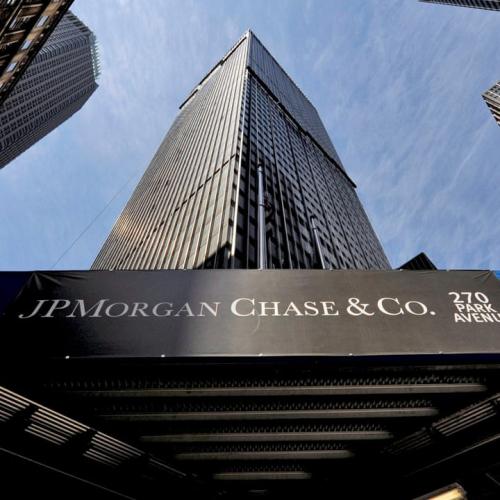
J.P. Morgan Chase & Co. ignored or dismissed warning signs about the Madoff fraud even as it earned hundreds of millions of dollars from its relationship with his firm, according to a lawsuit unsealed [on February 3]. The $6.4 billion lawsuit ... claims that bankers at J.P. Morgan discussed the possibility that Bernard Madoff was operating a Ponzi scheme, worried that a firm of such size was audited by a storefront accountant and called his returns "too good to be true." "While numerous financial institutions enabled Madoff's fraud, JPMC was at the very center of that fraud, and thoroughly complicit in it," according to the 115-page lawsuit, filed under seal in December by Irving Picard, the trustee seeking to recover money for Mr. Madoff's victims. The complaint seeks the return of nearly $1 billion in J.P. Morgan's profits and fees, and $5.4 billion in damages. It goes into great detail about the bank's alleged efforts, starting in about 2006, to make money by offering products tied to Mr. Madoff through investment funds that fed money to him. The lawsuit offers a detailed account of the more than two decade relationship between J.P. Morgan and Mr. Madoff. The lawsuit claims that the bank didn't pay attention to billions of dollars passing through the Madoff firm's main J.P. Morgan account, much of it by hand-written check, or to discrepancies in the account balance and unreported obligations.
Note: For lots more from major media sources on the criminal practices of the biggest financial institutions, click here.
"We certainly applaud the efforts of the commission," said White House press secretary Robert Gibbs, referring to the Financial Crisis Inquiry Report. "Frankly, I'm not sure much has changed," said one of commissioners, Byron Georgiou. "The concentration of assets in the nation's 10 biggest banks is bigger now than it was five years ago, from 58 percent in 2006 to 63 percent now." Referring to executives who remain at the head of those banks that almost ran aground, Georgiou said ... "Either they knew and didn't want to tell us, or they really didn't know. Either way, they put their institutions at risk." And have yet to be held accountable. Commissioner Brooksley Born can enjoy a certain sense of vindication. Not only had "over-the-counter derivatives contributed significantly to this crisis," ... but the enactment of legislation in 2000 to ban their regulation "was a key turning point in the march toward the financial crisis." As head of the Commodity Futures Trading Commission in the 1990s, Born was aware of the damage the largely unregulated instruments had already caused. Born suggested some more regulation. [She] was squashed like a bug by Clinton administration heavyweights, including Lawrence Summers and Robert Rubin, [and] Federal Reserve Chairman Alan Greenspan. One of the results: The Commodity Futures Modernization Act of 2000 eliminated government oversight of the OTC market. As the report documents, the use of such derivatives ... helped bring the entire financial system to its knees. Born hasn't seen much change in terms of accountability. One thing the report makes clear ... is just how preposterous were the "Who knew?" and "Who could have predicted?" statements offered up by chief executives and top government officials.
Note: So the 10 biggest banks now control 63% of total U.S. bank assets. The total for these banking assets as of the second quarter of 2010 were calculated at $13.22 trillion. Yet four of these megabanks also control an astounding 95% of the $574 trillion derivatives market, a sum over 40 times the amount of bank assets! Do you think there might be a problem with a derivatives bubble?
New disclosures show the Federal Reserve rushed trillions of dollars in emergency aid not just to Wall Street but also to ... foreign-owned banks in 2008 and 2009. The central bank's aid programs also supported U.S. subsidiaries of banks based in East Asia, Europe and Canada. The biggest users of the Fed lending programs were some of the world's largest banks, including Citigroup, Bank of America, Goldman Sachs, Swiss-based UBS and Britain's Barclays, according to more than 21,000 loan records released [December 1] under new financial regulatory legislation. The data reveal banks turning to the Fed for help almost daily in the fall of 2008 as the central bank lowered lending standards and extended relief to all kinds of institutions it had never assisted before. The extent of the lending to major banks - and the generous terms of some of those deals - heighten the political peril for a central bank that is already under the gun for a wide range of actions, including a recent decision to try to stimulate the economy by buying $600 billion in U.S. bonds. "The American people are finally learning the incredible and jaw-dropping details of the Fed's multitrillion-dollar bailout of Wall Street and corporate America," said Sen. Bernard Sanders (I-Vt.), a longtime Fed critic whose provision in the Wall Street regulatory overhaul required the new disclosures. "Perhaps most surprising is the huge sum that went to bail out foreign private banks and corporations." The Fed launched emergency programs totaling $3.3 trillion in aid, a figure reached by adding up the peak amount of lending in each program.
Note: The figure of $3.3 trillion cited in this article was simply the peak amount lent at one moment in time; the total amount lent by the Fed over the years covered by the data exceeded $20 trillion. For analysis of this data release, click here.
Important Note: Explore our full index to revealing excerpts of key major media news articles on several dozen engaging topics. And don't miss amazing excerpts from 20 of the most revealing news articles ever published.