
















Financial News Articles
Below are key excerpts of revealing news articles on financial corruption from reliable news media sources. If any link fails to function, a paywall blocks full access, or the article is no longer available, try these digital tools.
For further exploration, delve into our comprehensive Banking Corruption Information Center.

"Nothing," [famed economist] Anna Schwartz says, "seems to have quieted the fears of either the investors in the securities markets or the lenders and would-be borrowers in the credit market." The credit markets remain frozen, the stock market continues to get hammered, and deep recession now seems a certainty -- if not a reality already. [Recently, according to Schwarz, Secretary of the Treasury Hank Paulson has] shifted from trying to save the banking system to trying to save banks. These are not, Ms. Schwartz argues, the same thing. In fact, by keeping otherwise insolvent banks afloat, the Federal Reserve and the Treasury have actually prolonged the crisis. "They should not be recapitalizing firms that should be shut down." Rather, "firms that made wrong decisions should fail," she says bluntly. "You shouldn't rescue them. Everything works much better when wrong decisions are punished and good decisions make you rich." How did we get into this mess in the first place? As in the 1920s, the current "disturbance" started with a "mania." But manias always have a cause. "In every case, it was expansive monetary policy that generated the boom in an asset. The particular asset varied from one boom to another. But the basic underlying propagator was too-easy monetary policy and too-low interest ratest. And then of course if monetary policy tightens, the boom collapses." Today's crisis isn't a replay of the problem in the 1930s, but our central bankers have responded by using the tools they should have used then. They are fighting the last war. The result, she argues, has been failure.
Note: Anna Schwarz and Nobel-winner Milton Friedman authored A Monetary History of the United States. It's the definitive account of how misguided monetary policy turned the stock-market crash of 1929 into the Great Depression. The excellent article above mentions that Fed Reserve Chairman Bernanke once said "I would like to say to Milton and Anna: Regarding the Great Depression. You're right, we did it. We're very sorry. We won't do it again." Top bankers and their cronies have been aware of what causes the boom/bust cycle for over 100 years and taken full advantage of it. Try to find one top banker who lost significant money in any bust cycle.
Regulators had long classified a private Swiss energy conglomerate called Vitol as a trader that primarily helped industrial firms that needed oil to run their businesses. But when the Commodity Futures Trading Commission examined Vitol's books last month, it found that the firm was in fact more of a speculator, holding oil contracts as a profit-making investment rather than a means of lining up the actual delivery of fuel. Even more surprising to the commodities markets was the massive size of Vitol's portfolio -- at one point in July, the firm held 11 percent of all the oil contracts on the regulated New York Mercantile Exchange. The discovery revealed how an individual financial player had gained enormous sway over the oil market without the knowledge of regulators. Other CFTC data showed that a significant amount of trading activity was concentrated in the hands of just a few speculators. The CFTC ... now reports that financial firms speculating for their clients or for themselves account for about 81 percent of the oil contracts on NYMEX, a far bigger share than had previously been stated by the agency. That figure may rise in coming weeks as the CFTC checks the status of other big traders. Some lawmakers have blamed these firms for the volatility of oil prices, including the tremendous run-up that peaked earlier in the summer. "It is now evident that speculators in the energy futures markets play a much larger role than previously thought, and it is now even harder to accept the agency's laughable assertion that excessive speculation has not contributed to rising energy prices," said Rep. John D. Dingell (D-Mich.).
Hedge funds and big Wall Street banks are taking advantage of loopholes in federal trading limits to buy massive amounts of oil contracts, ... helping to push oil prices to record highs. The federal agency that oversees oil trading, the Commodity Futures Trading Commission, has exempted these firms from rules that limit speculative buying. The CFTC has also waived regulations over the past decade on U.S. investors who trade commodities on some overseas markets, freeing those investors to accumulate large quantities of the future oil supply by making purchases on lightly regulated foreign exchanges. Over the past five years, investors have become such a force on commodity markets that their appetite for oil contracts has been equal to China's increase in demand over the same period, said Michael Masters, a hedge fund manager who testified before Congress on the subject last month. The commodity markets, he added, were never intended for such large financial players. Commodities have become especially enticing to investors as the credit crisis has roiled other investment opportunities such as stocks and debt-related securities. The recent flood of investment money has transformed the markets for oil, as well as uranium, wheat, cotton and other goods, into a volatile realm that some insiders call the Wild West of Wall Street. Michael Greenberger, a professor at the University of Maryland and former CFTC commissioner, said there were loopholes the agency could close without much effort. "There's smoke here, and the CFTC hasn't wanted to look if there's a fire," he said. "But these are dark markets. They don't even know who's doing the trading."
Note: For revealing reports on financial corruption and criminality from major media sources, click here.
Who rules the world? The rise of nation states produced national ruling classes. It would be odd if the current integration of the world economy did not produce new global elites business people and financiers who run global companies and global politicians who steer supra-national organisations such as the European Union (EU) and the International Monetary Fund. David Rothkopf, a visiting scholar at the Carnegie Endowment for International Peace, argues that these elites constitute nothing less than a new global superclass. They have all the clubby characteristics of the old national ruling classes, but with the vital difference that they operate on the global stage, far from mere national electorates. They attend the same universities. They are groomed in a handful of world-spanning institutions such as Goldman Sachs. They belong to the same clubs the Council on Foreign Relations in New York is a particular favourite and sit on each other's boards of directors. Many of them shuttle between the public and private sectors. They meet at global events such as the World Economic Forum at Davos and the Trilateral Commission or for the crme de la crme the Bilderberg meetings or the Bohemian Grove seminars that take place every July in California. Mr Rothkopf is anything but a crank, and he is right when he says that, these days, the most influential people around the world are also the most global people. He is also admirably ambivalent about his subject. He worries about surging inequality the richest 1% of humans own 40% of the planet's wealth and about the rumbling backlash against so much unaccountable power.
Note: For reliable, verifiable information the secret societies of which the global elite are a part, click here. Superclass: The Global Power Elite and the World They Are Making by David Rothkopf is available here.
[In] speaking [with New York Federal Reserve Bank president Timothy] Geithner while I was doing the research for my recently published book Superclass, he sketched in fascinating detail how the world's power elite rallies when the markets quake. Recalling an earlier crisis in global securities markets that he helped to manage, Geithner said the Fed brought together the leaders of the world's 14 major financial firms, from five countries, representing 95 percent of all the activity in global markets. The Swiss were there, the Germans were there, the British were there. Goldman Sachs chairman and CEO Lloyd Blankfein "jokingly called them 'the 14 families,' like in 'The Godfather'," says Geithner. "And we said to them, 'You guys have got to fix this problem. Tell us how you are going to fix it and we will work out some basic regime.' You ... need a critical mass of the right players. It is a much more concentrated world." Geithner's description of the financial elite in crisis mode came many months before the recent meltdown of Bear Stearns, yet foreshadowed [it] in an uncanny way. The people ... described by Geithner, plus a few thousand more like them, not only in business and finance, but also politics, the arts, the nonprofit world and other realms, are part of a new global elite that has emerged over the past several decades. I call it the "superclass." They have vastly more power than any other group on the planet. Each of the members is set apart by his ability to regularly influence the lives of millions of people in multiple countries worldwide. Each actively exercises this power, and often amplifies it through the development of relationships with other superclass members.
Note: For many revealing stories from reliable sources on secret societies of the world's most powerful people, click here.
"In our view, however, derivatives are financial weapons of mass destruction, carrying dangers that, while now latent, are potentially lethal." That warning was in [Warren] Buffett's 2002 letter to Berkshire shareholders. He saw a future that many others chose to ignore. Wall Street didn't listen to Buffett. Derivatives grew into a massive bubble, from about $100 trillion to $516 trillion by 2007. Despite Buffett's clear warnings, a massive new derivatives bubble is driving the domestic and global economies, a bubble that continues growing today parallel with the subprime-credit meltdown triggering a bear-recession. Data on the five-fold growth of derivatives to $516 trillion in five years comes from the most recent survey by the Bank of International Settlements, the world's clearinghouse for central banks in Basel, Switzerland. Keep in mind that while the $516 trillion "notional" value (maximum in case of a meltdown) of the deals is a good measure of the market's size, the 2007 BIS study notes that the $11 trillion "gross market values provides a more accurate measure of the scale of financial risk transfer taking place in derivatives markets." The fact is, derivatives have become the world's biggest "black market," exceeding the illicit traffic in stuff like arms, drugs, alcohol, gambling, cigarettes, stolen art and pirated movies. Why? Because like all black markets, derivatives are a perfect way of getting rich while avoiding taxes and government regulations. And in today's slowdown, plus a volatile global market, Wall Street knows derivatives remain a lucrative business.
Note: $516 trillion is equivalent to $75,000 for every man, woman, and child in the world! Do you think the financial industry is out of control? For lots more powerful, reliable information on major banking manipulations, click here. For a powerful analysis describing just how crazy things have gotten and giving some rays of hope by researcher David Wilcock, click here.
BILL MOYERS: Why do some of the most powerful and privileged people in the country get a free lunch you pay for? You'll find some of the answers [in]: Free Lunch: How the Wealthiest Americans Enrich Themselves at Government Expense (and Stick You with the Bill). The theme of the book as I read it is that not that the rich are getting richer but that they've got the government rigging the rules to help them do it. DAVID CAY JOHNSTON: That's exactly right. And they're doing it in a way that I think is very crucial for people to understand. They're doing it by taking from those with less to give to those with more. We gave $100 million dollars to Warren Buffett's company last year, a gift from the taxpayers. We make gifts all over the place to rich people. Donald Trump benefits from a tax specifically levied by the State of New Jersey for the poor. Part of the casino winnings tax in New Jersey is dedicated to help the poor. But $89 million of it is being diverted to subsidize Donald Trump's casino's building retail space. George Steinbrenner, like almost every owner of a major sports franchise, gets enormous public subsidies. The major sports franchises [make] 100 percent of their profits from subsidies. In fact, if it weren't for these subsidies, the baseball, football, hockey, and basketball enterprises as a whole would be losing hundreds of millions of dollars a year. George Bush owes almost his entire fortune to a tax increase that was funneled into his pocket and into the use of eminent domain laws to essentially legally cheat other people out of their land for less than it was worth to enrich him and his fellow investors.
Note: Watch part of this amazingly revealing interview online at this link. Johnston is a prolific writer with the NY Times; to see a list of his many articles there, click here. For deeply revealing reports from reliable major media sources on financial corruption, click here.
The Secretary of the Treasury ... is required annually to submit financial statements for the U.S. government to the President and the Congress. GAO is required to audit these statements. Certain material weaknesses in financial reporting and other limitations on the scope of our work resulted in conditions that continued to prevent us from expressing an opinion on the accompanying consolidated financial statements for the fiscal years ended September 30, 2006 and 2005. The federal government did not maintain effective internal control over financial reporting. While we are unable to express an opinion ... the following key items deserve emphasis. The U.S. governments total reported liabilities, net social insurance commitments, and other fiscal exposures continue to grow and now total approximately $50 trillion, representing approximately four times the Nations total output (GDP) in fiscal year 2006, up from about $20 trillion, or two times GDP in fiscal year 2000. The retirement of thebaby boom generation is [also] closer to becoming a reality with the first wave of boomers eligible for early retirement under Social Security in 2008. It seems clear that the nations current fiscal path is unsustainable and that tough choices by the President and the Congress are necessary in order to address the nations large and growing long-term fiscal imbalance. Other material weaknesses were the federal governments inability to: determine the full extent to which improper payments exist; identify and resolve information security control weaknesses; and effectively manage its tax collection activities.
Note: The full 172-page report is available here. Why didn't any of the media cover this eye-opening report? Is the fact that the national debt has risen 150% since 2000 not news? For a possible answer, click here. To learn of the trillions of unaccounted for dollars in the military, click here.
Stock sales by America's corporate leaders exceeded purchases last month by the widest ratio in nearly 20 years. Executives sold $63.18 of shares for every $1 they bought in November, the largest ratio since at least January 1987. U.S. securities laws require company executives and directors to disclose stock purchases or sales within two business days. Insiders sold $8.4 billion in shares last month, according to data compiled from SEC filings. Buying was ... $133 million. The overall insider-selling amount was the fifth-highest since 1987. Selling peaked at $13.9 billion in March 2000. The data have "value for investors," said Wayne Reisner at Carret Asset Management in New York. "It's people who are very familiar with their company and their stock." Insiders executed 6.34 sales transactions for each purchase transaction in the eight weeks ended Dec. 1. That's up from 2.45 in the period ended Aug. 4 and above the ratio of 2.25 he considers neutral for the market. Microsoft ranked first among U.S. companies, with $594.2 million in sales by insiders in November. Seagate Technology and DreamWorks Animation SKG Inc. ranked second and third, at $311.8 million and $224.2 million, respectively. Google Inc. was fourth, at $182.1 million.
Note: Isn't it interesting that the NASDAQ stock index reached it's all-time high in March 2000, the exact month executive stock selling hit its record, and just prior to the huge NASDAQ crash. Is it possible that corporate executives knew something the rest of us didn't?
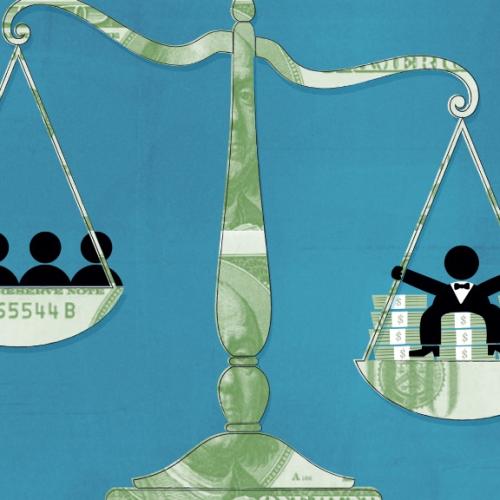
The richest 2 percent of adults still own more than half of the world's household wealth, perpetuating a yawning global gap between rich and poor, according to research published Tuesday. The report from the Helsinki-based World Institute for Development Economics Research shows that in 2000 the richest 1 percent of adults - most of whom live in Europe or the United States - owned 40 percent of global assets. The richest 10 percent of adults accounted for 85 percent of assets. By contrast, the bottom 50 percent of the world's adult population owned barely 1 percent of the world's wealth. "Income inequality has been rising for the past 20 to 25 years, and we think that is true for inequality in the distribution of wealth," said James Davies, a professor of economics at the University of Western Ontario, one of the report's authors. But ... there are some hopeful signs: China and India, which are developing rapidly, are gaining wealth, and in countries such as Bangladesh, the spread of microcredit institutions is helping people increase their personal wealth.
Note: If you are interested in a secure vehicle in which to place your investments which helps to directly pull families out of poverty in a big way through microcredit and microloans, click here.
Public kept in dark as business leads talks about North American integration. Away from the spotlight, from Sept. 12 to 14, in Banff Springs, Minister of Public Safety Stockwell Day and Defence Minister Gordon O'Connor met with U.S. and Mexican government officials and business leaders to discuss North American integration at the second North American Forum. The guest list included such prominent figures as U.S. Defence Secretary Donald Rumsfeld, Mexican Secretary of Public Security Eduardo Medina Mora and Canadian Forces chief General Rick Hillier. The event was chaired by former U.S. secretary of state George Schultz, former Alberta premier, Peter Lougheed and former Mexican finance minister Pedro Aspe. Organizers did not alert the media about the event. Our government ... refuses to release any information about the content of the discussions or the actors involved. The event was organized by the Canadian Council of Chief Executives. The media have paid little attention to this far-reaching agreement, so Canadians are unaware that a dozen working groups are currently "harmonizing" Canadian and U.S. regulations on everything from food to drugs to the environment and even more contentious issues like foreign policy. This process ... is about priming North America for better business by weakening the impacts of such perceived obstacles as environmental standards and labour rights. This is why the public has been kept in the dark while the business elite has played a leading role in designing the blueprint for this more integrated North America.
Note: If the above link fails, click here. Why has the U.S. media not covered this key topic? For a second article discussing this secret meeting on a top Canadian TV website, click here. To learn about other secret meetings of the power elite, click here
GAO is required by law to annually audit the consolidated financial statements of the U.S. government. Until the problems discussed in GAO's audit report on the U.S. government's consolidated financial statements are adequately addressed, they will continue to...hinder the federal government from having reliable financial information to operate in an economical, efficient, and effective manner. For the ninth consecutive year, certain material weaknesses in internal control and in selected accounting and financial reporting practices resulted in conditions that continued to prevent GAO from being able to provide the Congress and American people an opinion as to whether the consolidated financial statements of the U.S. government are fairly stated in conformity with U.S. generally accepted accounting principles. Major impediments to an opinion on the consolidated financial statements continued to be (1) serious financial management problems at the Department of Defense. The federal government's fiscal exposures now total more than $46 trillion, representing close to four times gross domestic product (GDP) in fiscal year 2005 and up from about $20 trillion or two times GDP in 2000.
Note:For the official .pdf version on the GAO website click here. Why didn't this become headline news? Why isn't anyone being assigned to seriously investigate these continually unresolved core issues and report to the public that the largest, most powerful country in the world is a long way from being able to track its own finances. For lots more major media articles on major government corruption, click here. You can help to build a better world by sharing this vital information with your friends and colleagues and contacting members of the media and your government representatives asking them to address this pervasive problem. Thanks for caring.
The Defense Department spent an estimated $100 million for airline tickets that were not used over a six-year period and failed to seek refunds even though the tickets were reimbursable, congressional investigators say. The GAO estimated that between 1997 and 2003, the Defense Department bought at least $100 million in tickets that were not used or used only partially by a passenger who did not complete all legs of a flight. The waste went undetected because the department relied on individuals to report the unused tickets. They did not do so. "The millions of dollars wasted on unused airline tickets provides another example of why DOD financial management is one of our high-risk areas, with DOD highly vulnerable to fraud, waste and abuse," the GAO said. Two of the three lawmakers who asked for the study were Republicans, and both were highly critical of the Pentagon's lack of financial control. Sen. Charles Grassley, R-Iowa, said, "It's outrageous that the Defense Department would be sending additional federal tax dollars to the airlines by way of unused passenger tickets." While one GAO report focused on the unused tickets, the second investigation found potential fraud. It said the department paid travelers for tickets the department already bought and reimbursed employees for tickets that had not been authorized. It is a crime for a government employee knowingly to request reimbursement for goods and services he or she did not buy. To demonstrate how easy it was to have the Pentagon pay for airline travel, the investigators posed as Defense employees, had the department generate a ticket and showed up at the ticket counter to pick up a boarding pass.
Note:To read this astonishing article on the New York Times website, click here.
Relax, everybody -- the White House counsel has "investigated" the case of the departing Sununu aide with no legal experience who was hired for $600,000 by a BCCI figure, and rendered this verdict: Nobody did anything wrong. Influence peddling? An attempt by intermediaries to obstruct justice? Forget it. Sununu's man agrees to give back the money; case closed. Much relieved, the Republican Justice Department hastily announces it accepts the predetermined result of the White House "inquiry" and will not investigate. To date, nobody has been asked a single question under oath. Let's see what Sheik Kamal Adham, the ex-Saudi spymaster at the center of the BCCI conspiracy, thought he would get by hiring the person closest to Bush's chief of staff. Since late spring, Plato Cacheris, Kamal's legitimate criminal defense lawyer, has been trying to get various prosecutors to ... come to a place of the sheik's choosing, where he cannot be arrested and extradited, to listen to an unsworn proffer of evidence that will deflect prosecution from him. Nothing doing, said Manhattan District Attorney Robert Morgenthau, the only lawman getting real results in the BCCI swindle; bring him in -- we'll get his story in front of a grand jury. Then Sununu's right-hand man departs the White House and is immediately retained, reportedly paid $136,000 in advance. Justice suddenly has a change of heart; though Ed Rogers' hand doesn't show, David Eisenberg, an assistant U.S. attorney, is dispatched from Washington to Cairo to meet Kamal on the sheik's terms.
Note: For more on the huge scandals of the powerful BCCI, click here. For lots more from reliable sources on government corruption, click here.
A demand for an investigation of charges printed in the Congressional Record by Representative Oscar Callaway of Texas, a pacifist Democrat, that the J.P. Morgan interests, the steel shipbuilding, and powder interests had purchased control of twenty-five great newspapers to further the preparedness campaign, was made in the House today by Representative J. Hampton Moore, a Pennsylvania Republican. Mr. Callaways speech, as inserted in The Record charged: In March, 1915, the J.P. Morgan interests, the steel, shipbuilding and powder interests, and their subsidiary organizations got together twelve men high up in the newspaper world and employed them to select from the most influential papers in the United States in sufficient numbers of them to control generally the policy of the daily press of the United States. They found it was only necessary to purchase the control of twenty-five of the greatest newspapers. [An] editor was furnished for each paper to properly supervise and edit information regarding the questions of preparedness, militarism, financial policies and other things of national and international nature considered vital to the interests of the purchasers. The policy also included the suppression of everything in opposition to the wishes of the interests served."
Note: For more showing how the media is controlled by carefully selected people placed by big money and the power elite, click here and here. For a short video of Congressional testimony from the 1970s proving CIA media manipulation, click here. The full text of this revealing article is available free at this link.
A massive trove of private financial records shared with The Washington Post exposes vast reaches of the secretive offshore system used to hide billions of dollars from tax authorities, creditors, criminal investigators and — in 14 cases involving current country leaders — citizens around the world. The revelations include more than $100 million spent by King Abdullah II of Jordan on luxury homes in Malibu, Calif., and other locations; millions of dollars in property and cash secretly owned by the leaders of the Czech Republic, Kenya, Ecuador and other countries; and a waterfront home in Monaco acquired by a Russian woman who gained considerable wealth after she reportedly had a child with Russian President Vladimir Putin. Other disclosures hit closer to home for U.S. officials. The files provide substantial new evidence, for example, that South Dakota now rivals notoriously opaque jurisdictions in Europe and the Caribbean in financial secrecy. Tens of millions of dollars from outside the United States are now sheltered by trust companies in Sioux Falls, some of it tied to people and companies accused of human rights abuses and other wrongdoing. The trove, dubbed the Pandora Papers, exceeds the dimensions of the leak that was at the center of the Panama Papers investigation five years ago. That data was drawn from a single law firm, but the new material encompasses records from 14 separate financial-services entities.
Note: Some have suggested that the CIA was responsible for the earlier Panama Papers leak. For more along these lines, see concise summaries of deeply revealing news articles on financial industry corruption from reliable major media sources.
The son of a federal judge was killed and her husband injured when a gunman opened fire at their family home in New Jersey on Sunday night. New Jersey U.S. District Court Judge Esther Salas' 20-year-old son Daniel Anderl was killed in the attack in North Brunswick, New Jersey, by a suspect dressed in a FedEx uniform. Salas was not injured in the shooting. North Brunswick Mayor Francis Womack told ABC News that Anderl died after being "shot through the heart." Womack said Salas received threats "from time to time" in the past but she is not believed to have received any recently. On July 15, four days before the shooting, Salas was assigned to the ongoing lawsuit brought by Deutsche Bank investors who claim the company made false and misleading statements about its anti-money laundering policies. The suit also alleged the bank failed to properly monitor "high-risk" customers, including convicted sex offender Jeffrey Epstein. Salas was nominated by President Barack Obama and was confirmed in 2011 having previously served as a U.S. Magistrate Judge in New Jersey. Her most high-profile case in recent years was the sentencing of Real Housewives of New Jersey reality TV stars Teresa and Joe Giudice for financial fraud charges. Salas allowed the pair to serve their time consecutively so one could raise their four children while the other was in jail.
Note: Media reports say the killer was Den Hollander, whose resume on his website states he once worked for Kroll Associates Russia. This Washington Post article states, "The French equivalent of the FBI ... suspected that Kroll's Paris operation was a CIA front." This New Yorker article states Kroll "has hired plenty of graduates of the C.I.A. and other secret services, such as M.I.6 and the Mossad." Is it just a coincidence these murder took place just days after Judge Salas was assigned to the Epstein case? Much more on this available here by crack reporter Whitney Webb.
Americas billionaires saw their fortunes soar by $434 billion during the U.S. lockdown between mid-March and mid-May, according to a new report. Amazons Jeff Bezos and Facebooks Mark Zuckerberg had the biggest gains, with Bezos adding $34.6 billion to his wealth and Zuckerberg adding $25 billion. The billionaire gains highlight how the coronavirus pandemic has rewarded the largest and most tech-focused companies, even as the economy and labor force grapples with the worst economic crisis in recent history. According to the report, the net worth of Americas billionaires grew 15% during the two-month period, to $3.382 trillion from $2.948 trillion. The biggest gains were at the top of the billionaire pyramid, with the richest five billionaires -- Bezos, Bill Gates, Zuckerberg, Warren Buffett, and Larry Ellison -- seeing combined wealth gains of $76 billion. Elon Musk had among the largest percentage gain of billionaires during the two months, seeing his net worth jump by 48% in the two months to $36 billion. Zuckerberg was close behind, seeing his wealth surge by 46% in the two months, to $80 billion. Bezos wealth increased by 31% to $147 billion. Because the study timeline captures the stock market bottom and quick rebound, it creates a slightly sunnier picture for billionaires than the full year. For the year, Buffetts wealth has declined by $20 billion, according to the Bloomberg Billionaires Index, while Gates is down by $4.3 billion. For the year, Jeff Bezos has gained $35.5 billion while Zuckerberg is up by $9 billion.
Note: For more along these lines, see concise summaries of deeply revealing news articles on the coronavirus from reliable major media sources.
On July 31, 2019, just eleven days before Jeffrey Epstein was found dead in a Manhattan jail cell, his connection to the Rothschild banking dynasty became the subject of major public controversy. Anonymous sources informed Bloomberg of a 2015 visit to Epstein’s New York mansion by baroness Ariane de Rothschild, the CEO of Edmond de Rothschild Group, a storied private bank and one of the largest Swiss financial institutions by assets under management. Newly released documents reveal that Epstein and de Rothschild’s personal relationship was much closer than the bank previously acknowledged. According to emails released by the U.S. House Oversight Committee on November 12, Epstein planned to see a Broadway play with de Rothschild in January 2014, and scheduled a private trip with her to Montreal. A second set of documents—the leaked inbox of former Israeli defense minister Ehud Barak ... sheds light on Epstein’s efforts to leverage his personal friendship with de Rothschild to raise funds for the development of Israeli cyberweapons. It’s not clear whether the Rothschild bank ultimately participated directly in Epstein and Barak’s cyberweapons efforts—but in October 2015, de Rothschild negotiated a $25 million contract with Epstein’s Southern Trust Company, the same entity Epstein used to fund Barak’s intelligence-linked security startup Reporty Homeland Security (now known as Carbyne) earlier that year.
Note: Read more about the vast influence of the Rothschild empire. Israeli cyberweapons have been sold to the FBI and used against journalists and activists. For more along these lines, read our concise summaries of news articles on Jeffrey Epstein's crime ring.
Staff at a Santa Barbara county jail heard screams coming from one of the cells. A 57-year-old inmate was moaning and hyperventilating. Rather than sending her to the ER, medical staff chalked her pain up to opioid withdrawal, since they had taken a prescription opioid away upon her arrival days before, a grand jury investigation later found. They placed the inmate – referred to as CF in the grand jury’s report – on mental health observation. The grand jury determined that CF’s stomach had perforated days before her excruciating death. CF would have had a 90% chance of survival if she had received immediate treatment. Wellpath, one of the nation’s leading health providers to prisons and jails, was the contractor responsible for healthcare at Santa Barbara county’s Northern Branch jail, where CF died. The grand jury’s report is the latest in over a decade of government investigations into two behemoths in the prison health industry – Wellpath and Corizon – which are both backed by private equity investors. Both Corizon and Wellpath continued to contract with jails, prisons, immigration and juvenile detention centers around the country until they faced so much liability ... that both landed in bankruptcy court over the last two years. Both companies were still operating in some form while restructuring in Chapter 11 bankruptcy proceedings, and had reorganization plans confirmed in bankruptcy court this year that allowed them to ... continue their prison contracts.
Note: According to this Guardian article, "More and more people, especially the relatively poor, may live almost their entire lives in systems owned by one or another private equity firm: financiers are their landlords, their electricity providers, their ride to work, their employers, their doctors, their debt collectors." For more along these lines, read our concise summaries of news articles on corruption in prisons and in the financial system.
Important Note: Explore our full index to revealing excerpts of key major media news articles on several dozen engaging topics. And don't miss amazing excerpts from 20 of the most revealing news articles ever published.