









Civil Liberties Media Articles
Below are key excerpts of revealing news articles on the erosion of our civil liberties from reliable news media sources. If any link fails to function, a paywall blocks full access, or the article is no longer available, try these digital tools.

Christopher David had watched in horror as videos surfaced of federal officers in camouflage throwing protesters into unmarked vans in Portland. The 53-year-old Portland resident had heard the stories: protesters injured, gassed, sprayed with chemicals that tugged at their nostrils and burned their eyes. David, a graduate of the U.S. Naval Academy and former member of the Navys Civil Engineer Corps, said he wanted to know what the officers involved thought of the oath they had sworn to protect and defend the Constitution. So, he said, on Saturday evening, he headed to downtown Portland to ask them. He asked one woman when the feds would show up, but she said it was also her first protest since the Department of Homeland Security deployed tactical units from U.S. Immigration and Customs Enforcement and U.S. Customs and Border Protection to bolster protections for federal buildings. Just as he was about to leave, David said, the federal officers emerged. Why are you not honoring your oath? he bellowed. Why are you not honoring your oath to the Constitution? An officer trained his weapon on Davids chest as several agents pushed him, sending David stumbling backward. But he regained his center and tried again. Another agent raised his baton and began to beat David, who stood unwavering with his arms at his sides. Then another officer unloaded a canister of chemical irritant spray into Davids face. At the hospital, he said, he learned his right hand had been broken in two places.
Note: For more along these lines, see concise summaries of deeply revealing news articles on government corruption and the erosion of civil liberties from reliable major media sources.
The strange and frightening images of unidentified military-looking men taking protesters off the streets of Portland, Oregon, and into unmarked vans may be headed to a city near you if that city is, as President Donald Trump declared Monday, run by "liberal Democrats." The teams of masked authorities seen in Portland dressed up for war like special forces apparently belong to the Department of Homeland Security's Customs and Border Protection Unit. They're trained for drug missions, but ... they've been dispatched to American streets. Trump suggested more federal agents will soon be headed to more American cities. The fact that DHS would deploy its own warriors into American streets without much discussion and without a clear mandate (they're vaguely supposed to be protecting federal buildings?) is dark-of-night dystopian stuff. Meanwhile, the militarized response has led to more violent levels of protest in Portland, where racial justice and anti-police brutality demonstrations have lasted more than 50 days. The atmosphere has not been helped by the efforts of federal agents, according to Portland Mayor Ted Wheeler, who called the administration's actions "abhorrent." "People are being literally scooped off the street into unmarked vans, rental cars," Wheeler [said]. Both Wheeler and Oregon's governor have demanded the federal authorities leave. And multiple House committee chairs are also calling for an immediate watchdog investigation.
Note: For more along these lines, see concise summaries of deeply revealing news articles on government corruption and the erosion of civil liberties from reliable major media sources.
Federal law enforcement officers have used unmarked vehicles to detain protesters in Portland. Videos shared online show officers driving up to people, detaining them without explanation, then driving off, Oregon Public Broadcasting first reported. The ACLU filed a lawsuit Friday evening to try and end what it called "lawlessness" on the streets of Portland. The lawsuit ... seeks to block the Department of Homeland Security and other agencies from attacking journalists and legal observers at protests. "Federal agents are terrorizing the community, threatening lives, and relentlessly attacking protesters demonstrating against police brutality," the ACLU said. "This is not law and order. This is lawlessness and it must be stopped." Conner OShea, 30, a Portland resident whos been attending protests for almost two months, told USA Today that early Thursday morning, around 2 a.m. he and a friend had left protests downtown and were walking back to their car when they were suddenly pursued by men who they believed to be federal agents. OShea did not see any sort of identifying markers on the men badges or numbers or words on their camouflage uniforms. OShea managed to get away. But his friend Mark Pettibone, 29, has told media he was arrested and booked by federal agents. Pettibone told the Washington Post that officers placed him in a holding cell in a federal courthouse, where he was read his Miranda rights. After Pettibone ... declined to answer questions, he was released.
Note: Read a CNN article questioning the degree to which we are moving towards martial law. For more along these lines, see concise summaries of deeply revealing news articles on government corruption and the erosion of civil liberties from reliable major media sources.
Covering protests in Minneapolis on Saturday, photojournalist Ed Ou could feel his hands and face were wet. For a long time, he didnt know if it was teargas, pepper spray, or blood in the end, it turned out to be a combination of all three. He has documented civil unrest in the Middle East, Ukraine and Iraq, where he learned a few things. So when the curfew hit and police fired teargas into the crowd of protesters, Ou stood steady, out of the way, documenting. And then the unexpected happened. They literally started throwing concussive grenades in our direction, in the middle of the journalists, he says. What ensued was a prolonged attack that involved being hit at with batons, being teargassed, dodging concussive grenades and begging for help. As of 9pm Thursday, the US press freedom tracker has received 192 reports of journalists being attacked by police forces while covering the protests across the US. Among them, some have sustained serious injuries. Linda Tirado, a photojournalist, was hit in the face with a tracer round, resulting in loss of sight in one eye. The Chicago Tribunes Ryan Fairclough was left with stitches after being shot through the window of his moving car. In Detroit, Nicole Hester was hit by pellets fired by Detroit police, leaving welts on her body. Others have been beaten up, arrested, their equipment damaged and they have been threatened for taking photos and filming on public streets. These are not one-off incidents: this is a picture of widespread attacks on the profession.
Note: For more along these lines, see concise summaries of deeply revealing news articles on police corruption and the erosion of civil liberties from reliable major media sources.
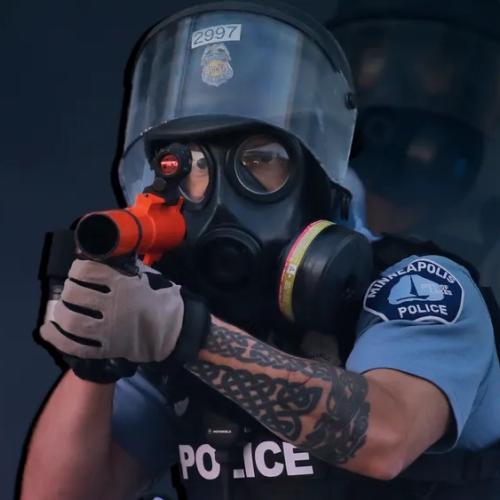
The nationwide anti-police brutality protests sparked by the killing of George Floyd in the US have been marked by widespread incidents of police violence, including punching, kicking, gassing, pepper-spraying and driving vehicles at often peaceful protesters in states across the country. The actions have left thousands of protesters in jail and injured many others, leaving some with life-threatening injuries. From Minnesota to New York, Texas, California, Washington DC and many places beyond, from small towns to big cities, police officers have demonstrated just how problematic law enforcement is in the US, drawing condemnation from international groups as well as domestic civil rights organizations. Numerous incidents of police violence have been exposed in disturbing videos and press accounts in recent days. Officers in a police SUV drove at a crowd of protesters in Brooklyn. A police officer was caught on camera violently shoving a woman to the ground during a demonstration. The woman, Dounya Zayer, was taken to hospital and said she suffered a seizure and concussion. An officer yanked a facemask from an African American man who was standing with his hands in the air, then pepper-sprayed him in the face. In Buffalo ... two officers shoved a 75-year-old man to the ground. A video showed the man hitting his head on the ground, causing his blood to spill on the sidewalk. He is now gravely ill in hospital. Frequently journalists have been met with the same aggressive policing as demonstrators. Police attacked journalists at least 140 times in the last four days of May. In most cases ... no action has been brought against officers or police departments.
Note: While some policemen are standing with protestors, as reported in this ABC News article, this revealing article shows how police are trained to be violent. For more along these lines, see concise summaries of deeply revealing news articles on police corruption from reliable major media sources.
The US National Football League is embroiled in a standoff with President Donald Trump after it said players would be allowed to take the knee during the American national anthem in protest against racism. After the NFL announced its U-turn, Trump tweeted late on Friday night: We should be standing up straight and tall, ideally with a salute, or a hand on heart. There are other things you can protest, but not our Great American Flag NO KNEELING! The NFL commissioner Roger Goodell said ... that the leagues earlier ban on players taking the knee had been mistaken. We were wrong for not listening to NFL players earlier, and encourage all to speak out and peacefully protest, Goodell said. The change in the NFLs position came after some players urged the league to condemn racism and the systemic oppression of black people. The practice of taking the knee during the national anthem before games started in 2016 as a protest by black player Colin Kaepernick against racial injustice. In the past two weeks, it has become an international symbol of opposition to racism. Trump has frequently denounced the action. Two years ago, he praised the NFLs ban on taking the knee during the pre-game national anthem, saying: You have to stand proudly for the national anthem. Or you shouldnt be playing, you shouldnt be there. Maybe you shouldnt be in the country. Last week, the president criticized New Orleans Saints quarterback Drew Brees for dropping his opposition to NFL kneeling protests.
Note: For more along these lines, see concise summaries of deeply revealing news articles on civil liberties from reliable major media sources.
Attorney General William P. Barr oversaw the deployment of a show of military force in the District in response to protests in recent days. His flood the zone strategy included the use of men in military tactical gear without any markings to indicate their names or agencies where they work. He thus took a page from the dictators handbook, threatening force without any accountability. Why did these unmarked troops refuse to identify themselves when asked by journalists and protesters? Some of the mystery forces in the District were special operations teams from the Bureau of Prisons. The bureau confirmed this in a statement to NBC, saying the crisis management teams were sent to Washington and Miami at Mr. Barrs request, and carry badges but were not wearing BOP specific clothing as they are serving a broader mission.. Mr. Barr also personally authorized the clearing of peaceful protesters in Lafayette Square on Monday so President Trump could walk to his photo op at St. Johns Episcopal Church. Two U.S. Park Police officers have been put on administrative leave after video showed Australian reporter Amanda Brace and cameraman Tim Myers being assaulted while reporting live on that melee. Was Mr. Barr in control of the Park Police, too? The Justice Departments inspector general and Congress ought to seek answers. In a democracy, where law enforcement works for the people and not against them, it must be identifiable and accountable.
Note: Read a related, incisive article on politico.com. For more along these lines, see concise summaries of deeply revealing news articles on government corruption and the erosion of civil liberties from reliable major media sources.
Law enforcement frequently infiltrates progressive political movements using agent provocateurs who urge others to engage in violence. More rarely, such provocateurs commit acts of violence themselves. In protests across the country over the past week, the clear actor escalating the violence generally hasnt been a protester or even a right-wing infiltrator, but the police themselves. The best documented use of provocateurs by the U.S. government occurred during the Federal Bureau of Investigations Counter-Intelligence Program, or COINTELPRO, from 1956 to 1971. The reason the documentation is available is because a group of citizens broke into an FBI office in Pennsylvania ... and stole files that they then passed to the media. In one notorious example in May 1970, an informant working for both the Tuscaloosa police and the FBI burned down a building at the University of Alabama during protests over the recent Kent State University shootings. The police then declared that demonstrators were engaging in an unlawful assembly and arrested 150 of them. The list goes on and on from there. Thirteen Black Panthers were accused of a plot to blow up the Statue of Liberty after receiving 60 sticks of dynamite from an FBI informant. After 28 people broke into a federal building to destroy draft files in 1971, an FBI informant bragged, I taught them everything they knew. When and whether the FBI ever stopped, however, is an open question. In any case, police forces in the U.S. continued the same tactics.
Note: Read more about the FBI's notorious COINTELPRO program. For more along these lines, see concise summaries of deeply revealing news articles on police corruption and the erosion of civil liberties from reliable major media sources.
Dozens of journalists covering anti-racism protests that have rocked the US have reported being targeted by security forces using tear gas, rubber bullets and pepper spray. In many cases, they said it was despite showing clear press credentials. The arrest of a CNN news crew live on air on Friday in Minneapolis, where unarmed black man George Floyd died at the hands of police, first drew global attention to how law enforcement authorities in the city were treating reporters. On Tuesday, Australian Prime Minister Scott Morrison asked his embassy in Washington to investigate the use of force by police against an Australian news crew as officers dispersed protesters there. It comes after dozens of attacks on journalists and media crews across the country over the weekend were reported on social media. In total the US Press Freedom Tracker, a non-profit project, says it is investigating more than 100 "press freedom violations" at protests. About 90 cases involve attacks. On Saturday night, two members of a TV crew from Reuters news agency were shot at with rubber bullets while police dispersed protesters in Minneapolis. In Washington DC, near the White House, a riot police officer charged his shield at a BBC cameraman on Sunday evening. On Friday night, Linda Tirado, a freelance photojournalist and activist, was struck in her left eye by a projectile that appeared to come from the direction of police in Minneapolis. She has been permanently blinded in that eye.
Note: For more along these lines, see concise summaries of deeply revealing news articles on police corruption and the erosion of civil liberties from reliable major media sources.
As thousands of protesters converged in Brooklyn on Monday evening, NYPD scanners picked up a bit of radio chatter. After a police dispatcher noted protester movement near the 77th Precinct, a voice on the same channel replies clearly: Shoot those motherfuckers. Just as clear was the immediate response: Dont put that over the air. The radio message was yet another indicator that police see protesters as enemies to combat rather than the citizens they are sworn to protect. [It] was also a sign of how emboldened police have become in calling for violence, and how little they seem to fear repercussions. Officers have responded to protests prompted by anger at police violence ... with yet more violence and, mostly, no consequence. Over the last several days, NYPD officers have beaten protesters with nightsticks, ripped off masks to pepper-spray them at close range, [and] driven their vehicles into crowds. The abuse has been enabled by laws that shield officers from accountability and by barriers to police oversight as well as by city leaders who have long allowed police to operate with impunity. In response to the police crackdown, NYPD Commissioner Dermot Shea expressed his pride as he congratulated his officers for their actions. Mayor Bill de Blasio ... continued his long-held practice of defending police misconduct in the face of indisputable evidence and attempted to shift the blame to protesters. Officials have responded to pressure for greater police transparency [by] making everything from complaints of misconduct to the findings of internal reviews, to body camera footage largely inaccessible to the public.
Note: While some policemen are standing with protestors, as reported in this ABC News article, another revealing article shows that the large majority of attacks on journalists came from police and not protestors. For more along these lines, see concise summaries of deeply revealing news articles on police corruption from reliable major media sources.
Images of tense encounters between protesters and police officers piled up over the weekend, as authorities intensified their efforts to quell nationwide uprisings, using rubber bullets, pepper pellets and tear gas in violent standoffs that seared cities nationwide. But some officers took different actions, creating contrasting images that told another story about the turbulent national moment following the death of George Floyd, a 46-year-old black man, in police custody in Minneapolis. From New York to Des Moines to Spokane, Wash., members of law enforcement sometimes clad in riot gear knelt alongside protesters and marched in solidarity with them. The act has become synonymous with peaceful protests in recent years after football player Colin Kaepernick knelt as part of his protests against police brutality on unarmed black citizens. A video circulating widely on Facebook captured two people in uniform joining a kneeling crowd in Queens. Thank you! cheered members of the crowd. The officers remained as a circle of people began to chant names of black Americans killed in infamous recent cases. Trayvon Martin! they called. Philando Castile! Cheers erupted, too, in the Iowa capital as Des Moines officers took a knee behind a police barricade. Acceding to the demands of protesters brought a rebuke in some places. In downtown Washington, a black officer who knelt was yanked from the crowd by his supervisor, and he returned standing to the line forming to hold back the demonstrations.
Note: For more along these lines, see concise summaries of deeply revealing news articles on police corruption from reliable major media sources.
What was your first reaction when you saw the video of the white cop kneeling on George Floyds neck while Floyd croaked, I cant breathe? If youre white, you probably muttered a horrified, Oh, my God while shaking your head at the cruel injustice. If youre black, you probably leapt to your feet, cursed, maybe threw something (certainly wanted to throw something), while shouting, Not @#$%! again! Then you remember the two white vigilantes accused of murdering Ahmaud Arbery as he jogged through their neighborhood in February, and how if it wasnt for that video emerging a few weeks ago, they would have gotten away with it. And how those Minneapolis cops claimed Floyd was resisting arrest but a stores video showed he wasnt. And how the cop on Floyds neck wasnt an enraged redneck stereotype, but a sworn officer who looked calm and entitled and devoid of pity. I dont want to see stores looted or even buildings burn. But African Americans have been living in a burning building for many years, choking on the smoke as the flames burn closer and closer. Racism in America is like dust in the air. It seems invisible even if youre choking on it until you let the sun in. Then you see its everywhere. So, maybe the black communitys main concern right now isnt whether ... a few desperate souls steal some T-shirts or even set a police station on fire, but whether their sons, husbands, brothers and fathers will be murdered by cops or wannabe cops just for going on a walk, a jog, a drive.
Note: For more along these lines, see concise summaries of deeply revealing news articles on police corruption and the erosion of civil liberties from reliable major media sources.
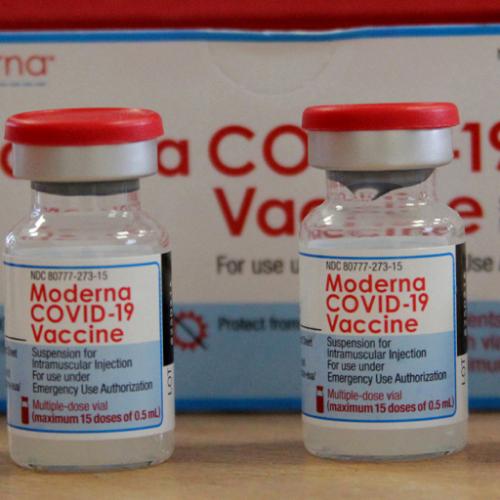
YouTube has removed two videos of California doctors ... Dan Erickson and Artin Massihi of Bakersfield, California [which] downplayed the risk of the coronavirus and asserted that stay-at-home measures were unnecessary. Facebook, however, has not removed the doctors' videos. The different reactions of YouTube and Facebook highlight the challenges of moderating high-stakes misinformation as it goes viral, especially when it is considered to be expert opinion. The video removed by YouTube showed a one-hour news conference livestreamed by local media, including NBC and ABC affiliates in Bakersfield. By Wednesday, the video had been seen at least 15 million times. Erickson and Massihi, owners of several urgent care centers in the area, presented data from 5,213 COVID-19 tests. The data, they claimed, showed that the coronavirus was widespread in the community already but had caused few deaths. Their data, they said, supported the need to rethink state stay-at-home measures. Furthermore, Erickson ... claimed that COVID-19 death numbers were inaccurate, citing other unnamed doctors in Wisconsin and California who he said had told him that they were urged to list the disease as a cause of death even if it was unrelated. "The only justification for taking it down was that the two physicians on screen had reached different conclusions from the people currently in charge," said Fox News host Tucker Carlson. Massihi posted a video to his personal Facebook page Tuesday thanking supporters while insisting that their comments were meant only to share their own data, not to drive national or even state policy.
Note: Watch an excellent follow-up interview with Dr. Erickson exposing further deception. Even if these doctors are wrong about some of their conclusions, don't they have a right to express their opinions? Will anyone who disputes the claims of government officials be banned from expressing their opinions on social media? Sadly, this BBC article shows that is already true for the coronavirus on YouTube. For more along these lines, see concise summaries of deeply revealing news articles on the coronavirus from reliable major media sources.
YouTube has banned any coronavirus-related content that directly contradicts World Health Organization (WHO) advice. The Google-owned service says it will remove anything it deems "medically unsubstantiated". Chief executive Susan Wojcicki said the media giant wanted to stamp out "misinformation on the platform". The move follows YouTube banning conspiracy theories falsely linking Covid-19 to 5G networks. Mrs Wojcicki made the remarks on Wednesday during her first interview since the global coronavirus lockdown began. "So people saying, Take vitamin C, take turmeric, well cure you, those are the examples of things that would be a violation of our policy, she told CNN. Anything that would go against World Health Organization recommendations would be a violation of our policy. Last week, Facebook announced users who had read, watched or shared false Covid-19 information would receive a pop-up alert urging them to visit the WHO's website. Facebook-owned messaging service WhatsApp, meanwhile, stopped users forwarding messages already shared more than four times by the wider community to more than one chat at a time. It comes as some of the UK's largest news publishers, including Daily Telegraph and the Guardian, criticised Google for failing to be transparent about its approach to filtering adverts alongside coronavirus-related content, according to the Financial Times.
Note: So now anything posted by those not deemed to be "experts" will be banned. Whatever happened to free speech? Watch YouTube's CEO spell this out in this video. More excellent, little-known information here in an interview with a respected MD whose video was banned. And how can BBC state links between 5G and Covid-19 are false, when that has yet to be established? Is it just a coincidence this CNBC article states China's 5G networks went online just weeks before the coronavirus outbreak? See also concise summaries of revealing coronavirus news articles.
A black Miami doctor was handcuffed outside his home last week while on his way to hand out tents to the citys homeless during the coronavirus outbreak. Security footage appeared to show a police sergeant handcuffing Dr. Armen Henderson, an internal medicine physician at the University of Miami Health System, as he was placing camping tents in his van. According to Henderson, the officer asked him what he was doing and if he was littering Henderson told him he lived there. At some point, he got upset with what I was saying and he handcuffed me, Henderson [said]. The officer then walked him over to the police car and pointed his fingers at him, all while not wearing a mask. Hendersons wife, Leyla Hussein, came out of the house with identification to prove they both lived there. Incidents like these underscore why black communities often distrust law enforcement. Only about a third of blacks say local police, do an excellent or good job in using the appropriate force on suspects, according to a 2016 Pew Research Center study. After fatal police shootings of black men such as Walter Scott and Alton Sterling, [a] study found that black people were, in fact, more likely to be stopped by police. If youre black or a minority, youre significantly more likely to be arrested if they stop you, Ted Miller ... who led the study, [said]. In 2019, another study ... revealed black men were 2.5 times more likely than white men to be killed by the police.
Note: Read about a 26-year-old black woman who was an EMT needlessly shot to death in her home and the purely racist murder of 25-year-old jogger Ahmaud Arbery. When will it stop? For more along these lines, see concise summaries of deeply revealing news articles on police corruption from reliable major media sources.
Tokyos coronavirus state of emergency is as surreal as they come. Though the streets are noticeably quieter than normal, subways and buses are still jammed with commuters. Stock trading goes on as normal. Many bars, restaurants and cafes are abuzz. So are barbershops, beauty salons and home improvement centers. In Shibuya and other meccas of youth culture, teenagers who should be hunkering down at home are out and about. Leave it to Japans largest metropolis to morph shelter-in-place into a giant kabuki performance starring 8.3 million people. [Prime Minister] Abe should dispense with the pandemic kabuki and call for a strict shelter-in-place policy. Though there are legal questions about enforceability, Abe could use the bully pulpit to urge Japanese and companies to comply.
Important Editor's Note: This article is a prime example of how the media is bulldozing it's social isolation agenda and convincing people to willingly give up their freedoms. Japan was one of the first countries hit by the virus, with it's first death due to the coronavirus on Feb. 13th. Yet while the U.S., Italy, France, Spain, and the UK all had their first coronavirus deaths after Japan, all of these countries as of April 12th had tens of thousands of deaths, while Japan had only 124 deaths. That's 100 times less. Instead of calling for stricter policies in Japan, why isn't everyone asking what they are doing to have such an incredibly low death rate without instituting lockdown procedures? For more serious questions on how we are being manipulated, see this excellent essay.
Much of Europe is still on coronavirus lockdown, with severe restrictions on movement and penalties for those who transgress. But not Sweden. Restaurants and bars are open in the Nordic country, playgrounds and schools too, and the government is relying on voluntary action to stem the spread of Covid-19. The Swedish government is confident its policy can work. Sweden's actions are about encouraging and recommending, not compulsion. Elisabeth Liden, a journalist in Stockholm, [noted that] "the subway went from being completely packed to having only a few passengers per car. I get the sense that a vast majority are taking the recommendations of social distancing seriously." On March 24, new rules were introduced to avoid crowding at restaurants. But they very much stayed open. So did many primary and secondary schools. Gatherings of up to 50 people are still permitted. The country's state epidemiologist, Anders Tegnell ... defended the decision to keep schools open [saying] "a lot of children are suffering when they can't go to school." Much of Sweden's focus has been to protect the elderly. Anyone aged 70 or older has been told to stay at home and limit their social contact as much as possible. Another factor in Sweden's favor is a generous social welfare net that means people don't feel obligated to turn up for work if their young child is sick. State support kicks in on day one of absence from work due to a child being sick. The next month will determine whether the Swedish system got it right.
Note: On 3/28, Sweden had twice as many deaths (203) as California (104). Yet 15 days later (4/12), California had risen 608% to 633, whileSwedenhad risen only 443% to 899. This is quite interesting considering that California has been in lockdown since 3/19, yet Sweden is not. You can verify these figures by going tothis linkof archived statistics from Johns Hopkins on the virus and clicking on the dates in question. For more along these lines, see concise summaries of deeply revealing news articles on the coronavirus from reliable major media sources.
The Netherlands has tried to adopt an "intelligent lockdown", but the infection is spreading rapidly and it has one of the world's highest mortality rates from the pandemic. Having shunned the stricter measures of neighbouring states the government has pursued an "intelligent" or "targeted" lockdown. It wants to cushion the social, economic and psychological costs of social isolation and make the eventual return to normality more manageable. [The] local florist, ironmonger, delicatessen, bakery and toy store are still serving customers. Posters on the door and sticky tape on the floor encourage people to give each other space. Only those businesses that require touching, like hairdressers, beauticians and red light brothels, have been forced to cease trading. Schools, nurseries and universities are closed. Bars, restaurants and cannabis cafes are shut, although they seem to be doing a roaring trade in takeaways. "We think we're cool-headed," explained Dr Louise van Schaik of the Clingendael Institute of International Relations. "We don't want to overreact, to lock up everybody in their houses." People have been advised to stay at home, but you can go out if you are unable to work from home ... as long as you maintain 1.5m (5ft) social distance. It helps that the Dutch appear to be broadly compliant. One survey suggested 99% of people kept their distance. Dutch public health agency RIVM has launched a study to see how far antibodies created when people are exposed remain effective in preventing re-infection. "It's kind of like creating your own internal vaccine, by being exposed to it and then letting your body generate those antibodies naturally," Prof Aura Timen from the RIVM told the BBC.
Note: On 3/28, the Netherlands had over six times as many deaths as California with 639 compared to California's 104. Yet 15 days later (4/12), California had risen 608% to 633, whilethe Netherlandshas gone up only 428%to 2,737. This is quite interesting considering that California has been in lockdown since 3/19. You can verify this by going tothis linkof archived statistics on the virus and clicking on the dates in question. For more along these lines, see concise summaries of deeply revealing news articles on the coronavirus from reliable major media sources.
Bill Gates ... just called for a complete and utter shutdown and quarantining of the entire American nation. Despite urging from public health experts, Gates wrote in a Washington Post opinion piece, some states and counties havent shut down completely. This is a recipe for disaster. Because people can travel freely across state lines, so can the virus. The countrys leaders need to be clear: Shutdown anywhere means shutdown everywhere. Until the case numbers start to go down ... no one can continue business as usual or relax the shutdown. He then added that the impacts of the new coronavirus could linger another 18 months or so, until a vaccine was developed. For the peons of America, work isnt an option. Its food. Its survival. The fate of a hard-earned dream shouldnt rest with a globalist billionaire whos warning of dire coronavirus consequences to come all the while making hands-over-fist coronavirus money. Its a conflict of interest. WHO didnt announce the coronavirus as a pandemic until the very day after Gates ... made a very large donation to a cause that benefits WHO. In a 2017 piece titled, Meet the worlds most powerful doctor: Bill Gates, Politico wrote: Some billionaires are satisfied with buying themselves an island. Bill Gates got a United Nations health agency. Over the past decade, the worlds richest man has become the World Health Organizations second-biggest donor, second only to the United States. This largesse gives him outsized influence over its agenda. The result, say his critics, is that Gates priorities have become the WHOs.
Very Important Note: To understand how the coronavirus is being used to exert more control over humanity, don't miss this incredibly important video focused on how Bill Gates is using fear around the coronavirus to push through his agenda to vaccinate everyone on the planet and then require a "digital certificate" to ensure they've been vaccinated. For other reliable, verifiable informing demonstrating how Gates' vaccine agenda has already harmed hundreds of thousands of children read this excellent article by Robert F. Kennedy, Jr.
In Hungary, the prime minister can now rule by decree. In Britain, ministers have what a critic called eye-watering power to detain people and close borders. Israels prime minister has shut down courts and begun an intrusive surveillance of citizens. Chile has sent the military to public squares once occupied by protesters. Bolivia has postponed elections. As the coronavirus pandemic brings the world to a juddering halt and anxious citizens demand action, leaders across the globe are invoking executive powers and seizing virtually dictatorial authority with scant resistance. Critics say some governments are using the public health crisis as cover to seize new powers that have little to do with the outbreak, with few safeguards to ensure that their new authority will not be abused. The laws are taking swift hold across a broad range of political systems in authoritarian states like Jordan, faltering democracies like Hungary, and traditional democracies like Britain. And there are few sunset provisions to ensure that the powers will be rescinded once the threat passes. We could have a parallel epidemic of authoritarian and repressive measures following close if not on the heels of a health epidemic, said Fionnuala Ni Aolain, the United Nations Special Rapporteur on counterterrorism and human rights. As the new laws broaden state surveillance, allow governments to detain people indefinitely and infringe on freedoms of assembly and expression, they could also shape civic life, politics and economies for decades to come.
Note: For more along these lines, see concise summaries of deeply revealing news articles on the coronavirus pandemic and the erosion of civil liberties from reliable major media sources.
Important Note: Explore our full index to key excerpts of revealing major media news articles on several dozen engaging topics. And don't miss amazing excerpts from 20 of the most revealing news articles ever published.