






































Corporate Corruption Media Articles
Below are key excerpts of revealing news articles on corporate corruption from reliable news media sources. If any link fails to function, a paywall blocks full access, or the article is no longer available, try these digital tools.

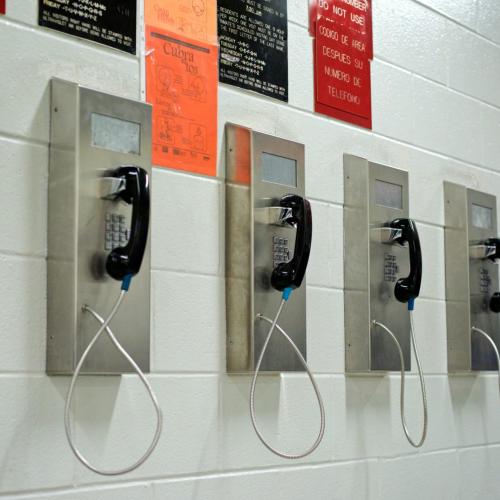
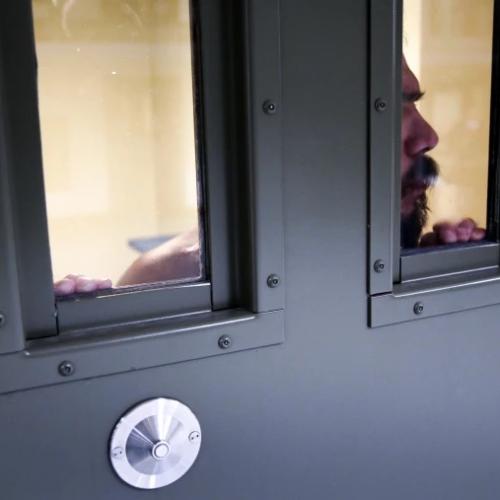
Last week, the nation’s largest prison and jail telecom corporation, Securus, effectively defaulted on more than a billion dollars of debt. After decades of preying on incarcerated people and their loved ones with exploitative call rates and other predatory practices that have driven millions of families into debt, Securus is being crushed under the weight of its own. Securus is one of two corporations that dominate roughly 80 percent of the U.S. prison telecom industry. Both companies are owned by private-equity firms: Securus, by Platinum Equity, and ViaPath (previously Global Tel Link), by American Securities. Together, Securus and ViaPath contract with 43 state prison systems and over 800 county jails. Their dominance of the market allows them to routinely charge incarcerated people and their families egregious rates for rudimentary communications services: A 15-minute phone call can run as high as $8.25; a 25-minute video call up to $15; and basic emails as much as $0.50, or more with attachments. The nature of agreements between these telecom providers and correctional agencies often further incentivizes the financial exploitation of the incarcerated, creating profit-sharing kickback schemes that provide prisons and jails with a portion of sales revenue. The ... tactics that brought Securus down—narrative change, policy campaigns, regulatory efforts, and investor activism—offer a roadmap for tackling exploitative corporate profiteers across the prison industry.
Note: For more along these lines, see concise summaries of deeply revealing news articles on prison system corruption from reliable major media sources.
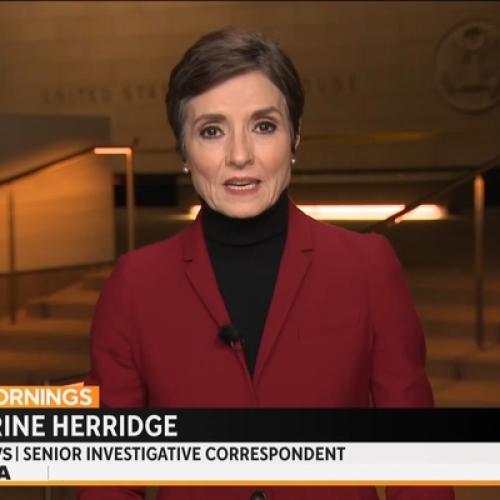
Catherine Herridge — the acclaimed CBS News investigative journalist known for her reporting on the Hunter Biden laptop scandal — accused the network of “journalistic rape” for seizing her files after she was fired during a House Judiciary Committee hearing. “CBS News’ decision to seize my reporting records crossed a red line that I believe should never be crossed by any media organization,” Herridge said. “Multiple sources said they were concerned that by working with me to expose government corruption and misconduct they would be identified and exposed.” Herridge, who had spent nearly five years at the network after being hired away from Fox News, was among 20 CBS News staffers let go as part of a larger purge of 800 employees by Paramount. Judiciary Committee Chair Jim Jordan (R-OH) asked Herridge if she wrote critical stories about Hunter Biden, the laptop, the Biden family, the business operation and the Biden brand. Herridge replied: ”I reported out the facts of the story.” “You sure did,” Jordan said. “You reported the facts and then CBS fired you!” The House Judiciary Committee also heard testimony from former CBS News reporter Sharyl Attkisson, who quit the network in 2014 over claims that CBS killed stories that put then-President Barack Obama in a bad light. Attkisson’s told the committee that her critical reporting of the government resulted in her phone being tapped.
Note: While Hunter Biden was indicted for three felony gun charges and nine counts of tax-related crimes, his laptop also revealed suspicious business dealings with corrupt overseas firms. For more, see concise summaries of deeply revealing news articles on corporate corruption and media manipulation from reliable sources.
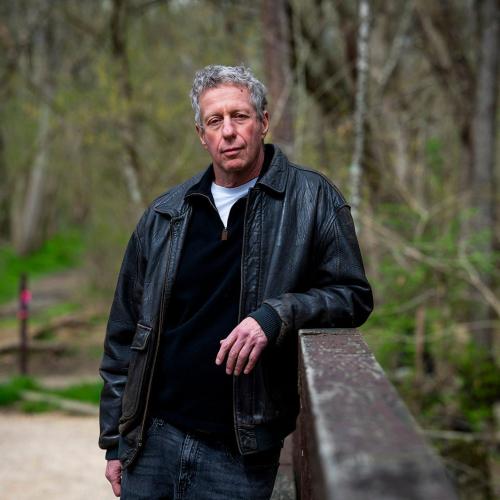
A debate about media bias has broken out at National Public Radio after a longtime employee published a scathing letter accusing the broadcaster of a “distilled worldview of a very small segment of the US population”. In the letter published on Free Press, NPR’s senior business editor Uri Berliner claimed Americans no longer trust NPR – which is partly publicly funded – because of its lack of “viewpoint diversity." Berliner wrote that “an open-minded spirit no longer exists within NPR, and now, predictably, we don’t have an audience that reflects America”. Berliner noted that in 2011 the public broadcaster’s audience identified as 26% conservative, 23% as middle of the road and 37% liberal. Last year it identified as 11% very or somewhat conservative, 21% as middle of the road, and 67% very or somewhat liberal. “We weren’t just losing conservatives; we were also losing moderates and traditional liberals,” Berliner wrote. Berliner identified the station’s coverage of the Covid-19 lab leak theory, Hunter Biden’s laptop and allegations that Donald Trump colluded with Russia in the 2016 election as all examples of how “politics were blotting out the curiosity and independence that ought to have been driving our work”. When he brought up [a] survey of newsroom political voter registration at a 2021 all-staff meeting, showing there were no Republicans, he claimed he was met with “profound indifference”.
Note: Read Berliner's full article about how NPR misled the public on the most important issues making front page news. For more, see concise summaries of deeply revealing news articles on corporate corruption and media manipulation from reliable sources.
A veteran National Public Radio journalist slammed the left-leaning broadcaster for ignoring the Hunter Biden laptop scandal because it could have helped Donald Trump get re-elected. Uri Berliner, an award-winning business editor and reporter at NPR, penned a lengthy essay ... in which he called out his bosses for turning the public radio broadcaster into “an openly polemical news outlet serving a niche audience.” “The laptop was newsworthy,” Berliner wrote. “But the timeless journalistic instinct of following a hot story lead was being squelched.” The Post was the first to reveal the existence of the laptop that Hunter Biden left at a Delaware computer shop. The Post published the contents of emails taken from the laptop, which shed light on Hunter Biden’s business dealings in Ukraine and China while his father, Joe Biden, was vice president during the Obama administration. Initially, national security experts and former intelligence officials declared the laptop a hoax and was the product of a Russian disinformation campaign. Social media sites like Twitter even barred its users from sharing links to The Post's reporting. The authenticity of the emails were later confirmed. According to Berliner, NPR’s managing editor for news at the time said that the outlet had no interest in “[wasting] our time on stories that are not really stories, and we don’t want to waste the listeners’ and readers’ time on stories that are just pure distractions.”
Note: While Hunter Biden was indicted for three felony gun charges and nine counts of tax-related crimes, his laptop also revealed suspicious business dealings with corrupt overseas firms. For more, see concise summaries of deeply revealing news articles on corporate corruption and media manipulation from reliable sources.
Forever chemicals, also known as per- and polyfluoroalkyl substances (PFAS), are a pervasive group of compounds that have been linked to a number of cancers and other illnesses. The toxic substances have become widespread in the air, soil and water via industrial discharge and are found in a number of common household items, from cookware to dental floss to stain-resistant furniture. And many of the products in which they have been detected — including waterproof makeup, workout leggings and period products — are primarily marketed toward women. In May 2022, a team of researchers at the Massachusetts-based Silent Spring Institute published a study ... looking at the presence of PFAS in underwear and several other consumer items. Among those products was menstrual underwear. Research released in August ... also found indicators of PFAS in some period products, including wrappers for several pads and some tampons and outer layers of menstrual underwear. A 2021 study ... tested 231 makeup products and found that 63 percent of the foundations, 58 percent of the eye products, 55 percent of the lip products and 47 percent of the mascaras it looked at contained high levels of fluorine. The Environmental Working Group has identified 300 cosmetic products from 50 different popular brands that contain PFAS in its Skin Deep database. The advocacy organization found that 200 of these products contain PTFE, which is also used in Teflon pans.
Note: For more along these lines, see concise summaries of deeply revealing news articles on health and corporate corruption from reliable major media sources.
A federal appeals court in the US has killed a ban on plastic containers contaminated with highly toxic PFAS “forever chemicals” found to leach at alarming levels into food, cosmetics, household cleaners, pesticides and other products across the economy. Houston-based Inhance manufactures an estimated 200m containers annually with a process that creates, among other chemicals, PFOA, a toxic PFAS compound. The Environmental Protection Agency (EPA) in December prohibited Inhance from using the manufacturing process. But the conservative fifth circuit court of appeals court overturned the ban. The judges did not deny the containers’ health risks, but said the EPA could not regulate the buckets under the statute it used. The rule requires companies to alert the EPA if a new industrial process creates hazardous chemicals. Inhance has produced the containers for decades and argued that its process is not new, so it is not subject to the regulations. The EPA argued that it only became aware that Inhance’s process created PFOA in 2020, so it could be regulated as a new use, but the court disagreed. PFAS are a class of about 15,000 compounds [that] have been linked to cancer, high cholesterol, liver disease, kidney disease, fetal complications and other serious health problems. A peer-reviewed study in 2011 found Inhance’s containers leached the toxic compounds into their contents.
Note: For more along these lines, see concise summaries of deeply revealing news articles on health and corporate corruption from reliable major media sources.
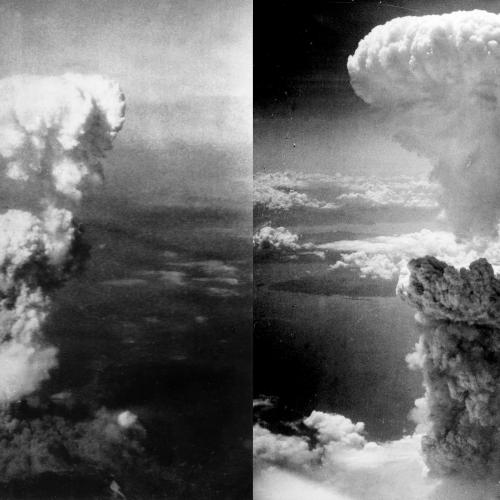
A Silicon Valley defense tech startup is working on products that could have as great an impact on warfare as the atomic bomb, its founder Palmer Luckey said. "We want to build the capabilities that give us the ability to swiftly win any war we are forced to enter," he [said]. The Anduril founder didn't elaborate on what impact AI weaponry would have. But asked if it would be as decisive as the atomic bomb to the outcome of World War II he replied: "We have ideas for what they are. We are working on them." In 2022, Anduril won a contract worth almost $1 billion with the Special Operations Command to support its counter-unmanned systems. Anduril's products include autonomous sentry towers along the Mexican border [and] Altius-600M attack drones supplied to Ukraine. All of Anduril's tech operates autonomously and runs on its AI platform called Lattice that can easily be updated. The success of Anduril has given hope to other smaller players aiming to break into the defense sector. As an escalating number of global conflicts has increased demand for AI-driven weaponry, venture capitalists have put more than $100 billion into defense tech since 2021, according to Pitchbook data. The rising demand has sparked a fresh wave of startups lining up to compete with industry "primes" such as Lockheed Martin and RTX (formerly known as Raytheon) for a slice of the $842 billion US defense budget.
Note: Learn more about emerging warfare technology in our comprehensive Military-Intelligence Corruption Information Center. For more, see concise summaries of deeply revealing news articles on corruption in the military and in the corporate world from reliable major media sources.
Last month, I revealed internal Twitter and Department of Homeland Security emails showing that the agency had successfully pressured the social media platform to censor the New York Times during the 2020 presidential election. It was impossible to get the Times to comment on my reporting that revealed that a government agency, enacted to protect national security, had muzzled one of its own. The paper remained silent. That was the case until last week when the Times finally mentioned the issue. In a lengthy article that falsely paints efforts to promote free speech as orchestrated entirely by Trump supporters, the Times buried an acknowledgment of our reporting some 52 paragraphs down. The backhanded way in which the Times finally noted that the government had suppressed the speech — in an article that essentially argues that free speech is a dangerous right-wing plot — reflects the institution's changing nature. Many in the public may view the paper as a beacon of the free press. After all, the most important Supreme Court case enshrining media rights was New York Times v. U.S., the 1971 case that made it clear that journalists have the right to publish even classified documents. There are sprawling constitutional issues at heart here that should go beyond left and right. This government or the next administration may use the DHS apparatus to control what is said about almost any political issue. DHS bureaucrats ... have planned to suppress “misinformation” about the Ukraine war, the origins of COVID-19, and topics as broad as “racial justice.” That power can easily be exploited. Last month, I testified before Congress on the importance of free speech. I also filed an amicus brief to the Supreme Court ... urging the justices to consider the lengthy evidence that the government has already overstepped its authority with respect to online censorship.
Note: This Substack was written by independent journalist Lee Fang. Read more about Department of Homeland Security's censorship efforts, including offensive operations to manipulate public opinion, discredit individuals, and infiltrate online groups. For more along these lines, see concise summaries of important news articles on censorship and media manipulation from reliable sources.
It prides itself on offering an "assortment of family-friendly programming." For Alexa Nikolas, however, Nickelodeon's claims concealed a darker truth. She says young stars were exploited into taking part in sexually suggestive scenes. "Kids are groomed into thinking that the lines that they're doing are pretend, that it's not real life," the star, who played Nicole Bristow on the Nickelodeon TV series Zoey 101, [said]. Nikolas spoke out in the wake of docuseries Quiet on Set: The Dark Side of Kids TV, which aired on the Investigation Discovery channel ... and exposed the "toxic culture" and alleged abuse on the set of some of Nickelodeon's biggest shows. In addition to Nikolas, several former child stars have spoken out, claiming sexual assault and harassment while working for the channel. Drake & Josh star Drake Bell speaks publicly for the first time about being repeatedly molested by his dialogue coach, Peck, when he was 15. "I was sleeping on the couch where I usually sleep and I woke up to him... I opened my eyes and I woke up and he was...he was sexually assaulting me." Bell claimed the abuse occurred more than once and said he was scared to report it. He explained: "And it just got worse, and worse, and worse, and worse, and I was just trapped. I had no way out. The abuse was extensive and it got pretty brutal." The four-part docuseries documents the child sexual abuse committed by assistant Jason Handy, dialogue coach Brian Peck, and studio freelancer Ezel Channel, as well as the alleged abusive and misogynistic behavior of showrunner Dan Schneider.
Note: Read more about the disturbing history of child sex abuse in Hollywood from the courageous voices of actor Corey Feldman and Lord of the Rings star Elijah Wood. For more along these lines, see concise summaries of deeply revealing news articles on corporate corruption and sexual abuse scandals from reliable major media sources.
Everywhere you go online, you’re being tracked. Almost every time you visit a website, trackers gather data about your browsing and funnel it back into targeted advertising systems, which build up detailed profiles about your interests and make big profits in the process. At the end of last year, thousands of websites started being more transparent about how many companies your data is being shared with. A WIRED analysis of the top 10,000 most popular websites shows that dozens of sites say they are sharing data with more than 1,000 companies, while thousands of other websites are sharing data with hundreds of firms. Quiz and puzzle website JetPunk tops the pile, listing 1,809 “partners” that may collect personal information, including “browsing behavior or unique IDs.” More than 20 websites from publisher Dotdash Meredith—including Investopedia.com, People.com, and Allrecipes.com—all say they can share data with 1,609 partners. The newspaper The Daily Mail lists 1,207 partners, while internet speed-monitoring firm Speedtest.net, online medical publisher WebMD, and media outlets Reuters, ESPN, and BuzzFeed all state they can share data with 809 companies. DuckDuckGo keeps a record of the companies that have the biggest tracking footprint across the web. Among the most common trackers, Google has its technology on 79 percent of websites, while those from five other companies are on more than 20 percent of websites.
Note: For more along these lines, see concise summaries of deeply revealing news articles on corporate corruption and the disappearance of privacy from reliable major media sources.
SpaceX is building a network of hundreds of spy satellites under a classified contract with a U.S. intelligence agency, five sources familiar with the program said. The network is being built by SpaceX's Starshield business unit under a $1.8 billion contract signed in 2021 with the National Reconnaissance Office (NRO), an intelligence agency that manages spy satellites. The plans show the extent of SpaceX's involvement in U.S. intelligence and military projects and illustrate a deeper Pentagon investment into vast, low-Earth orbiting satellite systems aimed at supporting ground forces. If successful, the sources said the program would significantly advance the ability of the U.S. government and military to quickly spot potential targets almost anywhere on the globe. Reuters reporting discloses for the first time that the SpaceX contract is for a powerful new spy system with hundreds of satellites bearing Earth-imaging capabilities that can operate as a swarm in low orbits. The planned Starshield network is separate from Starlink, SpaceX's growing commercial broadband constellation that has about 5,500 satellites in space. The classified constellation of spy satellites represents one of the U.S. government’s most sought-after capabilities in space because it is designed to offer the most persistent, pervasive and rapid coverage of activities on Earth. "No one can hide," one of the sources said of the system’s potential capability, when describing the network's reach.
Note: For more along these lines, see concise summaries of deeply revealing news articles on intelligence agency corruption and the disappearance of privacy from reliable major media sources.
Over the past year, Neha Wadekar and I unearthed a whistleblower’s shocking claim of a cover-up of a child sex abuse scandal, a who’s who of international do-good financiers, and a for-profit education chain operating mostly in Africa called Bridge International Academies. An investigator working for the World Bank was stymied and retaliated against. We got notes from a critical phone call between World Bank officials and company executives showing a plan to “neutralize Adler” — the lead internal investigator who had uncovered the allegations — and to slow down the process. “Time matters,” as one person on the call put it. “Need to delay until Series F.” (That’s a name for a financing round.) Following our reporting, Sens. Elizabeth Warren, D-Mass., and Peter Welch, D-Vt., sent multiple letters to the World Bank, warning the new president that how he responded to the scandal would be used by Congress as a proxy for his broader seriousness about reforming the bank. “We view the Bridge case as a litmus test for the conversation currently taking place around IFC’s responsibility to remedy social and environmental harm caused by its projects, especially those where IFC is not following its own policies,” the senators wrote. Bridge International Academies was backed by the World Bank’s IFC, as well as prominent Silicon Valley and venture capital leaders, including private funds linked to Bill Ackman, Mark Zuckerberg, and Pierre Omidyar.
Note: For more along these lines, see concise summaries of deeply revealing news articles on corporate corruption and sexual abuse scandals from reliable major media sources.
In November 2020 ... a ballot initiative known as Measure J passed with 57 percent support, amending the LA County charter so that jailing people before trial would be treated as a last resort. In June, LA County signed over the handling of changes to pretrial detention under Measure J to the consulting firm Accenture, a behemoth in the world of biometric databases and predictive policing. Accenture has pushed counterterror and policing strategies around the globe: The company built the world’s biggest biometric identification system in India, which has used similar technologies to surveil protesters and conduct crowd control as part of efforts by Prime Minister Narendra Modi’s Bharatiya Janata Party to investigate the citizenship of Muslim residents. Accenture ballooned into a giant in federal consulting over the course of the “war on terror,” winning hundreds of millions of dollars in lucrative contracts from federal agencies like the Department of Homeland Security for projects from a “virtual border” to recruiting and hiring Customs and Border Protection and Border Patrol agents. In 2006, Accenture won a $10 million contract for a DHS biometric ID program, the world’s second biggest, to collect and share biometric data on foreign nationals entering or leaving the U.S. Several LA-based advocates told The Intercept that the contract is yet another development that calls into question the county’s commitment to real criminal justice reform.
Note: For more along these lines, see concise summaries of deeply revealing news articles on corporate corruption and the disappearance of privacy from reliable major media sources.
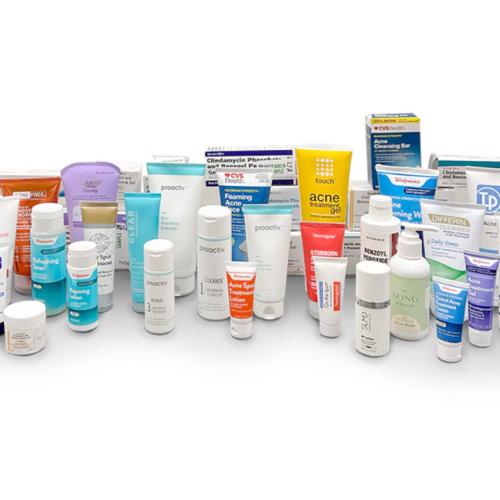
High levels of a chemical known to cause cancer have been found at "unacceptably high levels" in popular acne products from brands like Proactive, Target's Up & Up, Clinique, and Clearasil, according to a recent report by independent laboratory Valisure. Benzene, a known human carcinogen, was found to develop in products with benzoyl peroxide, a chemical used to treat acne, at a level of over 800 times the concentration limit of 2 parts per million set by the U.S. Food and Drug Administration, the March 6 report said. The drug product was found to be "fundamentally unstable" especially when stored at high temperatures. The report found a Proactiv product left in 158 degrees Fahrenheit of a hot compact car resulted in the detection of benzene at around 1,270 times the Environmental Protection Agency’s calculated threshold for increased cancer risk. "There is not a safe level of benzene that can exist in any skin care product, over the counter or prescription," Christopher Bunick, MD, PhD, Associate Professor of Dermatology at Yale University, said in a statement for Valisure. The report also found that benzene can leak out of packaging and "pose a potential inhalation risk" to consumers, according to the report. The company sent a citizen petition to the FDA on Tuesday describing its report and requesting "recalls and a suspension of sales for products containing the active pharmaceutical ingredient benzoyl peroxide."
Note: For more along these lines, see concise summaries of deeply revealing news articles on health and corporate corruption from reliable major media sources.
In 2015, the journalist Steven Levy interviewed Elon Musk and Sam Altman, two founders of OpenAI. A galaxy of Silicon Valley heavyweights, fearful of the potential consequences of AI, created the company as a non-profit-making charitable trust with the aim of developing technology in an ethical fashion to benefit “humanity as a whole”. Musk, who stepped down from OpenAI’s board six years ago ... is now suing his former company for breach of contract for having put profits ahead of the public good and failing to develop AI “for the benefit of humanity”. In 2019, OpenAI created a for-profit subsidiary to raise money from investors, notably Microsoft. When it released ChatGPT in 2022, the model’s inner workings were kept hidden. It was necessary to be less open, Ilya Sutskever, another of OpenAI’s founders and at the time the company’s chief scientist, claimed in response to criticism, to prevent those with malevolent intent from using it “to cause a great deal of harm”. Fear of the technology has become the cover for creating a shield from scrutiny. The problems that AI poses are not existential, but social. From algorithmic bias to mass surveillance, from disinformation and censorship to copyright theft, our concern should not be that machines may one day exercise power over humans but that they already work in ways that reinforce inequalities and injustices, providing tools by which those in power can consolidate their authority.
Note: Read more about the dangers of AI in the hands of the powerful. For more along these lines, see concise summaries of deeply revealing news articles on media manipulation and the disappearance of privacy from reliable sources.
Emotion artificial intelligence uses biological signals such as vocal tone, facial expressions and data from wearable devices as well as text and how people use their computers, promising to detect and predict how someone is feeling. Over 50% of large employers in the U.S. use emotion AI aiming to infer employees’ internal states, a practice that grew during the COVID-19 pandemic. For example, call centers monitor what their operators say and their tone of voice. We wondered what workers think about these technologies. My collaborators Shanley Corvite, Kat Roemmich, Tillie Ilana Rosenberg and I conducted a survey. 51% of participants expressed concerns about privacy, 36% noted the potential for incorrect inferences employers would accept at face value, and 33% expressed concern that emotion AI-generated inferences could be used to make unjust employment decisions. Despite emotion AI’s claimed goals to infer and improve workers’ well-being in the workplace, its use can lead to the opposite effect: well-being diminished due to a loss of privacy. On concerns that emotional surveillance could jeopardize their job, a participant with a diagnosed mental health condition said: “They could decide that I am no longer a good fit at work and fire me. Decide I’m not capable enough and not give a raise, or think I’m not working enough.” Participants ... said they were afraid of the dynamic they would have with employers if emotion AI were integrated into their workplace.
Note: The above article was written by Nazanin Andalibi at the University of Michigan. For more along these lines, see concise summaries of deeply revealing news articles on corporate corruption and the disappearance of privacy from reliable major media sources.
A federal appeals court on Tuesday refused to hold five major technology companies liable over their alleged support for the use of child labor in cobalt mining operations in the Democratic Republic of the Congo. In a 3-0 decision, the U.S. Court of Appeals for the District of Columbia ruled in favor of Google parent Alphabet, Apple, Dell Technologies, Microsoft and Tesla, rejecting an appeal by former child miners and their representatives. The plaintiffs accused the five companies of joining suppliers in a "forced labor" venture by purchasing cobalt, which is used to make lithium-ion batteries. Nearly two-thirds of the world's cobalt comes from the DRC. According to the complaint, the companies "deliberately obscured" their dependence on child labor, including many children pressured into work by hunger and extreme poverty, to ensure their growing need for the metal would be met. The 16 plaintiffs included representatives of five children who were killed in cobalt mining operations. Circuit Judge Neomi Rao said the plaintiffs had legal standing to seek damages, but did not show the five companies had anything more than a buyer-seller relationship with suppliers. Terry Collingsworth, a lawyer for the plaintiffs ... said his clients may appeal further. The decision provides "a strong incentive to avoid any transparency with their suppliers, even as they promise the public they have 'zero tolerance' policies against child labor," he said. "We are far from finished seeking accountability."
Note: Unreported deaths of children, devastating diseases, toxic environments, and sexual assault are just some of the tragedies within the hidden world of cobalt mining in the DRC. Furthermore, entire communities have been forced to leave their homes to make way for new mining operations. For more along these lines, see concise summaries of deeply revealing news articles on corporate corruption from reliable major media sources.
A chemical found in water bottles has been linked to child obesity, according to a new study. The synthetic chemical Bisphenol A, or BPA, was found in a variety of widely used products, such as plastic water bottles and eyewear. But it is also a chemical known to disrupt the body's hormones. The chemical, which can make its way into other avenues, such as food and the soil, accumulates in the body's tissues and organs when ingested. It is known to affect weight and can affect certain cells. A new study published in mSystems found that this chemical could be playing a role in causing different bacteria groups in children of normal weight than those who were overweight. "We found that the gut microbial community responds differently to BPA exposure depending on the BMI (body-mass index) of the individual," [said] microbiologist Margarita Aguilera of the University of Granada. "[Those connections] underscore the intricate interplay between gut microbiota and potential human pathophysiology resulting from cumulative BPA exposure." Researchers ... found overall that there were more unique bacteria groups in the children of a normal weight. This strongly suggests that the bacteria in those children may be able to fight off harmful chemicals like BPA. This study, and future studies into the effects of BPA, "could point to future interventions and policy changes that may reduce the risk of childhood obesity worldwide," Aguilera said.
Note: For more along these lines, see concise summaries of deeply revealing news articles on health and corporate corruption from reliable major media sources.
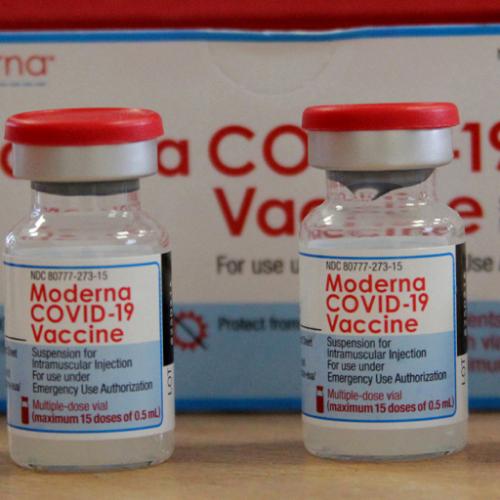
Government officials covered up the origins of COVID-19 and “forced” the vaccination of millions of people worldwide to “protect the integrity of the bioweapons industry,” according to a senior research scientist [at] Yale University. Harvey Risch, M.D., Ph.D. ... provided compelling testimony on what he believes accounts for the “crushingly obsessive push to COVID-vaccinate every living person on the planet.” Risch was among the medical experts ... who participated in Monday’s Senate roundtable discussion on “Federal Health Agencies and the COVID Cartel: What Are They Hiding?” Risch highlighted circumstantial evidence that COVID-19 “leaked from the Wuhan Institute of Virology” (WIV) in China in fall 2019. There is evidence the virus contains a unique genetic sequence “that also exists in Moderna patents from 2017,” while intelligence has “overwhelmingly” indicated the WIV as the source of the virus. According to Risch, “This work and the WIV leak was what I consider to be the fruit of our bioweapons industry that has been performing secretive and nefarious biological weapons development for the last 70 years.” Risch said that much of this research was banned in 1975, with the enactment of the United Nations Biological Weapons Convention, which prohibited the development of offensive bioweapons. However, a carve-out in the treaty allows “small quantities of offensive bioweapons ... to be developed in order to do research on vaccine countermeasures.”
Note: For more along these lines, see concise summaries of deeply revealing news articles on COVID and government corruption from reliable major media sources.
The disastrous situation at the US-Mexico border is, and has been, intentionally produced. Illegal crossings have risen to unprecedented levels. There is a bipartisan consensus about what must be done. Tellingly, the same “solution” is also being quietly rolled out at all American ports of entry that are not currently being “overrun”, such as airports. That solution, of course, is biometric surveillance, enabled by AI, facial recognition/biometrics and autonomous devices. This “solution” is not just being implemented throughout the United States as an alleged means of thwarting migrants, it is also being rapidly implemented throughout the world in apparent lockstep. Global policy agendas, ratified by nearly every country in the world ... seek both to restrict the extent of people’s freedom of movement and to surveil people’s movements ... through the global implementation of digital identity. The defense tech firm Anduril ... is one of the main beneficiaries of government contracts to build autonomous surveillance towers along the US-Mexico border, which are now also being rolled out along the US-Canada border. Anduril will create “a digital wall that is not a barrier so much as a web of all-seeing eyes, with intelligence to know what it sees.” While Anduril is one of the main companies building the “virtual wall,” they are not alone. General Dynamics, a defense firm deeply connected to organized crime, espionage scandals and corruption, has developed several hundred remote video surveillance systems (RVSS) towers for CBP while Google, another Big Tech firm with CIA connections, has been tapped by CBP to have its AI used in conjunction with Anduril’s towers, which also utilize Anduril’s own AI operating system known as Lattice.
Note: For more along these lines, see concise summaries of deeply revealing news articles on government corruption and the disappearance of privacy from reliable major media sources.
Important Note: Explore our full index to key excerpts of revealing major media news articles on several dozen engaging topics. And don't miss amazing excerpts from 20 of the most revealing news articles ever published.