








































Corporate Corruption News Articles
Below are key excerpts of revealing news articles on corporate corruption from reliable news media sources. If any link fails to function, a paywall blocks full access, or the article is no longer available, try these digital tools.

With few exceptions, big businesses are having a very different year from most of the country. Between April and September, one of the most tumultuous economic stretches in modern history, 45 of the 50 most valuable publicly traded U.S. companies turned a profit. Despite their success, at least 27 of the 50 largest firms held layoffs this year, collectively cutting more than 100,000 workers. Corporate leaders are touting their success and casting themselves as leaders on the road to economic recovery. Many of their firms have put Americans out of work and used their profits to increase the wealth of shareholders. 21 big firms that were profitable during the pandemic laid off workers anyway. Berkshire Hathaway raked in profits of $56 billion during the first six months of the pandemic while one of its subsidiary companies laid off more than 13,000 workers. Salesforce, Cisco Systems and PayPal cut staff even after their chief executives vowed not to do so. Companies sent thousands of employees packing while sending billions of dollars to shareholders. Walmart, whose CEO spent the past year championing the idea that businesses “should not just serve shareholders,” nonetheless distributed more than $10 billion to its investors during the pandemic while laying off 1,200 corporate office employees. Economists estimate at least 100,000 small businesses permanently closed in the first two months of the pandemic alone.
Note: For more along these lines, see concise summaries of deeply revealing news articles on corporate corruption and the coronavirus from reliable major media sources.
Netflixs brilliant new 90-minute docu-drama, The Social Dilemma ... might be the most important watch of recent years. The film, which debuted at Sundance Film Festival in January, takes a premise thats unlikely to set the world alight ... ie that Facebook, Twitter, Instagram et al arent exactly creating a utopia. Its masterstroke is in recruiting the very Silicon Valley insiders that built these platforms to explain their terrifying pitfalls which theyve realised belatedly. You dont get a much clearer statement of social medias dangers than an ex-Facebook executives claim that: In the shortest time horizon Im most worried about civil war. The commonly held belief that social media companies sell users data is quickly cast aside the data is actually used to create a sophisticated psychological profile of you. What theyre selling is their ability to manipulate you, or as one interviewee puts it: Its the gradual, slight, imperceptible change in your own behaviour and perception. Its the only thing for them to make money from: changing what you do, how you think, who you are. Despite it being public knowledge that Vote Leave and Trumps 2016 election campaign harvested voters Facebook data on a gigantic scale, The Social Dilemma still manages to find fresh and vital tales of how these platforms destabilise modern politics. Russias Facebook hack to influence the 2016 US election? The Russians didnt hack Facebook. They used the tools that Facebook made for legitimate advertisers, laments one of the companys ex-investors.
Note: For more along these lines, see concise summaries of deeply revealing news articles on corporate corruption and media manipulation from reliable sources.
The maker of a drug shown to shorten recovery time for severely ill COVID-19 patients says it will charge $2,340 for a typical treatment course for people covered by government health programs in the United States and other developed countries. Gilead Sciences announced the price Monday for remdesivir, and said the price would be $3,120 for patients with private insurance. The amount that patients pay out of pocket depends on insurance, income and other factors. The price was swiftly criticized; a consumer group called it an outrage because of the amount taxpayers invested toward the drug's development. In 127 poor or middle-income countries, Gilead is allowing generic makers to supply the drug; two countries are doing that for around $600 per treatment course. The drug, given through an IV, interferes with the coronaviruss ability to copy its genetic material. In a U.S. government-led study, remdesivir shortened recovery time by 31% 11 days on average versus 15 days for those given just usual care. Peter Maybarduk, a lawyer at the consumer group Public Citizen, called the price an outrage. Remdesivir should be in the public domain because the drug received at least $70 million in public funding toward its development, he said. The price puts to rest any notion that drug companies will do the right thing because it is a pandemic, Dr. Peter Bach, a health policy expert ... said. The price might have been fine if the company had demonstrated that the treatment saved lives. It didnt.
Note: The March coronavirus package passed in the U.S. "not only omitted language that would have limited drug makers intellectual property rights, it specifically prohibited the federal government from taking any action if it has concerns that the treatments or vaccines developed with public funds are priced too high." While many suffer economically from the virus, big Pharma is raking in big bucks. For more along these lines, see concise summaries of deeply revealing news articles on Big Pharma corruption and the coronavirus from reliable major media sources.
The global insulin market is dominated by three companies: Eli Lilly, the French company Sanofi and the Danish firm Novo Nordisk. All three have raised list prices to similar levels. According to IBM Watson Health data, Sanofis popular insulin brand Lantus was $35 a vial when it was introduced in 2001; its now $270. Novo Nordisks Novolog was priced at $40 in 2001, and as of July 2018, its $289. The companies appear to have increased [prices] in lockstep over a number of years, prompting allegations of price fixing. All three companies denied these charges. (In 2010, Mexico fined Eli Lilly and three Mexican companies for price collusion on insulin, an allegation Eli Lilly also denied.) In the United States, a federal prosecutor and at least five state attorneys general are currently investigating the companies pricing practices. There is also another, less known corporate entity in the mix: pharmacy benefit managers (PBMs), which include Express Scripts, OptumRx and CVS Health; all are now named in lawsuits on high insulin prices. These corporate entities are powerful special interests. In 2017, the pharmaceutical and health product industry ... spent nearly $280 million on lobbying, the biggest spender by far of 20 top industries, according to the Center for Responsive Politics. The industry also has a revolving door to government. Alex Azar, the head of the Department of Health and Human Services, was the president of Eli Lillys U.S. division until 2017.
Note: For more along these lines, see concise summaries of deeply revealing news articles on pharmaceutical industry corruption from reliable major media sources.
Last week, the nation’s largest prison and jail telecom corporation, Securus, effectively defaulted on more than a billion dollars of debt. After decades of preying on incarcerated people and their loved ones with exploitative call rates and other predatory practices that have driven millions of families into debt, Securus is being crushed under the weight of its own. Securus is one of two corporations that dominate roughly 80 percent of the U.S. prison telecom industry. Both companies are owned by private-equity firms: Securus, by Platinum Equity, and ViaPath (previously Global Tel Link), by American Securities. Together, Securus and ViaPath contract with 43 state prison systems and over 800 county jails. Their dominance of the market allows them to routinely charge incarcerated people and their families egregious rates for rudimentary communications services: A 15-minute phone call can run as high as $8.25; a 25-minute video call up to $15; and basic emails as much as $0.50, or more with attachments. The nature of agreements between these telecom providers and correctional agencies often further incentivizes the financial exploitation of the incarcerated, creating profit-sharing kickback schemes that provide prisons and jails with a portion of sales revenue. The ... tactics that brought Securus down—narrative change, policy campaigns, regulatory efforts, and investor activism—offer a roadmap for tackling exploitative corporate profiteers across the prison industry.
Note: For more along these lines, see concise summaries of deeply revealing news articles on prison system corruption from reliable major media sources.
In 2015, the journalist Steven Levy interviewed Elon Musk and Sam Altman, two founders of OpenAI. A galaxy of Silicon Valley heavyweights, fearful of the potential consequences of AI, created the company as a non-profit-making charitable trust with the aim of developing technology in an ethical fashion to benefit “humanity as a whole”. Musk, who stepped down from OpenAI’s board six years ago ... is now suing his former company for breach of contract for having put profits ahead of the public good and failing to develop AI “for the benefit of humanity”. In 2019, OpenAI created a for-profit subsidiary to raise money from investors, notably Microsoft. When it released ChatGPT in 2022, the model’s inner workings were kept hidden. It was necessary to be less open, Ilya Sutskever, another of OpenAI’s founders and at the time the company’s chief scientist, claimed in response to criticism, to prevent those with malevolent intent from using it “to cause a great deal of harm”. Fear of the technology has become the cover for creating a shield from scrutiny. The problems that AI poses are not existential, but social. From algorithmic bias to mass surveillance, from disinformation and censorship to copyright theft, our concern should not be that machines may one day exercise power over humans but that they already work in ways that reinforce inequalities and injustices, providing tools by which those in power can consolidate their authority.
Note: Read more about the dangers of AI in the hands of the powerful. For more along these lines, see concise summaries of deeply revealing news articles on media manipulation and the disappearance of privacy from reliable sources.
A US court this week banned three weedkillers widely used in American agriculture, finding that the Environmental Protection Agency (EPA) broke the law in allowing them to be on the market. The ruling is specific to three dicamba-based weedkillers manufactured by Bayer, BASF and Syngenta, which have been blamed for millions of acres of crop damage and harm to endangered species and natural areas across the midwest and south. Discovery documents turned up in the litigation showed the companies knew that their dicamba weedkillers would probably lead to off-target crop damage. This is the second time a federal court has banned these weedkillers since they were introduced for the 2017 growing season. In 2020, the ninth circuit court of appeals issued its own ban, but months later the Trump administration reapproved the weedkilling products. But a federal judge in Arizona ruled on Monday that the EPA made a crucial error in reapproving dicamba, finding the agency did not post it for public notice and comment as required by law. US district judge David Bury wrote ... that it was a “very serious” violation and that if EPA had done a full analysis, it probably would not have made the same decision. Bury wrote that the EPA did not allow many people who are deeply affected by the weedkiller – including specialty farmers, conservation groups and more – to comment. “The evidence has shown that dicamba cannot be used without causing massive and unprecedented harm to farms as well as endangering plants and pollinators,” said George Kimbrell [with] the Center for Food Safety, which litigated the case.
Note: For more along these lines, see concise summaries of deeply revealing news articles on health and government corruption from reliable major media sources.
2023 was a year marked by devastating conflicts from Russia’s ongoing invasion of Ukraine to Hamas’s horrific terror attacks on Israel, from that country’s indiscriminate mass slaughter in Gaza to a devastating civil war in Sudan. And there’s a distinct risk of even worse to come this year. Still, there was one clear winner in this avalanche of violence, suffering, and war: the U.S. military-industrial complex. In December, President Biden signed a record authorization of $886 billion in “national defense” spending for 2024, including funds for the Pentagon proper and work on nuclear weapons at the Department of Energy. Add to that tens of billions of dollars more in likely emergency military aid for Ukraine and Israel, and such spending could well top $900 billion for the first time. Annual spending on the costly, dysfunctional F-35 combat aircraft alone is greater than the entire budget of the Centers for Disease Control and Prevention. In 2020, Lockheed Martin’s contracts with the Pentagon were worth more than the budgets of the State Department and the Agency for International Development combined, and its arms-related revenues continue to rival the government’s entire investment in diplomacy. One $13 billion aircraft carrier costs more than the annual budget of the Environmental Protection Agency. Before investing ever more tax dollars ... the military strategy of the United States in the current global environment should be seriously debated.
Note: Learn more about unaccountable military spending in our comprehensive Military-Intelligence Corruption Information Center. For more, see concise summaries of deeply revealing news articles on military corruption from reliable major media sources.
In the past 20 years, every major US foreign policy objective has failed. The Taliban returned to power after 20 years of US occupation of Afghanistan. Post-Saddam Iraq became dependent on Iran. Syria’s President Bashar al-Assad stayed in power despite a CIA effort to overthrow him. Libya fell into a protracted civil war after a US-led NATO mission overthrew Muammar Gaddafi. Ukraine was bludgeoned on the battlefield by Russia in 2023 after the US secretly scuttled a peace agreement between Russia and Ukraine in 2022. Despite these remarkable and costly debacles ... the same cast of characters has remained at the helm of US foreign policy for decades. American foreign policy is not at all about the interests of the American people. It is about the interests of the Washington insiders, as they chase campaign contributions and lucrative jobs. In short, US foreign policy has been hacked by big money. To understand the foreign-policy scam, think of today’s federal government as a multi-division racket controlled by the highest bidders. The Wall Street division is run out of the Treasury. The Health Industry division is run out of the Department of Health and Human Services. The Big Oil and Coal division is run out of the Departments of Energy and Interior. And the Foreign Policy division is run out of the White House, Pentagon and CIA. Each division uses public power for private gain through insider dealing, greased by corporate campaign contributions and lobbying outlays.
Note: War profiteering is an old game. General Smedley Butler wrote War is a Racket in 1935. For more along these lines, see concise summaries of deeply revealing news articles on war and government corruption from reliable major media sources. Then explore the excellent, reliable resources provided in our Military-Intelligence Corruption Information Center.
The annual “Trouble in Toyland” report, produced by the U.S. Public Interest Research Group (PIRG) and released before the holiday season, historically has focused on safety hazards found in traditional children’s toys. According to the 38th annual “Trouble in Toyland” report, released in mid-November, “Toys that spy on children are a growing threat.” The threats “stem from toys with microphones, cameras and trackers, as well as recalled toys, water beads, counterfeits and Meta Quest VR headsets.” “The riskiest features of smart toys are those that can collect information, especially without our knowledge or used in a way that parents didn’t agree to,” said Teresa Murray, Consumer Watchdog at the U.S. PIRG Education Fund and author of the report. “It’s chilling to learn what some of these toys can do,” Murray said. Smart toys include “stuffed animals that listen and talk, devices that learn their habits, games with online accounts, and smart speakers, watches, play kitchens and remote cars that connect to apps or other technology,” according to PIRG. Smart toys can pose the risk of data breaches, hacking, potential violations of children’s privacy laws such as the Children’s Online Privacy Protection Act of 1998 (COPPA), and exposure to “inappropriate or harmful material without proper filtering and parental controls.” According to PIRG, “We don’t know with certainty when our child plays with a connected toy that the company isn’t recording us or collecting our data.”
Note: A 2015 New York Times article called smart objects a "trainwreck in privacy and security." For more along these lines, see concise summaries of deeply revealing news articles on corporate corruption and the disappearance of privacy from reliable major media sources.
Federal regulators announced warnings against two major food and beverage industry groups and a dozen nutrition influencers on Wednesday, as part of a broad action to enforce stricter standards for how companies and social media creators disclose paid advertising. The Federal Trade Commission sent warning letters on Monday to American Beverage, a lobbying group whose members include Coca-Cola and PepsiCo, as well as the Canadian Sugar Institute and a dozen health influencers who collectively have over 6 million followers on TikTok and Instagram. The agency flagged nearly three dozen social media posts that it said failed to clearly disclose who was paying the influencers to promote artificial sweeteners or sugary foods. The action follows a months-long investigation by The Examination and The Washington Post that revealed how the food and beverage industry had enlisted popular dietitians to promote industry-friendly messages on social media posts that often failed to disclose the names of sponsors. Social media marketing ... has been described as the Wild West of advertising. Over $6 billion is expected to be spent on influencer marketing in the United States in 2023. The enforcement action is the first the FTC has taken against major food and beverage industry groups for social media marketing. The agency urged the trade groups and nutrition influencers to remove posts or add proper disclosures and noted that future failures could trigger fines of more than $50,000 for each violation.
Note: Read how cereal giant Kellogg used fake experts to sell its sugary cereals. For more along these lines, see concise summaries of deeply revealing news articles on food system corruption from reliable major media sources.
Google maintains one of the world’s most comprehensive repositories of location information. Drawing from phones’ GPS coordinates, plus connections to Wi-Fi networks and cellular towers, it can often estimate a person’s whereabouts to within several feet. It gathers this information in part to sell advertising, but police routinely dip into the data to further their investigations. The use of search data is less common, but that, too, has made its way into police stations throughout the country. Traditionally, American law enforcement obtains a warrant to search the home or belongings of a specific person, in keeping with a constitutional ban on unreasonable searches and seizures. Warrants for Google’s location and search data are, in some ways, the inverse of that process, says Michael Price, the litigation director for the National Association of Criminal Defense Lawyers’ Fourth Amendment Center. Rather than naming a suspect, law enforcement identifies basic parameters—a set of geographic coordinates or search terms—and asks Google to provide hits, essentially generating a list of leads. By their very nature, these Google warrants often return information on people who haven’t been suspected of a crime. In 2018 a man in Arizona was wrongly arrested for murder based on Google location data. Google says it received a record 60,472 search warrants in the US last year, more than double the number from 2019. The company provides at least some information in about 80% of cases.
Note: For more along these lines, see concise summaries of deeply revealing news articles on police corruption and the disappearance of privacy from reliable major media sources.
Every year, up to 9,000 people die in the US as a result of a prescription medication error. That figure doesn’t include the hundreds of thousands of patients who suffer adverse effects from taking the wrong medication or taking meds in the wrong way. Now, an investigative report from the Los Angeles Times reveals that pharmacies make an estimated 5 million errors every year in California alone, according to the state’s Board of Pharmacy. But even as pharmacy errors mount across the US, pharmaceutical lobbyists are pushing to keep reports of errors hidden from officials and the public. The problem, according to pharmacists and others, is most acute at big retail pharmacy chains such as CVS and Walgreens, where overworked staff are pushed to the limit to meet sales quotas, despite desperate staffing shortages. To combat the rising tide of pharmacy errors, the California State Board of Pharmacy is sponsoring a bill that would require pharmacies to report every error to a third party outside the government. The bill would also allow the pharmacist responsible for the store to increase staffing if the workload has become too overwhelming to keep patients safe. But the bill is opposed by the California Community Pharmacy Coalition, a lobbying group representing retail pharmacies, including the big chains. The coalition believes pharmacy staffing requirements are too strict and it does not want the pharmacy board to have access to the error reports.
Note: For more along these lines, see concise summaries of deeply revealing news articles on corporate corruption and Big Pharma profiteering from reliable major media sources.
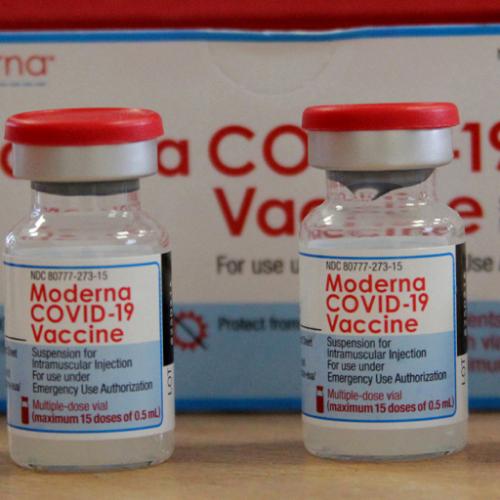
A 2022 investigation by the journal The BMJ declared that FDA oversight of clinical trials, including those for Pfizer and Moderna's mRNA Covid-19 vaccines, was "grossly inadequate," from not conducting enough inspections to failing to alert scientific journals or the public when violations were flagged. But the issues here are not confined to behind the pharmacy counter. Dr. John Abramson, author of the recent book "Sickening: How Big Pharma Broke American Health Care and How We Can Repair It," traces the roots of issue back decades. "In 1992, when what turned out to be effective HIV drugs were stuck in the bottleneck of the FDA, they didn't have enough staff to get them through quickly enough. Many people were dying, and it was a real crisis," he explains. "The solution was that the Prescription Drug User Fee Agreement was passed. The drug companies started to pay a user fee with that was due upon application for new drug approval. And now roughly 65% of the FDA budget for overseeing human products comes from the drug and device companies. This comes with rigid timelines, and as I see from the outside, some degree of influence and obligation to the drug companies that derives from this agreement." The numbers here vary — Forbes puts that budget figure as high as 75%. Another similar conflict of interest that concerns Abramson is what he calls "the revolving door that goes between FDA and the drug industry."
Note: Read about Brook Jackson, a researcher for the Pfizer COVID-19 vaccine trials, who discovered patient safety concerns, data integrity issues, and other significant issues at her site. When she reported it to the FDA, she was fired the same day. For more along these lines, see concise summaries of deeply revealing news articles on government corruption and health from reliable major media sources.
Palantir’s founding team, led by investor Peter Thiel and Alex Karp, wanted to create a company capable of using new data integration and data analytics technology — some of it developed to fight online payments fraud — to solve problems of law enforcement, national security, military tactics, and warfare. Palantir, founded in 2003, developed its tools fighting terrorism after September 11, and has done extensive work for government agencies and corporations though much of its work is secret. Palantir’s MetaConstellation platform allows the user to task ... satellites to answer a specific query. Imagine you want to know what is happening in a certain location and time in the Arctic. Click on a button and MetaConstelation will schedule the right combination of satellites to survey the designated area. The platform is able to integrate data from multiple and disparate sources — think satellites, drones, and open-source intelligence — while allowing a new level of decentralised decision-making. Just as a deep learning algorithm knows how to recognise a picture of a dog after some hours of supervised learning, the Palantir algorithms can become extraordinarily apt at identifying an enemy command and control centre. Alex Karp, Palantir’s CEO, has argued that “the power of advanced algorithmic warfare systems is now so great that it equates to having tactical nuclear weapons against an adversary with only conventional ones.”
Note: For more along these lines, see concise summaries of deeply revealing news articles on corporate corruption and the disappearance of privacy from reliable major media sources.
Over 30 million Americans a year use benzodiazepines, or “benzos,” including Xanax, Valium, Ativan and Klonopin. Benzodiazepines are prescribed to treat anxiety disorders, insomnia, muscle spasms, schizophrenia, bipolar disorder, seizures and epilepsy. But this widely used class of drugs is linked to severe side effects and life impacts that can last for years — even after people have stopped taking the drugs — a new study finds. “Patients have been reporting long-term effects from benzodiazepines for over 60 years. I am one of those patients,” Dr. Christy Huff, a cardiologist and co-author of the study, said in a news release. The new research, published in PLOS One, includes a lengthy list of side effects that a majority of benzo users experienced more than a year after they stopped taking the drugs. Those long-lasting symptoms include low energy, difficulty focusing, memory loss, anxiety, insomnia, sensitivity to light and sounds, digestive problems, symptoms triggered by food and drink, muscle weakness and body pain. Alarmingly, users also struggled with severe life impacts: 54.7% reported suicide attempts or suicidal thoughts, for example. Health experts noted numerous other problems with benzos, including an increased risk of suicide and dependence on the drug, among other adverse side effects. Withdrawal from benzos can produce troubling symptoms as soon as within 24 hours, and these adverse effects can last for months.
Note: For more along these lines, see concise summaries of deeply revealing news articles on Big Pharma corruption from reliable major media sources.
A study of military veterans has shown the strongest evidence yet that the widespread chemical trichloroethylene (TCE)–used in spot removers, office products and dry-cleaning–is linked to Parkinson's disease. The research focused on service members who were stationed at Camp Lejeune in North Carolina between 1975 and 1985, when levels of TCE in the base's water reached 70 times higher than the Environmental Protection Agency's limit. After accounting for demographic factors, Camp Lejeune veterans were 70 percent more likely to develop the movement disorder than service members stationed at Camp Pendleton in California, where the water was uncontaminated. The large study, published last week in the journal JAMA Neurology, adds to a handful of smaller, earlier papers that found a link between TCE and Parkinson's. TCE, which can be in liquid or vapor form, has been commonly used since the 1920s, including as an inhaled surgical anesthetic and in several cleaning products. Today, it's primarily used in making refrigerants and degreasing metal equipment. The chemical breaks down slowly and can be detected in the air, water and soil. It's also found in one-third of U.S. drinking water. The Camp Lejeune drinking water was contaminated with TCE and other chemicals from 1953 to 1987, per the study, due to leakage from underground storage tanks, industrial spills, waste disposal sites and a dry-cleaning business.
Note: Internal corporate documents reveal how global chemical giant Syngenta secretly influenced scientific research regarding links between its top-selling weedkiller and Parkinson's disease. For more along these lines, see concise summaries of deeply revealing news articles on health from reliable major media sources.
Antidepressants raise the risk of suicide while also giving people the means to kill themselves, scientists have warned, after discovering thousands of inquests linked to the drugs. Psychologists at the University of East London (UEL) analysed media reports of nearly 8,000 coroners' inquests in England and Wales between 2003 and 2020, in which antidepressants were mentioned. They found the drugs were linked to 2,718 cases of hanging and 2,329 overdoses, of which 933 people had overdosed on antidepressants themselves. A further 2,083 had been struck by a train, tube, lorry or other vehicle, had jumped or fallen to their death, drowned, shot themselves, or been involved in a fire or electrocution. Study author Dr John Read ... said: "Not only do antidepressants not reduce suicidality, but they also actually increase it for many, and for some they provide the mechanism for killing oneself." The research, ... concluded: "If the goal is to prevent suicide then clearly they are not working for thousands of people." Around one in six of the adult population takes antidepressants each year. In 2018, Prof Read surveyed nearly 1,500 people taking antidepressants and found that 50 per cent reported suicidal thoughts after starting the drugs. Recent studies have also called into question the benefits of antidepressants. Last year, University College London (UCL) concluded that depression is not caused by a chemical imbalance of serotonin and argued that life events were a larger factor.
Note: Antidepressants are some of the most commonly prescribed medications, yet their significant risks are often withheld from public debate. Furthermore, an in-depth investigation reveals the glaring conflicts of interest and financial ties to corporate drugmakers that are behind many studies marketing clinical antidepressants as safe.
A MintPress News investigation has found dozens of ex-U.S. State Department officials working in key positions at TikTok. Many more individuals with backgrounds in the FBI, CIA and other departments of the national security state also hold influential posts at the social media giant, affecting the content that over one billion users see. The influx of State Department officials into TikTok’s upper ranks is a consequence of “Project Texas,” an initiative the company began in 2020 in the hopes of avoiding being banned altogether in the United States. During his time in office, Secretary of State Mike Pompeo led the charge to shut the platform down, frequently labeling it a “spying app” and a “propaganda tool for the Chinese Communist Party.” It was widely reported that the U.S. government had forced the sale of TikTok to Walmart and then Microsoft. But in late 2020, as Project Texas began, those deals mysteriously fell through, and the rhetoric about the dangers of TikTok from officials evaporated. Project Texas is a $1.5 billion security operation to move the company’s data to Austin. In doing so, it announced that it was partnering with tech giant Oracle, a corporation that, as MintPress has reported on, is the CIA in all but name. Evidently, Project Texas also secretly included hiring all manner of U.S. national security state personnel to oversee the company’s operations – and not just from the State Department. Virtually every branch of the national security state is present at TikTok.
Note: For more along these lines, see concise summaries of deeply revealing news articles on corruption in intelligence agencies and in the corporate world from reliable major media sources.
Over the last decade alone, at least 540 doctors and healthcare practitioners collectively paid the government hundreds of millions of dollars to negotiate their way out of trouble via civil settlements, then continued to practice medicine without restrictions on their licenses despite allegations that included fraud and patient harm, a Reuters investigation found. That figure is the result of the first-ever comprehensive analysis of federal civil settlements and state disciplinary actions. Separately, more than 2,200 hospitals and healthcare companies likewise negotiated civil deals to sidestep prosecution for alleged offenses that included paying bribes, falsifying patients records and billing the government for unnecessary patient care, the Reuters analysis shows. In many of those cases, the physicians, staffers and top brass who purportedly committed those misdeeds were not named publicly by prosecutors or forced to pay settlements themselves. Federal enforcers said they sometimes withhold names of individuals in these situations because of ongoing or planned investigations. The U.S. government collected more than $26.8 billion in healthcare-related civil settlements and judgments from 2013 to 2022, the Reuters analysis found. Victims, meanwhile, received no share of these settlements, which are funneled to a Treasury Department general fund. Consequently, they must pursue their own civil cases in search of restitution for suffering and harm, Reuters found.
Note: For more along these lines, see concise summaries of deeply revealing news articles on corporate corruption and health from reliable major media sources.
Important Note: Explore our full index to revealing excerpts of key major media news articles on several dozen engaging topics. And don't miss amazing excerpts from 20 of the most revealing news articles ever published.