


























Microchip Implants Media Articles
Below are key excerpts of revealing news articles on Microchip Implants from reliable news media sources. If any link fails to function, a paywall blocks full access, or the article is no longer available, try these digital tools.

A new tech company claims it has developed a hat that can literally read your mind — then translate it onto a computer. Much has been discussed about brain implants which require ... putting microchips directly onto your grey matter, but new company Sabi says that’s not necessary for its beanies and caps. They have 70,000 to 100,000 sensors built in them which can “pinpoint exactly what and where neural activity is happening ... to decode what a person is thinking,” then translate it to a computer command, according to CEO Rahul Chhabra. Tom Oxley, the CEO and founder of Synchron ... is working in the same field as Neuralink, trying to give severely disabled patients the ability to communicate through their brainwaves. The company are partnered with Apple and their chips are implanted through an injection into the jugular vein in the neck, then the chip moves up a blood vessel near the brain’s motor cortex in order to read brainwaves. “Non-invasive wearables sit outside the skull, so the signals they pick up are much weaker and less precise. That makes it very difficult to achieve the kind of speed and accuracy needed for real-time control, especially for clinical applications like restoring function in paralysis,” said Oxley. Until Sabi’s tech arrives and revolutionizes our brainwaves, we’ll be stuck behind the keyboard in the near future, at least in America. China has recently approved their first implanted brain computer interface for commercial use.
Note: For more along these lines, read our concise summaries of news articles on microchip implants and mind control.
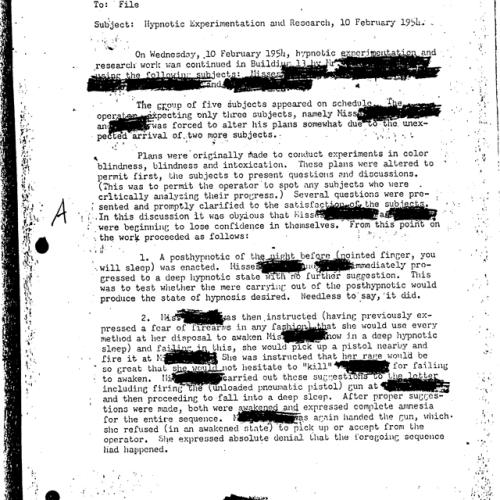
The public is now well aware of the Central Intelligent Agency’s misadventures in mind control throughout the 1950s and 1960s. MKUltra—the agency’s top-secret and wide-ranging human experimentation program—involved 149 subprojects that made test subjects out of thousands of unsuspecting Americans, jolting them with high-voltage shocks, zapping them with radio waves, and dosing them with psychedelic drugs in a bid to develop brainwashing techniques. But humans weren’t MKUltra’s only non-consenting participants. Animal subjects also played a starring role. Surgeons implanted microphones into cats’ ears. An elephant was allegedly injected with a massive amount of LSD. And ... scientists implanted electrodes into the brains of six dogs in an attempt to control their movement and turn them into remote-controlled assassins. The goal of that last initiative, Subproject 94 ... “was to examine the feasibility of controlling the behavior of a dog, in an open field, by means of remotely triggered electrical stimulation of the brain,” according to heavily redacted documents declassified in 2002. During Operation Fantasia, in an effort to scare the Japanese into surrender, OSS scientists painted foxes with radioactive paint that glowed in the dark, hoping to recreate a Shinto portent of doom: the kitsune, a shapeshifting, supernatural fox spirit. The plan was eventually scrapped, but not before a trial run in which the OSS released 30 glowing foxes into Washington D.C.
Note: Learn more about the MKUltra Program in our comprehensive Military-Intelligence Corruption Information Center. For more, read our concise summaries of news articles on mind control and microchip implants.
During the Cold War, the first implants showing that we could control animal minds sparked panic. The C.I.A. had its own clandestine experimental mind-control program. People warned of brain warfare. Those fears [are] back, along with a conversation about what it means to have freedom of thought at a time when technology is literally being implanted in our brains. Brain computer interface, or B.C.I. ... are very small devices that go right on the surface of your brain, where they can pick up neural activity. The data is transmitted via Bluetooth to a computer program, which decodes the information. In a sense, they’re hooked up to an artificial intelligence. So the neural network inside your mind communicates with a neural network outside. And through that, we are able to reconstruct people’s intentions. For people with degenerative diseases, or who are paralyzed, or who otherwise have lost important abilities, these implants have been totally revolutionary. These patients can move their hands, type and in some cases, speak again. Optogenetics, a technique for turning isolated neurons on and off, has been used to implant false memories in mice, raising the possibility that, in the distant future, something similar could be done in humans. Neuroprivacy is the idea that we should have to give consent to anyone who wants access to our innermost selves. But there’s a question: Does neuroprivacy apply only to my unspoken thoughts? Or does it apply to the electrical activity in my brain?
Note: Read about the Pentagon's plans to use our brains as warfare, describing how the human body is war's next domain. Learn more about biotech dangers. For more along these lines, read our concise summaries of news articles on Big Tech and microchip implants.
Billionaire Elon Musk’s brain-computer interface (BCI) company Neuralink made headlines earlier this year for inserting its first brain implant into a human being. Such implants ... are described as “fully implantable, cosmetically invisible, and designed to let you control a computer or mobile device anywhere you go." They can help people regain abilities lost due to aging, ailments, accidents or injuries, thus improving quality of life. Yet, great ethical concerns arise with such advancements, and the tech is already being used for questionable purposes. Some Chinese employers have started using “emotional surveillance technology” to monitor workers’ brainwaves. Governments and militaries are already ... describing the human body and brain as war’s next domain. On this new “battlefield,” an era of neuroweapons ... has begun. The Pentagon’s research arm DARPA directly or indirectly funds about half of invasive neural interface technology companies in the US. DARPA has initiated at least 40 neurotechnology-related programs over the past 24 years. As a 2024 RAND report speculates, if BCI technologies are hacked or compromised, “a malicious adversary could potentially inject fear, confusion, or anger into [a BCI] commander’s brain and cause them to make decisions that result in serious harm.” Academic Nicholas Evans speculates, further, that neuroimplants could “control an individual’s mental functions,” perhaps to manipulate memories, emotions, or even to torture the wearer. In a [military research paper] on neurowarfare: "Microbiologists have recently discovered mind-controlling parasites that can manipulate the behavior of their hosts according to their needs by switching genes on or off. Since human behavior is at least partially influenced by their genetics, nonlethal behavior modifying genetic bioweapons that spread through a highly contagious virus could thus be, in principle, possible.
Note: The CIA once used brain surgery to make six remote controlled dogs. For more, see important information on microchip implants and CIA mind control programs from reliable major media sources.
Military strategists believe that a "coronavirus bioweapon" may lurk on the horizon. This possibility is one of several outlined in a new report sponsored by the Office of the Secretary of Defense. The report “Plagues, Cyborgs, and Supersoldiers: The Human Domain of War Research” delves into how CRISPR gene-editing technology, mRNA vaccines, brain networking, and other technological advancements could unleash new forms of military conflict. “We see a complex, high-threat landscape emerging where future wars are fought with humans controlling hyper-sophisticated machines with their thoughts” and “synthetically generated, genomically targeted plagues” that cripple the American military-industrial base,” the report warns. At the same time, authoritarian states might ... brutally suppress "anti-vaccine populists" and enforce compliance. The report claims this could hinder the U.S. due to its more relaxed regulatory environment that values individual liberties, where such crackdowns and forced vaccinations are more difficult to deploy. The report takes aim at Congress, criticizing the recent repeal of the COVID-19 vaccine mandate for service members. It urges lawmakers to resist "anti-vaccine populism" to ensure military readiness. Simultaneously, the report urges the Pentagon to consider using genetic screening to find qualified military recruits and develop clear plans for integrating bioweapon warfare capabilities.
Note: Learn more about emerging warfare technology in our comprehensive Military-Intelligence Corruption Information Center. For more, see concise summaries of deeply revealing news articles on military corruption and microchip implants from reliable major media sources .
Private thoughts may not be private for much longer, heralding a nightmarish world where political views, thoughts, stray obsessions and feelings could be interrogated and punished all thanks to advances in neurotechnology. In a new book, The Battle for Your Brain, Duke University bioscience professor Nita Farahany argues that such intrusions into the human mind by technology are so close that a public discussion is long overdue and lawmakers should immediately establish brain protections as it would for any other area of personal liberty. Farahany, who served on Barack Obama’s commission for the study of bioethical issues, believes that advances in neurotechnology mean that intrusions through the door of brain privacy, whether by way of military programs or by way of well-funded research labs at big tech companies, are at hand via brain-to-computer innovations like wearable tech. “All of the major tech companies have massive investments in multifunctional devices that have brain sensors in them,” Farahany said. “Neural sensors will become part of our everyday technology and a part of how we interact with that technology.” François du Cluzel, a project manager at Nato Act Innovation Hub, issued a report in November 2020 entitled Cognitive Warfare that, it said, “is not limited to the military or institutional world. Since the early 1990s, this capability has tended to be applied to the political, economic, cultural and societal fields.”
Note: Read more about these troubling developments. For more along these lines, see concise summaries of deeply revealing news articles on the disappearance of privacy from reliable major media sources.
On at least four occasions since 2019, Elon Musk has predicted that his medical device company, Neuralink, would soon start human trials of a revolutionary brain implant to treat intractable conditions such as paralysis and blindness. Yet the company, founded in 2016, didn’t seek permission from the U.S. Food and Drug Administration (FDA) until early 2022 – and the agency rejected the application. Musk has detailed a bold vision for Neuralink: Both disabled and healthy people will pop into neighborhood facilities for speedy surgical insertions of devices with functions ranging from curing obesity, autism, depression or schizophrenia to web-surfing and telepathy. Musk also has said Neuralink would restore full mobility to paralyzed patients. Reuters exclusively reported late last year that the federal government was investigating the company’s treatment of its research animals. The probe was launched amid growing employee concern that the company is rushing experiments, causing additional suffering and deaths of pigs, sheep and monkeys. Musk’s company ... trails at least one direct rival in the race for FDA approval. Synchron, a competitor making a BCI implant, has won the agency’s blessing for human trials. The company first tested its device on four patients in Australia who successfully sent text messages with their minds. Synchron recently raised $75 million, including from funds backed by tech billionaires Bill Gates and Jeff Bezos.
Note: For more along these lines, see concise summaries of deeply revealing news articles on microchip implants from reliable major media sources.
Microchip technology invented by Swedish startup company "Epicenter" is now being presented as a possible way to carry around a COVID-19 vaccine passport under a person's skin, according to a viral video. "Beep boop beep: Your vaccination record has been verified," says the caption of the video. "Imagine showing your COVID-19 passport with just a flash of your arm," the video says at its beginning, showing a person holding out their arm and scanning it with a mobile phone. The video explains the microchip uses pre-existing technology the startup company was already developing to employ "near-field communication" (NFC) and send data to any compatible device. Smartphones are listed as an example of a possible data receiver. "Implants are a very versatile technology that can be used for many different things," says Epicenter's Chief Disruption Officer Hannes Sjoblad in the video. "Right now it is very convenient to have a COVID passport always accessible on your implant." A microchip, about the size of a grain of rice, can be embedded under a person's skin, either under the arm or between the pointer finger and thumb, according to Sjoblad. After the chip is implanted, data such as a vaccine passport can be stored on it using NFC-compatible devices. There is pushback on implants from lawmakers, advocacy groups, and the public. Hannes Sjoblad reportedly organized "transplant parties" for his employees starting in 2014, where they would gather in a fun, social setting to get chips embedded into themselves.
Note: According to this article, "At the beginning of December, Sweden enacted new rules requiring individuals to have a passport at all events with more than 100 people. Following that announcement, the number of people who got microchips inserted under their skin rose: around 6,000 people in Sweden have so far had a chip inserted in their hands." For more along these lines, see concise summaries of deeply revealing news articles on microchip implants from reliable major media sources.
Recording memories, reading thoughts, and manipulating what another person sees through a device in their brain may seem like science fiction plots about a distant and troubled future. But a team of multi-disciplinary researchers say the first steps to inventing these technologies have already arrived. Through a concept called “neuro rights,” they want to put in place safeguards for our most precious biological possessions: our mind. Headlining this growing effort today is the NeuroRights Initiative, formed by Columbia University neuroscientist Rafael Yuste. Their proposition is to stay ahead of the tech by convincing governments across the world to create “neuro rights” legal protections, in line with the Universal Declaration of Human Rights, a document announced by the United Nations in 1948 as the standard for rights that should be universally protected for all people. Neuro rights advocates propose five additions to this standard: the rights to personal identity, free will, mental privacy, equal access to mental augmentation, and protection from algorithmic bias. “This is a new frontier of privacy rights, in that the things that are inside of our heads are ours. They’re intimate; we share them when we want to share them. And we don’t want that to be made into a data field for experience,” said Sara Goering, professor of philosophy and co-lead for the Neuroethics Group for the Center of Neurotechnology at University of Washington.
Note: Watch a new documentary titled, "Cognitive Liberty: Neuroweapons and the Fight for Brain Privacy." For more along these lines, read our concise summaries of news articles on Big Tech and mind control.
Mingzheng Wu, a graduate student at Northwestern University, plopped two male mice into a cage and watched as they explored their modest new digs: sniffing, digging, fighting a little. With a few clicks on a nearby computer, Mr. Wu then switched on a blue light implanted in the front of each animal’s brain. That light activated a tiny piece of cortex, spurring neurons there to fire. Mr. Wu zapped the two mice at the same time and at the same rapid frequency — putting that portion of their brains quite literally in sync. Within a minute or two, any animus between the two creatures seemed to disappear, and they clung to each other like long-lost friends. “After a few minutes, we saw that those animals actually stayed together, and one animal was grooming the other,” said Mr. Wu. [He] and his colleagues then repeated the experiment, but zapped each animal’s cortex at frequencies different from the other’s. This time, the mice displayed far less of an urge to bond. The experiment, published this month in Nature Neuroscience, was made possible thanks to an impressive new wireless technology that allows scientists to observe — and manipulate — the brains of multiple animals as they interact with one another. Their tool ... uses a tiny LED light, implanted into an animal’s brain, to activate discrete groups of neurons. (A gene that encodes a light-sensitive protein ... is first inserted into the neurons of interest, to make them responsive.)
Note: For more on this manipulative technology, see this informative article. And remember that classified secret technologies in the military are often 10 years or more advanced than anything publicly released. For more along these lines, see concise summaries of deeply revealing news articles on microchip implants and mind control from reliable major media sources.
Researchers achieved a breakthrough in brain-computer interface (BCI) technology. As outlined in a statement by the Howard Hughes Medical Institute (HHMI) and published in a Nature journal article, scientists state that they have created a system to translate mental thoughts of handwriting into real-time text. HHMI investigator ... Krishna Shenoy is hopeful that this technology can, “with further development, let people with paralysis rapidly type without using their hands.” If scientists can indeed innovate a way where thoughts and imagination alone could be used to effectively communicate, this would be [an] unparalleled resource to millions of individuals facing paralysis or a wide variety of other neurological conditions which may cause loss of speech or movement. Brain-computer/machine interface technology is potentially a significant boon for patients affected by neurological conditions. For many, it may become a source of improved mobility, communication, or expression. Although much work still remains to be done in this industry, if innovators are indeed able to create this technology in a scalable manner that prioritizes patient safety, it may potentially provide much-needed respite for millions of people.
Note: The Howard Hughes Medical Institute published a video outlining this experiment. Explore a treasure trove of concise summaries of incredibly inspiring news articles which will inspire you to make a difference.
Pentagon scientists working inside a secretive unit set up at the height of the Cold War have created a microchip to be inserted under the skin, which will detect COVID-19 infection, and a revolutionary filter that can remove the virus from the blood when attached to a dialysis machine. The team at the Defense Advanced Research Projects Agency (DARPA) have been working for years on preventing and ending pandemics. One of their recent inventions, they told 60 Minutes on Sunday night, was a microchip which detects COVID infection in an individual before it can become an outbreak. The microchip is sure to spark worries among some about a government agency implanting a microchip in a citizen. Retired Colonel Matt Hepburn, an army infectious disease physician leading DARPA's response to the pandemic, showed the 60 Minutes team a tissue-like gel, engineered to continuously test your blood. 'You put it underneath your skin and what that tells you is that there are chemical reactions going on inside the body, and that signal means you are going to have symptoms tomorrow,' he explained. 'It's like a "check engine" light,' said Hepburn. Troops are likely to be highly skeptical of the new invention. In February, The New York Times reported that a third of troops have refused to take the vaccine, sighting concerns that the vaccine contains a microchip devised to monitor recipients, that it will permanently disable the body’s immune system or that it is some form of government control.
Note: For more along these lines, see concise summaries of deeply revealing news articles on military corruption and microchip implants from reliable major media sources.
The possibility of a super soldier is not so outlandish and one that not just China is interested in. Enhancement is nothing new - since ancient times, troops have been bolstered by advancements in weaponry, kit and training. But today, enhancement could mean much more than merely giving an individual soldier a better gun. It could mean altering the individual soldier. In 2017, Russia's President Vladimir Putin warned that humanity could soon create something "worse than a nuclear bomb". "One may imagine that a man can create a man with some given characteristics, not only theoretically but also practically. He can be a genius mathematician, a brilliant musician or a soldier, a man who can fight without fear, compassion, regret or pain." Last year, the former US Director of National Intelligence (DNI), John Ratcliffe, went further with a blunt accusation against China. "China has even conducted human testing on members of the People's Liberation Army in hope of developing soldiers with biologically enhanced capabilities. There are no ethical boundaries to Beijing's pursuit of power," he wrote. Prof [Patrick] Lin said "a key challenge is that nearly all of this is dual-use research. For instance, exoskeleton research was first aimed at helping or curing people of medical conditions, such as to help paralysed patients walk again. But this therapeutic use can be easily weaponised. It's not obvious how to regulate it, without overly broad regulation that also frustrates therapeutic research."
Note: A New York Post article titled “France, China developing biologically engineered supersoldiers” describes how “France has joined the fray in creating terminator troops that can be ‘bred to kill.” For more along these lines, see concise summaries of deeply revealing news articles on military corruption from reliable major media sources.
When Elon Musk gave the world a demo in August of his latest endeavor, the brain-computer interface (BCI) Neuralink, he reminded us that the lines between brain and machine are blurring quickly. It bears remembering, however, that Neuralink is, at its core, a computer — and as with all computing advancements in human history, the more complex and smart computers become, the more attractive targets they become for hackers. Our brains hold information computers don't have. A brain linked to a computer/AI such as a BCI removes that barrier to the brain, potentially allowing hackers to rush in and cause problems we can't even fathom today. Might hacking humans via BCI be the next major evolution in hacking, carried out through a dangerous combination of past hacking methods? Previous eras were defined by obstacles between hackers and their targets. However, what happens when that disconnect between humans and tech is blurred? When they're essentially one and the same? Should a computing device literally connected to the brain, as Neuralink is, become hacked, the consequences could be catastrophic, giving hackers ultimate control over someone. If Neuralink penetrates deep into the human brain with high fidelity, what might hacking a human look like? Following traditional patterns, hackers would likely target individuals with high net worths and perhaps attempt to manipulate them into wiring millions of dollars to a hacker's offshore bank account.
Note: For more on this, see an article in the UK’s Independent titled “Groundbreaking new material 'could allow artificial intelligence to merge with the human brain’.” Meanwhile, the military is talking about “human-machine symbiosis.” And Yale professor Charles Morgan describes in a military presentation how hypodermic needles can be used to alter a person’s memory and much more in this two-minute video. For more along these lines, see concise summaries of deeply revealing news articles on microchip implants from reliable major media sources.
A four-inch wafer of silicon has been turned into an army of one million microscopic, walking robots, thanks to some clever engineering employed by researchers at Cornell University in New York. In a paper, published Wednesday in the journal Nature, a team of roboticists detail the creation of their invisible army of robots, which are less than 0.1mm in size (about the width of a human hair) and cannot be seen with the naked eye. The robots ... take advantage of an innovative, new class of actuators, which are the legs of the microrobots. Controlling movement in these tiny machines requires the researchers to shine a laser on minuscule light-sensitive circuits on their backs, which propels their four legs forward. They've been designed to operate in all manner of environments such as extreme acidity and temperatures. One of their chief purposes, the researchers say, could be to investigate the human body from the inside. The team was able to build incredibly small legs, which are connected to two different patches on the back of the robot - one for the front pair of legs, one for the back. Alternating light between the patches propels the microrobot forward. The research team were able to show the microrobots devices could fit within the narrowest hypodermic needle and thus, could be "injected" into the body. The machines aren't intelligent enough to target a diseased cell or respond to stimuli, so there's no application for this invisible army. However, the researchers said that "their capabilities can rapidly evolve."
Note: Remember that secret military projects are often 20 years or more advanced of anything made public. Could this technology have already been developed in secret projects and used in military vaccines? Yale professor Charles Morgan describes in this two-minute video (or this one) how cells injected through hypodermic needles can cause foreign substances to be manufactured in our bodies, how they can alter a person's memory, and much more. His full presentation on psycho-neurobiology and war given at West Point Military Academy is quite disturbing.
Reading minds has just come a step closer to reality: scientists have developed artificial intelligence that can turn brain activity into text. While the system currently works on neural patterns detected while someone is speaking aloud, experts say it could eventually aid communication for patients who are unable to speak or type. “We are not there yet but we think this could be the basis of a speech prosthesis,” said Dr Joseph Makin, co-author of the research from the University of California, San Francisco. Writing in the journal Nature Neuroscience, Makin and colleagues reveal how they developed their system by recruiting four participants who had electrode arrays implanted in their brain to monitor epileptic seizures. These participants were asked to read aloud from 50 set sentences multiple times, including “Tina Turner is a pop singer”, and “Those thieves stole 30 jewels”. The team tracked their neural activity while they were speaking. This data was then fed into a machine-learning algorithm, a type of artificial intelligence system that converted the brain activity data for each spoken sentence into a string of numbers. At first the system spat out nonsense sentences. But as the system compared each sequence of words with the sentences that were actually read aloud it improved, learning how the string of numbers related to words, and which words tend to follow each other. The system was not perfect. However, the team found the accuracy of the new system was far higher than previous approaches.
Note: Remember that the military in their secret projects is often 10 to 20 years in advance of anything public. In 2008, CBS reported the story of a man with ALS who could type using only a brain computer interface. For more along these lines, see concise summaries of deeply revealing news articles on microchip implants from reliable major media sources.
Keeping track of vaccinations remains a major challenge in the developing world. Now a group of Massachusetts Institute of Technology researchers has developed a novel way to address this problem: embedding the record directly into the skin. Along with the vaccine, a child would be injected with a bit of dye that is invisible to the naked eye but easily seen with a special cell-phone filter, combined with an app that shines near-infrared light onto the skin. The dye would be expected to last up to five years, according to tests on pig and rat skin and human skin in a dish. The system - which has not yet been tested in children - would provide quick and easy access to vaccination history ... according to the study. Delivering the dye required the researchers to find something that was safe and would last long enough to be useful. The team ended up using a technology called quantum dots, tiny semiconducting crystals that reflect light and were originally developed to label cells during research. The work was funded by the Bill & Melinda Gates Foundation and came about because of a direct request from Microsoft founder and philanthropist Bill Gates himself. The researchers hope to add more detailed information to the dots, such as the date of vaccination. Along with them, the team eventually wants to inject sensors that could also potentially be used to track aspects of health such as insulin levels in diabetics.
Note: Bill Gates insists he never said we’d need digital vaccine passports. Yet researchers have found that his TED Talk which included this statement was edited to remove it. You can prove this with the evidence provided on this webpage. For more along these lines, see concise summaries of deeply revealing news articles on vaccines and microchip implants from reliable major media sources.
Newly released files from behavior modification, or mind control, projects conducted as part of the infamous Project MKUltra reveal the CIA experimented in more than controlling humans with psychotropic drugs, electrical shocks and radio wavesthey also created field operational, remote-controlled dogs. The documents were provided under the Freedom of Information Act (FOIA) by John Greenewald, founder of The Black Vault, a site specializing in declassified government records. In one declassified letter (released as file C00021825) a redacted individual writes to a doctor (whose name has also been redacted) with advice about launching a laboratory for experiments in animal mind control. The writer of the letter is already an expert in the field, whose earlier work had culminated with the creation of six remote control dogs, which could be made to run, turn and stop. The letter writer characterizes the work with remote-controlling dogs as a success, describing a demonstrated procedure for controlling the free-field behaviors of an unrestrained dog. Attached to the letter is the writers final report from his earlier research, published in 1965, titled Remote Control Behavior with Rewarding Electrical Stimulation of the Brain, with the principle investigators name redacted. The prospect of a potential new laboratory seems to fire the letter writers imagination, who describes potential experimentation on a range of species, should they want to move past basic research.
Note: If the CIA had this level of sophistication in 1967, what do you think they are capable of now? Read more on the development of microchip implants. For more along these lines, see concise summaries of deeply revealing news articles on CIA mind control programs.
A soldier wears a skullcap that stimulates his brain to make him learn skills faster, or reads his thoughts as a way to control a drone. Another is plugged into a Tron-like active cyber defense system, in which she mentally teams up with computer systems to successfully multitask during complex military missions. The Pentagon is already researching these seemingly sci-fi concepts. The basics of brain-machine interfaces are being developedjust watch the videos of patients moving prosthetic limbs with their minds. The Defense Department is examining newly scientific tools, like genetic engineering, brain chemistry, and shrinking robotics, for even more dramatic enhancements. But the real trick may not be granting superpowers, but rather making sure those effects are temporary. Last year, three Canadian defense researchers published a paper that explored the intersection of human enhancement and ethics. They found that the permanence of the enhancement could have impacts on troops in the field ... as well as a return to civilian life. They also note that many soldier resilience human enhancement technologies raised health and safety questions. The Canadian researchers wrote: Are there unknown side effects or long term effects that could lead to unanticipated health problems during deployment or after discharge? Moreover, is it ethical to force a soldier to use the technology in question, or should he/she be allowed to consent to its use? Can consent be fully free from coercion in the military?
Note: Read an excellent article detailing the risks of biosensors implanted under the skin which have already been developed. Some smaller than a grain of rice can be injected with a needle. Watch a slick video promoting this brave new world. Learn how this is already planned for use on soldiers. For more along these lines, see concise summaries of deeply revealing news articles on military corruption from reliable major media sources.
Last year an American company microchipped dozens of its workers. Of the 90 people who work at [Three Square Market] headquarters, 72 are now chipped. Two months ago, the company ... started chipping people with dementia. If someone wanders off and gets lost, police can scan the chip and they will know all their medical information, what drugs they can and cant have, theyll know their identity. So far, Three Square Market has chipped 100 people, but plans to do 10,000. The company has just launched a mobile phone app that pairs the chip with the phones GPS, enabling the implantees location to be tracked. Last week, it started using it with people released from prison on probation. Some Chinese companies are using sensors in helmets and hats to scan workers brainwaves. There are tech companies selling products that can ... monitor keystrokes and web usage, and even photograph [employees] using their computers webcams. All this can be done remotely. Monitoring is built into many of the jobs that form the so-called gig economy. Its not easy to object to the constant surveillance when youre desperate for work. What has surprised [Cass Business School professor Andr Spicer] is how willingly people in better-paid jobs have taken to it. Spicer has watched the shift away from monitoring something like emails to monitoring peoples bodies the rise of bio-tracking basically. The monitoring of your vital signs, emotions, moods.
Note: Author James Bloodworth describes the high tech monitoring of workers at Amazon warehouses in his new book, "Hired: Six Months Undercover in Low-Wage Britain". For more along these lines, see concise summaries of deeply revealing news articles on microchip implants and the disappearance of privacy.
Picture this: While reaching for the cookie jar - or cigarette or bottle of booze or other temptation - a sudden slap denies your outstretched hand. When the urge returns, out comes another slap. Now imagine those "slaps" occurring inside the brain. In a report published Monday in the Proceedings of the National Academy of Sciences, Stanford neuroscientists say they've achieved this sort of mind-reading in binge-eating mice. They found a telltale pattern of brain activity that comes up seconds before the animals start to pig out - and delivering a quick zap to that part of the brain kept the mice from overindulging. Whether this strategy could block harmful impulses in people remains unclear. The current study used a brain stimulation device already approved for hard-to-treat epilepsy. And based on the new findings, a clinical trial testing this off-the-shelf system for some forms of obesity could start as early as next summer, says Casey Halpern, the study's leader. He thinks the approach could also work for eating disorders and a range of other addictive or potentially life-threatening urges. As a physician-researcher, Halpern specializes in deep brain stimulation (DBS), a surgical treatment in which battery-powered implants send electrical pulses to brain areas where signals go awry. The Food and Drug Administration has approved DBS therapy for movement disorders such as Parkinson's disease, tremor and dystonia. Occasionally DBS is a last-resort treatment for obsessive-compulsive disorder (OCD).
Note: Remember that secret military and intelligence projects are usually 10 to 20 years ahead of anything being done in the public. Could some groups already have developed microchip implants designed for behavior modification or mind control?
Regulators have approved the first drug with a sensor that alerts doctors when the medication has been taken. The digital pill combines two existing products: the former blockbuster psychiatric medication Abilify - long used to treat schizophrenia and bipolar disorder - with a sensor tracking system first approved in 2012. Experts say the technology could be a useful tool, but it will also change how doctors relate to their patients as theyre able to see whether they are following instructions. The pill has not yet been shown to actually improve patients medication compliance, a feature insurers are likely to insist on before paying for the pill. Additionally, patients must be willing to allow their doctors and caregivers to access the digital information. The technology carries risks for patient privacy, too, if there are breaches of medical data or unauthorized use as a surveillance tool, said James Giordano, a professor of neurology at Georgetown University Medical Center. Could this type of device be used for real-time surveillance? The answer is of course it could, said Giordano. The new pill, Abilify MyCite, is embedded with a digital sensor that is activated by stomach fluids, sending a signal to a patch worn by the patient and notifying a digital smartphone app that the medication has been taken.
Note: In 2010, it was quietly reported that Novartis AG would be seeking regulatory approval for such "chip-in-a-pill technology". For more along these lines, see concise summaries of deeply revealing news articles on microchip implants and the disappearance of privacy.
Once among the worlds most acclaimed scientists, Jose Manuel Rodriguez Delgado has become an urban legend. Delgado pioneered ... the brain chip, which manipulates the mind by electrically stimulating neural tissue with implanted electrodes. In 1965, [he] stopped a charging bull in its tracks by sending a radio signal to a device implanted in its brain. He also implanted radio-equipped electrode arrays, which he called stimoceivers, in dogs, cats, monkeys, chimpanzees, gibbons, and humans. With the push of a button, he could evoke smiles, snarls, bliss, terror, hunger, garrulousness, lust, and other responses. Delgado also invented implantable chemotrodes that could release precise amounts of drugs directly into the brain. In 1952, Delgado co-authored ... the first peer-reviewed paper describing deep brain stimulation of humans. Over the next two decades, he implanted electrodes in some 25 subjects. Most were schizophrenics and epileptics at the now-defunct State Hospital for Mental Diseases in Howard, Rhode Island. The sponsorship of his experiments by the Office of Naval Research and the Air Force Aeromedical Research Laboratory (as well as several civilian agencies) raised eyebrows. He invented a halo-like device and a helmet that could deliver electromagnetic pulses to specific neural regions. Testing the gadgets on animals and human volunteers, including himself and his daughter, Delgado discovered that he could induce drowsiness, alertness, and other states.
Note: Read a 1965 New York Times article on Delgado's disturbing research. Imagine how far the military has gone with this microchip technology in the over 50 years since Delgado invented it. For more along these lines, see concise summaries of deeply revealing news articles on microchip implants and mind control.
Forget swiping a credit card or badge to buy food at work. One Wisconsin-based tech firm is offering to install rice-size microchips in its employees' hands. Three Square Market will be the first firm in the U.S. to use the device, which was approved by the FDA in 2004, CEO Todd Westby told CNBC on Monday. "We think it's the right thing to do for advancing innovation just like the driverless car basically did in recent months," he said. The company, which provides technology for break-room markets or mini-market kiosks, is anticipating over 50 employees to be voluntarily chipped. Westby said he and his family will be chipped, too. The chip, which costs $300 per implant, is inserted with a needle between the thumb and forefinger. Once an employee has the chip installed, he or she can purchase food in the break room, open doors and log into computers. And for those who may be concerned about Big Brother watching, Westby said there is no way for employees to be tracked. "Unlike your cell phone that is trackable and traceable pretty much no matter where you are, this device is only readable if you're within six inches of a proximity reader," he said. Three Square Market's partner, BioHax International in Sweden, has already started using the microchips in about 150 of its employees.
Note: A Swedish company's chief executive was recently "chipped" live on stage to promote this dubious technology. And do you really think they are not trackable? Read about the agenda to chip all people in this powerful essay and these news articles.
Scientists have demonstrated proof of principle that traumatic memories can be erased from the brain as seen in the science fiction film Eternal Sunshine Of The Spotless Mind. Studies in mice demonstrated that fearful memories prompted by a sound associated with an electric shock could be turned off and on. The researchers said attempting to do this in humans was full of ethical problems. But their studies suggest it will be possible at some point in the future. Professor Sheena Josselyn said they had been able to discover the specific brain cells where a particular memory was stored. So we can target where in the brain a memory has gone, she said. We can then decrease the activity in these cells And it is as if we erase the memory. After this was done, the mice were unperturbed when they heard the sound they had previously learned to associate with the shock. Increasing the cells activity restored the memory. We can turn memory on and turn memory off, Professor Josselyn said. We can erase a fearful memory in mice, suggesting in people there might be a way of targeting just those cells that are important in just this traumatic memory, perhaps getting rid of this traumatic memory. Asked about the ethical considerations, Professor Josselyn said ... that she did not see a future in which brain cells would be killed off to remove memories. But she added: For something that really interferes with your everyday life ... a treatment that targets just those cells could be appropriate.
Note: Remember that secret military and intelligence projects are usually 10 to 20 years ahead of anything being done in the public. Could some groups already have refined the ability to erase, and possibly even implant memories? For more along these lines, see concise summaries of deeply revealing news articles on mind control and microchip implants.
Dog owners should consider flouting new laws for mandatory microchipping, according to a specialist who warns the procedure can kill puppies and small breeds. Fines of up to 500 will be issued from April 6, the deadline for all dogs over the age of eight weeks to have the chips fitted to enable wardens to scan them for the name and address of their owner. More than a million of the countrys 8.5 million dogs are still not registered and around three million more owners have failed to update their details after moving house. But Richard Allport, a senior vet and owner of the Natural Medicine Centre, said the chip can cause serious health problems for young and small dogs. I think the age by which puppies must be microchipped eight weeks is far too young, Mr Allport wrote in specialist magazine Dogs Today. My advice to people who dont want their dogs microchipped is to sit tight and do nothing. The procedure involves a sterile chip, the size of a grain of rice, implanted between the shoulder blades. If the new law fails to reduce numbers of strays, wardens could eventually be deployed to patrol parks carrying out random spot-checks. Last year 110,000 stray dogs were picked up off the streets, of which 47,596 went unclaimed in council kennels. So far 86 per cent of dogs have been chipped, but the Dogs Trust said a large percentage of details on databases were out of date.
Note: Explore an excellent website on the risks and dangers of microchipping your pets.
Felicio de Costa ... arrives at the front door and holds his hand against it to gain entry. Inside he does the same thing to get into the office space he rents [at Epicenter, a new hi-tech office development in Sweden]. He can also wave his hand to operate the photocopier. That's all because he has a tiny RFID (radio-frequency identification) chip, about the size of a grain of rice, implanted in his hand. On the day of the building's official opening, the developer's chief executive was, himself, chipped live on stage. The whole process is being organised by a Swedish bio-hacking group. While some of the people around the building were looking forward to being chipped, others were distinctly dubious. An older woman ... saw little point in being chipped just to get through a door. But [Epicenter official] Hannes Sjoblad says he and the Swedish Biohacking Group have another objective - preparing us all for the day when others want to chip us. "We want to be able to understand this technology before big corporates and big government come to us and say everyone should get chipped - the tax authority chip, the Google or Facebook chip." Then, he says, we'll all be able to question the way the technology is implemented from a position of much greater knowledge.
Note: Read about the agenda to chip all people in this powerful essay and these news articles.
Scientists have created a mind-control system that allows a person to alter the genes in a mouse through the power of thought. A person wearing the device could alter how much protein was made from a gene in the mouse. Volunteers found that they could turn the gene on or off in the mouse at will. The experiment could lead to the development of a radical new approach to the treatment of diseases. Martin Fussenegger, a bioengineer who leads the project at ETH Zurich said he hoped to see clinical trials in people with chronic pain or epilepsy in the next five years. Fusseneggers team describes a system that demonstrates the idea. The mouse was fitted with a small implant containing copper coils, a light-emitting diode (LED) and a tiny container of genetically modified cells. When the electromagnetic field switches on beneath the mouse, an electric current is induced in the implants coils which makes the LED shine. This light illuminates the cells which are designed to respond by switching on a particular gene, causing the cells to make a new protein which seeps out of the implants membrane. In the tests, the new protein ... allowed scientists to measure its levels ... while people wearing the headset changed their state of mind. In a series of follow-up experiments, volunteers wearing the headset could see when the LED came on, because the red light shone through the mouses skin. In time, they learned to control the light and so the gene simply by thinking.
Note: For more along these lines, see concise summaries of deeply revealing microchip news articles from reliable major media sources.
The Defense Advanced Research Projects Agency, or DARPA, is launching a $70 million program to help military personnel with psychiatric disorders using electronic devices implanted in the brain. The goal of the five-year program is to develop new ways of treating problems including depression, anxiety and post-traumatic stress disorder, all of which are common among service members who fought in Iraq or Afghanistan. The new program will fund development of high-tech implanted devices able to both monitor and electrically stimulate specific brain circuits. The effort will be led by scientists at the University of California, San Francisco and Massachusetts General Hospital. The UCSF team will begin its work by studying volunteers who already have probes in their brains as part of treatment for epilepsy or Parkinson's disease. That will allow researchers to "record directly from the brain at a level of resolution that's never [been] done before," says Eddie Chang, a neurosurgeon at UCSF. And because many of the volunteers also have depression, anxiety and other problems, it should be possible to figure out how these conditions have changed specific circuits in the brain, Chang says. The scientists ... hope to design tiny electronic implants that can stimulate the cells in faulty brain circuits. "We know that once you start putting stimulation into the brain, the brain will change in response," Chang says.
Note: Do we really want the military implanting chips in people's brains? What other behavior might they want to control? For more on microchip implants, see the deeply revealing reports from reliable major media sources available here.
Researchers from Brown University made headlines after they successfully demonstrated how a paralyzed woman who had lost the use of her arms and legs could control a robotic arm using her brainwaves. In a video, Cathy Hutchinson imagines drinking a cup of coffee, and the robotic arm brings the cup to her lips. Hutchinson is connected to the robotic arm through a rod-like pedestal driven into her skull. Researchers at UC Berkeley has been working on plans for a less invasive, wireless monitoring system. Earlier this month, they released a draft paper: Neural Dust: An Ultrasonic, Low Power Solution for Chronic Brain-Machine Interfaces. Dongjin Seo, a [UC Berkeley] graduate student ... authored the paper under the supervision of senior faculty members, including Michel Maharbiz who has famously created cyborg beetles for the US Defense Department. Seo said the researchers goal is to build an implantable system that is ultra-miniature, extremely compliant, and scalable to be viable for a lifetime, for brain-machine interfaces. The Berkeley researchers propose to sprinkle the brain with tiny, dust-sized, wireless sensors. This would reduce the risk of infection ... and limit the trauma to one initial operation. During that operation, the skull would be opened, and sensors would be inserted into the brain. At the same time a separate transceiver would be placed directly under the skull but above the brain. The transceiver would communicate with the sensors via ultrasound.
Note: For information on the risks and dangers of this invasive technology being used to control minds, see this article. For more along these lines, see concise summaries of deeply revealing news articles on microchip implants and mind control.
The real time monitoring of brain function has advanced in leaps and bounds in recent years. Thats ... led to a new engineering discipline of brain-machine interfaces, which allows people to control machines by thought alone. Today, Dongjin Seo and pals at the University of California Berkeley reveal an entirely new way to study and interact with the brain. Their idea is to sprinkle electronic sensors the size of dust particles into the cortex and to interrogate them remotely using ultrasound. The ultrasound also powers this so-called neural dust. Each particle of neural dust consists of standard CMOS circuits and sensors that measure the electrical activity in neurons nearby. This is coupled to a piezoelectric material that converts ultra-high-frequency sound waves into electrical signals and vice versa. The neural dust is interrogated by another component placed beneath the scale but powered from outside the body. This generates the ultrasound that powers the neural dust and sensors that listen out for their response, rather like an RFID system. The system is also tetherless - the data is collected and stored outside the body for later analysis. [Seo and co say] implanting the neural dust particles in the cortex ... can probably be done by fabricating the dust particles on the tips of a fine wire array, held in place by surface tension, for example. This array would be dipped into the cortex where the dust particles become embedded.
Note: For information on the risks and dangers of this invasive technology being used to control minds, see this article. For more along these lines, see concise summaries of deeply revealing news articles on microchip implants and mind control.
A Texas school district can transfer a student who is citing religious reasons for her refusal to wear an identification card that is part of an electronic tracking system, a federal judge ruled on [January 8]. The parents of 15-year-old Andrea Hernandez had requested a preliminary injunction that would have prevented the school district from transferring their daughter from her San Antonio high school while the lawsuit on whether she should be forced to wear the tracking badge went through federal court. Last fall, the Northside Independent School District began experimenting with locator chips in student ID badges on two campuses, allowing administrators to track the whereabouts of 4,200 students with GPS-like precision. Hernandezs suit against Northside the fourth-largest school district in Texas argues that the ID rule violates her religious beliefs. Her family says the badge is a mark of the beast that goes against their religion. But U.S. District Judge Orlando Garcia ... denied a request to stop her from being transferred, saying the badge requirement has an incidental effect, if any, on (Hernandez's) religious beliefs. Garcia said that if Hernandez does not accept the school districts accommodation of wearing a badge without the tracking chip, the district can transfer her to another campus. John Whitehead, president of The Rutherford Institute, a Virginia-based civil rights group that is representing Hernandez and her family in court, said his organization plans to appeal the judges ruling.
Note: For deeply revealing reports from reliable major media sources on ID tracking technologies, click here.
A court challenge has delayed plans to expel a Texan student for refusing to wear a radio tag that tracked her movements. Religious reasons led Andrea Hernandez to stop wearing the tag that revealed where she was on her school campus. The tags were introduced to track students and help tighten control of school funding. A Texan court has granted a restraining order filed by a civil rights group pending a hearing on use of the tags. ID badges containing radio tags started to be introduced at the start of the 2012 school year to schools run by San Antonio's Northside Independent School District (NISD). Ms Hernandez refused to wear the tag because it conflicted with her religious beliefs, according to court papers. Wearing such a barcoded tag can be seen as a mark of the beast as described in Revelation 13 in the Bible, Ms Hernandez's father told Wired magazine in an interview. NISD suspended Ms Hernandez and said she would no longer be able to attend the John Jay High School unless she wore the ID badge bearing the radio tag. Alternatively it said Ms Hernandez could attend other schools in the district that had not yet joined the radio tagging project. The Rutherford Institute, a liberties campaign group, joined the protests and went to court to get a restraining order to stop NISD suspending Ms Hernandez. The Rutherford Institute said the NISD's suspension violated Texan laws on religious freedom as well as free speech amendments to the US constitution.
Note: For deeply revealing reports from reliable major media sources on microchips and radio tag technologies used to track children, click here.
This week science fiction writer Elizabeth Moon argues that everyone should be given a barcode at birth. If I were empress of the Universe I would insist on every individual having a unique ID permanently attached - a barcode if you will; an implanted chip to provide an easy, fast inexpensive way to identify individuals. It would be imprinted on everyone at birth. Point the scanner at someone and there it is. Having such a unique barcode would have many advantages. In war soldiers could easily differentiate legitimate targets in a population from non combatants. This could prevent mistakes in identity, mistakes that result in the deaths of innocent bystanders. Weapons systems would record the code of the use, identifying how fired which shot and leading to more accountability in the field. Anonymity would be impossible as would mistaken identity making it easier to place responsibility accurately, not only in war but also in non-combat situations far from the war.
Note: For a powerful essay showing that the plan to microchip the masses has been part of the global elite's agenda for control for a long time, click here.
Call it high-tech hijacking. Thieves now have the capabilities to steal your credit card information without laying a hand on your wallet. Its new technology being used in credit and debit cards, and its already leaving nearly 140 million people at-risk for electronic pickpocketing. It all centers around radio frequency identification technology, or RFID. Its supposed to make paying for things faster and easier. You just wave the card, and youve paid. But now some worry its also making life easier for crooks trying to rip you off. In a crowd, Walt Augustinowicz blends right in. And thats the problem. If Im walking through a crowd, I get near peoples back pocket and their wallet, I just need to be this close to it and theres [their] credit card and expiration date on the screen, says Augustinowicz demonstrating how easily cards containing RFID can be hacked. Armed with a credit card reader he bought for less than $100 on-line and a netbook computer ... for about an hour he patrolled Beale Street, looking for RFID chips to read, and credit card information to steal. Even scarier, Augustinowicz says bad guys could work a crowd, stealing numbers and then e-mail them anywhere in the world. Its not just your credit and debit cards at-risk. While they are harder to hack, all US passports issued since 2006 contain RFID technology that can be read, and swiped. It gives me a lot of personal information like your date of birth, your photo if I wanted to make some sort of ID, said Augustinowicz demonstrating with his reader.
Note: For an excellent video showing how easy it is for someone to hijack your credit card information if the card has an RFID, click here.
Novartis AG plans to seek regulatory approval within 18 months for a pioneering tablet containing an embedded microchip, bringing the concept of "smart-pill" technology a step closer. The initial program will use one of the Swiss firm's established drugs taken by transplant patients to avoid organ rejection. But Trevor Mundel, global head of development, believes the concept can be applied to many other pills. Novartis agreed in January to spend $24 million to secure access to chip-in-a-pill technology developed by privately owned Proteus Biomedical of Redwood City, California, putting it ahead of rivals. The biotech start-up's ingestible chips are activated by stomach acid and send information to a small patch worn on the patient's skin, which can transmit data to a smartphone or send it over the Internet to a doctor. Because the tiny chips are added to existing drugs, Novartis does not expect to have to conduct full-scale clinical trials to prove the new products work. Instead, it aims to do so-called bioequivalence tests to show they are the same as the original. A bigger issue may be what checks should be put in place to protect patients' personal medical data as it is transmitted from inside their bodies by wireless and Bluetooth.
Note: It's interesting that Fox News was the only major media to pick up this revealing Reuters story. This article seriously underplays the privacy concerns raised by this new corporate strategy. For more on this, click here. For many key reports on corporate and governmental threats to privacy, click here. For more on the dangers of microchips from reliable sources, click here.
Radio frequency identification the same technology used to monitor cattle is tracking students in the Spring and Santa Fe school districts. Identification badges for some students in both school districts now include tracking devices that allow campus administrators to keep tabs on students' whereabouts on campus. Some parents and privacy advocates question whether the technology could have unintended consequences. The tags remind them of George Orwell's Big Brother, and they worry that hackers could figure a way to track students after they leave school. Identity theft and stalking could become serious concerns, some said. "There [are] real questions about the security risks involved with these gadgets," said Dotty Griffith, public education director for the ACLU of Texas. "Readers can skim information. To the best of my knowledge, these things are not foolproof. We constantly see cases where people are skimming, hacking and stealing identities from sophisticated systems." The American Civil Liberties Union fought the use of this technology in 2005 - when a rural elementary school in California was thought to be the first in the U.S. to introduce the badges. The program was dismantled because of parental concern.
Note: For key reports from reliable sources on the risks to liberty and privacy posed by RFID technologies, click here.
A Berkshire family say they are devastated at being forced to leave their pet dog in France after his pet passport microchip failed. Matt Roberts and his family returned to Arborfield, near Reading, without their dog Indy because the technology had stopped working. Indy has undergone surgery costing 1,000 to remove the chip. It could take up to six months for him to be issued with a new pet passport. Mr Roberts had just finished a two week holiday in the south of France with his wife Dorota and six-month-old daughter Harriet when he tried to return to the UK via Dunkirk. However, when the dogs tried to re-enter the country the scanners could not read Indy's microchip. The family had spent spent 400 on pet passports for his two Shih Tzu dogs, Indy and Buzz. Indy will remain in kennels in France unless the manufacturer can confirm that the chip they have removed from him matches the documentation on the pet passport. However, vets have said that the chip has corrupted and will be difficult to read. Mr Roberts may have to apply for a new pet passport for Indy or put the dog into quarantine. He said he was reluctant to do this, and was already spending 15 a night to keep his dog in kennels. A Defra spokesman said: "Around 100 pets a year have a failed or missing microchip on arrival to the UK. "In the majority of cases the microchip number can be removed and identified or read by the manufacturer, and the pet eventually allowed to enter."
Note: Another media article shows the same thing happened to a second couple. Explore an excellent website on the risks and dangers of microchipping your pets.
University of Reading researcher Mark Gasson has become the first human known to be infected by a computer virus. The virus, infecting a chip implanted in Gasson's hand, passed into a laboratory computer. From there, the infection could have spread into other computer chips found in building access cards. All this was intentional, in an experiment to see how simple radio-frequency identification (RFID) chips like those used for tracking animals can host and spread technological diseases. The research from the British university shows that as implantable bionic devices such as pacemakers get more sophisticated in the years ahead, their security and the safety of the patients whose lives depend on them will become increasingly important, said Gasson. "We should start to think of these devices as miniature computers," Gasson said. And just like everyday computers, they can get sick. "I dont think for us that (infectious technological agents) would be a particularly new concept, but implants in our bodies will make it a lot more real," Gasson told TechNewsDaily. "A denial-of-service attack on a pacemaker, if such a thing were possible, would of course be very detrimental."
Note: For lots more from reliable sources on the dangers of microchip implant technologies, click here.
Researchers at the University of Florida have combined RFID, microchips and printed nano-particle antennas to make pills that communicate with cell phones or laptops to tell doctors whether patients are taking their medicine. Still a prototype, the inventors hope their tattletale technology can be applied commercially to a range of medications in clinical trials and in treatment of patients with chronic diseases in which it is essential that the doses are taken and taken on time. The pill is a white capsule with a microchip embedded and with an antenna printed on the outside with ink containing silver nanoparticles. A device worn by the patient energizes the microchip via bursts of low-voltage electricity. The chip signal confirms the pill is in the stomach and the device sends a signal that the pill has been swallowed. The messages can go to cell phones or laptops to inform doctors or family members.
Note: For lots more on microchips from reliable sources, click here.
All dogs are to be compulsorily microchipped so that their owners can be more easily traced under a crackdown on dangerous dogs. Under the scheme a microchip the size of a grain of rice is injected under the skin of the dog between its shoulder blades. The chip contains a unique code number, the dog's name, age, breed and health as well as the owner's name, address and phone number. When the chip is "read" by a handheld scanner the code number is revealed and the details can be checked on a national database. The measures will be set out by the home secretary, Alan Johnson, who will point to rising public concern that "status dogs" are being used by some irresponsible owners to intimidate communities or as a weapon by gangs. If the scheme were made compulsory owners would face a fine for failing to microchip their dogs.
Note: Once all dogs are required to be microchipped, what will come next? To be informed of some disturbing plans to microchip all of us, click here. For lots more on microchipping from reliable sources, click here.
Climbing into his Volvo, outfitted with a Matrics antenna and a Motorola reader he'd bought on eBay for $190, Chris Paget cruised the streets of San Francisco with this objective: To read the identity cards of strangers, wirelessly, without ever leaving his car. It took him 20 minutes to strike hacker's gold. Zipping past Fisherman's Wharf, his scanner detected, then downloaded to his laptop, the unique serial numbers of two pedestrians' electronic U.S. passport cards embedded with radio frequency identification, or RFID, tags. Within an hour, he'd "skimmed" the identifiers of four more of the new, microchipped PASS cards from a distance of 20 feet. Paget's February experiment demonstrated something privacy advocates had feared for years: That RFID, coupled with other technologies, could make people trackable without their knowledge or consent. He filmed his drive-by heist, and soon his video went viral on the Web, intensifying a debate over a push by government, federal and state, to put tracking technologies in identity documents and over their potential to erode privacy. With advances in tracking technologies coming at an ever-faster rate, critics say, it won't be long before governments could be able to identify and track anyone in real time, 24-7, from a cafe in Paris to the shores of California. The key to getting such a system to work, these opponents say, is making sure everyone carries an RFID tag linked to a biometric data file. On June 1, it became mandatory for Americans entering the United States by land or sea from Canada, Mexico, Bermuda and the Caribbean to present identity documents embedded with RFID tags, though conventional passports remain valid until they expire.
Note: For lots more on corporate and government surveillance, click here.
Gov. Matt Blunt signed a bill ... prohibiting companies in Missouri from forcing workers to have microchips implanted in their bodies. You read that right. In Missouri, its now illegal for businesses to require employees to have a microchip embedded under their skin. When youre forced to have a chip put in you as a condition of employment, thats taking away your civil liberties and your freedom, said Rep. Jim Guest, a King City Republican. Guest added the microchip language to a bill concerning overtime and disability benefits. Next year, he said, he will introduce a bill to prohibit all microchip implants in humans. Only a few hundred people nationwide have been voluntarily implanted with the devices, and mandated microchips are virtually unheard of in Missouri or anywhere else. But three other states already prohibit mandatory implants. Guest ... said its crucial to ban the technology before it gains any traction. We want a law on the books so we can stop a major problem before it starts, he said. Privacy advocates and others worry that widespread use of such chips could allow individuals to be tracked or monitored without their knowledge and create identity theft issues. The chips, which use radio frequency identification [RFID] technology, are about the size of a grain of rice and are usually implanted in the upper arm. Guest and others have raised health concerns as well, citing studies that link implanted chips with cancerous tumors in laboratory animals.
Note: For lots more on microchip implants, click here.
Here's a vision of the not-so-distant future: Microchips with antennas will be embedded in virtually everything you buy, wear, drive and read, allowing retailers and law enforcement to track consumer items -- and, by extension, consumers -- wherever they go, from a distance. A seamless, global network of electronic "sniffers" will scan radio tags in myriad public settings, identifying people and their tastes instantly so that customized ads, "live spam," may be beamed at them. In "Smart Homes," sensors built into walls, floors and appliances will inventory possessions, record eating habits, monitor medicine cabinets -- all the while, silently reporting data to marketers eager for a peek into the occupants' private lives. Science fiction? In truth, much of the radio frequency identification [RFID] technology that enables objects and people to be tagged and tracked wirelessly already exists -- and new and potentially intrusive uses of it are being patented, perfected and deployed. Some of the world's largest corporations are vested in the success of RFID technology, which couples highly miniaturized computers with radio antennas to broadcast information about sales and buyers to company databases. Already, microchips are turning up in some computer printers, car keys and tires, on shampoo bottles and department store clothing tags. They're also in library books and "contactless" payment cards. With tags in so many objects, relaying information to databases that can be linked to credit and bank cards, almost no aspect of life may soon be safe from the prying eyes of corporations and governments, says Mark Rasch, former head of the computer-crime unit of the U.S. Justice Department.
Note: For lots more on microchip implants, click here.
When the U.S. Food and Drug Administration approved implanting microchips in humans, the manufacturer said it would save lives, letting doctors scan the tiny transponders to access patients' medical records almost instantly. The FDA found "reasonable assurance" the device was safe, and a sub-agency even called it one of 2005's top "innovative technologies." But neither the company nor the regulators publicly mentioned this: A series of veterinary and toxicology studies, dating to the mid-1990s, stated that chip implants had "induced" malignant tumors in some lab mice and rats. "The transponders were the cause of the tumors," said Keith Johnson, a retired toxicologic pathologist, explaining ... the findings of a 1996 study he led at the Dow Chemical Co. Leading cancer specialists reviewed the research for The Associated Press and ... said the findings troubled them. Some said they would not allow family members to receive implants, and all urged further research before the glass-encased transponders are widely implanted in people. To date, about 2,000 of the so-called radio frequency identification, or RFID, devices have been implanted in humans worldwide. Did the agency know of the tumor findings before approving the chip implants? The FDA declined repeated AP requests to specify what studies it reviewed. The FDA is overseen by the Department of Health and Human Services, which, at the time of VeriChip's approval, was headed by Tommy Thompson. Two weeks after the device's approval took effect on Jan. 10, 2005, Thompson left his Cabinet post, and within five months was a board member of VeriChip Corp. and Applied Digital Solutions. He was compensated in cash and stock options.
Note: For more reliable information about the use and dangers of microchips, click here.
Some Amish farmers say a state requirement that they tag cattle with electronic chips is a violation of their religious beliefs. Last year, the state Department of Agriculture announced that Michigan cattle leaving farms must be tagged in the ear with electronic identification as part of an effort to combat bovine tuberculosis. That has drawn some resistance from the Amish, who typically shun technology. In April, Glen Mast and other Amish farmers appeared before the state Senate Appropriations Committee, urging it to block the program. "We're never happier than when we're just left alone," said Mast, whose farm in Isabella County operates without electricity. "That's all we're asking." State officials say the ability to trace food sources is increasingly important in the global economy. State officials said cattle are to be tagged if they are leaving the farm to be sold or change ownership. Kevin Kirk, who coordinates the program for the state agriculture department, said Amish farmers produced a "very, very small" percentage of the nearly 397 million pounds of beef sold by Michigan farmers last year. "Our No. 1 goal is animal health, human health and food safety," Kirk said. "I know it's hard sometimes to trust the government, but that's what we're asking is trust us." So far, the state has not forced the Amish to use the electronic tags but said they can wait until the animals arrive at an auction before having them applied, the newspaper said. Animal identification has traditionally involved a plastic or metal tag, or tattoo. Electronic ID uses a radio frequency device with a number unique to each animal, and speeds up the ability to locate or trace animals.
Note: To read an article that explains in more depth how the attitude of the Amish to the use of electronic chips on their cattle is that it is the "mark of the beast" in Bible prophecy, click here.
The ability to blend vast databases containing personal information -- and the sophistication of tracking devices that can announce your presence along with myriad vital statistics when you cross a bridge or enter a room -- have brought Americans to a crossroads. Do we shrug and concede that privacy is lost -- "get over it," as one titan of tech declared so bluntly? Or do we look for ways to draw the line, to identify means and places where employers and governments should not dare to tread? One such place: Our bodies. Life has begun to imitate art -- as in the futuristic film "Minority Report" -- with the refinement of toothpick-thick microchips that can be implanted in your arm and packed with loads of personally identifiable information that can be beamed to the world. These radio-frequency identification (RFID) devices -- or "talking bar codes" -- amount to miniature antennas that transmit the types of information that might otherwise be held on a swipe card. Even if you've shrugged through the debates about warrantless wiretapping and said "what the heck" at the prospect that everything from your spending habits to your Web site travels are being compiled and crunched for commercial purposes, you might think twice about letting your employer insert a microchip under your skin as a condition of getting a job. As of today, it is both a technical and a legal possibility. Just last year, a ... provider of video-surveillance equipment inserted ... microchips into the arms of two employees. Those two workers volunteered, but it's not hard to imagine the lightbulbs going off in Corporate America. Is Joe really making a sales call or is he taking in a baseball game at AT&T Park? How many smoke breaks is Mary taking? Amazingly, there is no California law against "chipping" workers as a condition of employment.
Note: For many reliable reports from the major media on the potential dangers of microchips, click here.
Imagine a day when the U.S. government implants microchips inside the brains of U.S. soldiers. Well you don't have to think too far into the future. The defense department is studying the idea now. The chip would be the size of a grain of rice. How far is too far when it comes to privacy? The department of defense recently awarded $1.6 million to Clemson University to develop an implantable biochip. It would go into the brain using a new gel that prevents the human body from rejecting it. The overall idea is to improve the quality and speed of care for fallen soldiers. "It's just crazy. To me, it's like a bad sci-fi movie," says Yelena Slattery [from] the website www.WeThePeopleWillNotBeChipped.com. Slattery says, "Soldiers can't choose not to get certain things done because they become government property once they sign up. When does it end? When does it become an infringement on a person's privacy?" Once the chip is in, she says, could those soldiers be put on surveillance, even when they're off-duty? A spokesman for veterans of foreign wars also urged caution. Joe Davis said, "If you have a chip that's holding a gigabyte, or 10 gigs, like an iPod, what kind of information is going to be on there? How could this be used against you if you were taken captive?"
Note: For a treasure trove of recent and reliable information on the increasing penetration of microchips into our lives, click here.
CityWatcher.com, a provider of surveillance equipment, attracted little notice itself until a year ago, when two of its employees had glass-encapsulated microchips with miniature antennas embedded in their forearms. The "chipping" of two workers with RFIDs radio frequency identification tags ... was merely a way of restricting access to ... sensitive data and images ... the company said. Innocuous? Maybe. But the news that Americans had, for the first time, been injected with electronic identifiers to perform their jobs fired up a debate over the proliferation of ever-more-precise tracking technologies and their ability to erode privacy in the digital age. To some, the ... notion of tagging people was Orwellian. Chipping, these critics said, might start with Alzheimer's patients or Army Rangers, but would eventually be suggested for convicts, then parolees, then sex offenders, then illegal aliens until one day, a majority of Americans, falling into one category or another, would find themselves electronically tagged. "It was scary that a government contractor that specialized in putting surveillance cameras on city streets was the first to incorporate this technology in the workplace," says Liz McIntyre, co-author of Spychips: How Major Corporations and Government Plan to Track Your Every Move with RFID. Within days of the company's announcement, civil libertarians and Christian conservatives joined to excoriate the microchip's implantation in people.
Note: For educated speculation on how certain powerful people might like to have everyone implanted with microchips for security and control purposes, click here.
Let's say your teenager is a habitual truant and there is nothing you can do about it. A Washington area politician thinks he might have the solution: Fit the child with a Global Positioning System chip, then have police track him down. "It allows them to get caught easier," said Maryland Delegate Doyle Niemann (D-Prince George's), who recently co-sponsored legislation in the House that would use electronic surveillance as part of a broader truancy reduction plan. "It's going to be done unobtrusively. The chips are tiny and can be put into a hospital ID band or a necklace." Niemann's legislation mirrors a bill sponsored by state Sen. Gwendolyn Britt (D-Prince George's). Both would provide truants and their parents with better access to social services, such as mental health evaluations and help with schoolwork. Electronic monitoring would be a last resort. Still, the prospect of tagging children and using them in some "catch and release" hunt by police casts a pall over everything that's good about the plan. Odd how billions and billions of dollars keep going to a war that almost nobody wants, but there's never enough to fund the educational programs that nearly everybody says are needed. Aimed solely at students in Prince George's the only predominantly black county in the Washington area the truancy effort is called a "pilot program," a first-of-its-kind experiment. It would cost $400,000 to keep track of about 660 students a year.
Note: For more reliable information on the push to microchip the entire population, click here.
They say money talks, and a new report suggests Canadian currency is indeed chatting, at least electronically, on behalf of shadowy spies. Coins containing tiny transmitters have mysteriously turned up in the pockets of at least three American contractors who visited Canada, says a branch of the U.S. Defence Department. Security experts believe the devices could be used to track the movements of defence industry personnel dealing in military technology. According to a report from the U.S. Defence Security Service, "On at least three separate occasions between October 2005 and January 2006, cleared defense contractors' employees travelling through Canada have discovered radio frequency transmitters embedded in Canadian coins placed on their persons." A service spokeswoman said details of the incidents were classified. The type of transmitter in play and its ultimate purpose remain a mystery. However, tiny tracking tags, known as RFIDs, are commonly placed in everything from clothing to key chains to help retailers track inventory. Each tag contains a miniature antenna that beams a unique identification code to an electronic reader. The information can then be transferred by the reader into a computerized database.
With 32 wires sprouting from a cap on his head, University of Washington research assistant C.J. Bell stared at a computer screen and thought: "Red." Across the room, a 2-foot-tall robot called Morpheus shuffled up to a table holding a green block and a red block. Tilting his head, the machine scanned the choices with camera "eyes." Morpheus paused, then picked up the red block. Morpheus has a 94 percent success rate at reading simple mental commands. But he's only a first step toward developing a practical household robot controlled solely by brain waves, said Rajesh Rao, leader of the UW robot team and associate professor of computer science and engineering. Other researchers have wired humans to machines that allow them to move a cursor on a computer screen or operate a robotic arm with their thoughts. But those connections require electrodes inside the person's skull. With the system Rao and his colleagues have developed, the operator only suffers a bad hair day. To prepare for the demonstration, Bell pulled on the tight-fitting cap while fellow graduate student Pradeep Shenoy filled a 4-inch syringe with conductive gel. Shenoy injected the gel into the openings in the cap, and fitted an electrode to each. "The electrodes don't actually touch the skull," he explained. "They float in the goo, and the goo touches the skull. "Robotics is already an $11 billion-a-year industry. Bill Gates likens it to the computer business in 1970, when he and Paul Allen founded Microsoft.
Farmers and ranchers won't be forced to register their cows, pigs and chickens in a nationwide database aimed at helping track the outbreak of disease, the Bush administration said Wednesday. Hoping to dampen widespread opposition to the animal tracking program, the Agriculture Department has decided it should remain voluntary. First promised in response to the discovery of mad cow disease in this country, the tracking system would pinpoint an animal's movements within 48 hours after a disease was discovered. Investigators never found all 80 of the cattle that came to the U.S. from Canada with the infected dairy cow that became the country's first case of mad cow disease in 2003. Many cattle ranchers are wary of the program because they want records kept confidential and don't want to pay for the system. The industry estimates it could cost more than $100 million annually.
If you have a passport, now is the time to renew it -- even if it's not set to expire anytime soon. In many countries, including the United States, passports will soon be equipped with RFID chips. And you don't want one of these chips in your passport. RFID stands for "radio-frequency identification." Passports with RFID chips store an electronic copy of the passport information: your name, a digitized picture, etc. And in the future, the chip might store fingerprints or digital visas from various countries. By itself, this is no problem. But RFID chips don't have to be plugged in to a reader to operate. Like the chips used for automatic toll collection on roads or automatic fare collection on subways, these chips operate via proximity. The risk to you is the possibility of surreptitious access: Your passport information might be read without your knowledge or consent by a government trying to track your movements, a criminal trying to steal your identity or someone just curious about your citizenship. Security mechanisms are also vulnerable, and several security researchers have already discovered flaws. One found that he could identify individual chips via unique characteristics of the radio transmissions. Another successfully cloned a chip. The Colorado passport office is already issuing RFID passports, and the State Department expects all U.S. passport offices to be doing so by the end of the year. Many other countries are in the process of changing over. So get a passport before it's too late.
Note: For lots of reliable, verifiable information on microchip implants: www.WantToKnow.info/microchipimplants
Kiss your keyboard goodbye: soon we'll jack our brains directly into the Net - and that's just the beginning. Two years ago, a quadriplegic man started playing video games using his brain as a controller. It spells the beginning of a radical change in how we interact with computers. Someday, keyboards and computer mice will be remembered only as medieval-style torture devices for the wrists. All work - emails, spreadsheets, and Google searches - will be performed by mind control. [Consider] the sensational research that's been done on the brain of one Matthew Nagle. Nagle, a 26-year-old quadriplegic, was hooked up to a computer via an implant smaller than an aspirin that sits on top of his brain and reads electrical patterns. He learned how to move a cursor around a screen, play simple games, control a robotic arm, and even...turn his brain into a TV remote control [all] in less time than the average PC owner spends installing Microsoft Windows. Neurodevices - medical devices that compensate for damage to the brain, nerves, and spinal column - are a $3.4 billion business that grew 21 percent last year. There are currently some 300 companies working in the field. This kind of technology can enable a hooked-up human to write at 15 words a minute. Remember, though, that silicon-based technology typically doubles in capacity every two years. Last year, Sony took out a patent on a game system that beams data directly into the mind without implants. It uses a pulsed ultrasonic signal that induces sensory experiences such as smells, sounds and images.
A sensor implanted in a paralysed man's brain has enabled him to control objects by using his thoughts alone. The experimental set-up allowed the man, who has no limb movement at all, to open e-mail ... and pinch a prosthetic hand's fingers. The US team behind the sensor hopes its technology can one day be incorporated into the body to restore the movement of paralysed limbs themselves. A team of scientists inserted the device, called a neuromotor prosthesis (NMP), into an area of the brain known as the motor cortex, which is responsible for voluntary movement. The NMP comprises an internal sensor that detects brain cell activity, and external processors that convert the activity into signals that can be recognised by a computer. Using the device, Mr Nagle was able to move a computer cursor to open an e-mail, play simple computer games, open and close a prosthetic hand, and use a robot limb to grasp and move objects. Mr Nagle said the sensor had restored some of his independence by allowing him to carry out a number of tasks - such as turning the lights on - that a nurse would normally do for him. He told the BBC: "I can't put it into words. It's just wild."
Feel like you're being followed? Maybe it's a tracking tag on your jeans or one implanted in a credit card. The tags are called radio frequency identification or RFIDs, and every day they are becoming more and more a part of our lifestyle. These Orwellian microchips, as minute as a grain of sand, identify and track products and even lost children at theme parks. They're being implanted in humans to alert hospitals about medical conditions. The tags can be so tiny, you may never know they are there. Retailers claim RFIDs are essential: alerting them when they're low on lipstick, air filters, sodas and other inventory. Embedded tags aren't so obvious. Hitachi Europe recently developed the world's tiniest RFID integrated circuit, small enough to be placed in a piece of paper. Some RFID chips are made to be imbedded in livestock, in pets and most recently in humans for a variety of reasons. RFID prices have dropped, and tagging has become practical for businesses. In-Stat, a high-tech research firm, reports more than 1 billion RFID chips were made last year and predicts that by 2010 the number will increase to 33 billion. Slightly larger than a grain of rice, RFID chips from VeriChip of Florida are manufactured for implanting in humans. The Food and Drug Administration approved human implants two years ago.
Note: For lots more on microchip implants, see http://www.WantToKnow.info/microchipimplants
The line between living organisms and machines has just become a whole lot blurrier. European researchers have developed "neuro-chips" in which living brain cells and silicon circuits are coupled together. The achievement could one day enable...the development of organic computers that crunch numbers using living neurons. To create the neuro-chip, researchers squeezed more than 16,000 electronic transistors and hundreds of capacitors onto a silicon chip just 1 millimeter square in size. They used special proteins found in the brain to glue brain cells, called neurons, onto the chip. However, the proteins acted as more than just a simple adhesive. "They also provided the link between ionic channels of the neurons and semiconductor material in a way that neural electrical signals could be passed to the silicon chip," said study team member Stefano Vassanelli from the University of Padua in Italy. The proteins allowed the neuro-chip's electronic components and its living cells to communicate with each other.
Note: For lots more on microchip implants, see http://www.WantToKnow.info/microchipimplants
Pentagon scientists are planning to turn sharks into "stealth spies" capable of tracking vessels undetected, a British magazine has reported. They want to remotely control the sharks by implanting electrodes in their brains, The New Scientist says. It says the aim is "to exploit sharks' natural ability to glide through the water, sense delicate electrical gradients and follow chemical trails". The research is being funded by the Pentagon's Defence Advanced Research Projects Agency (DARPA). It aims to build on latest developments in brain implant technology which has already seen scientists controlling the movements of fish, rats and monkeys. Such devices are already being used by scientists at Boston University to "steer" a spiny dogfish in a fish tank. The next step for the Pentagon scientists will be the release of blue sharks with similar devices into the ocean off the coast of Florida. Remote-controlled sharks...have advantages that robotic underwater surveillance vehicles just cannot match: they are silent, and they power themselves.
Note: This article fails to mention that electronic implants we used over 40 years ago to control the behavior of bulls, as reported on the front page of the New York Times on May 17, 1965. To see the Times article, go to http://www.WantToKnow.info/delgadobullnytimes.pdf. For lots more reliable information on government mind control programs: http://www.WantToKnow.info/mindcontrol
An Ohio company has embedded silicon chips in two of its employees - the first known case in which US workers have been "tagged" electronically as a way of identifying them. A private video surveillance company said it was testing the technology as a way of controlling access to a room where it holds security video footage for government agencies and the police. Embedding slivers of silicon in workers is likely to add to the controversy over RFID technology, widely seen as one of the next big growth industries. RFID chips inexpensive radio transmitters that give off a unique identifying signal have been implanted in pets or attached to goods so they can be tracked in transit. "There are very serious privacy and civil liberty issues of having people permanently numbered," said Liz McIntyre, who campaigns against the use of identification technology. "There's nothing pulsing or sending out a signal," said Mr Darks, who has had a chip in his own arm. "It's not a GPS chip. My wife can't tell where I am." The technology's defenders say it is acceptable as long as it is not compulsory. But critics say any implanted device could be used to track the "wearer" without their knowledge.
With a wave of his hand, Amal Graafstra, a 29-year-old entrepreneur based in Vancouver, Canada, opens his front door. With another, he logs onto his computer. Tiny radio frequency identification (RFID) computer chips inserted into Graafstra's hands make it all possible. The computer chips, which cost about $2, interact with a device installed in computers and other electronics. The chips are activated when they come within 3 inches of a so-called reader, which scans the data on the chips. The "reader" devices are available for as little as $50. Graafstra said at least 20 of his tech-savvy pals have RFID implants. "I can't feel it at all. It doesn't impede me. It doesn't hurt at all. I almost can't tell it's there," agreed Jennifer Tomblin, a 23-year-old marketing student and Graafstra's girlfriend. Mikey Sklar, a 28-year-old Brooklyn resident, said, "It does give you some sort of power of 'Abracadabra,' of making doors open and passwords enter just by a wave of your hand." The RFID chip in Sklar's hand, which is smaller than a grain of rice and can last up to 100 years, was injected by a surgeon in Los Angeles.
Sullivan, a Tennessee power company worker who lost both arms in a job-related accident, has been outfitted by Rehabilitation Institute of Chicago researchers with a kind of bionic arm, which is controlled directly by his thoughts. Sullivan doesn't have to think hard anymore about doing something; he simply does it the way he always did. "I feel my hand when I want to pick something up, then I just close my hand," he says. When he wants to grab a bottle of water, for instance, the computerized arm moves forward, the elbow bends and the mechanical hand grasps the bottle, bringing it to his lips, as his natural arm once did.
We bet that former Health and Human Services Secretary Tommy Thompson wishes he had gone to work for Breyers or Hershey's. To set a good example, he's preparing to consume his new company's product--VeriChip Corp's flesh-embedded medical radio chip. "It doesn't cause any pain," he assures us, explaining that a rice-size chip will be inserted into his arm. The chip stores coding that makes the user's health records available worldwide. Hospitals wave a radio wand over the arm to get the info. "People are dying all the time," he says, "because they can't access their medical information overseas."
The only grade school in this rural town is requiring students to wear radio frequency identification badges that can track their every move. Some parents are outraged, fearing it will rob their children of privacy. The badges introduced at Brittan Elementary School on Jan. 18 rely on the same radio frequency and scanner technology that companies use to track livestock and product inventory. The system was imposed, without parental input, by the school as a way to simplify attendance-taking and potentially reduce vandalism and improve student safety. Some parents see a system that can monitor their children's movements on campus as something straight out of Orwell. This latest adaptation of radio frequency ID technology was developed by InCom Corp., a local company co-founded by the parent of a former Brittan student, and some parents are suspicious about the financial relationship between the school and the company. InCom has paid the school several thousand dollars for agreeing to the experiment, and has promised a royalty from each sale if the system takes off, said the company's co-founder, Michael Dobson, who works as a technology specialist in the town's high school.
Peruvian alpaca herders are turning to technology to thwart a growing problem of the high Andes Mountains: the smuggling of prize-winning, wool-producing alpacas to neighboring countries. An association of alpaca farmers is surgically implanting microchips into hundreds of alpacas as part of an effort to reduce illegal transport of the animals. A herd of 700 Alpacas had microchips implanted in their neck muscles beneath their ears on Friday in the high plains of Peru near the town of Nunoz, about 540 miles southeast of Lima.
A Scottish nightclub is about to become the first in Britain to offer its customers the chance to have a microchip implanted in their arm to save them carrying cash. The "digital wallet", the size of a grain of rice, guarantees entry to the club and allows customers to buy drinks on account. Brad Stevens, owner of Bar Soba in Glasgow, said his customers had responded enthusiastically to the idea. The VeriChip is inserted by a medical professional and then scanned for its unique ID number as a customer enters the bar. The scheme was criticised by a spokesman for the Scottish Executive, who said the microchip could encourage excessive drinking, and by Notags, a consumer group set up to resist the spread of radio frequency identification devices. A spokesman said: "The chip contains your name and ID number and, as this could be read remotely without your knowledge, that is already too much information."
Note: For summaries of media articles showing an agenda to promote microchip implants in humans, click here. For a well-researched essay by a caring woman whose dog died of cancer likely from a microchip, click here.
The US passport is about to go electronic, with a tiny microchip embedded in its cover. The chip is the latest outpost in the battle to outwit tamperers. But it's also one that worries privacy advocates. The RFID (radio frequency identification) chip in each passport will contain the same personal data as now appear on the inside pages - name, date of birth, place of birth, issuing office - and a digitized version of the photo. But the 64K chip will be read remotely. And there's the rub. The scenario, privacy advocates say, could be as simple as you standing in line with your passport as someone walks by innocuously carrying a briefcase. Inside that case, a microchip reader could be skimming data from your passport to be used for identity theft. Or maybe authorities or terrorists want to see who's gathered in a crowd and surreptitiously survey your ID and track you. Why not choose a contact chip, where there would be no possibility of skimming, asks Barry Steinhardt, director of the ACLU's Technology and Liberty Project. "There was another way to go, which was to put an electronic strip in the passport that would require contact." The State Department says it's just following international standards set by the International Civil Aviation Organization (ICAO), under the umbrella of the United Nations. The ICAO specified the RFID ... at the behest of the United States. All countries that are part of the US visa-waiver program must use the new passports by Oct. 26, 2005. Mr. Steinhardt ... says the US pushed through the standards against the reservations of the Europeans. "Bush says at the G8 meeting, 'We have to adhere to the global standard,' as though we had nothing to do with it," he says in exasperation.
Note: If the above link fails, click here. For more on the risk of RFID chips, click here.
Medical milestone or privacy invasion? A tiny computer chip approved ... for implantation in a patients arm can speed vital information about a patients medical history to doctors and hospitals. But critics warn that it could open new ways to imperil the confidentiality of medical records. The Food and Drug Administration said ... that Applied Digital Solutions of Delray Beach, Fla., could market the VeriChip, an implantable computer chip about the size of a grain of rice, for medical purposes. With the pinch of a syringe, the microchip is inserted under the skin in a procedure that takes less than 20 minutes and leaves no stitches. Silently and invisibly, the dormant chip stores a code that releases patient-specific information when a scanner passes over it. The VeriChip itself contains no medical records, just codes that can be scanned, and revealed, in a doctors office or hospital. The microchips have already been implanted in 1 million pets. But the chips possible dual use for tracking peoples movements ... has raised alarm. If privacy protections arent built in at the outset, there could be harmful consequences for patients, said Emily Stewart, a policy analyst at the Health Privacy Project. To protect patient privacy, the devices should reveal only vital medical information, like blood type and allergic reactions, needed for health care workers to do their jobs, Stewart said.
Note: For key reports on the dangers of microchip implants from reliable sources, click here.
Queuing to get into one nightclub in Spain could soon be a thing of the past for regular customers thanks to a tiny computer chip implanted under their skin. The technology, known as a VeriChip, also means nightclubbers can leave their cash and cards at home and buy drinks using a scanner. The bill can then be paid later. Clubbers who want to join the scheme at Baja Beach Club in Barcelona pay 125 euros (about US $150) for the VeriChip -- about the size of a grain of rice -- to be implanted in their body. Then when they pass through a scanner the chip is activated and it emits a signal containing the individual's number, which is then transmitted to a secure data storage site. The club's director, Conrad Chase, said he began using the VeriChip, made by Applied Digital Solutions, in March 2004 because he needed something similar to a VIP card and wanted to provide his customers with better service. He said 10 of the club's regular customers, including himself, have been implanted with the chip, and predicted more would follow. "I know many people who want to be implanted," said Chase. "Almost everybody now has a piercing, tattoos or silicone. Why not get the chip and be original?" Chase said VeriChip could also boost security by speeding up checks at airports, for example. He denied the scheme had any drawbacks. The VeriChip is an in-house debit card and contains no personal information.
Note: Why is the media so upbeat about this? The article raises very few questions, yet seems to promote microchip implants in humans as the wave of the future for commerce.
A U.S. company launched Thursday in Mexico the sale of microchips that can be implanted under a person's skin and used to confirm everything from health history to identity. The microchips ... went on sale last year in the United States. The microchip, the size of a grain of rice, is implanted in the arm or hip and can contain information on everything from a person's blood type to their name. In a two-hour presentation, Palm Beach, Florida-based Applied Digital Solutions Inc. introduced reporters to the VeriChip and used a syringe-like device and local anesthetic to implant a sample in the right arm of employee Carlos Altamirano. It doesn't hurt at all, he said. The whole process is just painless. Antonio Aceves, the director of the Mexican company charged with distributing the chip here, said that in the first year of sales, the company hoped to implant chips in 10,000 people and ensure that at least 70 percent of all hospitals had the technology to read the devices. One chip costs $150 and has a $50 annual fee. Users can update and manage their chips' information by calling a 24-hour customer service line. The VeriChip can track subjects who are within 5 miles, but officials want to develop a new chip that can use satellite technology to track people who are farther away and may have been kidnapped. While the idea of using the chip to track people has raised privacy concerns in the United States, the idea has been popular with Mexicans. The company hopes to have the new anti-kidnapping chip developed by 2003.
Jerome Dobson is not joking. The University of Kansas research professor, a respected leader in the field of geographic information technologies [speculates about] "geoslavery" -- a form of technological human control that could make "George Orwell's `Big Brother' nightmare ... look amateurish." He's talking about overlords electronically punishing errant workers. He's talking about the possibility of people hooked to, tracked by, and potentially shocked or burned using inexpensive electronic bracelets, manacles or implants. Dobson worked for 26 years at Tennessee's Oak Ridge National Laboratory creating, for the government, the maps used in global tracking. He is the president of the American Geographical Society. And he is not alone in his thoughts. [In] the journal published by the Institute of Electrical and Electronics Engineers, a paper titled "Geoslavery" is co-written by Dobson and Peter F. Fisher, British editor of the International Journal of Geographical Information Science. "Human tracking systems, currently sold commercially without restrictions, already empower those who would be masters. Safeguards have not yet evolved to protect those destined to be slaves," they wrote. With a laptop computer, employers can keep track of their drivers' every move. Implanted chips ... keep track of livestock or pets. Whereify Wireless Inc. sells its GPS Kids Locator for $400. The device, which also looks like a watch, can be locked to a child's wrist. Dobson said that ... none of the companies was thinking of anything nefarious. [Yet he] worries that where there is an evil will, there is an evil way. He hopes [to ] create debate and perhaps legislation or safeguards around the technology that will keep it from being misused.
US scientists say a silicon chip could be used to replace the hippocampus, where the storage of memories is co-ordinated. They are due to start testing the device on rats' brains shortly. If that goes well, the Californian researchers will test the artificial hippocampus in live rats within six months and then monkeys trained to carry out memory tasks before progressing to human trials once the chip has been proved to be safe. The hippocampus is an area at the base of the brain in humans, close to the junction with the spinal cord. It is believed it "encodes" experiences so they can be stored as long-term memories in another part of the brain. the researchers were able to devise a mathematical model of a whole hippocampus. The model was then programmed on to a chip. They suggest the chip would sit on a patient's skull, rather than inside the brain. Bernard Williams, a philosopher at Oxford University, UK, who is an expert in personal identity, said people might find the technology hard to accept at first.
Note: Consider that top secret military experiments in almost all fields are generally at least a decade ahead of anything reported in the media. What do you think they might have developed by now? Could they have developed a way to erase and even replace memories? For more, click here.
Abandoned pets are a growing part of the military culture. Dogs and cats are dropped off in remote corners of the post at a rate of more than 20 a week. But the US Armed Forces are fighting back. Adopting a Big Brother approach, the military is implanting microchips in cats and dogs that live on government land as much for animal control as for owner control. Says Fort Polk, La., Garrison Command Sgt. Maj. Ricky L. Jones of the soldier who abandons a pet, "with the chip you can't hide." Fort Polk has used the chip to track down soldiers who have abandoned their pets and forced them to pay an adoption fee. "It's a way to control our stray animal population and protect our working force, too," says Capt. Steven Baty, a veterinarian at Fort Carson, Colo., where microchipping has been mandatory since 1998. The tiny chips, the size of a grain of rice, are injected under the skin on an animal's neck and contain a bar code that can be scanned and read by humane societies and veterinary clinics nationwide. The procedure costs about $15, takes two to three seconds, and is no more painful than a typical vaccination. Microchip enforcement varies by base. At Fort Polk, La., animal controllers are part of a weekly housing patrol, joining inspectors who check to make sure lawns are cut and that soldiers aren't violating housing regulations. The animal controller carries a portable scanner and runs the wand over dogs and cats, looking for numbers to light up the small screen. If the pets don't have a microchip, soldiers are warned, and if they don't comply, their animals are taken away.
Note: The Monitor removed this article from their website. To see a copy of it on the Internet archive, click here.
Scientists have turned living rats into remote-controlled, pleasure-driven robots which can be guided up ladders, through ruins and into minefields at the click of a laptop key. The project ... is funded by the US military's research arm. Animals have often been used by humans in combat and in search and rescue, but not under direct computer-to-brain electronic control. The advent of surgically altered roborats marks the crossing of a new boundary in the mechanisation, and potential militarisation, of nature. In 10 sessions the rats learned that if they ran forward and turned left or right on cue, they would be "rewarded" with a buzz of electrically delivered pleasure. Once trained they would move instantaneously and accurately as directed, for up to an hour at a time. The rats could be steered up ladders, along narrow ledges and down ramps, up trees, and into collapsed piles of concrete rubble. Roborats fitted with cameras or other sensors could be used as search and rescue aids. In theory, be put to some unpleasant uses, such as assassination. [For] surveillance ... you could apply this to birds ... if you could fit birds with sensors and cameras. Michael Reiss, professor of science education at London's Institute of Education and a leading bioethics thinker ... said he was uneasy about humankind "subverting the autonomy" of animals. "There is a part of me that is not entirely happy with the idea of our subverting a sentient animal's own aspirations and wish to lead a life of its own."
Note: Remember that secret military projects are almost always at least a decade in advance of anything you read in the media. For lots more on this little-known subject, click here.
When Kevin Warwick enters his office building on the campus of Reading University, strange things happen. As Warwick heads down the main hall, lights turn on. When he turns to the right, an office door unbolts and opens. Each step is clocked and recorded. The building knows who he is, where he is, and what he expects to happen. The building [even] says, Hello Professor Warwick. The structure knows Warwick because of the electrical fuse-sized smart card implanted in his left arm. In Britain, hes been dubbed The Cyborg Man, the first person known to have a microchip implanted in his body for communication with outside machines. Warwick predicts chip implants will one day replace time cards, criminal tracking devices, even credit cards. Capable of carrying huge amounts of data, they may, he says, one day be used to identify individuals by Social Security numbers, blood type, even their banking information. No one knows yet how the body will respond to this type of invasion. Warwick is not blind to the ethical questions of this technology. Implants ostensibly designed to clock workers in and out might be misused to monitor where people are at all times and who they are meeting. Governments could move to use implants instead of I.D. cards and passports, but what would stop them from using this new science to invade privacy? I feel mentally different. When I am in the building I feel much more closely connected with the computer.
Note: Those who would like to control the public named these implants "smart cards" to encourage us to accept them. For more reliable information on important topic, click here and here.
Dr. Jose M. R. Delgado of [Yale University] is one of the leading pioneers in ... E.S.B.: electrical stimulation of the brain. He is also the impassioned prophet of a new “psychocivilized” society whose members would influence and alter their own mental functions to create a “happier, less destructive and better balanced man.” [Delgado said,] “We know that [E.S.B.] can delay a heartbeat, move a finger, bring a word to memory, evoke a sensation.” [His] animals performed like electrical toys. One monkey, Ludy, each time she was stimulated [would] stand up on two feet and circle to the right; climb a pole and then descend again. This “automatism” was repeated [by Ludy] through 20,000 stimulations! The tickling of a few electric volts can send a monkey into a deep sleep, or snap him awake. Similarly, human beings are unable to resist motor responses elicited by E.S.B. Large-scale studies of rats with electrodes in [a] “pleasureful area” found that they preferred E.S.B. above all else—including water, sex and food. Sometimes ravenously hungry rats, ignoring nearby food, would stimulate themselves up to 5,000 times an hour—persisting with manic singleness of purpose for more than a day running, until they keeled over on the floor in a faint! “In humans also ... states of arousal and pleasure have been evoked" ... Delgado added. One patient of ours was a rather reserved 30-year-old woman. E.S.B. at one cerebral point made her suddenly confess her passionate regard for the therapist—whom she'd never seen before." According to one psychoanalyst, “The danger of this being abused is ... tremendous.”
Note: Though quite long, this entire intriguing article is well worth reading. If behavior manipulation was this advanced in 1970, what are they capable of now, and why is it being kept quiet? For more along these lines, see concise summaries of deeply revealing news articles on mind control from reliable major media sources. Then explore the excellent, reliable resources provided in our Mind Control Information Center.
Important Note: Explore our full index to key excerpts of revealing major media news articles on several dozen engaging topics. And don't miss amazing excerpts from 20 of the most revealing news articles ever published.



