




















































Privacy News Articles
Below are key excerpts of revealing news articles on privacy and mass surveillance issues from reliable news media sources. If any link fails to function, a paywall blocks full access, or the article is no longer available, try these digital tools.

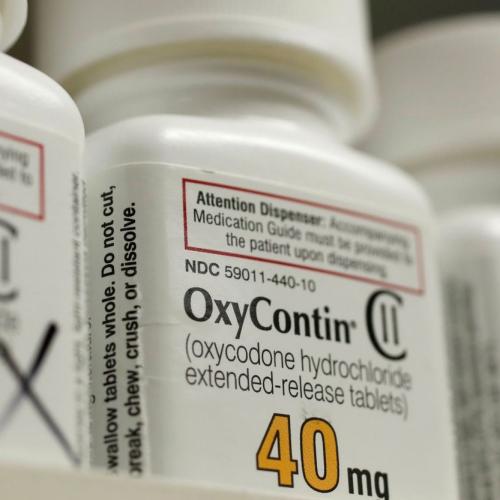
The nation’s largest pharmacy chains have handed over Americans’ prescription records to police and government investigators without a warrant, a congressional investigation found, raising concerns about threats to medical privacy. Though some of the chains require their lawyers to review law enforcement requests, three of the largest — CVS Health, Kroger and Rite Aid, with a combined 60,000 locations nationwide — said they allow pharmacy staff members to hand over customers’ medical records in the store. Pharmacies’ records hold some of the most intimate details of their customers’ personal lives, including years-old medical conditions and the prescriptions they take for mental health and birth control. Because the chains often share records across all locations, a pharmacy in one state can access a person’s medical history from states with more-restrictive laws. The Health Insurance Portability and Accountability Act, or HIPAA, regulates how health information is used and exchanged among “covered entities” such as hospitals and doctor’s offices. But the law gives pharmacies leeway as to what legal standard they require before disclosing medical records to law enforcement. In briefings, officials with eight American pharmacy giants — Walgreens Boots Alliance, CVS, Walmart, Rite Aid, Kroger, Cigna, Optum Rx and Amazon Pharmacy — told congressional investigators that they required only a subpoena, not a warrant, to share the records.
Note: For more along these lines, see concise summaries of deeply revealing news articles on corporate corruption and the disappearance of privacy from reliable major media sources.
On the morning of 10 June 2013 ... the journalist Glenn Greenwald and film-maker Laura Poitras published on the Guardian site a video revealing the identity of the NSA whistleblower behind one of the most damning leaks in modern history. It began: "My name is Ed Snowden." William Fitzgerald, then a 27-year-old policy employee at Google, knew he wanted to help. Fitzgerald found himself waiting in the lobby of the Hong Kong W Hotel to meet Greenwald and introduce him to Robert Tibbo and Jonathan Man – the men who became Snowden's legal representatives and hid him in the homes of Tibbo's refugee clients. The Snowden files told a ... sinister story, revealing mass surveillance by the US National Security Agency (NSA). The NSA files suggested that some tech firms, including Google, Facebook and Apple, were aware. Google and other tech firms worked to distance themselves from the NSA's efforts. But over time [Google's] culture appeared to shift, reflecting the changing needs of various governments. Google stopped promoting its transparency report to the media, free expression advocates were replaced by more traditional business-focused executives, and then there was Project Maven – the controversial Department of Defense drone project that Google signed on to build artificial intelligence for. Google isn't alone in vying for government contracts – Microsoft, Amazon, IBM have all since made a play for or struck multimillion-dollar deals to build tools of surveillance for various entities including the Pentagon.
Note: For more along these lines, see concise summaries of deeply revealing news articles on intelligence agency corruption and the disappearance of privacy from reliable major media sources.
In the pandemic’s bewildering early days, millions worldwide believed government officials who said they needed confidential data for new tech tools that could help stop coronavirus’ spread. In return, governments got a firehose of individuals’ private health details, photographs that captured their facial measurements and their home addresses. Now, from Beijing to Jerusalem to Hyderabad, India, and Perth, Australia, The Associated Press has found that authorities used these technologies and data to halt travel for activists and ordinary people, harass marginalized communities and link people’s health information to other surveillance and law enforcement tools. In some cases, data was shared with spy agencies. China’s ultra-strict zero-COVID policies recently ignited the sharpest public rebuke of the country’s authoritarian leadership since ... 1989. Just as the balance between privacy and national security shifted after the Sept. 11 terrorist attacks, COVID-19 has given officials justification to embed tracking tools in society that have lasted long after lockdowns. What use will ultimately be made of the data collected and tools developed during the height of the pandemic remains an open question. Australia’s intelligence agencies were caught “incidentally” collecting data from the national COVIDSafe app. In the U.S. ... the federal government took the opportunity to build out its surveillance toolkit, including two contracts in 2020 worth $24.9 million to the data mining and surveillance company Palantir Technologies Inc.
Note: Read an essay by constitutional attorney John W. Whitehead on COVID and the surveillance state. Detroit police recently sought COVID relief funds to install ShotSpotter microphones throughout the city. For more along these lines, see concise summaries of deeply revealing news articles on the coronavirus and the disappearance of privacy from reliable major media sources.
A whistleblower who works in Project Nightingale, the secret transfer of the personal medical data of up to 50 million Americans from one of the largest healthcare providers in the US to Google, has expressed anger to the Guardian that patients are being kept in the dark about the massive deal. The anonymous whistleblower has posted a video on the social media platform Daily Motion that contains a document dump of hundreds of images of confidential files relating to Project Nightingale. The secret scheme ... involves the transfer to Google of healthcare data held by Ascension, the second-largest healthcare provider in the US. The data is being transferred with full personal details including name and medical history and can be accessed by Google staff. Unlike other similar efforts it has not been made anonymous through a process of ... de-identification. The disclosed documents include highly confidential outlines of Project Nightingale, laying out the four stages or pillars of the secret project. By the time the transfer is completed next March, it will have passed the personal data of 50 million or more patients in 21 states to Google, with 10 million or so files already having moved across with no warning having been given to patients or doctors. Google has entered into similar partnerships on a much smaller scale with clients such as the Colorado Center for Personalized Medicine. But in that case all the data handed over to the search giant was encrypted, with keys being held only on the medical side.
Note: For more along these lines, see concise summaries of deeply revealing news articles on corporate corruption and the disappearance of privacy from reliable major media sources.
Over time, the CIA upper echelon has secretly developed all kinds of policy statements and legal rationales to justify routine, widespread surveillance on U.S. soil of citizens who arent suspected of terrorism or being a spy. Newly declassified documents from 2014 ... reveal the CIA not only intercepted emails of U.S. citizens but they were emails of the most sensitive kind written to Congress and involving whistleblowers reporting alleged wrongdoing within the Intelligence Community. The disclosures, kept secret until now, are two letters of congressional notification from the Intelligence Community inspector general at the time, Charles McCullough. He stated that during routine counterintelligence monitoring of government computer systems, the CIA collected emails between congressional staff and the CIAs head of whistleblowing and source protection. McCullough added that he was concerned about the CIAs potential compromise to whistleblower confidentiality and the consequent chilling effect. The March 2014 intercepts ... happened amid whats widely referred to as the Obama administrations war on whistleblowers and mass surveillance scandals. The evidence points to bad actors targeting candidate Donald Trump and his associates in part to keep them - and us - from learning about and digging into an even bigger scandal: our Intelligence Community increasingly spying on its own citizens, journalists, members of Congress and political enemies for the better part of two decades.
Note: The above article was written by Emmy award winning investigative journalist and former news anchor for CBS and CNN Sharyl Attkisson. She has been attacked numerous times for questioning the safety of vaccines and investigating too deeply into the lives of certain politicians. Her top-selling book Stonewalled describes her fight for truth against powerful political forces. For more along these lines, see concise summaries of deeply revealing news articles on intelligence agency corruption and the disappearance of privacy.
It's no secret that computers are insecure. The risks are about to get worse, because computers are being embedded into physical devices and will affect lives, not just our data. Many of todays new computers are not just screens that we stare at, but objects in our world with which we interact. A refrigerator is now a computer that keeps things cold; a car is now a computer with four wheels and an engine. These computers sense us and our environment, and they affect us and our environment. They talk to each other over networks ... and they have physical agency. They drive our cars, pilot our planes, and run our power plants. They control traffic, administer drugs ... and dispatch emergency services. These connected computers and the network that connects them - collectively known as the internet of things - affect the world in a direct physical manner. Computers fail differently than most other machines: It's not just that they can be attacked remotely - they can be attacked all at once. Its impossible to take an old refrigerator and infect it with a virus or recruit it into a denial-of-service botnet, and a car without an internet connection simply cant be hacked remotely. But that computer with four wheels and an engine? It - along with all other cars of the same make and model - can be made to run off the road, all at the same time. Do we want to allow vulnerable automobiles on the streets and highways during the weeks before a new security patch is written, tested, and distributed?
Note: A 2015 New York Times article called the Internet of Things a "train wreck in privacy and security". Read how a hacked vehicle may have resulted in journalist Michael Hastings' death in 2013. For more along these lines, see concise summaries of deeply revealing news articles on the disappearance of privacy and the risks of wireless technologies.
At least 75 companies receive anonymous, precise location data from apps whose users enable location services. Several of those businesses claim to track up to 200 million mobile devices in the United States about half those in use last year. The database reviewed by The Times ... reveals peoples travels in startling detail, accurate to within a few yards and in some cases updated more than 14,000 times a day. These companies sell, use or analyze the data to cater to advertisers, retail outlets and even hedge funds. Its a hot market, with sales of location-targeted advertising reaching an estimated $21 billion this year. Businesses say their interest is in the patterns, not the identities, that the data reveals. They note that the information apps collect is tied not to someones name or phone number but to a unique ID. But those with access to the raw data including employees or clients could still identify a person without consent. They could follow someone they knew, by pinpointing a phone that regularly spent time at that persons home address. More than 1,000 popular apps contain location-sharing code from such companies. Googles Android system was found to have about 1,200 apps with such code, compared with about 200 on Apples iOS.
Note: For more along these lines, see concise summaries of deeply revealing privacy news articles from reliable major media sources.
By now, almost everyone knows what Edward Snowden did. He leaked top-secret documents revealing that the National Security Agency was spying on hundreds of millions of people. The key to Snowdens effectiveness, according to Thomas Devine, the legal director of the Government Accountability Project (GAP), was that he practised civil disobedience rather than lawful whistleblowing. None of the lawful whistleblowers who tried to expose the governments warrantless surveillance ... had any success, Devine told me. They came forward ... but the government just said, Theyre lying. Were not doing those things. And the whistleblowers couldnt prove their case because the government had classified all the evidence. The NSA whistleblowers were not leftwing peace nuts. They had spent their professional lives inside the US intelligence apparatus devoted, they thought, to the protection of the homeland and defense of the constitution. They were political conservatives, highly educated, respectful of evidence, careful with words. And they were saying, on the basis of personal experience, that the US government was being run by people who were willing to break the law and bend the states awesome powers to their own ends. They were saying that laws and technologies had secretly been put in place that threatened to overturn the democratic governance Americans took for granted and shrink their liberties to a vanishing point.
Note: The article above was is adapted from Mark Hertsgaards book, Bravehearts: Whistle Blowing in the Age of Snowden. For more along these lines, see concise summaries of deeply revealing news articles on intelligence agency corruption and the disappearance of privacy.
The disastrous situation at the US-Mexico border is, and has been, intentionally produced. Illegal crossings have risen to unprecedented levels. There is a bipartisan consensus about what must be done. Tellingly, the same “solution” is also being quietly rolled out at all American ports of entry that are not currently being “overrun”, such as airports. That solution, of course, is biometric surveillance, enabled by AI, facial recognition/biometrics and autonomous devices. This “solution” is not just being implemented throughout the United States as an alleged means of thwarting migrants, it is also being rapidly implemented throughout the world in apparent lockstep. Global policy agendas, ratified by nearly every country in the world ... seek both to restrict the extent of people’s freedom of movement and to surveil people’s movements ... through the global implementation of digital identity. The defense tech firm Anduril ... is one of the main beneficiaries of government contracts to build autonomous surveillance towers along the US-Mexico border, which are now also being rolled out along the US-Canada border. Anduril will create “a digital wall that is not a barrier so much as a web of all-seeing eyes, with intelligence to know what it sees.” While Anduril is one of the main companies building the “virtual wall,” they are not alone. General Dynamics, a defense firm deeply connected to organized crime, espionage scandals and corruption, has developed several hundred remote video surveillance systems (RVSS) towers for CBP while Google, another Big Tech firm with CIA connections, has been tapped by CBP to have its AI used in conjunction with Anduril’s towers, which also utilize Anduril’s own AI operating system known as Lattice.
Note: For more along these lines, see concise summaries of deeply revealing news articles on government corruption and the disappearance of privacy from reliable major media sources.
Axon, maker of Tasers and police body cameras, has acquired a surveillance company that allows police to tap into camera networks in schools, retail stores, and other locations in cities and towns across America and apply AI technology to the footage. Axon acquired Fusus for an undisclosed sum. Fusus operates what it calls “real time crime centers (RTCC)” which allow police and other public agencies to analyze a wide array of video sources at a single point and apply AI that detects objects and people. These centers are reminiscent of the Department of Homeland Security’s Fusion Centers—where intelligence from a diverse number of sources is collected and shared among agencies—and have already expanded to over 250 cities and counties. Last week, Axon announced a new line of cameras called Axon Body Workforce designed to be worn by workers in retail and in healthcare. Despite pushing the cameras as deterrents, data shows no evidence that they’ve been effective in reducing police violence or increasing transparency. The rise of Fusus is concerning to rights groups like the Electronic Frontier Foundation, which has raised alarm over the expansion of law enforcement’s ability to easily surveil Americans. Notably, the concept behind Fusus’ solution is similar to technology that has been deployed in South Africa for years, and which experts have said exacerbates inequality in the country.
Note: Axon has ties to paid experts who are used to exonerate police after deaths in custody. For more along these lines, see concise summaries of deeply revealing news articles on corporate corruption and the disappearance of privacy from reliable major media sources.
United States officials fought to conceal details of arrangements between US spy agencies and private companies tracking the whereabouts of Americans. Obtaining location data from US phones normally requires a warrant, but police and intelligence agencies routinely pay companies instead for the data, effectively circumventing the courts. Ron Wyden, the US senator from Oregon, informed the nation’s intelligence chief, Avril Haines, on Thursday that the Pentagon only agreed to release details about the data purchases, which had always been unclassified, after Wyden hindered the Senate's efforts to appoint a new director of the National Security Agency. “The secrecy around data purchases was amplified,” Wyden wrote, “because intelligence agencies have sought to keep the American people in the dark." Pentagon offices known to have purchased location data from these companies include the Defense Intelligence Agency and the NSA, among others. Wyden's letter ... indicates that the NSA is also “buying Americans' domestic internet metadata.” Wyden's disclosure comes amid a fight in the US House of Representatives over efforts to outlaw the purchases. Members of the House Judiciary Committee attached legislation doing so ... to a bill reauthorizing a contentious surveillance program known as Section 702. Biden administration officials and members of the intelligence committee staged a campaign against the privacy-enhancing measures.
Note: Learn more about mission creep in our comprehensive Military-Intelligence Corruption Information Center. For more, see concise summaries of deeply revealing news articles on military corruption and the disappearance of privacy from reliable major media sources.
Mental health apps have become increasingly common over the past few years, particularly due to the rise in telehealth during the coronavirus pandemic. However, there's a problem: Data privacy is being compromised in the process. In 2023 the Federal Trade Commission ordered the mental health platform BetterHelp, which is owned by Teladoc (TDOC), to pay a $7.8 million fine to consumers for sharing their mental health data for advertising purposes with Facebook (META) and Snapchat (SNAP) after previously promising to keep the information private. Cerebral, a telehealth startup, admitted last year to exposing sensitive patient information to companies like Google (GOOG, GOOGL), Meta, TikTok, and other third-party advertisers. This info included patient names, birth dates, insurance information, and the patient's responses to mental health self-evaluations through the app. Overall, according to the Mozilla Foundation’s Privacy Not Included online buyer’s guide, only two out of the 27 mental health apps available to users met Mozilla's privacy and security standards in 2023. A December 2022 study of 578 mental health apps published in the Journal of the American Medical Association found that 44% shared data they collected with third parties. A February 2023 report from Duke University found that out of 37 different data brokers that researchers contacted ... firms “were ultimately willing and able to sell the requested mental health data.”
Note: For more along these lines, see concise summaries of deeply revealing news articles on health and the disappearance of privacy from reliable major media sources.
Apple has said it now requires a judge’s order to hand over information about its customers’ push notification to law enforcement, putting the iPhone maker’s policy in line with rival Google and raising the hurdle officials must clear to get app data about users. It follows the revelation from Oregon Senator Ron Wyden that officials were requesting such data from Apple as well as from Google. Apps of all kinds rely on push notifications to alert smartphone users to incoming messages, breaking news, and other updates. These are the audible “dings” or visual indicators users get when they receive an email or their sports team wins a game. What users often do not realize is that almost all such notifications travel over Google and Apple’s servers. In a letter first disclosed by Reuters last week, Wyden said the practice gave the two companies unique insight into traffic flowing from those apps to users, putting them “in a unique position to facilitate government surveillance of how users are using particular apps.” Apple and Google both acknowledged receiving such requests. Apple added a passage to its guidelines saying such data was available “with a subpoena or greater legal process.” The passage has now been updated to refer to more stringent warrant requirements. Wyden said in a statement that Apple was “doing the right thing by matching Google and requiring a court order to hand over push notification related data.”
Note: Read more about the controversial geofence warrants that use Big Tech data. As an older article about the Apple court order articulates, law enforcement can "intercept your messages, access your health records or financial data, track your location, or even access your phone’s microphone or camera without your knowledge." For more along these lines, see concise summaries of deeply revealing news articles on the disappearance of privacy from reliable major media sources.
In the 1970s, congressional investigators revealed that the FBI, NSA, and CIA had spent decades illegally surveilling and harassing the civil rights and anti-war movements. These abuses shocked the American public and led Congress to implement a series of intelligence reforms, including the Foreign Intelligence Surveillance Act (FISA), which set strict limitations on when and how intelligence agencies could perform domestic spying. In the decades since the 9/11 attacks, changing laws and aggressive executive branch lawyering have significantly relaxed the rules that govern surveillance of Americans. We are once again seeing abuses of these powers, including instances of intelligence agents seeking access to the communications of politicians, protesters, and journalists. Today, a bipartisan group of lawmakers ... introduced the Government Surveillance Reform Act of 2023 (GSRA) to reverse this erosion of privacy rights. The GSRA begins by tackling Section 702, a controversial surveillance law that expires at the end of this year. Section 702 allows the government to collect the communications of non-Americans located abroad without a warrant. But Americans’ private phone calls, emails, and text messages are inevitably captured, too — and intelligence officials frequently perform warrantless searches for them. Intelligence officials conducted more than 200,000 of these “backdoor searches” for Americans’ communications last year alone.
Note: For more along these lines, see concise summaries of deeply revealing news articles on intelligence agency corruption and the disappearance of privacy from reliable major media sources.
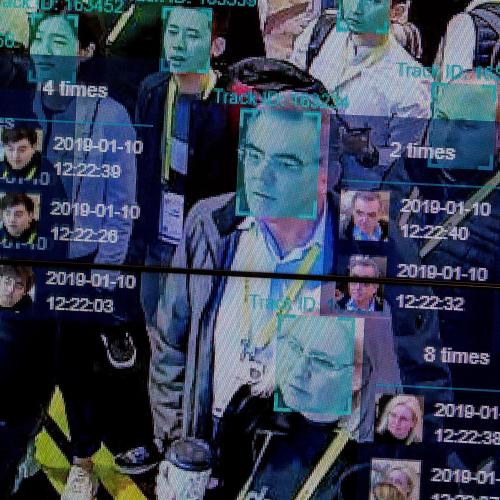
New Yorkers may have noticed an unwelcome guest hovering round their parties. In the lead-up to Labour Day weekend the New York Police Department (NYPD) said that it would use drones to look into complaints about festivities, including back-yard gatherings. Snooping police drones are an increasingly common sight in America. According to a recent survey by researchers at the Northwestern Pritzker School of Law, about a quarter of police forces now use them. Among the NYPD’s suppliers is Skydio, a Silicon Valley firm that uses artificial intelligence (AI) to make drones easy to fly. The NYPD is also buying from BRINC, another startup, which makes flying machines equipped with night-vision cameras that can smash through windows. Facial-recognition software is now used more widely across America, too, with around a tenth of police forces having access to the technology. A report released in September by America’s Government Accountability Office found that six federal law-enforcement agencies, including the FBI and the Secret Service, were together executing an average of 69 facial-recognition searches every day. Among the top vendors listed was Clearview AI. Surveillance capabilities may soon be further fortified by generative AI, of the type that powers ChatGPT, thanks to its ability to work with “unstructured” data such as images and video footage. The technology will let users “search the Earth for objects”, much as Google lets users search the internet.
Note: For more along these lines, see concise summaries of deeply revealing news articles on police corruption and the disappearance of privacy from reliable major media sources.
The FBI has amassed 21.7 million DNA profiles — equivalent to about 7 percent of the U.S. population — according to Bureau data reviewed by The Intercept. The FBI aims to nearly double its current $56.7 million budget for dealing with its DNA catalog with an additional $53.1 million, according to its budget request for fiscal year 2024. “The requested resources will allow the FBI to process the rapidly increasing number of DNA samples collected by the U.S. Department of Homeland Security,” the appeal for an increase says. “When we’re talking about rapid expansion like this, it’s getting us ever closer to a universal DNA database,” Vera Eidelman, a staff attorney at the American Civil Liberties Union, [said]. “I think the civil liberties implications here are significant.” The rapid growth of the FBI’s sample load is in large part thanks to a Trump-era rule change that mandated the collection of DNA from migrants who were arrested or detained by immigration authorities. Until recently, the U.S. DNA database surpassed even that of authoritarian China, which launched an ambitious DNA collection program in 2017. That year, the BBC reported, the U.S. had about 4 percent of its population’s DNA, while China had about 3 percent. While DNA has played an important role in prosecuting crimes, less than 3 percent of the profiles have assisted in cases, the Bureau’s data reveals. By comparison, fingerprints collected by the FBI from current and former federal employees linked them to crimes at a rate of 12 percent each year.
Note: For more along these lines, see concise summaries of deeply revealing news articles on intelligence agency corruption and the disappearance of privacy from reliable major media sources.
If you call 911 to report an emergency, the odds are increasing that a drone will be the first unit sent to respond. More than 1,500 departments across the country now use them, “mostly for search and rescue as well as to document crime scenes and chase suspects,” according to ... MIT Technology Review. Generally, police drones don’t carry weapons and are used primarily for video surveillance. It is possible for small drones to deliver chemical irritants like tear gas, however, a technology that police in Israel have used against Palestinians. In a report published on Thursday, American Civil Liberties Union Senior Policy Analyst Jay Stanley worries that these kinds of drone programs may normalize usage and “usher in an era of pervasive, suspicionless, mass aerial surveillance.” He notes far more invasive turns that police drone usage could take, including warrantless surveillance of specific people, crime “hotspots” or even whole neighborhoods or cities. Stanley wonders if drone usage won’t just ... “amplify the problems with the deeply broken U.S. criminal legal system.” Many of the cities using drones in policing are doing so from so-called “real-time crime centers.” These units function as centralized hubs to connect the various bits of surveillance and data that police collect from things like stationary cameras, drones, license plate readers and technology that listens for possible gunshots. Some centers can even integrate police body cameras and video from Ring doorbells.
Note: Police have been using military predator drones for domestic law enforcement since 2011. For more along these lines, see concise summaries of deeply revealing news articles on police corruption and the disappearance of privacy from reliable major media sources.
An industrial estate in Yorkshire is an unlikely location for ... an artificial intelligence (AI) company used by the Government to monitor people’s posts on social media. Logically has been paid more than £1.2 million of taxpayers’ money to analyse what the Government terms “disinformation” – false information deliberately seeded online – and “misinformation”, which is false information that has been spread inadvertently. It does this by “ingesting” material from more than hundreds of thousands of media sources and “all public posts on major social media platforms”, using AI to identify those that are potentially problematic. It has a £1.2 million deal with the Department for Culture, Media and Sport (DCMS), as well as another worth up to £1.4 million with the Department of Health and Social Care to monitor threats to high-profile individuals within the vaccine service. It also has a “partnership” with Facebook, which appears to grant Logically’s fact-checkers huge influence over the content other people see. A joint press release issued in July 2021 suggests that Facebook will limit the reach of certain posts if Logically says they are untrue. “When Logically rates a piece of content as false, Facebook will significantly reduce its distribution so that fewer people see it, apply a warning label to let people know that the content has been rated false, and notify people who try to share it,” states the press release.
Note: Read more about how NewsGuard, a for-profit company, works closely with government agencies and major corporate advertisers to suppress dissenting views online. For more along these lines, see concise summaries of deeply revealing news articles on government corruption and media manipulation from reliable sources.
On April 20, former acting CIA Director Michael Morell admitted he orchestrated the joint letter that torpedoed the New York Post’s bombshell reporting on Hunter Biden’s laptop in the weeks leading up to the November 2020 US Presidential election, at the direct request of Joe Biden’s campaign team. That letter ... asserted the leaked material bore unambiguous hallmarks of a Kremlin “information operation.” In all, 51 former senior intelligence officials endorsed the declaration. This intervention was sufficient for Twitter to block all sharing of the NY Post’s exposés and ban the outlet’s official account. Twitter’s public suppression of the NY Post’s disclosures was complemented by a covert operation to identify and neutralize anyone discussing the contents of Hunter Biden’s laptop, courtesy of Dataminr, a social media spying tool heavily connected to British and American intelligence services. In-Q-Tel [is] the CIA’s venture capital arm. In 2016, The Intercept revealed In-Q-Tel was financing at least 38 separate social media spying tools, to surveil “erupting political movements, crises, epidemics, and disasters.” Among them was Dataminr, which enjoys privileged access to Twitter’s “firehose” – all tweets published in real time – in order to track and visualize trends as they happen. [In 2020], the U.S. was ... engulfed by incendiary large-scale protests. Dataminr kept a close eye on this upheaval every step of the way, tipping off police to the identities of demonstrators.
Note: While Hunter Biden was indicted for three felony gun charges and nine counts of tax-related crimes, his laptop also revealed suspicious business dealings with corrupt overseas firms. Learn more about the history of military-intelligence influence on the media in our comprehensive Military-Intelligence Corruption Information Center. For more, see concise summaries of deeply revealing news articles on corporate corruption and media manipulation from reliable sources.
An AI-based decoder that can translate brain activity into a continuous stream of text has been developed, in a breakthrough that allows a person’s thoughts to be read non-invasively for the first time. The decoder could reconstruct speech with uncanny accuracy while people listened to a story – or even silently imagined one – using only fMRI scan data. Previous language decoding systems have required surgical implants. Large language models – the kind of AI underpinning OpenAI’s ChatGPT ... are able to represent, in numbers, the semantic meaning of speech, allowing the scientists to look at which patterns of neuronal activity corresponded to strings of words with a particular meaning rather than attempting to read out activity word by word. The decoder was personalised and when the model was tested on another person the readout was unintelligible. It was also possible for participants on whom the decoder had been trained to thwart the system, for example by thinking of animals or quietly imagining another story. Jerry Tang, a doctoral student at the University of Texas at Austin and a co-author, said: “We take very seriously the concerns that it could be used for bad purposes and have worked to avoid that. We want to make sure people only use these types of technologies when they want to and that it helps them.” Prof Tim Behrens, a computational neuroscientist ... said it opened up a host of experimental possibilities, including reading thoughts from someone dreaming.
Note: This technology has advanced considerably since Jose Delgado first stopped a charging bull using radio waves in 1965. For more along these lines, see concise summaries of deeply revealing news articles on mind control and the disappearance of privacy from reliable major media sources.
Important Note: Explore our full index to revealing excerpts of key major media news articles on several dozen engaging topics. And don't miss amazing excerpts from 20 of the most revealing news articles ever published.