






















































Health News Articles
Below are key excerpts of revealing news articles on health from reliable news media sources. If any link fails to function, a paywall blocks full access, or the article is no longer available, try these digital tools.
For further exploration, delve into our comprehensive Health and Food Corruption Information Center.

T-MOBILE, the mobile phone giant, has been accused of burying a scientific report it commissioned that concluded handsets and masts contribute to cancer and genetic damage. The report argued that officially recommended limits on radiation exposure should be cut to 1/1000th of those in force. The suggestion has not been taken up by the company or by regulators. Campaigners claimed T-Mobiles handling of the report was part of a wider pattern of behaviour by the industry in its efforts to keep discussion of the health risks off the agenda. The Ecolog Institute, which has been researching mobile phone technology since 1992, was paid by T-Mobile to evaluate evidence on its potential dangers. But Dr Peter Neitzke, one of the authors of the report, has accused T-Mobile ... of diluting the findings by commissioning other studies from which it knew no critical results or recommendations were to be expected. Ecologs report, which analysed dozens of peer-reviewed studies, stated: Given the results of the present epidemiological studies, it can be concluded that electromagnetic fields with frequencies in the mobile telecommunications range do play a role in the development of cancer. This is particularly notable for tumours of the central nervous system.
Note: For many highly important articles from reliable sources on major health issues, click here.
Some 10,000 US researchers have signed a statement protesting about political interference in the scientific process. The statement, which includes the backing of 52 Nobel Laureates, demands a restoration of scientific integrity in government policy. According to the American Union of Concerned Scientists, data is being misrepresented for political reasons. It claims scientists working for federal agencies have been asked to change data to fit policy initiatives. The Union has released an "A to Z" guide that ... documents dozens of recent allegations involving censorship and political interference in federal science. Campaigners say that in recent years the White House has been able to censor the work of agencies like the Environmental Protection Agency and the Food and Drug Administration because a Republican congress has been loath to stand up for scientific integrity. Michael Halpern from the UCS said the statement of objection to political interference had been supported by researchers regardless of their political views. "This science statement that has now been signed by the 10,000 scientists is signed by science advisers to both Republican and Democratic administrations dating back to President Eisenhower, stating that this is not business as usual and calling for this practice to stop."
White blood cells from mice that are naturally immune to cancer cured tumors in other mice and provided them with lifelong immunity to the disease, researchers reported Monday. The finding indicates the existence of a biological pathway previously unsuspected in any species. A small team of researchers is working to understand the genetic and immunological basis of the surprising phenomenon. Preliminary studies hint at the existence of a similar resistance in humans. Researchers hope that harnessing the biological process could lead to a new approach to treating cancer. But Dr. Zhen Cui of Wake Forest, whose team published the findings in the Proceedings of the National Academy of Science, said he expected rapid replication of the results because the findings were so clear-cut and easily observed. "This is a truly remarkable phenomenon -- and it really needs confirmation from other institutions," he said. The team took white blood cells from the immune mice ... and injected them into mice already carrying a variety of tumors, some of which were extremely aggressive. In every case, the cancers were destroyed, even if the cells were injected at a point distant from the tumor. Healthy tissues were not affected. The mice that received the cells, furthermore, were protected from new tumors for the rest of their lives. The researchers have no idea how the immunity continues.
Note: Why was this not in the headlines and not given a title like "Cancer Cure Found for Mice"? Most major papers didn't even report the story, and an article in the New York Times was titled simply "A Strain of Mice Appears Able to Resist Cancer Cells." Could it be that the power brokers in the medical industry know that a cancer cure would cause huge financial losses for them? For what happened to an incredible scientist in the past who discovered a cancer cure for humans, click here.
Fraudulent research regularly appears in the 30,000 scientific journals published worldwide, a former editor of the British Medical Journal (BMJ) said today. Even when journals discover that published research is fabricated or falsified they rarely retract the findings, according to Richard Smith, who was also chief executive of the BMJ publishing group. Writing in the latest edition of the Journal of the Royal Society of Medicine, Dr Smith called on editors to blow the whistle on bad research and to use their clout to pressure universities into taking action against dodgy researchers. The former BMJ editor said it was likely that research fraud was "equally common" in the 30,000 plus scientific journals across the globe but was "invariably covered up". His call for action comes in the wake of several high profile cases of fraudulent research, including the Korean scientist Hwang Woo-suk who fabricated stem cell research that it was claimed would open up new ways to treat diseases like Parkinson's. Dr Smith criticised the failure of scientific institutions, including universities, to discipline dodgy researchers even when alerted to problems by journals. "Few countries have measures in place to ensure research is carried out ethically," he said. "Most cases are not publicised. They are simply not recognised, covered up altogether or the guilty researcher is urged to retrain, move to another institution or retire from research."
Note: For reliable information on the collusion of industry, government, and research facilities who place profits above advances in public health: http://www.WantToKnow.info/healthcoverup
Americans consider the United States to be a country where debate flourishes. Yet with regard to avian flu, hyped sound bites predominate. When President Bush asked Congress for $7.1 billion toward "pandemic flu preparedness," even his critics replied "not enough." What is lacking in the overall discussion about pandemic flu is disagreement, criticism, and skepticism - once the bedrock of science - from researchers willing to question and test the data. Some facts: According to the World Health Organization, the first "outbreak" of the H5N1 virus, also known as avian flu, killed six people in 1997. Since then, H5N1 has allegedly killed 97 more worldwide, the majority of whom lived in poor, rural areas and had direct contact with dead or sick birds often kept in unsanitary conditions. These numbers do not suggest the human population faces an insurmountable threat from this virus. Peter Palese, flu scientist at Mount Sinai School of Medicine in New York, told The New York Times in a Nov. 8, 2005 article that H5N1 is a false alarm. The virus has been "around for more than a dozen years, but it hasn't jumped into the human population." The reason? It probably can't. There are better ways to promote America's health than selling sickness through the language of fear. Before the government employs "all instruments of national power," including "quarantine authority," as the National Strategy for Pandemic Influenza declares, we need to be told what "pandemic flu" really means.
Note: Not mentioned are the huge profits reaped by the drug companies and their political supporters thanks to the intense fear of bird flu generated by the media. For more: http://www.WantToKnow.info/healthcoverup
HIV tests detect footprints, never the animal itself. These footprints, antibodies ... were limited to two in 1984 ... but over the years expanded to include many proteins previously not associated with HIV. A majority of HIV-positive tests, when retested, come back indeterminate or negative. In many cases, different results emerge from the same blood tested in different labs. There are currently at least eleven different criteria for how many and what proteins at which band density signal positive. The most stringent criteria (four bands) are upheld in Australia and France; the least stringent (two bands), in Africa, where an HIV test is not even required as part of an AIDS diagnosis. Africa ... has become ground zero of the AIDS epidemic. The clinical definition of AIDS in Africa, however, is stunningly broad and generic, and was seemingly designed to be little other than a signal for funding. The Bangui definition of AIDS ... requires neither a positive HIV test nor a low T-cell count, as in the West, but only the presence of chronic diarrhea, fever, significant weight loss, and asthenia. These happen to be the symptoms of chronic malnutrition, malaria, parasitic infections, and other common African illnesses. The statistical picture of AIDS in Africa, consequently, is a communal projection based on very rough estimates ... extrapolated across the continent using computer models and highly questionable assumptions. More than 2,300 people, mostly scientists and doctors, including Nobelists in chemistry and medicine, have signed the petition of the Group for the Scientific Reappraisal of the HIV-AIDS Hypothesis, which calls for a more independent and skeptical approach to the question of AIDS causality.
Note: If you want to be educated about the details of how rampant corruption has become in the medical research industry, read this well researched article. For a concise description of unbridled corruption in the health care industry by one of the most respected doctors in the world, click here.
A Vietnamese doctor who has treated dozens of victims of avian flu claims the drug being stockpiled around the world to combat a pandemic is 'useless' against the virus. Dr Nguyen Tuong Van runs the intensive care unit at the Centre for Tropical Diseases in Hanoi and has treated 41 victims of H5N1. Van followed World Health Organisation (WHO) guidelines and gave her patients Tamiflu, but concluded it had no effect. 'We place no importance on using this drug on our patients,' she said. 'Tamiflu is really only meant for treating ordinary type A flu. It was not designed to combat H5N1 . . . (Tamiflu) is useless.' Roche, the company that makes Tamiflu, has sold stockpiles of the drug to 40 countries and insists there is clear evidence it will protect against a future flu virus. However, it stresses the drug must be given within 48 hours to be effective. The WHO admitted Tamiflu had not been widely successful in humans. 'However, we believe in many Asian countries it hasn't been used until late in the illness,' a spokesman said.
Note: Yet hundreds of millions of dollars are being spent to stockpile this drug. It's quite interesting that the former chairman of the board of directors of the company that made Tamiflu is current Secretary of Defense Donald Rumsfeld. Mr. Rumsfeld has had over $5 million in stock gains from the sales of this drug. To read about this and lots more: http://www.WantToKnow.info/avianflu
A California institute demonstrates how people can actually make their heart beat in a healthier way. HeartMath’s research shows that emotions work much faster, and are more powerful, than thoughts. And that—when it comes to the human body—the heart is much more important than the brain to overall health and well-being. Briefly re-experiencing a cherished memory creates synchronization in your heart rhythm in mere seconds. Using a simple prescription that consists of a number of exercises that anyone can do anywhere in a few minutes ... HeartMath is successfully battling the greatest threat to health, happiness and peace in this world: stress. A successful anti-stress strategy provides results precisely at the moment the stress is experienced. This is what HeartMath does, which is why its client list now includes such leading companies as Hewlett Packard, Shell, Unilever, Cisco Systems, and Boeing. HeartMath ... has published a large body of scientific research in established and respected publications such as the Harvard Business Review and the American Journal of Cardiology. You can learn the techniques in five minutes and get positive results if you do them a few times a day for 30 seconds. Feelings of compassion, love, care and appreciation produce a smoothly rolling ... heart rhythm, while feelings of anger, frustration, fear and danger emit a jagged ... image. When people experience love, they not only feel happy and joyful, but they also produce ... the hormone that prevents aging and gives us feelings of youthful vitality. HeartMath’s slogan – a change of heart changes everything – pretty much sums it up. We can change the world, starting with ourselves.
Note: To visit the inspiring website of the Institute of HeartMath, see http://www.heartmath.org.
Studying individual school districts in Texas, the epidemiologists found that those districts with the highest levels of mercury in the environment also had the highest rates of special education students and autism diagnoses. There was a strong, direct relationship between mercury and autism levels. The incidence of autism has grown dramatically over the last two decades, from about one in every 2,000 children to as high as one in every 166. The purported link between autism and mercury has been a subject of intense debate. In the past it has centered primarily on the mercury-containing preservative thimerosal, which was once widely used in vaccines. Many parents have argued that thimerosal causes autism because their children seemed to develop the neurological disorder shortly after they received childhood vaccinations.
Note: An MSNBC/Associated Press report shows that the FDA rejected limits on thimerosal and that "most doses of flu vaccine still contain thimerosal."
No one foresaw ... the shocking extent to which the internet would change the terms of trade between corporations and society. One of the world's largest drug companies [was] the first victim. Britain's GlaxoSmithKline, the world's second-largest pharma, denied any wrongdoing, but agreed to pay $2.5m ... for concealing evidence of its antidepressant Seroxat's potential for harming children, while doing them no measurable good. Infinitely more frightening ... this pharma had the backing of institutions that we, the public, rely on to protect us from poisoning by prescription. The Royal College of Psychiatrists had insisted only a year earlier that 'there is no evidence that antidepressant drugs can cause dependence syndromes'. It was really the internet that allowed public health activists to do an end run around GSK's and the medical authorities' denials of the drug's risks. An explosion of websites dedicated to vivid accounts of antidepressant reactions told these campaigners about hundreds of thousands affected by a problem that officially did not exist. Health activists in Britain and America have uncovered the core of pharma might. In both countries, clinical drug tests are paid for by the pharmas, who tweak the trials' design for the best possible results. Until recently, only the most favourable findings got published in the 20,000-odd biomedical journals, many of them dependent on pharmas for funding. The drugs are approved for marketing by regulators, whose salaries are mostly financed by the subjects of their evaluations. The medicines are then prescribed by doctors routinely courted with pharma gifts ... meant to persuade them to change their prescribing habits.
Note: For a two-page summary with lots more reliable information on major health cover-ups by a doctor who was editor-in-chief of one of the most pretigious medical journals in the world, click here.
Generic drugs are just as safe and effective as their brand-name counterparts but they cost only a fraction as much. That is because companies that produce the generic versions simply copy the formula developed by the drugs inventor years before. While your drugstore charges you less for a generic drug than a brand name version, that price difference is nothing compared to the markup most druggists place on the generics. Your pharmacy most likely paid a wholesale price of only pennies for that generic medicine. They then charge you a markup of 3,000%, 4,000%, even 5,000% or more, pocketing most of your savings. Whos paying sky-high prices? People who can least afford to get ripped offthe elderly, the unemployed, and everybody who has to pay for their prescription medicine out of their own pocket. At CVS the cost of generic Prozac is marked up at least 56 times what the drug cost wholesale. It is a 5,594% markup. And in our survey of more than a dozen popular generic drugs, CVS leads the pack with average markups of 1,436% Walgreens is not far behind at 1,341% and Rite Aid markups on generics average 1,183%. [WXYZ reporter] Steve Wilson took the issue to Kurt Proctor, Vice President of the Association of Chain Drug Stores. "Explain to me why its necessary to take an 82 cent product and mark it up to $46.69? You have to mark it up 5,500% to meet your costs to make a profit? This is really about greed, isnt it?" asked Wilson. "Its not about greed," responded Proctor. "Thats not accurate at all. Thats a misleading statement. What I hope you will focus on is making sure people use their medications correctly."
Note: This important exposure of price-gouging by pharmacies is still available at Web Archive (click on the link above for the complete article, which is well worth reading in its entirety), but for some reason has been taken down at WXYZ's website. Could it be someone doesn't want us to know about this?
It's been a mystery in Washington for weeks. Just before President Bush signed the homeland security bill into law an unknown member of Congress inserted a provision into the legislation that blocks lawsuits against the maker of a controversial vaccine preservative called "thimerosal," used in vaccines that are given to children. Drug giant Eli Lilly and Company makes thimerosal. It's the mercury in the preservative that many parents say causes autism in thousands of children. But nobody in Congress would admit to adding the provision, reports CBS News Correspondent Jim Acosta until now. House Majority Leader Dick Armey tells CBS News he did it to keep vaccine-makers from going out of business under the weight of mounting lawsuits. "I did it and I'm proud of it," says Armey, R-Texas. "It's a matter of national security," Armey says. Because Armey is retiring at the end of the year, some say the outgoing majority leader is the perfect fall guy to take the heat and shield the White House from embarrassment.
Note: A Reuters article reports that the former head of the US's CDC was later named president of Merck's vaccine division with accompanying high salary. Could this be payoff for her support in suppressing studies that cast doubt on vaccines?
We're giving more and more psychiatric drugs to children. What medicine and psychiatry have done is to take essentially behavioral problems - problems of conflict between adults and children - and redefine them as medical problems. I believe that there is no scientific reason or justification for giving psychoactive agents to children. Take a healthy animal, like a chimpanzee, who wants to groom its neighbor, wants to play, socialize, wants to explore, and particularly would like to escape - that's a normal animal. If you give the animal a stimulant drug, it loses all its spontaneous behavior. And instead, obsessive narrow behavior is enforced. These drugs make good caged animals. Now, if you get all that same behavior in a child, if you crush a child's desire to socialize, to play, to escape, to be full of stuff like kids are, and instead you enforce a narrow obsessive focus, teachers will see this universally as improved behavior. Parents have also been lied to: flat-out lied to. They've been told that children have a neurobiological disorder. On what basis? Physicians and the public grabbed on to what is essentially a PR campaign ... that if you have a mental disturbance, it's biochemical. Now they run into problems. Because the next drug that comes along affects a different neurotransmitter, and then the next one affects a different neurotransmitter. And they're all working, because they all cause certain disabilities of the brain that some people experience as an improvement.
Note: Learn about Dr. Breggin’s key role in stopping lobotomies and much more in this informative interview. For more along these lines, see concise summaries of deeply revealing news articles on Big Pharma corruption from reliable major media sources.
Do drugs really stop working after the date stamped on the bottle? Fifteen years ago, the U.S. military decided to find out. Sitting on a $1 billion stockpile of drugs and facing the daunting process of destroying and replacing its supply every two to three years, the military began a testing program to see if it could extend the life of its inventory. The testing, conducted by the U.S. Food and Drug Administration, ultimately covered more than 100 drugs, prescription and over-the-counter. The results ... show that about 90% of them were safe and effective far past their original expiration date, at least one for 15 years past it. The program's returns have been huge. The military from 1993 through 1998 spent about $3.9 million on testing and saved $263.4 million on drug expense. In light of these results, a former director of the testing program, Francis Flaherty, says he has concluded that expiration dates put on by manufacturers typically have no bearing on whether a drug is usable for longer. "Manufacturers put expiration dates on for marketing, rather than scientific, reasons," says Mr. Flaherty, a pharmacist at the FDA until his retirement last year. "They want turnover." Joel Davis, a former FDA expiration-date compliance chief, says that with a handful of exceptions - notably nitroglycerin, insulin and some liquid antibiotics - most drugs are probably as durable as those the agency has tested for the military. "Most drugs degrade very slowly," he says. "In all likelihood, you can take a product you have at home and keep it for many years." Drug-industry officials ... acknowledge that expiration dates have a commercial dimension.
Note: As the Wall Street Journal charges to view this article at the above link, you can view it free here. For lots more on how the pharmaceutical industry cares more about profits than your health, click here.
A simian virus known as SV40 has been associated with a number of rare human cancers. This same virus contaminated the polio vaccine administered to 98 million Americans from 1955 to 1963. Federal health officials see little reason for concern. A growing cadre of medical researchers disagree. A breakthrough in the war against polio had come in the early 1950s, when Jonas Salk took advantage of a new discovery: monkey kidneys could be used to culture the abundant quantities of polio virus necessary to mass-produce a vaccine. But there were problems with the monkey kidneys. In 1960 Bernice Eddy, a government researcher, discovered that when she injected hamsters with the kidney mixture on which the vaccine was cultured, they developed tumors. Eddy's superiors tried to keep the discovery quiet, but Eddy presented her data at a cancer conference in New York. She was eventually demoted, and lost her laboratory. The cancer-causing virus was soon isolated by other scientists and dubbed SV40, because it was the fortieth simian virus discovered. Alarm spread through the scientific community as researchers realized that nearly every dose of the vaccine had been contaminated. In 1961 federal health officials ordered vaccine manufacturers to screen for the virus and eliminate it from the vaccine. Worried about creating a panic, they kept the discovery of SV40 under wraps and never recalled existing stocks. For two more years millions of additional people were needlessly exposed -- bringing the total to 98 million Americans from 1955 to 1963.
Note: This fascinating report on modern research into SV40's role in human cancers is well worth reading in its entirety at the link above. It is most strange that the CDC posted a webpage stating "it has been estimated that 1030 million Americans could have received an SV40 contaminated dose of vaccine" and much more, but the webpage was then taken down. Using the Internet Archive, you can still see the revealing page that has been removed at this link.
Germs that cause cancer have been discovered and with a new high-frequency radio "ray." They have been killed in human patients who then recovered, according to assertions made yesterday at the California State Homeopathic Medical societys convention. The new progress in combating malignant cancer is said to have been made possible by an ultra microscope that magnifies 31,000 times and by a ray that kills micro-organisms in humans. Both the microscope and the Ray were developed by Royal Raymond Rife of San Diego. Rife was to have announced his discoveries before the British Medical Society, but made the announcement locally because of the war. Dr. Arthur W. Yale of San Diego reported that with the aid of the Rife Ray he has succeeded in curing a number of cases of malignant cancer in which patients had been told they had only a limited time in which to live. The physician [said that] "for 17 years Mr. Rife experimented with vibratory waves of all frequencies, and he has now succeeded in finding a rate that will kill the different invading organisms of the body. Radio waves, which with their harmonics range from 10 meters to 20,000 meters, are projected through a tube filled with helium gas. I have witnessed the disappearance of every malignant growth when the patient has remained under treatment." Dr. Yale then reported case histories of patients treated. Mr. Rife alluded to the fact that the medical profession has not yet accepted his findings. My work may not be accepted during my lifetime," he said, "but ... I know it ultimately will be recognized.
Note: As the above link requires payment, you can read the full text of this article free at this link. For an abundance of powerful, verifiable information on this amazing man and how his cancer cure was ruthlessly suppressed by the medical establishment, click here.
On a sunny March morning in Bengaluru, Ayesha Banu and Noorunnisa walk up to the stage of Nitte Meenakshi Institute of Technology. Their white canes folded and held aside, they speak to a packed hall of students and teachers about their work as Medical Tactile Examiners (MTEs). "We assist doctors in detecting the early signs of breast cancer in women," Banu speaks into the mic. "Using the first two fingers of both hands, we examine women's breasts for abnormalities." She explains that blind women like herself and Noorunnisa are especially well-suited to this profession because of the "high tactile sense in our fingertips, which helps us find tiny lumps in the breast." Tactile breast examinations, or TBEs, are clinical breast examinations specially designed for blind women trained as MTEs. Employing MTEs for routine breast cancer screening – and reaching women in their communities and workplaces – could help in the early detection of cancer and save lives, says Dr. Poovamma CU, the breast specialist under whom Banu and Noorunnisa work. Studies prove that in the absence of sight, blind people's brains can develop a heightened sense of touch, as well as hearing. Through the MTE training, a woman with vision impairment is able to empower another woman, by offering her preventive health care. In a recent Indian study where two MTEs conducted TBEs on 1,338 women, their success rate of detecting malignant cancers was over 78 percent, and the miss rate, only one percent.
Note: Explore a treasure trove of concise summaries of incredibly inspiring disabled persons news articles.
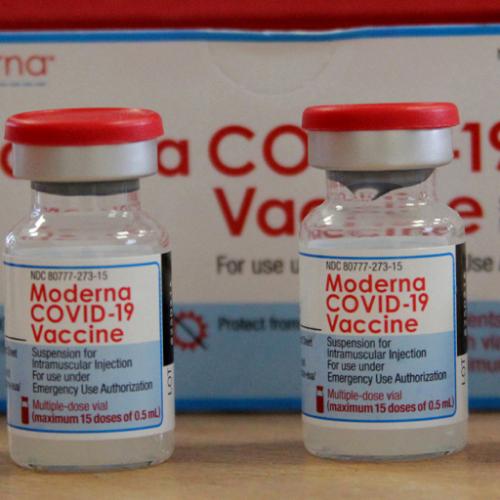
Existing surveillance studies are not designed to reliably estimate life-threatening event or vaccine-induced fatality rates (VFR). Here, regional variation in vaccination rates was used to predict all-cause mortality and non-COVID deaths in subsequent time periods using two independent, publicly available datasets from the US and Europe. Results [suggest] 146K to 187K vaccine-associated US deaths between February and August, 2021. Comparing our estimate with the CDC-reported VFR (0.002%) suggests VAERS deaths are underreported by a factor of 20, consistent with known VAERS under-ascertainment bias. Comparing our age-stratified VFRs with published age-stratified coronavirus infection fatality rates (IFR) suggests the risks of COVID vaccines and boosters outweigh the benefits in children, young adults, and older adults with low occupational risk or previous coronavirus exposure. There is little to no evidence that vaccines reduce community spread and transmission. Vaccine mandates in workplaces, colleges, schools and elsewhere are ill-advised. The mandates are not based on sound science given the relatively low COVID risk in healthy middle-aged and young adults and growing evidence base for alternative prevention and early treatment options for COVID.
Note: See this webpage for information on the author of this study. Why has the media been all but silent on deaths and injuries from the vaccines? Read hundreds of personal stories of severe vaccine injury and death that are not being reported. And explore an excellent website which presents official VAERS information and in easily understandable format. For more along these lines, see concise summaries of deeply revealing news articles on coronavirus vaccines from reliable major media sources.
In India – where the Delta variant was first identified and caused a huge outbreak – cases have plunged over the past two months. A similar drop may now be underway in Britain. There is no clear explanation for these declines. In the U.S., cases started falling rapidly in early January. The decline began before vaccination was widespread and did not follow any evident changes in Americans' Covid attitudes. This spring, caseloads were not consistently higher in parts of the U.S. that had relaxed masking and social distancing measures (like Florida and Texas) than in regions that remained vigilant. Large parts of Africa and Asia still have not experienced outbreaks as big as those in Europe, North America and South America. How do we solve these mysteries? Michael Osterholm, who runs an infectious disease research center at the University of Minnesota, suggests that ... Americans should not assume that Delta is destined to cause months of rising caseloads. Nor should they assume that a sudden decline, if one starts this summer, fits a tidy narrative that attributes the turnaround to rising vaccination and mask wearing. We are certainly not powerless in the face of Covid. We can reduce its risks, just as we can reduce the risks from driving, biking, swimming and many other everyday activities. But we cannot eliminate them. "We're not in nearly as much control as we think are," Osterholm said.
Note: For strong evidence that Ivermectin use is one significant cause of the major drop in India, see this webpage. And Sweden, which was hit hard in the beginning of the pandemic yet has never instituted a lockdown or mandated masks, is doing better than the U.S. and most European countries. For more along these lines, see concise summaries of deeply revealing news articles on the coronavirus from reliable major media sources.
Scientists who studied a big COVID-19 outbreak in Massachusetts concluded that vaccinated people who got so-called breakthrough infections carried about the same amount of the coronavirus as those who did not get the shots. Health officials on Friday released details of that research, which was key in this week's decision by the Centers for Disease Control and Prevention to recommend that vaccinated people return to wearing masks indoors. The authors said the findings suggest the CDC's mask guidance should be expanded to include the entire country, even outside of hot spots. The findings have the potential to upend past thinking about how the disease is spread. Previously, vaccinated people who got infected were thought to have low levels of virus and to be unlikely to pass it to others. But the new data shows that is not the case with the delta variant. The outbreak in Provincetown – a seaside tourist spot on Cape Cod in the county with Massachusetts' highest vaccination rate – has so far included more than 900 cases. About three-quarters of them were people who were fully vaccinated. Leaked internal documents ... suggest the CDC may be considering other changes in advice on how the nation fights the coronavirus, such as recommending masks for everyone and requiring vaccines for doctors and other health workers. People with breakthrough infections make up an increasing portion of hospitalizations and in-hospital deaths among COVID-19 patients.
Note: Read also about a surge in reports of serious injuries after receiving COVID injections. For more along these lines, see concise summaries of deeply revealing news articles on coronavirus vaccines from reliable major media sources.
Important Note: Explore our full index to revealing excerpts of key major media news articles on several dozen engaging topics. And don't miss amazing excerpts from 20 of the most revealing news articles ever published.