



















































Health News Articles
Below are key excerpts of revealing news articles on health from reliable news media sources. If any link fails to function, a paywall blocks full access, or the article is no longer available, try these digital tools.
For further exploration, delve into our comprehensive Health and Food Corruption Information Center.

In October 1995 ... the Scottish Office commissioned a research project from the Aberdeen-based Rowett Research Institute into the effect of GM crops on animal nutrition and the environment. This included, for the first time, feeding GM potatoes to rats to see if they had any harmful effects on their guts, bodies, metabolism and health. A former senior Scottish Office official involved in commissioning the project told the Guardian there was "little regard" at the time for research into the human nutritional and environmental consequences of GM foods. Dr Arpad Pusztai, a senior research scientist at the Rowett, beat off 28 other tenders to coordinate the project. The preliminary results of Dr Pusztai's work had begun to show unexpected and worrying changes in the size and weight of the rats' bodily organs. The team found liver and heart sizes were decreasing. Worse still, the brain was getting smaller. There were also indications of a weakening of the immune system. Granada TV's World in Action approached Dr Pusztai and ... with the institute's consent he gave an interview. Dr Pusztai told ITV viewers that he would not eat GM food. He found it "very, very unfair to use our fellow citizens as guinea pigs. We have to find [the results] in the laboratory," he insisted. Two days later Dr Pusztai was summarily suspended and forced to retire by the Rowett Institute's director, Professor Philip James, who had personally cleared the interview with Granada.
Note: For more along these lines, see concise summaries of deeply revealing news articles on GMOs from reliable major media sources.
A new peer-reviewed study released by a group of scientists in Taiwan has revealed an astonishingly strong link between severe depression, cognitive decline and exposure to the world’s most used herbicide, glyphosate. The study was fully published on Aug. 22 in the highly respected Elsevier Journal, Environmental Research. It was met with silence by the manufacturers of glyphosate-based herbicides such as Bayer/Monsanto, who produce the infamous weedkiller Roundup. The study authors stated that they: “Conducted analyses on existing data collected from 1532 adults of the 2013–2014 U.S. National Health and Nutrition Examination Survey (NHANES) to explore the possible relationship between glyphosate exposure and cognitive function, depressive symptoms, disability, and neurological medical conditions.” The proportion of individuals with detectable levels of glyphosate was 80.4%. The scientists concluded: “Our study provides important evidence of an association between urinary glyphosate levels and adverse neurological outcomes in a representative cohort of U.S. adult population. “Specifically, we observed lower cognitive function scores, greater odds of severe depressive symptoms, and increased risk of serious hearing difficulty in individuals with higher glyphosate exposure.” Some other recent independent studies ... suggest that both glyphosate alone and glyphosate-based herbicides such as Roundup are neurotoxins.
Note: A 2019 study found that glyphosate increases cancer risk by 41%. For more along these lines, see concise summaries of deeply revealing news articles on food system corruption and health from reliable major media sources.
In 2013, the National Vaccine Program Office of the U.S. Department of Health and Human Services (HHS) commissioned an update of earlier findings on the lack of evidence to support claims that the Centers for Disease Control and Prevention (CDC) infant/child vaccination schedule was safe. The Institute of Medicine (IOM) committee [was] charged with producing the update. The lack of information on the overall safety of the vaccination schedule was so compelling that the committee then recommended HHS incorporate the study of the safety of the overall childhood immunization schedule into its processes for setting priorities for research, “recognizing stakeholder concerns, and establishing the priorities on the basis of epidemiological evidence, biological plausibility, and feasibility.” The IOM also recommended the CDC use its private database, the Vaccine Safety Datalink (VSD), to study the overall health effects of the vaccination schedule using retrospective analyses. Ten years later, the CDC has yet to do such a comparison study, even though it is sitting on a vast repository of data in the VSD, which include comprehensive medical records for more than 10 million individuals and 2 million children. The VSD also contains records for a significant number of unvaccinated children, yet the CDC refuses to compare the health outcomes of vaccinated children to completely unvaccinated children. The CDC also prohibits VSD outside researchers from accessing the VSD data.
Note: Read more about how HHS was in violation of the “Mandate for Safer Childhood Vaccines” as stipulated in the Vaccine Injury Compensation Act. For more along these lines, see concise summaries of deeply revealing news articles on vaccines from reliable major media sources.
The number of American children that have been diagnosed with developmental disabilities has increased, the Centers for Disease Control and Prevention reported. The agency unveiled new findings Thursday showing that nearly one in 10 children in the US were diagnosed with a developmental disability in 2021, an increase from previous years. Specifically, the prevalence in children aged 3 to 17 grew from 7.4% in 2019 to 8.6% in 2021, according to data from the National Health Interview Survey, which monitors the nation's health through household questionnaires. Survey findings were broken down into four categories: any developmental disability, intellectual disability, autism spectrum disorder and other developmental delay. While the percentage of children diagnosed with an intellectual disability or autism spectrum disorder remained relatively stagnant, the agency saw an uptick in "other developmental delays" from 5.1% in 2018 to 6.1% in 2021. Boys were more likely than girls to be diagnosed with any developmental disability – 10.8% compared to 5.3% – and specifically were an estimated three times more likely to develop autism spectrum disorder. The CDC report follows the news of soaring autism spectrum disorder rates in the NYC metro area, according to findings released earlier this year. Researchers from Rutgers claimed that rates tripled over the course of 16 years, from 1% in 2000 to 3% in 2016.
Note: More than half of American youth now deal with at least one chronic health issue. Why is this not being thoroughly investigated? Explore a collection of revealing news articles we've summarized that investigates the sharp rise of autism in children. For more along these lines, see concise summaries of deeply revealing news articles on health from reliable major media sources.
For almost five decades, [Dr. Vandana] Shiva has been deeply engaged in the fight for environmental justice in India. Regarded as one of the world's most formidable environmentalists, she has worked to save forests, shut down polluting mines, exposed the dangers of pesticides, spurred on the global campaign for organic farming, championed ecofeminism and gone up against powerful giant chemical corporations. Her battle to protect the world's seeds in their natural form – rather than genetically altered and commercially controlled versions – continues to be her life's work. "I couldn't understand why were we told that new technology brings progress, but everywhere I looked, local people were getting poorer and landscapes were being devastated as soon as this development or new technology came in," she says. "No one was stopping to ask: what will be the impact on the environment? What will this cost the farmers? They only wanted to win the race and control all the world's seeds." Currently more than 60% of the world's' commercial seeds are sold by just four companies, which have led the push to patent seeds, orchestrated a global monopoly of certain [genetically modified] crops such as cotton and soya and sued hundreds of small-scale farmers for saving seeds from commercial crops. Shiva considers her most important work to be her travels through India's villages, collecting and saving seeds ... setting up more than 100 seed banks, and helping farmers return to organic methods.
Note: The Seeds of Vandana Shiva is an excellent documentary that reveals the remarkable life story of Dr. Shiva, her significant influence in creating an international food justice movement, and how she stood up to the big players of industrial agriculture. For more along these lines, see concise summaries of deeply revealing news articles on GMOs and food system corruption from reliable major media sources.
A state-of-the-art assessment on the scientific evidence of wireless radiation impacts on children’s health published in the journal Current Problems in Pediatric and Adolescent Health Care concludes that the medical community has a critical role to play to prevent harm from wireless radiation. Written by distinguished experts in medicine, epidemiology, toxicology, physics, biochemical engineering and public health ... the paper references numerous studies that associate wireless exposure to effects including oxidative stress, DNA damage, cardiomyopathy, carcinogenicity, sperm damage, memory damage and neurological effects. Pregnancy, infancy and childhood are periods of critical susceptibility, especially for the brain, which is rapidly developing. “Current government safety limits are outdated and do not reflect the latest science nor the way children use wireless technology today,” stated Linda Birnbaum Ph.D, former Director of the National Toxicology Program. Theodora Scarato, Executive Director of Environmental Health Trust, highlighted the international policies to reduce children’s exposure, such as France and Belgium’s bans on the sale of cell phones designed for young children and the numerous countries that have restrictions on Wi-Fi exposure in classrooms. She stated that, “US government limits allow radiation emissions 10 to 100 times higher than numerous countries such as Switzerland, Italy, China, Russia and India.”
Note: For more along these lines, see concise summaries of deeply revealing news articles on wireless technology dangers from reliable major media sources.
According to the Centers for Disease Control and Prevention, the United States is experiencing around 400 covid deaths every day. At that rate, there would be nearly 150,000 deaths a year. But are these Americans dying from covid or with covid? Robin Dretler ... the former president of Georgia's chapter of Infectious Diseases Society of America, estimates that at his hospital, 90 percent of patients diagnosed with covid are actually in the hospital for some other illness. "Since every hospitalized patient gets tested for covid, many are incidentally positive," he said. A gunshot victim or someone who had a heart attack, for example, could test positive for the virus, but the infection has no bearing on why they sought medical care. If these patients die, covid might get added to their death certificate. But the coronavirus was not the primary contributor to their death and often played no role at all. Earlier in the pandemic, a large proportion of covid-positive hospitalizations were due to covid. But as more people developed some immunity through vaccination or infection, fewer patients were hospitalized because of it. During some days, [infectious-disease physician Shira Doron] said, the proportion of those hospitalized because of covid were as low as 10 percent of the total number reported. Both Dretler and Doron ... want the public to see what they're seeing, because, as Doron says, "overcounting covid deaths undermines people's sense of security and the efficacy of vaccines."
Note: Further explore the troubling inflation of COVID death numbers in this thought-provoking article, which shows how factual information and good science are being labeled as a "conspiracy" within mainstream culture. For more along these lines, see concise summaries of deeply revealing news articles on the coronavirus from reliable major media sources.
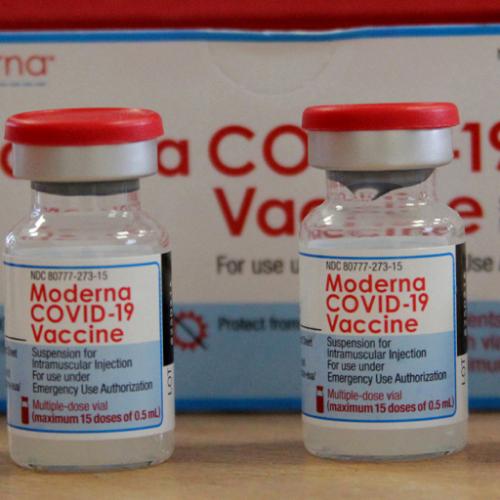
Not long after the rollout of coronavirus vaccines last year, women around the country began posting on social media about what they believed was a strange side effect: changes to their periods. Now, new research shows that many of the complaints were valid. A study of nearly 20,000 people around the world shows that getting vaccinated against covid can change the timing of the menstrual cycle. Vaccinated people experienced, on average, about a one-day delay in getting their periods, compared with those who hadn’t been vaccinated. The data for the study, published Tuesday in the British Medical Journal, was taken from a popular period-tracking app called Natural Cycles and included people from around the world, but most were from North America, Britain and Europe. The researchers used “de-identified” data from the app to compare menstrual cycles among 14,936 participants who were vaccinated and 4,686 who were not. The data showed that vaccinated people got their periods 0.71 days late, on average, after the first dose of vaccine. However, people who received two vaccinations within one menstrual cycle experienced greater disruptions. In this group, the average increase in cycle length was four days, and 13 percent experienced a delay of eight days or more. Many people on social media have complained of longer, heavier and more-painful periods after getting vaccinated. Preliminary findings from a different study suggest that getting a coronavirus vaccine sometimes may cause heavier periods.
Note: This news article states, "men who contract COVID-19 may experience a temporary reduction in fertility." Yet this Guardian article, titled "No data linking Covid vaccines to menstrual changes, US experts say" quotes an expert claiming, "I suspect the awful people who invented this lie saw the reports of menstrual irregularities post Covid-19 vaccine online and decided to warp it for their campaign of chaos. No, the Covid-19 vaccine is not capable of exerting reproductive control via proxy. Nothing is. This is because it is a vaccine, not a spell."
Obesity, depression, high blood pressure, asthma: These are just a few of the chronic health conditions that are now affecting almost 40 million Americans between the ages 18 and 34, new federal data shows. Overall, the 2019 data found that more than half of young adults (nearly 54%) now deal with at least one chronic health issue. Almost one in every four (22%) have two or more of these conditions, according to a team of researchers from the U.S. Centers for Disease Control and Prevention. “The most prevalent conditions were obesity (25.5%), depression (21.3%), and high blood pressure (10.7%),” said a team led by Kathleen Watson. High cholesterol levels affected about 10% of adults under 35, asthma affected over 9%, and about 6% had arthritis, the study found. Unhealthy lifestyles were often a part of the mix for people with chronic conditions. Young adults “with a chronic condition were more likely than those without one to report binge drinking, smoking or physical inactivity,” Watson’s team found. Certain factors seemed to raise a person’s odds for the leading chronic health condition, obesity. About one-third of young adults living in rural areas were obese, compared to about one-quarter of city dwellers. Black Americans were somewhat more likely to be dealing with obesity than whites — 33.7% versus 23.9%, respectively. Depression tended to affect young adult women (27%) more than men (about 16%) ... and depression rates were especially high among the unemployed (about 31%).
Note: For more along these lines, see concise summaries of deeply revealing news articles on health from reliable major media sources. Then explore the excellent, reliable resources provided in our Health Information Center.
Lockdowns had “little to no effect” on saving lives during the pandemic — and “should be rejected out of hand as a pandemic policy,” according to a controversial meta-analysis of dozens of studies. A group led by the head of Johns Hopkins Institute for Applied Economics analyzed studies from the first surge of the pandemic to investigate widely pushed claims that stringent restrictions would limit deaths. Instead, the meta-analysis concluded that lockdowns across the US and Europe had only “reduced COVID-19 mortality by 0.2% on average.” Worse, some of the studies even suggested that limiting gatherings in safe outdoor spots may have been “counterproductive and increased” the death rate, the authors noted in the non-peer-reviewed preprint. “While this meta-analysis concludes that lockdowns have had little to no public health effects, they have imposed enormous economic and social costs where they have been adopted,” the professors wrote in the journal Studies in Applied Economics. In fact, the early lockdowns “have had devastating effects,” the authors insisted. “They have contributed to reducing economic activity, raising unemployment, reducing schooling, causing political unrest, contributing to domestic violence, and undermining liberal democracy,” the damning report insisted. “Such a standard benefit-cost calculation leads to a strong conclusion: lockdowns should be rejected out of hand as a pandemic policy instrument,” the authors said of the “ill-founded” measures.
Note: For more along these lines, see concise summaries of deeply revealing news articles on government corruption and the coronavirus from reliable major media sources.
Massachusetts health officials on Tuesday reported ... 290 more deaths in people with breakthrough cases. In the last week, 27,530 new breakthrough cases - infections in people who have been vaccinated - were reported, with 555 more vaccinated people hospitalized over the period. It's a 40% drop in the rate of new breakthrough cases in Massachusetts - the previous week saw 46,092 new COVID infections in vaccinated people. On Tuesday ... there were 127 new deaths reported -- a statistic that includes three days because of the weekend -- bringing the death toll to 21,546. The seven-day average test positivity stands at 7.13%. In December, Massachusetts Department of Public Health officials released a study that found that 97% of breakthrough cases in the state did not become severely ill and rarely led to deaths, especially among young people. Massachusetts' COVID metrics, tracked on the Department of Public Health's interactive coronavirus dashboard, have been trending downward after spiking to heights not seen since previous surges, a peak thought to be driven at least in part by the omicron variant.
Note: As of Jan. 31, 2022, Massachusetts had a total of 21,546 COVID deaths as reported above. Their first COVID death was on Mar. 20, 2020. So over the 97 weeks since the start of the pandemic, they averaged 222 deaths a week. Yet in the last week of January 2022, this NBC article reports 290 breakthrough deaths. So the number of deaths among the vaccinated in that one week was greater than the average weekly number of deaths for the whole pandemic. Weren't these vaccines supposed to be 90% effective or more?
Santa Clara County health leaders announced a drop in its COVID-19 death toll by nearly a quarter after it refined its approach in reporting the data. The county reported that it had reviewed each COVID-19 fatality and was only counting those whose cause of death was from the virus and not those who tested positive for COVID-19 at the time of death but did not necessarily die from the virus. The new approach meant that the death toll dropped by 22%, specifically from 2,201 to 1,696 deaths. “It is important to go back and do this accounting to see if COVID was actually the cause of death,” said ... Infectious Disease expert Dr. Monica Gandhi. “I think that transparent communication is an upside, I mean, in the sense that it’s true that if we did this across the nation, it would bring our death rate lower. A downside of that, could be that people will say, ‘Well, it wasn’t as serious as you said.'” The refined approach in Santa Clara County comes as county officials try to figure out the true impact of the virus on the community. Last month, Alameda County health leaders refined their approach to reporting COVID-19 deaths as well and also registered a drop in that county’s death toll by about a quarter. “In the midst of everything COVID people were sort of putting down that cause of death as COVID,” Gandhi said. “It is important to go back and do this accounting to see if COVID was actually the cause of death.” Gandhi believes the Centers for Disease Control and Prevention may soon ask all counties to do the same.
Note: Read an informative article showing how COVID numbers have been inflated in many ways. For more along these lines, see concise summaries of deeply revealing news articles on the coronavirus from reliable major media sources.
One remarkable aspect of the Covid-19 pandemic has been how often unpopular scientific ideas, from the lab-leak theory to the efficacy of masks, were initially dismissed, even ridiculed, only to resurface later. Another reversal in thinking may be imminent. Some scientists have raised concerns that the safety risks of Covid-19 vaccines have been underestimated. But the politics of vaccination has relegated their concerns to the outskirts of scientific thinking. The Vaccine Adverse Event Reporting System, or Vaers ... is a database that allows Americans to document adverse events that occur after receiving a vaccine. Vaers data for Covid-19 vaccines shows an interesting pattern. Among the 310 million Covid-19 vaccines administered, several adverse events are reported at high rates in the days immediately following vaccination, then drop sharply thereafter. The silence around these potential signals of harm reflects the policy surrounding Covid-19 vaccines. The stigma of such concerns is bad for scientific integrity and could harm patients. Four serious adverse events follow this arc, according to data directly from Vaers: low platelet count (thrombocytopenia); non-infectious myocarditis or inflammation of the heart, especially in those under 30; deep vein thrombosis. The implication is that the risks of a Covid-19 vaccine may outweigh the benefits for some low-risk populations, such as children, young adults, and people who have recovered from Covid-19.
Note: This article is also available here. Read a revealing article on how the WHO is flip flopping on the safety of vaccines for children. For more along these lines, see concise summaries of deeply revealing news articles on coronavirus vaccines from reliable major media sources.
AstraZeneca may have included "outdated information" in touting the effectiveness of its COVID-19 vaccine in a U.S. study, federal health officials said Tuesday in an unusual public rift that could further erode confidence in the shot. In an extraordinary rebuke, just hours after AstraZeneca on Monday announced its vaccine worked well in the U.S. study, an independent panel that oversees the study scolded the company for cherry-picking data, according to a senior administration official. The panel wrote to AstraZeneca and U.S. health leaders that it was concerned the company chose to use data that was outdated and potentially misleading instead of the most recent and complete findings. The NIH's Dr. Anthony Fauci told ABC's "Good Morning America" that the incident "really is what you call an unforced error" and that he expects the discrepancy to be straightened out. But that nitty-gritty seldom is seen by the public, something now exposed by the extraordinary microscope being applied to development of the world's COVID-19 vaccines. The vaccine is used widely in Britain, across the European continent and in other countries, but its rollout was troubled by inconsistent study reports about its effectiveness, and then last week a scare about blood clots that had some countries temporarily pausing inoculations. Company executives refused repeated requests from reporters to provide a breakdown of the 141 COVID-19 cases it was using to make the case for the shot's effectiveness.
Note: For more along these lines, see concise summaries of deeply revealing news articles on coronavirus vaccines from reliable major media sources.
David Beasley, the executive director of the World Food Programme, knows the existence of his organization is both a blessing and a curse: it helps so many, but that means many are suffering. On Friday, that World Food Programme's fight against hunger ... was honored with the Nobel Peace Prize. "[COVID-19] comes on top of what you already thought was a worst-case scenario. It is literally horrific," Beasley told ABC News. At the beginning of this year, 135 million people already faced starvation from manmade conflict and climate extremes, Beasley said. Now, 270 million people are on the brink of starvation. "We've got a vaccine against starvation. It's called food," said Beasley. The award comes with the equivalent of a $1.1 million U.S. cash prize and a gold medal to be handed out at a ceremony in Oslo, Norway, on Dec. 10. "The economies of the world's strongest nations on Earth are struggling. We are not going to have the money we need next year. And not only are the resources going to go down, but the needs are going to be going up," said Beasley. Established in 1962, the United Nations World Food Programme is the world's largest humanitarian organization that delivers food assistance in emergencies and works with communities to improve nutrition and resilience, according to the website. The World Food Programme assisted 97 million people in 88 counties in 2019 alone.
Note: As of early October 2020, 1.5 million people had reportedly died from the virus, yet 135 million had been pushed to "the brink of starvation" not by the virus, but by the lockdown measures. Are the consequences of the lockdown policies worse than the consequences of the virus itself? For more along these lines, see concise summaries of deeply revealing news articles on the coronavirus from reliable major media sources.
More states and countries are coming to the conclusion that COVID-19 lockdowns like those in China and New Zealand are overly restrictive and too costly. People in democracies will simply not tolerate them. Sweden has "flattened the curve" of COVID-19 without ordering its citizens to stay inside. It has kept open its shops, schools for those under 16, and restaurants and bars. Its health authorities trusted its citizens to wash their hands and social distance without imposing laws. Anders Tegnell, the Swedish epidemiologist [said,] "We see no point in wearing a face mask." Swedish health authorities ... pride themselves on "following the science" and are highly respected. Sweden made a mistake ... when it, like the state of New York, sent recovering patients back to their nursing homes too soon (in the U.S., nursing home residents [and staff] account for ... 45% of COVID-19 fatalities). [Yet Swedish] schools stayed open with little risk to students. Studies from Sweden and the Netherlands ... have found teachers at no greater risk than the overall population. Sweden is approaching record lows while its European neighbors are seeing increasing rates. Sweden had about 30,000 new cases in June ... and was down to 7,000 new cases in August. During this time, cases took off in Spain, France and Germany. Sweden's current rate of positive tests is lower than those in Norway and Denmark. [Its] economy will contract by about 4.6%. In contrast, the European Union economy is expected to contract 11.9%. The U.S. economy contracted at a 32.9% annual rate between April and June. New Zealand's GDP contracted by 13.8% in the April-June period and has entered a recession, which Sweden has not.
Note: Explore a revealing article in the BMJ (formerly British Medical Journal) for more on Sweden's unusual success. Read a balanced, informative New York Times article written by a Swede about her experience there. For more along these lines, see concise summaries of deeply revealing news articles on the coronavirus from reliable major media sources.
As the new Coronavirus spreads illness, death, and catastrophe around the world, virtually no economic sector has been spared from harm. Yet amid the mayhem ... one industry is not only surviving, it is profiting handsomely. “Pharmaceutical companies view Covid-19 as a once-in-a-lifetime business opportunity,” said Gerald Posner, author of “Pharma: Greed, Lies, and the Poisoning of America.” The world needs ... treatments and vaccines and, in the U.S., tests. Dozens of companies are now vying to make them. The ability to make money off of pharmaceuticals is already uniquely large in the U.S., which lacks the basic price controls other countries have, giving drug companies more freedom over setting prices for their products than anywhere else in the world. During the current crisis, pharmaceutical makers may have even more leeway than usual because of language industry lobbyists inserted into an $8.3 billion coronavirus spending package, passed last week, to maximize their profits from the pandemic. Initially, some lawmakers had tried to ensure that the federal government would limit how much pharmaceutical companies could reap from vaccines and treatments for the new coronavirus that they developed with the use of public funding. But many Republicans opposed adding language to the bill that would restrict the industry’s ability to profit, arguing that it would stifle research and innovation. The final aid package not only omitted language that would have limited drug makers’ intellectual property rights, it specifically prohibited the federal government from taking any action if it has concerns that the treatments or vaccines developed with public funds are priced too high.
Note: For glaring examples of how big Pharma and select public officials made money hand over fist during previous virus scares, see concise summaries of deeply revealing news articles on the avian and swine flu from reliable major media sources.
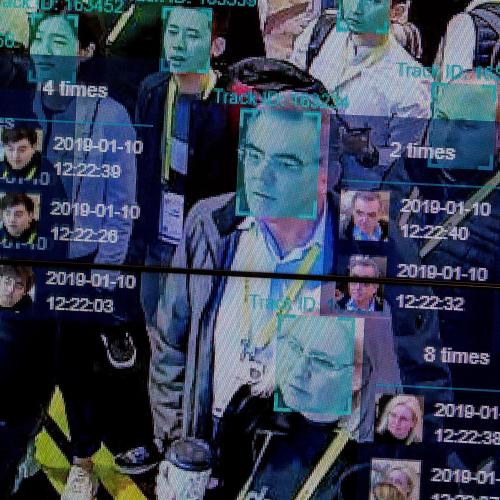
When the man from Hangzhou returned home from a business trip, the local police got in touch. They had tracked his car by his license plate in nearby Wenzhou, which has had a spate of coronavirus cases. Stay indoors for two weeks, they requested. After around 12 days, he was bored and went out early. This time, not only did the police contact him, so did his boss. He had been spotted ... by a camera with facial recognition technology, and the authorities had alerted his company as a warning. I was a bit shocked by the ability and efficiency of the mass surveillance network. They can basically trace our movements ... at any time and any place, said the man, who asked not to be identified for fear of repercussions. Chinese have long been aware that they are tracked by the world's most sophisticated system of electronic surveillance. The coronavirus emergency has brought some of that technology out of the shadows, providing the authorities with a justification for sweeping methods of high tech social control. Artificial intelligence and security camera companies boast that their systems can scan the streets for people with even low-grade fevers, recognize their faces even if they are wearing masks and report them to the authorities. If a coronavirus patient boards a train, the railway's "real name" system can provide a list of people sitting nearby. Mobile phone apps can tell users if they have been on a flight or a train with a known coronavirus carrier, and maps can show them ... where infected patients live.
Note: The New York Times strangely removed this article. Yet it is also available here. Is there something they don't want us to know? Read an excellent article showing how this virus scare is being used to test China's intense surveillance technologies in very disturbing ways. For more along these lines, see concise summaries of deeply revealing news articles on government corruption and the disappearance of privacy from reliable major media sources.
The flu vaccine turned out to be a big disappointment again. The vaccine didnt work against a flu bug that popped up halfway through the past flu season, dragging down overall effectiveness to 29%, the Centers for Disease Control and Prevention reported. The flu shot was working well early in the season with effectiveness put at 47% in February. But it was virtually worthless during a second wave driven by a tougher strain, at just 9%. There was no significant protection against that strain, said the CDCs Brendan Flannery. Flu vaccines are made each year to protect against three or four different kinds of flu virus. The ingredients are based on predictions of what strains will make people sick the following winter. This seasons shot turned out to be a mismatch against the bug that showed up late. That pushed down the overall effectiveness to one of the lowest in recent years. Since 2011, the only season with a lower estimate was the winter of 2014-2015, when effectiveness was 19%. A mismatch was also blamed then. Vaccines against some other infectious diseases are not considered successful unless they are at least 90% effective. But flu is particularly challenging, partly because the virus can so quickly change. Overall, flu vaccine has averaged around 40%. Flu shots are recommended for virtually all Americans age 6 months or older.
Note: This article was strangely removed from the website of ABC News. It is still available here. For more along these lines, see concise summaries of deeply revealing news articles on vaccines from reliable major media sources.
Glyphosate, an herbicide that remains the world’s most ubiquitous weed killer, raises the cancer risk of those exposed to it by 41%, a new analysis says. Researchers from the University of Washington evaluated existing studies into the chemical – found in weed killers including Monsanto’s popular Roundup – and concluded that it significantly increases the risk of non-Hodgkin lymphoma (NHL), a cancer of the immune system. “All of the meta-analyses conducted to date, including our own, consistently report the same key finding: exposure to GBHs (glyphosate-based herbicides) are associated with an increased risk of NHL,” the authors wrote in a study published in the journal Mutation Research. In 2015 ... the World Health Organization’s International Agency for Research on Cancer classified glyphosate as “probably carcinogenic to humans.” Moreover, the chemical has triggered multiple lawsuits from people who believe that exposure to the herbicide caused their non-Hodgkin’s lymphoma. In 2017 ... more than 800 people were suing Monsanto; by the following year, that figure was in the thousands. The authors of the University of Washington report analyzed all published studies on the impact of glyphosate on humans. Co-author ... Rachel Shaffer said: “This research provides the most up-to-date analysis of glyphosate and its link with Non-Hodgkin Lymphoma, incorporating a 2018 study of more than 54,000 people who work as licensed pesticide applicators.” The scientists also assessed studies on animals.
Note: Instead of relying on independent science, the EPA used industry studies to determine that glyphosate was safe. For more along these lines, see concise summaries of deeply revealing news articles on corporate corruption and health from reliable major media sources.
Important Note: Explore our full index to revealing excerpts of key major media news articles on several dozen engaging topics. And don't miss amazing excerpts from 20 of the most revealing news articles ever published.



