




















Health News Articles
Below are key excerpts of revealing news articles on health from reliable news media sources. If any link fails to function, a paywall blocks full access, or the article is no longer available, try these digital tools.
For further exploration, delve into our comprehensive Health and Food Corruption Information Center.

There are no magic bullets in the fight against cancer: that's the first thing every responsible scientist mentions when discussing a possible new treatment, no matter how promising. If there were a magic bullet, though, it might be something like dichloroacetate, or DCA, a drug that kills cancer cells by exploiting a fundamental weakness found in a wide range of solid tumors. So far, though, it kills them just in test tubes and in rats infected with human cancer cells; it has never been tested against cancer in living human beings. DCA ... is an existing drug whose side effects are well-studied and relatively tolerable. Also, it's a small molecule that might be able to cross the blood-brain barrier to reach otherwise intractable brain tumors. Within days after a technical paper on DCA appeared in the journal Cancer Cell last week, the lead author, Dr. Evangelos Michelakis of the University of Alberta, was deluged with calls and e-mails from prospective patientsto whom he can say only, Hang in there. DCA is a remarkably simple molecule. It acts in the body to promote the activity of the mitochondria. Researchers have assumed that the mitochondria in cancer cells were irreparably damaged. But Michelakis wondered if that was really true. With his colleagues he used DCA to turn back on the mitochondria in cancer cellswhich promptly died. One of the great things about DCA is that it's a simple compound, in the public domain, and could be produced for pennies a dose. But that's also a problem, because big drug companies are unlikely to spend a billion dollars or so on large-scale clinical trials for a compound they can't patent.
Note: Read a 2010 follow-up by Dr. Michelakis with promising results and watch a 10-minute video. Explore the DCA website. Why didn't other mass media report this major story? Why aren't many millions of dollars being poured into research? Notice even Newsweek acknowledges the drug companies are not interested in finding a cure for cancer if they can't make a profit from it. Some suspect the drug companies have even suppressed cancer cures found in the past. See one amazing example of this. For more, see these major media articles on potential cancer cures.
If you follow the news about health research, you risk whiplash. First garlic lowers bad cholesterol, then after more study it doesnt. Hormone replacement reduces the risk of heart disease in postmenopausal women, until a huge study finds that it doesn't. But what if wrong answers aren't the exception but the rule? More and more scholars who scrutinize health research are now making that claim. It isn't just an individual study here and there that's flawed, they charge. Instead, the very framework of medical investigation may be off-kilter, leading time and again to findings that are at best unproved and at worst dangerously wrong. The result is a system that leads patients and physicians astray spurring often costly regimens that won't help and may even harm you. Even a cursory glance at medical journals shows that once heralded studies keep falling by the wayside. A major study concluded theres no good evidence that statins (drugs like Lipitor and Crestor) help people with no history of heart disease. The study ... was based on an evaluation of 14 individual trials with 34,272 patients. Cost of statins: more than $20 billion per year. Positive drug trials, which find that a treatment is effective, and negative trials, in which a drug fails, take the same amount of time to conduct. But negative trials took an extra two to four years to be published. With billions of dollars on the line, companies are loath to declare a new drug ineffective. As a result of the lag in publishing negative studies, patients receive a treatment that is actually ineffective. From clinical trials of new drugs to cutting-edge genetics, biomedical research is riddled with incorrect findings.
Note: For the good of your health, the entire article at the link above is well worth reading. For lots more on how the profit-oriented health profession puts public health at risk, click here and here.
They're some of the most trusted voices in the defense of vaccine safety: the American Academy of Pediatrics, Every Child By Two, and pediatrician Dr. Paul Offit. But CBS News has found these three have something more in common - strong financial ties to the industry whose products they promote and defend. The vaccine industry gives millions to the Academy of Pediatrics for conferences, grants, medical education classes and even helped build their headquarters. The totals are kept secret, but public documents reveal bits and pieces. A $342,000 payment from Wyeth, maker of the pneumococcal vaccine - which makes $2 billion a year in sales. A $433,000 contribution from Merck, the same year the academy endorsed Merck's HPV vaccine - which made $1.5 billion a year in sales. Every Child By Two, a group that promotes early immunization for all children, admits the group takes money from the vaccine industry, too - but wouldn't tell us how much. Then there's Paul Offit, perhaps the most widely-quoted defender of vaccine safety. He's gone so far as to say babies can tolerate "10,000 vaccines at once." In fact, he's a vaccine industry insider. Offit holds a $1.5 million dollar research chair at Children's Hospital, funded by Merck. He holds the patent on an anti-diarrhea vaccine he developed with Merck. And future royalties for the vaccine were just sold for $182 million cash.
Note: An excellent report endorsed by many respected doctors and nurses reveals the serious risks of vaccines. Read an incisive list of questions regarding vaccines that are rarely raised by the media. The report accessible on this US government webpage states, "Since 1988, over 24,200 petitions have been filed with the VICP [Vaccine Injury Compensation Program] ... with 8,162 of those determined to be compensable. Total compensation paid over the life of the program is approximately $4.5 billion." Why isn't that huge price tag for vaccine injuries being talked about?
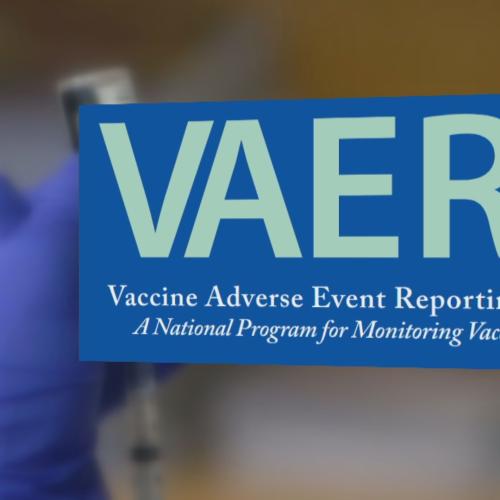
The Vaccine Adverse Event Reporting System (VAERS) ... collects reports of symptoms, diagnoses, hospital admissions, and deaths after vaccination. VAERS is supposed to be user friendly, responsive, and transparent. However, investigations by The BMJ have uncovered that it’s not meeting its own standards. Not only have staffing levels failed to keep pace with the unprecedented number of reports since the rollout of covid vaccines but there are signs that the system is overwhelmed. In the face of an unprecedented 1.7 million reports since the rollout of covid vaccines, VAERS’s staffing was likely not commensurate with the demands of reviewing the serious reports submitted, including reports of death. While other countries have acknowledged deaths that were “likely” or “probably” related to mRNA vaccination, the CDC—which says that it has reviewed nearly 20,000 preliminary reports of death using VAERS (far more than other countries)—has not acknowledged a single death linked to mRNA vaccines. In November 2022, React19, an advocacy group of some 30,000 people who have experienced prolonged illness after covid vaccination, reviewed 126 VAERS reports among its ranks. 22% had never been given a permanent VAERS ID number and 12% had disappeared from the system entirely. The BMJ has found that the FDA and CDC essentially maintain two separate VAERS databases: a public facing database, containing only initial reports; and a private, back end system containing all updates and corrections—such as a formal diagnosis, recovery, or death.
Note: Vaccine adverse event numbers on VAERS are made publically available here, and only capture a portion of the actual vaccine injuries. Albert Benavides is a VAERS researcher who recently wrote a comprehensive Substack piece investigating the corruption and dysfunction of the VAERS system, including how the VAERS system even deleted dead Pfizer Trial patients. Another excellent article explores these concerning implications from the perspective of cardiologists, physicians, and science researchers.
Goldman Sachs analysts attempted to address a touchy subject for biotech companies, especially those involved in the pioneering "gene therapy" treatment: cures could be bad for business in the long run. "Is curing patients a sustainable business model?" analysts ask in an April 10 report entitled "The Genome Revolution." "The potential to deliver 'one shot cures' is one of the most attractive aspects of gene therapy, genetically-engineered cell therapy and gene editing. However, such treatments offer a very different outlook with regard to recurring revenue versus chronic therapies," analyst Salveen Richter wrote in the note to clients. "While this proposition carries tremendous value for patients and society, it could represent a challenge for genome medicine developers looking for sustained cash flow." Richter cited Gilead Sciences' treatments for hepatitis C, which achieved cure rates of more than 90 percent. The company's U.S. sales for these hepatitis C treatments peaked at $12.5 billion in 2015, but have been falling ever since. "GILD is a case in point, where the success of its hepatitis C franchise has gradually exhausted the available pool of treatable patients," the analyst wrote. "In the case of infectious diseases such as hepatitis C, curing existing patients also decreases the number of carriers able to transmit the virus to new patients, thus the incident pool also declines. Where an incident pool remains stable (eg, in cancer) the potential for a cure poses less risk to the sustainability of a franchise."
Note: Many cancer treatments have been suppressed, sometimes in brutal ways, because the medical profession would lose the huge profits of traditional cancer treatments. Watch this video for undeniable evidence showing that this is the case. Read an excellent article on how the profiteering drug industry is crippling our children, possibly even intentionally. For more along these lines, see concise summaries of deeply revealing health news articles from reliable major media sources.
Children who get the annual flu vaccine, especially those who have asthma, may be more likely to be hospitalized than children who don't get the shot, a new study shows. "This may not be a reflection of the vaccine but that these patients are the sickest, and their doctors insist they get a vaccination," said study author Dr. Avni Y. Joshi, a fellow at the Mayo Clinic in Rochester, Minn. "Previous research has shown that the TIV does not provoke asthma attacks, but we've yet to see how effective it is in reducing hospitalization rates associated with the seasonal flu," Joshi said. "The flu shot may be safer in terms of triggering a wheezing episode, but we don't know how effective it is. We need more studies to assess the effectiveness of different kinds of vaccines. There could be something that has higher efficacy not only in preventing influenza illness, but also hospitalizations," she said. The authors looked back at 263 children aged 6 months to 18 years who had visited the Mayo Clinic between 1999 and 2006 with laboratory-confirmed influenza. Children -- including children who had asthma -- who received the annual inactivated flu vaccine were almost three times more likely to be hospitalized than those who were not inoculated.
Note: With hospitalization rates nearly three times that of children who did not get vaccinated, why are these doctors downplaying this study so much? Why the focus on asthma, when the study covered all children at the Mayo Clinic confirmed to have the flu? Why isn't anyone calling for more research on these striking results? For lots of articles raising serious questions about the safety of vaccines, click here.
Merck made a "hit list" of doctors who criticized Vioxx, according to testimony in a Vioxx class action case in Australia. According to The Australian, Merck emails from 1999 showed company execs complaining about doctors who disliked using Vioxx. The list, emailed between Merck employees, contained doctors' names with the labels "neutralise," "neutralised" or "discredit" next to them. One email said: We may need to seek them out and destroy them where they live. The plaintiffs' lawyer gave this assessment: "It gives you the dark side of the use of key opinion leaders and thought leaders. If (they) say things you don't like to hear, you have to neutralise them." The court was told that James Fries, professor of medicine at Stanford University, wrote to the then Merck head Ray Gilmartin in October 2000 to complain about the treatment of some of his researchers who had criticised the drug. "Even worse were allegations of Merck damage control by intimidation," he wrote. "This has happened to at least eight (clinical) investigators. I was mildly threatened myself, but I never have spoken or written on these issues." The allegations come on the heels of revelations that Merck created a fake medical journal -- the Australasian Journal of Bone and Joint Medicine -- in which to publish studies about Vioxx; had pop songs commissioned about Vioxx to inspire its staff, and paid ghostwriters to draft articles about the drug.
Note: FDA analysts estimated that Vioxx caused between 88,000 and 139,000 heart attacks, 30 to 40 percent of which were probably fatal, in the five years the drug was on the market. For more along these lines, see concise summaries of deeply revealing health corruption news articles from reliable major media sources.
Federal prosecutors in the U.S. will be reading with amusement the Australian press's coverage of a class action trial down under for patients who took Merck's now-withdrawn painkiller Vioxx. Details emerging in Oz make some of the antics that Merck's American counterparts got up to look tame by comparison. For example, in Australia, Merck allegedly: Had a doctor sign his name to an entirely ghostwritten journal article even though a Merck staffer had complained that the data within it was based on "wishful thinking;" created a fake "peer-reviewed" journal, the "Australasian Journal of Bone and Joint Medicine," in which to publicize pro-Vioxx articles; created a Ricky Martin-style pop song to get Merck sales reps all jazzed up about Vioxx; [and] hatched a Blackadder-style "cunning plan" to seed seminars with speakers who were sympathetic to Vioxx. Here's The Australian's description of the Merck PR team's over-the-top "handling" of reporters at ... a class action trial down under for patients who took Merck's now-withdrawn painkiller Vioxx: A hired crisis management team sits in court every day, under the guidance of Merck & Co's media spokeswoman flown out from the US, watching what journalists write, who they talk to and where they go in the court breaks. The team ... follow journalists out of court, ask them what they are writing, hand out daily press releases and send "background" emails they say should not be attributed to the company but which detail what they think are the "salient points" from the evidence presented in court. The team rings reporters first thing in the morning, accuses them of "cherry-picking" the evidence and bombards newspapers with letters to the editor arguing their case in detail based on the day's evidence - five were sent to The Australian in just seven days.
Note: FDA analysts estimated that Vioxx caused between 88,000 and 139,000 heart attacks, 30 to 40 percent of which were probably fatal, in the five years the drug was on the market. Read another CBS News article which shows how Merck literally created a hit list for doctors who opposed use of Vioxx. For more along these lines, see concise summaries of deeply revealing health corruption news articles from reliable major media sources.
An international drug company made a hit list of doctors who had to be "neutralised" or discredited because they criticised the anti-arthritis drug the pharmaceutical giant produced. Staff at US company Merck &Co emailed each other about the list of doctors - mainly researchers and academics - who had been negative about the drug Vioxx or Merck and a recommended course of action. The email, which came out in the Federal Court in Melbourne yesterday as part of a class action against the drug company, included the words "neutralise", "neutralised" or "discredit" against some of the doctors' names. It is also alleged the company used intimidation tactics against critical researchers, including dropping hints it would stop funding to institutions and claims it interfered with academic appointments. "We may need to seek them out and destroy them where they live," a Merck employee wrote, according to an email excerpt read to the court by Julian Burnside QC, acting for the plaintiff. Merck & Co and its Australian subsidiary, Merck, Sharpe and Dohme, are being sued for compensation by more than 1000 Australians, who claim they suffered heart attacks or strokes as a result of Vioxx. The drug was launched in 1999 and at its height of popularity was used by 80 million people worldwide because it did not cause stomach problems as did traditional anti-inflammatory drugs. It was voluntarily withdrawn from sale in 2004 after concerns were raised that it caused heart attacks and strokes and a clinical trial testing these potential side affects was aborted for safety reasons. Merck last year settled thousands of lawsuits in the US over the effects of Vioxx for $US 4.85 billion, but made no admission of guilt.
Note: For lots more on corporate corruption from reliable sources, click here.
We could make faster progress against cancer by changing the way drugs are developed. In the current system, if a promising compound cant be patented, it is highly unlikely ever to make it to market no matter how well it performs in the laboratory. The development of new cancer drugs is crippled as a result. The reason for this problem is that bringing a new drug to market is extremely expensive. In 2001, the estimated cost was $802 million; today it is approximately $1 billion. To ensure a healthy return on such staggering investments, drug companies seek to formulate new drugs in a way that guarantees watertight patents. In the meantime, cancer patients miss out on treatments that may be highly effective and less expensive to boot. In 2004, Johns Hopkins researchers discovered that an off-the-shelf compound called 3-bromopyruvate could arrest the growth of liver cancer in rats. The results were dramatic; moreover, the investigators estimated that the cost to treat patients would be around 70 cents per day. Yet, three years later, no major drug company has shown interest in developing this drug. The hormone melatonin, sold as an inexpensive food supplement in the United States, has repeatedly been shown to slow the growth of various cancers when used in conjunction with conventional treatments. Early this year, another readily available industrial chemical, dichloroacetate, was found by researchers at the University of Alberta to shrink tumors in laboratory animals by up to 75 percent. However ... dichloroacetate is not patentable, and the lead researcher is concerned that it may be difficult to find funding from private investors to test the chemical. Potential anticancer drugs should be judged on their scientific merit, not on their patentability.
Note: To explore several cancer cures which have shown dramatic potential, yet are not being studied for lack of funds due to inability to patent the process, click here. Why are these very promising treatments not being fast-tracked as the expensive AIDS drugs were? For a top MD's revealing comments on this, click here. And for why the media won't feature these promising cancer treatments in headlines, click here.
When Dr. Morando Soffritti ... saw the results of his team's seven-year study on aspartame, he knew he was about to be injected into a bitter controversy over this sweetener. Aspartame is sold under the brand names Nutra-Sweet and Equal and is found in such popular products as Diet Coke, Diet Pepsi, Diet Snapple and Sugar Free Kool-Aid. Hundreds of millions of people consume it worldwide. Dr. Soffritti ... oversees 180 scientists and researchers in 30 countries. Dr. Soffritti's study concluded that [aspartame] was associated with unusually high rates of lymphomas, leukemias and other cancers. The study ... involved 1,900 laboratory rats and cost $1 million. Soffritti said he was inspired to look at aspartame because of what he calls "inadequacies" in the cancer studies done by Searle in the 1970's. Others have also challenged Searle's studies. Years before the F.D.A. approved aspartame, the agency had serious concerns about the accuracy and credibility of Searle's aspartame studies. From 1977 to 1985 -- during much of the approval process -- Searle was headed by Donald H. Rumsfeld, who is now the secretary of defense. Searle was acquired by Monsanto in 1985. Dr. Soffritti said ... more research and open debate were needed on whether aspartame was a carcinogen. "It is very important to have scientists who are independent and not funded by industry looking at this."
Note: If you want to understand the influence of big money on your health, this article is well worth reading. And for an abundance of solid information on the dangers of aspartame, don't miss this webpage. Our Health Information Center has lots more. And for an excellent, incredibly eye-opening documentary on aspartame that will raise more questions about diet soft drinks, click here.
Where are the autistic Amish? In Lancaster County, heart of Pennsylvania Dutch country, there should be well over 100 with some form of the disorder. There is evidence of only three. Julia is one of them. She ... is adopted from China. She had most of her vaccines given to her in the United States. [Of the other, one definitely had a vaccine, and the other's vaccine status is unknown.] Thousands of children cared for by Homefirst Health Services in metropolitan Chicago have at least two things in common with thousands of Amish children in rural Lancaster: They have never been vaccinated. And they don't have autism. "We have about 30,000 or 35,000 children that we've taken care of over the years, and I don't think we have a single case of autism in children delivered by us who never received vaccines," said Dr. Mayer Eisenstein, Homefirst's medical director. Eisenstein, in fact, is author of the book "Don't Vaccinate Before You Educate!" Earlier this year Florida pediatrician Dr. Jeff Bradstreet said there is virtually no autism in home-schooling families who decline to vaccinate for religious reasons lending credence to Eisenstein's observations. "It's largely non-existent," said Bradstreet, who treats children with autism from around the country. Thimerosal, which is 49.6 percent ethyl mercury by weight, was phased out of most U.S. childhood immunizations beginning in 1999, but the CDC recommends flu shots for pregnant women and last year began recommending them for children 6 to 23 months old. Most of those shots contain thimerosal.
Note:This article was removed from the Times website. The link above uses archive.org. You can also find it on the UPI website. Page two is available here. If these links fail, click here. Watch an excellent video of Emmy award winning reporter Sharyl Attkisson exposing how the government fired an vaccine expert who found links to autism. Learn in this revealing article how a Washington Post article titled "Researchers find a hint of a link between flu vaccine and miscarriage" reveals that "hint" to be a 400% increase in miscarriages in women who had flu shots.
In June 2000, a group of top government scientists and health officials gathered for a meeting at the isolated Simpsonwood conference center ... to ensure complete secrecy. The federal officials and industry representatives had assembled to discuss a disturbing new study that raised alarming questions about the safety of a host of common childhood vaccines administered to infants and young children. A mercury-based preservative in the vaccines -- thimerosal -- appeared to be responsible for a dramatic increase in autism. But instead of taking immediate steps to alert the public and rid the vaccine supply of thimerosal, the officials and executives at Simpsonwood spent most of the next two days discussing how to cover up the damaging data. According to transcripts obtained under the Freedom of Information Act, many at the meeting were concerned about how the damaging revelations about thimerosal would affect the vaccine industry's bottom line. The CDC paid the Institute of Medicine to conduct a new study to whitewash the risks of thimerosal, ordering researchers to "rule out" the chemical's link to autism. Senate Majority Leader Bill Frist, who has received $873,000 in contributions from the pharmaceutical industry, has been working to immunize vaccine makers from liability in 4,200 lawsuits that have been filed by the parents of injured children. More than 500,000 kids currently suffer from autism. The disease was unknown until 1943, when it was identified and diagnosed among 11 children born in the months after thimerosal was first added to baby vaccines in 1931. Internal documents reveal that Eli Lilly, which first developed thimerosal, knew from the start that its product could cause damage -- and even death -- in both animals and humans.
Note: A good, though somewhat watered down version of the above article was published in the Boston Globe on July 1, 2005. To see this article on the Globe website, click here. For an excellent report endorsed by dozens of respected doctors and nurses on the serious risks and dangers of vaccines, click here. Watch an excellent video of Emmy award winning reporter Sharyl Attkisson exposing how the government fired an vaccine expert who found links to autism.
Marcia Angell [is] a faculty member at the Harvard Medical School [and one of the] former editors of The New England Journal of Medicine. Her new book, "The Truth About the Drug Companies," is a sober, clear-eyed attack on the excesses of drug company power. How does the drug industry deceive us? It plies attending physicians with expense-paid junkets to St. Croix and Key West, Fla., where they are given honoraria and consulting fees to listen to promotional presentations. It promotes new or little-known diseases such as "social anxiety disorder" and "premenstrual dysphoric disorder" as a way of selling the drugs that treat them. It sets up phony front groups disguised as "patient advocacy organizations." It hires ghostwriters to produce misleading scientific articles and then pays academic physicians to sign on as authors. It sends paid lackeys and shills out onto the academic lecture circuit to ''educate" doctors about a drug's unapproved uses. It hires multinational PR firms to trumpet dubious studies as scientific breakthroughs while burying the studies that are likely to harm sales. It buys up the results of publicly funded research. It maintains a political chokehold on the American public by donating more money to political campaigns than any other industry in the country. For many years the drug industry has reaped the highest profit margins of any industry in America. In 2002, the top 10 American drug companies had profit margins of 17 percent; Pfizer, the largest, had profit margins of 26 percent. So staggeringly profitable is the drug industry that in 2002 the combined profits for the top 10 drug companies in the Fortune 500 were greater than those of all the other 490 companies combined.
Note: For an excellent 10-page summary of this revealing book written by the esteemed author, click here. For additional reliable information on the health cover-up, click here.
A monkey virus found in early versions of a vaccine against polio may be linked to a common type of cancer, suggest scientists. Batches of polio vaccine tainted with "simian virus 40" (SV40) were given between 1955 and 1963. This was because monkey kidney cells were used in the [vaccine's] production process. It is [now] conceded that SV40 was present in the early vaccine - and the latest research, published in the Lancet journal, has linked it to non-Hodgkin's lymphoma. This is a cancer of the lymphatic system, which has a role in the body's fight against infection, and affects mainly the over 40s. The researchers looked at hundreds of tumours taken from various cancer patients, and compared them with 68 samples taken from non-Hodgkin's patients. They found genetic "footprints" of the virus in 43% of the non-Hodgkin's tumour cells.
Note: This information was uncovered years ago by Merck's top vaccine expert, Maurice Hilleman, who acknowledged that he unintentionally imported the AIDS virus to the US. See the shocking video of his testimony available here (text here). For lots of reliable information raising serious questions about the dangers of vaccines, click here and here.
Suicide rates for active-duty service members and veterans are rising, in part, experts say, because a culture of toughness and self-sufficiency may discourage service members in distress from getting the assistance they need. In some cases, the military services discharge those who seek help, an even worse outcome. More than 45,000 veterans and active-duty service members have killed themselves in the past six years. That is more than 20 deaths a day in other words, more suicides each year than the total American military deaths in Afghanistan and Iraq. The latest Pentagon figures show the suicide rate for active-duty troops across all service branches rose by over a third in five years, to 24.8 per 100,000 active-duty members in 2018. Those most at risk have been enlisted men under 30. The data for veterans is also alarming. In 2016, veterans were one and a half times more likely to kill themselves than people who hadnt served in the military, according to the House Committee on Oversight and Reform. Among those ages 18 to 34, the rate went up nearly 80 percent from 2005 to 2016. The risk nearly doubles in the first year after a veteran leaves active duty, experts say. The Pentagon this year also reported on military families, estimating that in 2017 there were 186 suicide deaths among military spouses and dependents. Military officials note that the suicide rates for service members and veterans are comparable to the general population after adjusting for the militarys demographics predominantly young and male.
Note: For more along these lines, see concise summaries of deeply revealing news articles on military corruption and health from reliable major media sources.
It's flu-shot season, and public health officials are urging everyone over 6 months of age to get one. For vaccine manufacturers, it's a bonanza: Influenza shots ... are a multibillion-dollar global business. But how good are they? Last month, in a step tantamount to heresy in the public health world, scientists at the Center for Infectious Disease Research and Policy at the University of Minnesota released a report saying that influenza vaccinations provide only modest protection for healthy young and middle-age adults, and little if any protection for those 65 and older. Moreover, the report's authors concluded, federal vaccination recommendations ... are based on inadequate evidence and poorly executed studies. Michael T. Osterholm, director of the Center for Infectious Disease Research and Policy [stated,] "It does not protect as promoted. It's all a sales job: it's all public relations." While researching the report ... the authors discovered a recurring error in influenza vaccine studies that led to an exaggeration of the vaccine's effectiveness. They also discovered 30 inaccuracies in the statement on influenza vaccines put forth by the expert panel that develops vaccine recommendations, all of which favor the vaccine. The new report from the Center for Infectious Disease Research and Policy is not the first to point out the shortcomings of influenza vaccines, however. The Cochrane Collaboration, an international network of experts that evaluates medical research, concluded in a 2010 review that the vaccines ... have minimal impact in seasons when vaccines and viruses are mismatched.
Note: A 2020 study on the annual flu vaccine in the Annals of Internal Medicine concluded that "no evidence indicated that vaccination reduced hospitalizations or mortality among elderly persons." For more along these lines, see concise summaries of deeply revealing news articles on vaccines from reliable major media sources.
Dr. Fiona Godlee, editor of the BMJ [British Medical Journal], specializes in the unexpected. [A marionette puppet on her desk is] dressed as a doctor, complete with a stethoscope around its neck. Its strings represent the hidden hand of the pharmaceutical industry. Godlee keeps it ... to remind her of the dark forces at work in science and medicine. And she is blunt about the results: "I think we have to call it what it is. It is the corruption of the scientific process." Hundreds of papers are being pulled from the scientific record, for falsified data, for plagiarism, and for a variety of other reasons that are often never explained. Sometimes it's an honest mistake. But it's estimated that 70 per cent of the retractions are based on some form of scientific misconduct. As the editor of one of the oldest and most influential medical journals, Godlee is leading several campaigns to change the way science is reported, including opening up data for other scientists to review, and digging up data from old and abandoned trials for a second look. She has strong words about the overuse of drugs, and the influence of industry on the types of questions that scientists ask, and the conclusions that are drawn from the evidence. "I do have a belief in the fundamentality of science to correct itself. We can't do that under the blanket of secrecy," she says. It matters, Godlee says, because bad science can be dangerous. "We do know that patients are harmed, and we know that the health systems are harmed as a result of poor science."
Note: Retraction Watch is fascinating reading for anyone interested in what goes on behind science's closed doors. Read also the revealing comments of Marcia Angell, former editor-in-chief of the New England Journal of Medicine, on the massive corruption she found in the health industry. For more along these lines, see concise summaries of deeply revealing science corruption news articles from reliable major media sources.
The International Federation of Health Plans, a group representing the C.E.O.s of health insurers worldwide, publishes a guide every few years on the international cost for common medical services. Its newest report, on 2017 prices, came out this month. Every time, the upshot is vivid and similar: For almost everything on the list, there is a large divergence between the United States and everyone else. Patients and insurance companies in the United States pay higher prices for medications, imaging tests, basic health visits and common operations. Those high prices make health care in the U.S. extremely expensive, and they also finance a robust and politically powerful health care industry, which means lowering prices will always be hard. For a typical angioplasty, a procedure that opens a blocked blood vessel to the heart, the average U.S. price is $32,200, compared with $6,400 in the Netherlands, or $7,400 in Switzerland, the survey finds. A typical M.R.I. scan costs $1,420 in the United States, but around $450 in Britain. An injection of Herceptin, an important breast cancer treatment, costs $211 in the United States, compared with $44 in South Africa. These examples aren’t outliers. Researchers at Harvard conducted an exhaustive study last year of things that make health systems in developed countries different from one another. The clear finding of those researchers was that it’s this huge gap in prices ... that helps explain why the United States is such an expensive place to be sick.
Note: For more along these lines, see concise summaries of deeply revealing news articles on health from reliable major media sources.
Sixty percent of US physicians serving as panel and task force members for the American Psychiatric Association’s official manual of psychiatric disorders received payments from industry totalling $14.24m, finds a study published by The BMJ. Because of the enormous influence of diagnostic and treatment guidelines, the researchers say their findings “raise questions about the editorial independence of this diagnostic manual.” Often referred to as the ‘bible’ of psychiatric disorders, the Diagnostic and Statistical Manual of Mental Disorders, fifth edition, text revision (DSM-5-TR) is the latest edition of the guide that doctors use to diagnose and treat patients. It is thus critical that authors of this psychiatric taxonomy should be free of industry ties. But until the development of Open Payments ... it wasn't possible to determine the amount of monies received by authors of diagnostic and clinical practice guidelines. Their analysis included 92 physicians based in the US who served as members of either a panel (86) or task force (6) on the DSM-5-TR from 2016-19. Of these 92 individuals, 55 (60%) received payments from industry. Collectively, these panel members received a total of $14.24m (£11.21m; €12.96m). The most common types of payment were for food and beverages (91%), followed by travel (69%) and consulting (69%). The greatest proportion of compensation by category of payment was for research funding (70%). To ensure unbiased, evidence based mental health practice, there should be a rebuttable presumption of prohibiting financial conflicts of interest among the panel and task force members.
Note: A recent study found that 80% of the global population will be treated for mental illness at some point in their lives, and that their lives are worse in many ways after receiving diagnosis and treatment. For more along these lines, see concise summaries of deeply revealing news articles on health and Big Pharma profiteering from reliable major media sources.
Important Note: Explore our full index to revealing excerpts of key major media news articles on several dozen engaging topics. And don't miss amazing excerpts from 20 of the most revealing news articles ever published.