























Income Inequality News Articles
Below are key excerpts of revealing news articles on income inequality from reliable news media sources. If any link fails to function, a paywall blocks full access, or the article is no longer available, try these digital tools.

Easy money pouring out of central banks is a key driver behind this surge in fortunes, and the resulting wealth inequality. In recent decades, as the global population of billionaires rose more than fivefold and the largest fortunes rocketed past $100 billion, I started tracking this wealth. Rising inequality was threatening to provoke popular backlashes against capitalism itself. The pandemic has reinforced this trend. As the virus spread, central banks injected $9 trillion into economies worldwide, aiming to keep growth alive. Much of that stimulus went into financial markets, and from there into the net worth of the ultra-rich. The total wealth of billionaires worldwide rose by $5 trillion to $13 trillion in 12 months, the most dramatic surge ever registered on the annual list compiled by Forbes magazine. The billionaire population boomed as well. On the 2021 Forbes list, which runs to April 6, their numbers rose nearly 700 to more than 2,700. The biggest surge came in China, which added 238 billionaires — one every 36 hours — for a total of 626. Next came the US, which added 110 for a total of 724. India added 38 for a total of 140, and has surpassed Russia for the third largest population of billionaires in the world. The fundamental driver of the market and thus the billionaire boom: easy money pouring out of central banks. Wealth inequality is likely to continue widening until the monetary spigots are turned off.
Note: If you can’t access this article on the FT website, go to this webpage. For more along these lines, see concise summaries of deeply revealing news articles on the coronavirus and income inequality from reliable major media sources.
Just as the Biden administration is pushing to raise taxes on corporations, a new study finds that at least 55 of America's largest firms paid no taxes last year on billions of dollars in profits. The sweeping tax bill passed in 2017 by a Republican Congress and signed into law by President Donald Trump reduced the corporate tax rate to 21% from 35%. But dozens of Fortune 500 companies were able to further shrink their tax bill – sometimes to zero – thanks to a range of legal deductions and exemptions that have become staples of the tax code. Salesforce, Archer-Daniels-Midland and Consolidated Edison were among those named in the report, which was done by the Institute on Taxation and Economic Policy. Twenty-six of the companies listed, including FedEx, Duke Energy and Nike, were able to avoid paying any federal income tax for the last three years even though they reported a combined income of $77 billion. Many also received millions of dollars in tax rebates. Publicly traded corporations are required to file financial reports. The institute used that data along with other information supplied by each company. The $2.2 trillion coronavirus relief act ... contained a provision that temporarily allowed businesses to use losses in 2020 to offset profits earned in previous years. Tax avoidance strategies include a mix of old standards and new innovations. Companies, for example, saved billions by allowing top executives to buy discounted stock options in the future and then deducting their value as a loss.
Note: For more along these lines, see concise summaries of deeply revealing news articles on corporate corruption from reliable major media sources.
The world economy is expected to contract by 5.2 percent this year - the worst recession in 80 years - but the sheer number of countries suffering economic losses means the scale of the downturn is worse than any recession in 150 years, the World Bank said in its latest Global Economic Prospects report. The depth of the crisis will drive 70 to 100 [million] people into extreme poverty - worse than the prior estimate of 60 million. Economists have been struggling to measure the impact of the crisis they have likened to a global natural disaster, but the sheer size of the impact across so many sectors and countries has made it hard to calculate, and made predictions about any recovery highly uncertain. Under the worst-case scenario, the global recession could mean a contraction of eight percent, according to the report. There remain some "exceptionally high" risks to the outlook, particularly if the current outbreaks linger or rebound, causing authorities to re-impose restrictions that could make the downturn as bad as eight percent. "Disruptions to activity would weaken businesses' ability to remain in operation and service their debt," the report cautioned. That, in turn, could raise interest rates for higher-risk borrowers and, "With debt levels already at historic highs, this could lead to cascading defaults and financial crises across many economies." But even if the 4.2 percent global recovery projected for 2021 materializes, "In many countries, deep recessions triggered by COVID-19 will likely weigh on potential output for years to come."
Note: What this article fails to mention is that it is not the pandemic that is driving all this, but rather the questionable lockdown policies developed to address the pandemic. Sweden, which has never instituted a lockdown, did not spiral out of control and has been less impacted economically. For more along these lines, see concise summaries of deeply revealing news articles on the coronavirus and income inequality from reliable major media sources.
The coronavirus pandemic has brought hunger to millions of people around the world. National lockdowns and social distancing measures are drying up work and incomes, and are likely to disrupt agricultural production and supply routes leaving millions to worry how they will get enough to eat. Already, 135 million people had been facing acute food shortages, but now with the pandemic, 130 million more could go hungry in 2020, said Arif Husain, chief economist at the World Food Program, a United Nations agency. Altogether, an estimated 265 million people could be pushed to the brink of starvation by years end. Weve never seen anything like this before, Mr. Husain said. It wasnt a pretty picture to begin with, but this makes it truly unprecedented and uncharted territory. This hunger crisis, experts say, is global and caused by a multitude of factors linked to the coronavirus pandemic and the ensuing interruption of the economic order: the sudden loss in income for countless millions who were already living hand-to-mouth; the collapse in oil prices; widespread shortages of hard currency from tourism drying up; overseas workers not having earnings to send home; and ongoing problems like climate change, violence ... and humanitarian disasters. The curfews and restrictions on movement are already devastating the meager incomes of displaced people. The effects of the restrictions may cause more suffering than the disease itself, said Kurt Tjossem ... at the International Rescue Committee.
Note: For more along these lines, see concise summaries of deeply revealing news articles on income inequality and the coronavirus pandemic from reliable major media sources.
This month, ProPublica revealed that American billionaires essentially do not pay taxes, and within hours the White House had awkwardly promised no fewer than four federal investigations into the identity of the individual who had alerted the news organization to this fact. By Thursday, a North Carolina congressman was demanding the FBI director explain why he hadn’t made any arrests or at the very least, “executed any search warrants or raided any offices” in the international manhunt for the leaker. ProPublica carefully chose the six billionaires whose tax returns it chose to single out for specific scrutiny. But ProPublica seems to have deliberately underthrown. After breathlessly informing readers they possessed a “trove” of 15 years’ worth of tax returns on literally “thousands” of the world’s richest people, the story’s three authors proceeded to weave a few juicy and non-contextualized facts into a narrative that felt like a protracted sidebar to the “real” story. We learned that the 25 richest billionaires in America added $401bn to their net worths between 2014 and 2018 and paid about 3% of that amount in taxes, but we didn’t learn much about any specific billionaire’s tax avoidance strategies. Fifteen years of tax return information on thousands of American plutocrats is, to be sure, one of the biggest stories of the decade. It’s just not clear ProPublica has that much appetite for sticking with the story.
Note: In the US, former tax lobbyists often write the rules on tax dodging. For more along these lines, see concise summaries of deeply revealing news articles on government corruption and income inequality from reliable major media sources.
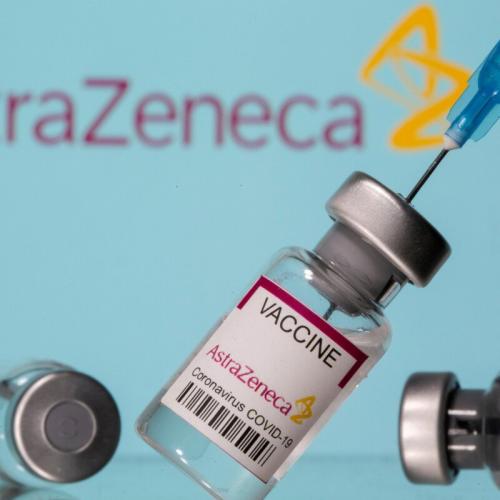
For years, the Gates Foundation has been steered by an unusually small board of trustees, made up of Bill, his estranged wife, Melinda, and the billionaire investor Warren Buffett. The larger the foundation became, the less anyone seemed willing to ask tough questions about its secretive management structure or its penchant for giving money to lucrative pharmaceutical and credit card companies such as Mastercard, despite the fact that giving away billions to wealthy corporations set an unusual and troubling precedent in the philanthropic sector. Billionaires who make their fortunes through corporate practices that undercut workers and deepen inequality — like corporate tax avoidance, insufficient sick pay and the immoral gap in pay between executives and low-paid workers — are not the solution to problems they generate. Asking Bill Gates to fix inequality is like asking an arsonist to hose down your house after he just set it on fire. In April last year, the University of Oxford was reportedly considering offering a Covid-19 vaccine developed by its scientists on a nonexclusive basis. But then, Kaiser Health News reported, “Oxford — urged on by the Bill & Melinda Gates Foundation — reversed course. It signed an exclusive vaccine deal with AstraZeneca that gave the pharmaceutical giant sole rights and no guarantee of low prices.” This dealmaking .. seemed to conflict with the Gates Foundation’s stated mission to improve global access to medicines, but it’s not surprising.
Note: Read more about the Gates Foundation's startling degree of media influence during the pandemic. For more along these lines, see concise summaries of deeply revealing news articles on corporate corruption and the coronavirus vaccine from reliable major media sources.
One in two people worldwide saw their earnings drop due to the coronavirus, with people in low-income countries hit particularly hard by job losses or cuts to their working hours, new research shows. US-based polling company Gallup, which surveyed 300,000 people across 117 countries, found that half of those with jobs earned less because of the disruption caused by the Covid-19 pandemic. This translated to 1.6 billion adults globally, it said. “Worldwide, these percentages ranged from a high of 76 per cent in Thailand to a low of 10 per cent in Switzerland,” said researchers in a statement. In Bolivia, Myanmar, Kenya, Uganda, Indonesia, Honduras and Ecuador, more than 70 per cent of people polled said they took home less than before the global health crisis. In the United States, this figure dropped to 34 per cent. The Covid-19 crisis has affected workers across the world – particularly women. International charity Oxfam said ... that according to its own research, the pandemic had cost women around the world $800bn (£578bn) in lost income. The poll also showed that one in three people surveyed had lost their job or business due to the pandemic – translating to just over 1 billion people globally. These figures also varied across nations, with more than 60 per cent of respondents in lower-income countries such as the Philippines, Kenya and Zimbabwe having lost their jobs or businesses, compared to 3 per cent in Switzerland and 13 per cent in the United States.
Note: This article fails to mention that these were consequences not of the virus, but of the lockdowns. For more along these lines, see concise summaries of deeply revealing news articles on the coronavirus from reliable major media sources.
Research Medical's owner, HCA Healthcare Inc., is a profitable, publicly traded network of 185 hospitals. Even in the year of Covid-19, 2020, the company generated $51.5 billion in revenue and increased its pretax earnings by 3.6 percent. That performance helped boost the total compensation HCA's chief executive, Samuel N. Hazen, received last year to $30.4 million, a 13 percent rise from 2019. The total worth of his compensation package equaled 556 times the compensation received by the median employee at HCA — $54,651. The figures highlight the growing CEO pay gap, a problem among many public companies according to some investors and workers and even a few CEOs. In 2019, for example, the average pay ratio among 350 large American companies was 320-to-1, according to research by the Economic Policy Institute. In 1989, the average was 61-to-1. Because [Jamelle] Brown, [an] emergency department worker, makes even less than the median, Hazen got roughly 1,000 times Brown's pay. Brown says he lives with his sister because he doesn't earn enough from his job at Research Medical to pay for his own apartment. HCA isn't alone in paying its chief executive vastly more than what rank-and-file workers earn. Acuity Brands, an industrial technology company, paid its CEO, Neil M. Ashe, $21 million last year, or 2,316 times the median employee's pay. Starbucks ... paid its CEO, Kevin Johnson, $14.7 million last year. That was 1,211 times the pay of its median employee.
Note: For more along these lines, see concise summaries of deeply revealing news articles on income inequality from reliable major media sources.
The pandemic has worsened income inequality, with the world's richest people regaining their losses from COVID-19 shutdowns in nine months while the number of people living in poverty has doubled to more than 500 million, according to a new report from the anti-poverty group Oxfam. Almost 9% of total working hours were lost last year when compared with the levels of employment at the end of 2019, before the pandemic shuttered the economy, according to a separate report from the International Labour Organization (ILO), a United Nations agency. That's the equivalent of 255 million full-time jobs lost across the globe, or about four times greater than the impact from the Great Recession of 2009. The world's poorest could take a decade to regain their financial footing. Oxfam describes the pandemic's impact as "the greatest rise in inequality since records began." The International Labour Organization said the crisis has been the most severe on work since the Great Depression in the 1930s. "Its impact is far greater than that of the global financial crisis of 2009," said ILO Director-General Guy Ryder. America's richest people have seen their wealth soar during the pandemic by more than $1 trillion, thanks to a booming stock market and a K-shaped recovery that has benefited the rich, while poorer people have struggled with lost wages and jobs and future opportunities. It's a rich vs. poor phenomenon that is replicating across the globe.
Note: The media continue to blame the pandemic for these dire consequences when it is clearly not the virus, but the lockdown policies that are the main reason for this huge increase in poverty and income inequality. For more along these lines, see concise summaries of deeply revealing news articles on the coronavirus and income inequality from reliable major media sources.
When I called up Chuck Collins on Tuesday afternoon, I found him glued to one of the grimmest new metrics documenting America’s economic and social unraveling. Collins is a scholar of inequality at the Institute for Policy Studies, a progressive think tank, and since March he has been tracking how the collective wealth of American billionaires has been affected by the coronavirus pandemic. In previous recessions, Collins said, billionaires were hit along with the rest of us; it took almost three years for Forbes’s 400 richest people to recover losses incurred in 2008’s Great Recession. But in the coronavirus recession of 2020, most billionaires have not lost their shirts. Instead, they’ve put on bejeweled overcoats and gloves made of spun gold — that is, they’ve gotten richer than ever before. On Tuesday, as the stock market soared to a record, Collins was watching the billionaires cross a depressing threshold: $1 trillion. That is the amount of new wealth American billionaires have amassed since March, at the start of the devastating lockdowns that state and local governments imposed to curb the pandemic. On March 18, according to a report Collins and his colleagues published last week, America’s 614 billionaires were worth a combined $2.95 trillion. When the markets closed on Tuesday, there were 650 billionaires and their combined wealth was now close to $4 trillion. In the worst economic crisis since the 1930s, American billionaires’ wealth grew by a third.
Note: For more along these lines, see concise summaries of deeply revealing news articles on income inequality and the coronavirus from reliable major media sources.
At least 43,000 American millionaires who are too rich to get coronavirus stimulus checks are getting a far bigger boost averaging $1.6 million each, according to a congressional committee. The Coronavirus Aid, Relief, and Economic Security (CARES) Act trumpeted its assistance for working families and small businesses, but it apparently contains an even bigger benefit for wealthy business owners, the committee found. The act allows pass-through businesses ones taxed under individual income, rather than corporate an unlimited amount of deductions against their non-business income, such as capital gains. They can also use losses to avoid paying taxes in other years. That gives the roughly 43,000 individual tax filers who make at least $1 million a year a savings of $70.3 billion or about $1.6 million apiece, according to the Joint Committee on Taxation. Hedge-fund investors and real estate business owners are far and away the ones who will benefit the most, tax expert Steve Rosenthal [said]. Rep. Lloyd Doggett (D-Texas) claimed that someone wrongly seized on this health emergency to reward ultrarich beneficiaries. For those earning $1 million annually, a tax break buried in the recent coronavirus relief legislation is so generous that its total cost is more than total new funding for all hospitals in America and more than the total provided to all state and local governments, he stressed in a statement.
Note: For more along these lines, see concise summaries of deeply revealing news articles on government corruption and the coronavirus pandemic from reliable major media sources.
Taxpayers in rural, poor parts of the U.S. are more likely be audited by the Internal Revenue Service than those living in wealthier counties, according to a new analysis. The county where residents are most likely to face an audit: tiny Humphreys County, Mississippi, where the median household income is less than $24,000 a year, or less than half the income of a typical U.S. family. The higher audit rates in poor regions comes down to an IRS policy of scrutinizing taxpayers who claim the Earned Income Tax Credit, or EITC, a refundable tax credit aimed at low- and moderate-income Americans. Counties with higher-than-average audit rates tend to be located in the South, the northern Plains, Mountain and Western states. The upper Midwest, Mid-Atlantic and New England states have lower audit rates. Many of the counties with the highest IRS audit rates have larger minority populations. That includes Humphreys, where 3 of every 4 residents is black. By comparison ... Denali, Alaska, with the lowest audit rate of all U.S. counties, is 84 percent white and has a median household income of more than $83,000. Audit rates for millionaires have declined by half since 2010. Corporate audits are also on the wane. But the audit rates for people who claim the EITC hasn't fallen as sharply as for the rich and corporations, ProPublica reported in December. That means a typical EITC claimant, who earns less than $20,000 per year, is more likely to face an audit than a millionaire.
Note: For more along these lines, see concise summaries of deeply revealing news articles on government corruption and income inequality from reliable major media sources.
If economic inequality increases within a country, the risk of civil war breaking out grows. This is the finding from a study by the Chair of Economic History at the University of Tübingen. The study has been published in the Review of Income and Wealth. The calculations revealed a statistically significant connection between unequal distribution of income and the outbreak of civil wars. The results can be verified using historical events: for example, land was extremely unequally distributed in Russia before the October revolution of 1917—and this critically contributed to the outbreak of revolution and civil war, a marker that was also identified by the new benchmark with a correspondingly high probability. The new benchmark also makes it possible to predict the risk of civil war today: "In the U.S. the inequality in income distribution has risen sharply in the past 30 years. Accordingly, the risk of a civil war in the U.S. has risen drastically from 10% to 21%," says Baten. In Great Britain, China, India and Russia too, inequality has risen greatly in the same period. "We've checked what influence other variables had on the outbreak of civil wars," says Laura Radatz, co-author of the study. "For instance, the size of a country and its population naturally increase the probability that a civil war will break out somewhere in this country." The amount of economic growth in a country does not measurably influence the risk of a civil war, according to the study.
Note: For more along these lines, read our concise summaries of news articles on financial inequality.
Lawmakers are facing a deadline to reauthorize the federal program providing insurance to homeowners when private insurers abandon their climate-battered locales. The 56-year-old program holds nearly five million policies and more than $22 billion in liabilities. It was envisioned as a stopgap measure for the working class — but the wealthy are now exploiting the program at the expense of low-income homeowners. That includes Trump’s Mar-a-Lago estate. A 2020 study ... found that the program “provides a substantial subsidy to upper-income groups.” How? By charging lower-income households higher premiums than high-income households — even though the latter’s properties are generating far higher loss ratios. The study found that “almost all of the excess (flood) losses are in the highest income segments” because “insufficient premium is collected from the higher income groups.” In other words, “Buyers that can most afford the premium are not paying their proper rate.” Facing the program’s March 14 expiration, lawmakers have been trying again to greenlight it with few reforms. But Sen. Rand Paul (R-Ky.) recently gummed up the works with amendments barring the program from insuring second homes and placing a cap on eligible home values. “Is there some level of rich person’s mansion that maybe the average ordinary taxpayer should not have to subsidize their insurance?” Paul asked.
Note: For more along these lines, read our concise summaries of news articles on financial inequality.
More Americans are going hungry now than at any point during the deadly coronavirus pandemic, according to a Post analysis of new federal data — a problem created by an economic downturn that has tightened its grip on millions of Americans and compounded by government relief programs that expired or will terminate at the end of the year. Experts say it is likely that there’s more hunger in the United States today than at any point since 1998, when the Census Bureau began collecting comparable data about households’ ability to get enough food. One in 8 Americans reported they sometimes or often didn’t have enough food to eat in the past week, hitting nearly 26 million American adults, an increase several times greater than the most comparable pre-pandemic figure. That number climbed to more than 1 in 6 adults in households with children. Nowhere has there been a hunger surge worse than in Houston, with a metro-area population of 7 million people. More than 1 in 5 adults in Houston reported going hungry recently, including 3 in 10 adults in households with children. The growth in hunger rates has hit Hispanic and Black households harder than White ones, a devastating consequence of a weak economy that has left so many people trying to secure food even during dangerous conditions. Yet the hunger crisis seems to have escaped widespread notice in a nation where millions of households have weathered the pandemic relatively untouched.
Note: Meanwhile, as the Washington Post reported on Jan. 1, 2021, "billionaires as a class have added about $1 trillion to their total net worth since the pandemic began." For more along these lines, see concise summaries of deeply revealing news articles on the coronavirus and income inequality from reliable major media sources.
Billionaires have seen their fortunes hit record highs during the pandemic, with top executives from technology and industry earning the most. The world's richest saw their wealth climb 27.5% to $10.2trn (7.9trn) from April to July this year, according to a report from Swiss bank UBS. That was up from the previous peak of $8.9trn at the end of 2017 and largely due to rising global share prices. UBS said billionaires had done "extremely well" in the Covid crisis. It also said the number of billionaires had hit a new high of 2,189, up from 2,158 in 2017. It comes as a World Bank report on Wednesday showed extreme poverty is set to rise this year for the first time in more than two decades due to the pandemic. Among the billionaires, the biggest winners this year have been industrialists, whose wealth rose a staggering 44% in the three months to July. "Industrials benefited disproportionately as markets priced in a significant economic recovery [after lockdowns around the world]," UBS said. Tech billionaires have also had a good pandemic, seeing their wealth soar 41%. UBS said this was "due to the corona-induced demand for their goods and services" and social distancing accelerating "digital businesses [and] compressing several years' evolution into a few months". Healthcare billionaires also benefited as the crisis put drug makers and medical device companies in the spotlight.
Note: For more along these lines, see concise summaries of deeply revealing news articles on the coronavirus and income inequality from reliable major media sources.
Disruption to food production and supplies due to COVID-19 could cause more deaths from starvation than the disease itself, according to an Oxfam report. The report found that 121 million more people could be pushed to the brink of starvation this year as a result of disruption to food production and supplies, diminishing aid as well as mass unemployment. The report estimates that COVID-19 related hunger could cause 12,000 deaths per day: the peak global mortality rate for COVID-19 in April was 10,000 deaths per day. COVID-19 is the last straw for millions of people already struggling with the impacts of conflict, climate change, inequality and a broken food system that has impoverished millions of food producers and workers, said Oxfams Interim Executive Director Chema Vera. Oxfam says Yemen, Democratic Republic of Congo (DRC), Afghanistan, Venezuela, the West African Sahel, Ethiopia, Sudan, South Sudan, Syria, and Haiti are extreme hunger hotspots that are likely to be severely affected by the pandemic. Women, who also make up a significant portion of informal workers, are more likely to have been severely affected by lockdown measures. The report notes that there are enough funds globally to address starvation. Eight out of ten of the biggest food and drink companies paid more than $18 billion to shareholders since the beginning of this year, an amount that is ten times more than the UN says is needed to stop people going hungry, according to the report.
Note: For more along these lines, see concise summaries of deeply revealing news articles on the coronavirus and income inequality from reliable major media sources.
The gap between the haves and have-nots in the United States grew last year to its highest level in more than 50 years. Income inequality in the United States expanded from 2017 to 2018, with several heartland states among the leaders of the increase, even though several wealthy coastal states still had the most inequality overall, according to figures released Thursday by the U.S. Census Bureau. The nation's Gini Index, which measures income inequality, has been rising steadily over the past five decades. The Gini Index grew from 0.482 in 2017 to 0.485 last year, according to the bureau's 1-year American Community Survey data. The Gini Index is on a scale of 0 to 1; a score of "0" indicates perfect equality, while a score of "1" indicates perfect inequality, where one household has all the income. The inequality expansion last year took place at the same time median household income nationwide increased to almost $62,000 last year, the highest ever measured by the American Community Survey. But the 0.8% income increase from 2017 to 2018 was much smaller compared to increases in the previous three years, according to the bureau. Even though household income increased, it was distributed unevenly, with the wealthiest helped out possibly by a tax cut passed by Congress in 2017, said Hector Sandoval, an economist at the University of Florida.
Note: For more along these lines, see concise summaries of deeply revealing news articles on income inequality from reliable major media sources.
CEOs at the 350 largest U.S. companies received 312 times as much in compensation as typical employees in 2017, according to a study released Thursday. The average chief executive received $18.9 million last year, a 17.6 percent increase from 2016, as the wages of a typical worker rose just 0.3 percent, according to research by the Economic Policy Institute, a Washington-based think tank. The highest CEO-to-worker pay ratio ever recorded is 344-to-1, in 2000. In 1965, it was 20-to-1. In 1989, it was 58-to-1. "CEO compensation has grown far faster than stock prices or corporate profits," EPI said in an online summary of the findings. "CEO compensation rose by 979 percent [based on stock options granted] or 1,070 percent [based on stock options realized] between 1978 and 2017. ... Higher CEO pay does not reflect correspondingly higher output or better firm performance. Exorbitant CEO pay therefore means that the fruits of economic growth are not going to ordinary workers."
Note: For more along these lines, see concise summaries of deeply revealing income inequality news articles from reliable major media sources.
This is the first year that businesses are required to disclose the ratio of CEO pay to median worker pay in their annual proxies, due to a provision of the Dodd-Frank financial reforms passed during the Obama administration. The AFL-CIO's annual Executive PayWatch database, released Tuesday, compiled that data and shows that in many cases, the pay for top executives is hundreds or even thousands of times that of the median worker at their companies. The largest pay gap for proxies released so far in 2018 ... belongs to Mattel (MAT), according to the AFL-CIO. But companies will continue to release their pay ratios in SEC filings in coming months, so any superlatives are subject to change. The AFL-CIO said it will keep updating its database as the relevant documents are filed. Mattel CEO Margo Georgiadis was awarded almost $31.3 million in 2017. Meanwhile, the median worker at the company, earned $6,271. The ratio? 4,987 to 1. Mattel is followed by McDonald's (MCD), where CEO Steve Easterbrook, who earned nearly $21.8 million last year, made 3,101 times as much as the company's median employee. The newly available pay ratios also highlight exactly how much standard workers earn. Amazon disclosed that the median pay for its employees was just $28,446 in 2017.
Note: For more along these lines, see concise summaries of deeply revealing income inequality news articles from reliable major media sources.
Important Note: Explore our full index to revealing excerpts of key major media news articles on several dozen engaging topics. And don't miss amazing excerpts from 20 of the most revealing news articles ever published.