



































Privacy News Articles
Below are key excerpts of revealing news articles on privacy and mass surveillance issues from reliable news media sources. If any link fails to function, a paywall blocks full access, or the article is no longer available, try these digital tools.

Bill Gates ... just called for a complete and utter shutdown and quarantining of the entire American nation. Despite urging from public health experts, Gates wrote in a Washington Post opinion piece, some states and counties havent shut down completely. This is a recipe for disaster. Because people can travel freely across state lines, so can the virus. The countrys leaders need to be clear: Shutdown anywhere means shutdown everywhere. Until the case numbers start to go down ... no one can continue business as usual or relax the shutdown. He then added that the impacts of the new coronavirus could linger another 18 months or so, until a vaccine was developed. For the peons of America, work isnt an option. Its food. Its survival. The fate of a hard-earned dream shouldnt rest with a globalist billionaire whos warning of dire coronavirus consequences to come all the while making hands-over-fist coronavirus money. Its a conflict of interest. WHO didnt announce the coronavirus as a pandemic until the very day after Gates ... made a very large donation to a cause that benefits WHO. In a 2017 piece titled, Meet the worlds most powerful doctor: Bill Gates, Politico wrote: Some billionaires are satisfied with buying themselves an island. Bill Gates got a United Nations health agency. Over the past decade, the worlds richest man has become the World Health Organizations second-biggest donor, second only to the United States. This largesse gives him outsized influence over its agenda. The result, say his critics, is that Gates priorities have become the WHOs.
Very Important Note: To understand how the coronavirus is being used to exert more control over humanity, don't miss this incredibly important video focused on how Bill Gates is using fear around the coronavirus to push through his agenda to vaccinate everyone on the planet and then require a "digital certificate" to ensure they've been vaccinated. For other reliable, verifiable informing demonstrating how Gates' vaccine agenda has already harmed hundreds of thousands of children read this excellent article by Robert F. Kennedy, Jr.
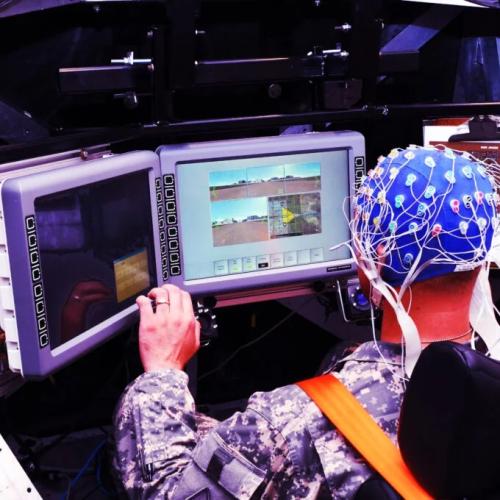
Private thoughts may not be private for much longer, heralding a nightmarish world where political views, thoughts, stray obsessions and feelings could be interrogated and punished all thanks to advances in neurotechnology. In a new book, The Battle for Your Brain, Duke University bioscience professor Nita Farahany argues that such intrusions into the human mind by technology are so close that a public discussion is long overdue and lawmakers should immediately establish brain protections as it would for any other area of personal liberty. Farahany, who served on Barack Obama’s commission for the study of bioethical issues, believes that advances in neurotechnology mean that intrusions through the door of brain privacy, whether by way of military programs or by way of well-funded research labs at big tech companies, are at hand via brain-to-computer innovations like wearable tech. “All of the major tech companies have massive investments in multifunctional devices that have brain sensors in them,” Farahany said. “Neural sensors will become part of our everyday technology and a part of how we interact with that technology.” François du Cluzel, a project manager at Nato Act Innovation Hub, issued a report in November 2020 entitled Cognitive Warfare that, it said, “is not limited to the military or institutional world. Since the early 1990s, this capability has tended to be applied to the political, economic, cultural and societal fields.”
Note: Read more about these troubling developments. For more along these lines, see concise summaries of deeply revealing news articles on the disappearance of privacy from reliable major media sources.
The precise locations of the U.S. government’s high-tech surveillance towers along the U.S-Mexico border are being made public for the first time as part of a mapping project by the Electronic Frontier Foundation. While the Department of Homeland Security’s investment of more than a billion dollars into a so-called virtual wall between the U.S. and Mexico is a matter of public record, the government does not disclose where these towers are located, despite privacy concerns of residents of both countries — and the fact that individual towers are plainly visible to observers. The surveillance tower map is the result of a year’s work steered by EFF Director of Investigations Dave Maass. As border surveillance towers have multiplied across the southern border, so too have they become increasingly sophisticated, packing a panoply of powerful cameras, microphones, lasers, radar antennae, and other sensors. Companies like Anduril and Google have reaped major government paydays by promising to automate the border-watching process with migrant-detecting artificial intelligence. Opponents of these modern towers, bristling with always-watching sensors, argue the increasing computerization of border security will lead inevitably to the dehumanization of an already thoroughly dehumanizing undertaking. Nobody can say for certain how many people have died attempting to cross the U.S.-Mexico border in the recent age of militarization and surveillance. Researchers estimate that the minimum is at least 10,000 dead.
Note: As the article states, the Department of Homeland Security was "the largest reorganization of the federal government since the creation of the CIA and the Defense Department," and has resulted in U.S. taxpayers funding corrupt agendas that have led to massive human rights abuses. For more along these lines, see concise summaries of deeply revealing news articles on government corruption and the disappearance of privacy from reliable major media sources.
The Biden administration took a public stand last year against the abuse of spyware to target human rights activists, dissidents and journalists: It blacklisted the most notorious maker of the hacking tools, the Israeli firm NSO Group. But the global industry for commercial spyware — which allows governments to invade mobile phones and vacuum up data — continues to boom. Even the U.S. government is using it. The Drug Enforcement Administration is secretly deploying spyware from a different Israeli firm, according to five people familiar with the agency’s operations, in the first confirmed use of commercial spyware by the federal government. The most sophisticated spyware tools — like NSO’s Pegasus — have “zero-click” technology, meaning they can stealthily and remotely extract everything from a target’s mobile phone, without the user having to click on a malicious link to give Pegasus remote access. They can also turn the mobile phone into a tracking and secret recording device, allowing the phone to spy on its owner. But hacking tools without zero-click capability, which are considerably cheaper, also have a significant market. Commercial spyware has been used by intelligence services and police forces to hack phones used by drug networks and terrorist groups. But it has also been abused by numerous authoritarian regimes and democracies to spy on political opponents and journalists. This has led governments to a sometimes tortured rationale for their use.
Note: Read about how NSO Group spyware was used against journalists and activists by the Mexican government. For more along these lines, see concise summaries of deeply revealing news articles on the disappearance of privacy from reliable major media sources.
The House committee investigating the events of January 6, 2021, is nearly finished. Nearly 900 ... criminal prosecutions of alleged rioters remain underway, and one case has shed troubling new light on how the FBI investigated these defendants. The suspect's name is David Rhine. His lawyer is the first to present a potentially successful challenge to the geofencing warrant the FBI used to place some defendants inside the Capitol building during the attack. A previous Wired report last year found 45 federal criminal cases citing the warrant, which required Google to provide the FBI with data on devices using its location services inside a set geographic area. Rhine's case has revealed just how expansive the FBI's request to Google really was. Google initially listed 5,723 devices in response to the warrant, then whittled the tally to exclude likely Capitol staff and police as well as anyone who wasn't "entirely within the geofence, to about a 70 percent probability." The final list of identifying details handed over to the FBI had 1,535 names. It included people whose phones had been turned off or put in airplane mode, and "people who attempted to delete their location data following the attacks were singled out by the FBI for greater scrutiny." It's ... easy to envision geofencing warrants undergoing the usual surveillance mission creep. Left unchecked, law enforcement could decide geofence data would come in handy while looking for a journalist's whistleblowing source, or perhaps at political protests.
Note: For more along these lines, see concise summaries of deeply revealing news articles on government corruption and the disappearance of privacy from reliable major media sources.
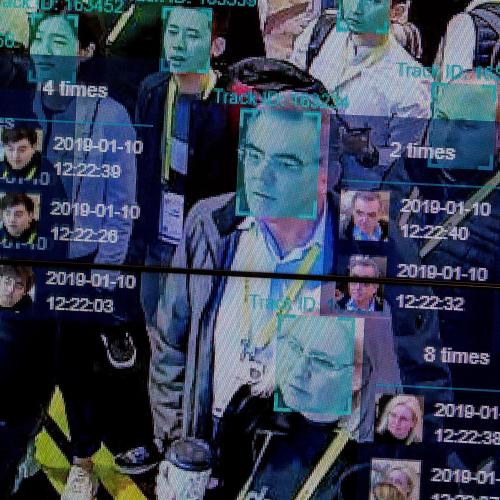
Australia's two most populous states are trialling facial recognition software that lets police check people are home during COVID-19 quarantine, expanding trials that have sparked controversy to the vast majority of the country's population. Little-known tech firm Genvis Pty Ltd said on a website for its software that New South Wales (NSW) and Victoria, home to Sydney, Melbourne and more than half of Australia's 25 million population, were trialling its facial recognition products. The Perth, Western Australia-based startup developed the software in 2020 with WA state police to help enforce pandemic movement restrictions. South Australia state began trialling a similar, non-Genvis technology last month, sparking warnings from privacy advocates around the world about potential surveillance overreach. The involvement of New South Wales and Victoria, which have not disclosed that they are trialling facial recognition technology, may amplify those concerns. Under the system being trialled, people respond to random check-in requests by taking a 'selfie' at their designated home quarantine address. If the software, which also collects location data, does not verify the image against a "facial signature", police may follow up with a visit to the location to confirm the person's whereabouts. While the recognition technology has been used in countries like China, no other democracy has been reported as considering its use in connection with coronavirus containment procedures.
Note: On Sept. 21st, thousands of citizens took to the streets to protest policies like this in Melbourne alone, as shown in this revealing video. The police are responding almost like they are at war, as show in this video. Yet the major media outside of Australia are largely ignoring all of this, while the Australian press is highly biased against the protesters. Are we moving towards a police state? For more along these lines, see concise summaries of deeply revealing news articles on the coronavirus and the disappearance of privacy from reliable major media sources.
When the man from Hangzhou returned home from a business trip, the local police got in touch. They had tracked his car by his license plate in nearby Wenzhou, which has had a spate of coronavirus cases. Stay indoors for two weeks, they requested. After around 12 days, he was bored and went out early. This time, not only did the police contact him, so did his boss. He had been spotted ... by a camera with facial recognition technology, and the authorities had alerted his company as a warning. I was a bit shocked by the ability and efficiency of the mass surveillance network. They can basically trace our movements ... at any time and any place, said the man, who asked not to be identified for fear of repercussions. Chinese have long been aware that they are tracked by the world's most sophisticated system of electronic surveillance. The coronavirus emergency has brought some of that technology out of the shadows, providing the authorities with a justification for sweeping methods of high tech social control. Artificial intelligence and security camera companies boast that their systems can scan the streets for people with even low-grade fevers, recognize their faces even if they are wearing masks and report them to the authorities. If a coronavirus patient boards a train, the railway's "real name" system can provide a list of people sitting nearby. Mobile phone apps can tell users if they have been on a flight or a train with a known coronavirus carrier, and maps can show them ... where infected patients live.
Note: The New York Times strangely removed this article. Yet it is also available here. Is there something they don't want us to know? Read an excellent article showing how this virus scare is being used to test China's intense surveillance technologies in very disturbing ways. For more along these lines, see concise summaries of deeply revealing news articles on government corruption and the disappearance of privacy from reliable major media sources.
As white supremacists have carried out a growing number of deadly attacks in recent years, the FBI has come under mounting criticism for its failure to address the threat posed by far-right extremist ideologies, whose adherents account for most of the politically motivated violence in the U.S. At the same time, the bureau has also been heavily criticized for devoting large resources to surveilling political dissent by groups and individuals, often of color, who pose no threat but are critical of the government because they oppose official immigration policies or demand police accountability. The FBIs preoccupation with policing nonviolent critical ideologies while neglecting to investigate ideologies tied to real, and increasing, violence was perhaps best captured in an infamous 2017 threat assessment report warning law enforcement agencies of the supposed rise of a black identity extremist movement targeting police. The black identity extremism category was a product of the FBIs imagination. Last year ... bureau officials told legislators that they were doing away with a set of earlier domestic terrorism categories in favor of four larger ones. The FBIs fictional black identity extremists would now be lumped together with white supremacists under a new racially motivated violent extremism category. That false equivalence made it virtually impossible for the public to know whether the FBI was devoting resources to investigating real threats of racist violence or social and racial justice groups critical of government.
Note: Read a revealing essay on COINTELPRO, the FBI program that targeted civil rights and anti-war activists from 1965-1975. For more along these lines, see concise summaries of deeply revealing news articles on civil liberties from reliable major media sources.
The Newborn Genetic Screening test is required in all 50 states. Nearly every baby born in the United States gets a heel prick shortly after birth. Their newborn blood fills six spots on a special filter paper card. It is used to test baby for dozens of congenital disorders. Some states destroy the blood spots after a year, 12 states store them for at least 21 years. California, however, is one of a handful of states that stores the remaining blood spots for research indefinitely in a state-run biobank. The child's leftover blood spots become property of the state and may be sold to outside researchers without the parent's knowledge or consent. "I just didn't realize there was a repository of every baby born in the state. It's like fingerprints," new mom Soniya Sapre responded. In California ... you do have the right to ask the biobank to destroy the leftovers after the fact, though the agency's website states it "may not be able to comply with your request." You also have the right to find out if your child's blood spots have been used for research, but you would have to know they were being used in the first place and we've discovered that most parents don't. But researchers with the California Genetic Disease Screening Program aren't the only ones with access to samples stored in the biobank. Blood spots are given to outside researchers for $20 to $40 per spot. According to biobank records, the program sold about 16,000 blood spots over the past five years, totaling a little more than $700,000.
Note: For more along these lines, see concise summaries of deeply revealing news articles on government corruption and the disappearance of privacy.
Over the last two years, researchers in China and the United States have begun demonstrating that they can send hidden commands that are undetectable to the human ear to Apples Siri, Amazons Alexa and Googles Assistant. Researchers have been able to secretly activate the artificial intelligence systems on smartphones and smart speakers, making them dial phone numbers or open websites. In the wrong hands, the technology could be used to unlock doors, wire money or buy stuff online - simply with music playing over the radio. A group of students from University of California, Berkeley, and Georgetown University showed in 2016 that they could hide commands in white noise played over loudspeakers and through YouTube videos to get smart devices to turn on airplane mode or open a website. This month, some of those Berkeley researchers published a research paper that went further, saying they could embed commands directly into recordings of music or spoken text. So while a human listener hears someone talking or an orchestra playing, Amazons Echo speaker might hear an instruction to add something to your shopping list. There is no American law against broadcasting subliminal messages to humans, let alone machines. The Federal Communications Commission discourages the practice as counter to the public interest, and the Television Code of the National Association of Broadcasters bans transmitting messages below the threshold of normal awareness.
Note: Read how a hacked vehicle may have resulted in journalist Michael Hastings' death in 2013. A 2015 New York Times article titled "Why Smart Objects May Be a Dumb Idea" describes other major risks in creating an "Internet of Things". Vulnerabilities like those described in the article above make it possible for anyone to spy on you with these objects, accelerating the disappearance of privacy.
The National Security Agency maintains a page on its website that outlines its mission statement. Since at least May 2016, the surveillance agency had featured honesty as the first of four core values listed on NSA.gov, alongside respect for the law, integrity, and transparency. On January 12, however, the NSA removed the mission statement page which can still be viewed through the Internet Archive and replaced it with a new version. Now, the parts about honesty and the pledge to be truthful have been deleted. The agencys new top value is commitment to service, which it says means excellence in the pursuit of our critical mission. Those are not the only striking alterations. All references to trust, honor, and openness have disappeared. The agency previously stated on its website that it embraced transparency and claimed that all of its activities were aimed at ensuring the safety, security, and liberty of our fellow citizens. That has also been discarded. The new list of values includes the additions respect for people and accountability. But the section on respecting people is a reference to diversity within the NSA workforce, not a general commitment to members of the public. Accountability is defined as taking responsibility for our decisions. The one core value that remains essentially unchanged is respect for the law, which the agency says means it is grounded in our adherence to the U.S. Constitution and compliance with the U.S. laws, regulations and policies that govern our activities.
Note: For more along these lines, see concise summaries of deeply revealing news articles on intelligence agency corruption and the disappearance of privacy.
I Googled mainstream media is And there it was. Googles autocomplete suggestions: mainstream media is dead, dying, fake news, fake, finished. Googles first suggested link ... leads to a website called CNSnews.com and an article: The Mainstream media are dead. How had it, an obscure site Id never heard of, dominated Googles search algorithm on the topic? In the About us tab, I learn CNSnews is owned by the Media Research Center. It receives a large bulk of its funding more than $10m in the past decade from a single source, the hedge fund billionaire Robert Mercer. Robert Mercer is the money behind an awful lot of things. He was Trumps single biggest donor. Since 2010, Mercer has donated $45m to different political campaigns all Republican and another $50m to non-profits all rightwing, ultra-conservative. This is a billionaire who is ... trying to reshape the world according to his personal beliefs. He is reported to have a $10m stake in the [Cambridge Analytica], which was spun out of a bigger British company called SCL Group. It specialises in election management strategies and messaging and information operations, refined over 25 years. In military circles this is known as psyops psychological operations. Cambridge Analytica makes the astonishing boast that it has psychological profiles based on 5,000 separate pieces of data on 220 million American voters. With this, a computer ... can predict and potentially control human behaviour. Its incredibly dangerous.
Note: The above article provides a detailed look at how mass media is being combined with Big Data to produce powerful new forms of mind control.
"There's really only two types of companies or two types of people which are those who have been hacked and realize it and those who have been hacked and haven't." That's what mobile security expert John Hering tells 60 Minutes correspondent Sharyn Alfonsi about the danger of cellphone hacking. To prove his point, Hering assembled a group of ace hackers. Jon Oberheide showed 60 Minutes an app he created that looks legitimate but allows him to take control of a phone and suck out ... information [such as] contacts, recent purchases and text messages. Another hacker, Adam Laurie, uses radio frequency identification to hack phones. "He didn't need my phone number," Alfonsi explains. "All he had to do was physically touch my phone." He demonstrated by brushing by her in the lobby of her hotel. When he did ... her phone [automatically] dialed Laurie, allowing him to listen in on anything discussed in the room with Alfonsi's phone. A so-called "CryptoPhone" ... alerts the user when someone is trying to attack or hack into his or her phone. "Certain government facilities will try to get into your phone if you get too close to them," Alfonsi explains. To demonstrate, Les Goldsmith, CEO of ESD America, a company that specializes in countersurveillance technologies, took Alfonsi for a ride ... near a secure government facility. As they were driving past, a red line appeared on the CryptoPhone, indicating that ... if she were using a regular phone, the government agency could hear her call and read her text messages.
Note: For more along these lines, see concise summaries of deeply revealing news articles about government corruption and the disappearance of privacy.
The sneak-and-peek provision of the Patriot Act that was alleged to be used only in national security and terrorism investigations has overwhelmingly been used in narcotics cases. Now the New York Times reports that National Security Agency data will be shared with other intelligence agencies like the FBI without first applying any screens for privacy. The ACLU of Massachusetts blog Privacy SOS explains [that] domestic law enforcement officials now have access to huge troves of American communications, obtained without warrants, that they can use to put people in cages. This basically formalizes what was already happening. Weve known for a couple of years now that the Drug Enforcement Administration and the IRS were getting information from the NSA. Because that information was obtained without a warrant, the agencies were instructed to engage in parallel construction when explaining to courts and defense attorneys how the information had been obtained. It certainly isnt the only time that that national security apparatus has let law enforcement agencies benefit from policies that are supposed to be reserved for terrorism investigations in order to get around the Fourth Amendment, then instructed those law enforcement agencies to misdirect, fudge and outright lie about how they obtained incriminating information. This isnt just a few rogue agents. The lying has been a matter of policy.
Note: For more along these lines, see concise summaries of deeply revealing news articles about government corruption and the disappearance of privacy.
Scores of low-flying planes circling American cities are part of a civilian air force operated by the FBI and obscured behind fictitious companies. The aircraft are equipped with high-tech cameras, and ... technology capable of tracking thousands of cellphones. The surveillance equipment is used for ongoing investigations, the FBI says, generally without a judge's approval. The Drug Enforcement Administration has its own planes, also registered to fake companies, according to a 2011 Justice Department ... report. At the time, the DEA had 92 aircraft in its fleet. And since 2007, the U.S. Marshals Service has operated an aerial surveillance program with its own fleet equipped with technology that can capture data from thousands of cellphones. "These are not your grandparents' surveillance aircraft," said Jay Stanley, a senior policy analyst with the American Civil Liberties Union. Evolving technology can record higher-quality video from long distances, even at night, and can capture certain identifying information from cellphones using a device known as a "cell-site simulator" [to] trick pinpointed cellphones into revealing identification numbers of subscribers, including those not suspected of a crime. The Obama administration [has] been directing local authorities through secret agreements not to reveal their own use of the devices. During the past few weeks, the AP tracked planes from the FBI's fleet on more than 100 flights over at least 11 states plus the District of Columbia.
Note: For more along these lines, see concise summaries of deeply revealing news articles about the corrupt intelligence agencies that facilitate the erosion of privacy rights in the U.S. and elsewhere.
At least 50 U.S. law enforcement agencies have secretly equipped their officers with radar devices that allow them to effectively peer through the walls of houses to see whether anyone is inside. Those agencies, including the FBI and the U.S. Marshals Service, began deploying the radar systems more than two years ago with little notice to the courts and no public disclosure of when or how they would be used. The technology raises legal and privacy issues because the U.S. Supreme Court has said officers generally cannot use high-tech sensors to tell them about the inside of a person's house without first obtaining a search warrant. The radars work like finely tuned motion detectors, using radio waves to zero in on movements as slight as human breathing from a distance of more than 50 feet. They can detect whether anyone is inside of a house, where they are and whether they are moving. The device the Marshals Service and others are using [was] first designed for use in Iraq and Afghanistan. They represent the latest example of battlefield technology finding its way home to civilian policing and bringing complex legal questions with it. Those concerns are especially thorny when it comes to technology that lets the police determine what's happening inside someone's home.
Note: This technology is not new. Working as interpreter in Washington, DC, WantToKnow.info founder Fred Burks witnessed this technology being used by the police there in the late 1980s. Explore an informative ACLU report detailing the many surveillance technologies used by police which are often used illegally. For more along these lines, see this deeply revealing summarized NPR report about The Pentagon's massive Program 1033 to widely distribute military hardware to domestic police forces.
The U.S. government threatened to fine Yahoo $250,000 a day in 2008 if it failed to comply with a broad demand to hand over user communications a request the company believed was unconstitutional according to court documents unsealed [on September 11] that illuminate how federal officials forced American tech companies to participate in the National Security Agencys controversial PRISM program. The documents ... outline a secret and ultimately unsuccessful legal battle by Yahoo to resist the governments demands. The companys loss required Yahoo to become one of the first to begin providing information to PRISM, a program that gave the NSA extensive access to records of online communications by users of Yahoo and other U.S.-based technology firms. The ruling by the Foreign Intelligence Surveillance Court of Review became a key moment in the development of PRISM, helping government officials to convince other Silicon Valley companies that unprecedented data demands had been tested in the courts and found constitutionally sound. Eventually, most major U.S. tech companies, including Google, Facebook, Apple and AOL, complied. Microsoft had joined earlier, before the ruling, NSA documents have shown. PRISM was first revealed by former NSA contractor Edward Snowden last year. Documents made it clear that the program allowed the NSA to order U.S.-based tech companies to turn over e-mails and other communications to or from foreign targets without search warrants for each of those targets. Other NSA programs gave even more wide-ranging access to personal information of people worldwide, by collecting data directly from fiber-optic connections.
Note: For more on this, see concise summaries of deeply revealing government surveillance news articles from reliable major media sources.
The US governments web of surveillance is vast and interconnected. You can be pulled into the National Security Agencys database quietly and quickly. Through ICREACH, a Google-style search engine created for the intelligence community, the NSA provides data on private communications to 23 government agencies. More than 1,000 analysts had access to that information. It was confirmed earlier this month that the FBI shares its master watchlist, the Terrorist Screening Database, with at least 22 foreign governments, countless federal agencies, state and local law enforcement, plus private contractors. The watchlist [is] based on [low] standards and secret evidence, which ensnares innocent people. Indeed, the standards are so low that the US governments guidelines specifically allow for a single, uncorroborated source of information including a Facebook or Twitter post to serve as the basis for placing you on its master watchlist. Of the 680,000 individuals on that FBI master list, roughly 40% have no recognized terrorist group affiliation, according to the Intercept. These individuals dont even have a connection as the government loosely defines it to a designated terrorist group, but they are still branded as suspected terrorists. The US [government uses] a loose standard so-called reasonable suspicion in determining who, exactly, can be watchlisted. ["Reasonable suspicion"] requires neither concrete evidence nor irrefutable evidence. Instead, an official is permitted to consider reasonable inferences and to draw from the facts in light of his/her experience.
Note: For more on this, see concise summaries of deeply revealing terrorism news articles from reliable major media sources.
The former National Security Agency contractor Edward J. Snowden said in a wide-ranging interview ... that the oversight of surveillance programs was so weak that members of the United States military working at the spy agency sometimes shared sexually explicit photos they intercepted. He also said the British government often pioneered the most invasive surveillance programs because its intelligence services operate with fewer restrictions intended to protect individual privacy than its counterparts in the United States and other allies. In the course of their daily work they stumble across something that is completely unrelated to their work, for example an intimate nude photo of someone in a sexually compromising situation but theyre extremely attractive, he said. So what do they do? They turn around in their chair and they show a co-worker. And their co-worker says: Oh, hey, thats great. Send that to Bill down the way. Mr. Snowden said that type of sharing ... was seen as the fringe benefits of surveillance positions. He said that this was never reported and that the system for auditing surveillance programs was incredibly weak. Mr. Snowden had particularly stark criticism for the British governments surveillance programs, because in Britain the respect for individual privacy, he said, is not strongly encoded in law or policy. Because it has fewer restrictions, British intelligence platforms are used as a testing ground for programs of all five intelligence partners, a group referred to as Five Eyes, which includes Britain, Canada, Australia, New Zealand and the United States.
Note: For more on this, see concise summaries of deeply revealing privacy news articles from reliable major media sources.
British spies have developed "dirty tricks" ... that include releasing computer viruses, spying on journalists and diplomats, jamming phones and computers, and using sex to lure targets into "honey traps." Documents taken from the National Security Agency by Edward Snowden ... describe techniques developed by a secret British spy unit called the Joint Threat Research and Intelligence Group (JTRIG). According to the documents ... the agency's goal was to "destroy, deny, degrade [and] disrupt" enemies by "discrediting" them, planting misinformation and shutting down their communications. The propaganda campaigns use deception, mass messaging and "pushing stories" via Twitter, Flickr, Facebook and YouTube. JTRIG also uses "false flag" operations, in which British agents carry out online actions that are designed to look like they were performed by one of Britain's adversaries. Other documents ... show that JTRIG ... used a DDOS attack to shut down Internet chat rooms used by members of the hacktivist group known as Anonymous. A computer virus called Ambassadors Reception was "used in a variety of different areas" and was "very effective." When sent to adversaries ... the virus will "encrypt itself, delete all emails ... and block the computer user from logging on. Spies have long used sexual "honey traps" to snare, blackmail and influence targets. Most often, a male target is led to believe he has an opportunity for a romantic relationship or a sexual liaison with a woman, only to find that the woman is actually an intelligence operative.
Note: You can read the documents released by Snowden at this link and this one. For more along these lines, see concise summaries of deeply revealing news articles on intelligence agency corruption from reliable major media sources.
Important Note: Explore our full index to revealing excerpts of key major media news articles on several dozen engaging topics. And don't miss amazing excerpts from 20 of the most revealing news articles ever published.