




















































Privacy News Articles
Below are key excerpts of revealing news articles on privacy and mass surveillance issues from reliable news media sources. If any link fails to function, a paywall blocks full access, or the article is no longer available, try these digital tools.

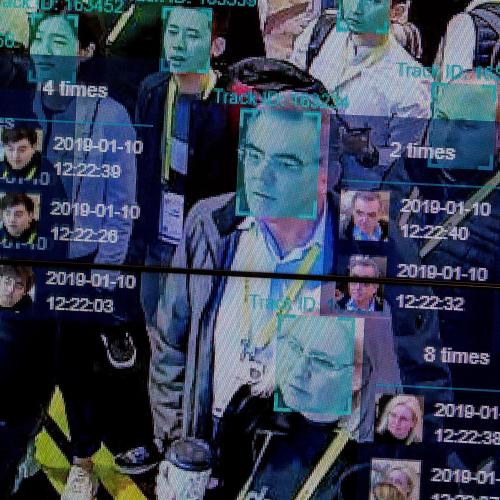
Facial recognition has become a security feature of choice for phones, laptops, passports, and payment apps. Yet it is also, increasingly, a tool of state oppression and corporate surveillance. Immigration and Customs Enforcement and the FBI have deployed the technology as a digital dragnet, searching for suspects among millions of faces in state driver’s license databases, sometimes without first seeking a court order. In early 1963, [Woody Bledsoe] proposed to conduct “a study to determine the feasibility of a simplified facial recognition machine.” A recently declassified history of the CIA’s Office of Research and Development mentions just such a project in 1965; that same year, Woody sent a letter on facial recognition to John W. Kuipers, the division’s chief of analysis. In 1967 ... Woody took on one last assignment that involved recognizing patterns in the human face. The purpose of the experiment was to help law enforcement agencies quickly sift through databases of mug shots and portraits, looking for matches. As before, funding for the project appears to have come from the US government. A 1967 document declassified by the CIA in 2005 mentions an “external contract” for a facial-recognition system that would reduce search time by a hundredfold. Woody’s work set an ethical tone for research on facial recognition that has been enduring and problematic. The potential abuses of facial-recognition technology were apparent almost from its birth.
Note: For more along these lines, see concise summaries of deeply revealing news articles on intelligence agency corruption and the disappearance of privacy from reliable major media sources.
The New York Times's explanation of its decision to report, after what it said was a one-year delay, that the National Security Agency is eavesdropping domestically without court-approved warrants was woefully inadequate. And I have had unusual difficulty getting a better explanation for readers, despite the paper's repeated pledges of greater transparency. For the first time since I became public editor, the executive editor and the publisher have declined to respond to my requests for information about news-related decision-making. My queries concerned the timing of the exclusive Dec. 16 article about President Bush's secret decision in the months after 9/11 to authorize the warrantless eavesdropping on Americans in the United States. I e-mailed a list of 28 questions to Bill Keller, the executive editor [of the New York Times], on Dec. 19, three days after the article appeared. He promptly declined to respond to them. I then sent the same questions to Arthur Sulzberger Jr., the publisher, who also declined to respond. They held out no hope for a fuller explanation in the future. The top Times people involved in the final decisions [are] refusing to talk and urging everyone else to remain silent.
A young African American man, Randal Quran Reid, was pulled over by the state police in Georgia. He was arrested under warrants issued by Louisiana police for two cases of theft in New Orleans. The arrest warrants had been based solely on a facial recognition match, though that was never mentioned in any police document; the warrants claimed "a credible source" had identified Reid as the culprit. The facial recognition match was incorrect and Reid was released. Reid ... is not the only victim of a false facial recognition match. So far all those arrested in the US after a false match have been black. From surveillance to disinformation, we live in a world shaped by AI. The reason that Reid was wrongly incarcerated had less to do with artificial intelligence than with ... the humans that created the software and trained it. Too often when we talk of the "problem" of AI, we remove the human from the picture. We worry AI will "eliminate jobs" and make millions redundant, rather than recognise that the real decisions are made by governments and corporations and the humans that run them. We have come to view the machine as the agent and humans as victims of machine agency. Rather than seeing regulation as a means by which we can collectively shape our relationship to AI, it becomes something that is imposed from the top as a means of protecting humans from machines. It is not AI but our blindness to the way human societies are already deploying machine intelligence for political ends that should most worry us.
Note: For more along these lines, see concise summaries of deeply revealing news articles on police corruption and the disappearance of privacy from reliable major media sources.
Imagine a global spying network that can eavesdrop on every single phone call, fax or e-mail, anywhere on the planet. It sounds like science fiction, but it's true. Two of the chief protagonists - Britain and America - officially deny its existence. But the BBC has confirmation from the Australian Government that such a network really does exist. The base is linked directly to the headquarters of the US National Security Agency (NSA) at Fort Mead in Maryland, and it is also linked to a series of other listening posts scattered across the world, like Britain's own GCHQ. The power of the network, codenamed Echelon, is astounding. Every international telephone call, fax, e-mail, or radio transmission can be listened to by powerful computers capable of voice recognition. They home in on a long list of key words, or patterns of messages. The network is so secret that the British and American Governments refuse to admit that Echelon even exists. But another ally, Australia, has decided not to be so coy. The man who oversees Australia's security services, Inspector General of Intelligence and Security Bill Blick, has confirmed to the BBC that their Defence Signals Directorate (DSD) does form part of the network. Asked if they are then passed on to countries like Britain and America, he said: "They might be in certain circumstances." They are looking for evidence of international crime, like terrorism. But the system is so widespread all sorts of private communications, often of a sensitive commercial nature, are hoovered up and analysed.
Note that this is a 1999 article, long before the revelations of Edward Snowden. The capability to monitor all communications has existed for a long time. For a powerful, well documented 20-page paper in the Federal Communications Law Journal providing strong evidence that this program is unconstitutional, click here.
American Amara Majeed was accused of terrorism by the Sri Lankan police in 2019. Robert Williams was arrested outside his house in Detroit and detained in jail for 18 hours for allegedly stealing watches in 2020. Randal Reid spent six days in jail in 2022 for supposedly using stolen credit cards in a state he’d never even visited. In all three cases, the authorities had the wrong people. In all three, it was face recognition technology that told them they were right. Law enforcement officers in many U.S. states are not required to reveal that they used face recognition technology to identify suspects. Surveillance is predicated on the idea that people need to be tracked and their movements limited and controlled in a trade-off between privacy and security. The assumption that less privacy leads to more security is built in. That may be the case for some, but not for the people disproportionately targeted by face recognition technology. As of 2019, face recognition technology misidentified Black and Asian people at up to 100 times the rate of white people. In 2018 ... 28 members of the U.S. Congress ... were falsely matched with mug shots on file using Amazon’s Rekognition tool. Much early research into face recognition software was funded by the CIA for the purposes of border surveillance. More recently, private companies have adopted data harvesting techniques, including face recognition, as part of a long practice of leveraging personal data for profit.
Note: For more along these lines, see concise summaries of deeply revealing news articles on police corruption and the disappearance of privacy from reliable major media sources.
OpenAI was created as a non-profit-making charitable trust, the purpose of which was to develop artificial general intelligence, or AGI, which, roughly speaking, is a machine that can accomplish, or surpass, any intellectual task humans can perform. It would do so, however, in an ethical fashion to benefit “humanity as a whole”. Two years ago, a group of OpenAI researchers left to start a new organisation, Anthropic, fearful of the pace of AI development at their old company. One later told a reporter that “there was a 20% chance that a rogue AI would destroy humanity within the next decade”. One may wonder about the psychology of continuing to create machines that one believes may extinguish human life. The problem we face is not that machines may one day exercise power over humans. That is speculation unwarranted by current developments. It is rather that we already live in societies in which power is exercised by a few to the detriment of the majority, and that technology provides a means of consolidating that power. For those who hold social, political and economic power, it makes sense to project problems as technological rather than social and as lying in the future rather than in the present. There are few tools useful to humans that cannot also cause harm. But they rarely cause harm by themselves; they do so, rather, through the ways in which they are exploited by humans, especially those with power.
Note: Read how AI is already being used for war, mass surveillance, and questionable facial recognition technology.
Silicon Valley techies are pretty sanguine about commercial surveillance. But they are much less cool about government spying. Government employees and contractors are pretty cool with state surveillance. But they are far less cool with commercial surveillance. What are they both missing? That American surveillance is a public-private partnership: a symbiosis between a concentrated tech sector that has the means, motive, and opportunity to spy on every person in the world and a state that loves surveillance as much as it hates checks and balances. The tech sector has powerful allies in government: cops and spies. No government agency could ever hope to match the efficiency and scale of commercial surveillance. Meanwhile, the private sector relies on cops and spies to go to bat for them, lobbying against new privacy laws and for lax enforcement of existing ones. Think of Amazon’s Ring cameras, which have blanketed entire neighborhoods in CCTV surveillance, which Ring shares with law enforcement agencies, sometimes without the consent or knowledge of the cameras’ owners. Ring marketing recruits cops as street teams, showering them with freebies to distribute to local homeowners. Google ... has managed to play both sides of the culture war with its location surveillance, thanks to the “reverse warrants” that cops have used to identify all the participants at both Black Lives Matter protests and the January 6 coup. Distinguishing between state and private surveillance is a fool’s errand.
Note: For more along these lines, see concise summaries of deeply revealing news articles on the disappearance of privacy from reliable major media sources.
From Virginia to Florida, law enforcement all over the US are increasingly using tools called reverse search warrants – including geofence location warrants and keyword search warrants – to come up with a list of suspects who may have committed particular crimes. While the former is used by law enforcement to get tech companies to identify all the devices that were near a certain place at a certain time, the latter is used to get information on everyone who’s searched for a particular keyword or phrase. It’s a practice public defenders, privacy advocates and many lawmakers have criticised, arguing it violates fourth amendment protections against unreasonable searches. Unlike reverse search warrants, other warrants and subpoenas target a specific person that law enforcement has established there is probable cause to believe has committed a specific crime. But geofence warrants are sweeping in nature and are often used to compile a suspect list to further investigate. Google broke out how many geofence warrants it received for the first time in 2021. The company revealed it received nearly 21,000 geofence warrants between 2018 and 2020. The tech giant did not specify how many of those requests it complied with but did share that in the second half of 2020, it responded to 82% of all government requests for data in the US with some level of information. Apple has taken steps to publish its own numbers. In the first half of 2022 the company fielded a total of 13 geofence warrants and complied with none.
Note: The legal world is struggling to keep up with the rise of tech firms building ever more sophisticated means of surveilling people and their devices. For more along these lines, see concise summaries of deeply revealing news articles on police corruption and the disappearance of privacy from reliable major media sources.
Recent reports about the Secret Service and Immigration and Customs Enforcement playing fast and loose with rules regarding cellphone tracking and the FBI purchasing phone location data from commercial sources constitute an important wake-up call. They remind us that those handy mobile devices many people tote around are the most cost-effective surveillance system ever invented. "The United States Secret Service and U.S. Immigration and Customs Enforcement, Homeland Security Investigations (ICE HSI) did not always adhere to Federal statute and cellsite simulator (CSS) policies when using CSS during criminal investigations," the Department of Homeland Security's Office of the Inspector General reported last month. "Separately, ICE HSI did not adhere to Department privacy policies and the applicable Federal privacy statute when using CSS." The OIG report referred to the use of what is commonly called "stingray" technology—devices that simulate cellphone towers and trick phones within range into connecting and revealing their location. "They also gather information about the phones of countless bystanders who happen to be nearby," the ACLU warns. Even the most precise phone company location data remains available with court approval. The courts are currently mulling multiple cases involving "geofence warrants" whereby law enforcement seeks data not on individuals, but on whoever was carrying a device in a designated area at a specified time.
Note: For more along these lines, see concise summaries of deeply revealing news articles on government corruption and the disappearance of privacy from reliable major media sources.
Facebook wants to get up close and personal with its users after a patent was revealed detailing a desire to secretly watch users through their webcam or smartphone camera, spying on your mood in order to sell you tailored content or advertisements. The purpose behind the invasive idea is to analyse people through the camera in real time while they browse online and if it recognises you looking happy, bored or sad, it would deliver an advert fitting your emotion. If you were forlorn, for example, it would be able to serve an ad to perk you up, or know what products you had previously looked at online and put them under your nose at just the right time. The social network has filed several patents over the years on emotion-based technology but this, based on 'passive imaging data' is perhaps the most unnerving, considering it would take control of cameras that weren't even switched on by the user. As described by CB Insights: "This patent proposes capturing images of the user through smartphone or laptop cameras, even when the user is not actively using the camera. By visually tracking a user's facial expression, Facebook aims to monitor the user's emotional reactions to different types of content." Other patents listed by Facebook include a text messaging platform to detect a user's mood by measuring how hard and fast they were typing, then augment the message format, such as adding emojis or changing the font size, to match their emotion.
Note: For more along these lines, see concise summaries of deeply revealing news articles on corporate corruption and the disappearance of privacy.
A safe that tallies the cash that is placed in it. A sniper rifle equipped with advanced computer technology for improved accuracy. A car that lets you stream music from the Internet. All of these innovations sound great, until you learn the risks that this type of connectivity carries. Recently, two security researchers, sitting on a couch and armed only with laptops, remotely took over a Chrysler Jeep Cherokee speeding along the highway ... while a Wired reporter was driving. A hacked car is a high-profile example of what can go wrong with the coming Internet of Things objects equipped with software and connected to digital networks. The selling point ... is added convenience and better safety. In reality, it is a ... train wreck in privacy and security. That smart safe? Hackers can empty it with a single USB stick while erasing all [evidence] of their crime. That high-tech rifle? Researchers managed to remotely manipulate its target selection without the shooters knowing. The Internet of Things is also a privacy nightmare. Databases that already have too much information about us will now be bursting with data on the places weve driven, the food weve purchased and more. Last week, at Def Con, the annual information security conference, researchers set up an Internet of Things Village to show how they could hack everyday objects like baby monitors, thermostats and security cameras. Connecting everyday objects introduces new risks if done at mass scale. Once a hacker is in - she's in everywhere.
Note: Read how a hacked vehicle may have resulted in journalist Michael Hastings' death in 2013. The networked computerization of everyday objects means that these objects can spy on you, accelerating the disappearance of privacy in the name of convenience. What will happen when the "internet of things" expands to include microchip implants in people?
In March I received a call from the White House counsels office regarding a speech I had prepared for my boss at the State Department. The speech was about the impact ... of National Security Agency surveillance practices. The draft stated that if U.S. citizens disagree with congressional and executive branch determinations about the proper scope of signals intelligence activities, they have the opportunity to change the policy through our democratic process. But the White House counsels office told me that no, that wasnt true. I was instructed to amend the line. Some intelligence practices remain so secret, even from members of Congress, that there is no opportunity for our democracy to change them. Public debate about the bulk collection of U.S. citizens data by the NSA has focused largely on Section 215 of the Patriot Act. Based in part on classified facts that I am prohibited by law from publishing, I believe that Americans should be even more concerned about the collection and storage of their communications under Executive Order 12333 than under Section 215. Unlike Section 215, the executive order authorizes collection of the content of communications, not just metadata, even for U.S. persons. It does not require that the affected U.S. persons be suspected of wrongdoing and places no limits on the volume of communications by U.S. persons that may be collected and retained. None of the reforms that Obama announced earlier this year will affect such collection.
Note: The above was written by John Napier Tye, former section chief for Internet freedom in the State Departments Bureau of Democracy, Human Rights and Labor. A 2014 Washington Post investigation sheds more light on the NSA's legally dubious domestic mass surveillance program. For more along these lines, see concise summaries of deeply revealing news articles about intelligence agency corruption and the disappearance of privacy.
Whistle-blower AT&T technician Mark Klein says his effort to reveal alleged government surveillance of domestic Internet traffic was blocked not only by U.S. intelligence officials but also by the top editors of the Los Angeles Times. Klein describes how he stumbled across "secret NSA rooms" being installed at an AT&T switching center in San Francisco and later heard of similar rooms in at least six other cities. Eventually, Klein says he decided to take his documents to the Los Angeles Times, to blow the whistle on what he calls "an illegal and Orwellian project." But after working for two months with LA Times reporter Joe Menn, Klein says he was told the story had been killed at the request of then-Director of National Intelligence John Negroponte and then-director of the NSA Gen. Michael Hayden. Klein says he then took his AT&T documents to The New York Times, which published its exclusive account last April [later removed from NY Times website]. In the court case against AT&T, Negroponte formally invoked the "state secrets privilege," claiming the lawsuit and the information from Klein and others could "cause exceptionally grave damage to the national security of the United States." The Los Angeles Times' decision was made by the paper's editor at the time, Dean Baquet, now the Washington bureau chief of The New York Times. As the new Washington bureau chief of The New York Times, Baquet now oversees the reporters who have broken most of the major stories involving the government surveillance program, often over objections from the government.
Note: This webpage was removed from the ABC website, but is still available through archive.org on thise webpage. So after the NY Times has the guts to report this important story, the man who was responsible for the censorship at the LA Times is transferred to the very position in the NY Times where he can now block future stories there. For why this case of blatant media censorship isn't making headlines, click here.
In 2010, the Washington Post reported that "every day, collection systems at the [NSA] intercept and store 1.7 billion emails, phone calls and other type of communications." In 2011, NSA expanded a program to provide real-time location information of every American with a cell phone, acquiring more than a billion cell phone records each day from AT&T. Later, newspapers around the world began publishing confidential documents leaked by [Edward] Snowden. Americans learned that the NSA can tap almost any cell phone in the world, exploit computer games like Angry Birds to poach personal data, access anyone's email and web browsing history [and] remotely penetrate almost all computers. The NSA used Facebook and Google apps to send malware to targeted individuals. NSA filched almost 200,000,000 records a month from private computer cloud accounts. Obama perpetuated perverse Bush-era legal doctrines to totally shield federal surveillance from judicial scrutiny. Obama's Justice Department secretly decreed that all phone records of all Americans were "relevant" to terrorism investigations and that the NSA could therefore justifiably seize everyone's personal data. Snowden revealed how the NSA had covertly carried out "the most significant change in the history of American espionage from the targeted surveillance of individuals to the mass surveillance of entire populations."
Note: For more along these lines, see concise summaries of deeply revealing news articles on intelligence agency corruption and the disappearance of privacy from reliable major media sources.
The future of wearable technology, beyond now-standard accessories like smartwatches and fitness tracking rings, is ePANTS, according to the intelligence community. The federal government has shelled out at least $22 million in an effort to develop “smart” clothing that spies on the wearer and its surroundings. Similar to previous moonshot projects funded by military and intelligence agencies, the inspiration may have come from science fiction and superpowers, but the basic applications are on brand for the government: surveillance and data collection. Billed as the “largest single investment to develop Active Smart Textiles,” the SMART ePANTS — Smart Electrically Powered and Networked Textile Systems — program aims to develop clothing capable of recording audio, video, and geolocation data, the Office of the Director of National Intelligence announced in an August 22 press release. Garments slated for production include shirts, pants, socks, and underwear, all of which are intended to be washable. There is already evidence that private industry outside of the national security community are interested in smart clothing. Meta, Facebook’s parent company, is looking to hire a researcher “with broad knowledge in smart textiles and garment construction, integration of electronics into soft and flexible systems, and who can work with a team of researchers working in haptics, sensing, tracking, and materials science.”
Note: Smart objects have been called a "train wreck in privacy and security." For more along these lines, see concise summaries of deeply revealing news articles on intelligence agency corruption and the disappearance of privacy from reliable major media sources.
Imagine a world where wireless devices are as small as a grain of salt. These miniaturized devices have sensors, cameras and communication mechanisms to transmit the data they collect back to a base in order to process. Today, you no longer have to imagine it: microelectromechanical systems (MEMS), often called motes, are real and they very well could be coming to a neighborhood near you. With such a small size, these devices can stay suspended in an environment just like a particle of dust. They can: Collect data including acceleration, stress, pressure, humidity, sound and more from sensors; Process the data with what amounts to an onboard computer system; Store the data in memory; Wirelessly communicate the data to the cloud, a base or other MEMs. Since smart dust devices are miniature sensors they can record anything that they are programmed to record. Since they are so small, they are difficult to detect. Your imagination can run wild regarding the negative privacy implications when smart dust falls into the wrong hands. Once billions of smart dust devices are deployed over an area it would be difficult to retrieve or capture them if necessary. The volume of smart dust that could be engaged by a rogue individual, company or government to do harm would make it challenging for the authorities to control. Many of the applications for smart dust are still in the concept stage. We might not know when it will progress to the point of wide-scale adoption, but ... its a question of when rather than if.
Note: This takes privacy issues to an entirely new level. This AP article states the supermicro chips are "just 0.002 inches by 0.002 inches and look like bits of powder. They're thin enough to be embedded in a piece of paper." They are also small enough to slip into a vaccine unnoticed. And check out another Forbes article titled "Stratospheric Balloons Will Rain Tiny Electronic Spies From The Sky." For more along these lines, see concise summaries of deeply revealing news articles on the disappearance of privacy from reliable major media sources.
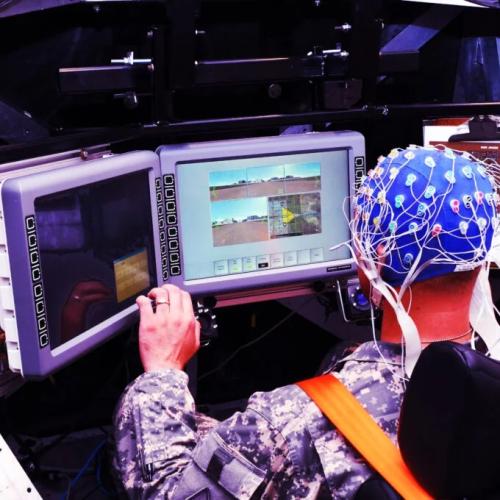
Billionaire Elon Musk’s brain-computer interface (BCI) company Neuralink made headlines earlier this year for inserting its first brain implant into a human being. Such implants ... are described as “fully implantable, cosmetically invisible, and designed to let you control a computer or mobile device anywhere you go." They can help people regain abilities lost due to aging, ailments, accidents or injuries, thus improving quality of life. Yet, great ethical concerns arise with such advancements, and the tech is already being used for questionable purposes. Some Chinese employers have started using “emotional surveillance technology” to monitor workers’ brainwaves. Governments and militaries are already ... describing the human body and brain as war’s next domain. On this new “battlefield,” an era of neuroweapons ... has begun. The Pentagon’s research arm DARPA directly or indirectly funds about half of invasive neural interface technology companies in the US. DARPA has initiated at least 40 neurotechnology-related programs over the past 24 years. As a 2024 RAND report speculates, if BCI technologies are hacked or compromised, “a malicious adversary could potentially inject fear, confusion, or anger into [a BCI] commander’s brain and cause them to make decisions that result in serious harm.” Academic Nicholas Evans speculates, further, that neuroimplants could “control an individual’s mental functions,” perhaps to manipulate memories, emotions, or even to torture the wearer. In a [military research paper] on neurowarfare: "Microbiologists have recently discovered mind-controlling parasites that can manipulate the behavior of their hosts according to their needs by switching genes on or off. Since human behavior is at least partially influenced by their genetics, nonlethal behavior modifying genetic bioweapons that spread through a highly contagious virus could thus be, in principle, possible.
Note: The CIA once used brain surgery to make six remote controlled dogs. For more, see important information on microchip implants and CIA mind control programs from reliable major media sources.
Finances at the vaccine manufacturer Moderna began to fall almost as quickly as they had risen, as most Americans resisted getting yet another COVID booster shot. In a September call aimed at shoring up investors, Moderna’s then-chief commercial officer, Arpa Garay, attributed some of the hesitancy pummeling Moderna's numbers to uninformed vaccine skeptics. What Garay hinted at during the call, but didn’t disclose, was that Moderna already had a sprawling media operation in place aimed at identifying and responding to critics of vaccine policy and the drug industry. Internal company reports and communications ... show that Moderna has worked with former law enforcement and public health officials and a drug industry-funded non-governmental organization called The Public Good Projects (PGP) to confront the “root cause of vaccine hesitancy” by rapidly identifying and “shutting down misinformation.” Part of this effort includes providing talking points to some 45,000 healthcare professionals “on how to respond when vaccine misinformation goes mainstream.” PGP routinely sent Excel lists of accounts to amplify on Twitter and others to de-platform, including populist voices such as ZeroHedge. The messages also suggested emerging narratives to remove from the platform. The growing network these efforts rely on shows the growth of what has been called the censorship industrial complex.
Note: Learn more about Moderna's misinformation department. For more along these lines, see concise summaries of deeply revealing news articles on pharmaceutical industry corruption and media manipulation from reliable sources.
The Moderna misinformation reports, reported here for the first time, reveal what the pharmaceutical company is willing to do to shape public discourse around its marquee product. The mRNA COVID-19 vaccine catapulted the company to a $100 billion valuation. Behind the scenes, the marketing arm of the company has been working with former law enforcement officials and public health officials to monitor and influence vaccine policy. Key to this is a drug industry-funded NGO called Public Good Projects. PGP works closely with social media platforms, government agencies and news websites to confront the “root cause of vaccine hesitancy” by rapidly identifying and “shutting down misinformation.” A network of 45,000 healthcare professionals are given talking points “and advice on how to respond when vaccine misinformation goes mainstream”, according to an email from Moderna. An official training programme, developed by Moderna and PGP, alongside the American Board of Internal Medicine, [helps] healthcare workers identify medical misinformation. The online course, called the “Infodemic Training Program”, represents an official partnership between biopharma and the NGO world. Meanwhile, Moderna also retains Talkwalker which uses its “Blue Silk” artificial intelligence to monitor vaccine-related conversations across 150 million websites in nearly 200 countries. Claims are automatically deemed “misinformation” if they encourage vaccine hesitancy. As the pandemic abates, Moderna is, if anything, ratcheting up its surveillance operation.
Note: Strategies to silence and censor those who challenge mainstream narratives enable COVID vaccine pharmaceutical giants to downplay the significant, emerging health risks associated with the COVID shots. For more along these lines, see concise summaries of deeply revealing news articles on corporate corruption and the disappearance of privacy from reliable major media sources.
A controversial facial recognition database, used by police departments across the nation, was built in part with 30 billion photos the company scraped from Facebook and other social media users without their permission. The company, Clearview AI, boasts of its potential for identifying rioters at the January 6 attack on the Capitol, saving children being abused or exploited, and helping exonerate people wrongfully accused of crimes. But critics point to privacy violations and wrongful arrests fueled by faulty identifications made by facial recognition, including cases in Detroit and New Orleans, as cause for concern over the technology. Once a photo has been scraped by Clearview AI, biometric face prints are made and cross-referenced in the database, tying the individuals to their social media profiles and other identifying information forever — and people in the photos have little recourse to try to remove themselves. CNN reported Clearview AI last year claimed the company's clients include "more than 3,100 US agencies, including the FBI and Department of Homeland Security." BBC reported Miami Police acknowledged they use the technology for all kinds of crimes, from shoplifting to murder. The risk of being included in what is functionally a "perpetual police line-up" applies to everyone, including people who think they have nothing to hide, [said] Matthew Guariglia, a senior policy analyst for the international non-profit digital rights group Electronic Frontier Fund.
Note: Read about the rising concerns of the use of Clearview AI technology in Ukraine, with claims to help reunite families, identify Russian operatives, and fight misinformation. For more along these lines, see concise summaries of deeply revealing news articles on corporate corruption and the disappearance of privacy from reliable major media sources.
Important Note: Explore our full index to revealing excerpts of key major media news articles on several dozen engaging topics. And don't miss amazing excerpts from 20 of the most revealing news articles ever published.



