














Civil Liberties News Articles
Below are key excerpts of revealing news articles on the erosion of our civil liberties from reliable news media sources. If any link fails to function, a paywall blocks full access, or the article is no longer available, try these digital tools.

Part One: 'A Different Understanding With the President': In less than an hour ... Cheney's proposal had become a military order from the commander in chief. Foreign terrorism suspects held by the United States were stripped of access to any court -- civilian or military, domestic or foreign. They could be confined indefinitely without charges and would be tried, if at all, in closed "military commissions." "What the hell just happened?" Secretary of State Colin L. Powell demanded ... when CNN announced the order that evening, Nov. 13, 2001. National security adviser Condoleezza Rice, incensed, sent an aide to find out. Even witnesses to the Oval Office signing said they did not know the vice president had played any part. "Angler," as the Secret Service code-named him, has approached the levers of power obliquely, skirting orderly lines of debate he once enforced as chief of staff to President Gerald R. Ford. He has battled a bureaucracy he saw as hostile, using intimate knowledge of its terrain. He has empowered aides to fight above their rank, taking on roles reserved in other times for a White House counsel or national security adviser. And he has found a ready patron in George W. Bush for edge-of-the-envelope views on executive supremacy that previous presidents did not assert. Over the past six years, Cheney has shaped his times as no vice president has before. [The] relationship [between Bush and Cheney] is opaque, a vital unknown in assessing Cheney's impact on events. Officials who see them together often, not all of them admirers of the vice president, detect a strong sense of mutual confidence that Cheney is serving Bush's aims.
Note: This is an important, in-depth investigation of the Cheney vice-presidency. It is highly revealing and well worth reading it its entirety.
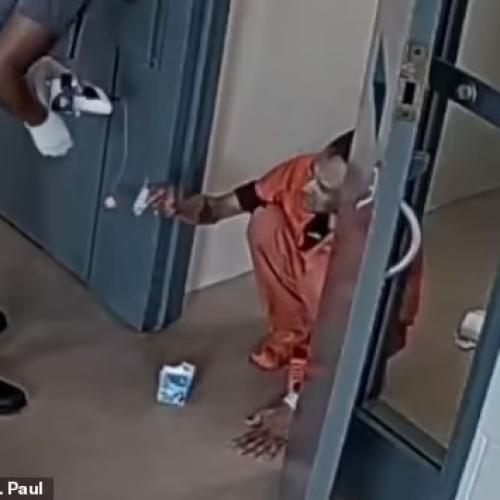
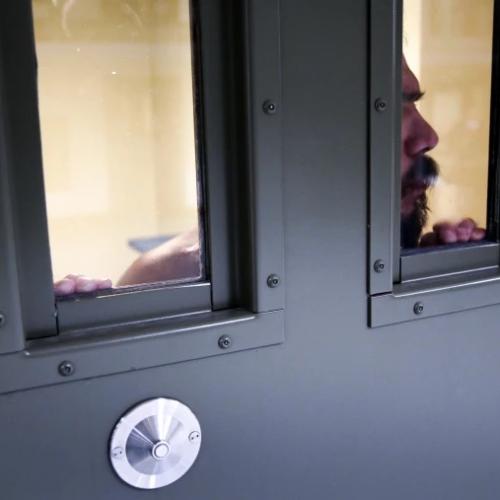
Behind the county hospital's tall cinderblock walls, a 27-year-old tuberculosis patient ... sits in a jail cell equipped with a ventilation system that keeps germs from escaping. Robert Daniels has been locked up indefinitely, perhaps for the rest of his life, since last July. But he has not been charged with a crime. Instead, he suffers from an extensively drug-resistant strain of tuberculosis. It is considered virtually untreatable. County health authorities obtained a court order to lock him up as a danger to the public because ... he did not heed doctors' instructions to wear a mask in public. "I'm being treated worse than an inmate," Daniels said. "I'm all alone. Four walls. Even the door to my room has been locked. I haven't seen my reflection in months." He said sheriff's deputies will not let him take a shower -- he cleans himself with wet wipes -- and have taken away his television, radio, personal phone and computer. His only visitors are masked medical staff members who come in to give him his medication. Though Daniels' confinement is extremely rare, health experts say it is a situation that U.S. public health officials may have to confront more and more because of the spread of drug-resistant TB and the emergence of diseases such as SARS and avian flu.
Note: If the above link fails, click here. What possible reason is there for taking away this man's TV, radio, cell phone, and computer? Are we being prepared for mass quarantines and imprisonment due to disease? For more, click here.
Let's say your teenager is a habitual truant and there is nothing you can do about it. A Washington area politician thinks he might have the solution: Fit the child with a Global Positioning System chip, then have police track him down. "It allows them to get caught easier," said Maryland Delegate Doyle Niemann (D-Prince George's), who recently co-sponsored legislation in the House that would use electronic surveillance as part of a broader truancy reduction plan. "It's going to be done unobtrusively. The chips are tiny and can be put into a hospital ID band or a necklace." Niemann's legislation mirrors a bill sponsored by state Sen. Gwendolyn Britt (D-Prince George's). Both would provide truants and their parents with better access to social services, such as mental health evaluations and help with schoolwork. Electronic monitoring would be a last resort. Still, the prospect of tagging children and using them in some "catch and release" hunt by police casts a pall over everything that's good about the plan. Odd how billions and billions of dollars keep going to a war that almost nobody wants, but there's never enough to fund the educational programs that nearly everybody says are needed. Aimed solely at students in Prince George's the only predominantly black county in the Washington area the truancy effort is called a "pilot program," a first-of-its-kind experiment. It would cost $400,000 to keep track of about 660 students a year.
Note: For more reliable information on the push to microchip the entire population, click here.
A disturbing recent phenomenon in Washington is that laws that strike to the heart of American democracy have been passed in the dead of night. So it was with a provision quietly tucked into the enormous defense budget bill at the Bush administrations behest that makes it easier for a president to override local control of law enforcement and declare martial law. The provision, signed into law in October, weakens two obscure but important bulwarks of liberty. One is the doctrine that bars military forces, including a federalized National Guard, from engaging in law enforcement. The other is the Insurrection Act of 1807, which ... essentially limits a presidents use of the military in law enforcement to putting down lawlessness, insurrection and rebellion, where a state is violating federal law or depriving people of constitutional rights. The newly enacted provisions upset this careful balance. The president may now use military troops as a domestic police force in response to a natural disaster, a disease outbreak, terrorist attack or to any other condition. Changes of this magnitude should be made only after a thorough public airing. But these new presidential powers were slipped into the law without hearings or public debate. The president made no mention of the changes when he signed the measure, and neither the White House nor Congress consulted in advance with the nations governors.
[Book Review of] Medical Apartheid: The Dark History of Medical Experimentation on Black Americans From Colonial Times to the Present. Harriet Washington opens the door on the torture room in "Medical Apartheid". Experimental operations on the skulls of slave children, Washington writes, were a favorite pursuit of a particularly sadistic South Carolinian doctor named J. Marion Sims, widely revered today as the "father of gynecology." For years, Sims experimented on a group of slave women, to whom he refused anesthesia. The most notorious post-slavery racial crime of American medicine [was] the Tuskegee Syphilis Study, conducted by the U.S. Public Health Service between 1932 and 1972. More than 100 black subjects ... were denied treatment, even and especially after the discovery of penicillin in 1943. The research required that they suffer and die, the more slowly the better. Tuskegee was hardly unique. The Rockefeller Institute ... conducted a study in 1910 that saw 470 black syphilitics injected with a deadly strain of malaria. Black Americans were also disproportionately used ... as subjects in government inquiries into the effects of radiation. Washington's chilling history ends with contemporary case studies. At the Incarnation Children's Center in New York, Columbia University doctors continue to administer experimental AIDS drugs to minority orphans, even after many develop painful and debilitating reactions. As for current clinical trials in Africa, Washington describes the continent as the new "laboratory for the West," where unsuspecting patients regularly receive experimental therapies that might never receive state sanction in the United States or Europe.
Note: For more reliable, verifiable information on major corruption in the health industry, click here. It's also interesting to not that no other major media chose to review this important book.
In a nation that preaches the virtues of democracy, the United States government has consistently eroded the media's ability to report. U.S. press freedom has been slipping away since Sept. 11, 2001. Many other countries are now ranked freer than the United States. In the most recent survey by Freedom House [the U.S.] tied for 17th place. International free-press advocates Reporters Without Borders ranked us 53rd, tied with Botswana, Croatia and Tonga. Now that we are in a seemingly permanent "war" on terrorism, the government claims wartime powers that result in restricting press freedom. The Bush administration has multiplied exponentially the number of documents it classifies as secret. The office of Vice President Dick Cheney claims to be exempt from reporting even the numbers of records it brands with the "classified" stamp. Within weeks after 9/11, President Bush issued Executive Order 13233, allowing him to veto public release not only of his own presidential papers but those of former [presidents]. One of former Attorney General John Ashcroft's first post-Sept. 11 acts was to issue a directive to federal agencies restricting access to government records under the Freedom of Information Act. Cheney [refused] to disclose even the identity of the corporate executives he met with to determine the administration's energy policy. The U.S. Supreme Court held ... that there is no such thing as a First Amendment right of access to government information or facilities. The Bush administration did not advance press freedom by producing ... favorable "news" stories with fake reporters. It is hard to stomach the hypocrisy of claiming to spread democracy abroad while restricting at home the very freedoms that make democracy possible.
"The Under Secretary of the Navy (UNSECNAV) is the Approval Authority for research involving: (a) Severe or unusual intrusions, either physical or psychological, on human subjects (such as consciousness-altering drugs or mind-control techniques). (b) Prisoners. (c) Potentially or inherently controversial topics (such as those likely to attract significant media coverage or that might invite challenge by interest groups). The UNSECNAV forwards to the Director, Defense Research and Engineering (DDR&E) for final determination: (a) All proposed research involving exposure of human subjects to the effects of nuclear, biological or chemical warfare agents or weapons, as required by reference (a)."
Note: This 2006 US Department of the Navy document shows that the US military continues to develop mind control techniques, use mind-altering drugs, and expose individuals to lethal nuclear, biological, and chemical agents while keeping it all out of the media's eye. For lots more showing blatant disregard for human rights on this topic, click here and here.
John K. Vance [was] a member of the Central Intelligence Agency inspector general's staff in the early 1960s who discovered that the agency was running a research project that included administering LSD and other drugs to unwitting human subjects. Code-named MKULTRA (and pronounced m-k-ultra), the project Mr. Vance uncovered was the brainchild of CIA Director Allen Dulles, who was intrigued by reports of mind-control techniques allegedly conducted by Soviet, Chinese and North Korean agents on U.S. prisoners of war during the Korean War. The CIA wanted to use similar techniques on its own POWs and perhaps use LSD or other mind-bending substances on foreign leaders, including Cuba's Fidel Castro a few years after the project got underway in 1953. Heading MKULTRA was a CIA chemist named Sidney Gottlieb. In congressional testimony, Gottlieb, who died in 1999, acknowledged that the agency had administered LSD to as many as 40 unwitting subjects, including prison inmates and patrons of brothels set up and run by the agency. At least one participant died when he jumped out of a 10th-floor window in a hotel; others claimed to have suffered serious psychological damage. Mr. Vance learned about MKULTRA in the spring of 1963 during a wide-ranging inspector general survey of the agency's technical services division. The inspector general's report said: "The concepts involved in manipulating human behavior are found by many people both within and outside the agency to be distasteful and unethical." MKULTRA came to public light in 1977 as a result of hearings conducted by a Senate committee on intelligence chaired by Sen. Frank Church (D-Idaho).
Note: If the above link fails, click here. For an excellent two-page summary of reliable verifiable information on CIA mind control programs which clearly violated ethical and moral standards, click here.
In the slightly less than a hundred years from 1898 to 1994, the U.S. government has intervened successfully to change governments in Latin America a total of at least 41 times. That amounts to once every 28 months for an entire century. Direct intervention occurred in 17 of the 41 cases. These incidents involved the use of U.S. military forces, intelligence agents or local citizens employed by U.S. government agencies. In another 24 cases, the U.S. government played an indirect role. That is, local actors played the principal roles, but either would not have acted or would not have succeeded without encouragement from the U.S. government. The 41 cases do not include incidents in which the United States sought to depose a Latin American government, but failed in the attempt. The most famous such case was the failed Bay of Pigs invasion of April 1961. Also absent from the list are numerous cases in which the U.S. government acted decisively to forestall a coup detat or otherwise protect an incumbent regime from being overthrown. In nearly every case, U.S. officials cited U.S. security interests, either as determinative or as a principal motivation. With hindsight, it is now possible to dismiss most these claims as implausible. In many cases, they were understood as necessary for generating public and congressional support, but not taken seriously by the key decision makers.
When Kevin Warwick enters his office building on the campus of Reading University, strange things happen. As Warwick heads down the main hall, lights turn on. When he turns to the right, an office door unbolts and opens. Each step is clocked and recorded. The building knows who he is, where he is, and what he expects to happen. The building [even] says, Hello Professor Warwick. The structure knows Warwick because of the electrical fuse-sized smart card implanted in his left arm. In Britain, hes been dubbed The Cyborg Man, the first person known to have a microchip implanted in his body for communication with outside machines. Warwick predicts chip implants will one day replace time cards, criminal tracking devices, even credit cards. Capable of carrying huge amounts of data, they may, he says, one day be used to identify individuals by Social Security numbers, blood type, even their banking information. No one knows yet how the body will respond to this type of invasion. Warwick is not blind to the ethical questions of this technology. Implants ostensibly designed to clock workers in and out might be misused to monitor where people are at all times and who they are meeting. Governments could move to use implants instead of I.D. cards and passports, but what would stop them from using this new science to invade privacy? I feel mentally different. When I am in the building I feel much more closely connected with the computer.
Note: Those who would like to control the public named these implants "smart cards" to encourage us to accept them. For more reliable information on important topic, click here and here.
During the reign of Quebec Premier Maurice Duplessis in the 1940s and 1950s, an alarming number of healthy children living in sanctuaries were hastily diagnosed as mentally incompetent, psychotic patients. The diagnoses were always swift the children went to bed orphans and woke up psychiatric patients. The reason? Shrewd fiscal planning; federal subsidies paid out more to hospitals than to orphanages. Some children allegedly endured lobotomies, electroshock, straitjackets and abuse. For the rest of their lives they would struggle to bring attention to their story and demand compensation. They called themselves the Duplessis Orphans. Born out of wedlock and deemed "children of sin," [these] thousands of Quebec children were cut off from society and sent to orphanages during the 1940s and 1950s. Many were improperly diagnosed as mentally incompetent. The diagnosis would be a lifelong sentence; the orphans endured a difficult and sometimes abusive childhood. Fifty years later, the orphans who are now in their 40s and 50s have organized and are seeking compensation.
Note: For more on this most bizarre story, click here. To learn how these children were likely being used for secret mind control experiments, click here.
Agents of the Federal Bureau of Investigation committed widespread acts of unauthorized lawlessness including the burning of automobiles, assaults and illegal wiretapping, while conducting internal security investigations in the last five years, law enforcement sources said. Militant antiwar activists at Queens College in Flushing were one target of illegal and unauthorized electronic surveillance. Agents placed illegal "wildcat" telephone taps and electronic bugs, the sources said, ... because these were often the best methods of getting intelligence on militant leftist activity. Agents would disguise the source of the information in their reports to make it appear that it came from live informants. One source said, however, that he believed that supervisory F.B.I. personnel were "aware" that information was coming from taps but did nothing about it. Car burnings and assaults upon individuals in the radical left were efforts to disrupt antiwar activity. The cars were set afire with "Molotov cocktails" made from glass bottles filled with gasoline. This was done in such a manner as to appear to have been an attack by another extremist group. Cars were also disabled to strand suspects during a surveillance. Agents, the sources said, from time to time "roughed up" radical antiwar figures to frighten them or to disrupt a demonstration or protest activity. At least one radical was kidnapped for the same reason. One source said that the victim of a beating was never seriously hurt because agents did not want to create a situation that might be traced to the bureau. The victim, this source said, would not know he was attacked by bureau men.
Note: The above link requires a small payment to view the article on the Times website. To view it free, click here. For deeply revealing reports from reliable major media sources on intelligence agency corruption, click here.
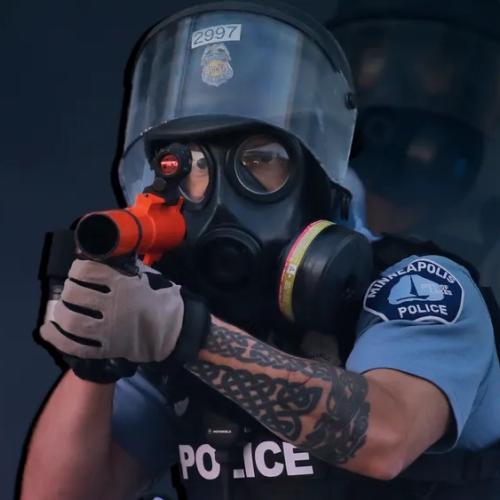
As thousands of protesters converged in Brooklyn on Monday evening, NYPD scanners picked up a bit of radio chatter. After a police dispatcher noted protester movement near the 77th Precinct, a voice on the same channel replies clearly: Shoot those motherfuckers. Just as clear was the immediate response: Dont put that over the air. The radio message was yet another indicator that police see protesters as enemies to combat rather than the citizens they are sworn to protect. [It] was also a sign of how emboldened police have become in calling for violence, and how little they seem to fear repercussions. Officers have responded to protests prompted by anger at police violence ... with yet more violence and, mostly, no consequence. Over the last several days, NYPD officers have beaten protesters with nightsticks, ripped off masks to pepper-spray them at close range, [and] driven their vehicles into crowds. The abuse has been enabled by laws that shield officers from accountability and by barriers to police oversight as well as by city leaders who have long allowed police to operate with impunity. In response to the police crackdown, NYPD Commissioner Dermot Shea expressed his pride as he congratulated his officers for their actions. Mayor Bill de Blasio ... continued his long-held practice of defending police misconduct in the face of indisputable evidence and attempted to shift the blame to protesters. Officials have responded to pressure for greater police transparency [by] making everything from complaints of misconduct to the findings of internal reviews, to body camera footage largely inaccessible to the public.
Note: While some policemen are standing with protestors, as reported in this ABC News article, another revealing article shows that the large majority of attacks on journalists came from police and not protestors. For more along these lines, see concise summaries of deeply revealing news articles on police corruption from reliable major media sources.
Much of Europe is still on coronavirus lockdown, with severe restrictions on movement and penalties for those who transgress. But not Sweden. Restaurants and bars are open in the Nordic country, playgrounds and schools too, and the government is relying on voluntary action to stem the spread of Covid-19. The Swedish government is confident its policy can work. Sweden's actions are about encouraging and recommending, not compulsion. Elisabeth Liden, a journalist in Stockholm, [noted that] "the subway went from being completely packed to having only a few passengers per car. I get the sense that a vast majority are taking the recommendations of social distancing seriously." On March 24, new rules were introduced to avoid crowding at restaurants. But they very much stayed open. So did many primary and secondary schools. Gatherings of up to 50 people are still permitted. The country's state epidemiologist, Anders Tegnell ... defended the decision to keep schools open [saying] "a lot of children are suffering when they can't go to school." Much of Sweden's focus has been to protect the elderly. Anyone aged 70 or older has been told to stay at home and limit their social contact as much as possible. Another factor in Sweden's favor is a generous social welfare net that means people don't feel obligated to turn up for work if their young child is sick. State support kicks in on day one of absence from work due to a child being sick. The next month will determine whether the Swedish system got it right.
Note: On 3/28, Sweden had twice as many deaths (203) as California (104). Yet 15 days later (4/12), California had risen 608% to 633, whileSwedenhad risen only 443% to 899. This is quite interesting considering that California has been in lockdown since 3/19, yet Sweden is not. You can verify these figures by going tothis linkof archived statistics from Johns Hopkins on the virus and clicking on the dates in question. For more along these lines, see concise summaries of deeply revealing news articles on the coronavirus from reliable major media sources.
At least 50 journalists in the US have been arrested during Black Lives Matter demonstrations across the US, while dozens of others have also been injured by rubber bullets, pepper spray and tear gas. The US Press Freedom Tracker has collected nearly 500 incidents from 382 reports, from the unrest in Minneapolis in the wake of George Floyds killing by police in late May, to demonstrations in more than 70 cities across 35 states since. At least 46 journalists were arrested between the end of May and the beginning of June. Dozens of others reported injuries from law enforcement, firing less lethal projectiles, tear gas canisters and other weapons into crowds or directly at reporters during demonstrations, even when they had identified themselves and shown credentials. Two reporters have suffered permanent eye injuries. The latest reports mark a significant spike since the end of May, when nationwide protests started, at which point the organisation had recorded only five arrests and 26 attacks for the entire year. But by the end of the month, the number of attacks had increased nearly five times. The conversations and reckoning that lie ahead of us as a country are taking shape right now, Press Freedom Tracker managing editor Kristin McCudden said. Whats happened in 70 cities in more than 30 states across the nation in one month is unlike anything weve seen in modern history and surpasses the Trackers entire ... history of documentation.
Note: Read more about the violent attacks on members of the media by police this year. For more along these lines, see concise summaries of deeply revealing news articles on police corruption and the erosion of civil liberties from reliable major media sources.
When hundreds of protesters took over Melbourne’s West Gate Bridge on Tuesday, the Real Rukshan was there to capture it. With 60,000 people concurrently viewing his livestream, Real Rukshan — the online nom de plume of Rukshan Fernando — was recognised by a man dressed in hi-vis: “Rukshan,” he yelled over the chaos, “you’re the reason we came down.” Fernando is one of a number of Australian content creators such as Avi Yemini and Morgan C Jonas who position themselves as independent journalists documenting the “freedom” movements opposing lockdowns and vaccines. Fernando’s live streams have functioned as the connective tissue for Melbourne protests and the broader movement, with millions of people watching from his perspective. His content and commentary take an anti-media and anti-government slant. Fernando says: “When you have the government interfere with your life, that really makes you arc up and be more politically attuned to what’s happening around you.” During a general “freedom” protest last week, Fernando narrated his live stream by repeatedly claiming that all the protesters were being peaceful and that police were instigating violence. At many protests, mainstream media organisations haven’t had reporters present. Unlike other creators, Fernando doesn’t appear to make money from his content. He’s posted about refusing donations and hasn’t made any efforts to monetise his online presence.
Note: Australia’s huge protests against vaccine mandates and the lockdown have gotten very little coverage outside of Australia and highly biased coverage against the protests in the country. This video shows the thousands participating in Melbourne, while this disturbing video shows the intense police response with many hundreds of police deployed. For more along these lines, see concise summaries of deeply revealing news articles on the coronavirus from reliable major media sources
The leader of the far-right Proud Boys group was a "prolific" informer for federal and local law enforcement, reports say. Enrique Tarrio worked undercover for authorities after he was arrested in 2012, according to a 2014 federal court document obtained by Reuters. During a Miami court hearing a federal prosecutor, an FBI agent and Mr Tarrio's lawyer described his work for law enforcement and said that he had helped convict more than a dozen people in drugs, gambling and human smuggling cases. He has become an increasingly high-profile figure as his violent group gained an elevated profile during the Trump administration. The ex-president infamously told the group to "stand back and stand by" when asked to denounce them during a presidential debate last September. They have been involved in a string of high-profile clashes in Washington DC, including the 6 January pro-Trump Capitol riot. [Mr Tarrio] was arrested in Washington DC in January two days before the riot and charged with possession of two high-capacity rifle magazines, and setting fire to a Black Lives Matter banner during a December pro-Trump demonstration in the city. Mr Tarrio was ordered to leave the city and has a June court date. During the 2014 court case Reuters says that Mr Tarrio's lawyer and prosecutors asked a judge to reduce his prison sentence after he and two defendants pleaded guilty in a fraud case related to stolen diabetes test kits. The prosecutor told the judge that Mr Tarrio had provided information that resulted in the prosecution of 13 people.
Note: For more along these lines, see concise summaries of deeply revealing news articles from reliable major media sources.
Images of tense encounters between protesters and police officers piled up over the weekend, as authorities intensified their efforts to quell nationwide uprisings, using rubber bullets, pepper pellets and tear gas in violent standoffs that seared cities nationwide. But some officers took different actions, creating contrasting images that told another story about the turbulent national moment following the death of George Floyd, a 46-year-old black man, in police custody in Minneapolis. From New York to Des Moines to Spokane, Wash., members of law enforcement sometimes clad in riot gear knelt alongside protesters and marched in solidarity with them. The act has become synonymous with peaceful protests in recent years after football player Colin Kaepernick knelt as part of his protests against police brutality on unarmed black citizens. A video circulating widely on Facebook captured two people in uniform joining a kneeling crowd in Queens. Thank you! cheered members of the crowd. The officers remained as a circle of people began to chant names of black Americans killed in infamous recent cases. Trayvon Martin! they called. Philando Castile! Cheers erupted, too, in the Iowa capital as Des Moines officers took a knee behind a police barricade. Acceding to the demands of protesters brought a rebuke in some places. In downtown Washington, a black officer who knelt was yanked from the crowd by his supervisor, and he returned standing to the line forming to hold back the demonstrations.
Note: For more along these lines, see concise summaries of deeply revealing news articles on police corruption from reliable major media sources.
A national public inquiry into possibly thousands of missing and murdered indigenous women in Canada has called the deaths a "Canadian genocide". The report was leaked to Canada's national broadcaster CBC which published details. The 1,200-page document reportedly blames the disproportionate violence faced by indigenous women on deep-rooted colonialism and state inaction. The findings of the National Inquiry into Murdered and Missing Indigenous Women and Girls are long-awaited in Canada, where there are about 1.6m indigenous people. "It took 40 years to get to this present moment and only because indigenous women have been on the ground making noise about this," Robyn Bourgeois, a campaigner on the issue, told the BBC. The inquiry concluded that about 1,200 aboriginal women had been murdered or gone missing in Canada since 1980, but some activists say the number is likely to have been far higher. The report acknowledged disagreements over what constituted genocide, but concluded: "The national inquiry's findings support characterizing these acts, including violence against Indigenous women, girls, and 2SLGBTQQIA [two-spirit, lesbian, gay, bisexual, transgendered, queer, questioning, intersex and asexual] people, as genocide." The inquiry, which cost C$92m ($67m; 53m), focused on the systemic causes of violence against indigenous women as well as on prevention. It has heard from more than 2,000 witnesses since 2017.
Note: Kevin Annett is a great Canadian hero who has worked tirelessly and courageously in the face of death threats to expose the systematic abuse and murders of native children in Canada. He was recently kidnapped while crossing the border. Don't miss his amazing story of all the happened.
By now, almost everyone knows what Edward Snowden did. He leaked top-secret documents revealing that the National Security Agency was spying on hundreds of millions of people. The key to Snowdens effectiveness, according to Thomas Devine, the legal director of the Government Accountability Project (GAP), was that he practised civil disobedience rather than lawful whistleblowing. None of the lawful whistleblowers who tried to expose the governments warrantless surveillance ... had any success, Devine told me. They came forward ... but the government just said, Theyre lying. Were not doing those things. And the whistleblowers couldnt prove their case because the government had classified all the evidence. The NSA whistleblowers were not leftwing peace nuts. They had spent their professional lives inside the US intelligence apparatus devoted, they thought, to the protection of the homeland and defense of the constitution. They were political conservatives, highly educated, respectful of evidence, careful with words. And they were saying, on the basis of personal experience, that the US government was being run by people who were willing to break the law and bend the states awesome powers to their own ends. They were saying that laws and technologies had secretly been put in place that threatened to overturn the democratic governance Americans took for granted and shrink their liberties to a vanishing point.
Note: The article above was is adapted from Mark Hertsgaards book, Bravehearts: Whistle Blowing in the Age of Snowden. For more along these lines, see concise summaries of deeply revealing news articles on intelligence agency corruption and the disappearance of privacy.
Important Note: Explore our full index to revealing excerpts of key major media news articles on several dozen engaging topics. And don't miss amazing excerpts from 20 of the most revealing news articles ever published.