



















Civil Liberties News Articles
Below are key excerpts of revealing news articles on the erosion of our civil liberties from reliable news media sources. If any link fails to function, a paywall blocks full access, or the article is no longer available, try these digital tools.

President Barack Obama rang in the New Year by signing the NDAA law with its provision allowing him to indefinitely detain citizens. Obama signed one of the greatest rollbacks of civil liberties in the history of our country. It was a continuation of the dishonest treatment of the issue by the White House since the law first came to light. The White House told citizens that the president would not sign the NDAA because of the provision. [But] sponsor Senator Carl Levin ... went to the floor and disclosed that it was the White House [that] insisted that there be no exception for citizens in the indefinite detention provision. The almost complete failure of the mainstream media to cover this issue is shocking. Reporters continue to mouth the claim that this law only codifies what is already the law. That is not true. The administration has fought any challenges to indefinite detention to prevent a true court review. Moreover, most experts agree that such indefinite detention of citizens violates the constitution. The White House conducted a misinformation campaign to secure this power while portraying the president as some type of reluctant absolute ruler, or, as Obama maintains, a reluctant president with dictatorial powers. Most Democratic members joined their Republican colleagues in voting for this un-American measure. Some Montana citizens are moving to force the removal of these members who, they insist, betrayed their oaths of office and their constituents.
Note: For important analyses of the implications of Obama's signing of the NDAA legislation, click here, here and here.
Barack Obama has abandoned a commitment to veto a new security law that allows the military to indefinitely detain without trial American terrorism suspects arrested on US soil who could then be shipped to Guantnamo Bay. Human rights groups accused the president of deserting his principles and disregarding the long-established principle that the military is not used in domestic policing. The legislation has also been strongly criticised by libertarians on the right angered at the stripping of individual rights for the duration of "a war that appears to have no end". The law ... effectively extends the battlefield in the "war on terror" to the US and applies the established principle that combatants in any war are subject to military detention. The law's critics describe it as a draconian piece of legislation that extends the reach of detention without trial to include US citizens arrested in their own country. "It's something so radical that it would have been considered crazy had it been pushed by the Bush administration," said Tom Malinowski of Human Rights Watch. "It establishes precisely the kind of system that the United States has consistently urged other countries not to adopt. At a time when the United States is urging Egypt, for example, to scrap its emergency law and military courts, this is not consistent."
Note: The implications of the passage of this bill to authorize the US military to carry out domestic arrest and imprisonment of US citizens have hardly been reported on by the major media. The defense authorization bill undermines protections established by the Bill of Rights and the Posse Comitatus Act against use of US military forces in domestic control and arrest. For further analysis of the implications of this legislation, click here and here.
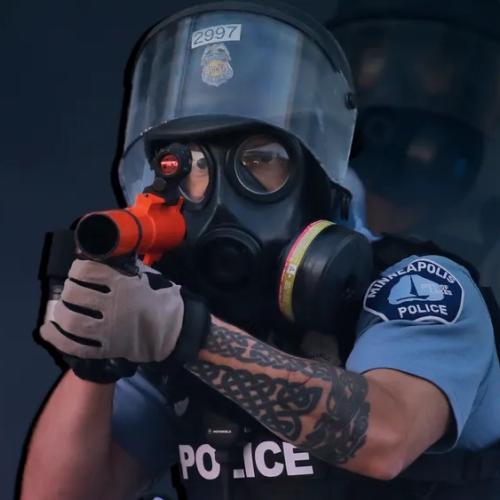
The violent police assaults across the US are no coincidence. Occupy has touched the third rail of our political class's venality. US citizens of all political persuasions are still reeling from images of unparallelled police brutality in a coordinated crackdown against peaceful OWS protesters in cities across the nation this past week. But just when Americans thought we had the picture was this crazy police and mayoral overkill, on a municipal level, in many different cities? the picture darkened. The New York Times reported that "New York cops have arrested, punched, whacked, shoved to the ground and tossed a barrier at reporters and photographers" covering protests. In New York, a state supreme court justice and a New York City council member were beaten up; in Berkeley, California, one of our greatest national poets, Robert Hass, was beaten with batons. The Mayor of Oakland acknowledged that the Department of Homeland Security had participated in an 18-city mayor conference call advising mayors on "how to suppress" Occupy protests. I noticed that rightwing pundits and politicians on the TV shows on which I was appearing were all on-message against OWS. Journalist Chris Hayes reported on a leaked memo that revealed lobbyists vying for an $850,000 contract to smear Occupy. Message coordination of this kind is impossible without a full-court press at the top. As the puzzle pieces fit together, they began to show coordination against OWS at the highest national levels.
Note: For key reports from reliable sources on the reasons why people nationwide are occupying their city centers in protest against the collusion between powerful corporate and government elites, click here.
Police organizations across the country co-operated to spy on community organizations and activists in what the RCMP [Royal Canadian Mounted Police] called one of the largest domestic intelligence operations in Canadian history, documents reveal. Information about the extensive police surveillance in advance of last year's G8 and G20 meetings in southern Ontario comes from evidence presented in the case of 17 people accused of orchestrating street turmoil during the summits. Two undercover police officers ... spent 18 months infiltrating southern Ontario community groups ahead of the June 26-27, 2010, gathering of world leaders. They were part of a much larger so-called joint intelligence group (JIG) operation [which] employed more than 500 people at its peak. "The 2010 G8 summit in Huntsville ... will likely be subject to actions taken by criminal extremists motivated by a variety of radical ideologies," reads a JIG report. "The important commonality is that these ideologies ... place these individuals and/or organizations at odds with the status quo and the current distribution of power in society." The RCMP-led intelligence team made a series of presentations to private-sector corporations, including one to "energy sector stakeholders" in November 2011. Other corporations that received intelligence from police included Canadas major banks, telecom firms, airlines, downtown property companies and other businesses seen to be vulnerable to the effects of summit protests.
Note: For lots more from major media sources on government attacks on civil liberties, click here.
A cross-section of 13 news organizations in New York City lodged complaints ... about the New York Police Departments treatment of journalists covering the Occupy Wall Street movement. Separately, ten press clubs, unions and other groups that represent journalists called for an investigation and said they had formed a coalition to monitor police behavior going forward. [The] actions were prompted by a rash of incidents on Nov. 15, when police officers impeded and even arrested reporters during and after the evictions of Occupy Wall Street protesters from Zuccotti Park, the birthplace of the two-month-old movement. The news organizations said in a joint letter to the Police Department that officers had clearly violated their own procedures by threatening, arresting and injuring reporters and photographers. The letter said there were numerous inappropriate, if not unconstitutional, actions and abuses by the police against both credentialed and noncredentialed journalists in the last few days. The letter was written by George Freeman, vice president and assistant general counsel for The New York Times Company, and signed by representatives for The Associated Press, The New York Post, The Daily News, Thomson Reuters, Dow Jones & Company, and three local television stations, WABC, WCBS and WNBC. It was also signed by representatives for the National Press Photographers Association, New York Press Photographers Association, Reporters Committee for Freedom of the Press, and the New York Press Club.
Note: For key reports from reliable sources on the reasons why people nationwide are occupying their city centers in protest against the collusion between powerful corporate and government elites, click here.
One week after a U.S. military airstrike killed a 16-year-old American citizen in Yemen, no one in the Obama administration, Pentagon or Congress has taken responsibility for his death, or even publicly acknowledged that it happened. The absence of official accountability for the demise of Abdulrahman al-Awlaki, a Denver native and the son of [Anwar al-Awlaki], deepens the legal and ethical murkiness of the Obama administrations campaign to kill alleged enemies of the state outside of traditional war zones. Officials throughout the U.S. government ... have refused to answer questions for the record about how or why Awlaki was killed Oct. 14 in a remote part of Yemen, along with eight other people. The official silence about the death of the American teenager contrasts with the Obama administrations eagerness to trumpet another airstrike in Yemen two weeks earlier. In that case, armed drones controlled by the CIA killed the teens father, Anwar al-Awlaki. [A] U.S. official said the airstrike was launched by the militarys secretive Joint Special Operations Command, or JSOC. The younger Awlaki was the third U.S. citizen killed by the U.S. government in Yemen in recent weeks.
Note: For deep background on reasons why the US government may have wanted to eliminate Anwar al-Awlaki and his son, click here.
Working inside the New York Police Department is one of the CIA's most experienced clandestine operatives. He arrived in July as the special assistant to the deputy commissioner of intelligence. While his title is clear, his job responsibilities are not. Federal and city officials have offered differing explanations for why this top CIA officer was assigned to a municipal police department. The CIA is prohibited from spying domestically, and its unusual partnership with the NYPD has troubled top lawmakers and prompted an internal investigation. The last time a CIA officer worked so closely with the NYPD, beginning in the months after the 9/11 attacks, he became the architect of aggressive police programs that monitored Muslim neighborhoods. With that earlier help from this CIA official, the police put entire communities under a microscope based on ethnicity rather than allegations of wrongdoing. On Monday, New York Mayor Michael Bloomberg defended the arrangement. "If the CIA can help us I'm all for getting any information they have and then letting the police department use it," he said. All of this has troubled lawmakers, including Sen. Dianne Feinstein, D-Calif., the chairwoman of the Senate Intelligence Committee, who has said the CIA has "no business or authority in domestic spying, or in advising the NYPD how to conduct local surveillance."
Note: While it is quite amazing that this information was reported in the major media, well-informed people have known that CIA operatives are secretly inserted in police stations across the US. They are also deployed in key positions in every major media outlet in the U.S. and many around the world, where they can stop reporting of information which reveals too much. To read the fascinating accounts of two award-winning journalist providing clear evidence of this, click here.
American militants like Anwar al-Awlaki are placed on a kill or capture list by a secretive panel of senior government officials, which then informs the president of its decisions, according to officials. There is no public record of the operations or decisions of the panel, which is a subset of the White House's National Security Council. Neither is there any law establishing its existence or setting out the rules by which it is supposed to operate. The panel was behind the decision to add Awlaki ... to the target list. He was killed by a CIA drone strike in Yemen late last month. The White House is portraying the killing of Awlaki as a demonstration of President Barack Obama's toughness toward militants who threaten the United States. But the process that led to Awlaki's killing has drawn fierce criticism from both the political left and right. Obama, who ran for president denouncing predecessor George W. Bush's expansive use of executive power in his "war on terrorism," is being attacked in some quarters for using similar tactics. They include secret legal justifications and undisclosed intelligence assessments. Liberals criticized the drone attack on an American citizen as extra-judicial murder. Conservatives criticized Obama for refusing to release a Justice Department legal opinion that reportedly justified killing Awlaki.
Note: State assassination of a citizen without due process would seem to be the ultimate attack on civil liberties. For lots more on such threats from reliable sources, click here.
Since the Sept. 11 terrorist attacks, the New York Police Department has become one of the nation's most aggressive domestic intelligence agencies, targeting ethnic communities in ways that would run afoul of civil liberties rules if practiced by the federal government. The operations have benefited from unprecedented help from the CIA, a partnership that has blurred the line between foreign and domestic spying. The department has dispatched undercover officers, known as "rakers," into minority neighborhoods as part of a human mapping program, according to officials directly involved in the program. They've monitored daily life in bookstores, bars, cafes and nightclubs. Police have also used informants, known as "mosque crawlers," to monitor sermons, even when there's no evidence of wrongdoing. Many of these operations were built with help from the CIA, which is prohibited from spying on Americans but was instrumental in transforming the NYPD's intelligence unit. A veteran CIA officer, while still on the agency's payroll, was the architect of the NYPD's intelligence programs. The CIA trained a police detective at the Farm, the agency's spy school in Virginia, then returned him to New York, where he put his new espionage skills to work inside the United States. And just last month, the CIA sent a senior officer to work as a clandestine operative inside police headquarters.
Note: For more on this important story from NPR, click here. For lots more from reliable sources on government threats to civil liberties, click here.
A Pennsylvania judge was sentenced to 28 years in prison in connection to a bribery scandal that roiled the state's juvenile justice system. Former Luzerne County Judge Mark Ciavarella Jr. was convicted of taking $1 million in bribes from developers of juvenile detention centers. The judge then presided over cases that would send juveniles to those same centers. The case came to be known as "kids-for-cash." The Pennsylvania Supreme Court tossed about 4,000 convictions issued by Ciavarella between 2003 and 2008, saying he violated the constitutional rights of the juveniles, including the right to legal counsel and the right to intelligently enter a plea. Ciavarella, 61, was tried and convicted of racketeering charges earlier this year. More than a dozen people who said they had been affected by the judge's decision stood outside [the court house in Scranton, PA], awaiting the sentencing. Jeff Pollins was in that crowd. His stepson was convicted by Ciavarella. "These kids are still affected by it. It's like post traumatic stress disorder," Pollins told the Times Leader. "Our life is ruined. It's never going to be the same".
Note: Two crooked judges and a for-profit detention center company used millions of taxpayer dollars to systematically violate the rights of thousands of kids. For more along these lines, see concise summaries of deeply revealing prison industry corruption news articles from reliable major media sources.
Early one morning, 50 years ago today, while his wife, Mary, slept upstairs, Ernest Hemingway went into the vestibule of his Ketchum, Idaho, house, selected his favorite shotgun from the rack, inserted shells into its chambers and ended his life. There were many differing explanations at the time: that he had terminal cancer or money problems, that it was an accident, that hed quarreled with Mary. None were true. As his friends knew, hed been suffering from depression and paranoia for the last year of his life. This man, who had stood his ground against charging water buffaloes, who had flown missions over Germany, who had refused to accept the prevailing style of writing but, enduring rejection and poverty, had insisted on writing in his own unique way, this man, my deepest friend, was afraid afraid that the F.B.I. was after him. Decades later, in response to a Freedom of Information petition, the F.B.I. released its Hemingway file. It revealed that beginning in the 1940s J. Edgar Hoover had placed Ernest under surveillance because he was suspicious of Ernests activities in Cuba. Over the following years, agents filed reports on him and tapped his phones. In the years since, I have tried to reconcile Ernests fear of the F.B.I., which I regretfully misjudged, with the reality of the F.B.I. file. I now believe he truly sensed the surveillance, and that it substantially contributed to his anguish and his suicide.
Note: The view that FBI harassment contributed to Hemingway's suicide is similar to the conclusion of many observers that the FBI hounded microbiologist Bruce Ivins to death by investigating him for involvement in the anthrax attacks that occurred just after 9/11. For an important analysis of the reality of the anthrax attacks by Prof. Graeme MacQueen of McMaster University, which makes it clear they could not have been carried out by a "lone nut" as claimed by the FBI, click here.
When two senators warned that the Patriot Act is being interpreted in a secret way that would alarm Americans if they knew the details, civil liberties activists could only speculate about what they meant. The activists' fear: that the government is using the anti-terrorism law to collect vast troves of personal information, including cellphone records, on Americans who have no link to terrorism. Sens. Ron Wyden of Oregon and Mark Udall of Colorado, both Democrats, proclaimed that the Patriot Act's surveillance powers are being used far more expansively than most Americans realize. "Today the American people do not know how their government interprets the language of the Patriot Act," Wyden said. "Someday they are going to find out, and a lot of them are going to be stunned. Some of them will undoubtedly ask their senators: 'Did you know what this law actually did? Why didn't you know? Wasn't it your job to know, before you voted on it?'" The warnings by two lawmakers with access to secret information underscore the extent to which government surveillance is shielded from view, in an age when nearly every American leaves a digital trail through the Internet and mobile devices. A clue about Wyden's concerns may be found in a separate bill he is proposing, to forbid the government from tracking, without a court order, the location of Americans through the GPS signals given out by their cellphones.
Note: For key reports from major media sources on government surveillance and other threats to privacy and civil liberties, click here and here.
Pennsylvania Amish farmer Dan Allgyer has become a cause celebre for raw milk drinkers as the target of a Food and Drug Administration campaign - using sting operations and guns-drawn raids usually reserved for terrorists and drug lords - to eliminate unpasteurized milk. Such milk, also known as raw or fresh milk, is legal in California and considered essential to Europe's finest cheeses, creams and butters. Allgyer is the latest to feel the force of a yearslong Food and Drug Administration campaign against raw milk that has focused on tiny farms and consumer co-ops. Raw milk drinkers say cooking milk diminishes its flavor and nutrients. They said similar sterilization standards, if applied across the American diet, would ban sushi, medium-rare steaks, oysters on the shell and most raw fruits and vegetables. The Food Safety and Modernization Act approved by Congress last year and signed by President Obama in January has vastly enhanced the agency's powers. Starting July 3, the agency can confiscate any food at any farm that it deems unsafe or mislabeled. Throughout Europe, uncooked milk is the norm, dispensed in vending machines in Switzerland, Austria, France, Italy, Slovenia and the Netherlands. It is healthy, adherents say, because it contains fat that is not broken down by homogenization and is free of antibiotics and hormones, because cows are raised in small herds on pastures.
The mob was already waiting for James Zwerg by the time the Greyhound bus eased into the station in Montgomery, Alabama. Looking out the window, Zwerg could see men gripping baseball bats, chains and clubs. They had sealed off the streets leading to the bus station and chased away news photographers. They didn't want anyone to witness what they were about to do. Zwerg accepted his worst fear: He was going to die today. Only the night before, Zwerg had prayed for the strength to not strike back in anger. He was among the 18 white and black college students from Nashville who had decided to take the bus trip through the segregated South in 1961. They called themselves Freedom Riders. Their goal was to desegregate public transportation. Zwerg had not planned to go, but the night before, some students had asked him to join them. To summon his courage, Zwerg stayed up late, reading Psalm 27, the scripture that the students had picked to read during a group prayer before their trip. "The Lord is my light and my salvation, of whom shall I fear?" the Psalm began. But there was another passage at the end that touched Zwerg in a place the other students didn't know about: "Though my mother and father forsake me, the Lord will receive me." Zwerg's parents had forsaken him for joining the civil rights movement.
Note: For another amazingly inspiring story of a man in the civil rights movement who faced death by hatred with compassion, click here. And for a powerfully inspiring New York Times article on the 50th anniversary of the Freedom Riders, click here. We have clearly come a long way in building more harmony between races.
Weeks after generating an uproar for the aggressive screening of a six-year-old child in New Orleans, the TSA is again facing criticism for an enhanced pat-down. Former Miss USA Susie Castillo says she was "molested" by a TSA screener at Dallas/Fort Worth International Airport after declining to go through a body scanner due to radiation concerns. According to a detailed account from the Dallas Morning News, Castillo wrote "My private area was grazed four times!" on a complaint card after the screening. Castillo immediately shot a tearful video recounting the episode more explicitly and posted it on YouTube. The Boston Herald quotes from the video: "That's why I'm crying, that's why I'm so upset. They're making me choose to either get molested, because that's what I feel like, or go through this machine that's completely unhealthy and dangerous." TSA spokesman Luis Casanova defended the screening procedure. "Everything [the screener] did was according to protocol," Casanova said.
Note: For key articles on increasing reductions of civil liberties by governments, click here.
The "war on drugs" has failed and should be abandoned in favour of evidence-based policies that treat addiction as a health problem, according to prominent public figures including former heads of MI5 and the Crown Prosecution Service. Leading peers including prominent Tories say that despite governments worldwide drawing up tough laws against dealers and users over the past 50 years, illegal drugs have become more accessible. Vast amounts of money have been wasted on unsuccessful crackdowns, while criminals have made fortunes importing drugs into this country. The increasing use of the most harmful drugs such as heroin has also led to enormous health problems, according to the group. The MPs and members of the House of Lords, who have formed a new All-Party Parliamentary Group on Drug Policy Reform, are calling for new policies to be drawn up on the basis of scientific evidence. It could lead to calls for the British government to decriminalise drugs, or at least for the police and Crown Prosecution Service not to jail people for possession of small amounts of banned substances.
Note: If you examine topics on which the government has declared war, what is being fought against often increases instead of decreasing. Could it be that the best way to deal with serious problems is not to wage war?
The US military is developing software that will let it secretly manipulate social media sites by using fake online personas to influence internet conversations and spread pro-American propaganda. A Californian corporation has been awarded a contract with United States Central Command (Centcom), which oversees US armed operations in the Middle East and Central Asia, to develop what is described as an "online persona management service" that will allow one US serviceman or woman to control up to 10 separate identities based all over the world. Critics are likely to complain that it will allow the US military to create a false consensus in online conversations, crowd out unwelcome opinions and smother commentaries or reports that do not correspond with its own objectives. The discovery that the US military is developing false online personalities known to users of social media as "sock puppets" could also encourage other governments, private companies and non-government organisations to do the same. Once developed, the software could allow US service personnel, working around the clock in one location, to respond to emerging online conversations with any number of co-ordinated messages, blogposts, chatroom posts and other interventions.
Note: The Pentagon claims that the "fake persona" software will not be used on social networks in the United States, because that would break laws against using propaganda on US citizens. How much credence should be given to this assurance?
Three Metropolitan Police officers are under investigation after they were alleged to have inadvertently recorded themselves arranging to falsely arrest a protester during the student fees demonstrations. The officers, who have not been named, are alleged to have conspired to arrest a 20-year-old man who had broken through the police cordon during the protests at Parliament Square in December. The man was chased and caught and, it is alleged, was then struck in the face with a police riot shield which chipped his tooth. The officers are then alleged to have discussed how to arrest the man and are believed to have concocted a story in which they claimed the man had threatened to cause criminal damage to a nearby building. However one of the officers was wearing sound recording equipment which recorded the chase and arrest of the man and the subsequent conversation between the officers. The officers have each been served with letters telling them that they are now being investigated for gross misconduct and criminal matters believed to be assault and false arrest. A total of 113 complaints were received by the IPCC about police officers behaviour during the four demonstrations. One of them concerns 20-year-old student Alfie Meadows, who needed brain surgery after he was allegedly struck on the head during a protest in December.
Note: For lots more on government corruption, click here.
The US government is offering private intelligence companies contracts to create software to manage "fake people" on social media sites. Private security firms employeed by the government have used the accounts to create the illusion of consensus on controversial issues. The contract calls for the development of "Persona Management Software" which would help the user create and manage a variety of distinct fake profiles online. According to the contract, the software would "protect the identity of government agencies" by employing a number of false signals to convince users that the poster is in fact a real person. A single user could manage unique background information and status updates for up to 10 fake people from a single computer. The software enables the government to shield its identity through a number of different methods including the ability to assign unique IP addresses to each persona and the ability to make it appear as though the user is posting from other locations around the world. The document describes how they would 'friend' real people on Facebook as a way to convey government messages.
Note: To read the government contract for "Persona Management" software, click here.
About a half-hour past midnight [on January 28] in Egypt, the Internet went dead. Almost simultaneously, the handful of companies that pipe the Internet into and out of Egypt went dark as protesters were gearing up for a fresh round of demonstrations calling for the end of President Hosni Mubarak's nearly 30-year rule, experts said. Egypt has apparently done what many technologists thought was unthinkable for any country with a major Internet economy: It unplugged itself entirely from the Internet to try and silence dissent. Experts say it's unlikely that what's happened in Egypt could happen in the United States because the U.S. has numerous Internet providers and ways of connecting to the Internet. Coordinating a simultaneous shutdown would be a massive undertaking. But the idea of a single "kill switch" to turn the Internet on and off has seduced some American lawmakers, who have pushed for the power to shutter the Internet in a national emergency. The Internet blackout in Egypt shows that a country with strong control over its Internet providers apparently can force all of them to pull their plugs at once. It also sets a precedent for other countries grappling with paralyzing political protests though censoring the Internet and tampering with traffic to quash protests is nothing new.
Note: For information on how a Israeli company bought out by Boeing facilitated the shutdown of the Internet in Egypt, click here. And to learn about a bill being proposed which would give the US president power over an Internet "kill switch," click here.
Important Note: Explore our full index to revealing excerpts of key major media news articles on several dozen engaging topics. And don't miss amazing excerpts from 20 of the most revealing news articles ever published.