

























News Articles
Below are key excerpts of revealing news articles from reliable news media sources. If any link fails to function, a paywall blocks full access, or the article is no longer available, try these digital tools.
For further exploration, delve into our comprehensive Information Centers.

The Justice Department is investigating allegations that officers of a special Venezuelan anti-drug unit funded by the CIA smuggled more than 2,000 pounds of cocaine into the United States with the knowledge of CIA officials - despite protests by the Drug Enforcement Administration. That is a huge amount of cocaine. But it was hardly a first. The agency has never been above using individuals or organizations with known links to drug trafficking. Until recently, no DEA country attach overseas was allowed to initiate an investigation into a suspected drug trafficker ... without clearance from the local CIA station chief. CIA ties to international drug trafficking date to the Korean War. Nowhere, however, was the CIA more closely tied to drug traffic than it was in Pakistan during the Afghan War. As its principal conduit for arms and money to the Afghan guerrillas, the agency chose the Pakistan military's Inter-Services Intelligence Bureau. The ISI in turn steered the CIA's support toward [an Islamic fundamentalist who] received almost half of the agency's financial support during the war. But many of his commanders were also major heroin traffickers. Soon the trucks that delivered arms to the guerrillas in Afghanistan were coming back ... full of heroin. The heroin traffic blossomed in the shadows of a CIA-sustained guerrilla war. The conflict and its aftermath have given the world another Golden Triangle: the Golden Crescent, sweeping through Afghanistan, Pakistan and parts of the former Soviet Union. Many of those involved in the drug traffic are men who were once armed, trained and financed by the CIA.
Note: The entire article at the link above is highy revealing. Read more about the CIA's ongoing involvement with Afghan heroin trafficking. The Taliban banned opium production in 2000 reducing the yield by 90%. Yet shortly after the U.S. defeated the Taliban, Afghanistan quickly returned to supplying 75% of the world's heroin. Do you think the U.S. is serious about stopping the drug trade? For more along these lines, see concise summaries of deeply revealing intelligence agency corruption news articles from reliable major media sources.
When Timmy drinks orange juice he has no problem. But Timmy is just one of close to a dozen personalities who alternate control over [his body]. If those other personalities drink orange juice, the result is a case of hives. If Timmy comes back while the allergic reaction is present, the itching of the hives will cease immediately, and the water-filled blisters will begin to subside. For more than a century clinicians have ... reported isolated cases of dramatic biological changes in people with multiple personalities. These include the abrupt appearance and disappearance of rashes, welts, scars and other tissue wounds; switches in handwriting and handedness; epilepsy, allergies and color blindness that strike only when a given personality is in control of the body. One patient ... had a blood pressure of 150/110 when one personality was in control, and a pressure of only 90/60 when another personality took over. The effects found in these patients ... are graphic examples of the power of states of mind to regulate the body's biology. [They] are leading scientists to study the physiology of patients with multiple personalities to assess how much psychological states can affect the body's biology. If the mechanisms through which these differences occur can be discovered, it may be possible to teach people some similar degree of control over these problems. Multiple personalities typically develop in people who were severely and repeatedly abused as children. Often only one or two of the sub-personalities will be conscious of the abuse, while others will have no memory or experience of the pain.
Note: How is it possible that one body can exhibit such extreme, seemingly impossible changes when differing personalities take over? Why aren't scientists doing all they can to tap into this amazing potential for control over the health of our bodies? Explore an informative article in U.S. News & World Report exploring the various aspects of dissociative identity disorder, former known as multiple personality disorder. For more along these lines, see concise summaries of deeply revealing news articles on the nature of reality from reliable major media sources.
The Biden administration likely infringed upon the First Amendment when it leaned on social media companies to remove false or misleading COVID-19 content, a federal court of appeals ruled Friday — narrowing a bombshell district court order that barred several officials and agencies from communicating with the platforms. The White House, surgeon general, Centers for Disease Control and Prevention and the FBI “likely coerced or significantly encouraged social-media platforms to moderate content” and in doing so, “likely violated the First Amendment,” the New Orleans-based Fifth US Circuit Court of Appeals determined. The three-judge panel, however, adjusted the scope of US District Judge Terry Doughty’s July 4 order ... removing officials from the National Institute of Allergy and Infectious Disease, the Cybersecurity and Infrastructure Security Agency and the State Department from the injunction. The Fifth Circuit vacated nine of the 10 provisions in Doughty’s order that prevented Biden administration officials from “urging, encouraging, pressuring” or “inducing” social media companies from removing content. Similarly, the appeals court determined that “following up with social-media companies” about content moderation, “requesting content reports from social-media companies” or asking platforms to “Be on The Lookout” for certain types of material does not violate individuals’ First Amendment rights.
Note: Many posts that were censored contained factual information on COVID-related issues. For more along these lines, see concise summaries of deeply revealing news articles on the coronavirus and media manipulation from reliable sources.
The pandemic has made the rich richer while the income of the rest of the world – about 99% of humanity – dropped, according to a new Oxfam report titled "Inequality Kills." The wealth of the world's 10 richest men doubled from $700 billion to $1.5 trillion during the pandemic, the global charity said on Monday. "It has never been so important to start righting the violent wrongs of this obscene inequality by clawing back elites' power and extreme wealth including through taxation – getting that money back into the real economy and to save lives," said Oxfam International's Executive Director Gabriela Bucher. A 99% windfall tax on the pandemic gains of the world's 10 richest men would raise enough money to pay for vaccines for the world – as well as finance various social measures for more than 80 countries, the report said. The wealth of billionaires rose more since Covid started compared to the last 14 years, and a new billionaire was minted every 26 hours since the pandemic began. The CEOs of Covid vaccine-developers Moderna and BioNTech made billions in 2020 as a result of the pandemic. At the same time, the vast majority of the population are worse off after losing income during Covid-19, and 160 million more people fell into poverty. One way to "claw back" the huge gains made by billionaires during the crisis is to tax the money that billionaires have made since the start of the pandemic. Even after the tax, the world's 10 richest men would still be billionaires.
Note: For more along these lines, see concise summaries of deeply revealing news articles on the coronavirus and income inequality from reliable major media sources.
Can the mind-blowing effects of psychedelics help heal our traumas? The scientific community [says] it's an increasingly hopeful thumbs up. Despite the fact that psychedelics are illegal, the last decade has seen an explosion of research, with results so intriguing that governments are greenlighting studies around the world. Scientists are busily exploring the role of hallucinogens on treatment-resistant depression, post traumatic stress disorder, cancer-related anxiety, addictions, and even anorexia. During the '40s and early '50s tens of thousands of patients took LSD and other psychotropics to study their effects on cancer anxiety, alcoholism, opioid use disorder, depression, and ... PTSD. Researchers began to see psychedelics as possible "new tools for shortening psychotherapy." In the 1950s UK psychiatrist Dr. Humphry Osmond began giving LSD to treatment-resistent alcoholics: 40% to 45% of those who took LSD were still sober after a year. [Then] in 1970, President Richard Nixon ... classified hallucinogenics as Schedule I drugs -- the most restrictive category. [Fast forward to today and] MAPS is in the final phase of a gold-standard study administering MDMA [Ecstasy] to 300 people with severe PTSD. Results of the second phase showed 68% of the people no longer met the criteria for PTSD at a 12-month follow-up; before the study they had suffered from treatment-resistant PTSD for an average of 17.8 years. The results are so positive that in January the FDA declared MDMA-assisted psychotherapy for PTSD a "Breakthrough Therapy." Perhaps one day soon a trip to the therapist will include a trip into your mind, and hopefully, a quicker path to healing.
Note: The full article at the link above gives a concise, yet thorough survey of the use of psychedelics for healing and growth over the years. For more along these lines, see concise summaries of deeply revealing news articles on the powerful healing potentials of some psychedelics from reliable major media sources.
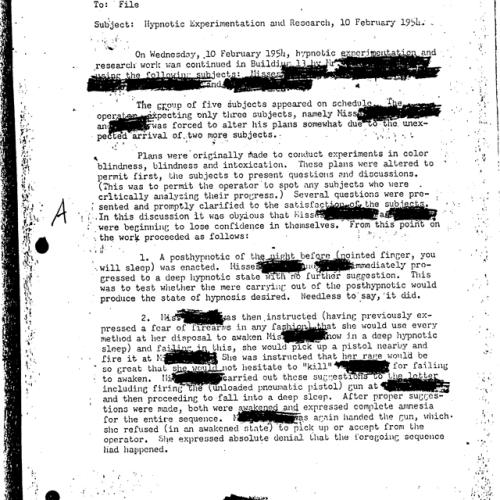
During the early period of the Cold War, the CIA became convinced that communists had discovered a drug or technique that would allow them to control human minds. In response, the CIA began its own secret program, called MK-ULTRA, to search for a mind control drug that could be weaponized against enemies. MK-ULTRA, which operated from the 1950s until the early '60s, was created and run by a chemist named Sidney Gottlieb. Some of Gottlieb's experiments were covertly funded at universities and research centers ... while others were conducted in American prisons and in detention centers in Japan, Germany and the Philippines. Many of his unwitting subjects endured psychological torture ranging from electroshock to high doses of LSD. In the early 1950s, he arranged for the CIA to pay $240,000 to buy the world's entire supply of LSD. He brought this to the United States, and he began spreading it around to hospitals, clinics, prisons and other institutions, asking them, through bogus foundations, to carry out research projects and find out what LSD was, how people reacted to it and how it might be able to be used as a tool for mind control. MK-ULTRA, was essentially a continuation of work that began in Japanese and Nazi concentration camps. Not only was it roughly based on those experiments, but the CIA actually hired the vivisectionists and the torturers who had worked in Japan and in Nazi concentration camps to come and explain what they had found out so that we could build on their research.
Note: Read more about the CIA's MK-ULTRA program. For more along these lines, see concise summaries of deeply revealing news articles on mind control from reliable major media sources.
Brooklyn is known the world over for things small-batch and local, like designer clogs. In a promising experiment in an affluent swath of the borough, dozens of solar-panel arrays spread across rowhouse rooftops are wired into a growing network. Called the Brooklyn Microgrid, the project is signing up residents and businesses to a virtual trading platform that will allow solar-energy producers to sell excess-electricity credits from their systems to buyers in the group, who may live as close as next door. The project is still in its early stages — it has just 50 participants thus far — but its implications could be far reaching. The idea is to create a kind of virtual, peer-to-peer energy trading system built on blockchain, the database technology that underlies cryptocurrencies like Bitcoin. The ability to complete secure transactions and create a business based on energy sharing would allow participants to bypass the electric company energy supply and ultimately build a microgrid with energy generation and storage components that could function on their own, even during broad power failures. “The long-term goal is to be at least partially independent of the grid in emergencies, which was a reasonable argument to join,” said Patrick Schnell, whose Gowanus basement flooded during Hurricane Sandy in 2012. “Hopefully it will expand and more people will join and it will be more worthwhile.”
Note: Our latest video explores the potential for blockchain to transform society for the better. Explore more positive stories like this in on technology for good.
[CNN] is seriously compromising its journalism in the Gulf states by blurring the line between advertising and editorial. CNN International (CNNi) [has refused] to broadcast an award-winning documentary, "iRevolution", that was produced in early 2011 as the Arab Spring engulfed the region and which was highly critical of the regime in Bahrain. The documentary ... documented the brutality and violence the regime was using against its own citizens who were peacefully protesting for democracy. CNNi has aggressively pursued a business strategy of extensive, multifaceted financial arrangements between the network and several of the most repressive regimes around the world which the network purports to cover. Its financial dealings with Bahrain are deep and longstanding. CNNi's pursuit of and reliance on revenue from Middle East regimes increased significantly after the 2008 financial crisis, which caused the network to suffer significant losses in corporate sponsorships. It thus pursued all-new, journalistically dubious ways to earn revenue from governments around the world. Bahrain has been one of the most aggressive government exploiters of the opportunities presented by CNNi [which produces] programs in an arrangement it describes as "in association with" the government of a country, and offers regimes the ability to pay for specific programs about their country. These programs are then featured as part of CNNi's so-called "Eye on" series [or] "Marketplace Middle East", [which are] designed to tout the positive economic, social and political features of that country.
Note: For deeply revealing reports from reliable sources on corruption in the major media, click here.
Researchers from the Argonne National Laboratory in Illinois have developed a hack that, for about $26 and an 8th-grade science education, can remotely manipulate the electronic voting machines used by millions of voters all across the U.S. The researchers ... performed their proof-of-concept hack on a Diebold Accuvote TS electronic voting machine, a type of touchscreen Direct Recording Electronic (DRE) voting system that is widely used for government elections. Diebold's voting-machine business is now owned by the Denver-based Dominion Voting Systems, whose e-voting machines are used in about 22 states. Roger Johnston and Jon Warner from Argonne National Laboratory's Vulnerability Assessment Team demonstrate three different ways an attacker could tamper with, and remotely take full control, of the e-voting machine simply by attaching what they call a piece of "alien electronics" into the machine's circuit board. The electronic hacking tool consists of a $1.29 microprocessor and a circuit board that costs about $8. Together with the $15 remote control, which enabled the researchers to modify votes from up to a half-mile away, the whole hack runs about $26.
Note: Why isn't this making news headlines? For more on this critical development, click here. For many other news articles on serious problems with elections, click here.
''Multiple personality offers a special window into psychosomatics,'' said Frank Putnam, a psychiatrist at the National Institute of Mental Health and a leading researcher in the field. ''Multiples exhibit some remarkable medical phenomena.'' Dr. Putnam said. He gives the example of one patient who reacted normally to a sedative drug in one personality, but was totally unaffected by it in another. ''Some multiples carry several different eyeglasses, because their vision changes with each personality,'' said Bennett Braun, who directs a unit devoted to treating multiple personalities at the Rush-Presbyterian-St. Luke's Medical Center in Chicago. Another woman, admitted to a hospital for diabetes, baffled her physicians by showing no symptoms of the disorder at times when one personality, who was not diabetic, was dominant. A young man was allergic to citrus fruit in some personalities, but not in others. The key sign of the disorder is a person seeming to have developed at least two distinctive personalities that alternate in control of the body. Another important symptom is partial amnesia: some but not necessarily all of the multiple personalities are unaware of the others. Circumstances that lead to the condition are usually brutal, typically extreme neglect or abuse. The disorder seems to represent a psychological adaptation to an otherwise unbearable situation. On average there are from 8 to 13 personalities in a typical patient, although there can be more than 60, according to Richard Kluft, a psychiatrist at the University of Pennsylvania who has studied more than a hundred cases.
Note: How is it possible that one body can exhibit such extreme, seemingly impossible changes when differing personalities take over? Why aren't scientists doing all they can to tap into this amazing potential for control over the health of our bodies? Explore an informative article in U.S. News & World Report exploring the various aspects of dissociative identity disorder, former known as multiple personality disorder. For more along these lines, see concise summaries of deeply revealing news articles on the nature of reality from reliable major media sources.
In the summer of 1982, seven heroin users were admitted to a California hospital paralyzed and mute. They were in their 20s, otherwise healthy — until a synthetic drug they had manufactured in makeshift labs left them frozen inside their own bodies. Doctors quickly discovered the cause: MPTP, a neurotoxic contaminant that had destroyed a small but critical part of the brain, the substantia nigra, which controls movement. The patients had developed symptoms of late-stage Parkinson’s, almost overnight. Until then, Parkinson’s was thought to be a disease of aging, its origins slow and mysterious. But here was proof that a single chemical could reproduce the same devastating outcome. And more disturbing still: MPTP turned out to be chemically similar to paraquat, a widely used weedkiller that, for decades, had been sprayed on farms across the United States and Europe. Parkinson’s disease has more than doubled globally over the past 20 years, and is expected to double again in the next 20. It is now one of the fastest-growing neurological disorders in the world. In a 2024 paper co-authored with U.S. neurologist Ray Dorsey, [Bas] Bloem wrote that Parkinson’s is “predominantly an environmental disease” — a condition shaped less by genetics and more by prolonged exposure to toxicants like air pollution, industrial solvents and, above all, pesticides. “Parkinson’s was a very rare disease,” Bloem says. “Then with the ... explosion of pesticide use, rates started to climb.”
Note: For more along these lines, read our concise summaries of news articles on health and toxic chemicals.
Tangles of grapes and blackberries grow in clusters along a trellis. Leafy rows of basil, sweet potatoes and mesclun spring from raised garden troughs. Most striking are corridors of elevated planters stacked four high, like multilevel bunk beds, filled with kale, cabbage, arugula, various lettuces, eggplants, tatsoi and collard greens. Run by a gardening wizard named Jamiah Hargins, this wee farm in the front yard of his bungalow provides fresh produce for 45 nearby families, all while using a tiny fraction of the water required by a lawn. At just 2,500 square feet, this farm forms the heart of Mr. Hargins’s nonprofit, Crop Swap LA, which transforms yards and unused spaces into microfarms. It runs three front yard farms that provide organic fruits and vegetables each week to 80 families, all living in a one-mile radius, and often with food insecurity. Rooted in the empowering idea that people can grow their own food, Crop Swap LA has caught on, with a wait list of 300 residents wanting to convert their yards into microfarms. The mini farms bring environmental benefits, thanks to irrigation and containment systems that capture and recycle rain. That allows the farms to produce thousands of pounds of food without using much water. “Some people pay $100 a month on their water because they’re watering grass, but they don’t get to eat anything, no one gets any benefit from it,” Mr. Hargins said. “I can’t think of a more generous gift to give to the community than to grow delicious, naturally organic food for the direct community,” [says Crop Swap LA subscriber] Katherine Wong. “This is one of the noblest things anyone is doing today.”
Note: Explore more positive stories like this about healing our bodies and healing the Earth.
Clinicians know that their patients’ health is determined not just by the care they receive but also factors outside the confines of medicine — employment, financial stability, safe housing and access to nutritious food, to name a few. Boston Medical Center ... is well ahead of the curve; 23 years ago, it began its first “food as medicine” program. Patients identified as having food insecurity receive a food “prescription,” meaning they could visit a food pantry run by the hospital once every two weeks and receive boxes customized for their medical conditions. Latchman Hiralall, manager of BMC’s Preventive Food Pantry, explained that clinicians give a referral to the program, so workers know whether the patient requires a diet for diabetes, kidney disease, autoimmune conditions and so forth. Eligible patients can walk in right away, chat with pantry staff and leave with a wide array of food. Crucially, it’s patients who decide what food they take. Eligibility is simply a matter of answering yes to two questions about whether they are worried about getting enough food. They don’t need to show proof of financial stress. The program serves about 6,800 patients, distributing 50,000 pounds of food a month. The source of much of the fresh produce: The hospital itself. That’s right — BMC operates its own rooftop farm. Seventy percent of the vegetables grown there go to Preventive Food Pantry participants. A portion of the rest is served in the hospital cafeteria.
Note: Read about how German hospitals are offering patients the "planetary health diet," a plant-based, whole food approach that's also in service to the Earth. Explore more positive stories like this about healing our bodies.
Western Sikkim in India ... officially went 100 percent organic in 2016, and won what many regard as the Oscar for best public policies — the UN Food and Agriculture Organisation’s Future Policy Gold Award — in 2018. This change is necessary: An estimated 52 percent of agricultural land across the globe is moderately to severely degraded due to monoculture, chemical pesticide and fertilizer use, and groundwater extraction — and this will accelerate unless these practices change. Sikkim is India’s most sparsely populated state. Its mainly subsistence farms were, and continue to be, spread thinly across mountainous terrain, which makes supplying inorganic fertilizers expensive. Consequently, using homegrown organic manure and vermicompost (compost created from worm waste) was very much the norm. It also helped that the local populace already understood the value of organic food. “As children, we were taught that basti (local) vegetables grown without any chemical inputs by small farmers, were the best vegetables to eat,” says Renzino Lepcha, CEO of Mevedir, an organic agri-business and certification agency in Sikkim. [Former] chief minister Pawan Chamling wrote, “[W]e have not inherited this earth from our forefather but have borrowed it from our future generations, it is our duty to protect it by living in complete harmony with nature and environment.” Rain-fed agriculture has helped reduce the need for irrigation and conserve water. Some reports suggest that since 2014, bee populations have been rebounding, with yields of pollinator-dependent cardamom increasing by more than 23 percent.
Note: Explore more positive stories like this on healing our bodies and healing the Earth.
Leah Garcés considered Craig Watts her enemy. As CEO and president of the nonprofit Mercy for Animals, Garcés has devoted her life to protecting animals. When she met Watts in the spring of 2014 at his poultry farm in North Carolina, he was one those factory farmers she deeply despised. Watts had raised over 720,000 chickens in 22 years for Perdue, the fourth-largest chicken company in the US. He took out a $200,000 bank loan to build four giant chicken houses. Squeezed by Perdue’s profit margins, Watts struggled to pay the bills. Garcés realized that Watts was not her enemy, but an ally: Chicken farmers like him wanted to end chicken farming as much as she did. Yet because of his hefty loans, Watts saw no way out. Together, they released footage from the horrors of chicken farming in the New York Times. Watts has now become one of the poster farmers for the Transfarmation Project, which Garcés founded as an offshoot of the nonprofit Mercy for Animals in 2019. Ultimately, Garcés’s vision is not just “helping a few dozen farmers transition to a healthier and more sustainable model, it is about how we transition away entirely from factory farming.” The Transfarmation Project connects farmers with consultants and is producing resources and pilots to model successful transitions. In the same warehouse where Watts once had to kill chickens and where he and Garcés filmed the whistleblower video, he is now harvesting mushrooms.
Note: Explore more positive stories like this about healing our Earth.
Former NASA astronaut Ron Garan ... described the striking beauty and stark reality he witnessed from space. “When I looked out the window of the International Space Station, I saw ... dancing curtains of auroras that seemed so close it was as if we could reach out and touch them,” he exclaimed. He also noticed something concerning. “I saw the unbelievable thinness of our planet's atmosphere,” the astronaut remarked. That “paper-thin” atmosphere is all that stands between humanity and disaster. Garan was troubled by how easily this fact is overshadowed by economic priorities. “I saw an iridescent biosphere teeming with life. I didn't see the economy. But since our human-made systems treat everything, including the very life-support systems of our planet, as the wholly owned subsidiary of the global economy, it's obvious from the vantage point of space that we're living a lie,” he said. He shared the concept of the “overview effect,” something many astronauts feel after they visit space. “It describes the shift that astronauts have when they see the planet hanging in the blackness of space. There's this light bulb that pops up where they realize how interconnected and interdependent we all are,” the astronaut explained. "When we can evolve beyond a two-dimensional us versus them mindset, and embrace the true multi-dimensional reality of the universe that we live in, that's when we're going to no longer be floating in darkness. That's our true calling.”
Note: Watch a powerful video where Ron Garan shares the profound revelations he experienced in space. Read about astronaut Edgar Mitchell's mystical experience in space as the sixth person to walk on the moon. Explore more positive stories like this about healing social division.
In December 2016, William Akley sat down in his sprawling headquarters for the biggest gas utility in Massachusetts, Eversource. Across the table were three women from a group that had become increasingly troublesome to his company. The group was Mothers Out Front, and it had been doing things like dressing up in orange costumes depicting gas flames and putting big signs where the company’s natural gas lines leaked into the air. As the meeting started, Zeyneb Magavi and each of the other mothers calmly explained their passion to Mr. Akley: “I have three kids,” Ms. Magavi said. “I’m worried about climate change. And I’m worried about their future.” It was the start of an unlikely partnership that eventually became an audacious idea: to use heat from underground – instead of natural gas – to both cool and heat homes and buildings. The test of that idea is now blinking on in Framingham, Massachusetts. Eversource workers have buried a mile-long loop of plastic pipe underground ... to collect geothermal energy. They are now connecting the loop to heat and cool 36 buildings – homes, a fire station, and businesses. It is the first U.S. trial of this innovative technology being provided to an entire neighborhood by a major utility. It’s the kind of scaled-up model that could bring a wholesale change to the nation’s infrastructure, replacing natural gas just as natural gas supplanted coal and oil in much of the United States.
Note: Explore more positive stories like this on technology for good.
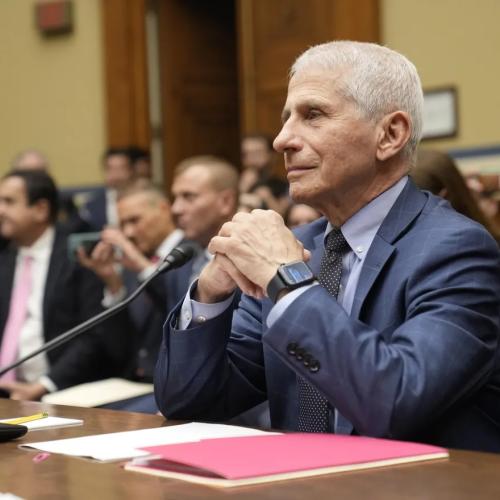
Elinore McCance-Katz, the Trump administration’s assistant secretary for mental health and substance use, was urging the CDC to justify its recommendation that Americans stay six feet apart to avoid contracting covid-19 — or get rid of it. “I very much hope that CDC will revisit this decision or at least tell us that there is more and stronger data to support this rule than what I have been able to find online,” McCance-Katz wrote in a June 2020 memo submitted to the CDC and other health agency leaders. The CDC would keep its six-foot social distance recommendation in place until August 2022. There was little science behind the six-foot rule. “It sort of just appeared, that six feet is going to be the distance,” Fauci testified to Congress in a January closed-door hearing, according to a transcribed interview released Friday. Fauci characterized the recommendation as “an empiric decision that wasn’t based on data.” Francis S. Collins, former director of the National Institutes of Health, also privately testified to Congress in January that he was not aware of evidence behind the social distancing recommendation. The U.S. distancing measure was particularly stringent, as other countries adopted shorter distances; the World Health Organization set a distance of one meter, or slightly more than three feet, which experts concluded was roughly as effective as the six-foot mark at deterring infections, and would have allowed schools to reopen more rapidly.
Note: Fauci was literally the highest paid federal employee within the US government, even higher than the president. Yet while he told the world that attacking him is attacking science, he lied about funding risky gain of function research on bat coronaviruses. In hearings earlier this year, he said “I don’t recall” over 100 times when asked important information on his role in COVID and pandemic policies. What does this say about our public health leaders?
Patrick Burrichter did not think about saving lives or protecting the planet when he trained as a chef. But 25 years later he has focused his culinary skills on doing exactly that. On the outskirts of Berlin, Burrichter and his team cook for a dozen hospitals that offer patients a “planetary health” diet – one that is rich in plants and light in animals. Compared with the typical diet in Germany, known for its bratwurst sausage and doner kebab, the 13,000 meals they rustle up each day are better for the health of people and the planet. In Burrichter’s kitchen, the steaming vats of coconut milk dal and semolina dumpling stew need to be more than just cheap and healthy – they must taste so good that people ditch dietary habits built up over decades. The biggest challenge, says Burrichter, is replacing the meat in a traditional dish. Moderate amounts of meat can form part of a healthy diet, providing protein and key nutrients, but the average German eats twice as much as doctors advise. Patients on the wards of Waldfriede praise the choice of meals on offer. Martina Hermann, 75, says she has been inspired to cook more vegetables when she gets home. Followers of the planetary health diet need not abandon animal products altogether. The guidelines, which were proposed by 37 experts from the EAT-Lancet Commission in 2019, translate to eating meat once a week and fish twice a week, along with more wholegrains, nuts and legumes.
Note: Explore more positive stories like this in our comprehensive inspiring news articles archive focused on solutions and bridging divides.
There are three basic problems with the CIA: its objectives, methods, and unaccountability. In effect, the CIA is a secret army of the U.S., capable of creating mayhem across the world with no accountability whatsoever. When President Dwight Eisenhower decided that Africa’s rising political star, democratically elected Patrice Lumumba of Zaire (now the Democratic Republic of Congo), was the “enemy,” the CIA conspired in his 1961 assassination, thus undermining the democratic hopes for Africa. The CIA has been held to serious public account just once, in 1975. In that year, Idaho Senator Frank Church led a Senate investigation that exposed the CIA’s shocking rampage of assassinations, coups, destabilization, surveillance, and Mengele-style torture and medical “experiments.” Since 1975, the CIA has run secretive operations backing Islamic jihadists in Afghanistan that utterly wrecked Afghanistan while giving rise to al-Qaeda. The CIA has likely run secretive operations in the Balkans against Serbia, in the Caucuses against Russia, and in Central Asia targeting China, all deploying CIA-backed jihadists. In the 2010s, the CIA ran deadly operations to topple Syria’s Bashir al-Assad, again with Islamic jihadists. For at least 20 years, the CIA has been deeply involved in fomenting the growing catastrophe in Ukraine, including the violent overthrow of Ukraine’s President Viktor Yanukovych in February 2014 that triggered the devastating war now engulfing Ukraine.
Note: Learn more about the rise of the CIA in our comprehensive Military-Intelligence Corruption Information Center. For more, see concise summaries of deeply revealing news articles on intelligence agency corruption from reliable major media sources.
Important Note: Explore our full index to revealing excerpts of key major media news articles on several dozen engaging topics. And don't miss amazing excerpts from 20 of the most revealing news articles ever published.