




















Secrecy News Articles
Below are key excerpts of revealing news articles on secrecy from reliable news media sources. If any link fails to function, a paywall blocks full access, or the article is no longer available, try these digital tools.

Porter J. Goss, the former director of the Central Intelligence Agency, in 2005 approved of the decision by one of his top aides to destroy dozens of videotapes documenting the brutal interrogation of two detainees, according to an internal C.I.A. document released [on April 15]. Shortly after the tapes were destroyed at the order of Jose A. Rodriguez Jr., then the head of the C.I.A.s clandestine service, Mr. Goss told Mr. Rodriguez that he agreed with the decision, according to the document. He even joked after Mr. Rodriguez offered to take the heat for destroying the tapes. PG laughed and said that actually, it would be he, PG, who would take the heat, according to one document. A number of documents released Thursday provide the most detailed glimpse yet of the deliberations inside the C.I.A. surrounding the destroyed tapes, and of the concern among officials at the spy agency that the decision might put the C.I.A. in legal jeopardy. The documents detailing those deliberations, including two e-mail messages from a C.I.A. official whose name has been excised, were released as part of a Freedom of Information Act lawsuit filed by the American Civil Liberties Union. According to one of the e-mail messages released Thursday, Mr. Rodriguez told Mr. Goss that the tapes ... would make the C.I.A. look terrible; it would be devastating to us.
Note: For lots more on the realities of the "war on terror", click here.
He hobnobbed with Mexico's rich and famous, cut lucrative real estate deals and was rumored to travel on occasion with a briefcase full of cash. He fathered at least one child, molested seminarians and boys and is said to have boasted that he had the pope's permission to get massages from young nuns. And all the while the conservative priest was building one of the most influential organizations in the Roman Catholic Church. Two years after the death of the Rev. Marcial Maciel, a Mexico native, scandals continue to unfold. Buffeted by the string of revelations, Maciel's powerful Legion of Christ is fighting for its survival in Rome, the headquarters of the church. But here in Mexico, where the Legion has long-standing ties with the ruling class and an expansive network of elite schools, the organization remains strong. Rather than the desertions that some branches of the Legion have experienced in the United States and elsewhere, student enrollment in Legionary schools in Mexico grew by 6% to 8% last year, spokesman Javier Bravo said. The order's assets are estimated by some to be worth $20 billion.
The Democratic administration of Barack Obama, who denounced his predecessor, George W. Bush, as the most secretive in history, is now denying more Freedom of Information Act requests than the Republican did. Transparency and openness were so important to the new president that on his first full day in office, he dispatched a much-publicized memo saying: "All agencies should adopt a presumption in favor of disclosure, in order to renew their commitment to the principles embodied in FOIA, and to usher in a new era of open government. The presumption of disclosure should be applied to all decisions involving FOIA." One of the exemptions allowed to deny Freedom of Information requests has been used by the Obama administration 70,779 times in its first year; the same exemption was used 47,395 times in Bush's final budget year. An Associated Press examination of 17 major agencies' handling of FOIA requests found denials 466,872 times, an increase of nearly 50% from the 2008 fiscal year under Bush.
Note: For lots more from reliable sources on government secrecy, click here.
The Boy Scouts of America has long kept an extensive archive of secret documents that chronicle the sexual abuse of young boys by Scout leaders over the years. The "perversion files," a nickname the Boy Scouts are said to have used for the documents, have rarely been seen by the public, but that could change in the coming weeks in a Portland, Ore., courtroom. The attorney for a man who was allegedly molested in the 1980s by a Scout leader has obtained about 1,000 Boy Scouts sex files and is expected to release some of them at a trial that began [on March 17]. The lawyer says the files show the organization has covered up abuse for decades. The trial is significant because the files could offer a rare window into how the organization has responded to sex abuse by Scout leaders. The only other time the documents are thought to have been presented at a trial was in the 1980s in Virginia. Dozens of lawsuits have been filed against the organization over sex abuse allegations, but judges for the most part have either denied requests for the files or the lawsuits have been settled before they went to trial.
Note: Why isn't the leadership of the Boy Scouts being proactive in releasing these files. Do you think they might have something to hide?
The Vatican ... denounced what it called aggressive attempts to drag Pope Benedict XVI into the spreading scandals of pedophile priests in his German homeland. The Vatican's campaign to defend the pope's reputation and resolve in combating clergy abuse of minors followed acknowledgment by the Munich archdiocese that it had transferred a suspected pedophile priest to community work while Benedict was archbishop there. Benedict is also under fire for a 2001 church directive he wrote while a Vatican cardinal, instructing bishops to keep abuse cases confidential. Germany's justice minister has blamed the directive for what she called a "wall of silence" preventing prosecution. Skeptical about the Vatican's handling of abuse, a U.S.-based advocacy group for abuse victims, Survivors Network of those Abused for Priests, urged faithful to bring candles and childhood photos to vigils outside churches, cathedrals and German consulates across the U.S. this weekend to remind people to "call police, not bishops" in cases of suspected abuse. Meanwhile, the scandal swirling around Benedict's brother, Georg Ratzinger, escalated with the first public allegations of abuse of choirboys during some of the 30 years he ran the boys' choir in Regensburg.
Note: If you want to know just how deep this goes, watch the powerfully revealing documentary "Conspiracy of Silence," available at this link.
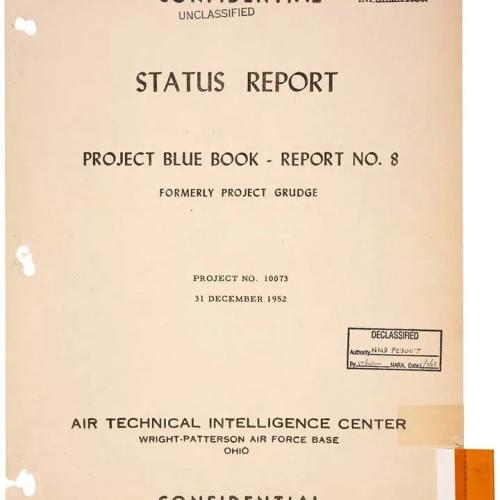
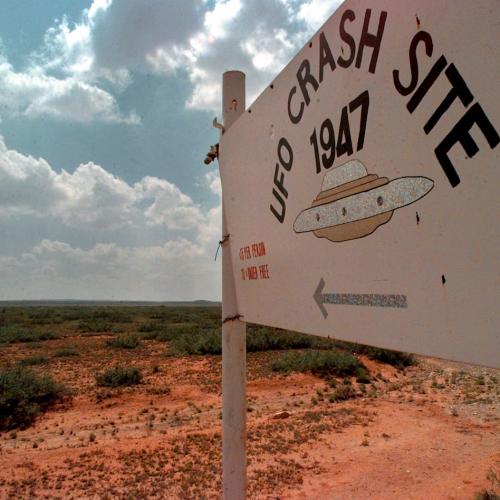
The Ministry of Defence will destroy all future UFO reports it receives so it does not have to make them public, a previously secret memo reveals. Britain's official UFO investigation unit and hotline were closed down at the start of December. Since then reports of strange sights in the skies sent to the MoD have been kept for 30 days before being thrown out, the newly released policy document shows. This stance was adopted so defence officials would not have to publish the information in response to freedom of information (FoI) requests or pass it to the National Archives. The MoD recorded 634 UFO sightings in 2009, the second highest annual total after 1978, when there were 750, according to UFO expert Dr David Clarke. This compares with an average of about 150 reports a year over the past decade. The document includes as an annex a printout from the US Department of Defence website explaining that the American government stopped collecting reports of UFO sightings in December 1969.
Note: For a concise summary of key testimony on UFO sightings by highly-credible government and military officials, click here. For astonishing media reports revealing the existence of UFOs, click here.
As a presidential candidate, Barack Obama promised transparency in government. Specifically, Obama said, well have [healthcare reform] negotiations televised on C-SPAN, so the people can see who is making arguments on behalf of their constituents and who is making arguments on behalf of the drug companies or the insurance companies. But now, the White House seems to be pulling back from that pledge. The House and Senate each of which have passed versions of healthcare reform were putting the final bill together behind closed doors according to an agreement by top Democrats. Not so fast, cry Republicans, who are feeling left out even though their general approach on the issue has been just say no. The negotiations are obviously being done in secret and the American people really just want to know what they are trying to hide, said Rep. Tom Price, (R) of Georgia.
Note: For key reports from reliable sources on government secrecy, click here.
Researchers are already using brain-computer interfaces to aid the disabled, treat diseases like Parkinson's and Alzheimer's, and provide therapy for depression and post-traumatic stress disorder. Work is under way on devices that may eventually let you communicate with friends telepathically, give you superhuman hearing and vision or even let you download data directly into your brain, a la "The Matrix." Researchers are practically giddy over the prospects. "We don't know what the limits are yet," says Melody Moore Jackson, director of Georgia Tech University's BrainLab. At the root of all this technology is the 3-pound generator we all carry in our head. It produces electricity at the microvolt level. But the signals are strong enough to move robots, wheelchairs and prosthetic limbs -- with the help of an external processor. One of the more controversial uses under development is telepathy. It would require at least two people to be implanted with electrodes that send and receive signals. DARPA, the Pentagon's technology research division, is currently working on an initiative called "Silent Talk," which would let soldiers on secret missions communicate with their thoughts alone. This stealth component is attractive, but naysayers fear that such soldiers could become manipulated for evil means.
Note: Remember that secret military research such as that undertaken by DARPA is often years ahead of capabilities publicly acknowledged.
President Obama will maintain a lid of secrecy on millions of pages of military and intelligence documents that were scheduled to be declassified by the end of the year. The missed deadline spells trouble for the White Houses promises to introduce an era of government openness, say advocates, who believe that releasing historical information enforces a key check on government behavior. They cite as an example the abuses by the Central Intelligence Agency during the Cold War, including domestic spying and assassinations of foreign officials, that were publicly outlined in a set of agency documents known as the "family jewels." The White House has given the agencies ... an extension beyond Dec. 31 of an undetermined length - possibly years. It will be the third such extension: Clinton granted one in 2000 and Bush granted one in 2003. The documents, dating from World War II to the early 1980s, cover the gamut of foreign relations, intelligence activities, and military operations. The records in question are held by the Central Intelligence Agency; the National Security Agency; the departments of Justice, State, Defense, and Energy; and other security and intelligence agencies. None of the agencies involved responded to requests for comment. Steven Aftergood, a specialist on government secrecy at the Federation of American Scientists in Washington [said] "If binding deadlines can be extended more or less at will, then any new declassification requirements will be similarly subject to doubt or defiance."
Note: These documents are all more than 25 years old. Why can't the public know what their government is trying to hide from them? For lots more on government secrecy, click here.
Though rarely shown on TV these days ... 9/11 footage is replayed more than once in "The Unofficial Story" [on the CBC News program the fifth estate]. The documentary follows up on some fairly startling public-opinion polls of late. To wit: More than half of all Americans believe the Bush administration had advance knowledge of 9/11, and did nothing to stop it; slightly more than one-third of the Canadian population believes likewise. The number of people who believe the U.S. government was involved in the attacks appears to be growing, says fifth estate veteran Bob McKeown, who helms the report. Most of them believe there are still questions that have gone unanswered. Among the group's more prominent proponents is Richard Gage, a well-regarded architect interviewed by McKeown in the program. Gage is fervent in his belief that the destruction was intentional, and was not accomplished with airplanes, but with explosives. Also speaking out for the Truthers movement is academic and Nobel Peace Prize nominee David Ray Griffin who questions the lack of NORAD response after the first plane struck the tower and Canadian professor Kee Dewdney, who insists the fabled on-board struggle between hijackers and passengers on United Airlines Flight 93 could only be a hoax. The really interesting thing to me is that you cannot get these people to speculate, observes McKeown. They will say, That is not my job.'
Note: Watch this first-ever North American major media network news documentary on the 9/11 truth movement by clicking here. And for what may be the best ever documentary on 9/11 for opening people's eyes, click here.
The Justice Department has indicated that the Obama administration is in support of renewing [three] controversial sections of the USA Patriot Act that expire later this year. The provisions that will expire in December include Section 206, that allows "roving" wiretaps so FBI agents can tap multiple phones or computers (with court authorization) that a specific person (target) may use. Another expiring provision, Section 215, is the so-called "library provision," which allows investigators to obtain [library, medical, business, banking and other] records with approval from the Foreign Intelligence Surveillance Court. And the final provision which was nicknamed the "Lone Wolf" authorization, allows intelligence gathering of people not suspected of being part of a foreign government or known terrorist organization. Critics of the Patriot Act protested loudly that the FBI could obtain individuals' library records under the legislation. [But] section 215 is much more expansive than reviewing a suspected terrorist's summer reading list. [It] allows the FBI to obtain any business record, "any tangible things," like credit card and bank statements and also allows access to medical and mental health records. The provision has been used to obtain communication and subscriber information to help set up surveillance and monitoring of computers and telephones.
Note: The American Library Association, the national organization of professional librarians, was the first and strongest defender of civil liberties after the passage of the PATRIOT Act. For a discussion of the concerns of professional librarians over this decision by the Obama administration, click here.
[President] Barack Obama has launched a fresh operation to find [Osama bin Laden]. Working with the Pakistani Army, elite squads of U.S. and British special forces were sent into Waziristan this summer to 'hunt and kill' the shadowy figure intelligence officers still call 'the principal target' of the war on terror. This new offensive is, of course, based on the premise that the 9/11 terrorist is alive. Yet what if he isn't? What if he has been dead for years, and the British and U.S. intelligence services are actually playing a game of double bluff? What if everything we have seen or heard of him on video and audio tapes since the early days after 9/11 is a fake - and that he is being kept 'alive' by the Western allies to stir up support for the war on terror? Incredibly, this is the breathtaking theory that is gaining credence among political commentators, respected academics and even terror experts. Still more questions have been raised with the publication in America and Britain of a book called Osama Bin Laden: Dead or Alive? Written by political analyst and philosopher Professor David Ray Griffin, ... it is provoking shock waves - for it goes into far more detail about his supposed death and suggests there has been a cover-up by the West. The book claims that Bin Laden died of kidney failure, or a linked complaint, on December 13, 2001, while living in Afghanistan's Tora Bora mountains close to the border with Waziristan. His burial took place within 24 hours, in line with Muslim religious rules, and in an unmarked grave, which is a Wahhabi custom. The author insists that the many Bin Laden tapes made since that date have been concocted by the West to make the world believe Bin Laden is alive. Could it be that, for years, he's just been smoke and mirrors?
Note: Hundreds of scholars, officials and professionals have raised questions about bin Laden, Al Qaeda, and other aspects of the official conspiracy about the events of 9/11. Click here and here to read their concerns.
A sleepy Montana checkpoint along the Canadian border that sees about three travelers a day will get $15 million under President Barack Obama's economic stimulus plan. A government priority list ranked the project as marginal, but two powerful Democratic senators persuaded the administration to make it happen. Despite Obama's promises that the stimulus plan would be transparent and free of politics, the government is handing out $720 million for border upgrades under a process that is both secretive and susceptible to political influence. It wasn't supposed to be that way. In 2004, Congress ordered Homeland Security to create a list, updated annually, of the most important repairs at checkpoints nationwide. But the Obama administration continued a Bush administration practice of considering other, more subjective factors when deciding which projects get money. The results: A border station in Homeland Security Secretary Janet Napolitano's home state of Arizona is getting $199 million, five times more than any other border station. A checkpoint in Laredo, Texas, which serves more than 55,000 travelers and 4,200 trucks a day, is rated among the government's highest priorities but was passed over for stimulus money. The Westhope, N.D., checkpoint, which serves about 73 people a day and is among the lowest-priority projects, is set to get nearly $15 million for renovations. The Whitetail project, which involves building a border station the size and cost of a Hollywood mansion, benefited from two key allies, Montana Sens. Max Baucus and Jon Tester.
Note: For lots more on government corruption, click here.
The murder of President Kennedy was a seminal event for me and for millions of Americans. It changed the course of history. It was a crushing blow to our country and to millions of people around the world. Today, ... profound doubts persist about how President Kennedy was killed and why. My film "JFK" was a metaphor for all those doubts, suspicions and unanswered questions. Now an extraordinary new book offers the best account I have read of this tragedy and its significance. That book is James Douglass's JFK and the Unspeakable: Why He Died and Why It Matters. In his beautifully written and exhaustively researched treatment, Douglass lays out the "motive" for Kennedy's assassination. Simply, he traces a process of steady conversion by Kennedy from his origins as a traditional Cold Warrior to his determination to pull the world back from the edge of destruction. Many of these steps are well known, such as Kennedy's disillusionment with the CIA after the disastrous Bay of Pigs Invasion, and his refusal to follow the reckless recommendations of the Joint Chiefs of Staff in resolving the Cuban Missile Crisis. But many of his steps remain unfamiliar: Kennedy's back-channel dialogue with Khrushchev and their shared pursuit of common ground; his secret opening to dialogue with Fidel Castro (ongoing the very week of his assassination); and his determination to pull out of Vietnam after his probable re-election in 1964. All of these steps caused him to be regarded as a virtual traitor by elements of the military-intelligence community. These were the forces that planned and carried out his assassination.
Note: For more on this important book, click here. For an excellent collection of the best information, videos, books, and essays on the John F. Kennedy assassination, click here.
Weapons inspector David Kelly was writing a book exposing highly damaging government secrets before his mysterious death. He was intending to reveal that he warned Prime Minister Tony Blair there were no weapons of mass destruction anywhere in Iraq weeks before the British and American invasion. He had several discussions with a publisher in Oxford and was seeking advice on how far he could go without breaking the law on secrets. Following his death, his computers were seized and it is still not known if any rough draft was discovered by investigators and, if so, what happened to the material. Dr Kelly was also intending to lift the lid on a potentially bigger scandal, his own secret dealings in germ warfare with the apartheid regime in South Africa. US television investigators have spent four years preparing a 90-minute documentary, Anthrax War, suggesting there is a global black market in anthrax and exposing the mystery suicides of five government germ warfare scientists from around the world. Director Bob Coen said: The deeper you look into the murky world of governments and germ warfare, the more worrying it becomes. We have proved there is a black market in anthrax. David Kelly was of particular interest to us because he was a world expert on anthrax and he was involved in some degree with assisting the secret germ warfare programme in apartheid South Africa. Dr Kelly was found dead in woods near his Oxfordshire home on July 17 2003. His apparent suicide came two days after he was interrogated in the Commons over his behind-the-scenes role in exposing the flaws in the sexed-up Number 10 dossier which justified Britain going to war with Iraq. Conspiracy theorists have claimed he was murdered.
Note: For more on the CBC documentary Anthrax War, click here. And to read about the strange deaths of 13 renowned microbiologists in the space of less than five months, click here.
Powerful Democrats on Capitol Hill are clamoring for creation of a bipartisan "9/11 style" commission to investigate the legality of the Bush administration's antiterrorism tacticsespecially its use of harsh interrogation techniques. The case for a "truth" commission was bolstered by the disclosure this month that the CIA had destroyed 92 videotapes of the interrogations and confinement of Al Qaeda suspects. A dozen showed the use of ... torture. Lawmakers say the obvious model for such an inquiry would be the 9/11 Commission. [But] the commission appears to have ignored obvious clues throughout 2003 and 2004 that its account of the 9/11 plot and Al Qaeda's history relied heavily on information obtained from detainees who had been subjected to torture, or something not far from it. The [Commission] raised no public protest over the CIA's interrogation methods. In fact, the Commission demanded that the CIA carry out new rounds of interrogations in 2004 to get answers to its questions. That has troubling implications for the credibility of the commission's final report. In intelligence circles, testimony obtained through torture is typically discredited; research shows that people will say anything under threat of intense physical pain. Former senator Bob Kerrey of Nebraska, a Democrat on the commission, told me last year he had long feared that the investigation depended too heavily on the accounts of Al Qaeda detainees who were physically coerced into talking. Kerrey said it might take "a permanent 9/11 commission" to end the remaining mysteries of September 11.
Note: For key statements by hundreds of respected scholars and professionals questioning the accuracy of the 9/11 Commission's report, click here.
The American International Group said on Monday that it ... had secured a new $150 billion government assistance package intended to stem the bleeding from its complex financial contracts. A central component of the new package will be to get the most tainted assets out of the company, in an effort to stop the collateral calls that have been rapidly draining A.I.G.s cash. A.I.G.s trading partners in these financial contracts will largely be made whole in the process. [An] important feature will be government investments of about $50 billion to create special-purpose entities to relieve the company of its most tainted assets. About $30 billion of the government money will be used to buy complex debt securities that were insured by A.I.G. and about $20 billion more will be used to buy securities backed by home loans. A.I.G.s counterparties financial institutions in the United States and Europe have not borne significant losses on the financial contracts that led A.I.G. to the brink, and the new program suggests they will not. Were funding somebody on the other side of A.I.G.s derivatives contracts, said Lynn E. Turner, a former chief accountant with the Securities and Exchange Commission. Neither A.I.G. nor the federal government has been willing to provide the names of the companys biggest counterparties, or their amount of exposure. Weve had way too many things here that nobody knows anything about, said Mr. Turner, who is on the Treasurys Advisory Committee on the Auditing Profession. Thats why no one has faith in the capital markets.
Note: The culture of secrecy around this bailout using nearly $1 trillion of taxpayer money is appalling. For many revealing and reliable reports on the Wall Street bailout, click here.
The Federal Reserve is refusing to identify the recipients of almost $2 trillion of emergency loans from American taxpayers or the troubled assets the central bank is accepting as collateral. Fed Chairman Ben S. Bernanke and Treasury Secretary Henry Paulson said in September they would comply with congressional demands for transparency in a $700 billion bailout of the banking system. Two months later, as the Fed lends far more than that in separate rescue programs that didn't require approval by Congress, Americans have no idea where their money is going or what securities the banks are pledging in return. Bloomberg News has requested details of the Fed lending under the U.S. Freedom of Information Act and filed a federal lawsuit Nov. 7 seeking to force disclosure. The Fed made the loans under terms of 11 programs, eight of them created in the past 15 months. The Fed's lending is significant because the central bank has stepped into a rescue role that was also the purpose of the $700 billion Troubled Asset Relief Program, or TARP, bailout plan -- without safeguards put into the TARP legislation by Congress. Total Fed lending topped $2 trillion for the first time last week and has risen by 140 percent, or $1.172 trillion, in the seven weeks since Fed governors relaxed the collateral standards on Sept. 14. The nation's biggest banks, Citigroup, Bank of America Corp., JPMorgan Chase, Wells Fargo & Co., Goldman Sachs Group Inc. and Morgan Stanley, declined to comment on whether they have borrowed money from the Fed. They received $120 billion in capital from the TARP, which was signed into law Oct. 3.
Note: For many revealing and reliable reports on the Wall Street bailout, click here.
The case of a freelance photographer in Iraq who was barred from covering the Marines after he posted photos on the Internet of several of them dead has underscored what some journalists say is a growing effort by the American military to control graphic images from the war. Zoriah Miller, the photographer who took images of marines killed in a June 26 suicide attack and posted them on his Web site, was subsequently forbidden to work in Marine Corps-controlled areas of the country. After five years and more than 4,000 American combat deaths, searches and interviews turned up fewer than a half-dozen graphic photographs of dead American soldiers. Opponents of the war, civil liberties advocates and journalists argue that the public portrayal of the war is being sanitized and that Americans who choose to do so have the right to see in whatever medium the human cost of a war that polls consistently show is unpopular with Americans. Journalists say it is now harder ... to accompany troops in Iraq on combat missions. And while publishing photos of American dead is not barred under the embed rules in which journalists travel with military units, the Miller case underscores what is apparently one reality of the Iraq war: that doing so, even under the rules, can result in expulsion from covering the war with the military. "It is absolutely censorship, Mr. Miller said. I took pictures of something they didnt like, and they removed me. Deciding what I can and cannot document, I dont see a clearer definition of censorship."
Note: For more coverage of war censorship and the realities of the Iraq and Afghanistan wars, click here.
The framework under which detainees were imprisoned for years without charges at Guantanamo and in many cases abused in Afghanistan wasn't the product of American military policy or the fault of a few rogue soldiers. It was largely the work of five White House, Pentagon and Justice Department lawyers who, following the orders of President Bush and Vice President Dick Cheney, reinterpreted or tossed out the U.S. and international laws that govern the treatment of prisoners in wartime, according to former U.S. defense and Bush administration officials. The Supreme Court now has struck down many of their legal interpretations. The quintet of lawyers, who called themselves the War Council," drafted legal opinions that circumvented the military's code of justice, the federal court system and America's international treaties in order to prevent anyone ... from being held accountable for activities that at other times have been considered war crimes. The international conventions ... to which [the US is] a party, were abandoned in secret meetings among the five men in one another's offices: ... David Addington, the ... longtime legal adviser and now chief of staff to Cheney [whose] primary motive, according to several former administration and defense officials, was to push for an expansion of presidential power that Congress or the courts couldn't check; Alberto Gonzales, first the White House counsel and then the attorney general; William J. Haynes II, the former Pentagon general counsel; former Justice Department lawyer John Yoo, [and] Timothy E. Flanigan, a former deputy to Gonzales.
Note: Virtually no major media other than the Herald picked up this key story.
Important Note: Explore our full index to revealing excerpts of key major media news articles on several dozen engaging topics. And don't miss amazing excerpts from 20 of the most revealing news articles ever published.



