














News Articles
Below are key excerpts of revealing news articles from reliable news media sources. If any link fails to function, a paywall blocks full access, or the article is no longer available, try these digital tools.
For further exploration, delve into our comprehensive Information Centers.

The U.S. government secretly allowed radiation from a damaged reactor to be released into air over the San Fernando and Simi valleys in the wake of a major nuclear meltdown in Southern California more than 50 years ago fallout that nearby residents contend continues to cause serious health consequences and, in some cases, death. "Area Four," which is part of the once-secret Santa Susana Field Lab, [was] founded in 1947 to test experimental nuclear reactors and rocket systems. In 1959, Area Four was the site of one of the worst nuclear accidents in U.S. history. But the federal government still hasn't told the public that radiation was released into the atmosphere as a result of the partial nuclear meltdown. Now, whistleblowers ... have recounted how during and after that accident they were ordered to release dangerous radioactive gases into the air above Los Angeles and Ventura counties, often under cover of night, and how their bosses swore them to secrecy. For years starting in 1959, workers at Area Four were routinely instructed to release radioactive materials into the air above neighboring communities, through the exhaust stacks of nuclear reactors, open doors, and by burning radioactive waste. Radioactive contamination ... remains in the soil and water of Area Four and in some areas off-site. The fallout could be linked to illnesses, including cancer, among residents living nearby. In addition to the radiation, dozens of toxic chemicals, including TCE and Perchlorate, were also released ... from the 1950s to 80s.
Note: The government is lying, and people are dying. For lots more on this huge nuclear cover-up, see this NBC article and this one. You can also watch an eight-minute History Channel video on this disaster. The video states that the amount of radiation released during this accident was 240 times the amount released at Three Mile Island, making it one of the worst nuclear disasters in history, yet it was all kept secret. For more, see concise summaries of deeply revealing news articles on government corruption and nuclear power issues.
Peer review is supposed to be the pride of the rigorous academic publishing process. But increasingly journals are finding out that those supposedly authoritative checks are being rigged. In the latest episode of the fake peer review phenomenon, one of the worlds largest academic publishers, Springer, has retracted 64 articles from 10 of its journals after discovering that their reviews were linked to fake e-mail addresses. The announcement comes nine months after 43 studies were retracted by BioMed Central (one of Springers imprints) for the same reason. Retraction Watch co-founder Ivan Oransky ... said he didnt know of any instances of retractions for faked peer reviews before 2012. In a report for the journal Nature last fall, Oransky and his colleagues told the story of a ... researcher who wrote peer reviews for 28 of his own papers. Investigations ... have also uncovered a number of services selling names and contact information for made-up experts guaranteed to give an expedited, positive review. In a statement on its Web site in February, the Committee on Publication Ethics (COPE) detailed these agencies systematic, inappropriate attempts to manipulate the process. COPEs chair Ginny Barbour wrote in December, The uncovering of companies systematically manipulating publications, by the use of fake reviewers and more, offers an alarming glimpse into what can happen if reward systems are implemented with no thought or oversight.
Note: The editor of a top medical journal recently suggested that half all of scientific literature may simply be untrue. For more along these lines, see concise summaries of deeply revealing news articles about corruption in science.
A safe that tallies the cash that is placed in it. A sniper rifle equipped with advanced computer technology for improved accuracy. A car that lets you stream music from the Internet. All of these innovations sound great, until you learn the risks that this type of connectivity carries. Recently, two security researchers, sitting on a couch and armed only with laptops, remotely took over a Chrysler Jeep Cherokee speeding along the highway ... while a Wired reporter was driving. A hacked car is a high-profile example of what can go wrong with the coming Internet of Things objects equipped with software and connected to digital networks. The selling point ... is added convenience and better safety. In reality, it is a ... train wreck in privacy and security. That smart safe? Hackers can empty it with a single USB stick while erasing all [evidence] of their crime. That high-tech rifle? Researchers managed to remotely manipulate its target selection without the shooters knowing. The Internet of Things is also a privacy nightmare. Databases that already have too much information about us will now be bursting with data on the places weve driven, the food weve purchased and more. Last week, at Def Con, the annual information security conference, researchers set up an Internet of Things Village to show how they could hack everyday objects like baby monitors, thermostats and security cameras. Connecting everyday objects introduces new risks if done at mass scale. Once a hacker is in - she's in everywhere.
Note: Read how a hacked vehicle may have resulted in journalist Michael Hastings' death in 2013. The networked computerization of everyday objects means that these objects can spy on you, accelerating the disappearance of privacy in the name of convenience. What will happen when the "internet of things" expands to include microchip implants in people?
For the fearmongers in the West and their allies, its always the scariest time ever. In February, former CIA Deputy Director Michael Morrell, arguing for renewal of the Patriot Act, warned that the lone wolf terrorist threat to the United States has never been greater. In January, an anonymous senior aide to U.K. Prime Minister ... argued for a new snooper bill by saying that the terrorist threat has never been greater. In mid-2014, U.K. Prime Minister Cameron himself raised the threat level to severe and announced: Britain faces the greatest and deepest terror threat in the countrys history. Throughout the Bush years ... officials raised their color-coded terror alerts and issued similar warnings so many times that it became a running joke. Years later, the face of that joke, Homeland Security Secretary Tom Ridge, admitted he was pressured to issue warnings for political gain. Here we are 14 years after 9/11, and its still always the worst threat ever in all of history. If we always face the greatest threat ever, then one of two things is true: 1) fearmongers serially exaggerate the threat for self-interested reasons, or 2) the threat is always getting more severe, year after year which might mean we should evaluate the wisdom of terrorism policies that constantly make the problem worse. Whatever else is true, the people who should have the least credibility on the planet are [those] who have spent the last 15 years exploiting the terror threat in order to terrorize the American population into doing what they want.
Note: Read an excellent essay by a top US general exposing how war is a racket. For more along these lines, see concise summaries of deeply revealing news articles about corruption in the intelligence community and the manipulation of public perception.
Five of the worlds largest banks have agreed to pay more than $5 billion in fines to settle charges made by regulatory agencies and the Justice Department that the banks had acted in concert to manipulate international interest and foreign currency exchange rates. Attorney General Loretta E. Lynch said the banks had engaged in brazenly illegal behavior on a near-daily basis. The scale of the price-fixing scandal is hard to grasp. It touched ... almost every company and individual in the financial markets. By tweaking global benchmarks used to set foreign exchange and interest rates for a staggering number of transactions a day, the banks over several years bilked billions of dollars of extra profits by altering rates in their favor. Critics complained that the Justice Department had failed to prosecute any additional individuals. Wall Street watchdog group Better Markets called it a slap on the wrist, and Sen. Elizabeth Warren (D-Mass.) said in an e-mail: Thats not accountability for Wall Street. Its business as usual, and it stinks. Barclays, along with JPMorgan Chase, Royal Bank of Scotland Group and Citigroup, will plead guilty to conspiring to manipulate the price of U.S. currency and euros, authorities said. JPMorgan Chase said it had agreed to plead guilty to a single antitrust violation and pay a fine of $550 million. Under the resolution with the Fed, the firm will pay a fine of $342 million. The bank said it had previously set aside reserves for these settlements.
Note: When it comes to international banking, it appears that almost everything is rigged. For more along these lines, see concise summaries of deeply revealing news articles about the systemically corrupt financial industry.
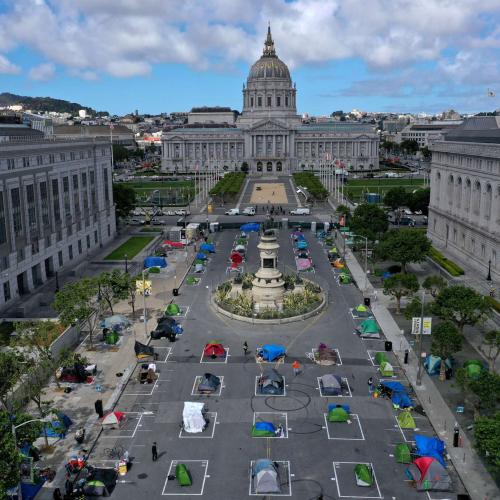
Meet Sam Tsemberis. He's all but solved chronic homelessness. His research, which commands the support of most scholars, has inspired policies across the nation. The results have been staggering. Late last month, Utah, the latest laboratory for Tsemberis's models, reported it has nearly eradicated chronic homelessness. Phoenix, an earlier test case, eliminated chronic homelessness among veterans. Then New Orleans housed every homeless veteran. Homelessness has long seemed one of the most intractable of social problems. For decades, the number of homeless from New York City to San Francisco surged and so did the costs. At one point around the turn of the millennium, New York was spending an annual $40,500 on every homeless person with mental issues. Tsemberis ... unfurled a model so simple children could grasp it, so cost-effective fiscal hawks loved it, so socially progressive liberals praised it. Give homes for the homeless, and you will solve chronic homelessness. Success begat success. The federal government tested the model on 734 homeless across 11 cities, finding the model dramatically reduced levels of addiction as well as shrank health related costs by half. "Adults who have experienced chronic homelessness may be successfully housed and can maintain their housing," the report declared. Utah's Gordon Walker, explain[s] how his state succeeded at eliminating homelessness and saved millions, "It was costing us in state services, health-care costs, jail time, police time, about $20,000 per person. Now, we spend $12,000 per person."
Note: Explore a treasure trove of concise summaries of incredibly inspiring news articles which will inspire you to make a difference.
Several industries have become notorious for the millions they spend on influencing legislation. But one has managed to quickly build influence with comparatively little scrutiny: Private prisons. The two largest for-profit prison companies in the United States GEO and Corrections Corporation of America and their associates have funneled more than $10 million to candidates since 1989 and have spent nearly $25 million on lobbying efforts. Meanwhile, these private companies have seen their revenue and market share soar. They now rake in a combined $3.3 billion in annual revenue and the private federal prison population more than doubled between 2000 and 2010. A report by the Justice Policy Institute ... identified the private-prison industrys three-pronged approach to increase profits through political influence: lobbying, direct campaign contributions, and building relationships and networks. Private-prison companies have indirectly supported policies that put more Americans and immigrants behind bars ... by donating to politicians who support them. With the growing influence of the prison lobby, the nation is, in effect, commoditizing human bodies for an industry in militant pursuit of profit. For instance, privatization created the atmosphere that made the Kids For Cash scandal possible, in which two Pennsylvania judges received $2.6 million in kickbacks from for-profit juvenile detention centers for sending more kids to the facilities and with unusually long sentences.
Note: The "Cash for Kids" scandal mentioned in the article above resulted in the unlawful incarceration of thousands of kids. Few are aware that violent crime rates have dropped to 1/3 of what they were in 1993, yet prison spending continues to skyrocket. For more along these lines, see concise summaries of deeply revealing news articles on corruption in government and in the prison industry.
The Justice Department and FBI have formally acknowledged that nearly every examiner in an elite FBI forensic unit gave flawed testimony in almost all trials in which they offered evidence against criminal defendants over more than a two-decade period before 2000. Of 28 examiners with the FBI Laboratorys microscopic hair comparison unit, 26 overstated forensic matches in ways that favored prosecutors in more than 95 percent of the 268 trials reviewed so far, according to the National Association of Criminal Defense Lawyers (NACDL) and the Innocence Project, which are assisting the government with the countrys largest post-conviction review of questioned forensic evidence. The cases include those of 32 defendants sentenced to death. Of those, 14 have been executed or died in prison, the groups said under an agreement with the government to release results after the review of the first 200 convictions. The admissions mark a watershed in one of the countrys largest forensic scandals, highlighting the failure of the nations courts for decades to keep bogus scientific information from juries, legal analysts said. The question now, they said, is how state authorities and the courts will respond to findings that confirm long-suspected problems with subjective, pattern-based forensic techniques like hair and bite-mark comparisons that have contributed to wrongful convictions in more than one-quarter of 329 DNA-exoneration cases since 1989.
Note: For more along these lines, see concise summaries of deeply revealing news articles on the threats to civil liberties posed by government corruption from reliable major media sources.
People who receive flu vaccines year after year can sometimes show reduced protection, an effect that Canadian infectious disease specialists say muddies public health messages for annual flu vaccine campaigns. During the 2009 H1N1 pandemic, researchers at the B.C. Centre for Disease Control originally thought seasonal flu shots from 2008 might offer extra protection. They were puzzled to find instead, seasonal flu vaccination almost doubled the risk of infection with pandemic flu. Dr. Danuta Skowronski and her colleagues went on to do five more studies during the summer that showed the same effect in people and in ferrets, which are considered the best animal model of flu. What was originally called "the Canadian problem" has since been found in a randomized control trial by researchers in Hong Kong ... Japan and the U.S. Researchers in several countries have found a blunting or "interference" effect between previous seasonal vaccines and reduced levels of vaccine protection in later years. "People do not have a good explanation for why," said Dr. Michael Gardam, director of infection prevention and control at Toronto's University Health Network. "We have kind of hyped this vaccine so much for so long we are starting to believe our own hype. Really, what we should be doing is looking for better vaccines," Gardam said. In the meantime, public health officials who aim to protect people from flu complications need to grapple with the imperfections of a vaccine given every year to a moving target of strains.
Note: Healthcare workers in New York protested the government mandate that they be given this vaccine, from which drug companies made billions of dollars. For more, see concise summaries of deeply revealing news articles about the mysterious and profitable avian and swine flu panics and questioning the effectiveness of many other vaccines.
The Obama version of national security looks almost indistinguishable from the one he inherited. Critics tend to focus on Obama himself, but Tufts University political scientist Michael J. Glennon has a more pessimistic answer: Obama couldnt have changed policies much even if he tried. Our government no longer works that way. In a new book, National Security and Double Government, he catalogs the ways that the defence and national security apparatus is effectively self-governing, with virtually no accountability, transparency, or checks and balances of any kind. He uses the term double government: Theres the one we elect, and then theres the one behind it, steering huge swaths of policy almost unchecked. Elected officials end up serving as mere cover for the real decisions made by the bureaucracy. National Security and Double Government comes favorably blurbed by former members of the Defense Department, State Department, White House, and even the CIA. Glennon spoke with Ideas from his office. IDEAS: Where does the term double government come from? GLENNON: Walter Bagehot - the scholar who presided over the birth of The Economist magazine. IDEAS: What evidence exists for saying America has a double government? GLENNON: The documented evidence in the book is substantial there are 800 footnotes. I think the American people ... believe that when they vote for a president or member of Congress or succeed in bringing a case before the courts, that policy is going to change. Policy by and large in the national security realm is made by the concealed institutions.
Note: For more along these lines, see concise summaries of deeply revealing stories about questionable intelligence agency practices from reliable sources.
Traditionally, you wouldn't gift someone a rat. Tanzania-based NGO Apopo, however, thinks rats make excellent gifts. So much so that they've launched an adopt-a-rat program, which allows participants to sponsor the animal. Despite the creatures' reputation for thieving and spreading disease, [Apopo's founder Bart] Weetjens has proven that rats can ... save lives. Apopo's rats have actually saved thousands. They are highly trained to sniff out land mines and detect tuberculosis - two scourges that have had a tremendously negative impact across the African continent. And his rats are fast. A single rat can clear 200 square feet in an hour (done manually, the same area would take 50 hours to clear). A TB-detection rat can evaluate 50 samples in eight minutes (almost a day's work for a lab technician). In 2006, Weetjens started testing his "hero rats," as he dubs them, on the mine fields in Mozambique, a country that at that time was one of the worst affected by landmines, thanks mainly to a civil war that ended in 1992. Since then, Apopo has cleared the country of 6,693 landmines, 29,934 small arms and ammunition, and 1,087 bombs. Mozambique is on track to be free of landmines by the year's end. In 2005, the World Health Organization (WHO) declared a TB crisis in Africa. It's a problem Weetjens realized he could address with his sniffer rats. So far, they've analyzed over 260,000 samples from health clinics in Dar es Salaam. They are cheap to train, cheaper to procure, and plentiful.
Note: Explore a treasure trove of concise summaries of incredibly inspiring news articles which will inspire you to make a difference.
In the 1980s, leading consultants were skeptical about cellular phones. The handsets were heavy, batteries didnt last long, coverage was patchy, and the cost per minute was exorbitant. The experts are saying the same about solar energy now. They say that solar is inefficient, too expensive to install, and unreliable, and will fail without government subsidies. They too are wrong. Solar will be as ubiquitous as cellular phones are. Futurist Ray Kurzweil notes that solar power has been doubling every two years for the past 30 years as costs have been dropping. He says solar energy is only six doublings or less than 14 years away from meeting 100 percent of todays energy needs. By Kurzweils estimates, inexpensive renewable sources will provide more energy than the world needs in less than 20 years. In places such as Germany, Spain, Portugal, Australia, and the Southwest United States, residential-scale solar production has already reached grid parity with average residential electricity prices. In other words, it costs no more in the long term to install solar panels than to buy electricity from utility companies. The prices of solar panels have fallen 75 percent in the past five years alone and will fall much further as the technologies to create them improve and scale of production increases. By 2020, solar energy will be price-competitive with energy generated from fossil fuels on an unsubsidized basis in most parts of the world. Within the next decade, it will cost a fraction of what fossil fuel-based alternatives do. Despite the skepticism of experts and criticism by naysayers, there is little doubt that we are heading into an era of unlimited and almost free clean energy.
Note: This article also points out how some big energy companies and the Koch brothers are lobbying to stop alternative technologies from flowering. Read through a rich collection of energy news articles with inspiring and revealing news on energy developments. And explore a treasure trove of concise summaries of incredibly inspiring news articles which will inspire you to make a difference.
Nearly all of the highest-profile domestic terrorism plots in the United States since 9/11 featured the "direct involvement" of government agents or informants, a new report says. Some of the controversial "sting" operations "were proposed or led by informants", bordering on entrapment by law enforcement. Yet the courtroom obstacles to proving entrapment are significant, one of the reasons the stings persist. The lengthy report, released on [July 21] by Human Rights Watch, raises questions about the US criminal justice system's [respect for] civil rights and due process in post-9/11 terrorism cases. [The report] portrays a system that features not just the sting operations but secret evidence, anonymous juries, extensive pretrial detentions and convictions significantly removed from actual plots. "In some cases the FBI may have created terrorists out of law-abiding individuals by suggesting the idea of taking terrorist action or encouraging the target to act," the report alleges. Out of the 494 cases related to terrorism the US has tried since 9/11, the plurality of convictions ... are not for thwarted plots but for "material support" charges, a broad category expanded further by the 2001 Patriot Act that permits prosecutors to pursue charges with tenuous connections to a terrorist act or group. Several cases featured years-long solitary confinement for accused terrorists before their trials. Some defendants displayed signs of mental incapacity. Jurors for the 2007 plot to attack the Fort Dix army base, itself influenced by government informants, were anonymous, limiting defense counsel's ability to screen out bias.
Note: Why was this important news not picked up by any major US media? For more on this, see concise summaries of deeply revealing intelligence agency operations news articles from reliable major media sources.
In March I received a call from the White House counsels office regarding a speech I had prepared for my boss at the State Department. The speech was about the impact ... of National Security Agency surveillance practices. The draft stated that if U.S. citizens disagree with congressional and executive branch determinations about the proper scope of signals intelligence activities, they have the opportunity to change the policy through our democratic process. But the White House counsels office told me that no, that wasnt true. I was instructed to amend the line. Some intelligence practices remain so secret, even from members of Congress, that there is no opportunity for our democracy to change them. Public debate about the bulk collection of U.S. citizens data by the NSA has focused largely on Section 215 of the Patriot Act. Based in part on classified facts that I am prohibited by law from publishing, I believe that Americans should be even more concerned about the collection and storage of their communications under Executive Order 12333 than under Section 215. Unlike Section 215, the executive order authorizes collection of the content of communications, not just metadata, even for U.S. persons. It does not require that the affected U.S. persons be suspected of wrongdoing and places no limits on the volume of communications by U.S. persons that may be collected and retained. None of the reforms that Obama announced earlier this year will affect such collection.
Note: The above was written by John Napier Tye, former section chief for Internet freedom in the State Departments Bureau of Democracy, Human Rights and Labor. A 2014 Washington Post investigation sheds more light on the NSA's legally dubious domestic mass surveillance program. For more along these lines, see concise summaries of deeply revealing news articles about intelligence agency corruption and the disappearance of privacy.
Global gold prices may have been manipulated on 50 per cent of occasions between January 2010 and December 2013, according to analysis by Fideres, a consultancy. The findings come amid a probe by German and UK regulators into alleged manipulation of the gold price, which is set twice a day by Deutsche Bank, HSBC, Barclays, Bank of Nova Scotia and Socit Gnrale in a process known as the London gold fixing. Fideres research found the gold price frequently climbs (or falls) once a twice-daily conference call between the five banks begins, peaks (or troughs) almost exactly as the call ends and then experiences a sharp reversal, a pattern it alleged may be evidence of collusive behaviour. [This] is indicative of panel banks pushing the gold price upwards on the basis of a strategy that was likely predetermined before the start of the call in order to benefit their existing positions or pending orders, Fideres concluded. The behaviour of the gold price is very suspicious in 50 per cent of cases. This is not something you would expect to see if you take into account normal market factors, said Alberto Thomas, a partner at Fideres. Alasdair Macleod, head of research at GoldMoney, a dealer in physical gold, added: When the banks fix the price, the advantage they have is that they know what orders they have in the pocket. BaFin, the German regulator, has launched an investigation into gold-price manipulation and demanded documents from Deutsche Bank. The UKs Financial Conduct Authority is also examining how the price of gold and other precious metals is set as part of a wider probe into benchmark manipulation following findings of wrongdoing with respect to Libor and similar allegations with respect to the foreign exchange market.
Important Note: The above article was removed from the Financial Times website just two days after it was posted. How strange. To read the full article on another website, click here. And for a BBC article which shows how the Rothschilds fixed gold prices in the past, click here. For more on financial corruption, see the deeply revealing reports from reliable major media sources available here.
Less than two weeks after the 2011 raid that killed Osama bin Laden, a top Pentagon official ordered all photos of bin Laden's corpse be destroyed or turned over to the CIA. In an e-mail dated May 13, 2011, Adm. William McRaven, the U.S. Special Operations commander, wrote: "One particular item that I want to emphasize is photos; particularly UBLs remains. At this point all photos should have been turned over to the CIA; if you still have them destroy them immediately or get them to the (redacted)." Shortly after the raid in Pakistan, President Obama said he would not authorize the release of any images of the al-Qaeda leader's body. Days before the order to destroy the photos, watchdog group Judicial Watch and the Associated Press had separately filed a Freedom of Information Act request for photos, videos and documents regarding bin Laden during the raid. Typically, when a Freedom of Information Act request is filed to a government agency under the Federal Records Act, the agency is obliged to preserve the material sought even if the agency later denies the request.
Note: Why would a top military commander order all photos of bin Laden's dead body destroyed? Why would Obama prevent the release of any images of the body? For powerful evidence that the dead body was not, in fact, bin Laden's, click here and here. For other solid evidence that the official story of 9/11 is riddles with holes, see our 9/11 Information Center available here.
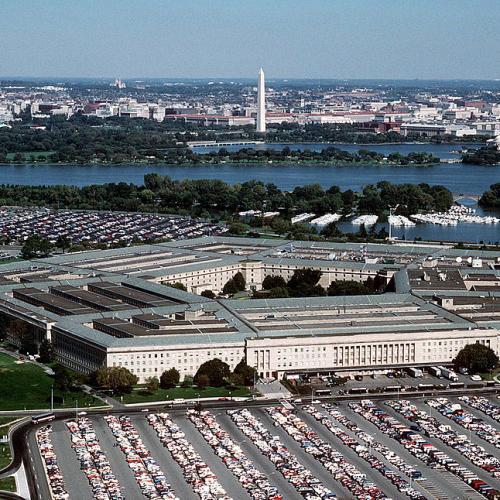
The Defense Department has launched 20 or more projects to build modern business-management systems since the late 1990s. At least five were subsequently killed as complete failures after billions of dollars were spent on them. With each failure, a pattern emerges: An off-the-shelf product with a proven track record in the private sector is chosen and then modified to the point where it doesn't work properly. The Pentagon is unable to account for itself, and thus for roughly half of all congressionally approved annual federal spending. Interviews with scores of current and former defense officials, contractors and Pentagon watchers, as well as a review of dozens of reports by oversight agencies, show that the Pentagon is continually thwarted by a lack of accountability for failures ... and an incentive to spend. All other federal agencies are audited annually ... and with rare exceptions, they pass every year. The Pentagon alone has never been audited, leaving roughly $8.5 trillion in taxpayer dollars unaccounted for since 1996. The Pentagon has for years kept lousy books with impunity. The 2009 law requiring the Defense Department to be audit-ready by 2017 provides for no penalties if it misses the deadline. From 1995 through 2002, Senator Charles Grassley pushed through an amendment to the annual defense appropriations bill requiring the Pentagon to account for its expenditures by following one seemingly simple procedure: match each payment to the expense it covered. The order was ignored, and Grassley gave up. There is no doubt that bad bookkeeping conceals movements of money that in some instances are illegal.
Note: See also this article on the Reuters website. This article sadly fails to state the obvious: Many military officers illegally rake in tons of money with false contracts which benefit those officers and contracting companies. They obviously don't want their accounts to be properly audited. For a revealing essay by a top U.S. general exposing major war manipulations, click here. For more on military corruption, see the deeply revealing reports from reliable major media sources available here.
Swedish prisons have long had a reputation around the world as being liberal and progressive. The head of Sweden's prison and probation service, Nils Oberg, announced in November that four Swedish prisons are to be closed due to an "out of the ordinary" decline in prisoner numbers. Although there has been no fall in crime rates, between 2011 and 2012 there was a 6% drop in Sweden's prisoner population, now a little over 4,500. A similar decrease is expected this year and the next. The Swedes [have] managed to maintain a broadly humane approach to sentencing, even of the most serious offenders: jail terms rarely exceed 10 years; those who receive life imprisonment can still apply to the courts after a decade to have the sentence commuted to a fixed term, usually in the region of 18 to 25 years. Sweden was the first country in Europe to introduce the electronic tagging of convicted criminals and continues to strive to minimise short-term prison sentences wherever possible by using community-based measures proven to be more effective at reducing reoffending. The overall reoffending rate in Sweden stands at between 30 and 40% over three years around half that in the UK. One likely factor that has kept reoffending down and the rate of incarceration in Sweden below 70 per 100,000 head of population less than half the figure for England and Wales is that the age of criminal responsibility is set at 15. Unlike the UK, where a life sentence can be handed down to a 10-year-old, in Sweden no young person under the age of 21 can be sentenced to life and every effort is made to ensure that as few juvenile offenders as possible end up in prison.
Note: For a Time magazine article showing how Norway's prisons actually rehabilitate prisoners so that they can more easily fit back in society, click here. For a treasure trove of great news articles which will inspire you to make a difference, click here.
Linda Woodford spent the last 15 years of her career inserting phony numbers in the U.S. Department of Defenses accounts. Every month ... the Navy would [dump] numbers on the Cleveland, Ohio, office of the Defense Finance and Accounting Service, the Pentagons main accounting agency. Using the data they received, Woodford and her fellow DFAS accountants there set about preparing monthly reports to square the Navys books with the U.S. Treasurys. And every month, they encountered the same problem. Numbers were missing. Numbers were clearly wrong. Numbers came with no explanation of how the money had been spent or which congressional appropriation it came from. Woodford and her colleagues were told by superiors to take unsubstantiated change actions - in other words, enter false numbers, commonly called plugs, to make the Navys totals match the Treasurys. And plugging isnt confined to DFAS. Former military service officials say record-keeping at the operational level throughout the services is rife with made-up numbers to cover lost or missing information. The Defense Departments 2012 budget totaled $565.8 billion. How much of that money is spent as intended is impossible to determine. The Pentagon is largely incapable of keeping track of its vast stores of weapons, ammunition and other supplies. It has amassed a backlog of more than half a trillion dollars in unaudited contracts with outside vendors; how much of that money paid for actual goods and services delivered isnt known.
Note: Could it be that the real reason the Pentagon is the only branch of US government that doesn't balance its books is that they don't want us to know where the money is going? For more along these lines, see concise summaries of deeply revealing military corruption news articles from reliable major media sources.
[Timothy] Jackson was convicted of shoplifting and sent to Angola prison in Louisiana. That was 16 years ago. Today he is still incarcerated in Angola, and will stay there for the rest of his natural life having been condemned to die in jail. All for the theft of a jacket, worth $159. Jackson, 53, is one of 3,281 prisoners in America serving life sentences with no chance of parole for non-violent crimes. Some, like him, were given the most extreme punishment short of execution for shoplifting; one was condemned to die in prison for siphoning petrol from a truck; another for stealing tools. It has been very hard for me, Jackson wrote to the American Civil Liberties Union (ACLU) as part of its new report on life without parole for non-violent offenders. The ACLU's report, A Living Death, chronicles the thousands of lives ruined and families destroyed by the modern phenomenon of sentencing people to die behind bars for non-violent offences. Most of those ... inmates held on life without parole sentences were given their punishments by the federal government. More than 2,000 of the 3,281 individuals tracked down on these sentences by the ACLU are being held in the federal system. Taxpayers pay an additional $1.8bn to keep the prisoners locked up for the rest of their lives. About 65% of the prisoners identified nationwide by the ACLU are African American. Of the prisoners serving life without parole for non-violent offences nationwide, the ACLU estimates that almost 80% were for drug-related crimes.
Note: For more along these lines, see concise summaries of deeply revealing news articles on judicial system corruption from reliable major media sources.
Important Note: Explore our full index to revealing excerpts of key major media news articles on several dozen engaging topics. And don't miss amazing excerpts from 20 of the most revealing news articles ever published.