






































Corporate Corruption News Articles
Below are key excerpts of revealing news articles on corporate corruption from reliable news media sources. If any link fails to function, a paywall blocks full access, or the article is no longer available, try these digital tools.

Why have so many smart, well-trained doctors stood by as American healthcare descended into a state of profound dysfunction? The answer lies in the gradual, nearly invisible commercial takeover of the medical “knowledge” that doctors are trained to trust. In 1981, President Ronald Reagan slashed government support of university-based medical research. Following the 1980 passage of the University and Small Business Patent Procedures Act, nonprofit institutions and their researchers were allowed to benefit financially from the discoveries made while conducting federally funded research. Over the past few decades, the drug companies have taken over most of our clinical research. In 1991, academic medical centers (AMCs)—hospitals that train doctors and conduct medical research—received 80 percent of the money that industry was spending to fund clinical trials. But by 2004, the percentage of commercially funded clinical trials conducted by AMCs had fallen from 80 to just 26 percent. That ... allowed the commercial funder to own, and thus control, the data from jointly conducted research. Unbeknownst to almost all doctors, peer reviewers are not granted access to the underlying data that serves as the basis for the reported findings. The drug companies own that data and keep it confidential. Reviewers must rely on brief data summaries. Peer reviewers at even the most prestigious medical journals cannot possibly attest to the accuracy and completeness of the articles they review.
Note: For more along these lines, see concise summaries of deeply revealing news articles on corruption in science and Big Pharma profiteering from reliable major media sources.
On September 19, 2019, House Speaker Nancy Pelosi introduced the Elijah Cummings Lower Drug Costs Now Act. The bill ... would allow the federal government to negotiate drug prices on behalf of Medicare, a right assumed by the governments of every other major economy. Polls showed support ranging from 80 to an eye-popping 90-plus percent. H.R. 3 was delivered stillborn into Mitch McConnell’s Senate in November of 2019. Two years later, when Joe Biden released the massive social-spending and climate-change bill dubbed Build Back Better, H.R. 3’s reforms were nowhere to be found. And at every level of government, Pharma’s endless river of money continues to flow, the widest, steadiest current of lobbying largesse the capitol has ever known. In 2021, the industry reported spending $124 million on a fleet of 846 lobbyists, roughly two for every member of Congress. Sixty-five percent were former government employees. Pharmaceutical manufacturers are part of a larger coalition that includes the insurance, medical-device, and hospital industries. Its combined resources flow downstream through dozens of lobbying firms, communications shops, and front groups. “If a freshman Democrat so much as signs a letter related to drug prices, the lobby hammers them with phone calls and meeting requests, completely locking up the calendar,” says Alex Lawson, executive director of Social Security Works. “The calls come in from ex-Democratic officials and staffers, so they have to take the meetings.”
Note: For more along these lines, see concise summaries of deeply revealing news articles on government corruption and Big Pharma profiteering from reliable major media sources.
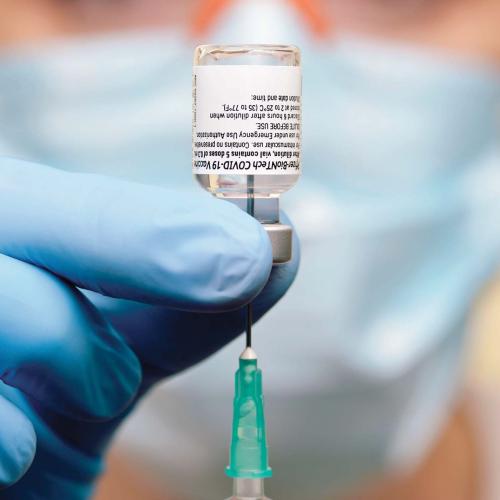
Last year, racing to develop a vaccine in record time, Pfizer made a big decision: Unlike several rival manufacturers, which vowed to forgo profits on their shots during the Covid-19 pandemic, Pfizer planned to profit on its vaccine. On Tuesday, the company announced just how much money the shot is generating. The vaccine brought in $3.5 billion in revenue in the first three months of this year, nearly a quarter of its total revenue, Pfizer reported. The vaccine was, far and away, Pfizer's biggest source of revenue. The company did not disclose the profits it derived from the vaccine, but it reiterated its previous prediction that its profit margins on the vaccine would be in the high 20 percent range. That would translate into roughly $900 million in pretax vaccine profits in the first quarter. The company's vaccine is disproportionately reaching the world's rich – an outcome, so far at least, at odds with its chief executive's pledge to ensure that poorer countries "have the same access as the rest of the world" to a vaccine that is highly effective at preventing Covid-19. As of mid-April, wealthy countries had secured more than 87 percent of the more than 700 million doses of Covid-19 vaccines dispensed worldwide, while poor countries had received only 0.2 percent. Pfizer has kept the profitability of its vaccine sales opaque. The United States, for example, is paying $19.50 for each Pfizer dose. Israel agreed to pay Pfizer about $30 per dose.
Note: If Pfizer is truly concerned about global health, why are they reaping such huge profits when other companies were willing to forgo profits. And why are they not helping the economically disadvantaged countries? For more along these lines, see concise summaries of deeply revealing news articles on coronavirus vaccines and Big Pharma profiteering from reliable major media sources.
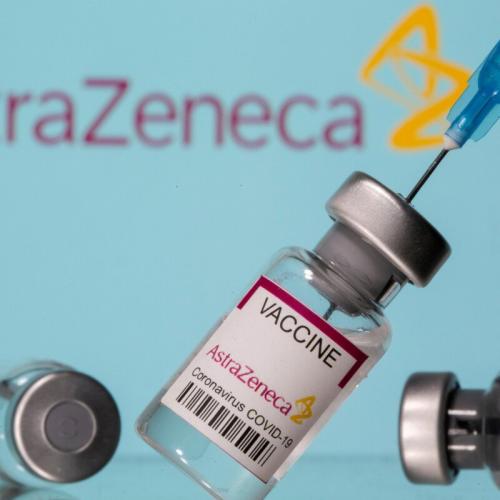
AstraZeneca may have included "outdated information" in touting the effectiveness of its COVID-19 vaccine in a U.S. study, federal health officials said Tuesday in an unusual public rift that could further erode confidence in the shot. In an extraordinary rebuke, just hours after AstraZeneca on Monday announced its vaccine worked well in the U.S. study, an independent panel that oversees the study scolded the company for cherry-picking data, according to a senior administration official. The panel wrote to AstraZeneca and U.S. health leaders that it was concerned the company chose to use data that was outdated and potentially misleading instead of the most recent and complete findings. The NIH's Dr. Anthony Fauci told ABC's "Good Morning America" that the incident "really is what you call an unforced error" and that he expects the discrepancy to be straightened out. But that nitty-gritty seldom is seen by the public, something now exposed by the extraordinary microscope being applied to development of the world's COVID-19 vaccines. The vaccine is used widely in Britain, across the European continent and in other countries, but its rollout was troubled by inconsistent study reports about its effectiveness, and then last week a scare about blood clots that had some countries temporarily pausing inoculations. Company executives refused repeated requests from reporters to provide a breakdown of the 141 COVID-19 cases it was using to make the case for the shot's effectiveness.
Note: For more along these lines, see concise summaries of deeply revealing news articles on coronavirus vaccines from reliable major media sources.
When Oswald Bilotta landed his dream job as a sales representative for Novartis Pharmaceuticals in 1999, he thought he'd be doing good. He had no idea that just over a decade later, he'd be part of a vast federal investigation into kickbacks at Novartis and that he'd be paying cash bribes to doctors while wearing a wire for prosecutors. On July 1, Ozzie Bilotta's years long effort to blow the whistle at Novartis paid off. The Justice Department announced a $678 million settlement with the company over improper inducements it made to doctors to prescribe 10 of the company's drugs, including the anti-hypertension drug Lotrel. The deal represents the biggest whistleblower settlement under the federal anti-kickback law, Bilotta's lawyer said. Bilotta ... could receive a pretax sum of $75 million through the settlement. In the settlement, Novartis admitted to "certain conduct" alleged by the government and will sharply curtail practices exposed by Bilotta that gave doctors incentives to prescribe its drugs. Novartis derived at least $40 million as a result of the conduct, money that was paid by federal health care programs, the government said. "For more than a decade, Novartis spent hundreds of millions of dollars on so-called speaker programs, including speaking fees, exorbitant meals, and top-shelf alcohol that were nothing more than bribes to get doctors across the country to prescribe Novartis's drugs," said Audrey Strauss, the acting U.S. attorney for southern New York, whose office prosecuted the case.
Note: For more along these lines, see concise summaries of deeply revealing news articles on big Pharma corruption from reliable major media sources.
As the new Coronavirus spreads illness, death, and catastrophe around the world, virtually no economic sector has been spared from harm. Yet amid the mayhem ... one industry is not only surviving, it is profiting handsomely. “Pharmaceutical companies view Covid-19 as a once-in-a-lifetime business opportunity,” said Gerald Posner, author of “Pharma: Greed, Lies, and the Poisoning of America.” The world needs ... treatments and vaccines and, in the U.S., tests. Dozens of companies are now vying to make them. The ability to make money off of pharmaceuticals is already uniquely large in the U.S., which lacks the basic price controls other countries have, giving drug companies more freedom over setting prices for their products than anywhere else in the world. During the current crisis, pharmaceutical makers may have even more leeway than usual because of language industry lobbyists inserted into an $8.3 billion coronavirus spending package, passed last week, to maximize their profits from the pandemic. Initially, some lawmakers had tried to ensure that the federal government would limit how much pharmaceutical companies could reap from vaccines and treatments for the new coronavirus that they developed with the use of public funding. But many Republicans opposed adding language to the bill that would restrict the industry’s ability to profit, arguing that it would stifle research and innovation. The final aid package not only omitted language that would have limited drug makers’ intellectual property rights, it specifically prohibited the federal government from taking any action if it has concerns that the treatments or vaccines developed with public funds are priced too high.
Note: For glaring examples of how big Pharma and select public officials made money hand over fist during previous virus scares, see concise summaries of deeply revealing news articles on the avian and swine flu from reliable major media sources.
Few news outlets covered the detention of [attorney] Steven Donziger, who won a multibillion-dollar judgment in Ecuador against Chevron over the massive contamination in the Lago Agrio region. On August 6, Donziger left a Lower Manhattan courthouse ... with an electronic monitoring device newly affixed to his ankle. As he was arguing the case against Chevron in Ecuador back in 2009, the company expressly said its long-term strategy was to demonize him. Chevron has hired private investigators to track Donziger, created a publication to smear him, and put together a legal team of hundreds of lawyers from 60 firms. As a result, Donziger has been disbarred and his bank accounts have been frozen. He now has a lien on his apartment, faces exorbitant fines, and has been prohibited from earning money. As of August, a court has seized his passport and put him on house arrest. Despite Donzigers current predicament, the case against Chevron in Ecuador was a spectacular victory. An Ecuadorian court ruled against Chevron in 2011 and ordered the company to pay $18 billion in compensation, an amount that was later reduced to $9.5 billion. After years of struggling with the health and environmental consequences of oil extraction, the impoverished Amazonian plaintiffs had won a historic judgment from one of the biggest corporations in the world. But ... Chevron immediately made clear that it would not be paying the judgment. Instead, Chevron moved its assets out of the country.
Note: For more along these lines, see concise summaries of deeply revealing news articles on corporate corruption from reliable major media sources.
Glyphosate, an herbicide that remains the world’s most ubiquitous weed killer, raises the cancer risk of those exposed to it by 41%, a new analysis says. Researchers from the University of Washington evaluated existing studies into the chemical – found in weed killers including Monsanto’s popular Roundup – and concluded that it significantly increases the risk of non-Hodgkin lymphoma (NHL), a cancer of the immune system. “All of the meta-analyses conducted to date, including our own, consistently report the same key finding: exposure to GBHs (glyphosate-based herbicides) are associated with an increased risk of NHL,” the authors wrote in a study published in the journal Mutation Research. In 2015 ... the World Health Organization’s International Agency for Research on Cancer classified glyphosate as “probably carcinogenic to humans.” Moreover, the chemical has triggered multiple lawsuits from people who believe that exposure to the herbicide caused their non-Hodgkin’s lymphoma. In 2017 ... more than 800 people were suing Monsanto; by the following year, that figure was in the thousands. The authors of the University of Washington report analyzed all published studies on the impact of glyphosate on humans. Co-author ... Rachel Shaffer said: “This research provides the most up-to-date analysis of glyphosate and its link with Non-Hodgkin Lymphoma, incorporating a 2018 study of more than 54,000 people who work as licensed pesticide applicators.” The scientists also assessed studies on animals.
Note: Instead of relying on independent science, the EPA used industry studies to determine that glyphosate was safe. For more along these lines, see concise summaries of deeply revealing news articles on corporate corruption and health from reliable major media sources.
An 11-year-old has been able to hack into a replica of Floridas election system in 10 minutes during a test ahead of upcoming US midterm elections this November. The boy was the fastest of 35 children who were able to hack into replicas of the websites of six swing states during the three-day Def Con security convention. The results of those efforts to test the strength of US election infrastructure will be passed onto the states, and the National Association of Secretaries of State - the officials responsible for tallying and confirming vote totals - said that they welcome the efforts. The results highlight potential security lapses amid heightened concern that American voter rolls will be tampered with in the upcoming midterm elections, and after President Donald Trumps national security team warned that Russia had launched pervasive efforts to interfere in Americas 2018 elections. The convention indicated that the hackers were able to change party names in the systems, and added as many as 12 billion votes to candidates. Candidates names were changed to Bob Da Builder and Richard Nixons head, the convention said in a tweet. The winning hacker was identified as Emmett Brewer, a boy whose Twitter account says he lives in Austin, Texas.
Note: For more along these lines, see concise summaries of deeply revealing elections corruption news articles from reliable major media sources. Then explore the excellent, reliable resources provided in our Elections Information Center.
Over the last two years, researchers in China and the United States have begun demonstrating that they can send hidden commands that are undetectable to the human ear to Apples Siri, Amazons Alexa and Googles Assistant. Researchers have been able to secretly activate the artificial intelligence systems on smartphones and smart speakers, making them dial phone numbers or open websites. In the wrong hands, the technology could be used to unlock doors, wire money or buy stuff online - simply with music playing over the radio. A group of students from University of California, Berkeley, and Georgetown University showed in 2016 that they could hide commands in white noise played over loudspeakers and through YouTube videos to get smart devices to turn on airplane mode or open a website. This month, some of those Berkeley researchers published a research paper that went further, saying they could embed commands directly into recordings of music or spoken text. So while a human listener hears someone talking or an orchestra playing, Amazons Echo speaker might hear an instruction to add something to your shopping list. There is no American law against broadcasting subliminal messages to humans, let alone machines. The Federal Communications Commission discourages the practice as counter to the public interest, and the Television Code of the National Association of Broadcasters bans transmitting messages below the threshold of normal awareness.
Note: Read how a hacked vehicle may have resulted in journalist Michael Hastings' death in 2013. A 2015 New York Times article titled "Why Smart Objects May Be a Dumb Idea" describes other major risks in creating an "Internet of Things". Vulnerabilities like those described in the article above make it possible for anyone to spy on you with these objects, accelerating the disappearance of privacy.
In January 1993, David Reynard sued the NEC America Company, claiming that his wifes NEC phone caused her lethal brain tumor. After Reynard appeared on national TV, the story went viral. A week later, [Cellular Telecommunications and Internet Association president Tom] Wheeler announced that his industry would pay for a comprehensive research program. Cell phones were already safe, Wheeler told reporters; the new research would simply re-validate the findings of the existing studies. George Carlo seemed like a good bet to fulfill Wheelers mission. In 1995, Carlo began directing the industry-financed Wireless Technology Research project (WTR), whose eventual budget of $28.5 million made it the best-funded investigation of cell-phone safety to date. He and Wheeler would eventually clash bitterly over the ... findings, which Carlo presented to wireless-industry leaders on February 9, 1999. By that date, the WTR had commissioned more than 50 original studies and reviewed many more. Those studies raised serious questions about cell-phone safety. A livid Tom Wheeler began publicly trashing Carlo to the media. Wheelers tactics succeeded in dousing the controversy. In the years to come, the WTRs cautionary findings would be replicated by numerous other scientists ... leading the World Health Organization in 2011 to classify cell-phone radiation as a possible human carcinogen and the governments of Great Britain, France, and Israel to issue strong warnings on cell-phone use by children.
Note: Read the complete article above to learn how far the wireless industry has gone to hide the dangers of its products from the public. Also worthy of attention is a Harvard study titled "How the Federal Communications Commission Is Dominated by the Industries It Presumably Regulates". For more along these lines, see concise summaries of deeply revealing news articles on the risks and dangers of wireless technologies.
The CEO of Marathon Petroleum, Gary Heminger, took home an astonishing 935 times more pay than his typical employee in 2017. One of Marathons gas station workers would have to toil more than nine centuries to make as much as Heminger grabbed in just one year. Employees of at least five other US firms would have to work even longer more than a millennium to catch up with their top bosses. These companies include the auto parts maker Aptiv (CEO-worker pay ratio: 2,526 to 1), the temp agency Manpower (2,483 to 1), amusement park owner Six Flags (1,920 to 1), Del Monte Produce (1,465 to 1), and apparel maker VF (1,353 to 1). These revelations come thanks to a new federal regulation that requires publicly traded US corporations to disclose, for the first time ever, how much their chief executives are making compared with their median workers. The disclosures are just now starting to flow in. Ever since 2010, the year Congress plugged a ratio disclosure mandate into the Dodd-Frank financial reform act, corporate lobbyists have been scheming to delay and repeal that mandates implementation. But responsible investors and other activists rallied and kept the mandate in place. The new ratios offer a benchmark for corporate greed that exposes exactly which firms are sharing the wealth their employees create and which arent, knowledge we can use to impose consequences on the corporations doing the most to make the United States more unequal.
Note: For more along these lines, see concise summaries of deeply revealing income inequality news articles from reliable major media sources.
As tens of thousands of Americans die from prescription opioid overdoses each year, an exclusive analysis by CNN and researchers at Harvard University found that opioid manufacturers are paying physicians huge sums of money - and the more opioids a doctor prescribes, the more money he or she makes. The CNN/Harvard analysis looked at 2014 and 2015, during which time more than 811,000 doctors wrote prescriptions to Medicare patients. Of those, nearly half wrote at least one prescription for opioids. Fifty-four percent of those doctors - more than 200,000 physicians - received a payment from pharmaceutical companies that make opioids. Among doctors in the top 25th percentile of opioid prescribers by volume, 72% received payments. Among those in the top fifth percentile, 84% received payments. Among the very biggest prescribers ... 95% received payments. On average, doctors whose opioid prescription volume ranked among the top 5% nationally received twice as much money from the opioid manufacturers, compared with doctors whose prescription volume was in the median. Pharmaceutical company payments to doctors are not unique to opioids. Drug companies pay doctors billions of dollars for various services. In 2015, 48% of physicians received some pharmaceutical payment. The CNN and Harvard findings are in line with other studies suggesting that money from drug companies does influence a doctor's prescribing habits.
Note: From 1999 to 2015, over 183,000 people died from prescription opioid overdoses in the US. A CBS article titled, "Ex-DEA agent: Opioid crisis fueled by drug industry and Congress" describes major regulatory failures that contributed to this crisis. For more along these lines, see concise summaries of deeply revealing Big Pharma corruption news articles from reliable major media sources.
Olympic gold-medal-winning gymnast McKayla Maroney alleges in a lawsuit filed in Los Angeles on Wednesday that USA Gymnastics paid her to be quiet about abuse by the team's longtime doctor Larry Nassar. The lawsuit ... also names as defendants Michigan State University, the US Olympic Committee and Nassar, the former team doctor who has admitted sexually abusing underage girls. "In December of 2016, after suffering for years from psychological trauma of her sexual abuse at the hands of Nassar, and in need of funds to pay for psychological treatment," Maroney was forced to enter into a confidential agreement with USA Gymnastics, the lawsuit said. John Manly, Maroney's attorney, called the confidentiality agreement "an immoral and illegal attempt to silence a victim of child sexual abuse. The US Olympic Committee and USA Gymnastics were well aware that the victim of child sexual abuse in California cannot be forced to sign a nondisclosure agreement as a condition of a settlement," he said. "Such agreements are illegal for very good reasons - they silence victims and allow perpetrators to continue committing their crimes." Maroney entered the settlement to "obtain funds necessary to pay for lifesaving psychological treatment and care," according to the lawsuit. Nassar was sentenced to 60 years in federal prison on child pornography charges earlier this month. In November, he pleaded guilty to seven counts of first-degree criminal sexual conduct and admitted to using his position to sexually abuse underage girls.
Note: For more along these lines, see concise summaries of deeply revealing news articles on corporate corruption and sexual abuse scandals.
For decades, Don Anderson of Seattle has been taking the same drug to help control the temporary bouts of immobility and muscle weakness caused by a rare and frightening genetic illness called periodic paralysis. The drug Anderson has been taking all these years was originally approved in 1958 and used primarily to treat the eye disease glaucoma under the brand name Daranide. The price has been on a roller coaster in recent years zooming from a list price of $50 for a bottle of 100 pills in the early 2000s up to $13,650 in 2015, then plummeting back down to free, before skyrocketing back up to $15,001 after a new company, Strongbridge Biopharma, acquired the drug and relaunched it this spring. The zigzagging trajectory of the price of Daranide, now known as Keveyis, shows just how much freedom drug companies have in pricing therapies and what a big business opportunity selling extremely-rare-disease drugs has become. In 2016, after The Washington Post asked questions about the high price of the drug, Sun Pharmaceutical said it would give the drug away free. Late last year, Sun agreed to sell Keveyis to a biotech company, Strongbridge Biopharma. In April, Strongbridge relaunched the drug. In August, it jacked the list price ... to $15,001 for a bottle of 100 pills. In a PowerPoint presentation for investors, Strongbridge Biopharma estimated that the annual price of treatment for the drug, Keveyis, would range from $109,500 to $219,000.
Note: For more along these lines, see concise summaries of deeply revealing Big Pharma corruption news articles from reliable major media sources.
Why do Americans continue to pay the highest prices for medicine in the world? Lawmakers have sculpted specific policies, often not found in many other nations, that boost pharmaceutical industry profits. Meanwhile, the drug industry has spent $61 million on state elections and nearly $67 million on federal elections since 2010. Both parties have made pivotal decisions ... that have kept drug prices high. Insurance companies and pharmacy benefit managers, or PBMs, across the U.S., face at least nine class-action lawsuits alleging they attached arbitrary premiums to the prices of often less-expensive, generic prescription drugs. The plaintiffs also accuse the PBMs and insurers of imposing so-called gag clauses on pharmacies to keep pharmacists from telling consumers that they could save money by paying out of pocket. The system could be denying customers $120 billion in discounts and rebates. Should drugs developed at taxpayer expense be sold to Americans at sky high prices? In the past, the federal government passed a rule saying no but that rule was rescinded in 1995. If Americans were allowed to import lower-priced drugs from places like Canada, it would save government agencies alone $6 billion. But ... Americans are still prohibited from engaging in such importation. The federal government could [also] save billions of dollars a year by having Medicare use its huge market power to negotiate - or require - lower drug prices for the program's beneficiaries.
Note: For more along these lines, see concise summaries of deeply revealing news articles on Big Pharma profiteering and health.
In the summer of 2012, a subcommittee of the U.S. Senate released a report. [After] looking into the London-based banking group HSBC, [investigators] discovered that ... the bank had laundered billions of dollars for Mexican drug cartels, and violated sanctions. No criminal charges were filed, and no executives or employees were prosecuted. Instead, HSBC pledged to clean up its institutional culture, and to pay a fine of nearly two billion dollars: the equivalent of four weeks profit for the bank. In the years since the mortgage crisis of 2008 ... corporate executives have essentially been granted immunity. As recently as 2006, when Enron imploded, such titans as Jeffrey Skilling and Kenneth Lay were convicted of conspiracy and fraud. Something has changed in the past decade, however, and federal prosecutions of white-collar crime are now at a twenty-year low. As Jesse Eisinger, a reporter for ProPublica, explains in a new book ... a financial crisis has traditionally been followed by a legal crackdown, because a market contraction reveals all the wishful accounting and outright fraud that were hidden when the going was good. After the mortgage crisis, people in Washington and on Wall Street expected prosecutions. Eisinger reels off a list of potential candidates for criminal charges: Countrywide, Washington Mutual, Lehman Brothers, Citigroup, A.I.G., Bank of America, Merrill Lynch, Morgan Stanley. Although fines were paid ... there were no indictments, no trials, no jail time.
Note: For more along these lines, see concise summaries of deeply revealing news articles on corruption in government and in the financial industry.
The companies responsible for programming your phones are working hard to get you and your family to feel the need to check in constantly. Some programmers call it brain hacking and the tech world would probably prefer you didnt hear about it. Ramsay Brown studied neuroscience before co-founding Dopamine Labs. The company is named after the dopamine molecule in our brains that aids in the creation of desire and pleasure. Brown and his colleagues write computer code for apps ... designed to provoke a neurological response. The computer code he creates finds the best moment to give you ... rewards, which have no actual value, but Brown says trigger your brain to make you want more. When Brown says experiments, hes talking generally about the millions of computer calculations being used every moment by his company and others use to constantly tweak your online experience. "Youre part of a controlled set of experiments that are happening in real time across you and millions of other people," [said Brown]. "Youre guinea pigs ... pushing the button and sometimes getting the likes. And theyre doing this to keep you in there. You dont pay for Facebook. Advertisers pay for Facebook. You get to use it for free because your eyeballs are whats being sold there." While Brown is tapping into the power of dopamine, psychologist Larry Rosen and his team at California State University ... are researching the effect technology has on our anxiety levels. Their research suggests our phones are keeping us in a continual state of anxiety in which the only antidote is the phone.
Note: This new form of "brain hacking" adds to a vast arsenal of behavior modification technologies developed by government and industry. For more along these lines, see concise summaries of deeply revealing news articles on mind control and the disappearance of privacy.
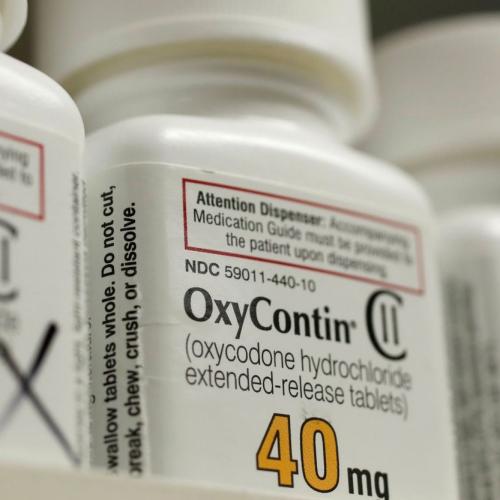
To combat an escalating opioid epidemic, the Drug Enforcement Administration trained its sights in 2011 on Mallinckrodt Pharmaceuticals, one of the nations largest manufacturers of the highly addictive generic painkiller oxycodone. It was the first time the DEA had targeted a manufacturer of opioids for alleged violations of laws designed to prevent diversion of legal narcotics to the black market. Ultimately, the DEA and federal prosecutors would contend that the company ignored its responsibility to report suspicious orders as 500 million of its pills ended up in Florida between 2008 and 2012. Investigators alleged in internal documents that the companys lack of due diligence could have resulted in nearly 44,000 federal violations and exposed it to $2.3 billion in fines. But six years later ... the government has taken no legal action against Mallinckrodt. Instead, the company has reached a tentative settlement. Under the proposal, which remains confidential, Mallinckrodt would agree to pay a $35 million fine and admit no wrongdoing. Mallinckrodts response was that everyone knew what was going on in Florida but they had no duty to report it, according to an internal summary of the case prepared by federal prosecutors. The Post reported in October that the DEAs civil and administrative enforcement efforts against the mammoth wholesale distributors that deliver painkillers to pharmacies stalled in the face of a stepped-up lobbying campaign by the drug industry.
Note: The city of Everett, Washington is currently suing Purdue Pharma, maker of the opioid pain medication OxyContin, for the company's alleged role in the diversion of its pills to black market buyers. For other reliable information on pharmaceutical involvement in the huge increase in opioid deaths, see Dr. Mercola's excellent article. For more along these lines, see concise summaries of deeply revealing pharmaceutical corruption news articles from reliable major media sources.
I Googled mainstream media is And there it was. Googles autocomplete suggestions: mainstream media is dead, dying, fake news, fake, finished. Googles first suggested link ... leads to a website called CNSnews.com and an article: The Mainstream media are dead. How had it, an obscure site Id never heard of, dominated Googles search algorithm on the topic? In the About us tab, I learn CNSnews is owned by the Media Research Center. It receives a large bulk of its funding more than $10m in the past decade from a single source, the hedge fund billionaire Robert Mercer. Robert Mercer is the money behind an awful lot of things. He was Trumps single biggest donor. Since 2010, Mercer has donated $45m to different political campaigns all Republican and another $50m to non-profits all rightwing, ultra-conservative. This is a billionaire who is ... trying to reshape the world according to his personal beliefs. He is reported to have a $10m stake in the [Cambridge Analytica], which was spun out of a bigger British company called SCL Group. It specialises in election management strategies and messaging and information operations, refined over 25 years. In military circles this is known as psyops psychological operations. Cambridge Analytica makes the astonishing boast that it has psychological profiles based on 5,000 separate pieces of data on 220 million American voters. With this, a computer ... can predict and potentially control human behaviour. Its incredibly dangerous.
Note: The above article provides a detailed look at how mass media is being combined with Big Data to produce powerful new forms of mind control.
Important Note: Explore our full index to revealing excerpts of key major media news articles on several dozen engaging topics. And don't miss amazing excerpts from 20 of the most revealing news articles ever published.