










































Corporate Corruption News Articles
Below are key excerpts of revealing news articles on corporate corruption from reliable news media sources. If any link fails to function, a paywall blocks full access, or the article is no longer available, try these digital tools.

How much influence do private networks of the rich and powerful have on government policies and international relations? One group, the Bilderberg, has often attracted speculation that it forms a shadowy global government. Every year since 1954 [they have brought] together about 120 leading business people and politicians. At this year's meeting in Germany, the audience included the heads of the World Bank and European Central Bank, Chairmen or Chief Executives from Nokia, BP, Unilever, DaimlerChrysler and Pepsi ... editors from five major newspapers, members of parliament, ministers, European commissioners ... and the queen of the Netherlands. The chairman ... is 73-year-old Viscount Etienne Davignon. In an extremely rare interview, he played down the importance of Bilderberg. "I don't think (we are) a global ruling class because I don't think a global ruling class exists." Will Hutton ... who attended a Bilderberg meeting in 1997, says people take part in these networks in order to influence the way the world works, to create what he calls "the international common sense". And that "common sense" is one which supports the interests of Bilderberg's main participants. For Bilderberg's critics the fact that there is almost no publicity about the annual meetings is proof that they are up to no good. Bilderberg meetings often feature future political leaders shortly before they become household names. Bill Clinton went in 1991 while still governor of Arkansas, Tony Blair was there two years later while still an opposition MP. All the recent presidents of the European Commission attended Bilderberg meetings before they were appointed. Informal and private networks like Bilderberg have helped to oil the wheels of global politics and globalisation for the past half a century.
Note: Why is this meeting of top world leaders kept so secret? Why, until a few years ago, was there virtually no reporting on this influential group in the major media? Thankfully, the alternative media has had some good articles. And a Google search can be highly informative. Explore many other revealing major media news articles on powerful secret societies. And for those interested, check out reliable, eye-opening information covering the big picture of how and why these secret societies are using government-sponsored mind control programs to achieve their agenda.
There are no magic bullets in the fight against cancer: that's the first thing every responsible scientist mentions when discussing a possible new treatment, no matter how promising. If there were a magic bullet, though, it might be something like dichloroacetate, or DCA, a drug that kills cancer cells by exploiting a fundamental weakness found in a wide range of solid tumors. So far, though, it kills them just in test tubes and in rats infected with human cancer cells; it has never been tested against cancer in living human beings. DCA ... is an existing drug whose side effects are well-studied and relatively tolerable. Also, it's a small molecule that might be able to cross the blood-brain barrier to reach otherwise intractable brain tumors. Within days after a technical paper on DCA appeared in the journal Cancer Cell last week, the lead author, Dr. Evangelos Michelakis of the University of Alberta, was deluged with calls and e-mails from prospective patientsto whom he can say only, Hang in there. DCA is a remarkably simple molecule. It acts in the body to promote the activity of the mitochondria. Researchers have assumed that the mitochondria in cancer cells were irreparably damaged. But Michelakis wondered if that was really true. With his colleagues he used DCA to turn back on the mitochondria in cancer cellswhich promptly died. One of the great things about DCA is that it's a simple compound, in the public domain, and could be produced for pennies a dose. But that's also a problem, because big drug companies are unlikely to spend a billion dollars or so on large-scale clinical trials for a compound they can't patent.
Note:Read a 2010 follow-up by Dr. Michelakis with promising results and watch a 10-minute video. Explore the DCA website. Why didn'tother mass mediareport this major story? Why aren't many millions of dollars being poured into research?Notice evenNewsweekacknowledges the drug companies are not interested in finding a cure for cancer if they can't make a profit from it.Some suspect the drug companies have even suppressed cancer cures found in the past. See one amazing example of this. For more, see these major media articles on potential cancer cures.
Some of the world's biggest, most profitable corporations enjoy a far lower tax rate than you do – that is, if they pay taxes at all. The most egregious example is General Electric. Last year the conglomerate generated $10.3 billion in pretax income, but ended up owing nothing to Uncle Sam. In fact, it recorded a tax benefit of $1.1 billion. How did this happen? It's complicated. GE in effect consists of two divisions: General Electric Capital and everything else. The everything else – maker of engines, power plants, TV shows and the like – would have paid a 22% tax rate if it was a standalone company. It's GE Capital that keeps the overall tax bill so low. Over the last two years, GE Capital has displayed an uncanny ability to lose lots of money in the U.S. (posting a $6.5 billion loss in 2009), and make lots of money overseas (a $4.3 billion gain). Not only do the U.S. losses balance out the overseas gains, but GE can defer taxes on that overseas income indefinitely. It's the tax benefit of overseas operations that is the biggest reason why multinationals end up with lower tax rates than the rest of us.
Note: Forbes later changed the title of this article to a more innocuous "What The Top U.S. Companies Pay In Taxes." Can you believe that GE not only pays no taxes, they actually get credit from the US government? They ship US jobs overseas and then reap huge tax benefits as a result. What's wrong with this picture? For a wealth of media news articles on the hidden manipulations of major financial corporations, click here.
If you follow the news about health research, you risk whiplash. First garlic lowers bad cholesterol, thenafter more studyit doesnt. Hormone replacement reduces the risk of heart disease in postmenopausal women, until a huge study finds that it doesnt. But what if wrong answers arent the exception but the rule? More and more scholars who scrutinize health research are now making that claim. It isnt just an individual study here and there thats flawed, they charge. Instead, the very framework of medical investigation may be off-kilter, leading time and again to findings that are at best unproved and at worst dangerously wrong. The result is a system that leads patients and physicians astrayspurring often costly regimens that wont help and may even harm you. Even a cursory glance at medical journals shows that once heralded studies keep falling by the wayside. A major study concluded theres no good evidence that statins (drugs like Lipitor and Crestor) help people with no history of heart disease. The study ... was based on an evaluation of 14 individual trials with 34,272 patients. Cost of statins: more than $20 billion per year. Positive drug trials, which find that a treatment is effective, and negative trials, in which a drug fails, take the same amount of time to conduct. But negative trials took an extra two to four years to be published. With billions of dollars on the line, companies are loath to declare a new drug ineffective. As a result of the lag in publishing negative studies, patients receive a treatment that is actually ineffective. From clinical trials of new drugs to cutting-edge genetics, biomedical research is riddled with incorrect findings.
Note: For the good of your health, the entire article at the link above is well worth reading. For lots more on how the profit-oriented health profession puts public health at risk, click here and here.
After receiving billions in aid from U.S. taxpayers, the nation's largest banks say they can't track exactly how they're spending it. Some won't even talk about it. "We're choosing not to disclose that," said Kevin Heine, spokesman for Bank of New York Mellon, which received about $3 billion. The Associated Press contacted 21 banks that received at least $1 billion in government money and asked four questions: How much has been spent? What was it spent on? How much is being held in savings, and what's the plan for the rest? None of the banks provided specific answers. Some banks said they simply didn't know where the money was going. There has been no accounting of how banks spend that money. The answers highlight the secrecy surrounding the Troubled Asset Relief Program, which earmarked $700 billion ... to help rescue the financial industry. Lawmakers summoned bank executives to Capitol Hill last month and implored them ... not to hoard it or spend it on corporate bonuses, junkets or to buy other banks. But there is no process in place to make sure that's happening and there are no consequences for banks that don't comply. Meanwhile, banks that are getting taxpayer bailouts awarded their top executives nearly $1.6 billion in salaries, bonuses, and other benefits last year. Congress attached nearly no strings to the $700 billion bailout in October. And the Treasury Department, which doles out the money, never asked banks how it would be spent. No bank provided even the most basic accounting for the federal money. Most banks wouldn't say why they were keeping the details secret.
Note: Explore key information that the bankers don't want you to know on the Federal Reserve, which is neither federal, nor a reserve. For more along these lines, see concise summaries of deeply revealing news articles on the banking bailout from reliable major media sources. Then explore the excellent, reliable resources suggesting major corruption provided in our Banking Information Center.
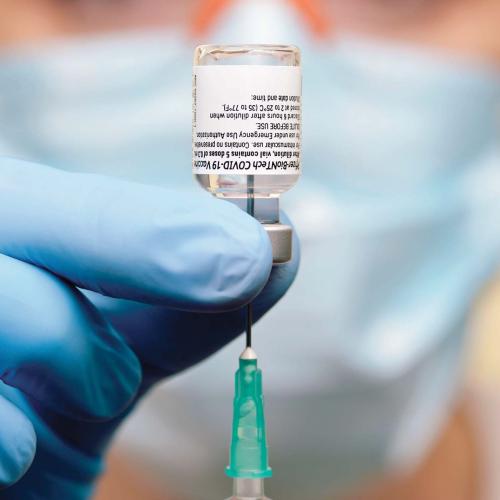
They're some of the most trusted voices in the defense of vaccine safety: the American Academy of Pediatrics, Every Child By Two, and pediatrician Dr. Paul Offit. But CBS News has found these three have something more in common - strong financial ties to the industry whose products they promote and defend. The vaccine industry gives millions to the Academy of Pediatrics for conferences, grants, medical education classes and even helped build their headquarters. The totals are kept secret, but public documents reveal bits and pieces. A $342,000 payment from Wyeth, maker of the pneumococcal vaccine - which makes $2 billion a year in sales. A $433,000 contribution from Merck, the same year the academy endorsed Merck's HPV vaccine - which made $1.5 billion a year in sales. Every Child By Two, a group that promotes early immunization for all children, admits the group takes money from the vaccine industry, too - but wouldn't tell us how much. Then there's Paul Offit, perhaps the most widely-quoted defender of vaccine safety. He's gone so far as to say babies can tolerate "10,000 vaccines at once." In fact, he's a vaccine industry insider. Offit holds a $1.5 million dollar research chair at Children's Hospital, funded by Merck. He holds the patent on an anti-diarrhea vaccine he developed with Merck. And future royalties for the vaccine were just sold for $182 million cash.
Note: An excellent report endorsed by many respected doctors and nurses reveals the serious risks of vaccines. Read an incisive list of questions regarding vaccines that are rarely raised by the media. The report accessible on this US government webpage states, "Since 1988, over 24,200 petitions have been filed with the VICP [Vaccine Injury Compensation Program] ... with 8,162 of those determined to be compensable. Total compensation paid over the life of the program is approximately $4.5 billion." Why isn't that huge price tag for vaccine injuries being talked about?
Researchers have long known that any single antidepressant drug is little more effective than a placebo in the majority of trials, shown to be less effective than a placebo in some studies, and generally found to be “clinically negligible” with respect to depression remission, while often resulting in severe adverse effects; for example, resulting in a higher percentage of sexual dysfunction than depression remission. However, for nearly twenty years, psychiatry and Big Pharma have told us that while one antidepressant may not work for the majority of patients, in the “real world,” doctors provide patients who have been failed by their initial antidepressant with another antidepressant, and if that fails, still another; and that this real-world treatment is successful for nearly 70% of patients. The problem with this “nearly 70%” story is that the research that has been used to justify it, a 2006 report on the results of the Sequenced Treatment Alternatives to Relieve Depression (STAR*D), has long been disputed by researchers. Moreover, a recent reanalysis of previously undisclosed data reveals that STAR*D, owing to scientific misconduct that dramatically inflated remission rates, may go down in US medical history as one of its most harmful scandals. Even [STAR*D's] fabricated 67% depression remission rate should never have been celebrated. 85% of depressed individuals who go without somatic treatments spontaneously recover within 1 year.
Note: Read more important news articles we've summarized on medical and scientific corruption regarding antidepressants. For more along these lines, see concise summaries of deeply revealing news articles on Big Pharma corruption from reliable major media sources.
While I was out of town on business, I got a call from my dad who told me my husband Woody had been found hanging—dead at age 37. Woody wasn’t depressed and he hadn’t had a history of depression nor any other mental illness. His doctor had prescribed the antidepressant Zoloft to take the edge off. In the following weeks, I started to investigate, to try and understand why my perfectly normal husband had decided to end his life. The only thing that made sense ... Zoloft. Figuring out Zoloft’s dangers completely altered my life’s trajectory, absorbing years of my time. Today, I sit on one of the Food and Drug Administration (FDA) advisory committees that reviews new drugs coming to market. I initially thought that what I was learning about Zoloft was just an isolated issue with antidepressants. But I soon realized it was part of a much bigger, systemic problem with our nation’s drug safety system. The pharmaceutical industry is driven by commercial interests, not public health, and this problem is compounded by a lack of transparency, conflicts of interests, manipulation of clinical trials, and undue corporate influence across the government. Marketing companies ghostwrite pharmaceutical studies for academics who sometimes barely read the papers that get submitted to medical journals, and drug makers then cite these ghostwritten studies as peer-reviewed proof of their products’ safety and efficacy. The revolving door between Big Pharma and the FDA spins faster than the one between the Pentagon and the defense industry.
Note: This guest essay is written by Kim Witczak, a globally renowned advocate for pharmaceutical drug safety and FDA reform. Antidepressants have been found to increase the risk of suicide in some patients. For more along these lines, see concise summaries of deeply revealing news articles on health and Big Pharma corruption from reliable major media sources.
A new study published in JAMA Psychiatry finds that almost everyone will be treated for mental illness at some point in their lives and that their lives are worse in many ways after receiving diagnosis and treatment. About 80% of the population will be hospitalized or receive psychiatric drugs. After treatment, they are more likely to end up poor, unemployed, and receiving disability benefits, and they have worsening social connections. According to the researchers, the likelihood of getting prescribed psychiatric drugs during your lifetime was 82.6% (87.5% for women and 76.7% for men). The likelihood of being hospitalized for mental illness was 29.0% (31.8% for women and 26.1% for men). On average, the 80% who were treated for mental illness were already struggling before treatment. But after treatment, things only got worse. After treatment, “individuals with any mental health disorder were more likely to experience new socioeconomic difficulties, compared with control individuals from the general population,” the researchers write. “During follow-up, they were more likely to become unemployed or receive a disability benefit, to earn lower income, to be living alone, and to be unmarried.” There is copious evidence that antidepressant use leads to worse outcomes in the long term, even after controlling for the severity of depression and other factors. The adverse effects of the drugs lead to worse health outcomes for those taking them, and withdrawal symptoms prevent people from being able to discontinue.
Note: For more along these lines, see concise summaries of deeply revealing news articles on health from reliable major media sources. Then explore the excellent, reliable resources provided in our Health Information Center.
Last week, the report Merchants of Poison: How Monsanto Sold the World on a Toxic Pesticide was published by authors Stacy Malkan, Kendra Klein and Anna Lappé. [In 2012], pesticide and processed food companies spent $45 million to defeat a ballot initiative to label GMOs (genetically modified foods) in California. This campaign was led by Monsanto, one of the planet’s largest producers of GMOs. Monsanto created a PR storm through the mouths of so-called third-party “experts” from across the fields of academia and science. It was later revealed that these allegedly neutral voices were closely tied to Monsanto. The World Health Organization (WHO) in 2015 concluded that glyphosate—the chemical contained within herbicides that most GMO crops have been engineered to resist—is likely a human carcinogen. Thousands sued Monsanto claiming that their exposure of Monsanto’s glyphosate-based product, Roundup, caused their cancers. Monsanto employees ghostwrote scientific papers on the safety of glyphosate and strategized how to discredit journalists and scientists raising concerns about the pesticide. Major universities, including University of California Davis and University of Florida, played a significant role in legitimizing and amplifying pesticide industry product-defense efforts. The Bill & Melinda Gates Foundation, Cornell University, and the American Academy for the Advancement of Science (AAAS) ... also provided essential aid and cover for pesticide industry propaganda.
Note: A 2019 study found that glyphosate increases cancer risk by 41%. For more along these lines, see concise summaries of deeply revealing news articles on GMOs and science corruption from reliable major media sources.
Big Tech giants and their oligarchic owners now engage in a new type of censorship, which we have called “censorship by proxy.” Censorship by proxy describes restrictions on freedom of information undertaken by private corporations that exceed limits on governmental censorship and serve both corporate and government or third-party interests. Censorship by proxy is not subject to venerable First Amendment proscriptions on government interference with freedom of speech or freedom of the press. Censorship by proxy alerts us to the power of economic entities that are not normally recognized as “gatekeepers.” For example, in 2022, the digital financial service PayPal (whose founders include Peter Thiel and Elon Musk) froze the accounts of Consortium News and MintPress News for “unspecified offenses” and “risks” associated with their accounts, a ruling that prevented both independent news outlets from using funds maintained by PayPal. Consortium News and MintPress News have each filed critical news stories and commentary on the foreign policy objectives of the United States and NATO. PayPal issued notices to each news outlet, stating that, in addition to suspending their accounts, it might also seize their assets for “damages.” Joe Lauria, editor in chief of Consortium News, said he believed this was a case of “ideological policing.” Mnar Adley, head of MintPress News, warned, “The sanctions-regime war is coming home to hit the bank accounts of watchdog journalists.”
Note: For more along these lines, see concise summaries of deeply revealing news articles on corporate corruption and media manipulation from reliable sources.
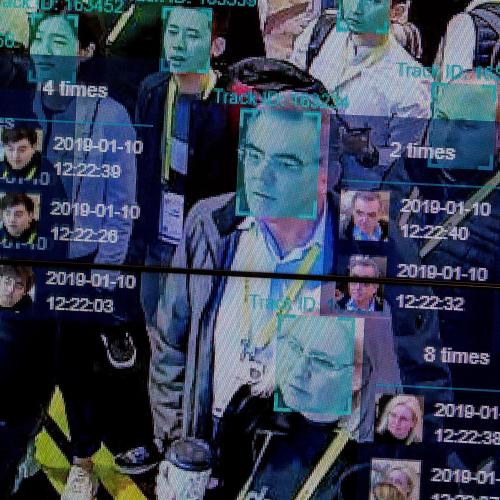
Facial recognition has become a security feature of choice for phones, laptops, passports, and payment apps. Yet it is also, increasingly, a tool of state oppression and corporate surveillance. Immigration and Customs Enforcement and the FBI have deployed the technology as a digital dragnet, searching for suspects among millions of faces in state driver’s license databases, sometimes without first seeking a court order. In early 1963, [Woody Bledsoe] proposed to conduct “a study to determine the feasibility of a simplified facial recognition machine.” A recently declassified history of the CIA’s Office of Research and Development mentions just such a project in 1965; that same year, Woody sent a letter on facial recognition to John W. Kuipers, the division’s chief of analysis. In 1967 ... Woody took on one last assignment that involved recognizing patterns in the human face. The purpose of the experiment was to help law enforcement agencies quickly sift through databases of mug shots and portraits, looking for matches. As before, funding for the project appears to have come from the US government. A 1967 document declassified by the CIA in 2005 mentions an “external contract” for a facial-recognition system that would reduce search time by a hundredfold. Woody’s work set an ethical tone for research on facial recognition that has been enduring and problematic. The potential abuses of facial-recognition technology were apparent almost from its birth.
Note: For more along these lines, see concise summaries of deeply revealing news articles on intelligence agency corruption and the disappearance of privacy from reliable major media sources.
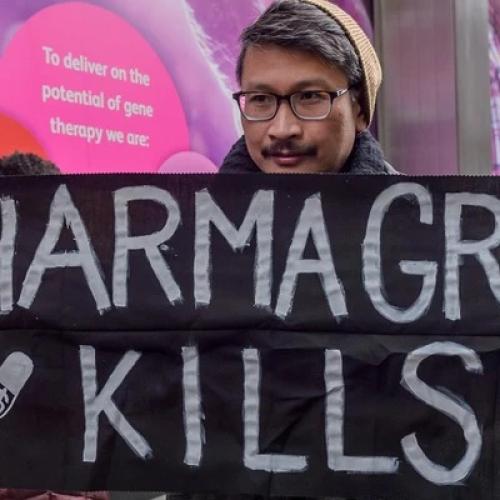
Goldman Sachs analysts attempted to address a touchy subject for biotech companies, especially those involved in the pioneering "gene therapy" treatment: cures could be bad for business in the long run. "Is curing patients a sustainable business model?" analysts ask in an April 10 report entitled "The Genome Revolution." "The potential to deliver 'one shot cures' is one of the most attractive aspects of gene therapy, genetically-engineered cell therapy and gene editing. However, such treatments offer a very different outlook with regard to recurring revenue versus chronic therapies," analyst Salveen Richter wrote in the note to clients. "While this proposition carries tremendous value for patients and society, it could represent a challenge for genome medicine developers looking for sustained cash flow." Richter cited Gilead Sciences' treatments for hepatitis C, which achieved cure rates of more than 90 percent. The company's U.S. sales for these hepatitis C treatments peaked at $12.5 billion in 2015, but have been falling ever since. "GILD is a case in point, where the success of its hepatitis C franchise has gradually exhausted the available pool of treatable patients," the analyst wrote. "In the case of infectious diseases such as hepatitis C, curing existing patients also decreases the number of carriers able to transmit the virus to new patients, thus the incident pool also declines. Where an incident pool remains stable (eg, in cancer) the potential for a cure poses less risk to the sustainability of a franchise."
Note: Many cancer treatments have been suppressed, sometimes in brutal ways, because the medical profession would lose the huge profits of traditional cancer treatments. Watch this video for undeniable evidence showing that this is the case. Read an excellent article on how the profiteering drug industry is crippling our children, possibly even intentionally. For more along these lines, see concise summaries of deeply revealing health news articles from reliable major media sources.
Many critical election systems in the United States are poorly secured and protected against malicious attacks. In the 15 years since electronic voting machines were first adopted by many states, numerous reports by computer scientists have shown nearly every make and model to be vulnerable to hacking. The systems were not initially designed with robust security in mind, and even where security features were included, experts have found them to be poorly implemented with glaring holes. But for as long as experts have warned about security problems, voting machine makers and election officials have denied that the machines can be remotely hacked. Election officials also assert that routine procedures they perform would detect if someone altered transmitted votes or machine software. Experts, however, say ... that vendor claims about security cant be trusted. "Vendors have absolutely fumbled every single attempt in security," says Jacob D. Stauffer, vice president of operations for Coherent Cyber, who has conducted voting-machine security assessments for Californias secretary of state for a decade. Stauffer and colleagues ... found the voting machines and election-management systems to be rife with security problems. Attackers could theoretically intercept unofficial results as theyre transmitted on election night or, worse, use the modem connections to reach back into election machines at either end and install malware or alter election software and official results.
Note: For more along these lines, see concise summaries of deeply revealing elections corruption news articles from reliable major media sources. Then explore the excellent, reliable resources provided in our Elections Information Center.
Merck made a "hit list" of doctors who criticized Vioxx, according to testimony in a Vioxx class action case in Australia. According to The Australian, Merck emails from 1999 showed company execs complaining about doctors who disliked using Vioxx. The list, emailed between Merck employees, contained doctors' names with the labels "neutralise," "neutralised" or "discredit" next to them. One email said: We may need to seek them out and destroy them where they live. The plaintiffs' lawyer gave this assessment: "It gives you the dark side of the use of key opinion leaders and thought leaders. If (they) say things you don't like to hear, you have to neutralise them." The court was told that James Fries, professor of medicine at Stanford University, wrote to the then Merck head Ray Gilmartin in October 2000 to complain about the treatment of some of his researchers who had criticised the drug. "Even worse were allegations of Merck damage control by intimidation," he wrote. "This has happened to at least eight (clinical) investigators. I was mildly threatened myself, but I never have spoken or written on these issues." The allegations come on the heels of revelations that Merck created a fake medical journal -- the Australasian Journal of Bone and Joint Medicine -- in which to publish studies about Vioxx; had pop songs commissioned about Vioxx to inspire its staff, and paid ghostwriters to draft articles about the drug.
Note: FDA analysts estimated that Vioxx caused between 88,000 and 139,000 heart attacks, 30 to 40 percent of which were probably fatal, in the five years the drug was on the market. For more along these lines, see concise summaries of deeply revealing health corruption news articles from reliable major media sources.
Federal prosecutors in the U.S. will be reading with amusement the Australian press's coverage of a class action trial down under for patients who took Merck's now-withdrawn painkiller Vioxx. Details emerging in Oz make some of the antics that Merck's American counterparts got up to look tame by comparison. For example, in Australia, Merck allegedly: Had a doctor sign his name to an entirely ghostwritten journal article even though a Merck staffer had complained that the data within it was based on "wishful thinking;" created a fake "peer-reviewed" journal, the "Australasian Journal of Bone and Joint Medicine," in which to publicize pro-Vioxx articles; created a Ricky Martin-style pop song to get Merck sales reps all jazzed up about Vioxx; [and] hatched a Blackadder-style "cunning plan" to seed seminars with speakers who were sympathetic to Vioxx. Here's The Australian's description of the Merck PR team's over-the-top "handling" of reporters at ... a class action trial down under for patients who took Merck's now-withdrawn painkiller Vioxx: A hired crisis management team sits in court every day, under the guidance of Merck & Co's media spokeswoman flown out from the US, watching what journalists write, who they talk to and where they go in the court breaks. The team ... follow journalists out of court, ask them what they are writing, hand out daily press releases and send "background" emails they say should not be attributed to the company but which detail what they think are the "salient points" from the evidence presented in court. The team rings reporters first thing in the morning, accuses them of "cherry-picking" the evidence and bombards newspapers with letters to the editor arguing their case in detail based on the day's evidence - five were sent to The Australian in just seven days.
Note: FDA analysts estimated that Vioxx caused between 88,000 and 139,000 heart attacks, 30 to 40 percent of which were probably fatal, in the five years the drug was on the market. Read another CBS News article which shows how Merck literally created a hit list for doctors who opposed use of Vioxx. For more along these lines, see concise summaries of deeply revealing health corruption news articles from reliable major media sources.
An international drug company made a hit list of doctors who had to be "neutralised" or discredited because they criticised the anti-arthritis drug the pharmaceutical giant produced. Staff at US company Merck &Co emailed each other about the list of doctors - mainly researchers and academics - who had been negative about the drug Vioxx or Merck and a recommended course of action. The email, which came out in the Federal Court in Melbourne yesterday as part of a class action against the drug company, included the words "neutralise", "neutralised" or "discredit" against some of the doctors' names. It is also alleged the company used intimidation tactics against critical researchers, including dropping hints it would stop funding to institutions and claims it interfered with academic appointments. "We may need to seek them out and destroy them where they live," a Merck employee wrote, according to an email excerpt read to the court by Julian Burnside QC, acting for the plaintiff. Merck & Co and its Australian subsidiary, Merck, Sharpe and Dohme, are being sued for compensation by more than 1000 Australians, who claim they suffered heart attacks or strokes as a result of Vioxx. The drug was launched in 1999 and at its height of popularity was used by 80 million people worldwide because it did not cause stomach problems as did traditional anti-inflammatory drugs. It was voluntarily withdrawn from sale in 2004 after concerns were raised that it caused heart attacks and strokes and a clinical trial testing these potential side affects was aborted for safety reasons. Merck last year settled thousands of lawsuits in the US over the effects of Vioxx for $US 4.85 billion, but made no admission of guilt.
Note: For lots more on corporate corruption from reliable sources, click here.
We could make faster progress against cancer by changing the way drugs are developed. In the current system, if a promising compound cant be patented, it is highly unlikely ever to make it to market no matter how well it performs in the laboratory. The development of new cancer drugs is crippled as a result. The reason for this problem is that bringing a new drug to market is extremely expensive. In 2001, the estimated cost was $802 million; today it is approximately $1 billion. To ensure a healthy return on such staggering investments, drug companies seek to formulate new drugs in a way that guarantees watertight patents. In the meantime, cancer patients miss out on treatments that may be highly effective and less expensive to boot. In 2004, Johns Hopkins researchers discovered that an off-the-shelf compound called 3-bromopyruvate could arrest the growth of liver cancer in rats. The results were dramatic; moreover, the investigators estimated that the cost to treat patients would be around 70 cents per day. Yet, three years later, no major drug company has shown interest in developing this drug. The hormone melatonin, sold as an inexpensive food supplement in the United States, has repeatedly been shown to slow the growth of various cancers when used in conjunction with conventional treatments. Early this year, another readily available industrial chemical, dichloroacetate, was found by researchers at the University of Alberta to shrink tumors in laboratory animals by up to 75 percent. However ... dichloroacetate is not patentable, and the lead researcher is concerned that it may be difficult to find funding from private investors to test the chemical. Potential anticancer drugs should be judged on their scientific merit, not on their patentability.
Note: To explore several cancer cures which have shown dramatic potential, yet are not being studied for lack of funds due to inability to patent the process, click here. Why are these very promising treatments not being fast-tracked as the expensive AIDS drugs were? For a top MD's revealing comments on this, click here. And for why the media won't feature these promising cancer treatments in headlines, click here.
In June 2000, a group of top government scientists and health officials gathered for a meeting at the isolated Simpsonwood conference center ... to ensure complete secrecy. The federal officials and industry representatives had assembled to discuss a disturbing new study that raised alarming questions about the safety of a host of common childhood vaccines administered to infants and young children. A mercury-based preservative in the vaccines -- thimerosal -- appeared to be responsible for a dramatic increase in autism. But instead of taking immediate steps to alert the public and rid the vaccine supply of thimerosal, the officials and executives at Simpsonwood spent most of the next two days discussing how to cover up the damaging data. According to transcripts obtained under the Freedom of Information Act, many at the meeting were concerned about how the damaging revelations about thimerosal would affect the vaccine industry's bottom line. The CDC paid the Institute of Medicine to conduct a new study to whitewash the risks of thimerosal, ordering researchers to "rule out" the chemical's link to autism. Senate Majority Leader Bill Frist, who has received $873,000 in contributions from the pharmaceutical industry, has been working to immunize vaccine makers from liability in 4,200 lawsuits that have been filed by the parents of injured children. More than 500,000 kids currently suffer from autism. The disease was unknown until 1943, when it was identified and diagnosed among 11 children born in the months after thimerosal was first added to baby vaccines in 1931. Internal documents reveal that Eli Lilly, which first developed thimerosal, knew from the start that its product could cause damage -- and even death -- in both animals and humans.
Note: A good, though somewhat watered down version of the above article was published in the Boston Globe on July 1, 2005. To see this article on the Globe website, click here. For an excellent report endorsed by dozens of respected doctors and nurses on the serious risks and dangers of vaccines, click here. Watch an excellent video of Emmy award winning reporter Sharyl Attkisson exposing how the government fired an vaccine expert who found links to autism.
Lockheed Martin doesn't run the United States. But it does help run a breathtakingly big part of it. Lockheed ... has built a formidable information-technology empire that now stretches from the Pentagon to the post office. It sorts your mail and totals your taxes. It cuts Social Security checks and counts the United States census. It runs space flights and monitors air traffic. Lockheed ... is best known for its weapons. But in the post-9/11 world, Lockheed has become more than just the biggest corporate cog in what Dwight D. Eisenhower called the military-industrial complex. It is increasingly putting its stamp on the nation's military policies. Former Lockheed executives, lobbyists and lawyers hold crucial posts at the White House and the Pentagon, picking weapons and setting policies. War and crisis have been good for business. The company's stock has tripled in the last four years. Lockheed is creating robot soldiers and neural software - "intelligent agents" - to do their work. Israel spends much of the $1.8 billion in annual military aid from the United States to buy F-16 warplanes from Lockheed. Its own executives say the concentration of power among military contractors is more intense than in any other sector of business outside banking. AND, after 9/11 ... cost is essentially irrelevant. Former Lockheed executives serve on the Defense Policy Board ... and the Homeland Security Advisory Council, which help make military and intelligence policy and pick weapons for future battles. Lockheed's board includes E. C. Aldridge Jr. ... the Pentagon's chief weapons buyer.
Note: If the above link fails, click here. To say that "war and crisis have been good for business" is quite an understatement. To read what one of the most highly decorated generals had to say about this, click here.
Important Note: Explore our full index to revealing excerpts of key major media news articles on several dozen engaging topics. And don't miss amazing excerpts from 20 of the most revealing news articles ever published.