





















Russiagate Media Coverage Rewrites History, How NPR Lost Public Trust, Organizing Digital Democracy
August 1, 2025
Dear friends,
Welcome to our weekly newsletter, where we summarize important news articles buried by the mainstream, revealing both the darker forces shaping society—regardless of who's elected in office—and the best of human goodness, creativity, and possibility. This week we've summarized key news articles on:
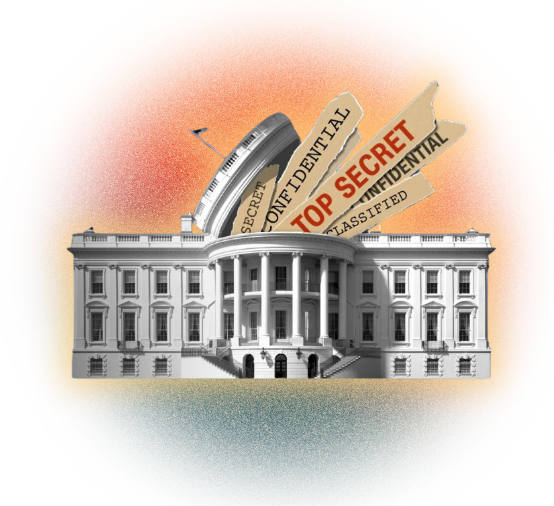
- declassified documents showing that the Obama administration promoted the Russiagate narrative despite knowing that Russia played no role in the 2016 election result
- NPR reporter Uri Berliner's call to question the neutrality of public radio news and how NPR lost public trust
- California police using utility consumption data to target average people for investigation
- 3 minutes missing from the "raw footage" released to the public of Jeffrey Epstein's prison cell entryway on the day he died
- President Trump's lawsuit against The Wall Street Journal related to a birthday card he sent to Jeffrey Epstein
- the Trump administration's release of more than 230,000 pages of previously classified documents related to the 1968 assassination of civil rights leader Martin Luther King Jr.
- US Customs and Border Protection's plan for AI-enhanced mass surveillance of American cities
- an elite British army veteran used by factory farming companies to spy on people speaking out about sick fish in fish farms
- the "neuro rights" movement emerging in response to the increasing risk of high tech mind control technologies
Our inspiring stories (skip to this section now):
- the Taiwanese digital activist using tech to heal social division and encourage efficient democracy
- how blockchain technology could help us reclaim our personal data
- how AI and blockchain technology could compliment each other in surprising ways
Each excerpt is taken verbatim from the news source listed. If any link fails, see this page. The most important sentences are highlighted. By educating ourselves and spreading the word, we can work together to create a more free and informed society.
With faith in a transforming world,
Mark Bailey and Amber Yang for PEERS and WantToKnow.info
Quote of the week: One reason I'm in hot water is because [I] didn't play by the conventional rules of journalism. Those rules divide the world into Democrats and Republicans, liberals and conservatives, and allow journalists to pretend they have done their job if instead of reporting the truth behind the news, they merely give each side an opportunity to spin the news. — American journalist Bill Moyers (1934-2025)
Video of the week: Confused and lost when it comes to navigating the polarizing media landscape? Watch our video, How To Transform Media Polarization, One Echo Chamber At A Time. In this video, we explore two essential conversations: 1. the political, government, and corporate forces shaping public perception and reality itself. 2. real-life examples, creative solutions, and stories that help us move beyond fear toward a more informed, connected, and collaborative society.
Obama admin assessed Russia played no role in 2016 election result, declassified docs show
July 18, 2025, New York Post
https://nypost.com/2025/07/18/us-news/obama-admin-assessed-russia-played...
The Obama administration knew before and after the 2016 election that Russia did not affect the vote’s outcome through cyberattacks. Director of National Intelligence (DNI) Tulsi Gabbard made public more than 100 pages of emails, memos and other records cataloguing what she called Obama officials’ “conspiracy to subvert President Trump’s 2016 victory.” Both before and after Democrat Hillary Clinton’s loss, the US Intelligence Community assessed that Russia played no significant role influencing the election. Among the documents was a Sept. 12, 2016, Intelligence Community Assessment that determined “foreign adversaries do not have and will probably not obtain the capabilities to successfully execute widespread and undetected cyber attacks” on election infrastructure. On Dec. 7, 2016, then-DNI James Clapper’s office also concluded: “We have no evidence of cyber manipulation of election infrastructure intended to alter results.” But those findings were suppressed after the FBI ... said it was going to “dissent” from the draft’s conclusions “based on some new guidance.” Clapper then spearheaded an alternative intelligence report claiming the Kremlin orchestrated hackings of Democratic National Committee emails ... and intervened in the presidential contest in favor of Trump. [Obama] ordered a new intelligence assessment from the CIA, FBI, NSA and DHS ... which ended up including the since-debunked dossier produced by former MI6 spy Christopher Steele.
Note: The security firm CrowdStrike was hired to investigate the alleged Russian hack of DNC servers in 2016 and found no proof that any emails from the system had been exfiltrated. All they found was inconclusive circumstantial evidence, which was presented as proof in media to the public. This deflected from the DNC and Clinton campaign’s sabotage of Bernie Sanders and the damaging content of leaked DNC emails. In 2022, the DNC and Clinton campaign were fined by the FEC for obscuring their role in funding the debunked Steele dossier. Clinton also personally approved sharing another unverified claim with the press that alleged a secret Trump-Russia server connection, which helped trigger an FBI investigation later found to be discredited. Why are we not connecting the dots?
CIA Contradicts Obama Officials’ Sworn Denials About Russiagate Report
July 8, 2025, Real Clear Investigations
https://www.realclearinvestigations.com/articles/2025/07/08/cia...
New evidence suggests that some of the highest-ranking officials in the Obama-era CIA and FBI perjured themselves regarding their claims that Russian President Vladimir Putin helped Donald Trump secure his victory in 2016. A newly released CIA review challenges their sworn denials to Congress that the Steele dossier – a discredited set of allegations about Trump funded by Hillary Clinton’s campaign – was used as the basis for the years-long Russiagate probe that hamstrung President Trump’s first term. The eight-page review conducted by career CIA analysts found the dossier did, in fact, worm its way into the text of the highly classified report known as an Intelligence Community Assessment (ICA) to buttress the thinly sourced, yet inflammatory allegation that “Putin and the Russian Government aspired to help President-elect Trump’s election chances.” Former CIA Director John Brennan, for one, insisted in his sworn May 2017 testimony before Congress that the Steele dossier was not “in any way” used as a basis for the so-called ICA completed in late December 2016. Likewise, then-National Intelligence Director James Clapper said in an official January 2017 statement that “we did not rely upon [the dossier] in any way for our conclusions.” The CIA review shows that the unverified and now-debunked dossier was used as support for the intelligence analysis, not just as a sidebar as Obama officials have maintained.
Note: The security firm CrowdStrike was hired to investigate the alleged Russian hack of DNC servers in 2016 and found no proof that any emails from the system had been exfiltrated. All they found was inconclusive circumstantial evidence, which was presented as proof in media to the public. This deflected from the DNC and Clinton campaign’s sabotage of Bernie Sanders and the damaging content of leaked DNC emails. In 2022, the DNC and Clinton campaign were fined by the FEC for obscuring their role in funding the debunked Steele dossier. Clinton also personally approved sharing another unverified claim with the press that alleged a secret Trump-Russia server connection, which helped trigger an FBI investigation later found to be baseless. Why are we not connecting the dots?
Uri Berliner: What Congress Should Ask NPR’s Chief
February 4, 2025, The Free Press
https://www.thefp.com/p/uri-berliner-will-congress-hold-npr-accountable
It’s been about 10 months since I wrote an essay for The Free Press in which I lamented, much more in sorrow than in anger, that NPR, my journalistic home for 25 years, had lost the trust of a large segment of the country. Public radio news had devolved into a doctrinaire source of what I called “one story after another about instances of supposed racism, transphobia, signs of the climate apocalypse, Israel doing something bad, and the dire threat of Republican policies.” In 2020 alone, we dismissed the very possibility of a Covid lab leak in China, and our then–managing editor refused even to cover Hunter Biden’s laptop, calling it “not really” a story. Now the crisis is at hand. Republicans control Congress and the White House, and they seem serious about what had previously been ritualistic GOP threats to cut public media. Katherine Maher, the NPR CEO ... has been called before the House Subcommittee on Delivery on Government Efficiency. The immediate past CEO of NPR, the late John Lansing, declared diversity, equity, and inclusion “the North Star” of the organization. In 2021, I found 87 registered Democrats among NPR editorial staff residing in D.C., where the network is headquartered. There were zero Republicans. Is NPR doing anything to address this seeming lack of viewpoint diversity, such as hiring journalists from conservative media, recruiting military veterans, or seeking candidates who attended religious colleges and state universities?
Note: Read more about the major problems Uri Berliner encountered at NPR. For more along these lines, read our concise summaries of news articles on corporate corruption and media manipulation.
When Your Power Meter Becomes a Tool of Mass Surveillance
July 21, 2025, Electronic Freedom Foundation
https://www.eff.org/deeplinks/2025/07/when-your-power-meter-becomes...
In California, the law explicitly protects the privacy of power customers, prohibiting public utilities from disclosing precise “smart” meter data in most cases. Despite this, Sacramento’s power company and law enforcement agencies have been running an illegal mass surveillance scheme for years, using our power meters as home-mounted spies. For a decade, the Sacramento Municipal Utilities District (SMUD) has been searching through all of its customers’ energy data, and passed on more than 33,000 tips about supposedly “high” usage households to police. Ostensibly looking for homes that were growing illegal amounts of cannabis, SMUD analysts have admitted that such “high” power usage could come from houses using air conditioning or heat pumps or just being large. And the threshold of so-called “suspicion” has steadily dropped, from 7,000 kWh per month in 2014 to just 2,800 kWh a month in 2023. This scheme has targeted Asian customers. SMUD analysts deemed one home suspicious because it was “4k [kWh], Asian,” and another suspicious because “multiple Asians have reported there.” Sacramento police sent accusatory letters in English and Chinese, but no other language, to residents who used above-average amounts of electricity. Last week, we filed our main brief explaining how this surveillance program violates the law and why it must be stopped. This type of dragnet surveillance ... is inherently unreasonable.
Note: For more along these lines, read our concise summaries of news articles on police corruption and the disappearance of privacy.
The FBI's Jeffrey Epstein Prison Video Had Nearly 3 Minutes Cut Out
July 15, 2025, Wired
https://www.wired.com/story/the-fbis-jeffrey-epstein-prison-video...
Newly uncovered metadata reveals that nearly three minutes of footage were cut from what the US Department of Justice and Federal Bureau of Investigation described as “full raw” surveillance video from the only functioning camera near Jeffrey Epstein’s prison cell the night before he was found dead. The video was released last week as part of the Trump administration’s commitment to fully investigate Epstein’s 2019 death but instead has raised new questions about how the footage was edited and assembled. WIRED previously reported that the video had been stitched together in Adobe Premiere Pro from two video files, contradicting the Justice Department’s claim that it was “raw” footage. Now, further analysis shows that one of the source clips was approximately 2 minutes and 53 seconds longer than the segment included in the final video, indicating that footage appears to have been trimmed before release. It’s unclear what, if anything, the minutes cut from the first clip showed. The footage was released at a moment of political tension. Trump allies had spent months speculating about the disclosure of explosive new evidence about Epstein’s death. But last week, the DOJ and FBI issued a memo stating that no “incriminating ‘client list’” exists and reaffirmed the government’s long-standing conclusion that Epstein—whom the US government accused of committing conspiracy to sex traffic minors and sex trafficking minors—died by suicide.
Note: Internal US Bureau of Prison (BOP) documents suggest a possible cover-up, while a 60 Minutes 2020 investigation uncovered compelling evidence that challenges the official suicide ruling in Jeffrey Epstein’s death—including suspicious neck fractures, missing surveillance footage, and a series of unexplained security failures. Read our comprehensive Substack investigation covering the connection between Epstein’s child sex trafficking ring and intelligence agency sexual blackmail operations.
Trump Sues Wall Street Journal for Article on Note to Epstein
August 18, 2025, New York Times
https://www.nytimes.com/2025/07/18/business/media/trump-sues-wall-street...
President Trump on Friday accused Rupert Murdoch and The Wall Street Journal of defaming him in an article about a lewd birthday greeting that the publication said Mr. Trump had sent to the disgraced financier Jeffrey Epstein decades ago. In a suit filed in the U.S. District Court for the Southern District of Florida, Mr. Trump said the article “falsely claimed that he authored, drew and signed” the note to Mr. Epstein. It asked for awarded damages “not to be less than $10 billion.” The Journal published the article about the note on Thursday under the headline: “Jeffrey Epstein’s Friends Sent Him Bawdy Letters for a 50th Birthday Album. One Was From Donald Trump.” The article described a letter that appeared to be from Mr. Trump in a 2003 birthday album compiled for Mr. Epstein. The letter, which The Journal said it had reviewed, had a drawing of a naked woman on it with Mr. Trump’s signature below her waist, alluding to pubic hair, the article said. “Happy Birthday — and may every day be another wonderful secret,” The Journal said the note read. Mr. Trump has faced mounting criticism and pressure from his supporters over whether to release documents related to investigations into Mr. Epstein, who was charged with running a vast sex-trafficking scheme. Many of Mr. Trump’s supporters were upset because they believed that Attorney General Pam Bondi was holding back some files related to the Epstein investigation.
Note: Internal US Bureau of Prison (BOP) documents suggest a possible cover-up, while a 60 Minutes 2020 investigation uncovered compelling evidence that challenges the official suicide ruling in Jeffrey Epstein’s death—including suspicious neck fractures, missing surveillance footage, and a series of unexplained security failures. Read our comprehensive Substack investigation covering the connection between Epstein’s child sex trafficking ring and intelligence agency sexual blackmail operations.
MLK Jr. assassination files released after 60 years
July 21, 2025, News Nation
https://www.newsnationnow.com/politics/mlk-jr-assassination-files...
The Trump administration Monday released more than 230,000 pages of previously classified documents related to the 1968 assassination of civil rights leader Martin Luther King Jr. Director of National Intelligence Tulsi Gabbard announced the release, carried out under President Donald Trump’s executive order directing full transparency on the assassinations of King, President John F. Kennedy and Sen. Robert F. Kennedy. The documents ... include FBI investigation details, internal memos tracking case progress and information about James Earl Ray’s former cellmate who claimed Ray discussed an assassination plot. The files also contain foreign evidence from Canadian police and CIA records on the international manhunt for Ray. Unlike the JFK assassination files released under federal law, the King documents had never been digitized. Conspiracy theories have circulated about King’s death, in part prompted by Ray’s claims that his confession had been forced and the revelation of illegal surveillance of King by the FBI and the CIA. The FBI also allegedly attempted to get King to commit suicide. Some in King’s family also believe that the government and possibly the Mafia were involved in the assassination and that Ray was set up to take the fall. The United States House Select Committee on Assassinations determined in 1979 that there was a likelihood Ray acted for monetary gain and that there was likely a conspiracy behind the shooting.
Note: Few people know about the buried 1999 King Family civil trial in Memphis, where it took a jury only one hour to determine that the US government was behind the assassination of King. Read our comprehensive Substack investigation that uncovers the dark truths behind the assassination of Martin Luther King Jr. For more along these lines, read our concise summaries of news articles on political assassinations.
Border Patrol Wants Advanced AI to Spy on American Cities
July 23, 2025, The Intercept
https://theintercept.com/2025/07/23/cbp-border-patrol-ai-surveillance/
U.S. Customs and Border Protection, flush with billions in new funding, is seeking “advanced AI” technologies to surveil urban residential areas, increasingly sophisticated autonomous systems, and even the ability to see through walls. A CBP presentation for an “Industry Day” summit with private sector vendors ... lays out a detailed wish list of tech CBP hopes to purchase. State-of-the-art, AI-augmented surveillance technologies will be central to the Trump administration’s anti-immigrant campaign, which will extend deep into the interior of the North American continent. [A] reference to AI-aided urban surveillance appears on a page dedicated to the operational needs of Border Patrol’s “Coastal AOR,” or area of responsibility, encompassing the entire southeast of the United States. “In the best of times, oversight of technology and data at DHS is weak and has allowed profiling, but in recent months the administration has intentionally further undermined DHS accountability,” explained [Spencer Reynolds, a former attorney with the Department of Homeland Security]. “Artificial intelligence development is opaque, even more so when it relies on private contractors that are unaccountable to the public — like those Border Patrol wants to hire. Injecting AI into an environment full of biased data and black-box intelligence systems will likely only increase risk and further embolden the agency’s increasingly aggressive behavior.”
Note: For more along these lines, read our concise summaries of news articles on AI and immigration enforcement corruption.
Spies for hire used ‘Big Brother’ tactics on salmon farm activists
June 29, 2025, The Guardian (One of the UK's Leading Newspapers)
https://www.theguardian.com/world/2025/jun/29/revealed-spies-for-hire...
Wildlife activists who exposed horrific conditions at Scottish salmon farms were subjected to “Big Brother” surveillance by spies for hire working for an elite British army veteran. One of the activists believes he was with his young daughter ... when he was followed and photographed by the former paratrooper Damian Ozenbrook’s operatives. The surveillance of [Corin] Smith and another wildlife activist, Don Staniford, began after they paddled out to some of the floating cages where millions of salmon are farmed every year ... and filmed what was happening inside. The footage, posted online and broadcast by the BBC in 2018, showed fish crawling with sea lice. Covert surveillance by state agencies is subject to legislation that includes independent oversight. But once highly trained operatives leave the police, military or intelligence services, the private firms that deploy them are barely regulated. Guy Vassall-Adams KC, a barrister who has worked for the targets of surveillance, including anti-asbestos activists infiltrated by private spies, believes these private firms “engage in highly intrusive investigations which often involve serious infringements of privacy.” He added. “It’s a wild west.” One firm, run by a former special forces pilot, was found to have infiltrated Greenpeace, Friends of the Earth and other environmental groups for corporate clients in the 2000s. Another, reportedly founded by an ex-MI6 officer, was hired in 2019 by BP to spy on climate campaigners.
Note: For more along these lines, read our concise summaries of news articles on factory farming and the disappearance of privacy.
Key Articles From Years Past
The Movement to Protect Your Mind From Brain-Computer Technologies
May 31, 2021, Gizmodo
https://gizmodo.com/the-movement-to-protect-your-mind-from-brain...
Recording memories, reading thoughts, and manipulating what another person sees through a device in their brain may seem like science fiction plots about a distant and troubled future. But a team of multi-disciplinary researchers say the first steps to inventing these technologies have already arrived. Through a concept called “neuro rights,” they want to put in place safeguards for our most precious biological possessions: our mind. Headlining this growing effort today is the NeuroRights Initiative, formed by Columbia University neuroscientist Rafael Yuste. Their proposition is to stay ahead of the tech by convincing governments across the world to create “neuro rights” legal protections, in line with the Universal Declaration of Human Rights, a document announced by the United Nations in 1948 as the standard for rights that should be universally protected for all people. Neuro rights advocates propose five additions to this standard: the rights to personal identity, free will, mental privacy, equal access to mental augmentation, and protection from algorithmic bias. “This is a new frontier of privacy rights, in that the things that are inside of our heads are ours. They’re intimate; we share them when we want to share them. And we don’t want that to be made into a data field for experience,” said Sara Goering, professor of philosophy and co-lead for the Neuroethics Group for the Center of Neurotechnology at University of Washington.
Note: Watch a new documentary titled, "Cognitive Liberty: Neuroweapons and the Fight for Brain Privacy." For more along these lines, read our concise summaries of news articles on Big Tech and mind control.
Inspiring Articles
The good hacker: can Taiwanese activist turned politician Audrey Tang detoxify the internet?
August 17, 2024, The Guardian (One of the UK's Leading Newspapers)
https://www.theguardian.com/world/article/2024/aug/17/audrey-tang...
Audrey Tang ... is determined that digital technology will once again become a force for good – a supreme listening tool for humanity, bringing us together by celebrating difference and uniting over what we have in common. Tang spent eight years in Taiwan’s government (the last two as the world’s first minister of digital affairs), putting her theory into practice – and it has worked, from a fantastically efficient response to Covid to countering misinformation about electoral fraud. In 2012, she was part of the digital community that created g0v, pronounced Gov Zero. The project ran in parallel with the official government and was there to support it, even if ministers didn’t initially think so. Through g0v, government websites were examined and rewritten to make them more comprehensible and reachable. “We created a parallel web around which citizens could have a normal conversation. For example, when we did the ministry of education dictionary project, we copied everything from the official website, but turned it into something more accessible.” The thinking is simple, she says: the more clearly information is displayed, the more people will know, and the easier it becomes to have a conversation about what is and isn’t working in a democracy. After g0v came vTaiwan, an online forum allowing people to discuss and petition on issues of public interest. Once there were 5,000 signatures, the petition was taken to the government to be addressed.
Note: Read more about how vTaiwan is changing the game. Explore more positive stories like this on healing social division and technology for good.
Strengthening The Connective Tissue Of Democracy
February 28, 2025, Noema
https://www.noemamag.com/strengthening-the-connective-tissue...
California has introduced a first-in-the-nation online public platform to help bridge silos. The platform, called Engaged California (EC), enables and encourages the direct engagement of citizens with government and with each other. Engaged California is not glorified polling and is more than a town hall gathering. It is a three-way tool that enables policymakers and administrators to listen at scale to average citizens outside of election cycles and be responsive; it invites citizens to directly voice their concerns and proposals on an ongoing basis; and it is a platform for Californians from all walks of life to interact with each other to find common ground. Audrey Tang ... helped craft California’s program ... modeled on the pioneering online deliberative platform she created as Taiwan’s first digital minister. Tang’s vTaiwan platform engages thousands of citizens at a time to weigh in on social issues or policy propositions. In essence, as each participant formulates a position on an issue, others chime in with their own versions. Extreme positions fall to the margins with minimal support, and more consensus views aggregate in the middle. In turn, legislators, parties and administrators can formulate policies in full knowledge of where the public stands. Housed in the state’s Office of Data and Innovation, Engaged California is meant to become a permanent feature of governance going forward that will be used for the public to deliberate a range of concerns and proposals
Note: Read more about how vTaiwan is changing the game. Explore more positive stories like this on healing social division and technology for good.
Blockchain Could Help Us Reclaim Control of Our Personal Data
October 5, 2017, Harvard Business Review
https://hbr.org/2017/10/smart-ledgers-can-help-us-reclaim-control...
Companies such as Experian, Equifax, and TransUnion are able to store huge quantities of our personal data and profit from it in a way that doesn’t always benefit us. And when those same companies lose our personal data and make us susceptible to identity theft, there’s virtually nothing we can do about it. Several organizations are working on returning the value of your data to you, such as the state of Illinois’ pilot to test a blockchain-based birth registry/ID system. Taking this idea one step further, when you are the sole owner of your personal data on purchases, online browsing history, or mobile data, you can also choose whether or not to “sell” your own data, with rights and restrictions using smart ledgers. This could shift the power of (and profit from) data management from big, established firms back to individual users. This would also shift the responsibility. If you lost your cryptographic “keys,” then they would be truly lost and you would have to build your identity again. Equifax and others have shown the weakness of central databases in the hands of a single firm. Mutual distributed ledger systems have the potential to provide us with identity and activity management, even permitting us to make a market selling information about ourselves, taking control and cash back from companies like Equifax. There will certainly be mistakes along the way, but how can we truly object to reclaiming control of our most private property — our personal data?
Note: This article is also available here. Watch our 13 minute video on the promise of blockchain technology. Explore more positive stories like this on reimagining the economy and technology for good.
How AI And Blockchain Are Solving Each Other’s Biggest Challenges
October 29, 2024, Forbes
https://www.forbes.com/sites/tonyaevans/2024/10/29/how-ai-and...
The fusion of artificial intelligence (AI) and blockchain technology has generated excitement, but both fields face fundamental limitations that can’t be ignored. What if these two technologies, each revolutionary in its own right, could solve each other’s greatest weaknesses? Imagine a future where blockchain networks are seamlessly efficient and scalable, thanks to AI’s problem-solving prowess, and where AI applications operate with full transparency and accountability by leveraging blockchain’s immutable record-keeping. This vision is taking shape today through a new wave of decentralized AI projects. Leading the charge, platforms like SingularityNET, Ocean Protocol, and Fetch.ai are showing how a convergence of AI and blockchain could not only solve each other’s biggest challenges but also redefine transparency, user control, and trust in the digital age. While AI’s potential is revolutionary, its centralized nature and opacity create significant concerns. Blockchain’s decentralized, immutable structure can address these issues, offering a pathway for AI to become more ethical, transparent, and accountable. Today, AI models rely on vast amounts of data, often gathered without full user consent. Blockchain introduces a decentralized model, allowing users to retain control over their data while securely sharing it with AI applications. This setup empowers individuals to manage their data’s use and fosters a safer, more ethical digital environment.
Note: Watch our 13 minute video on the promise of blockchain technology. Explore more positive stories like this on reimagining the economy and technology for good.
As a 501(c)(3) nonprofit, we depend almost entirely on donations from people like you.
Your financial support makes a difference.
Donate here.
Our site serves as a research tool and comprehensive archive for educating the public on deep government and corporate corruption. We offer whistleblower reports, declassified government documents, online books and videos, and educational courses on important topics avoided by the mainstream.
- Explore our Youtube and Substack for our latest videos and original investigations.
- Explore our comprehensive news index on a wide variety of topics.
- Explore our Information Centers.
- Explore the top 20 most revealing news media articles we've summarized.
- Check out 10 useful approaches for making sense of the media landscape.
- Share the work of WantToKnow.info with your friends and colleagues.
Finding Balance: WantToKnow.info Inspiration Center
Our Inspiration Center seeks to catalyze new connections and meaningful community action for systemic change. We've summarized over 3,000 inspiring news articles since the beginning of our organization in 2003, focusing on solutions, bridging divides, and unique human stories.
www.momentoflove.org - Every person in the world has a heart
www.personalgrowthcourses.net - Dynamic online courses powerfully expand your horizons
www.WantToKnow.info - Reliable, verifiable information on major cover-ups
www.weboflove.org - Strengthening the Web of Love that interconnects us all
Subscribe here to the WantToKnow.info email list (two messages a week)