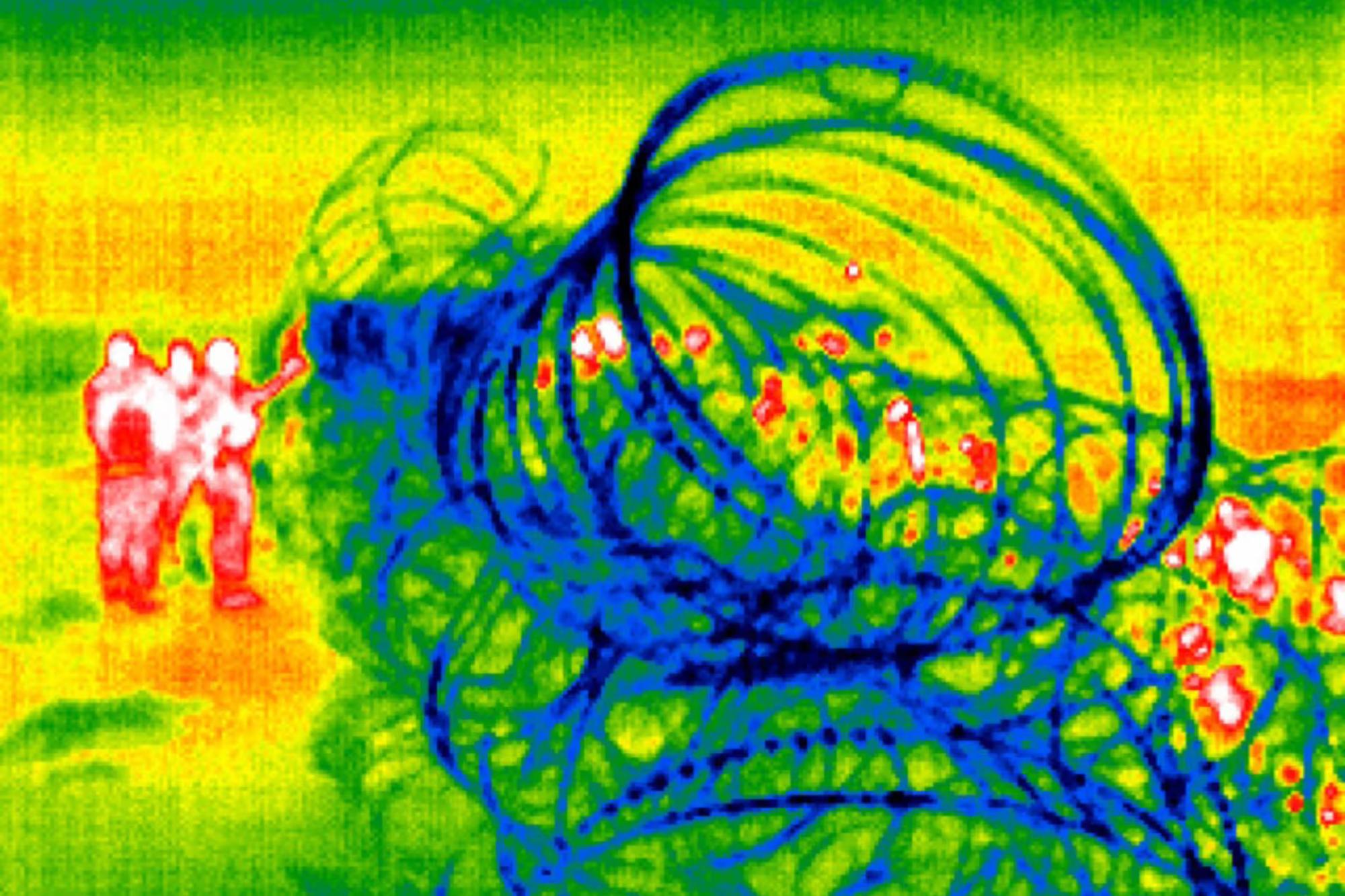
The $118bn bipartisan immigration bill that the US Senate introduced on Sunday is already facing steep opposition. The 370-page measure, which also would provide additional aid to Israel and Ukraine, has drawn the ire of both Democrats and Republicans over its proposed asylum and border laws. But privacy, immigration and digital liberties experts are also concerned over another aspect of the bill: more than $400m in funding for additional border surveillance and data-gathering tools. The lion's share of that funding will go to two main tools: $170m for additional autonomous surveillance towers and $204m for "expenses related to the analysis of DNA samples", which includes those collected from migrants detained by border patrol. The bill describes autonomous surveillance towers as ones that "utilize sensors, onboard computing, and artificial intelligence to identify items of interest that would otherwise be manually identified by personnel". The rest of the funding for border surveillance ... includes $47.5m for mobile video surveillance systems and drones and $25m for "familial DNA testing". The bill also includes $25m in funding for "subterranean detection capabilities" and $10m to acquire data from unmanned surface vehicles or autonomous boats. As of early January, CBP had deployed 396 surveillance towers along the US-Mexico border, according to the Electronic Frontier Foundation (EFF).
Latest
Latest News
Each news summary is created according to strict standards. Here's how we do it.
Each summary is created using a consistent editorial procedure. The target length is approximately 16 lines of 11-point Arial text in a 650-pixel-wide column. Up to 25% of a summary may be set in bold to emphasize the most important ideas. Summaries are composed of verbatim excerpts presented in the same sequence as they appear in the original news source, with very minor editorial additions. Where material has been omitted between excerpts, the omission is indicated with ellipses (...). Any words added by an editor for clarity or context appear in [brackets]. Our original news editor was Fred Burks. Tod Fletcher edited most summaries from 2007 through 2014, and Mark Bailey has served as news editor since 2014.