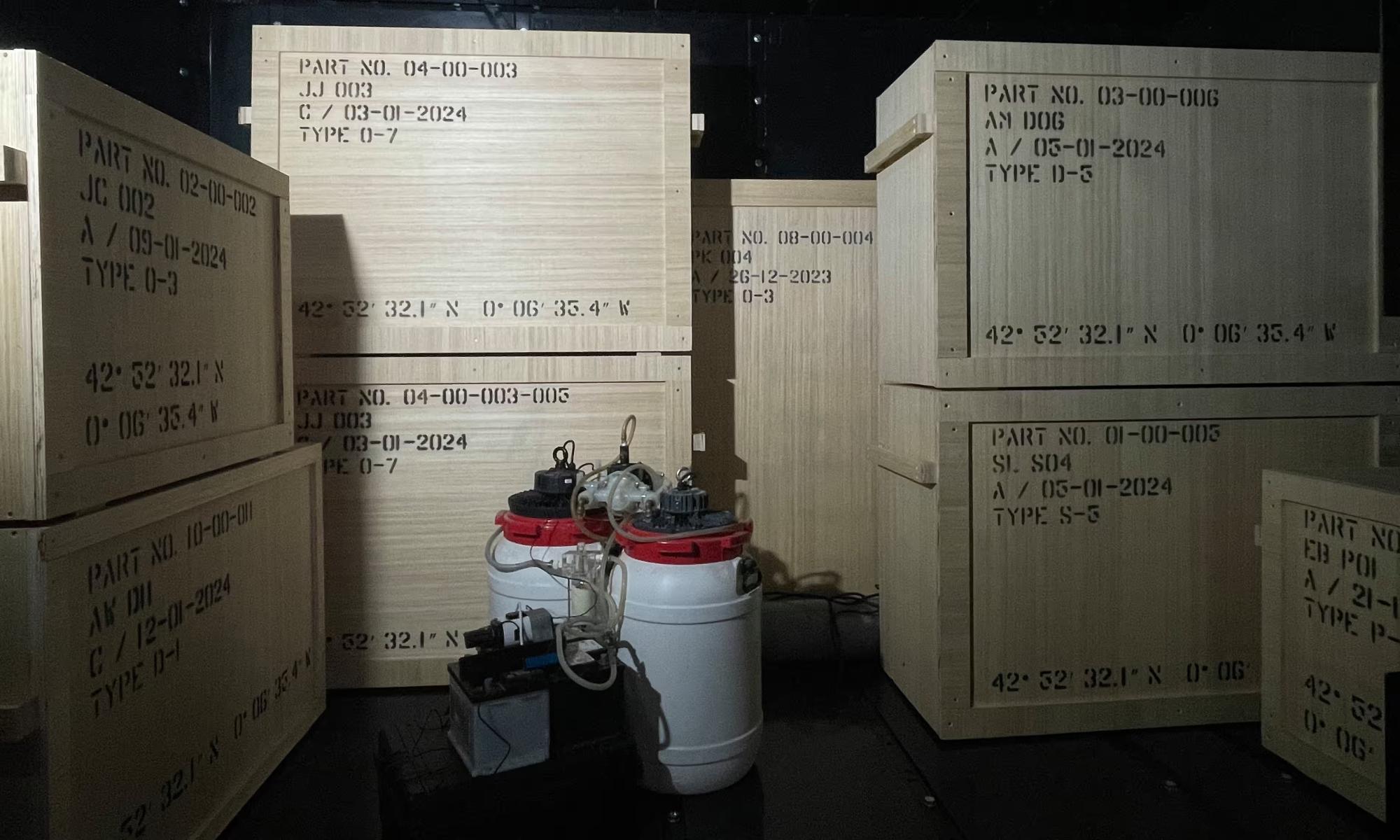
An artist in the south of France says he's planning to destroy up to $45 million worth of art, including pieces by Rembrandt, Picasso, and Andy Warhol, if WikiLeaks founder Julian Assange dies in prison. Andrei Molodkin [said] that he put a collection of masterpieces that had been donated to him into a 29-ton safe hooked up to two barrels one containing an acid powder and the other containing an accelerator " which, when pumped into the safe, will create a reaction strong enough to destroy all its contents. The project is called "Dead Man's Switch," and it is backed by Assange's wife, Stella. Assange is currently in jail in the U.K. awaiting his final appeal over extradition to the United States to face charges under the Espionage Act, which will take place later this month. WikiLeaks published thousands of leaked documents relating to the wars in Iraq and Afghanistan, and Assange is alleged to have conspired to obtain and disclose U.S. national defense information. Molodkin says that the safe will be hooked up to a 24-hour timer which must be reset every day or else it will trigger the release of the two barrel's corrosive substances inside. He says, each day, the timer will only be reset when someone "close to Assange" confirms he is alive. Assange's wife, Stella, says the project asks the question of "which is the greater taboo: destroying art or destroying human life? If democracy wins, the art will be preserved - as will Julian's life."
Latest
Latest News
Each news summary is created according to strict standards. Here's how we do it.
Each summary is created using a consistent editorial procedure. The target length is approximately 16 lines of 11-point Arial text in a 650-pixel-wide column. Up to 25% of a summary may be set in bold to emphasize the most important ideas. Summaries are composed of verbatim excerpts presented in the same sequence as they appear in the original news source, with very minor editorial additions. Where material has been omitted between excerpts, the omission is indicated with ellipses (...). Any words added by an editor for clarity or context appear in [brackets]. Our original news editor was Fred Burks. Tod Fletcher edited most summaries from 2007 through 2014, and Mark Bailey has served as news editor since 2014.