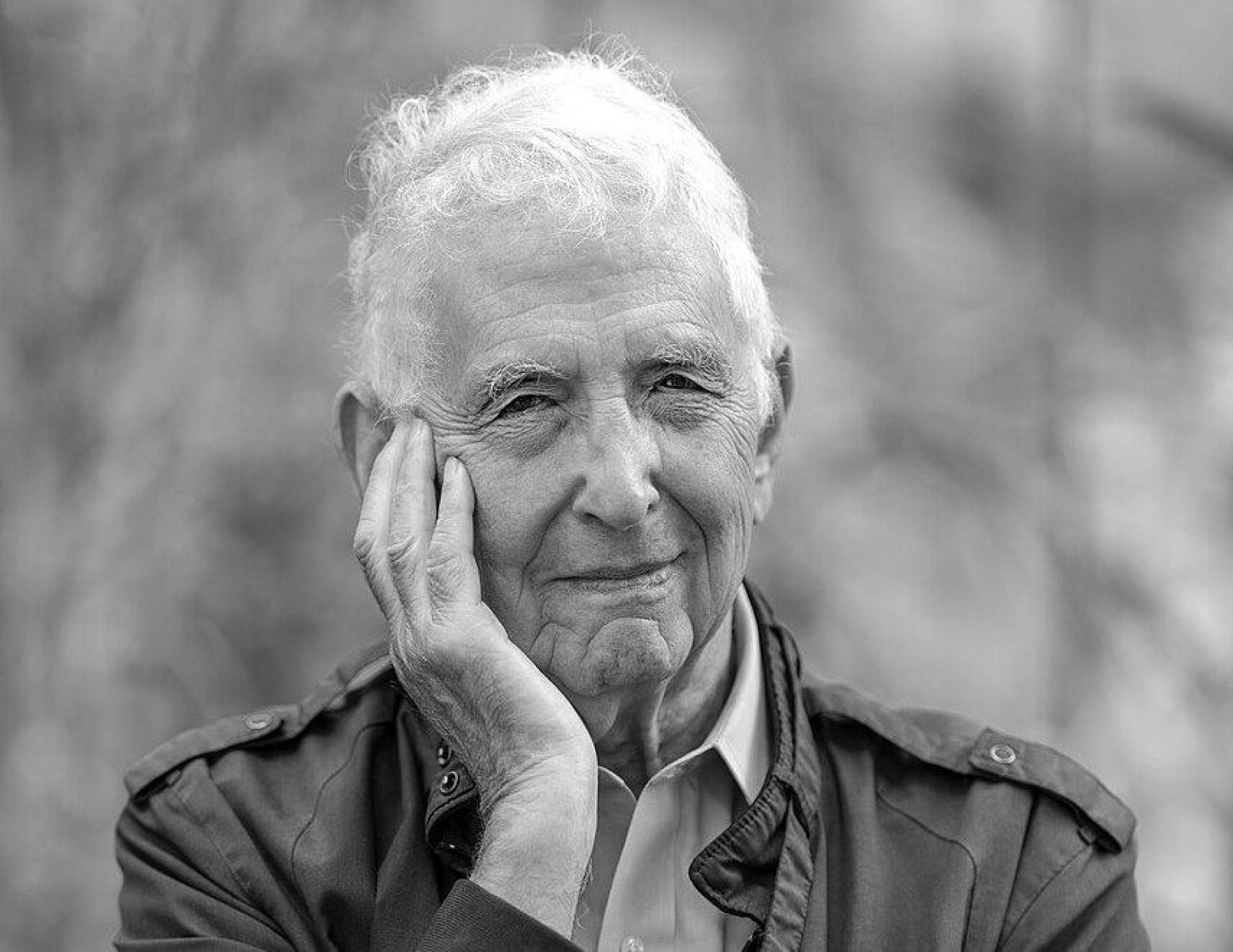
More than 50 years had passed since Ellsberg risking prison for the rest of his life " had provided the New York Times and other newspapers with 7,000 pages of top-secret documents that quickly became known as the Pentagon Papers. From then on, he continued to speak, write, and protest as a tireless antiwar activist. I asked what the impacts would likely be if pictures of people killed by the U.S. military's bombing campaigns were on the front pages of American newspapers. "I am in favor, unreservedly, of making people aware what the human consequences are of what we're doing " where we are killing people, what the real interests appear to be involved, who is benefiting from this, what are the circumstances of the killing," Ellsberg replied. "I want that to come out. It is not impossible, especially [with] social media, where people can be their own investigative journalists." Ellsberg died today from pancreatic cancer. While he is best known as the whistleblower who gave the Pentagon Papers about the Vietnam War to the world, he went on for 52 years to expose other types of secrets " including hidden truths about the psychology and culture of U.S. militarism. Ellsberg added, "How much of a role does the media actually play in ... deceiving the public? I would say, as a former insider, one becomes aware: It's not difficult to deceive them. First of all, you're often telling them what they would like to believe " that we're better than other people, we are superior in our morality and our perceptions of the world."
Latest
Latest News
Each news summary is created according to strict standards. Here's how we do it.
Each summary is created using a consistent editorial procedure. The target length is approximately 16 lines of 11-point Arial text in a 650-pixel-wide column. Up to 25% of a summary may be set in bold to emphasize the most important ideas. Summaries are composed of verbatim excerpts presented in the same sequence as they appear in the original news source, with very minor editorial additions. Where material has been omitted between excerpts, the omission is indicated with ellipses (...). Any words added by an editor for clarity or context appear in [brackets]. Our original news editor was Fred Burks. Tod Fletcher edited most summaries from 2007 through 2014, and Mark Bailey has served as news editor since 2014.