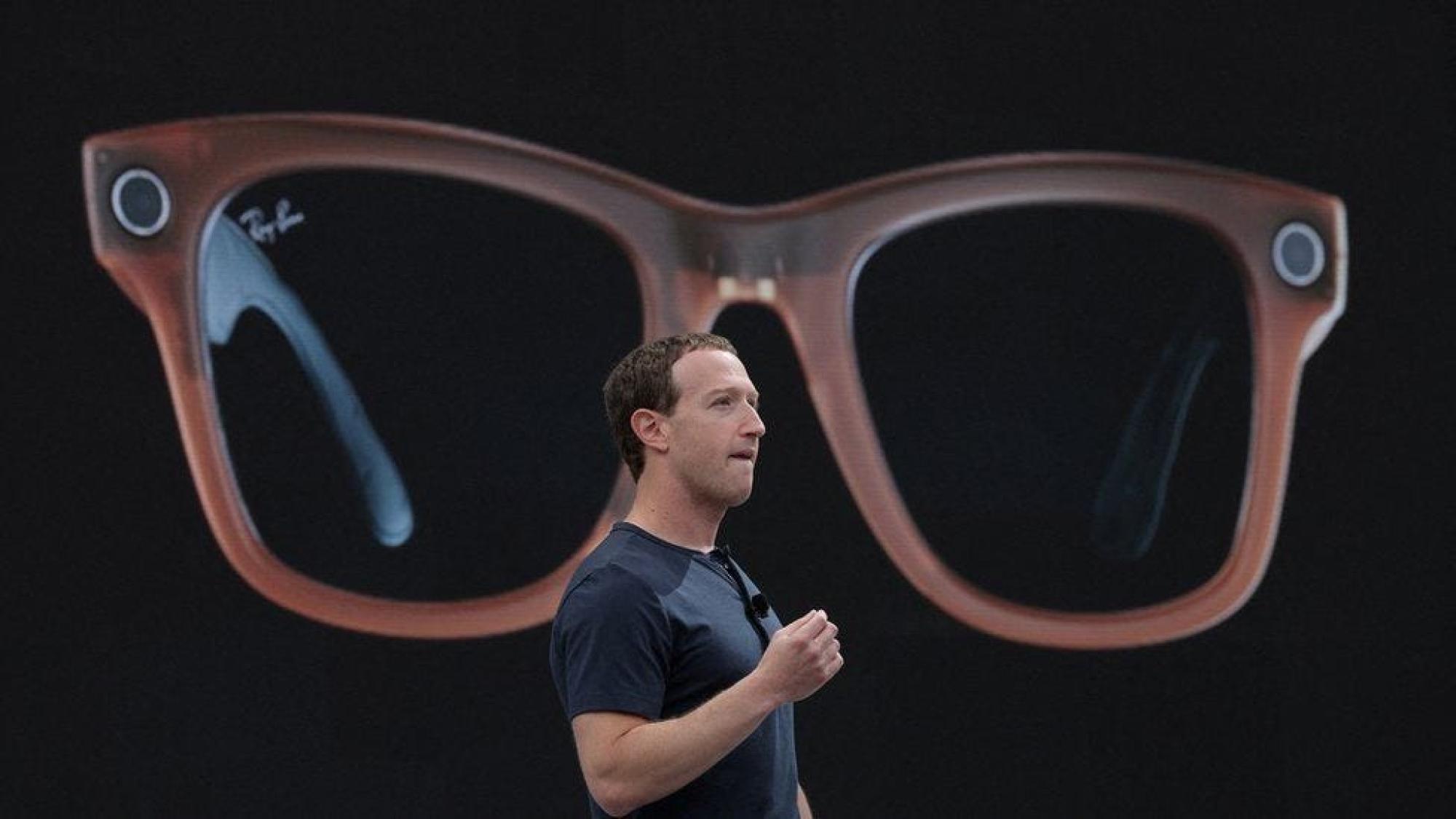
For the past two weeks, I've been using a new camera to secretly snap photos and record videos of strangers in parks, on trains, inside stores and at restaurants. I was testing the recently released $300 Ray-Ban Meta glasses that Mark Zuckerberg's social networking empire made in collaboration with the iconic eyewear maker. The high-tech glasses include a camera for shooting photos and videos, and an array of speakers and microphones for listening to music and talking on the phone. The glasses, Meta says, can help you "live in the moment" while sharing what you see with the world. Meta, Apple and Magic Leap have all been hyping mixed-reality headsets that use cameras to allow their software to interact with objects in the real world. To inform people that they are being photographed, the Meta Ray-Bans include a tiny LED light embedded in the right frame to indicate when the device is recording. When a photo is snapped, it flashes momentarily. When a video is recording, it is continuously illuminated. As I shot 200 photos and videos with the glasses in public, including on BART trains, on hiking trails and in parks, no one looked at the LED light or confronted me about it. And why would anyone? It would be rude to comment on a stranger's glasses, let alone stare at them. The ubiquity of smartphones, doorbell cameras and dashcams") makes it likely that you are being recorded anywhere you go. But Chris Gilliard, an independent privacy scholar who has studied the effects of surveillance technologies), said cameras hidden inside smart glasses would most likely enable bad actors " like the people shooting sneaky photos of others at the gym " to do more harm.
Latest
Latest News
Each news summary is created according to strict standards. Here's how we do it.
Each summary is created using a consistent editorial procedure. The target length is approximately 16 lines of 11-point Arial text in a 650-pixel-wide column. Up to 25% of a summary may be set in bold to emphasize the most important ideas. Summaries are composed of verbatim excerpts presented in the same sequence as they appear in the original news source, with very minor editorial additions. Where material has been omitted between excerpts, the omission is indicated with ellipses (...). Any words added by an editor for clarity or context appear in [brackets]. Our original news editor was Fred Burks. Tod Fletcher edited most summaries from 2007 through 2014, and Mark Bailey has served as news editor since 2014.