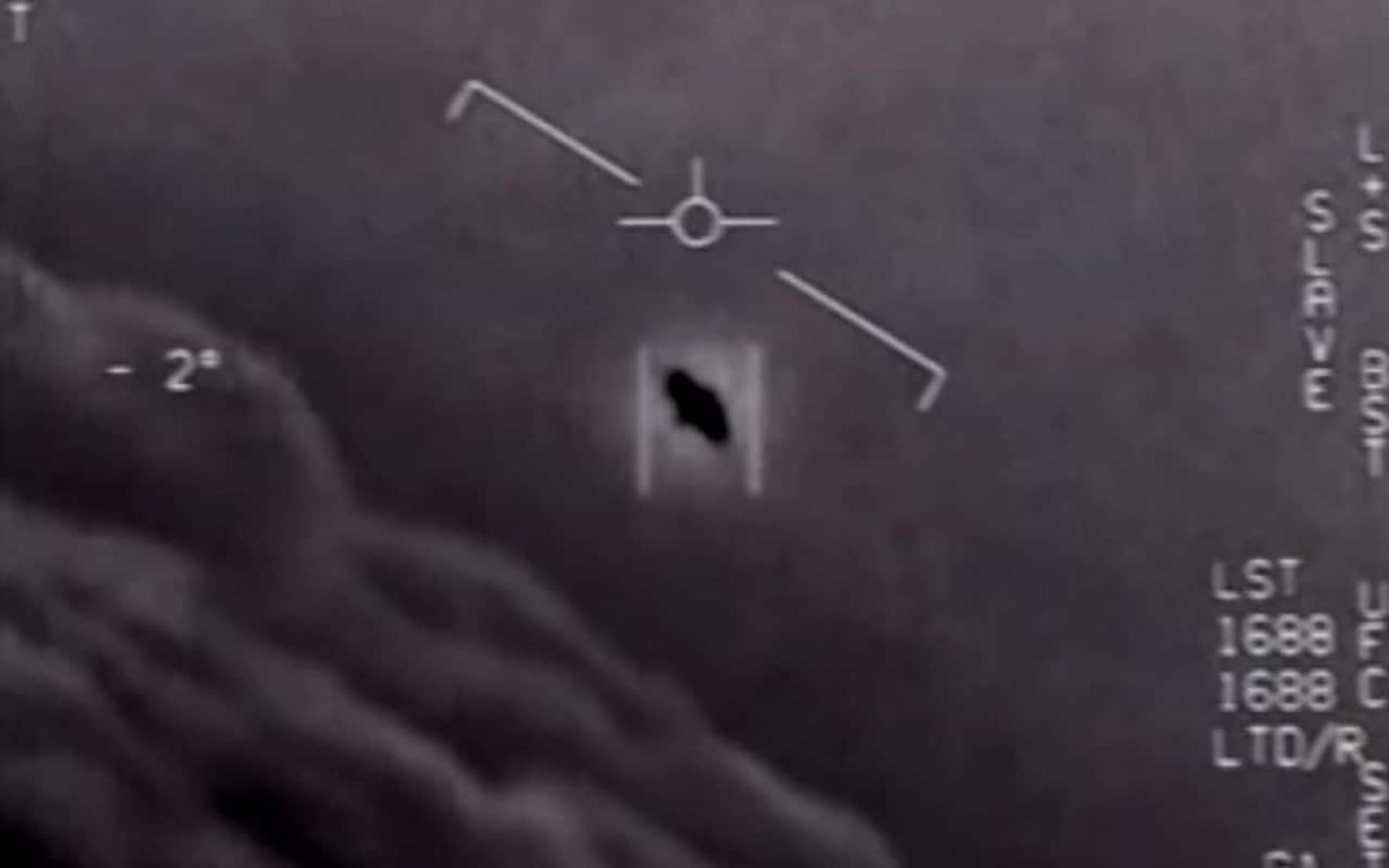
At a press conference at NASA's Washington, D.C., headquarters, the space agency [appointed] the country's, and indeed the world's, first-ever UFO Czar. Only NASA didn't use either one of those terms. Fewer and fewer people ... talk about UFOs. The preferred term now is UAP, for unidentified anomalous (or, variously, aerial) phenomenon. And NASA didn't use the label czar either. Instead, the full name for the new job is director of UAP research, and the man tapped to do the work is Mark McInernay, a former Pentagon liaison for NASA. It will be McInernay's job to study the sightings, advancing science if the vehicles are confirmed to be extraterrestrial, and protecting national security if they're of international military origin. He'll have a lot to work with. Over the past 20 years, there have been more than 120 sightings of objects that often appear to be flying with no identified means of propulsion, and maneuvering in quick, head-snapping, often stop-and-start ways that no conventional machines can manage. It helps that the sightings have been called in by witnesses most people think of as unimpeachably reliable: U.S. military pilots. NASA Administrator Bill Nelson yesterday stepped up to offer his view of the possibility of life in space. "There's a global fascination with UAP," he said. "Now, NASA has a statutory authority to look for life in the universe. Do I believe there's life in a universe that is so vast that it's hard for me to comprehend how big it is? My personal answer is yes."
Latest
Latest News
Each news summary is created according to strict standards. Here's how we do it.
Each summary is created using a consistent editorial procedure. The target length is approximately 16 lines of 11-point Arial text in a 650-pixel-wide column. Up to 25% of a summary may be set in bold to emphasize the most important ideas. Summaries are composed of verbatim excerpts presented in the same sequence as they appear in the original news source, with very minor editorial additions. Where material has been omitted between excerpts, the omission is indicated with ellipses (...). Any words added by an editor for clarity or context appear in [brackets]. Our original news editor was Fred Burks. Tod Fletcher edited most summaries from 2007 through 2014, and Mark Bailey has served as news editor since 2014.