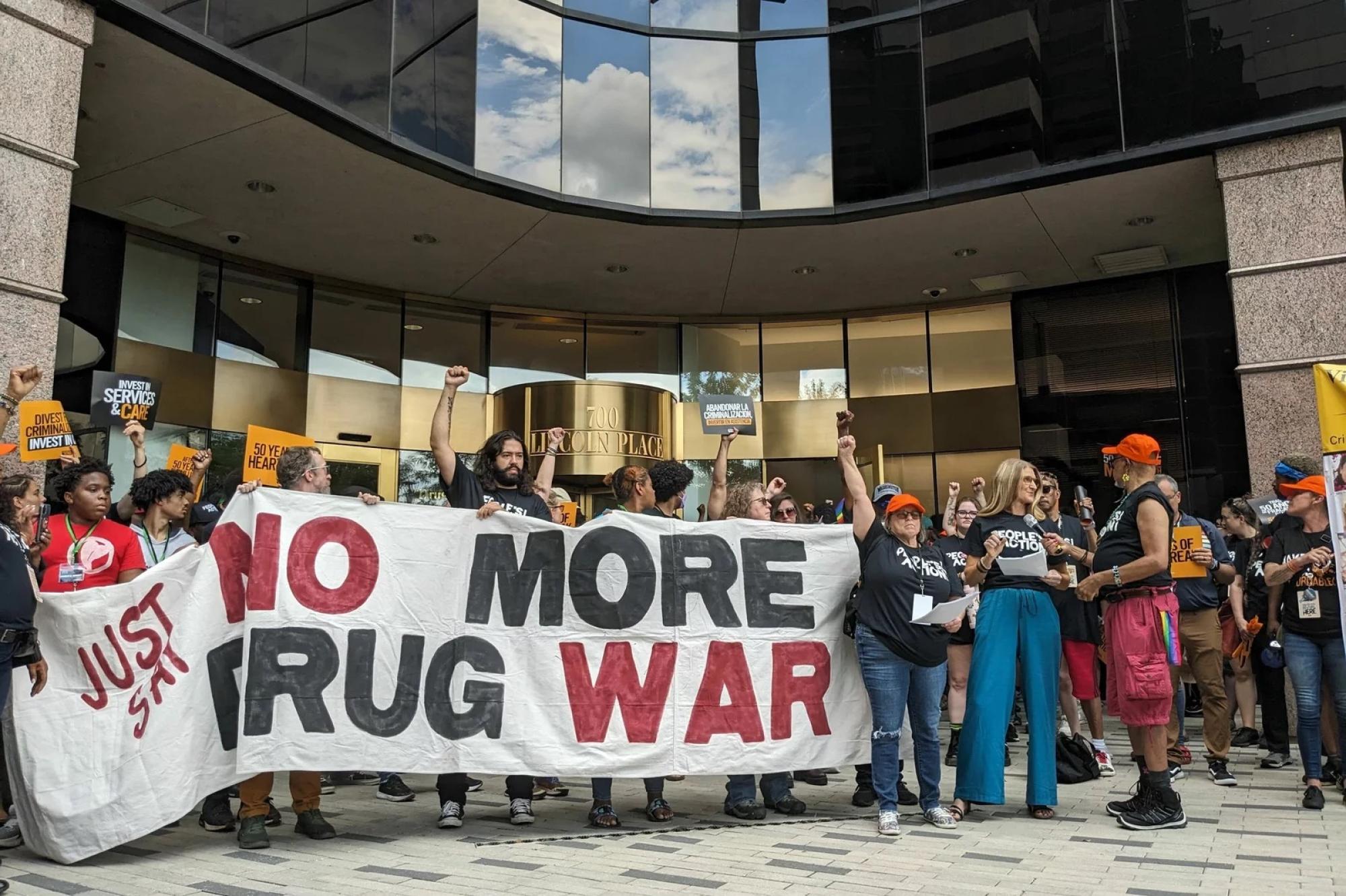
Policing expenses mount quickly: $18,000 for technology to unlock cellphones in Southington, Conn.; $2,900 for surveillance cameras and to train officers and canines in New Lexington, Ohio. And in other communities around the country, hundreds of thousands for vehicles, body scanners, and other equipment. State and local governments are turning to a new means to pay those bills: opioid settlement cash. This money " totaling more than $50 billion across 18 years " comes from national settlements with more than a dozen companies that made, sold, or distributed opioid painkillers, including Johnson & Johnson, AmerisourceBergen, and Walmart, which were accused of fueling the epidemic that addicted and killed millions. In August, more than 200 researchers and clinicians delivered a call to action to government officials in charge of opioid settlement funds. "More policing is not the answer to the overdose crisis," they wrote. Years of research suggests law enforcement and criminal justice initiatives have exacerbated the problem. "Police activity is actually causing the very harms that police activity is supposed to be stemming," says Jennifer Carroll, an author of that study and an addiction policy researcher. In Louisiana ... 80% of settlement dollars are flowing to parish governments and 20% to sheriffs' departments. Over the lifetime of the settlements, sheriffs' offices in the state will receive more than $65 million " the largest direct allocation to law enforcement nationwide. And they do not have to account for how they spend it.
Latest
Latest News
Each news summary is created according to strict standards. Here's how we do it.
Each summary is created using a consistent editorial procedure. The target length is approximately 16 lines of 11-point Arial text in a 650-pixel-wide column. Up to 25% of a summary may be set in bold to emphasize the most important ideas. Summaries are composed of verbatim excerpts presented in the same sequence as they appear in the original news source, with very minor editorial additions. Where material has been omitted between excerpts, the omission is indicated with ellipses (...). Any words added by an editor for clarity or context appear in [brackets]. Our original news editor was Fred Burks. Tod Fletcher edited most summaries from 2007 through 2014, and Mark Bailey has served as news editor since 2014.