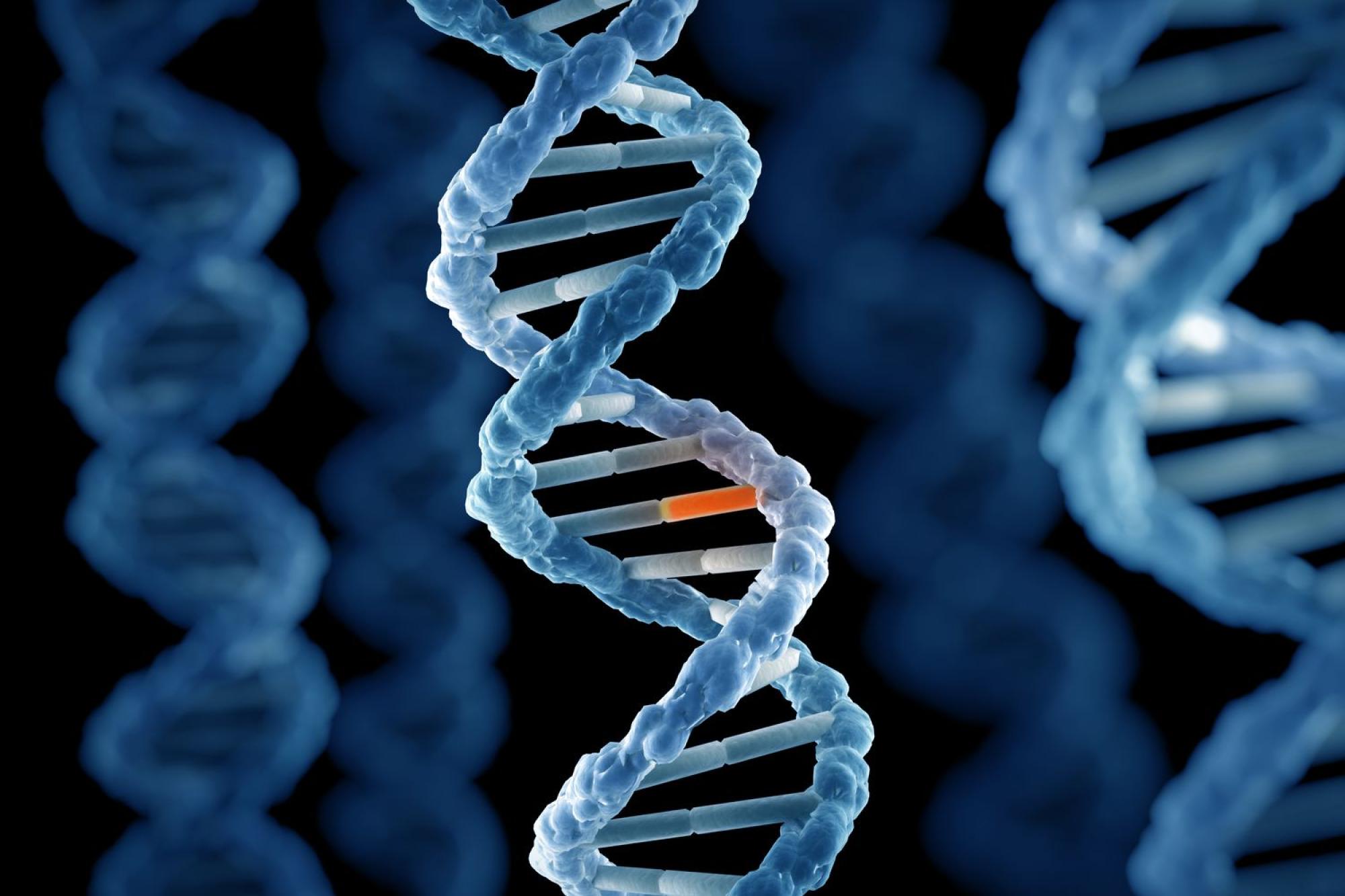
Findings, published January 12 in the journal Nature, radically change our understanding of evolution and could one day help researchers breed better crops or even help humans fight cancer. Mutations occur when DNA is damaged and left unrepaired, creating a new variation. The scientists wanted to know if mutation was purely random or something deeper. What they found was unexpected. "We always thought of mutation as basically random across the genome," said [paper lead author] Grey Monroe. "It turns out that mutation is very non-random and it's non-random in a way that benefits the plant. It's a totally new way of thinking about mutation." Researchers spent three years sequencing the DNA of hundreds of Arabidopsis thaliana, or thale cress. Sequencing of those ... plants revealed more than 1 million mutations. Within those mutations a nonrandom pattern was revealed, counter to what was expected. Instead of randomness they found patches of the genome with low mutation rates. In those patches, they were surprised to discover an over-representation of essential genes, such as those involved in cell growth and gene expression. "These are the really important regions of the genome," Monroe said. "The areas that are the most biologically important are the ones being protected from mutation." The areas are also sensitive to the harmful effects of new mutations. The findings [reveal] that the plant has evolved to protect its genes from mutation to ensure survival.
Latest
Latest News
Each news summary is created according to strict standards. Here's how we do it.
Each summary is created using a consistent editorial procedure. The target length is approximately 16 lines of 11-point Arial text in a 650-pixel-wide column. Up to 25% of a summary may be set in bold to emphasize the most important ideas. Summaries are composed of verbatim excerpts presented in the same sequence as they appear in the original news source, with very minor editorial additions. Where material has been omitted between excerpts, the omission is indicated with ellipses (...). Any words added by an editor for clarity or context appear in [brackets]. Our original news editor was Fred Burks. Tod Fletcher edited most summaries from 2007 through 2014, and Mark Bailey has served as news editor since 2014.