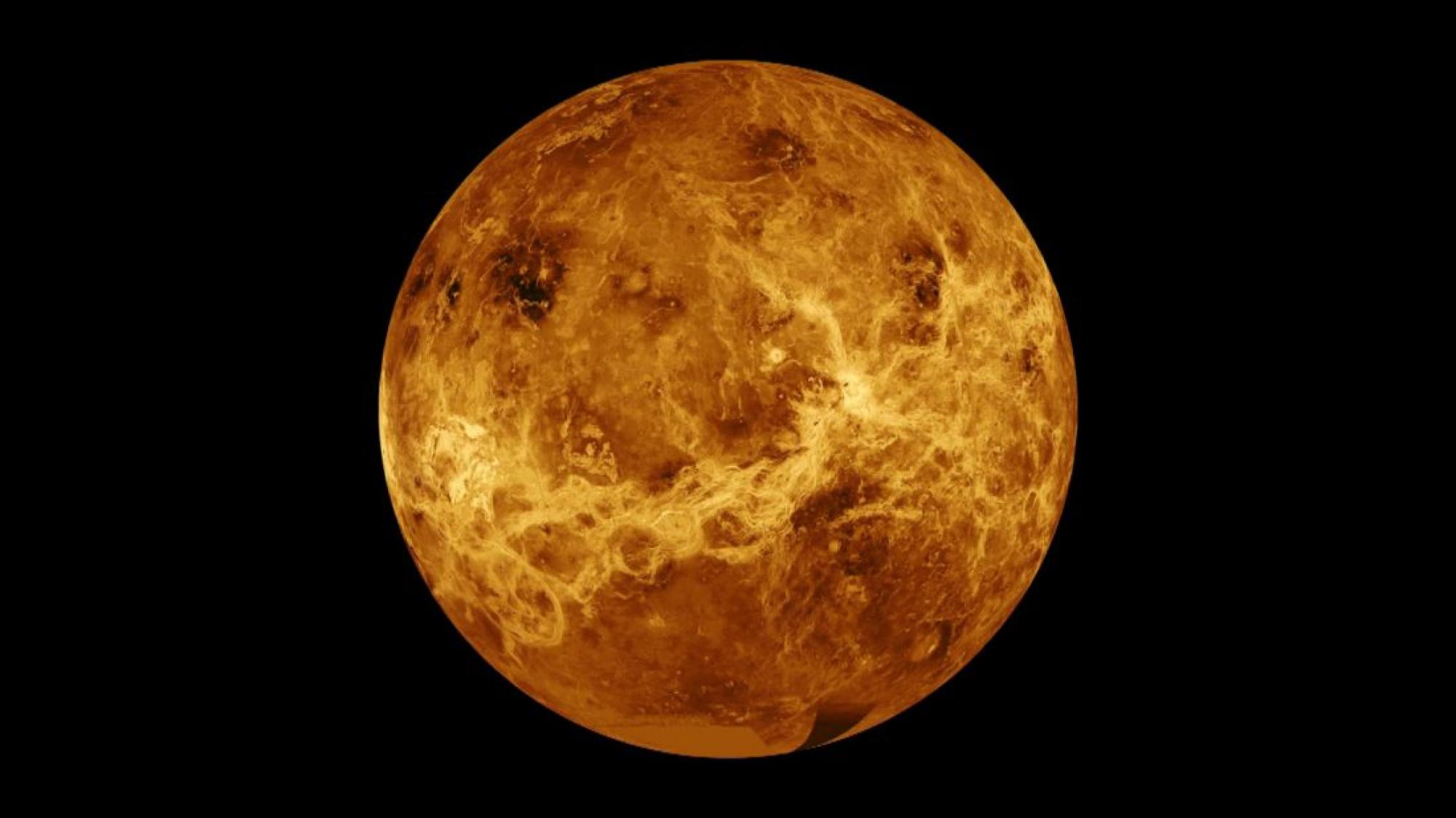
Saturn's orange moon Titan has hundreds of times more liquid hydrocarbons than all the known oil and natural gas reserves on Earth, according to new data from NASA's Cassini spacecraft. The hydrocarbons rain from the sky, collecting in vast deposits that form lakes and dunes. The new findings from the study led by Ralph Lorenz, Cassini radar team member from the Johns Hopkins University Applied Physics Laboratory, Laurel, Md., are reported in ... the Geophysical Research Letters. Titan is just covered in carbon-bearing material -- it's a giant factory of organic chemicals," said Lorenz. "This vast carbon inventory is an important window into the geology and climate history of Titan." At a balmy minus 179 degrees Celsius (minus 290 degrees Fahrenheit), Titan is a far cry from Earth. Instead of water, liquid hydrocarbons in the form of methane and ethane are present on the moon's surface. Cassini has mapped about 20 percent of Titan's surface with radar. Several hundred lakes and seas have been observed, with each of several dozen estimated to contain more hydrocarbon liquid than Earth's oil and gas reserves. Proven reserves of natural gas on Earth total 130 billion tons, enough to provide 300 times the amount of energy the entire United States uses annually for residential heating, cooling and lighting. Dozens of Titan's lakes individually have the equivalent of at least this much energy in the form of methane and ethane.
Latest
Latest News
Each news summary is created according to strict standards. Here's how we do it.
Each summary is created using a consistent editorial procedure. The target length is approximately 16 lines of 11-point Arial text in a 650-pixel-wide column. Up to 25% of a summary may be set in bold to emphasize the most important ideas. Summaries are composed of verbatim excerpts presented in the same sequence as they appear in the original news source, with very minor editorial additions. Where material has been omitted between excerpts, the omission is indicated with ellipses (...). Any words added by an editor for clarity or context appear in [brackets]. Our original news editor was Fred Burks. Tod Fletcher edited most summaries from 2007 through 2014, and Mark Bailey has served as news editor since 2014.