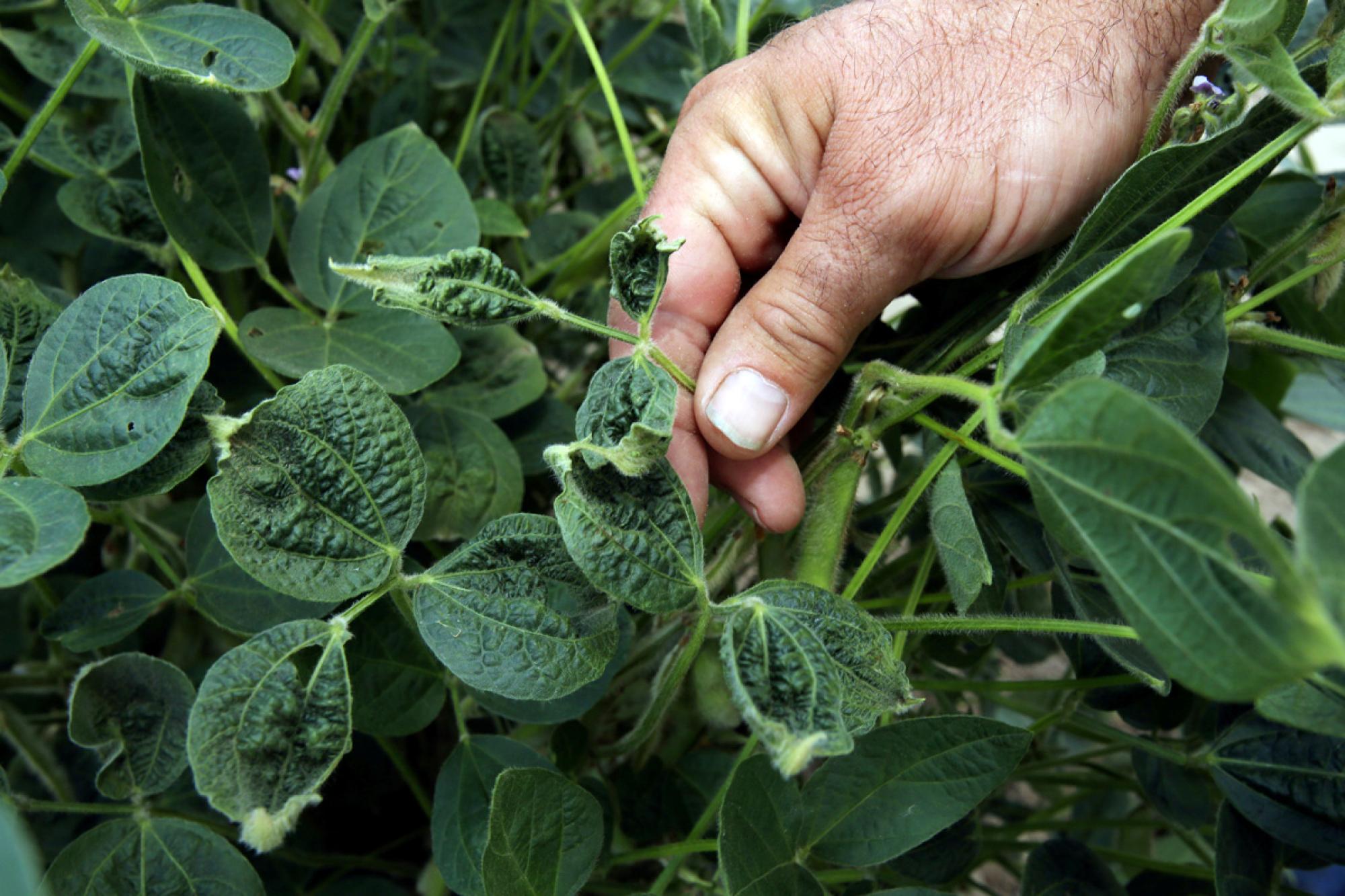
A US court this week banned three weedkillers widely used in American agriculture, finding that the Environmental Protection Agency (EPA) broke the law in allowing them to be on the market. The ruling is specific to three dicamba-based weedkillers manufactured by Bayer, BASF and Syngenta, which have been blamed for millions of acres of crop damage and harm to endangered species and natural areas across the midwest and south. Discovery documents turned up in the litigation showed the companies knew that their dicamba weedkillers would probably lead to off-target crop damage. This is the second time a federal court has banned these weedkillers since they were introduced for the 2017 growing season. In 2020, the ninth circuit court of appeals issued its own ban, but months later the Trump administration reapproved the weedkilling products. But a federal judge in Arizona ruled on Monday that the EPA made a crucial error in reapproving dicamba, finding the agency did not post it for public notice and comment as required by law. US district judge David Bury wrote ... that it was a "very serious" violation and that if EPA had done a full analysis, it probably would not have made the same decision. Bury wrote that the EPA did not allow many people who are deeply affected by the weedkiller " including specialty farmers, conservation groups and more " to comment. "The evidence has shown that dicamba cannot be used without causing massive and unprecedented harm to farms as well as endangering plants and pollinators," said George Kimbrell [with] the Center for Food Safety, which litigated the case.
Latest
Latest News
Each news summary is created according to strict standards. Here's how we do it.
Each summary is created using a consistent editorial procedure. The target length is approximately 16 lines of 11-point Arial text in a 650-pixel-wide column. Up to 25% of a summary may be set in bold to emphasize the most important ideas. Summaries are composed of verbatim excerpts presented in the same sequence as they appear in the original news source, with very minor editorial additions. Where material has been omitted between excerpts, the omission is indicated with ellipses (...). Any words added by an editor for clarity or context appear in [brackets]. Our original news editor was Fred Burks. Tod Fletcher edited most summaries from 2007 through 2014, and Mark Bailey has served as news editor since 2014.