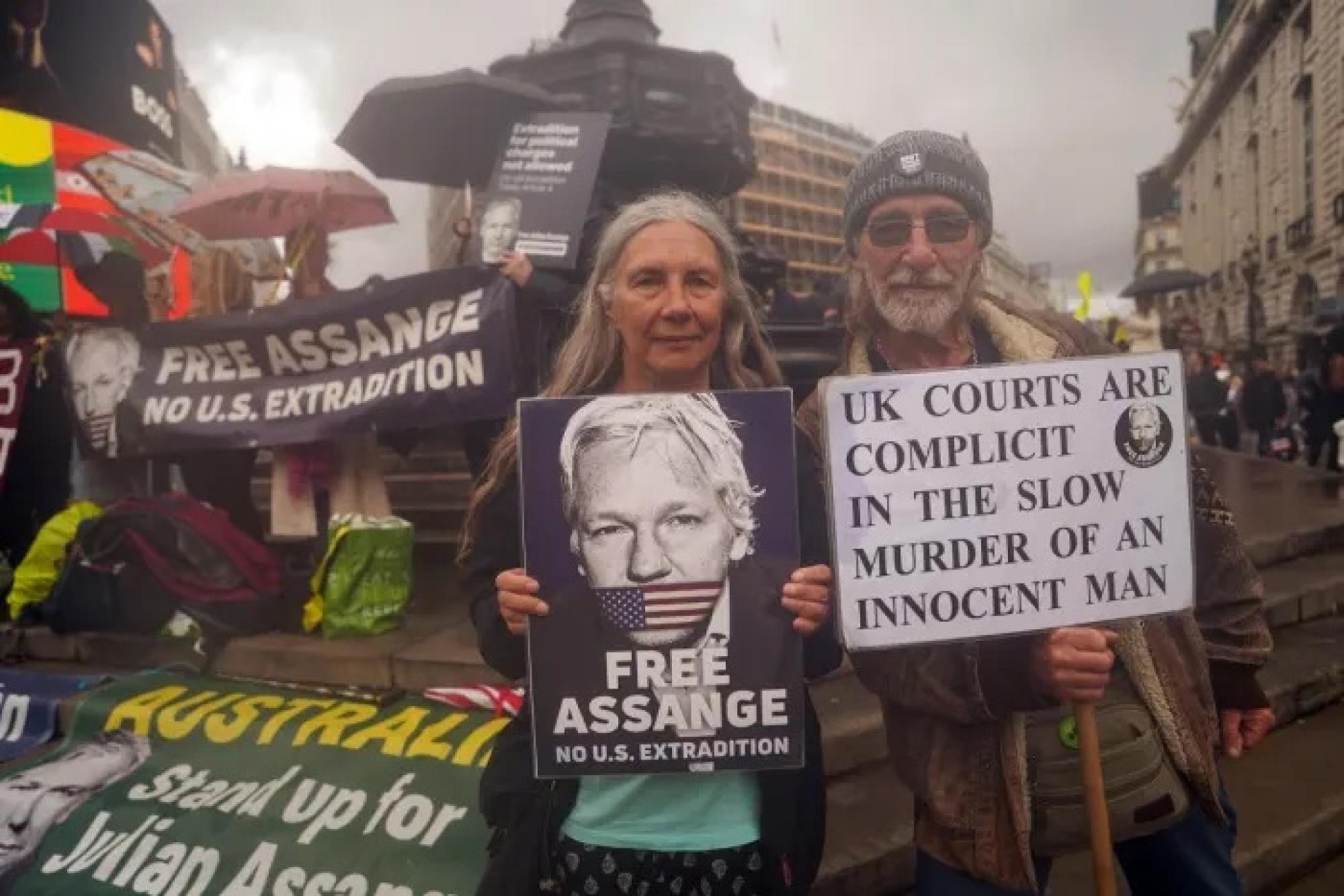
Last month, a multi-party delegation of Australian Members of Parliament visited the United States to actively lobby U.S. officials to cease their efforts to extradite Julian Assange. The founder of Wikileaks is an Australian citizen facing charges filed by the Trump administration under the infamous Espionage Act of 1917 for revealing US war crimes and violations of international law. The revelations were called "Cable gate," a set of 251,000 confidential cables from the US State Department that disclosed corruption, diplomatic scandals and spy affairs on an international scale. On January 4, 2021, British criminal court judge Vanessa Baraister denied the US government's request to extradite Assange. Given the fact that he had been confined in the Ecuadorian embassy for seven years and then held in the Balmarsh high-security prison since April 12, 2019, the judge found that Assange's mental condition "is such that it would be oppressive to extradite him to the United States of America." The Biden DOJ appealed that ruling and convinced the British higher courts to reverse Judge Baraister. As a result, Assange is now subject to extradition unless his further legal appeals can prevail. For Australians, securing the release of Assange is broadly supported by a coalition that transcends partisan politics. The Australian delegation last month included members of Parliament from the majority Labor Party, the conservative opposition, the Greens, the National party, and an independent party.
Latest
Latest News
Each news summary is created according to strict standards. Here's how we do it.
Each summary is created using a consistent editorial procedure. The target length is approximately 16 lines of 11-point Arial text in a 650-pixel-wide column. Up to 25% of a summary may be set in bold to emphasize the most important ideas. Summaries are composed of verbatim excerpts presented in the same sequence as they appear in the original news source, with very minor editorial additions. Where material has been omitted between excerpts, the omission is indicated with ellipses (...). Any words added by an editor for clarity or context appear in [brackets]. Our original news editor was Fred Burks. Tod Fletcher edited most summaries from 2007 through 2014, and Mark Bailey has served as news editor since 2014.