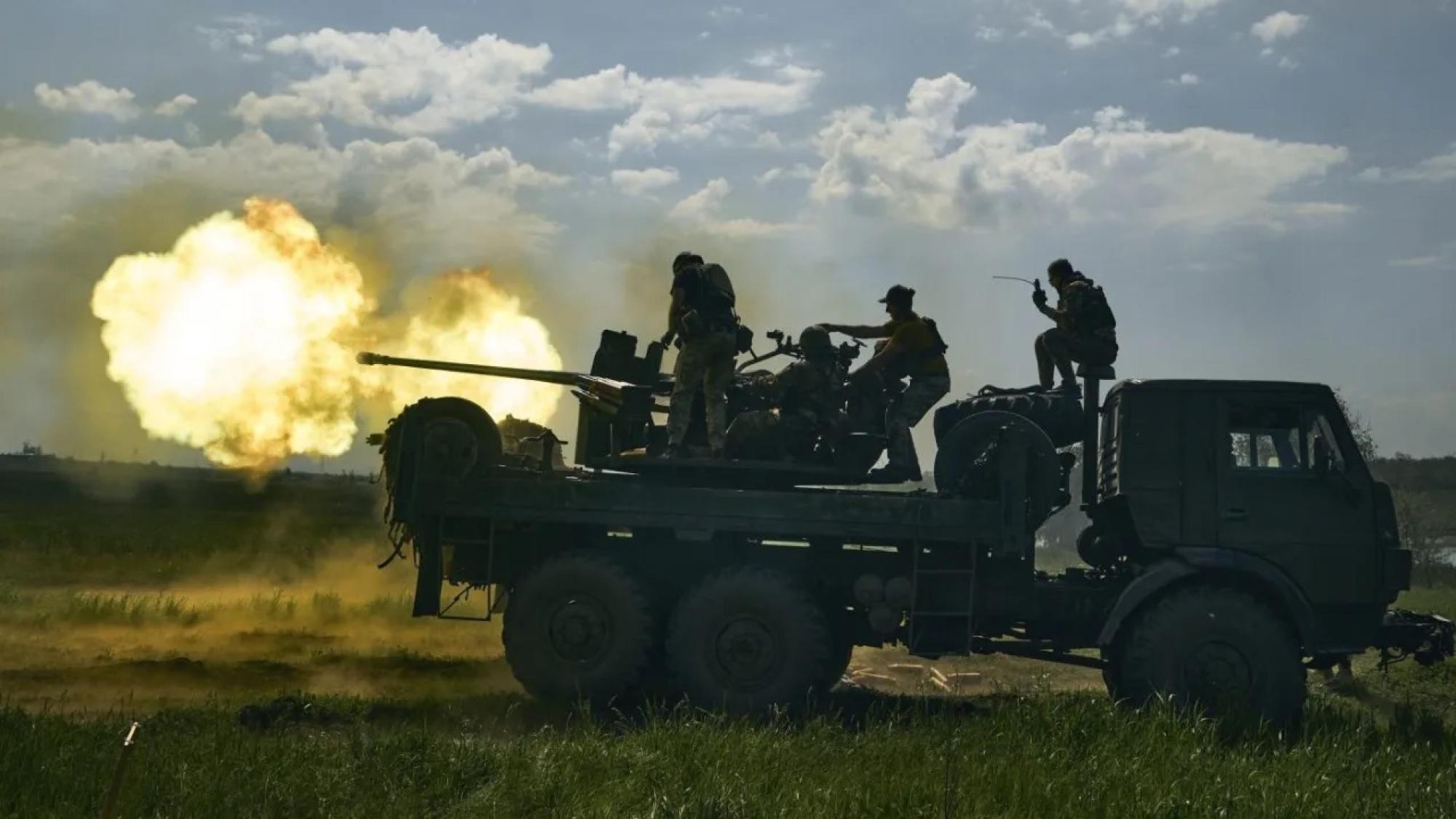
Research by Brown University is shedding light on the impact of the wars in Iraq, Afghanistan and other conflict zones, finding that the U.S. military, among others, contributes significantly to climate change, becoming one of the world's top greenhouse gas emitters through the fighting of battles. Air pollution from military vehicles and weaponry has adversely affected public health among civilians in the war zone and U.S. service members. The report examines everything from the destruction of military base garbage in burn pits to the deforestation in Afghanistan to cancer, birth defects and other conditions associated with war-related toxins. "The water supply in the war zones has been contaminated by oil from military vehicles and depleted uranium from ammunition. Along with the degradation of the natural resources in these countries ... the animal and bird populations have also been adversely affected." Now think about Russia and Ukraine. Russia's targeting of Ukraine's energy grid has been particularly damaging, as oil depots and gas power plants explode, releasing carbon and methane into the air. Reports suggest that ordinary Ukrainians are feeling the impact, forced to rely on dirtier fuels to keep warm. A recent report by GHG, a Dutch firm examining the war's greenhouse gas impact, found that each explosion of a missile or projectile causes pollution of air, water and land with toxic substances, and that Russian bombing of industrial infrastructure in Ukraine has led to uncontrolled chemical releases.
Latest
Latest News
Each news summary is created according to strict standards. Here's how we do it.
Each summary is created using a consistent editorial procedure. The target length is approximately 16 lines of 11-point Arial text in a 650-pixel-wide column. Up to 25% of a summary may be set in bold to emphasize the most important ideas. Summaries are composed of verbatim excerpts presented in the same sequence as they appear in the original news source, with very minor editorial additions. Where material has been omitted between excerpts, the omission is indicated with ellipses (...). Any words added by an editor for clarity or context appear in [brackets]. Our original news editor was Fred Burks. Tod Fletcher edited most summaries from 2007 through 2014, and Mark Bailey has served as news editor since 2014.