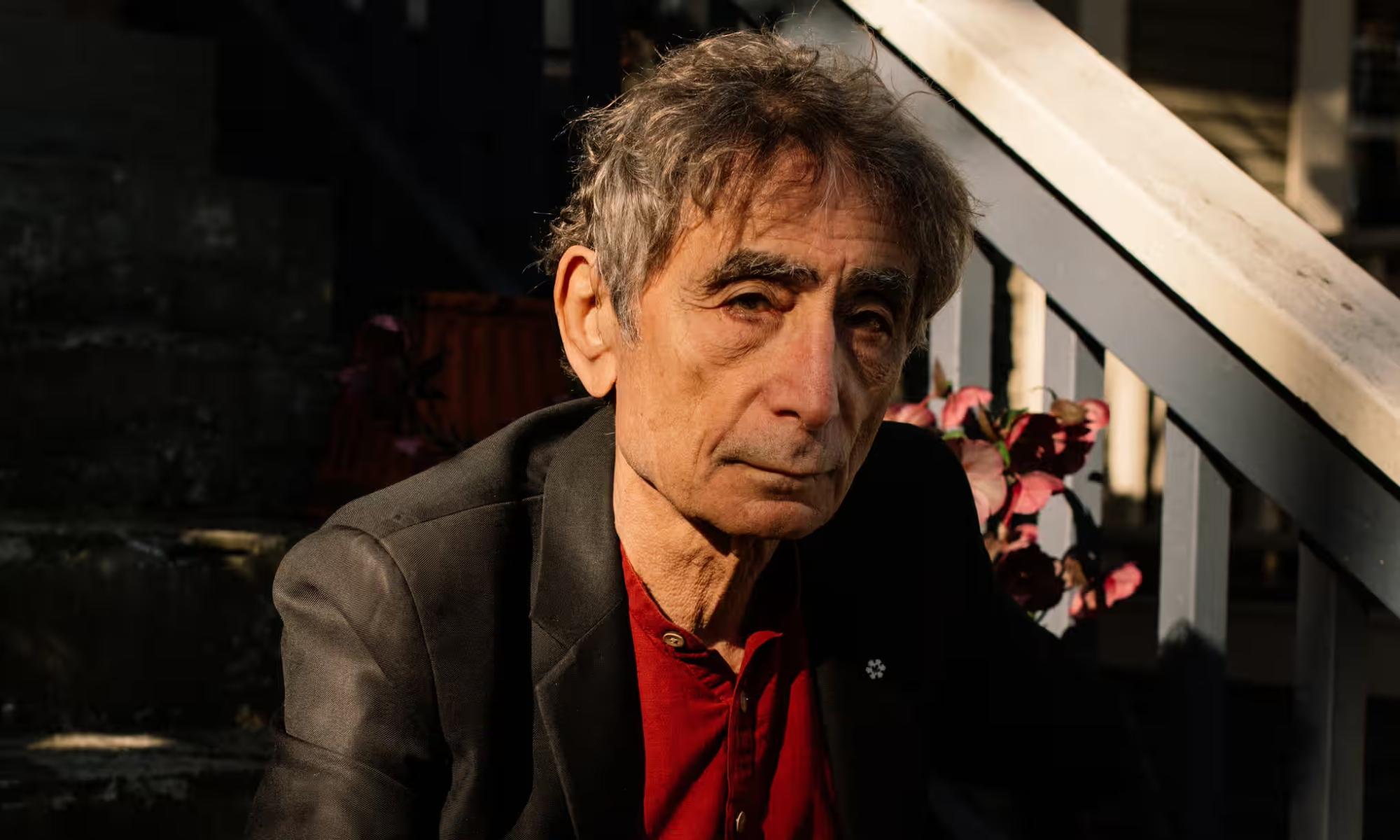
[Gabor] Maté was born in January 1944; in May of that year, the deportation of Hungary's Jews to Auschwitz began. By the end of the Holocaust, 565,000 Hungarian Jews had been murdered, Maté's maternal grandparents among them. When he was 11 months old, his mother sent him with a stranger to be cared for by his aunt. Maté says trauma, from the Greek for "wound", "is not what happens to you; it is what happens inside you as a result of what happens to you. It is not the blow on the head, but the concussion I get." That, he says, is the good news. "If my trauma was that my mother gave me to a stranger ... that will never not have happened. But if the wound was that I decided as a result that I wasn't worthwhile as a human being, I wasn't lovable, that's a wound that can heal at any time." There can be two types of wound, he says. "There's the capital-T traumatic events," which include things like being abused as a child and the loss of a parent. Then there are "small-T traumas". "You can wound a kid not only by doing bad things to them, but by also not meeting their needs," he says. Maté has a heightened level of compassion. For him, the real villain is our culture. Many of the plights of modern society are, he says, natural responses to an unhealthy culture. Take addiction. His view is that there is no such thing as an "addictive personality". Nor is addiction a disease. His mantra is: "Don't ask why the addiction, ask why the pain. Addiction is a normal response to trauma."
Latest
Latest News
Each news summary is created according to strict standards. Here's how we do it.
Each summary is created using a consistent editorial procedure. The target length is approximately 16 lines of 11-point Arial text in a 650-pixel-wide column. Up to 25% of a summary may be set in bold to emphasize the most important ideas. Summaries are composed of verbatim excerpts presented in the same sequence as they appear in the original news source, with very minor editorial additions. Where material has been omitted between excerpts, the omission is indicated with ellipses (...). Any words added by an editor for clarity or context appear in [brackets]. Our original news editor was Fred Burks. Tod Fletcher edited most summaries from 2007 through 2014, and Mark Bailey has served as news editor since 2014.