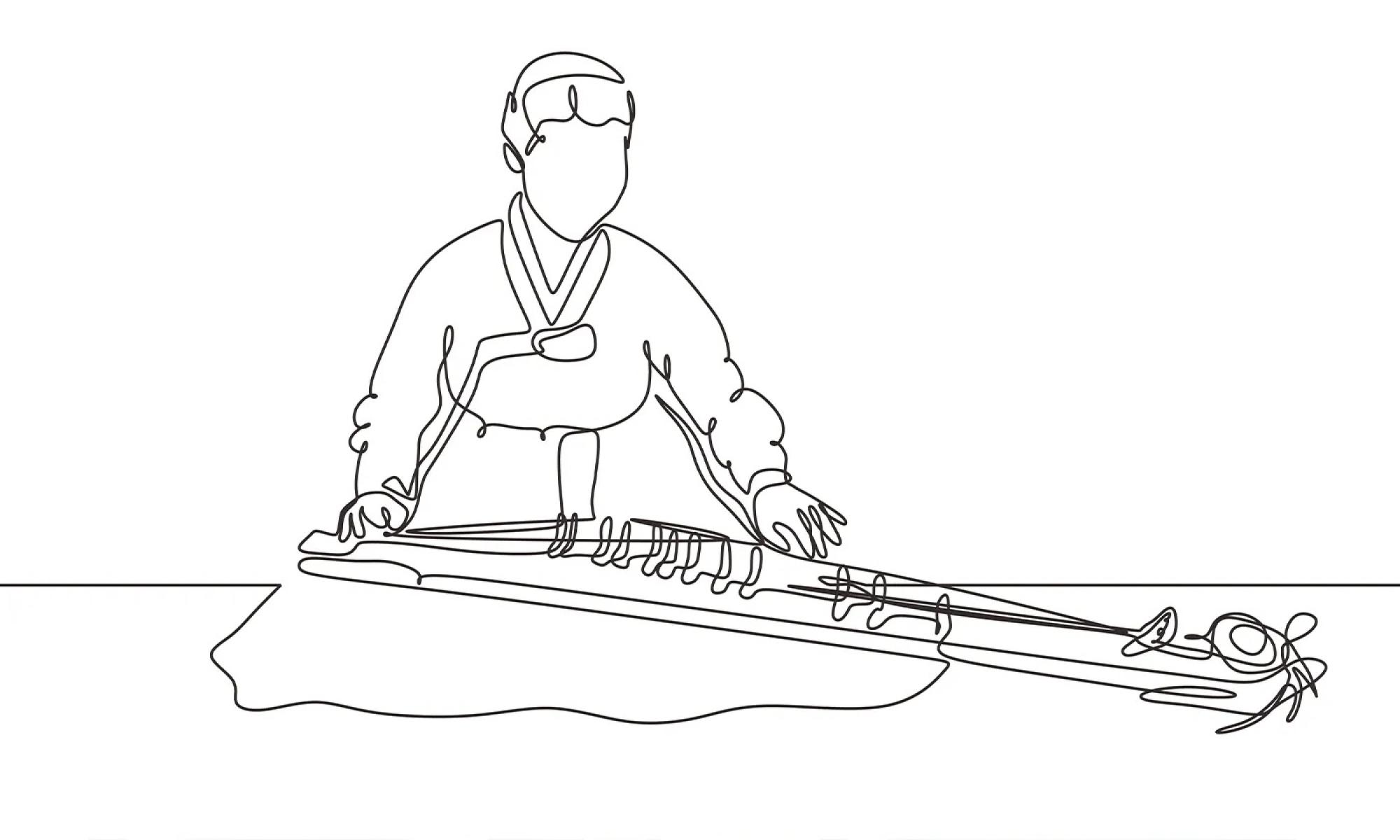
At the heart of the Korean spirit is a concept called "Han." I define Han as "irreparable sorrow." A more accurate definition might be achieved by describing how Han expresses itselfthrough storytelling, song, poetry, prayer. It is the language of humanity. Suh Nam-Dong, one of the founders of Korean minjung liberation theology, described Han as "a feeling of unresolved resentment against injustices suffered, a sense of helplessness because of the overwhelming odds against one, a feeling of acute pain in one's guts and bowels, making the whole body writhe and squirm, and an obstinate urge to take revenge and to right the wrong"all these combined." What is omitted from such definitions, though, is the very quality that makes Han transcendent; that is, the poeticization of these profound feelings of grief and loss. It gives us a common song. That is why the African American tradition of blues serves as a great model for resilience"joy, even"in the face of unimaginable adversity. It is all the sorrows of the world experienced in communion with others. Communion and fellowship are what will get us through, no matter what the bastards do. I also think of my Quaker grandmother, Elinor Ashkenazy, who helped organize the peace boat, the Golden Rule, in the 1950s. The tiny ketch first set sail across the Pacific in 1958 with the intention of stopping the U.S. from dropping atomic bombs on the Marshall Islands. Its story was another kind of prayer, another kind of poetry"and the inspiration for the founding of Greenpeace and many other peace projects.
Latest
Latest News
Each news summary is created according to strict standards. Here's how we do it.
Each summary is created using a consistent editorial procedure. The target length is approximately 16 lines of 11-point Arial text in a 650-pixel-wide column. Up to 25% of a summary may be set in bold to emphasize the most important ideas. Summaries are composed of verbatim excerpts presented in the same sequence as they appear in the original news source, with very minor editorial additions. Where material has been omitted between excerpts, the omission is indicated with ellipses (...). Any words added by an editor for clarity or context appear in [brackets]. Our original news editor was Fred Burks. Tod Fletcher edited most summaries from 2007 through 2014, and Mark Bailey has served as news editor since 2014.