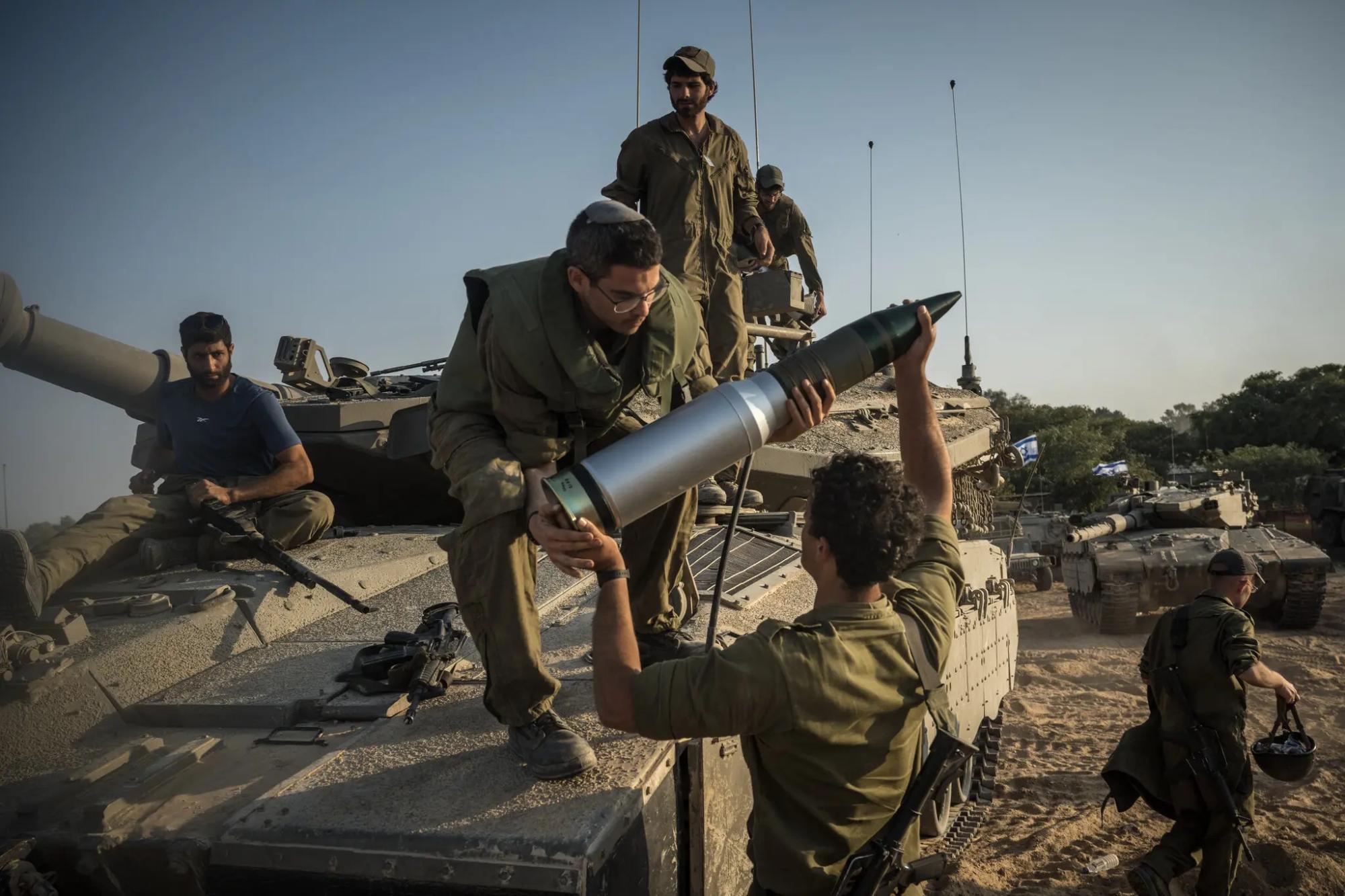
The conflict between Israel and Hamas is just the latest impetus behind a boom in international arms sales that is bolstering profits and weapons-making capacity among American suppliers. The surge in sales is providing the Biden administration with new opportunities to tie the militaries of other countries more closely to the United States, the world's biggest arms exporter, while also raising concerns that a more heavily armed world will be prone to careen into further wars. Even before Israel responded to the deadly Hamas attack, the combination of Russia's invasion of Ukraine and the perception of a rising threat from China was spurring a global rush to purchase fighter planes, missiles, tanks, artillery, munitions and other lethal equipment. Worldwide military spending last year on weapons, personnel and other costs " hit $2.2 trillion, the highest level in inflation-adjusted dollars since at least the end of the Cold War, according to the Stockholm International Peace Research Institute, which prepares an annual tally. Excluding sales within the United States, China and Russia, worldwide spending on military procurement is expected to hit $241 billion next year, a 23 percent increase since last year. That is by far the largest two-year increase in the database maintained by Janes, a company that has been tracking military spending for nearly two decades. As of last year, the United States controlled an estimated 45 percent of the world's weapons exports, nearly five times more than any other nation.
Latest
Latest News
Each news summary is created according to strict standards. Here's how we do it.
Each summary is created using a consistent editorial procedure. The target length is approximately 16 lines of 11-point Arial text in a 650-pixel-wide column. Up to 25% of a summary may be set in bold to emphasize the most important ideas. Summaries are composed of verbatim excerpts presented in the same sequence as they appear in the original news source, with very minor editorial additions. Where material has been omitted between excerpts, the omission is indicated with ellipses (...). Any words added by an editor for clarity or context appear in [brackets]. Our original news editor was Fred Burks. Tod Fletcher edited most summaries from 2007 through 2014, and Mark Bailey has served as news editor since 2014.