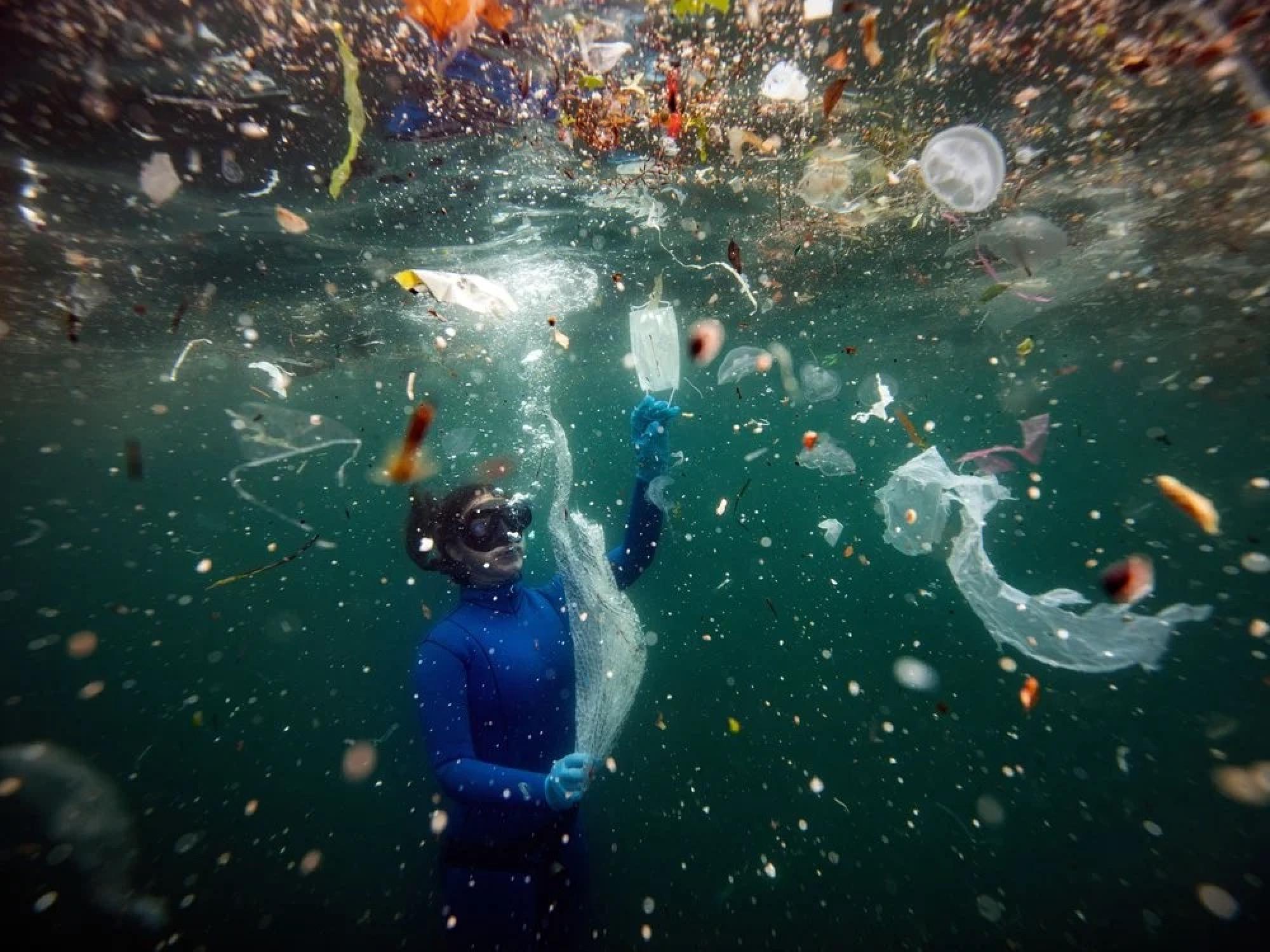
High in the Swiss Alps and the Arctic, scientists have discovered microbes that can digest plasticsimportantly, without the need to apply excess heat. Their findings, published this month in the journal Frontiers in Microbiology, could one day improve plastic recycling. It's no secret that plastic pollution is a big, global issue. Since its production exploded during and after World War II, humans have created more than 9.1 billion tons of plastic"and researchers estimate that less than one tenth of the resulting waste has been recycled. To make matters worse, the most common recycling option"when plastic is washed, processed and turned into new products"doesn't actually reduce waste: The recycled materials are often lower quality and might later end up in a landfill all the same. Researchers are looking for solutions to the plastics problem. One process they've experimented with is breaking down plastics using microorganisms. Enzymes from the microorganisms found in the Arctic and Swiss Alps ... were able to break down biodegradable plastics at 59 degrees Fahrenheit. "These organisms could help to reduce the costs and environmental burden of an enzymatic recycling process for plastic," co-author Joel RÄthi [said]. Of the total 34 types of microbes examined, 19 were successfully able to break down a form of plastic called polyester-polyurethane, and 17 could break down two types of biodegradable plastic mixtures.
Latest
Latest News
Each news summary is created according to strict standards. Here's how we do it.
Each summary is created using a consistent editorial procedure. The target length is approximately 16 lines of 11-point Arial text in a 650-pixel-wide column. Up to 25% of a summary may be set in bold to emphasize the most important ideas. Summaries are composed of verbatim excerpts presented in the same sequence as they appear in the original news source, with very minor editorial additions. Where material has been omitted between excerpts, the omission is indicated with ellipses (...). Any words added by an editor for clarity or context appear in [brackets]. Our original news editor was Fred Burks. Tod Fletcher edited most summaries from 2007 through 2014, and Mark Bailey has served as news editor since 2014.