






















News Articles
Below are key excerpts of revealing news articles from reliable news media sources. If any link fails to function, a paywall blocks full access, or the article is no longer available, try these digital tools.
For further exploration, delve into our comprehensive Information Centers.

The federal investigation into the death of convicted sex-trafficker Jeffrey Epstein was marred by significant lapses, experts told CBS News, including the failure by investigators to interview potential witnesses, properly preserve certain evidence and run basic forensic tests. Nearly two years passed before investigators interviewed the two key corrections officers on duty the night Epstein died. And details pulled from 90 photos of the cell and other evidence collected in the hours after Epstein's death — but before FBI agents arrived to process the scene — appear to show a succession of basic oversights, ranging from an absence of evidence markers to items being moved, experts told CBS News. "The FBI literally has all of the best tools. I mean, spared no expense. They have every tool you can imagine. And they used none of it as far as we can tell," forensic analyst Nick Barreiro said after reviewing the photos. "I do not believe he died by suicide, no," Epstein's co-defendant, Ghislaine Maxwell, said this summer during her interview in August with the Deputy U.S. Attorney General Todd Blanche. Epstein's body was discovered at 6:30 a.m. on Aug. 10, 2019. The first FBI agents arrived at the cell more than seven hours later. When they arrived, photos show they found a disorganized, rifled-through clutter. Epstein's lifeless body had already been removed from the cell, eliminating a critical source of information investigators would need to determine how and when he died.
Note: Read our comprehensive Substack investigation covering the connection between Epstein’s child sex trafficking ring and intelligence agency sexual blackmail operations. For more, read our concise summaries of news articles on Jeffrey Epstein's criminal enterprise.
For 25 years, Jeff Schoep headed America's largest Neo-Nazi organisation, the National Socialist Movement. Now ... he says he is committed to helping deradicalise people who hold the extremist views he used to preach. "Hating people is exhausting. When you can't tolerate other people and other systems of belief ... there's something wrong with you and the way you're looking at things," Mr Schoep said. "Once you have the opportunity to see and understand somebody else's viewpoint, from their perspective of their story in life, that can be life-altering." Mr Schoep said his time at the helm of the National Socialist Movement was like being the leader of a cult. "I felt like I was going to save my race, and I was a patriot for my country ... that was what drove me," he said. A revelation for Mr Schoep occurred in 2016 when he agreed to an interview with Daryl Davis, a prolific African-American jazz musician who worked to deradicalise Neo-Nazi groups. Mr Davis spoke of the impact that racism had on his own life, which began when he was pelted with rocks as a child marching in a Boy Scout parade, asking Mr Schoep, "How could someone hate me when they don't even know me?" "I was told that racism was wrong in school, by my parents, my grandfather, everybody," Mr Schoep said. "But none of that resonated until I sat across from somebody that had experienced it firsthand and how it made them feel. "Daryl never told me how I was wrong; he showed me how I was wrong."
Note: Read more about the powerful anti-racist work of Daryl Davis. Explore more positive stories like this on healing social division.
“Dance is a language of the body,” says Julia F. Christensen, a neuroscientist at the Max Planck Institute for Empirical Aesthetics and author of Dancing is the Best Medicine. “Our brain understands gestures that we may do as we dance like an expressive language.” For centuries, communities have turned to dance not only for celebration but for ritual and healing. Long before scientists tracked brain waves or measured neurotransmitters, dancers had an intuitive understanding of the power of moving together. Now, the research is starting to catch up. A 2024 meta-analysis published in The BMJ reviewed 218 clinical trials and found that dance reduced symptoms of depression more than walking, yoga, strength training, and even standard antidepressants. While only 15 of the studies focused specifically on dance, the results were enough to grab the attention of researchers. Our brains are wired for rhythm—and dancing engages our entire nervous system. Some neuroscientists describe this full-body stimulation as a neurochemical symphony. Anticipating a melody can trigger the release of dopamine. Physical movement boosts endorphins. Dancing with others increases oxytocin. Studies have shown that this trifecta can enhance mood, increase social bonding, and reduce stress. Dance offers a unique way to reconnect with oneself. It can activate emotional, cognitive, and sensory pathways, reawakening a sense of connection within and beyond the self.
Note: Explore more positive stories like this on the power of art and healing our bodies.
The aviary has a narrow duck pond in the back and a plywood square painted with the portrait of a coyote hanging on the front door. Inside, 71-year-old Willie H. uses plastic tweezers to feed moistened dog food pellets to juvenile robins through the bars of their cage. Like every day, he does this with his pet cockatiel, Bird, on his shoulder. The makeshift aviary he’s spent the past 20 years working in is within the confines of the Marion Correctional Institution, where he’s serving a potential life sentence. The Ohio Wildlife Center has been sending injured and orphaned wildlife to Marion for rehabilitation since the 1990s. According to Brittany Jordan, the center’s wildlife rehabilitation operational director, these behind-bars rehab centers are now in five prisons across the state, and more institutions are joining the program as a way to help both the inmates and the animals. Willie ... was one of the first inmates to participate in the program, which has rehabilitated and released thousands of animals that required extra care after being treated at the Ohio Wildlife Center’s hospital in Columbus. The inmates volunteer as caretakers and learn how to handle, feed and administer medication to a wide range of species—from barn swallows to opossums. While the Prison Program benefits wildlife ... it also rewards inmates with new skills, routine and purpose. They tend to stay out of trouble, away from substance abuse, and have an increased interest to learn more about the animals they care for.
Note: Explore more positive stories like this on repairing criminal justice.
The Arcadia Center for Sustainable Food figured that veterans were perfectly cut out for farming, as the average vet is 45% more likely to start their own business, and aside from being physically fit, are used to enduring discomfort, waking up early, and being both self-reliant and a team player. Looking to connect their need to perform a service for their communities with the needs of thousands of retiring military who reenter society every year, Arcadia created the Veteran Farmers Training Program. Just a few miles from the Pentagon in Arlington, Arcadia trains veterans in the fundamentals of agriculture both in the field and in the class room. Ephesia Sutton was in the US Army for 20 years, and now trains veterans like herself how to grow nutritious produce for their families and communities. “I left the military with PTSD, depression, and anxiety, and I would rather be anywhere else when dealing with those symptoms. This is the place that relaxes me,” said Sutton told Stars and Stripes from the fields of collard greens, cucumbers, bitter melon, peppers, spinach, kale, and tomatoes. “Knowing the work that I’m doing every time I put my hands in the soil is going to provide for a family, for somebody in this community, that just gives me the push to be out here,” Sutton said. Military spouses ... often have to put their own lives on hold whilst their partners deploy. These too are finding new purpose and fulfillment among the rows of fruits and vegetables.
Note: Explore more positive stories like this on healing our bodies and healing the war machine.
Kolle 37 is not your usual kind of kids’ recreation space. This 4,000-square-meter, anarchic adventure playground in the heart of Berlin’s central Prenzlauer Berg neighborhood is like the love child of a Wes Anderson set designer and a steampunk doorman at the city’s infamous Berghain nightclub. Also known as the Adventurous Construction Playground Kolle 37, this unconventional educational space allows children to build — or, indeed, destroy — structures as they see fit. (Parents can enter only one day a week, on Saturdays.) Kolle 37, which started in 1990, is open to children between the ages of six and 16, and offers a rare space for unaccompanied play and so-called “free-range parenting” — moms and dads are asked to give a cell phone number and leave the site promptly. The playground, which receives funding from Berlin government authorities, also offers practical courses such as pottery, blacksmithery, archery and handicrafts, and has a space for music practice. Weekly meetings are held among the kids to discuss rules and problems, with a system of cards used for behavioral issues. Yellows serve as warnings and reds mean a child must leave for the day, for example if they hurt someone or stole something. “They run everything,” says [social workert Marcus] Schmidt. “If the government or officials visit, the kids give the tour. There’s an equal relationship between children and adults here. This is a really, really special place.”
Note: Explore more positive stories like this on reimagining education.
As I approach India's first Garbage Cafe on a cloudy and foggy winter day in early 2025, the smell of hot samosas immediately makes the place feel cosy. Inside, people are sitting on wooden benches holding steel plates filled with steaming meals, some chatting, others eating quietly. Every day, hungry people arrive at this cafe in Ambikapur, a city in the state of Chhattisgarh in central India, in the hope of getting a hot meal. But they don't pay for their food with money – instead, they hand over bundles of plastic such as old carrier bags, food wrappers and water bottles. People can trade a kilogram (2.2lb) of plastic waste for a full meal that includes rice, two vegetable curries, dal, roti, salad and pickles, says Vinod Kumar Patel, who runs the cafe on behalf of the Ambikapur Municipal Corporation (AMC), the public body which manages the city's infrastructure. Every morning, [Rashmi Mondal] sets out early on the streets of Ambikapur in a search for discarded plastic – anything from old food wrappers to plastic bottles. For her, collecting such detritus is a means of survival. "I've been doing this work for years," Mondal says, looking at the small pile of plastic she has gathered. Previously, Mondal used to sell the plastic she collected to local scrap dealers for just 10 Indian rupees (£0.09/$0.12) per kilogram – barely enough to survive on. "But now, I can get food for my family in exchange for the plastic I collect. It makes all the difference in our lives."
Note: Explore more positive stories like this on reimagining the economy.
Over the course of a week, officials from Massachusetts, North Dakota and Oklahoma toured four German prisons where inmates wore street clothes, maintained their right to vote, cooked their own meals, played in soccer leagues and learned skills like animal husbandry and carpentry. One, called the Open Prison, allowed residents to come and go for work, school and errands. [German] prisons must provide single-occupancy cells at least 10 square meters in size. Many have kitchens where residents may cook their own meals. In the United States, privacy, time outside of cells and family visits are considered risky, and “over-familiarity” between correction officers and inmates is prohibited. German prisons take the opposite approach, known as dynamic security. Correction officers are expected to develop relationships with inmates and know when problems may arise. Yvonne Gade, a correction officer in a ward that houses a small number of prisoners deemed particularly dangerous, shrugged off concerns about their access to a gym with free weights. “It would be a huge potential for violence if you locked them up all the time,” she said. A growing number of American states are looking abroad for ideas that can be adapted to their state prison systems. California, Arizona and Oklahoma’s prison systems have shifted their focus to rehabilitation rather than punishment. In 2022, Pennsylvania opened a unit known as Little Scandinavia, and last year Missouri began a similar transformation project in four prisons. Six other states have established European-style units for younger prisoners. The efforts are still small. Prison conditions are not a priority for voters. U.S. prisons are in crisis, struggling with severe staffing shortages, crumbling facilities and frequent violence. Inmates in U.S. prisons often endure extreme temperatures, vermin-infested food and years, or even decades, in solitary confinement. High-profile cases have brought attention to prolonged shackling, fatal beatings and sexual abuse.
Note: For more along these lines, read our concise summaries of news articles on prison system corruption and inspiring articles on prison system reform.
For more than 30 years, Frank Frost worked as a long-distance truck driver. He gained weight and was diagnosed with Type 2 diabetes in his 50s. His doctors put him on insulin injections and told him to lose weight and move more. "When l, like most people, failed, they made me feel weak and worthless," says Frost. Then, Frost met a doctor with a completely different approach — one that changed his life. The doctor ... asked Frost about things he enjoyed doing as a kid and discovered he used to love riding a bike. He gave him a prescription for a 10-week cycling course called Pedal Ready for adults getting back into cycling. "I hadn't been on a bike for almost 50 years until I started cycling again," says Frost. What Frost's doctor had done was give him a social prescription, says journalist Julia Hotz. It's the idea of health professionals "literally prescribing you a community activity or resource the same way they'd prescribe you pills or therapies," she explains. The prescriptions include exercise, art, music, exposure to nature and volunteering, which are known to have enormous benefits to physical and mental health. And it all starts with "flipping the script from what's the matter with you to focusing on what matters to you," Hotz says. "What are your activities that you love? What gets you out of bed?" Frost's prescription helped him make friends after years in a solitary profession. And it helped him lose 100 pounds, get his diabetes under control and go off insulin.
Note: Explore more positive stories like this in our comprehensive healing our bodies and healing social division.
Dan Mancina has been a skateboarder since the age of seven, but when he was 13, he was diagnosed with rhinitis pigmentosa, a degenerative eye disease that rendered him almost completely blind by 22. He hit pause on his skateboarding for a couple of years in his early 20s, but decided to pick it back up again, now using a white cane to shred more confidently. Now almost 38, he’s a professional skateboarder, relearning tricks, and even completing the course at the Paris 2024 Olympic Games. About seven years ago, he started dreaming of creating the world’s first adaptive skatepark right in his hometown of Detroit, Michigan. Finally, the park is a reality. Called “The Ranch,” the 5,000-square-foot skatepark is completely accessible, allowing both seasoned low-vision boarders to take it for a spin and newcomers to the sport to feel welcome. In a recent video, blind content creator Anthony S. Ferraro, who reviews and documents his experiences in accessible environments ... on TikTok, showed off the park’s features. Features include rollers, bank ramps, and ledges, with manual pads and platforms, all designed to be easier to navigate for people with vision impairments or in wheelchairs. Auditory cues are also placed throughout the park in the form of beepers, which warn a skater about a dangerous drop or guide them to a particular obstacle. “Thanks for building this park, Dan, [you’re] a true pioneer.” Next up, he plans to host workshops and camps for other visually impaired skaters who want to learn how to skate with a white cane. “It’s been so inspiring to watch this come to reality. I’ve never had a place where I can skate with full confidence,” Ferraro ends his video.
Note: Watch a deeply inspiring video about how Dan Mancina learned how to skateboard after losing his sight. Explore more positive stories like this on inspiring disabled persons.
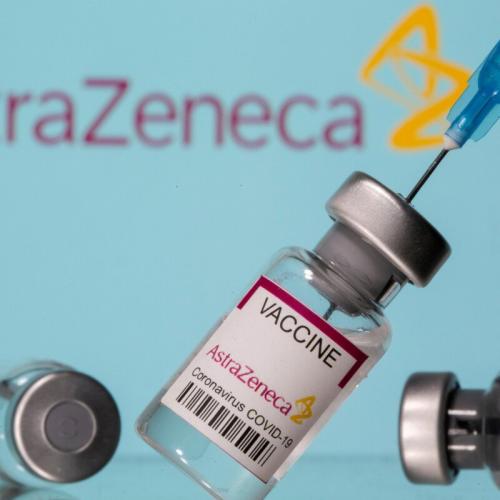
This interim report highlights records the Subcommittee has reviewed regarding HHS’s awareness of and response to cases of myocarditis—a type of heart inflammation—following COVID-19 vaccination. [Some] documents ... have remained hidden from the public and Congress for years. U.S. health officials knew about the risks of myocarditis; Those officials downplayed the health concern; and U.S. health agencies delayed informing the public about the risk of the adverse event. The records [show]: The Israeli Ministry of Health notifying officials at the CDC in late February 2021 of “large reports of myocarditis, particularly in young people, following the administration of the Pfizer vaccine.” Discussions among CDC officials in May 2021 on whether to issue a HAN [Health Alert Network message] on myocarditis, noting that health care professionals across the nation may not be aware of the risk because “providers aren’t reporting these cases to VAERS [Vaccine Adverse Event Reporting System].” A CDC official providing up-to-date information on the status of the HAN to Pfizer Inc. (“Pfizer”) and Moderna, Inc. (“Moderna”) representatives, indicating CDC’s preference to keep the vaccine companies more informed about vaccine adverse events, rather than the American people. Draft meeting notes from late May 2021 exchanged between U.S. public health officials which included the question: “Is VAERS signaling for myopericarditis now?”; and the answer: “For the age groups 16-17 years and 18-24 years, yes.”
Note: Our Substack investigation, The Nuanced View on COVID Vaccine Injuries and Lawsuits, examines how whistleblowers, FDA advisers, and vaccine-injured people exposed irrefutable evidence of COVID vaccine harms, data integrity issues, and failures within the VAERS reporting system. The investigation also explores how Big Tech platforms, pharmaceutical companies, and health organizations engineered the information environment around COVID through censorship and media manipulation.
In President Dwight D. Eisenhower's famous 1961 speech about the dangers of the military-industrial complex, he also cautioned Americans about the growing power of a "scientific, technological elite." "The prospect of domination of the nation's scholars by federal employment project allocations and the power of money is ever present," warned Eisenhower. And he was right. Today, many of the people protesting the Trump administration's cuts to federal funding for scientific research are part of that scientific, technological elite. But there's a good chance that slashing federal spending will liberate science from the corrupting forces that Eisenhower warned us about. Thomas Edison's industrial lab produced huge breakthroughs in telecommunications and electrification. Alexander Graham Bell's lab produced modern telephony and sound recording, all without government money. The Wright Brothers—who ran a bicycle shop before revolutionizing aviation—launched the first successfully manned airplane flight in December 1903, beating out more experienced competitors like Samuel Langley, secretary of the Smithsonian Institution, who had received a grant from the War Department for his research. Of course, government funding has led to major breakthroughs both during and after World War II. In an influential 2005 paper, Stanford University professor John Ioannidis flatly concluded that "most published research findings are false." He argued that the current peer review model encourages groupthink. "You end up with a monolithic view, and so you crush what's so important in science, which is different ideas competing in a marketplace of ideas."
Note: “Trust the science” sounds noble—until you realize that even top editors of world-renowned journals have warned that much of published medical research is unreliable, distorted by fraud, corporate influence, and conflicts of interest. For more along these lines, read about how the US government turns a blind eye to the corporations fueling America's health crisis.
Researchers at ETH Zurich have designed a sustainable method to extract gold from electronic waste using a byproduct of cheese production. Electronic devices, from smartphones to laptops, contain small amounts of gold due to its excellent conductivity and resistance to corrosion. With the rapid turnover of electronic gadgets, e-waste has become the fastest-growing waste stream globally, reaching 62 million tonnes in 2022, and only 22.3 percent of this was formally collected and recycled, leaving vast amounts of valuable materials unused. Professor Raffaele Mezzenga and scientist Mohammad Peydayesh led the ETH Zurich team in developing a method that utilizes “whey”, the liquid byproduct of cheese-making. By processing whey proteins into amyloid fibrils, they created a sponge-like aerogel capable of selectively absorbing gold ions from acidic solutions derived from e-waste. Professor Mezzenga stated, "The fact I love the most is that we're using a food industry byproduct to obtain gold from electronic waste. You can't get much more sustainable than that!" In laboratory tests, this aerogel successfully extracted gold from dissolved computer motherboards. The sponge drew out gold that was about 90.8 percent pure, yielding a 22-carat nugget weighing approximately 450 milligrams. The research team is also exploring the use of other food industry byproducts, like pea protein and fish collagen, to diversify the sources of the aerogel. The process is economically viable, with operational costs significantly lower than the market value of the recovered gold, unlike traditional gold extraction techniques that rely on toxic chemicals like cyanide.
Note: Explore more positive stories like this on healing the Earth and technology for good.
For seven years, I was a white nationalist skinhead and the front man of a neo-Nazi metal band based in Milwaukee. The life I led was toxic to myself and everyone around me. I was drawn in when I was 16. I was an angry, lonely kid, searching for something: identity, purpose, belonging. I found it, or thought I did, in a fantasy: the idea that I was part of a master race under siege. We justified brutal attacks — what we called "boot parties" — on people we saw as enemies: people of color, LGBTQ folks, Jews, punks, anyone who wasn't us. I'd hear a quiet voice inside asking, "What are you doing? This guy didn't do anything to you. You don't even know him," but I didn't have the courage to listen. In early 1994, the mother of my daughter and I broke up, and I found myself a single parent to our 18-month-old. Two months later, a second friend of mine was shot and killed. I'd lost count of how many friends had been incarcerated. It finally hit me that if I didn't leave, prison or death would take me from my daughter. That was the push I needed. I realized something profound: what I had been searching for all along — belonging, joy, connection — wasn't found in hate, it was in community. Today, I work with Parents for Peace, an organization that helps people caught in extremism find a healthier, more connected life. We support individuals on their journey — whether they're questioning, struggling, or still deeply entrenched — and we guide families trying to reach a loved one.
Note: Explore more positive stories like this on healing social division and human interest topics.
In their peer-reviewed book, In Covid’s Wake: How Our Politics Failed Us, [left-leaning political scientists] Stephen Macedo and Frances Lee argue that public health authorities, the mainstream media, and progressive elites often pushed pandemic measures without weighing their costs and benefits, and ostracized people who expressed good-faith disagreement. The book grew out of research Macedo was doing on the ways progressive discourse gets handicapped by a refusal to engage with conservative or outside arguments. “Covid is an amazing case study in groupthink and the effects of partisan bias,” he said. At times, scientific and health authorities acted less like neutral experts and more like self-interested actors, engaging in PR efforts to downplay uncertainty, missteps or conflicts of interest. Reports by Johns Hopkins (2019), the World Health Organization (2019), the state of Illinois (2014) and the British government (2011) had all expressed ambivalence or caution about the kind of quarantine measures that were soon taken. The Johns Hopkins Center for Health Security hosted a wargaming exercise in October 2019, shortly before the pandemic began, to simulate a deadly coronavirus pandemic; the findings explicitly urged that “[t]ravel and trade … be maintained even in the face of a pandemic.” A WHO paper in 2019 said that some measures – such as border closures and contact tracing – were “not recommended in any circumstances”. “In inflation-adjusted terms,” Macedo and Lee write, “the United States spent more on pandemic aid in 2020 than it spent on the 2009 stimulus package and the New Deal combined." The economic strain on poor and minority Americans was particularly severe. Teachers’ unions ... painted school re-openings as “rooted in sexism, racism, and misogyny” ... despite the fact that minority and poor students were most disadvantaged by remote learning.
Note: Pandemic policies led to one of the greatest wealth transfers in history. For more along these lines, read our concise summaries of news articles on COVID corruption and media manipulation.
In 2020, Dr. Jay Bhattacharya was condemned as a quack and considered a pariah by the medical field for co-authoring a public declaration questioning the efficacy of Covid lockdowns. In an October 2020 email to Dr. Anthony Fauci that was later leaked online, [former director of the National Institutes of Health Francis] Collins called Bhattacharya a “fringe epidemiologist,” and urged a “quick and devastating published takedown” of his declaration. Bhattacharya is now the new director of the NIH. He [said] Collins has since apologized for his comments—but only in private. Bhattacharya said of Collins: “I’ve been praying for him ever since I found out that he’d written that email. Reconciliation is really possible. Even if people disagree with each other fundamentally, even hate each other—and I’d never hated him and never will.” Bhattacharya “wants to extend [Fauci] the same grace that I want to extend to everybody. I think he was deeply wrong in his scientific ideas in 2020, but I believe ... he was trying to do what he viewed as the best for the American people.” President Biden preemptively pardoned Fauci for his extreme Covid response measures. The first step to rebuilding trust, Bhattacharya argues, is transparency. A database on doctors’ relationships with Big Pharma already exists, thanks to the 2010 Physician Payments Sunshine Act, which allows anyone to search for and view all pharmaceutical money doctors have received since 2013. Producing a similar website that shows where scientists get their research funding, and the results of their research, “would be a really productive way to reestablish trust ... “The work of the NIH in particular affects basically every single aspect of biomedical research. And of course, there are pecuniary interests involved. People make money off of the results of the research.”
Note: Bhattacharya's tone of reconciliation after being smeared in the media sets a powerful example. He recently received the top intellectual freedom award from the prestigious American Academy of Sciences and Letters. Top leaders in the field of medicine and science have spoken out about the rampant corruption and conflicts of interest in those industries. For more, read our concise summaries of news articles on science corruption.
Fray Tormenta was a masked wrestler that delighted crowds in Mexico’s lucho libre circuit for years, but few would have known that underneath the mask there was a man of god—a drug addict turned priest, who wrestled purely to raise money for an orphanage. The story, though decades old, resurfaced and was retold recently on a Spanish news outlet. Sergio Gutierrez Benitez was born in 1945 the second-youngest of 18 children. By the tender age of 11, Benitez was addicted to drugs and proceeded down a path of crime, robbery, and odd jobs to fund his various dependencies. After that ... he joined the seminary and became a priest in the Piarist Order, studying in Spain and Italy to cement his faith. After joining the Diocese of Texcoco, he wanted to build a shelter for the city’s many homeless children and orphans, but the costs were prohibitive. So he pulled on a lucho libre mask and started wrestling for $15 per hour under the name Fray Tormenta. He ended up wrestling for 23 years, from 1977 to 2000, traveling from town to town elbow dropping, tombstoning, and double-legging his way to semi-stardom. Relying on his mask to hide his identity, he eventually revealed his double-personality to officiate the wedding of a close wrestling colleague shortly before opening his orphange ... at the turn of the millennium. Fray Tormenta’s Puppies Children’s Home, has seen over 2,000 children pass through its walls.
Note: Explore more positive and inspiring human interest stories.
Science is revealing that ... giving thanks might be more powerful than we ever imagined. Research shows that expressing gratitude doesn’t just make us feel good momentarily — it actually reshapes our brains in ways that enhance our well-being. When you take a moment to count your blessings, your brain releases dopamine and serotonin, chemicals that create feelings of pleasure and contentment. But what’s really fascinating is that this isn’t just a temporary boost — these moments of thankfulness create a positive feedback loop, training your brain to look for more reasons to be grateful. Brain imaging studies have captured this process in action. When people express gratitude, they activate the prefrontal cortex, the brain’s command center for decision-making and emotional regulation. This triggers a cascade of beneficial effects, including sharper attention and increased motivation. Think of it like building a muscle — the more you exercise gratitude, the stronger these neural pathways become, making it progressively easier to access positive emotions. Perhaps even more remarkable is gratitude’s effect on stress. When you focus on appreciation, your brain actually dials down the production of cortisol, your body's primary stress hormone. Research conducted at Indiana University found that practicing gratitude can actually change the structure of your brain, particularly in areas linked to empathy and emotional processing. Even simply pausing throughout the day — my favorite practice — to notice and appreciate positive moments can help reshape your neural circuitry.
Note: Explore more positive stories like this about healing social division and healing our bodies.
When Marco de Kat starts planning his meals, he doesn’t need to travel far for fresh food. Right outside his house is an 800 square metre plot with all sorts of produce – apples, pears, peppers, basil, beets and cauliflower, to name a few. Oosterwold, where de Kat has lived since 2017, is a 4,300 hectare (10,625 acre) urban experiment located east of Amsterdam, in a suburb of the city of Almere, where de Kat works as a municipal councillor. The area, which has about 5,000 residents and a growing waiting list, is completely self-sufficient. Residents can build houses however they like, and must collaborate with others to figure out things such as street names, waste management, roads, and even schools. But the local government has included one extremely unusual requirement: about half of each plot must be devoted to urban agriculture. Some, like de Kat, have turned their gardens into an Eden of sorts to provide for their own household unit. Other residents just plant a few apple trees or outsource by owning plots of land on site that are tended to by professional farmers. Others, such as Jalil Bekkour, have been able to capitalise on it. “I never had experience gardening my own food or anything like that,” he said. But he taught himself how to garden, and three years ago he opened his own restaurant, Atelier Feddan, where 80% of the food is directly from Oosterwold. His newfound excitement for gardening and agriculture is palpable.
Note: Learn about the community-powered movement that's transforming yards into microfarms in Los Angeles. Explore more positive stories like this on healing social division and healing the Earth.
Public understanding of paedophiles has not improved over the past 30 years, according to the founder of the pioneering charity Circles, which offers support to some of society’s most reviled offenders. While the Rev Harry Nigh says child protection must always be paramount, he stresses the importance of breaking the isolation and shame that often leads people who commit child sexual abuse to reoffend, arguing that “anything that drives people underground even further endangers the community itself”. The Circles programme provides a local network of volunteers who support and hold accountable their “core member”, a child sexual offender who wants to reintegrate into the community after serving their sentence. The core model of grassroots community support – and accountability – has remained the same for the past three decades: “It’s not just about risk management, it has to be about affirmation,” Nigh said. “Just to reinforce the humanity of the person is really important. “That’s a very powerful thing for a person to be able to find a new narrative of his life that can lead him forward. But it’s not all hugs and kisses. There can be some very hard conversations in the Circle and confrontations. But the studies show that men with a Circle are 70 to 80% less likely to reoffend than a control group. The underlying principles of restorative justice are what’s guiding this work, that harm cannot be remedied completely by locking people up.”
Note: For more along these lines, read our concise summaries of news articles on sexual abuse scandals, repairing our criminal justice system, and healing social division.
Important Note: Explore our full index to revealing excerpts of key major media news articles on several dozen engaging topics. And don't miss amazing excerpts from 20 of the most revealing news articles ever published.