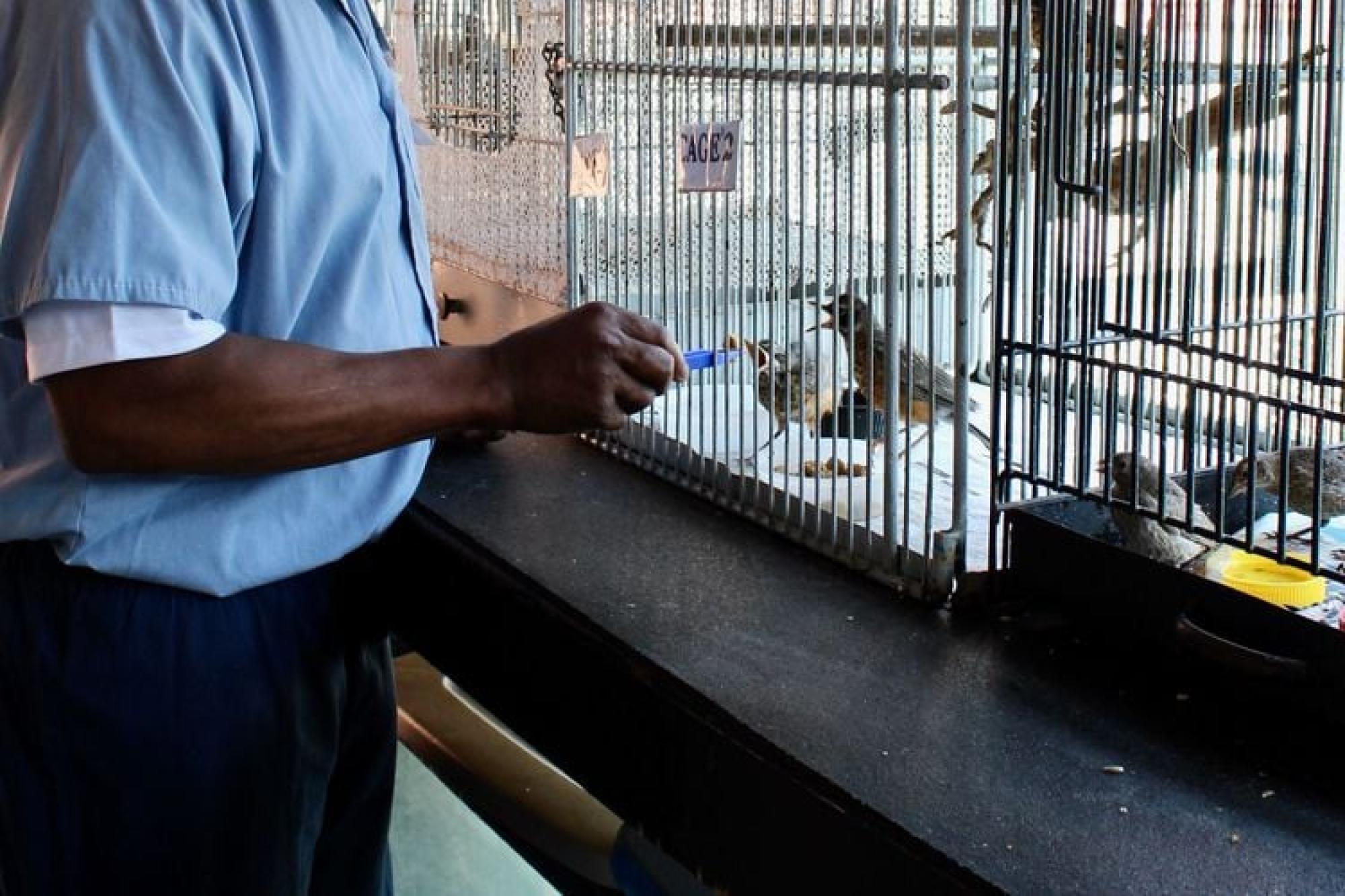
The aviary has a narrow duck pond in the back and a plywood square painted with the portrait of a coyote hanging on the front door. Inside, 71-year-old Willie H. uses plastic tweezers to feed moistened dog food pellets to juvenile robins through the bars of their cage. Like every day, he does this with his pet cockatiel, Bird, on his shoulder. The makeshift aviary he's spent the past 20 years working in is within the confines of the Marion Correctional Institution, where he's serving a potential life sentence. The Ohio Wildlife Center has been sending injured and orphaned wildlife to Marion for rehabilitation since the 1990s. According to Brittany Jordan, the center's wildlife rehabilitation operational director, these behind-bars rehab centers are now in five prisons across the state, and more institutions are joining the program as a way to help both the inmates and the animals. Willie ... was one of the first inmates to participate in the program, which has rehabilitated and released thousands of animals that required extra care after being treated at the Ohio Wildlife Center's hospital in Columbus. The inmates volunteer as caretakers and learn how to handle, feed and administer medication to a wide range of species"from barn swallows to opossums. While the Prison Program benefits wildlife ... it also rewards inmates with new skills, routine and purpose. They tend to stay out of trouble, away from substance abuse, and have an increased interest to learn more about the animals they care for.
Latest
Latest News
Each news summary is created according to strict standards. Here's how we do it.
Each summary is created using a consistent editorial procedure. The target length is approximately 16 lines of 11-point Arial text in a 650-pixel-wide column. Up to 25% of a summary may be set in bold to emphasize the most important ideas. Summaries are composed of verbatim excerpts presented in the same sequence as they appear in the original news source, with very minor editorial additions. Where material has been omitted between excerpts, the omission is indicated with ellipses (...). Any words added by an editor for clarity or context appear in [brackets]. Our original news editor was Fred Burks. Tod Fletcher edited most summaries from 2007 through 2014, and Mark Bailey has served as news editor since 2014.