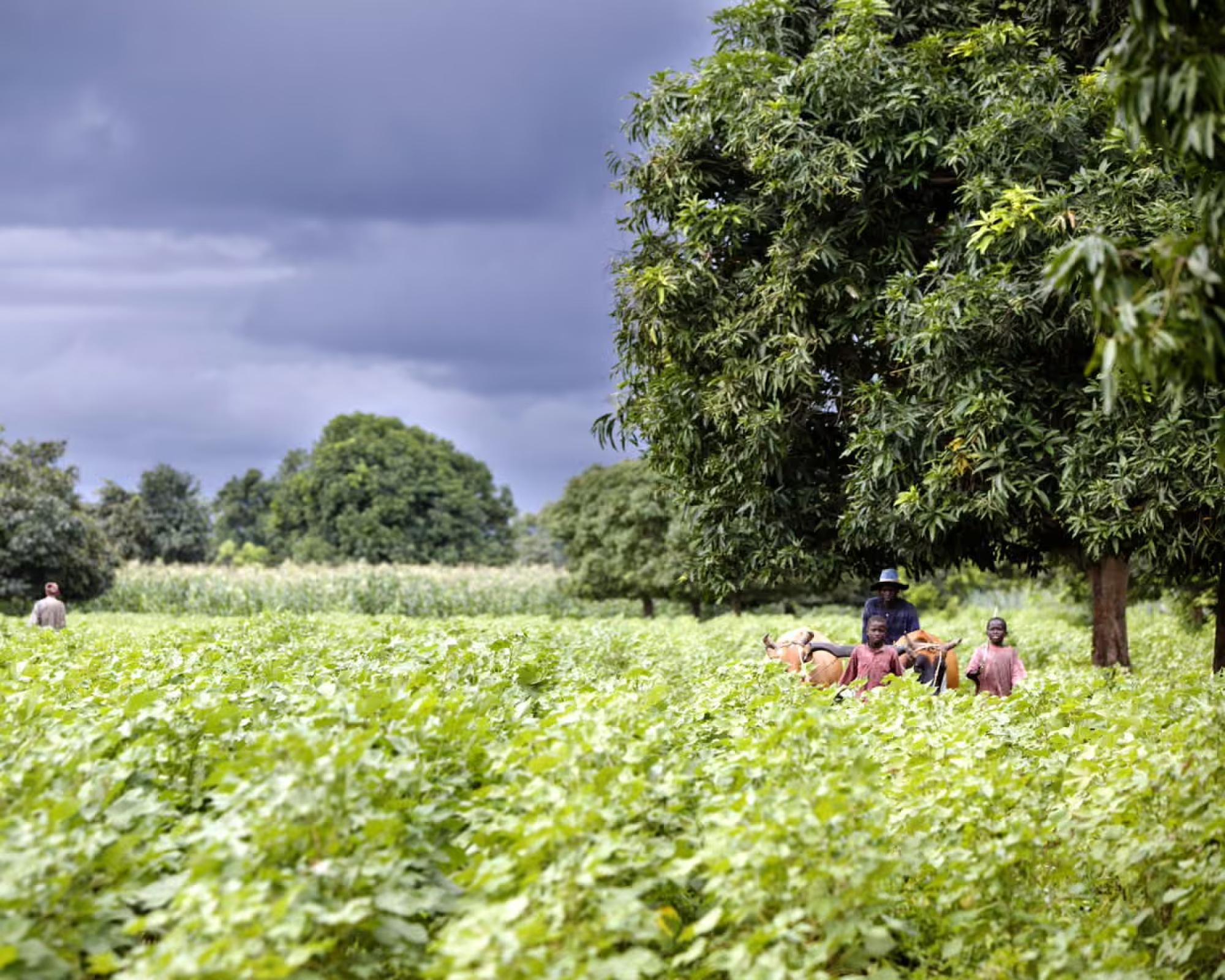
While trying to come up with a pesticide solution to kill off bollworms, Dr Robert Mensah had his eureka moment. It was the 90s, and in Australia bollworms were devastating cotton farms. He experimented and eventually came up with a simple food spray, "a mixture of food ingredients, yeast and sugar-based, diluted in water and applied to crops. It emits an odour which is picked up by beneficial predatory insects and attracts them to the fields where they kill pests." It was the beginning of an international grassroots campaign, in which Mensah has worked with various charities to teach people about this sustainable farming method. Ever since the dangerous side effects of pesticides became widely known, alternatives have been sought. This approach to farming, which reduces our reliance on pesticides, is called integrated pest management. In 2005, Mensah took food sprays to Benin, where the Pesticide Action Network (PAN UK) was helping farmers transition to organic farming. There, the misuse of chemical pesticides was seriously damaging people's health. The food sprays cheap, safe and effective " caught on with farmers in Benin where thousands now use the technique. From there, Mensah took food sprays to southern Ethiopia, where they were also trialled successfully on vegetables ... and then to Vietnam where they were used successfully on maize. Another charity, Better Cotton, is now trialling food sprays in India ... where they've trained 214,000 farmers to use sprays.
Latest
Latest News
Each news summary is created according to strict standards. Here's how we do it.
Each summary is created using a consistent editorial procedure. The target length is approximately 16 lines of 11-point Arial text in a 650-pixel-wide column. Up to 25% of a summary may be set in bold to emphasize the most important ideas. Summaries are composed of verbatim excerpts presented in the same sequence as they appear in the original news source, with very minor editorial additions. Where material has been omitted between excerpts, the omission is indicated with ellipses (...). Any words added by an editor for clarity or context appear in [brackets]. Our original news editor was Fred Burks. Tod Fletcher edited most summaries from 2007 through 2014, and Mark Bailey has served as news editor since 2014.